In small bedrooms, traditional bedside tables can feel bulky and unnecessary. They take up precious floor space and often become clutter magnets rather than functional furniture. Designers frequently replace bedside tables with lighter, smarter alternatives that keep essentials close without crowding the room.
The goal is to maintain bedside function—lighting, storage, and surface space—while using vertical solutions, multifunctional pieces, and minimal footprints.
Below are 10 bedside table alternatives that work beautifully in small bedrooms.
1. Wall-Mounted Floating Shelves
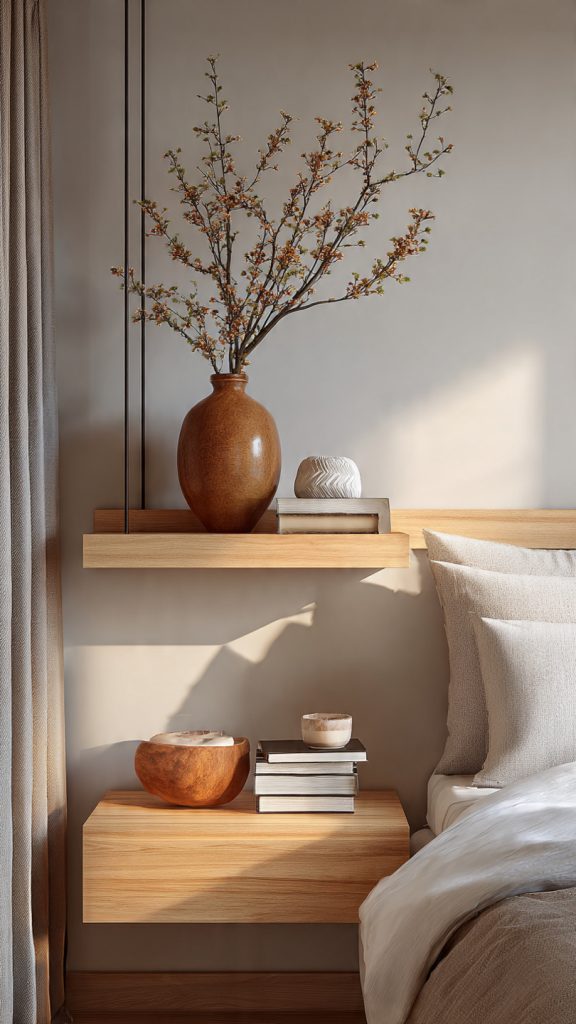
Floating shelves are one of the most popular bedside table alternatives. Mounted at mattress height, they provide space for a lamp, phone, and book without touching the floor.
This instantly makes the room feel larger.
Why it works
Frees up floor space
Feels light and modern
Keeps essentials within reach
A single shallow shelf is usually enough.
2. Wall-Mounted Nightstand Drawers
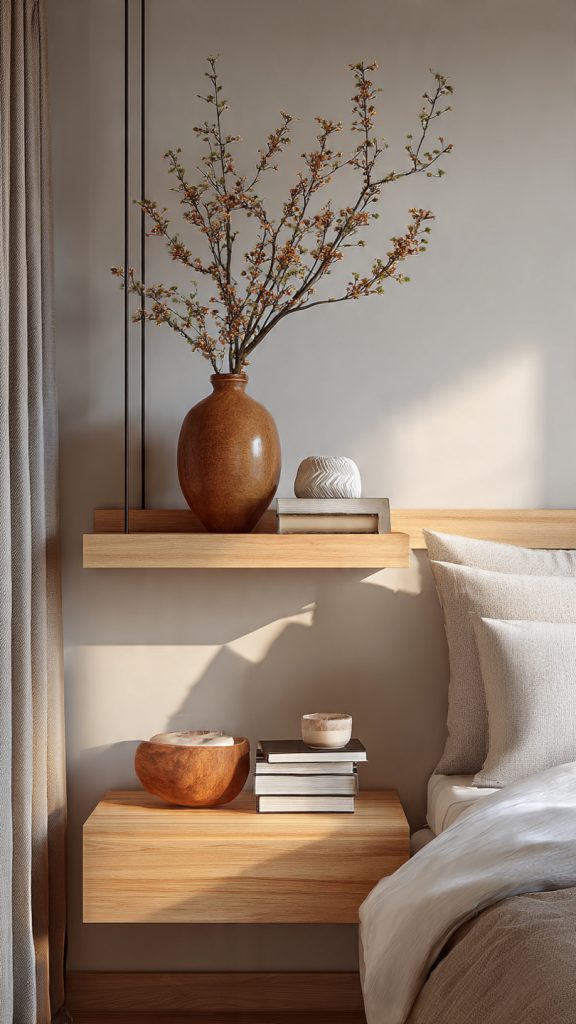
Floating drawers offer the function of a nightstand without the bulk. Designers use slim, wall-mounted drawers to store personal items while keeping the floor clear.
This creates a built-in look.
Why it works
Adds hidden storage
Keeps the room visually open
Feels intentional
Handleless designs look especially clean.
3. Small Stools or Accent Tables
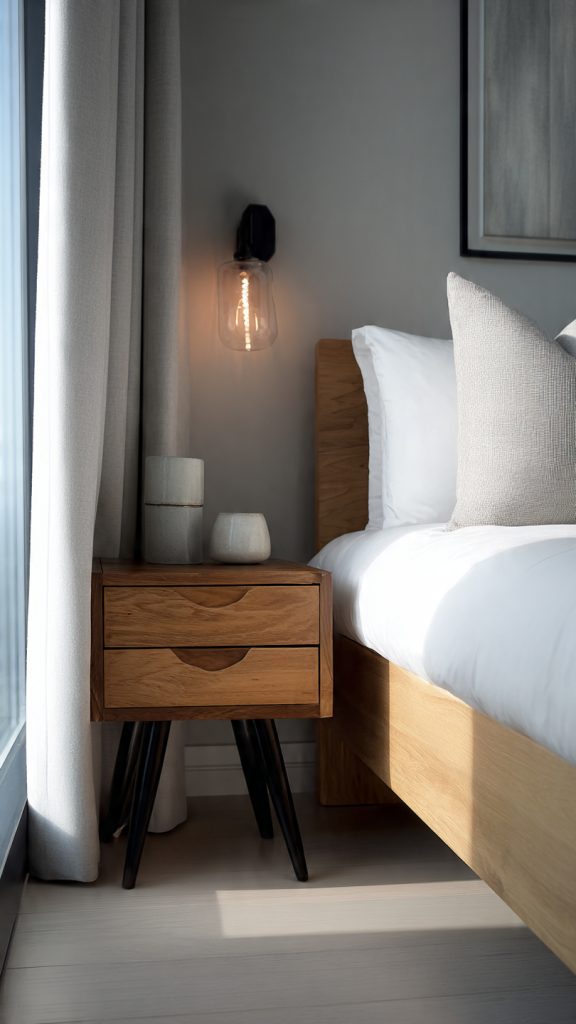
A simple stool or small accent table can replace a bedside table beautifully. Designers choose lightweight pieces that are easy to move and visually unobtrusive.
This works well in minimalist bedrooms.
Why it works
Takes up minimal space
Adds flexibility
Feels casual and intentional
Round shapes soften tight layouts.
4. Wall Sconces Instead of Table Lamps
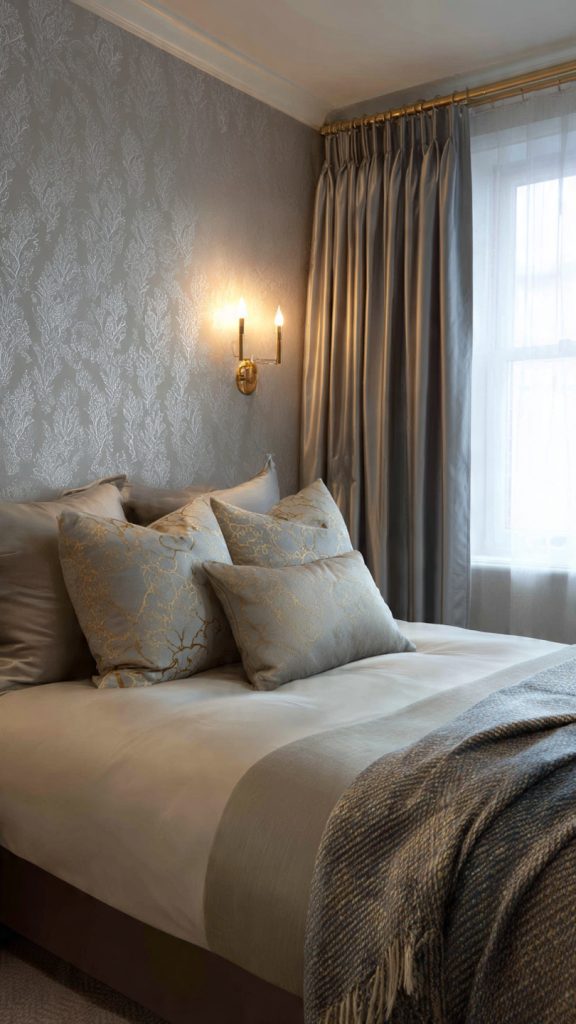
Removing table lamps frees up surface space. Designers install wall sconces above or beside the bed to handle lighting without needing a table at all.
This pairs well with shelf-based storage.
Why it works
Eliminates lamp clutter
Saves surface space
Feels hotel-inspired
Adjustable sconces add function.
5. Storage Benches Beside the Bed
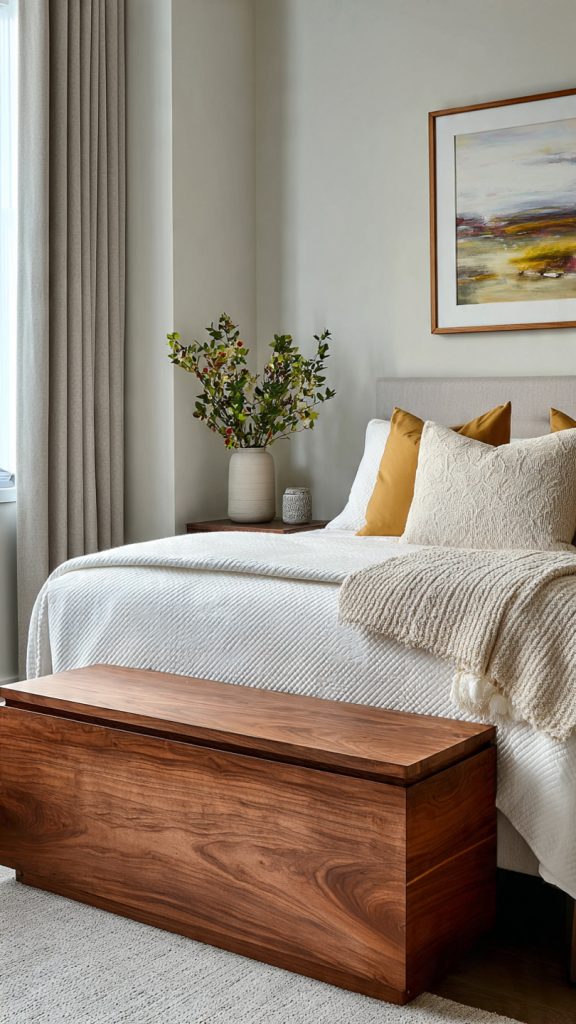
In extremely small bedrooms, designers sometimes place a narrow storage bench alongside the bed instead of a table. This works especially well in shared or studio spaces.
Benches provide surface and hidden storage.
Why it works
Combines seating and storage
Uses space efficiently
Feels intentional
Slim profiles work best.
6. Headboards with Built-In Shelves
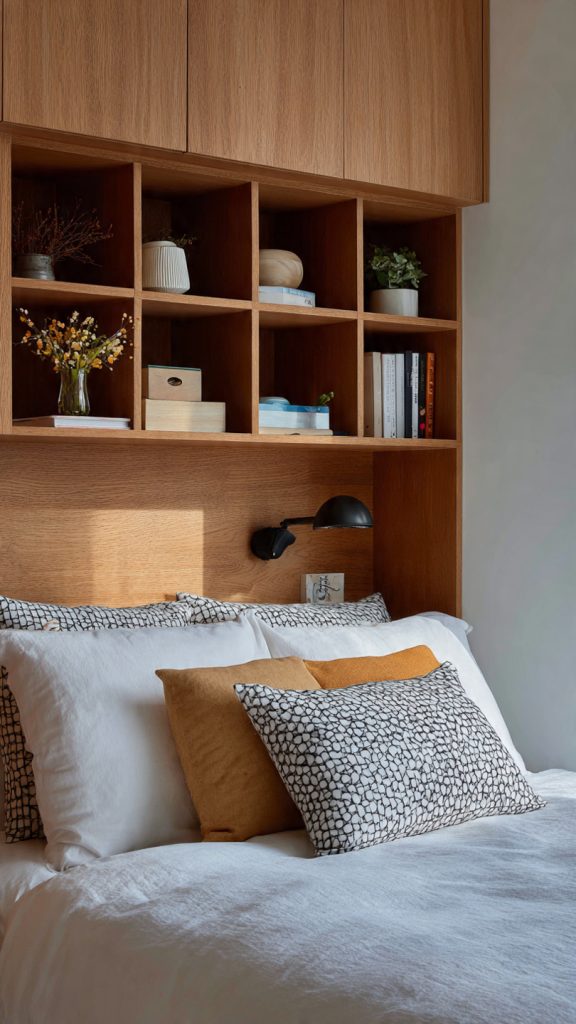
A storage headboard can fully replace bedside tables. Designers use headboards with shallow shelves to hold books, glasses, and small items.
This keeps everything centralized.
Why it works
Eliminates extra furniture
Keeps items accessible
Saves floor space
Minimal designs prevent visual heaviness.
7. Window Ledges Used as Bedside Surfaces
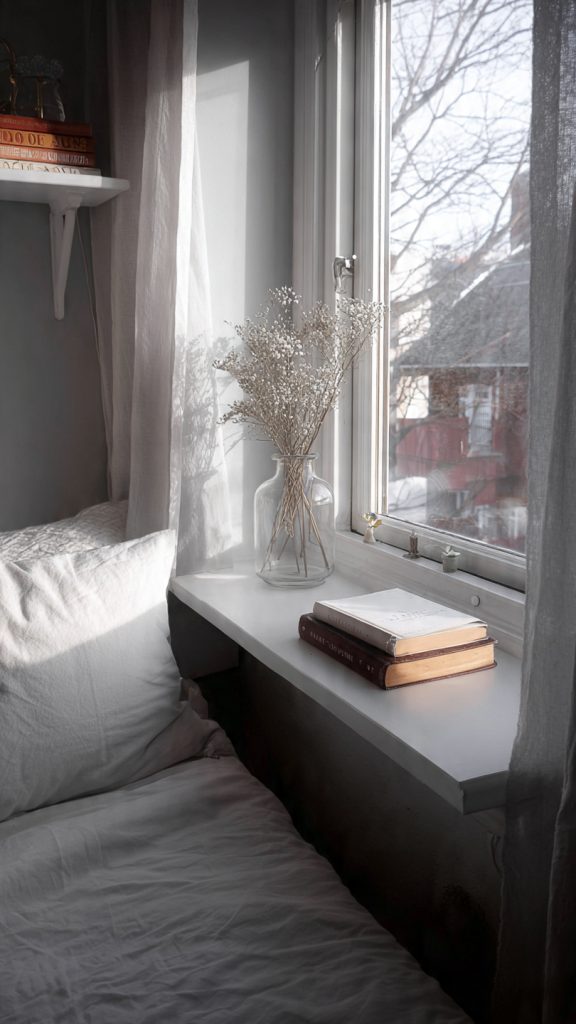
When a bed sits near a window, designers often use the window ledge as a bedside surface. This avoids adding extra furniture entirely.
This works best when kept minimal.
Why it works
Uses existing architecture
Keeps the room uncluttered
Feels intentional
Only store essentials here.
8. Slim Rolling Carts
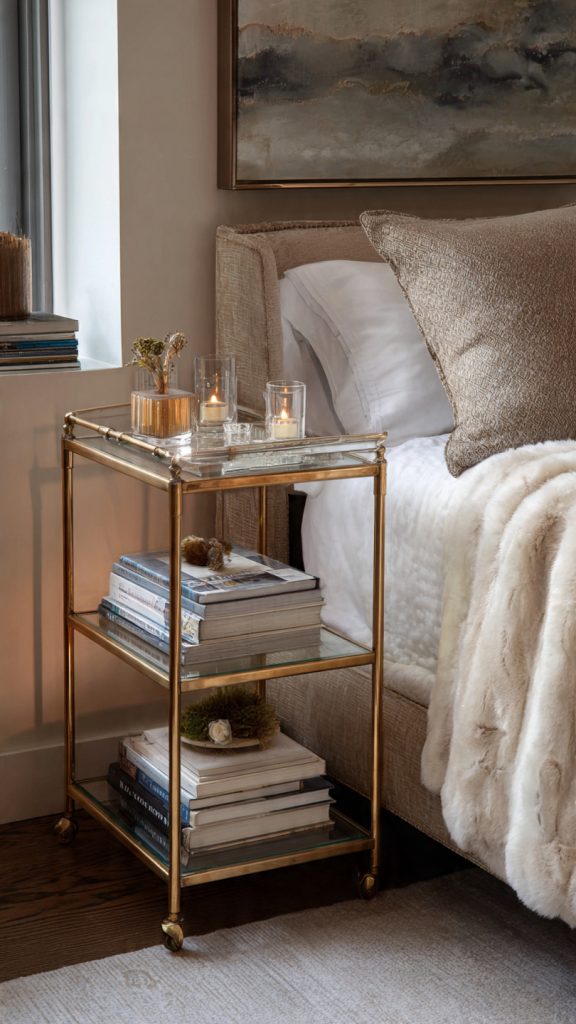
A narrow rolling cart can function as a flexible bedside surface and storage unit. Designers use these when layouts need adaptability.
Carts can be moved easily when needed.
Why it works
Adds storage without bulk
Offers flexibility
Works in tight layouts
Keep styling minimal for a clean look.
9. Wall Niches Beside the Bed
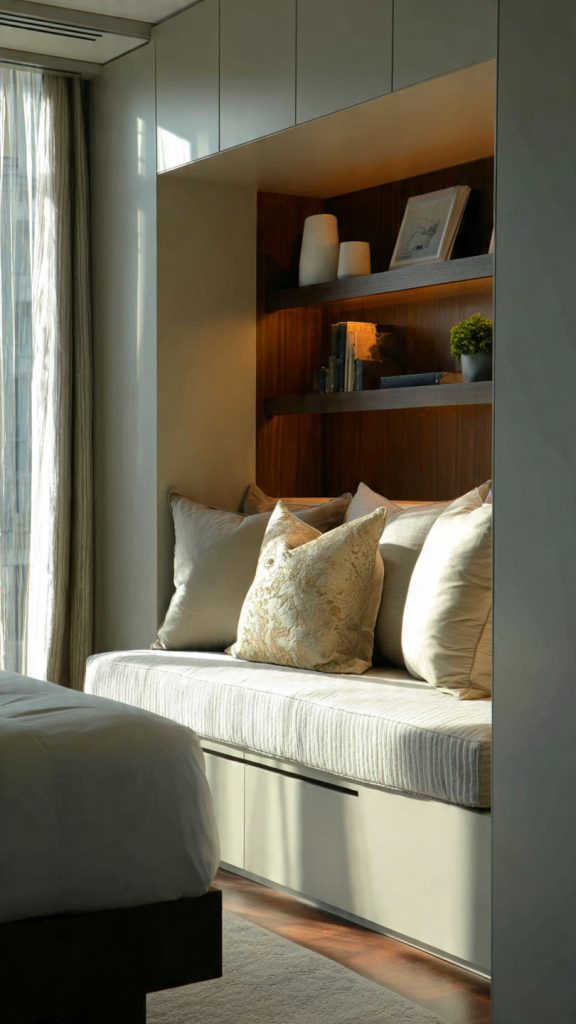
Built-in wall niches provide recessed bedside storage without protruding into the room. Designers often include these in modern or custom bedrooms.
They feel architectural and intentional.
Why it works
Preserves floor space
Feels custom
Keeps items contained
Even shallow niches are effective.
10. Minimal Floor Space with No Table at All
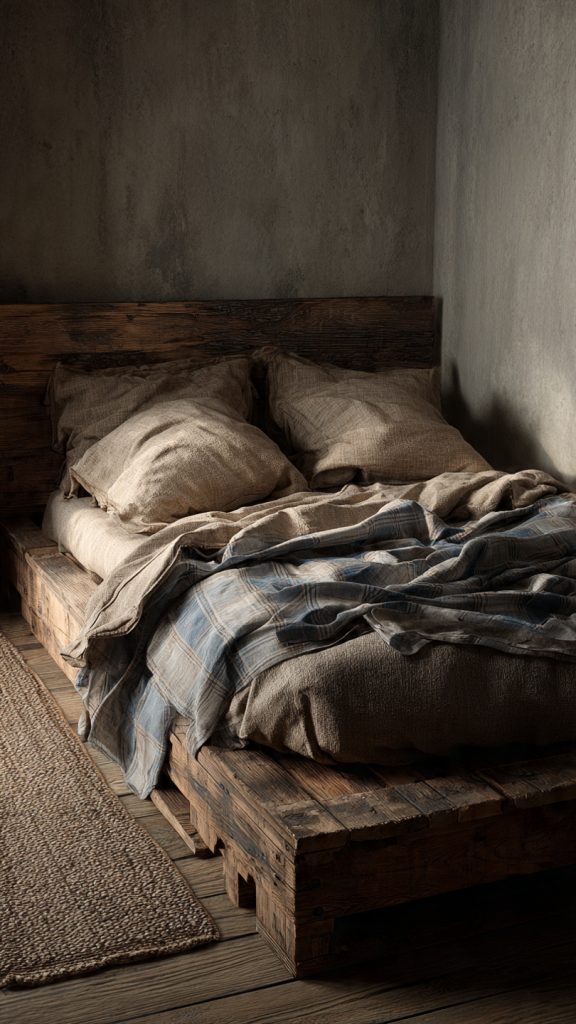
Sometimes, the best alternative is no bedside table. Designers pair wall lighting with a single shelf or niche—or nothing at all—for an ultra-minimal look.
This works well in very small bedrooms.
Why it works
Maximizes open space
Creates a calm environment
Feels deliberate
Intentional simplicity is the key.
Final Thoughts
Small bedrooms don’t need bulky furniture to function well. With thoughtful alternatives that use walls, built-ins, and multifunctional pieces, it’s possible to create a bedside setup that feels light, practical, and well-designed.
These 10 bedside table alternatives prove that smart choices—not square footage—determine how comfortable and functional a bedroom feels. With the right approach, even the smallest bedroom can feel open, intentional, and beautifully balanced.