Floating shelves are a favorite in modern interiors because they add storage and display space without visual heaviness. But without careful styling, they can quickly look cluttered, chaotic, or unfinished—especially in small homes.
Designers approach floating shelf styling with restraint. The goal isn’t to fill every inch, but to create balance, breathing room, and intention. When styled well, floating shelves feel curated, calm, and architectural rather than busy.
Below are 10 floating shelf styling ideas designers use to keep shelves looking clean, cohesive, and visually light.
1. Stick to a Limited Color Palette
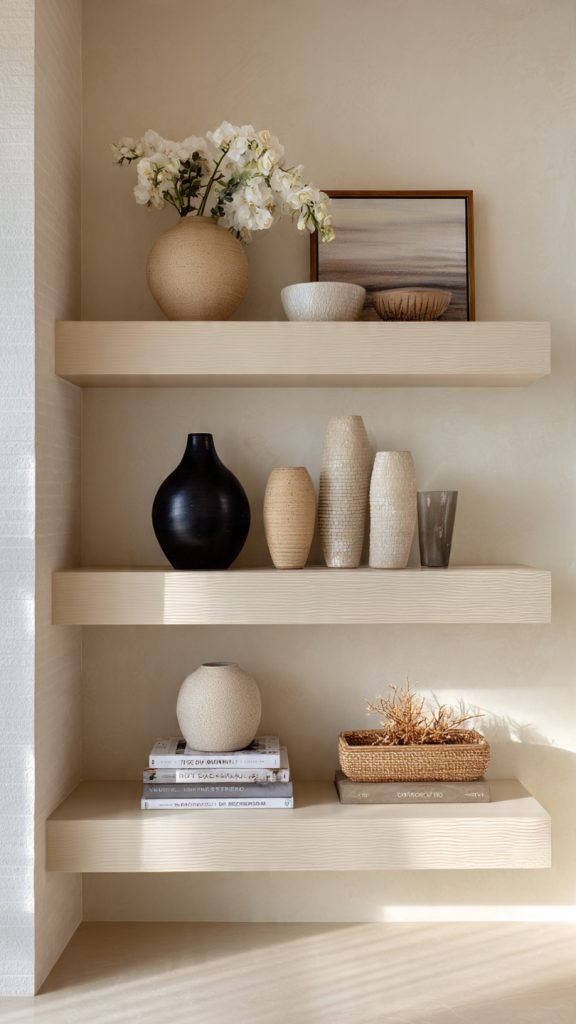
One of the easiest ways to keep floating shelves from looking cluttered is limiting the color palette. Designers often choose two to three main colors and repeat them across objects.
This creates visual cohesion and prevents shelves from feeling chaotic.
Why it works
- Reduces visual noise
- Creates a calm, curated look
- Makes shelves feel intentional
Neutral tones with subtle contrast work especially well.
2. Use the Rule of Odd Numbers
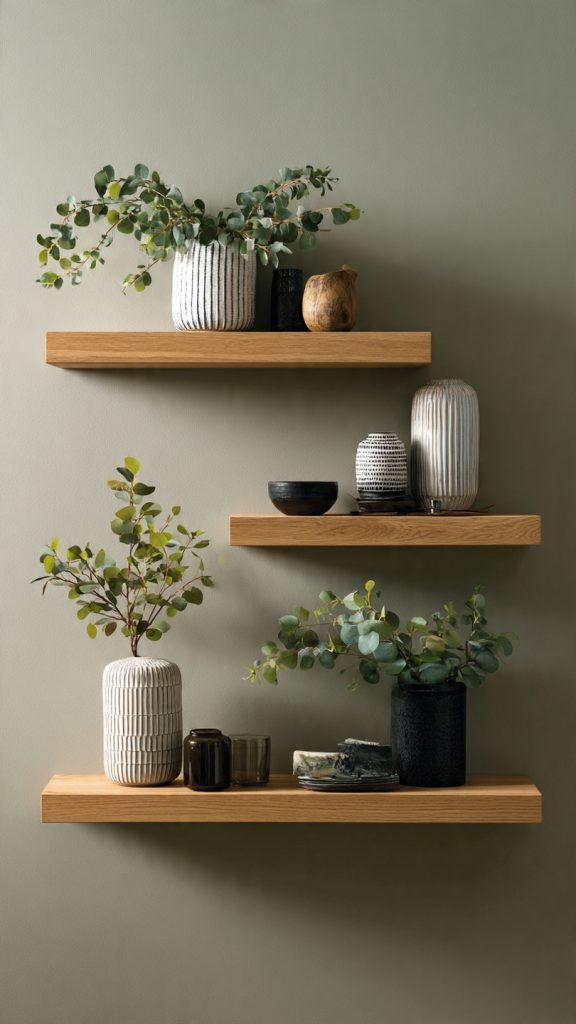
Styling in odd numbers—groups of three or five—feels more natural and balanced than even groupings. Designers use this principle to create effortless-looking arrangements.
Objects grouped in odd numbers feel less rigid and more organic.
Why it works
- Creates visual balance
- Feels relaxed and intentional
- Prevents over-styling
Vary heights and shapes within each grouping for interest.
3. Mix Vertical and Horizontal Elements
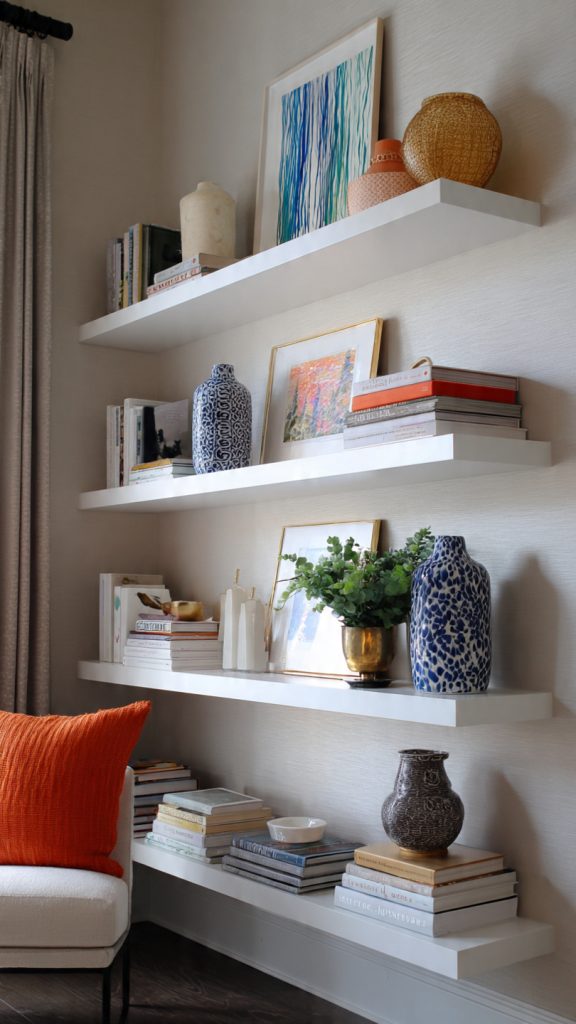
A shelf filled with only upright objects can feel stiff. Designers mix vertical items like vases or framed art with horizontal elements such as stacked books or trays.
This variation adds movement and keeps the shelf visually dynamic.
Why it works
- Adds depth and rhythm
- Prevents monotony
- Keeps the eye moving
Horizontal stacks also create platforms for smaller décor.
4. Leave Intentional Empty Space
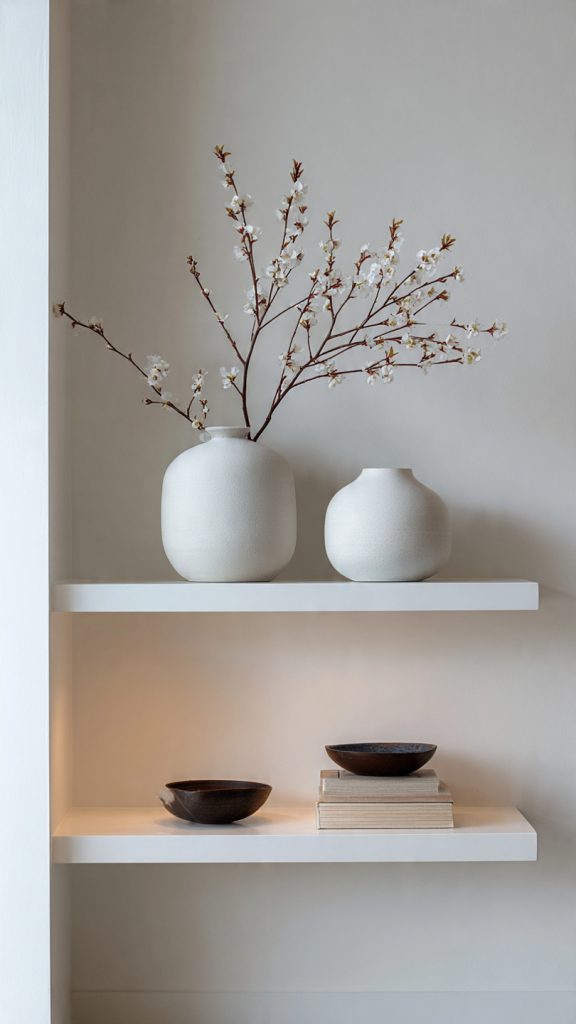
Empty space is just as important as what’s on the shelf. Designers deliberately leave breathing room between objects to keep shelves from feeling overcrowded.
Negative space allows each item to stand out.
Why it works
- Makes shelves feel lighter
- Highlights individual pieces
- Prevents visual overwhelm
Resist the urge to fill every gap.
5. Repeat Materials for Cohesion
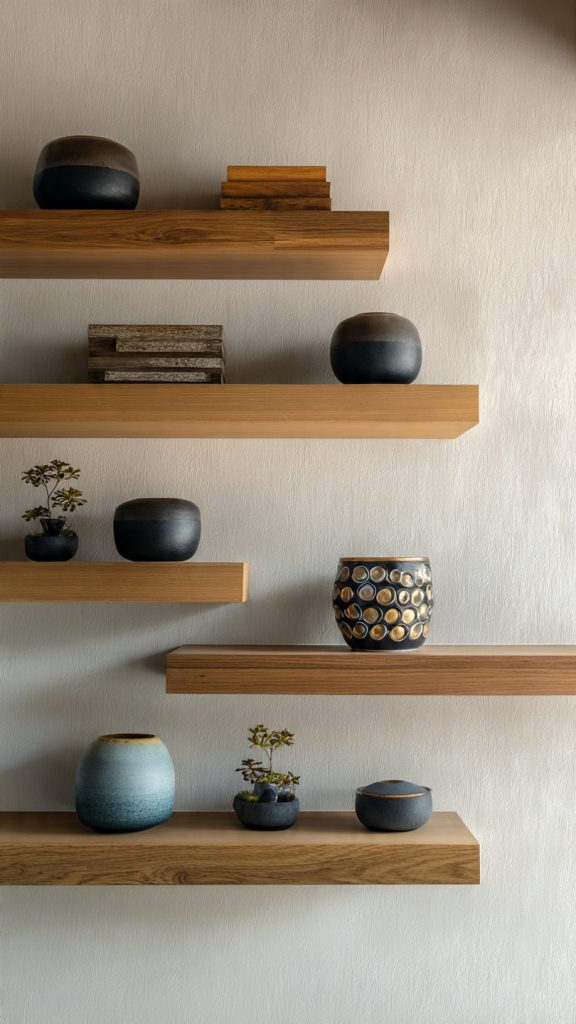
Repeating materials—such as wood, ceramic, glass, or metal—helps shelves feel cohesive even when displaying different objects.
Designers often choose one or two dominant materials and echo them throughout the shelf styling.
Why it works
- Creates unity
- Feels intentional and polished
- Avoids a mismatched look
Subtle repetition is more effective than exact matching.
6. Vary Height Without Overcrowding
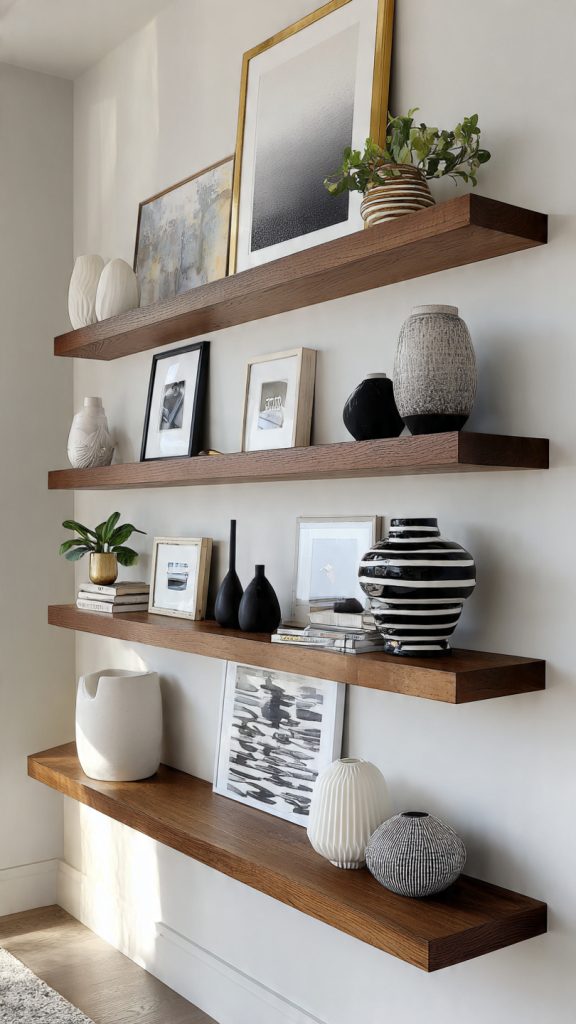
Height variation adds interest, but too many tall items can feel heavy. Designers balance taller objects with medium and low-profile pieces to maintain openness.
This keeps the shelf from feeling top-heavy or cluttered.
Why it works
- Adds visual rhythm
- Keeps shelves balanced
- Prevents crowding
Limit tall items to one or two per shelf.
7. Use Books as Styling Anchors
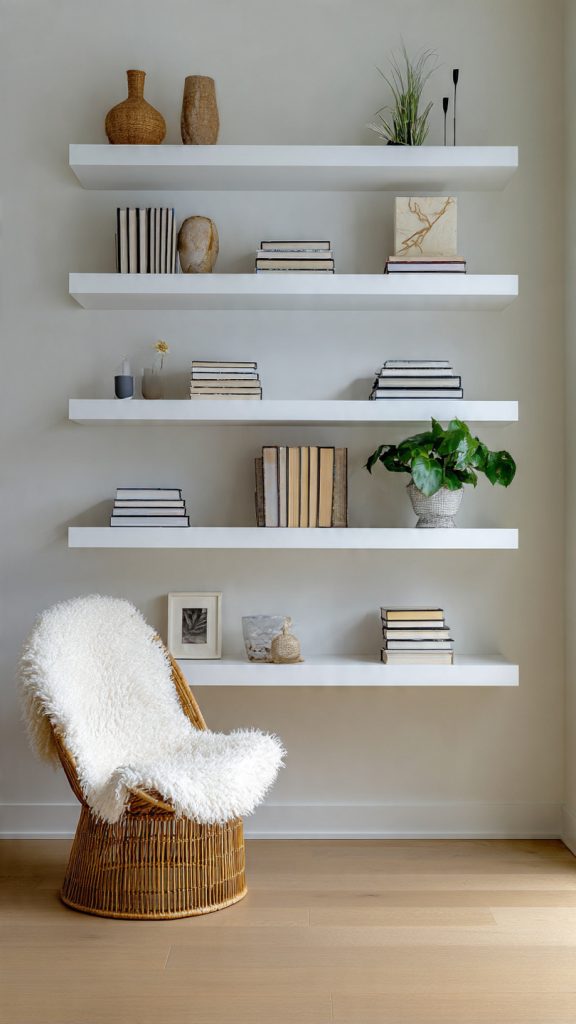
Books aren’t just for reading—they’re powerful styling tools. Designers use books to anchor shelf arrangements and add structure.
Stacks of books can ground decorative objects and create visual stability.
Why it works
- Adds structure and weight
- Makes shelves feel lived-in
- Provides natural layering
Choose books with neutral or cohesive spines for a clean look.
8. Incorporate One Organic Element
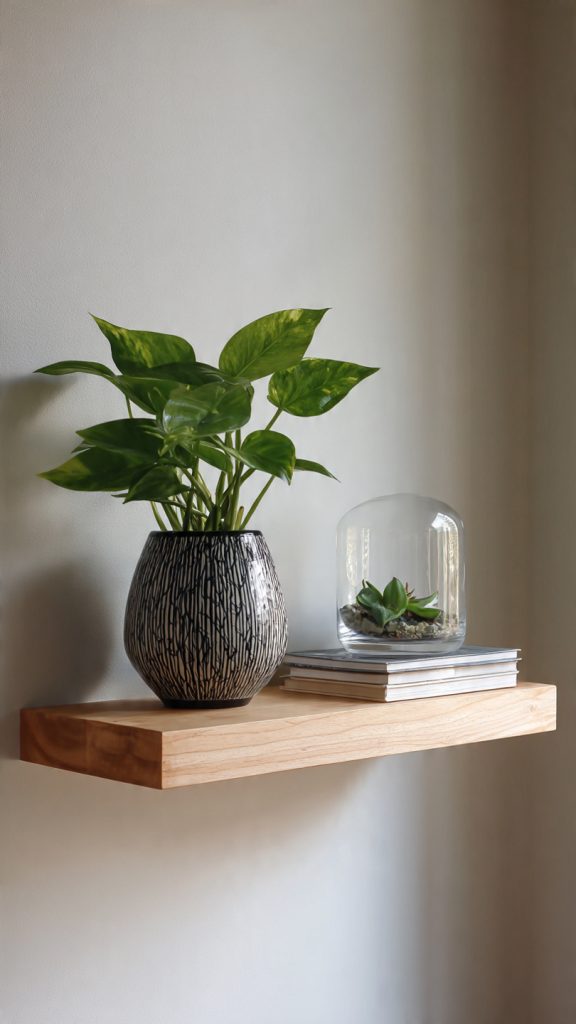
A single organic element—such as a small plant, branch, or textured object—softens the shelf and adds warmth without clutter.
Designers use these elements sparingly to avoid visual chaos.
Why it works
- Adds warmth and life
- Softens hard lines
- Keeps the shelf feeling fresh
One organic piece per shelf is often enough.
9. Keep Decor Depth in Check
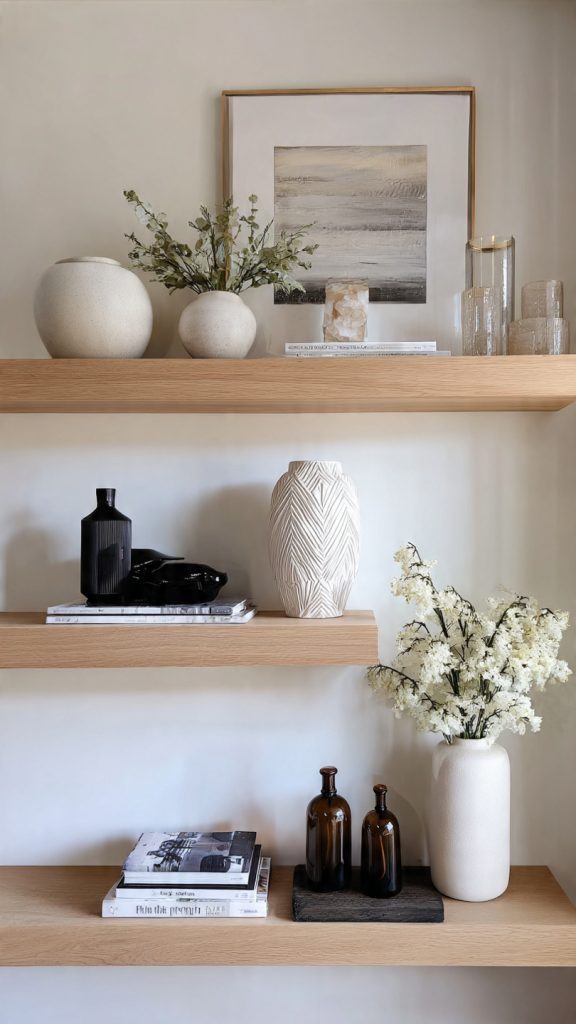
Deep or bulky décor can overwhelm floating shelves. Designers prefer shallow objects that sit closer to the wall, preserving a streamlined profile.
This is especially important in small rooms or narrow spaces.
Why it works
- Keeps shelves visually light
- Prevents a crowded look
- Maintains clean lines
Slim frames and shallow bowls work well.
10. Edit Regularly
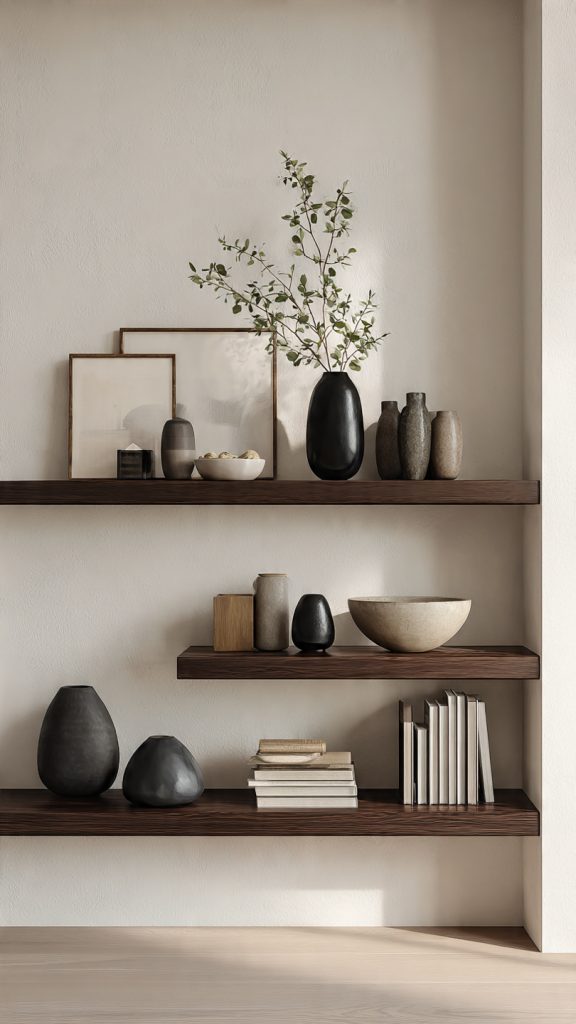
Designers regularly edit shelf styling. Removing one or two items can instantly refresh the look and restore balance.
Floating shelves benefit from occasional reassessment rather than permanent arrangements.
Why it works
- Prevents gradual clutter
- Keeps styling intentional
- Allows the space to evolve
Less is often more when it comes to shelf styling.
Final Thoughts
Floating shelves should enhance a room, not overwhelm it. With thoughtful styling, they can look clean, curated, and architectural rather than cluttered.
By focusing on color cohesion, spacing, and restraint, these 10 floating shelf styling ideas help create shelves that feel calm, intentional, and beautifully balanced.