In open-plan homes, the transition between the kitchen and dining area plays a major role in how cohesive and comfortable the space feels. A well-designed transition creates visual flow while still subtly defining each zone’s purpose.
Below are ten kitchen and dining transition ideas that work beautifully in open plans, each explained clearly and followed by why it works.
1. Use a Consistent Color Palette
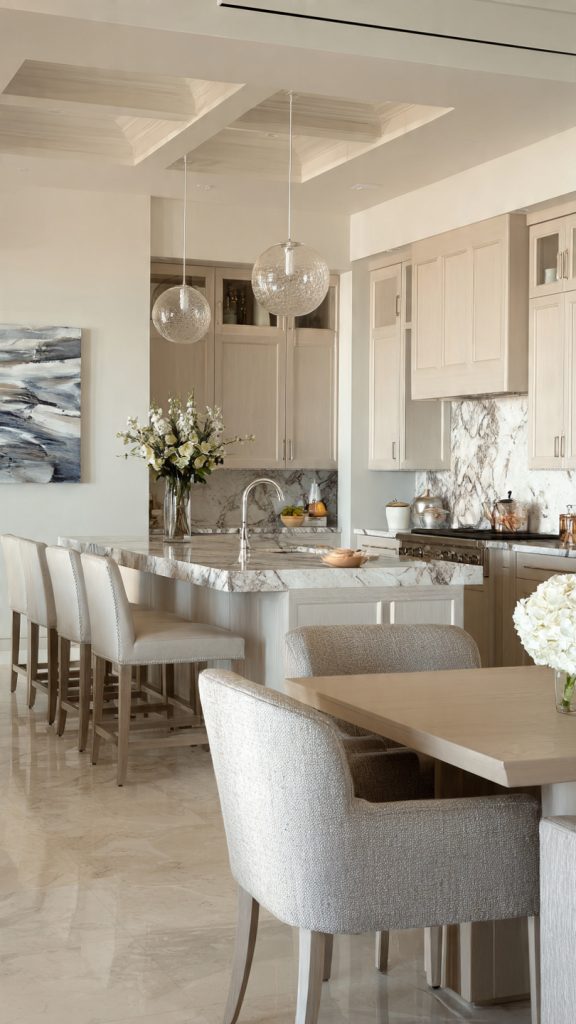
Carry the same core colors from the kitchen into the dining area through cabinetry, walls, or key furnishings.
Why it works:
A shared palette creates visual continuity and prevents the open space from feeling disjointed.
2. Define Zones With Area Rugs
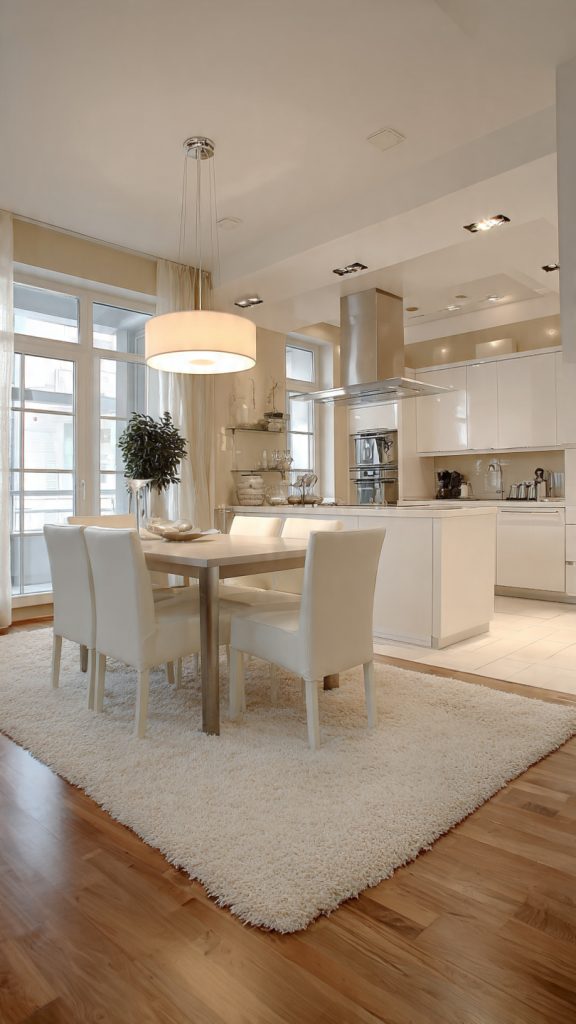
Place a rug under the dining table to distinguish it from the kitchen without adding walls or partitions.
Why it works:
Rugs clearly define zones while keeping the layout open and flexible.
3. Repeat Materials Across Both Spaces
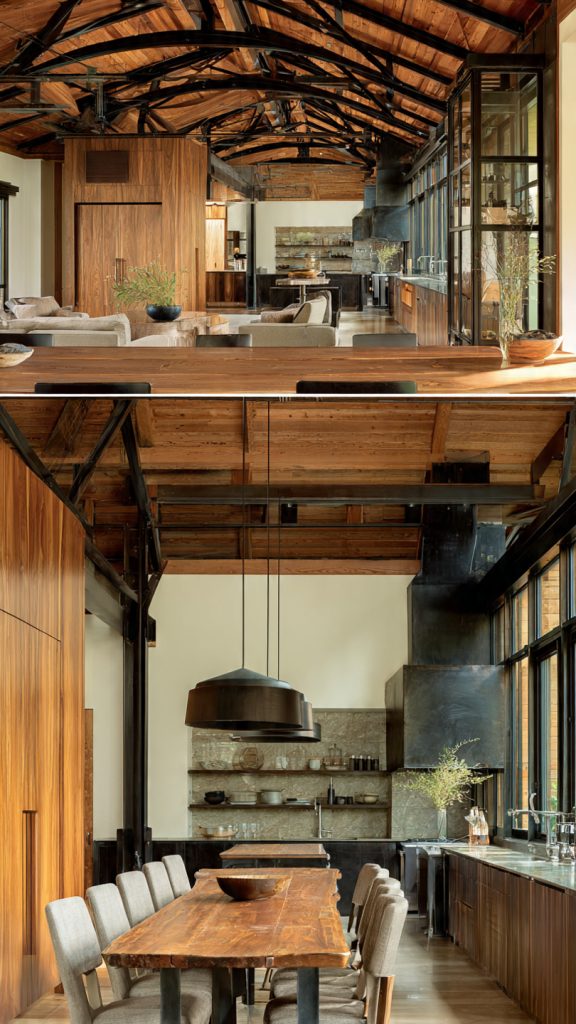
Echo materials like wood, stone, or metal in both the kitchen and dining area to visually link them.
Why it works:
Material repetition creates cohesion and makes the transition feel intentional.
4. Use Lighting to Signal Each Zone
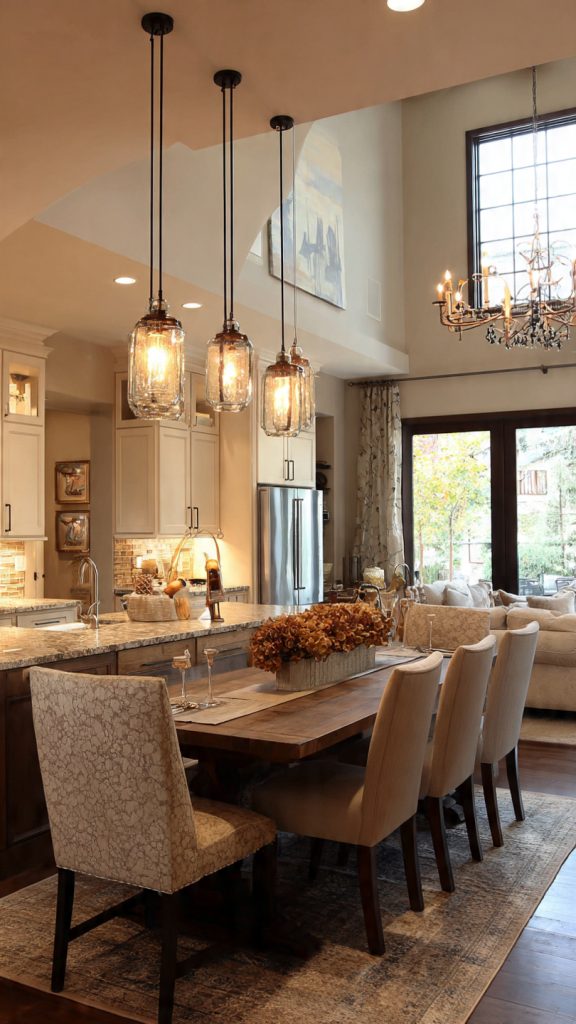
Install distinct lighting styles for each area, such as pendants over the kitchen island and a chandelier above the dining table.
Why it works:
Lighting naturally separates spaces while maintaining an open, connected feel.
5. Align Furniture With the Kitchen Layout
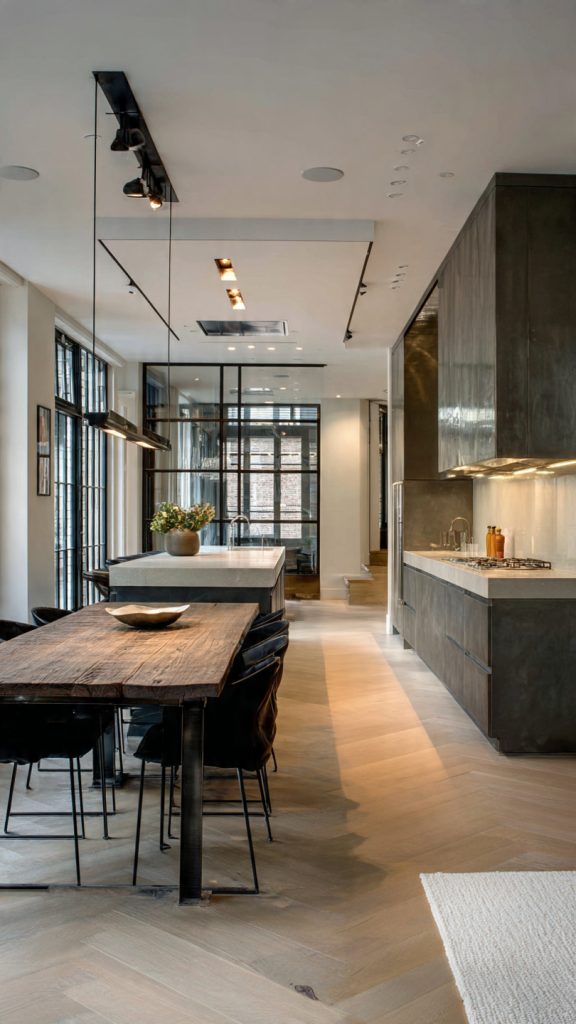
Position the dining table parallel to the kitchen island or counters to reinforce visual order.
Why it works:
Alignment improves flow and makes the transition feel seamless and organized.
6. Create a Visual Pause With a Sideboard
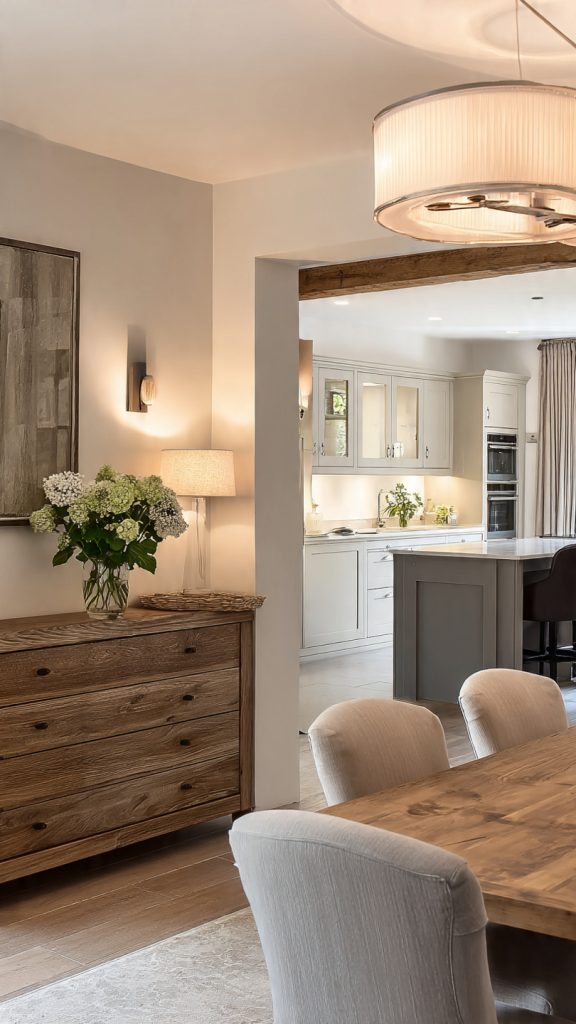
Place a sideboard or console near the dining area to act as a soft boundary between zones.
Why it works:
Furniture-based transitions define spaces without blocking light or movement.
7. Use Flooring Transitions Subtly
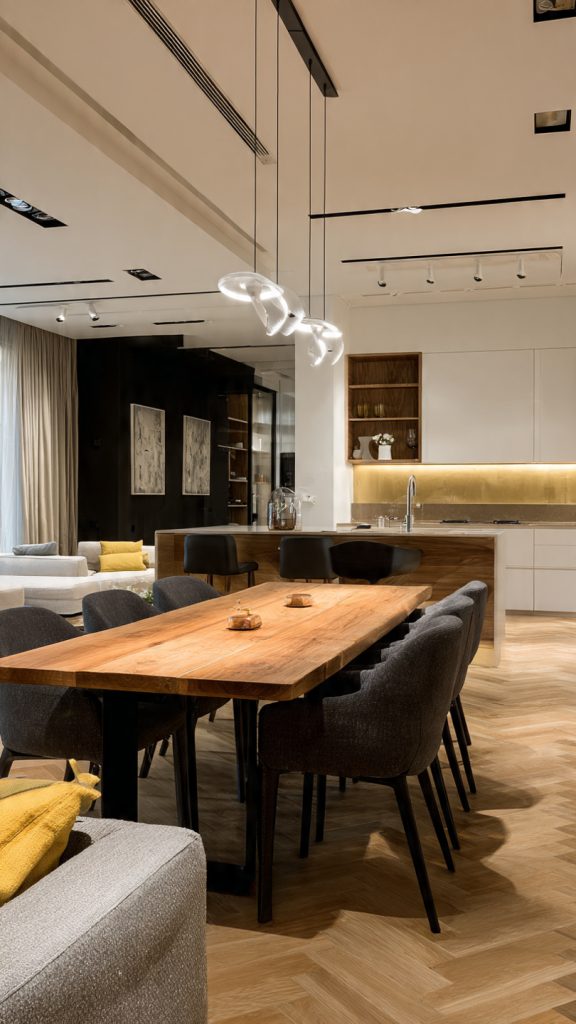
Keep flooring consistent where possible, or use subtle changes in pattern or direction to suggest separation.
Why it works:
Subtle flooring shifts define zones without breaking the open-plan concept.
8. Carry Decor Style Across Both Areas
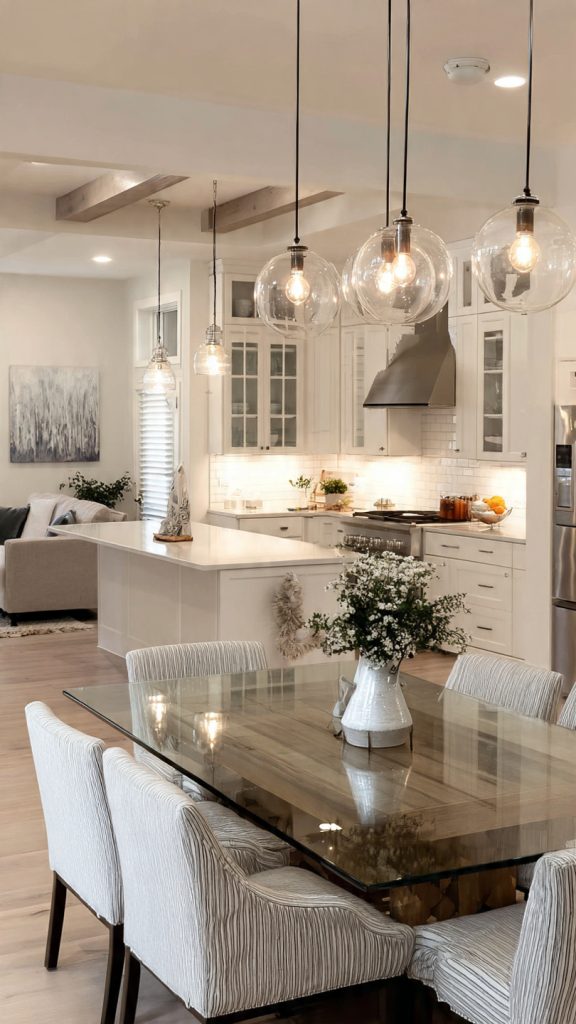
Match the overall decor style—modern, farmhouse, minimalist—so the spaces feel unified.
Why it works:
Consistent styling prevents visual tension and keeps the open plan cohesive.
9. Use Architectural Details as Dividers
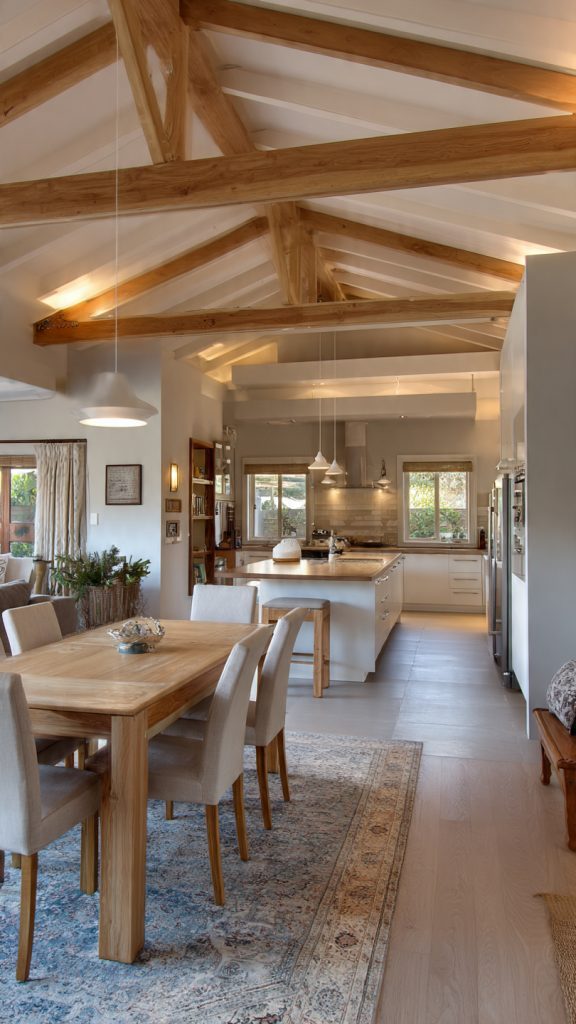
Elements like ceiling beams, half walls, or columns can subtly separate areas while maintaining openness.
Why it works:
Architectural cues provide structure without closing off the space.
10. Keep Sightlines Open
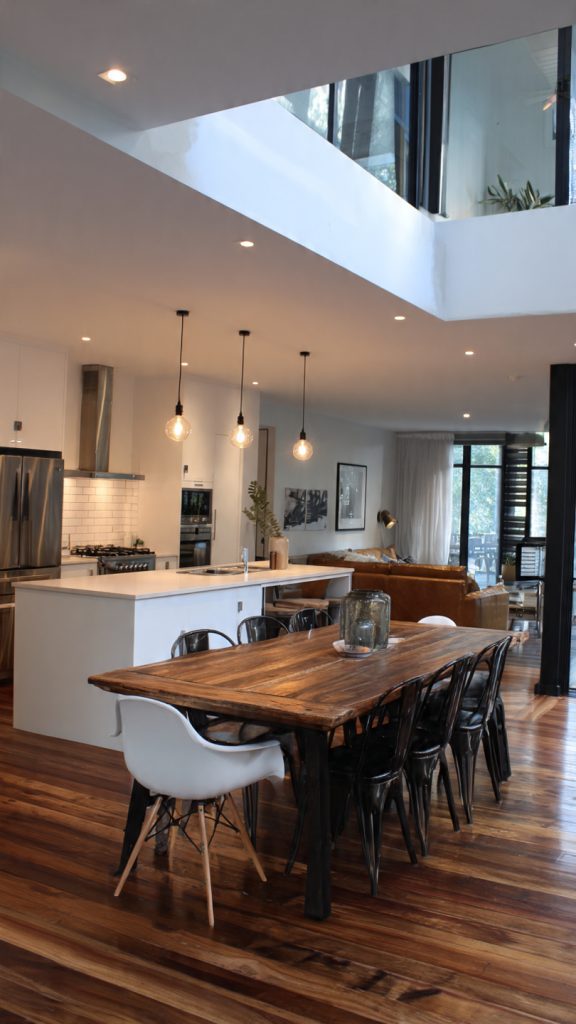
Avoid tall furniture or bulky decor between the kitchen and dining area to maintain clear views.
Why it works:
Open sightlines preserve the airy feel that makes open plans desirable.
Conclusion
Successful kitchen and dining transitions in open plans rely on balance rather than separation. By using color, materials, layout, and lighting thoughtfully, you can create distinct yet harmonious zones that flow naturally together.