Minimal nightstands can easily cross the line from calm to unfinished. When there’s too little on display, the space can feel cold or accidental rather than intentional. The difference between minimal and empty comes down to balance, proportion, and purposeful choices.
Designers style nightstands as quiet focal points. Each item serves a function, adds texture, or anchors the composition. Nothing is random—and nothing is excessive.
Below are 10 nightstand styling ideas that keep the look minimal while still feeling complete, warm, and thoughtfully designed.
1. Start with One Functional Anchor Item
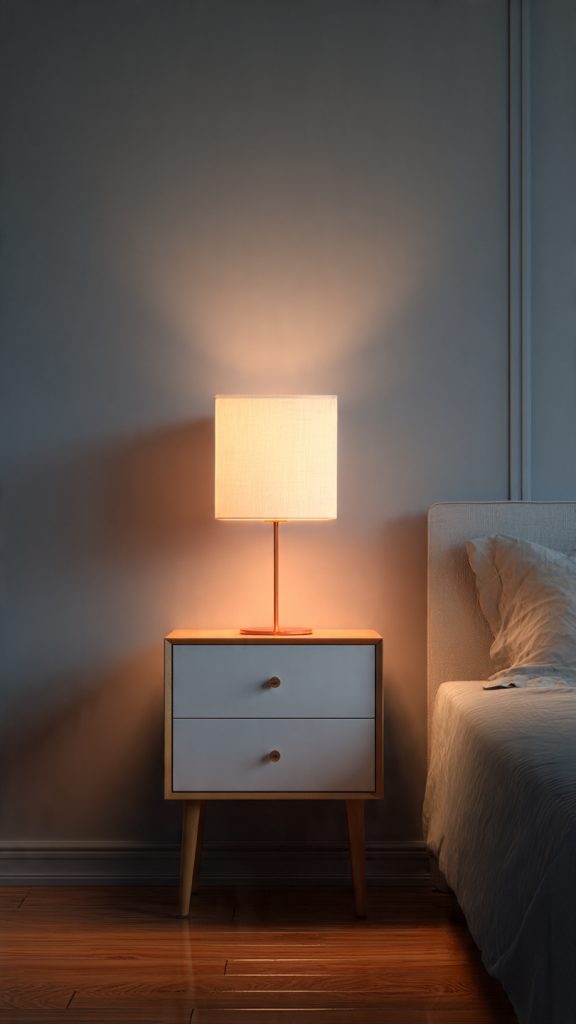
Every minimal nightstand needs an anchor. Designers typically choose one main item—usually a lamp, sconce-adjacent object, or sculptural light—to ground the space.
This gives the nightstand purpose instantly.
Why it works
Creates visual structure
Prevents the surface from feeling bare
Anchors the styling
Everything else should support this piece.
2. Limit Styling to Two or Three Items Maximum
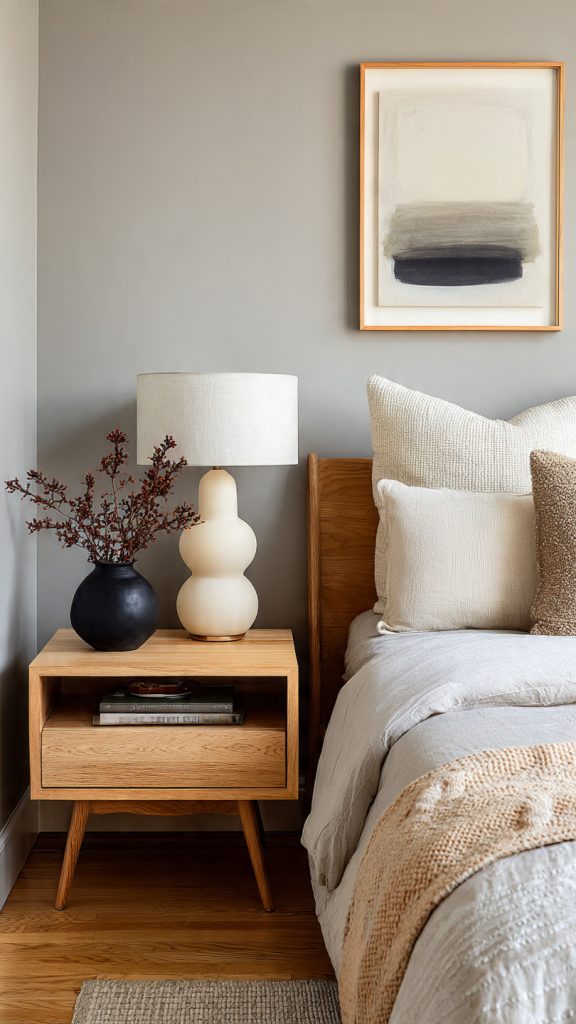
Minimal styling relies on restraint. Designers rarely place more than two or three items on a nightstand.
More than that starts to feel cluttered.
Why it works
Keeps the look calm
Maintains negative space
Feels intentional
Less surface coverage looks more refined.
3. Use Height Variation for Visual Interest
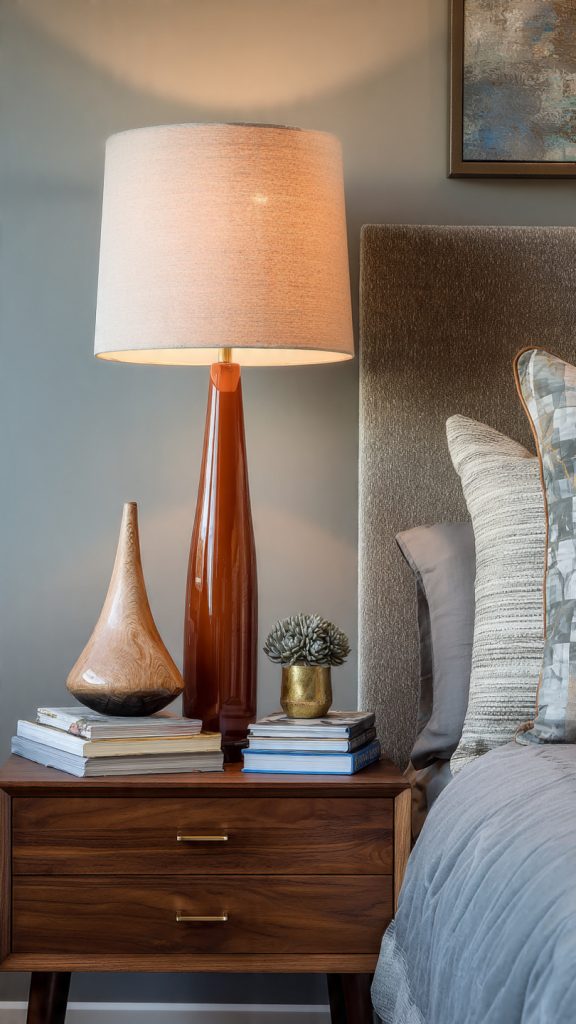
An empty nightstand often lacks height contrast. Designers mix one tall item with one low or flat piece to create balance.
This adds dimension without adding clutter.
Why it works
Creates visual movement
Feels layered, not flat
Adds polish
Avoid items that are all the same height.
4. Choose One Personal Item Only
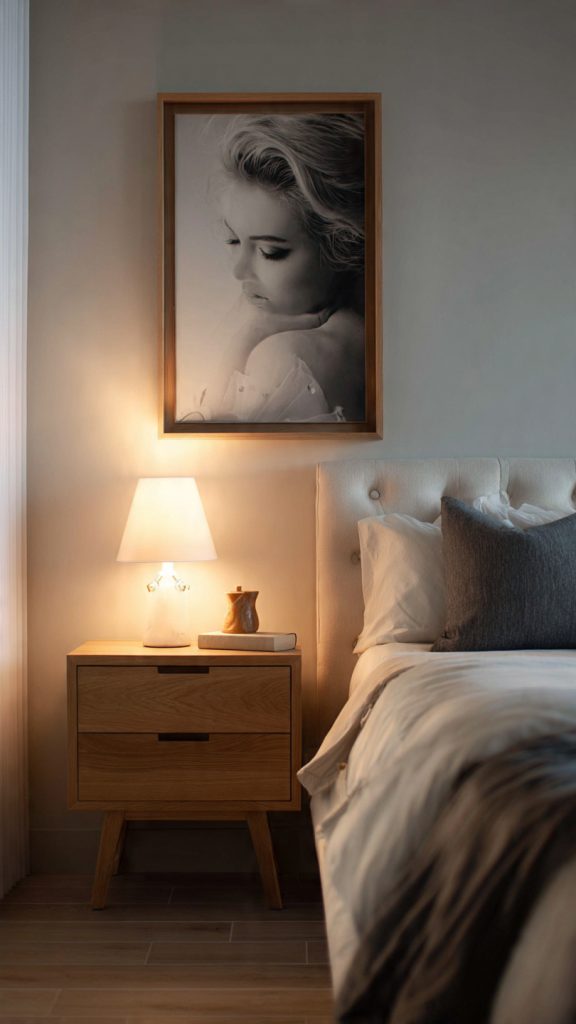
Minimal doesn’t mean impersonal. Designers include one meaningful object—a book, framed photo, or keepsake—to make the space feel lived-in.
One is enough.
Why it works
Adds warmth
Prevents the space from feeling sterile
Keeps styling intentional
Too many personal items disrupt the calm.
5. Use Trays to Define the Surface
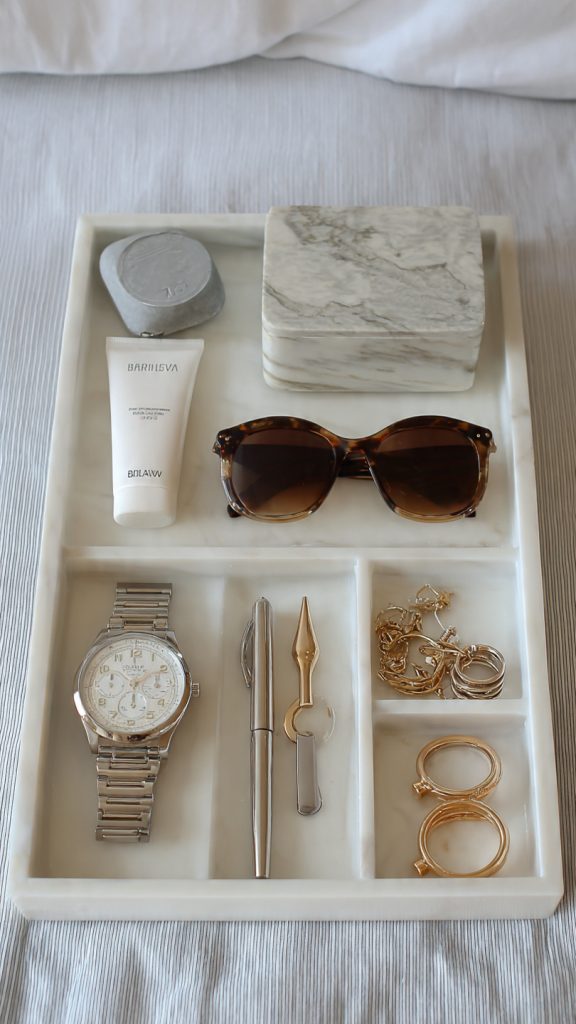
A small tray turns loose items into a single, cohesive grouping. Designers use trays to visually organize even just one or two objects.
This makes the setup feel deliberate.
Why it works
Creates boundaries
Adds structure
Keeps items from feeling scattered
Low-profile trays work best.
6. Keep Color Palettes Soft and Restrained
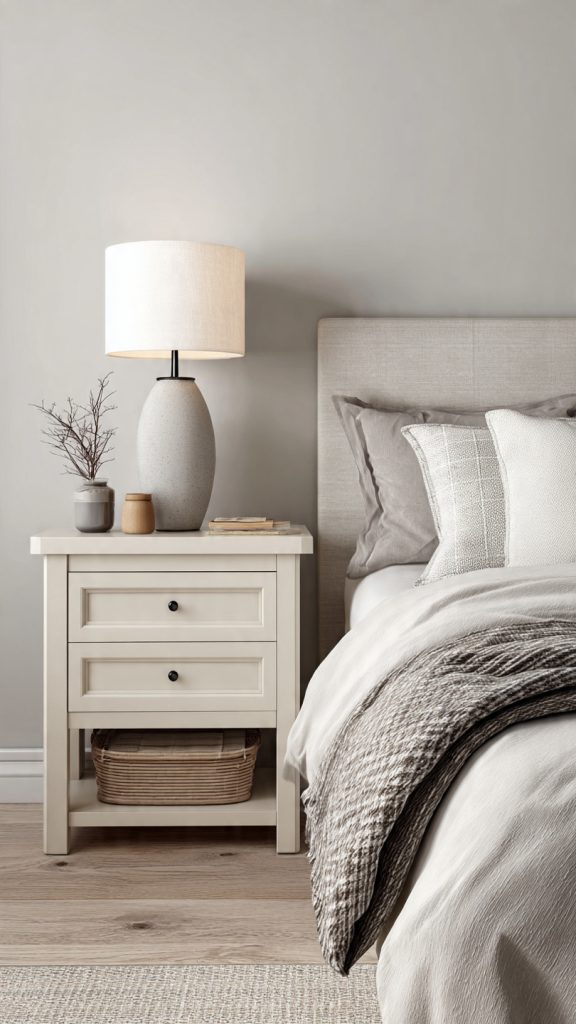
Minimal nightstands rely on quiet colors. Designers stick to neutral or muted tones that blend with the bedroom palette.
Color consistency keeps the look elevated.
Why it works
Reduces visual noise
Feels cohesive
Enhances calm
Texture matters more than color here.
7. Add One Natural Element
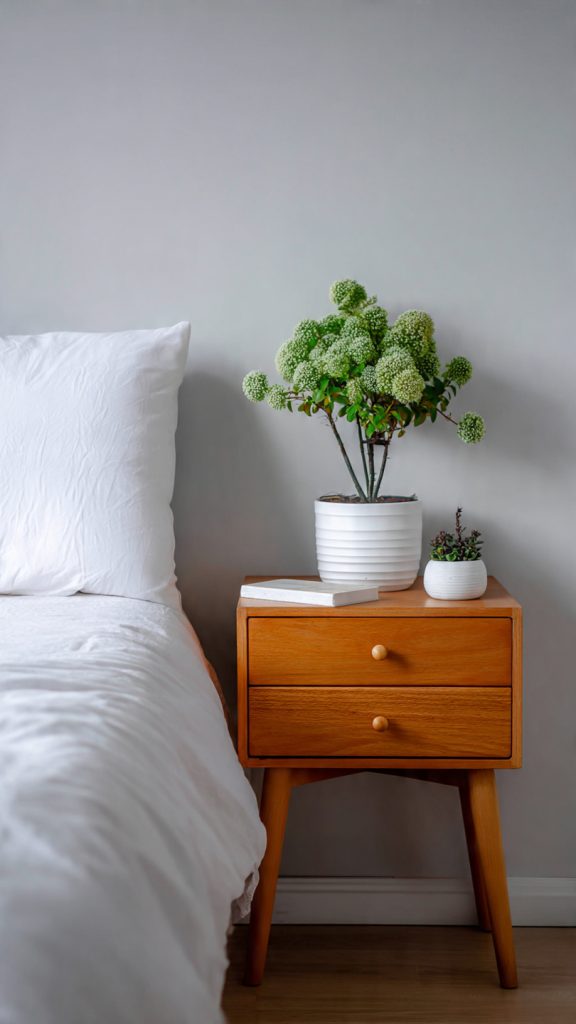
A small plant, branch, or natural material adds softness to minimal styling. Designers use greenery sparingly to keep the look balanced.
This prevents the nightstand from feeling stark.
Why it works
Adds life and warmth
Softens hard lines
Feels intentional
One natural element is enough.
8. Leave Negative Space on Purpose
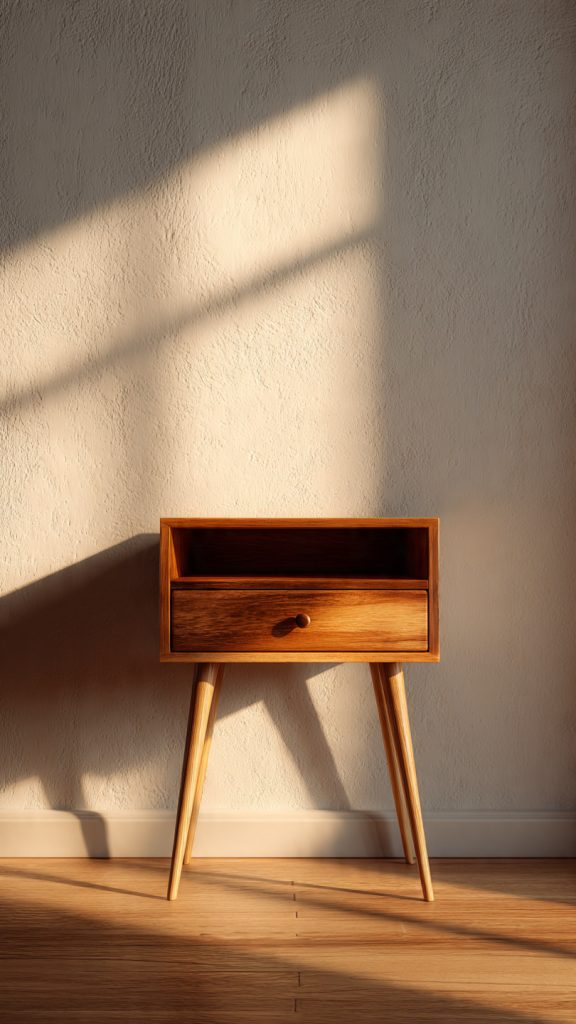
A minimal nightstand should never be fully filled. Designers intentionally leave part of the surface empty to let the styling breathe.
Empty space is part of the design.
Why it works
Makes the styling feel intentional
Prevents overcrowding
Signals restraint
Crowding kills minimalism.
9. Match Styling to Nightstand Scale
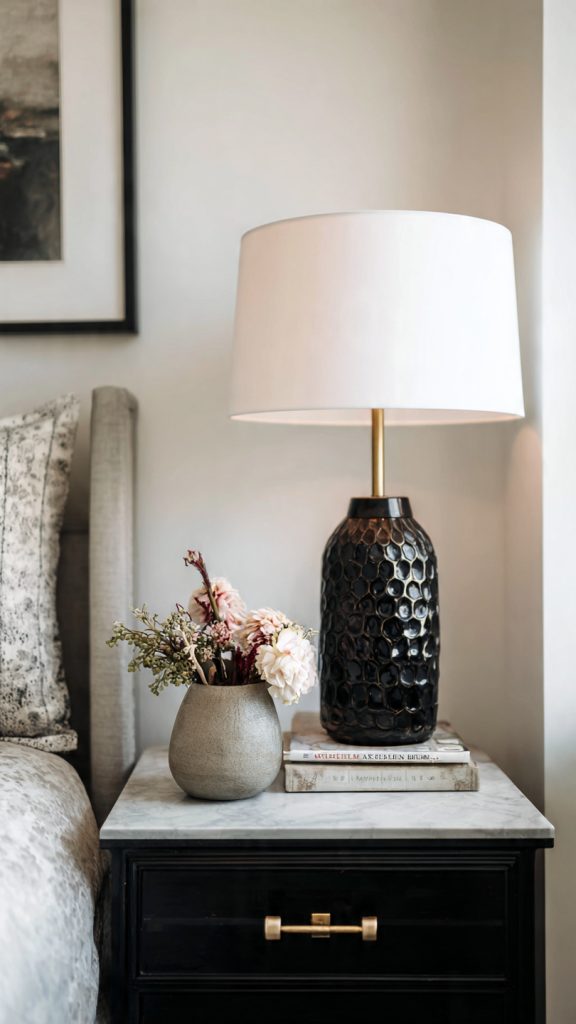
Oversized décor on a small nightstand—or tiny objects on a large one—makes the setup feel off. Designers always match item scale to furniture size.
Proportion matters more than quantity.
Why it works
Keeps the look balanced
Prevents awkward emptiness
Feels thoughtfully styled
Scale mistakes make minimalism look accidental.
10. Edit and Refresh Occasionally
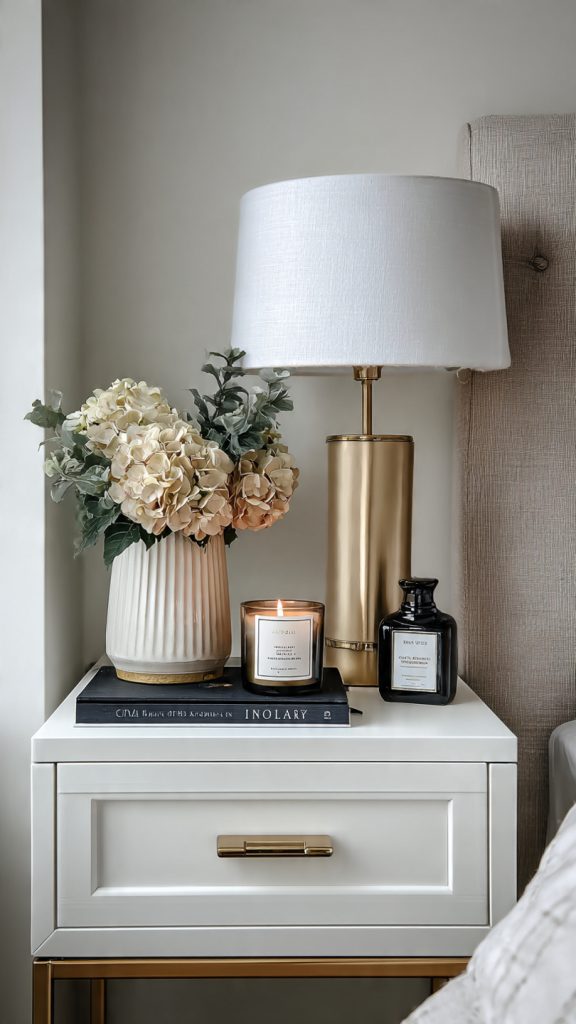
Minimal styling requires maintenance. Designers revisit nightstands periodically to remove items that no longer serve a purpose.
Editing keeps the look intentional.
Why it works
Prevents gradual clutter
Maintains a clean look
Keeps styling fresh
If it’s not used or loved, it goes.
Final Thoughts
A minimal nightstand shouldn’t feel empty—it should feel considered. When every item has a reason to be there and space is left intentionally open, the result is calm, warm, and effortlessly refined.
These 10 nightstand styling ideas show that minimal design isn’t about removing everything—it’s about choosing the right few things and letting them breathe. With thoughtful restraint, even the simplest nightstand can feel complete and beautifully styled.