Room dividers are often associated with temporary fixes—folding screens, awkward curtains, or makeshift solutions that feel like an afterthought. But when done right, a room divider can become a design feature in its own right, adding structure, style, and function without sacrificing flow.
Whether you’re working with an open-plan home, a studio apartment, or a large multifunctional room, the right divider can define zones while still feeling permanent and intentional.
Below are 10 room divider ideas that look stylish, thoughtfully designed, and far from temporary.
1. Open Shelving as a Functional Divider
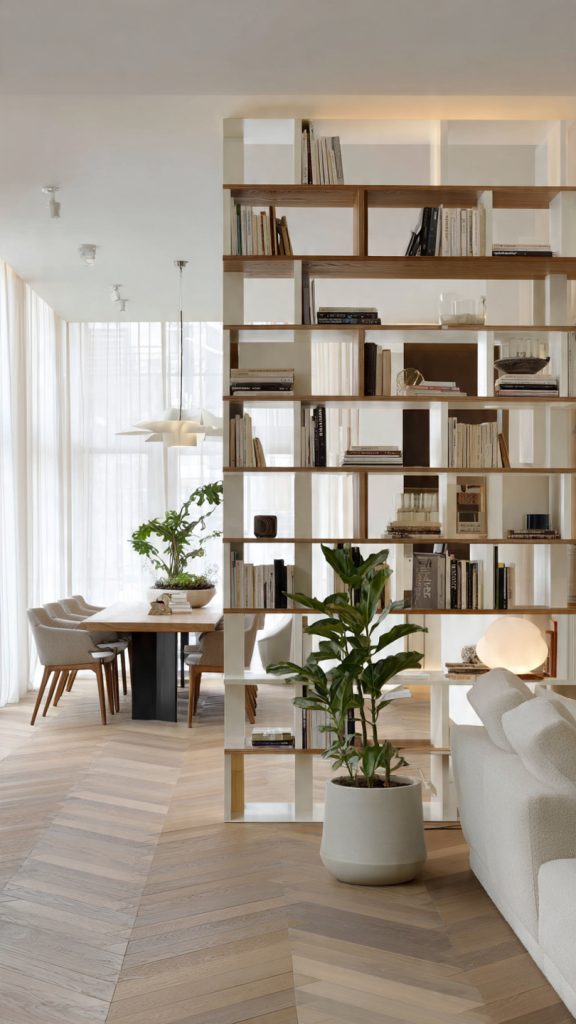
Open shelving is one of the most versatile and design-forward ways to divide a room. It creates separation while allowing light to pass through, keeping the space open and connected.
Used between living and dining areas or between a bedroom and workspace, shelving adds storage and display opportunities without feeling bulky.
Why it works
- Feels built-in rather than temporary
- Adds storage and visual interest
- Maintains openness and light
Styling shelves carefully keeps the divider looking intentional rather than cluttered.
2. Slatted Wood Partitions
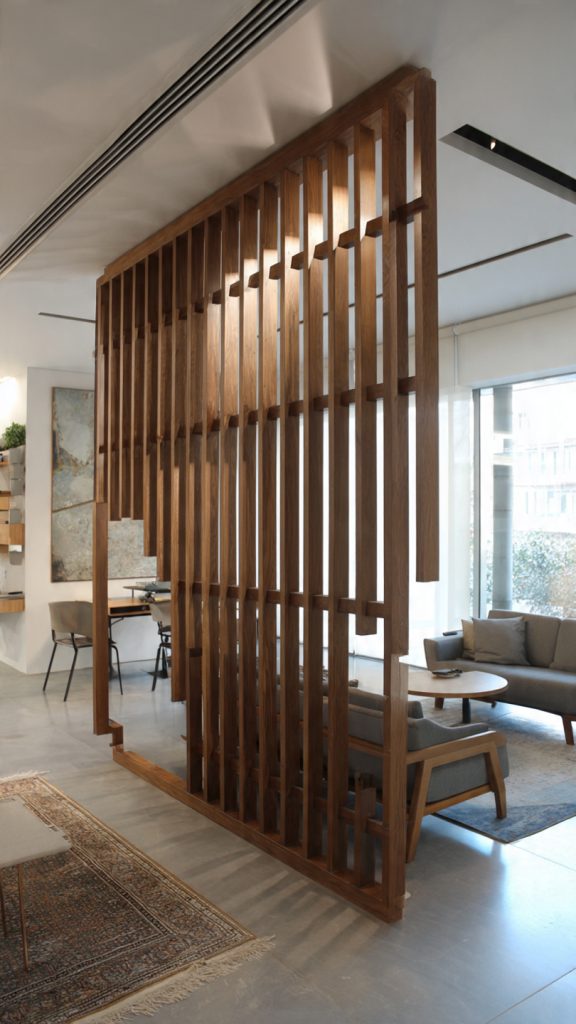
Vertical wood slats create a sense of structure while maintaining transparency. This type of divider feels architectural and custom, making it ideal for modern, Scandinavian, or minimalist interiors.
Slatted dividers define space without fully enclosing it, offering privacy and visual rhythm at the same time.
Why it works
- Adds texture and warmth
- Looks custom and permanent
- Allows light to flow through
Consistent spacing and quality materials elevate the look.
3. Half Walls or Pony Walls
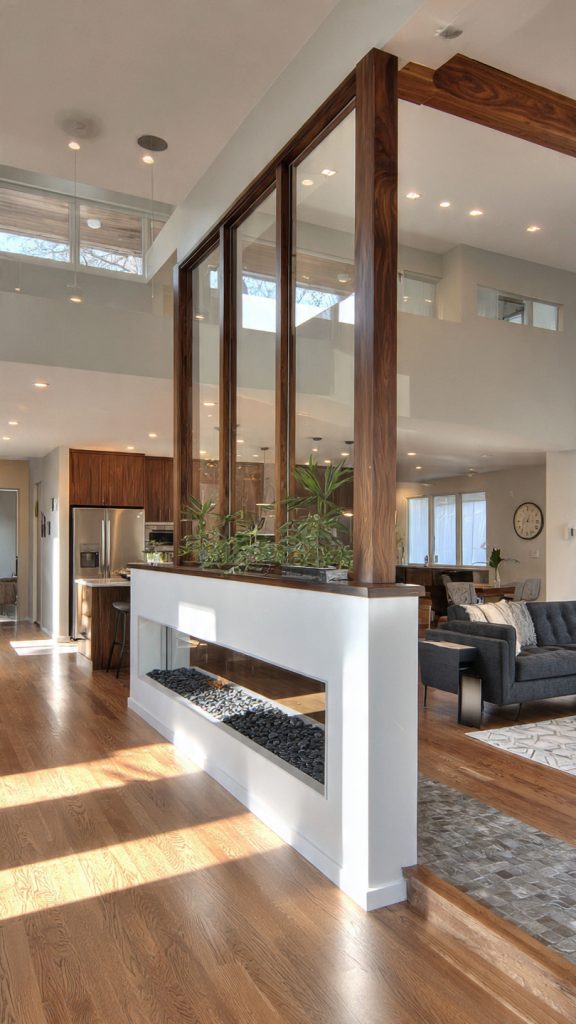
A half wall provides clear separation without cutting the room in half visually. It’s especially effective for defining living and dining areas or separating entryways from main living spaces.
Unlike full walls, half walls maintain openness while offering a strong sense of structure.
Why it works
- Feels architectural and intentional
- Preserves light and sightlines
- Works across many design styles
The top of the wall can double as a ledge or display surface.
4. Built-In Cabinets or Sideboards
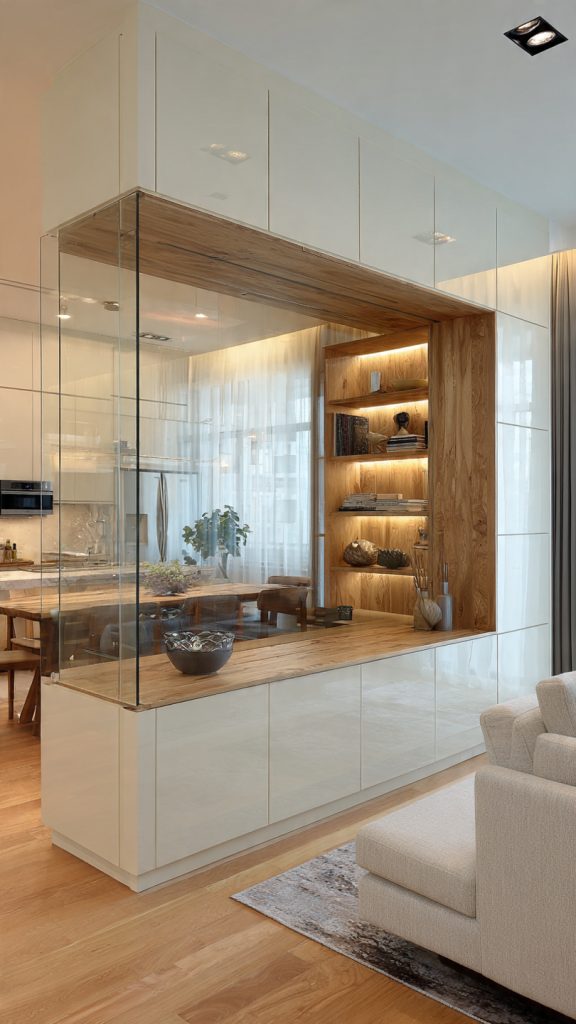
Built-in cabinetry creates a divider that feels permanent and purposeful. Used between zones, it adds storage while visually anchoring the space.
This approach works well in open-plan layouts where storage is limited but definition is needed.
Why it works
- Combines function and separation
- Feels intentional and custom
- Adds visual weight without clutter
Finishes should complement surrounding furniture for a cohesive look.
5. Glass or Metal-Framed Partitions
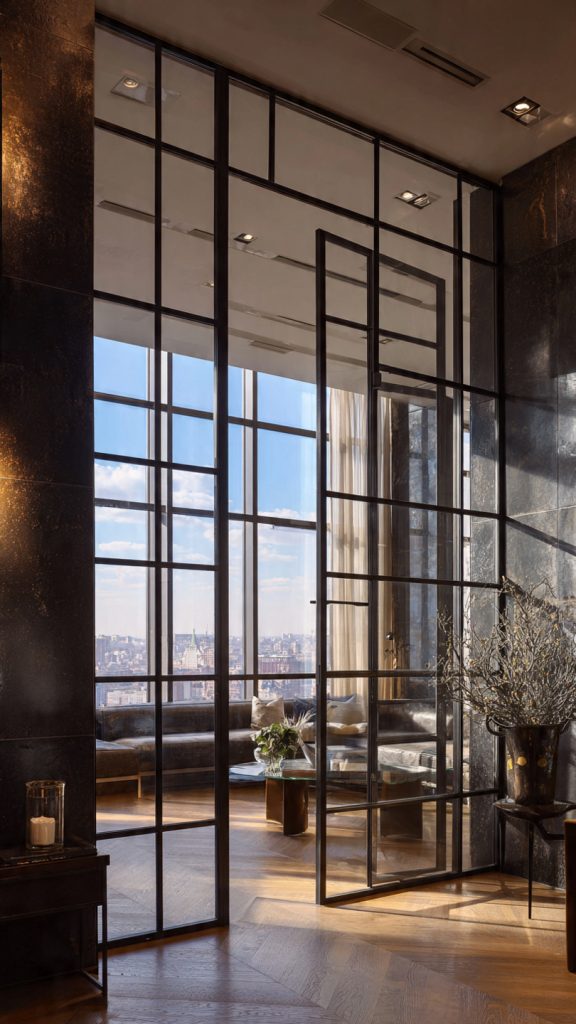
Glass dividers—especially with slim metal frames—create separation without blocking light. They’re ideal for dividing workspaces, dining areas, or bedrooms while keeping the room visually open.
This style feels architectural and polished rather than temporary.
Why it works
- Maintains openness
- Adds a modern, elevated feel
- Defines space without heaviness
Clear or fluted glass can be chosen depending on privacy needs.
6. Curtains Done the Right Way
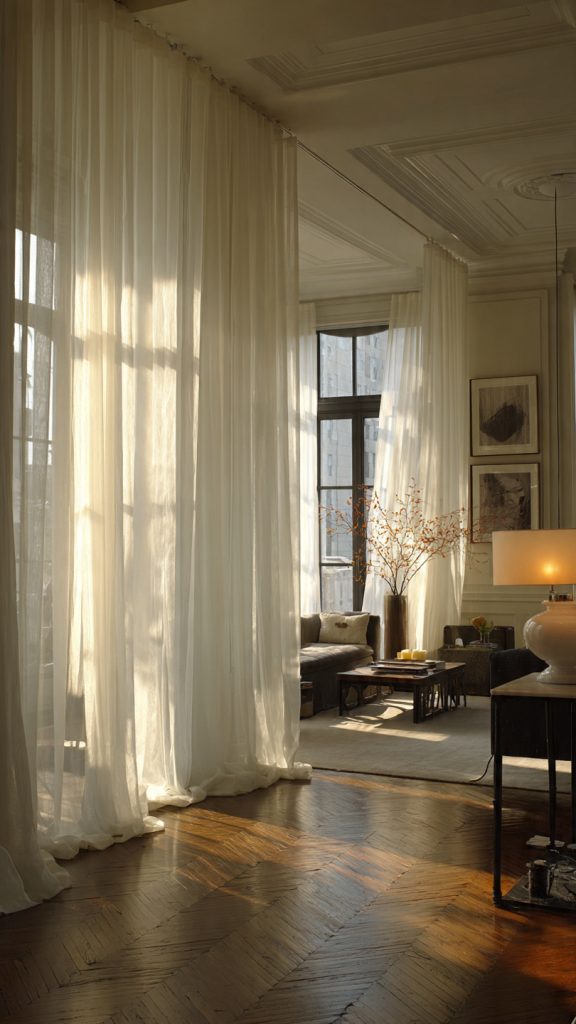
Curtains don’t have to feel makeshift. When mounted ceiling-to-floor on proper tracks or rods, they create a soft yet intentional division.
High-quality fabrics and thoughtful placement make curtains feel like a design choice, not a last resort.
Why it works
- Flexible and adaptable
- Adds softness and texture
- Can be opened or closed as needed
Neutral tones and heavier fabrics elevate the look.
7. Console Tables and Low Furniture Dividers
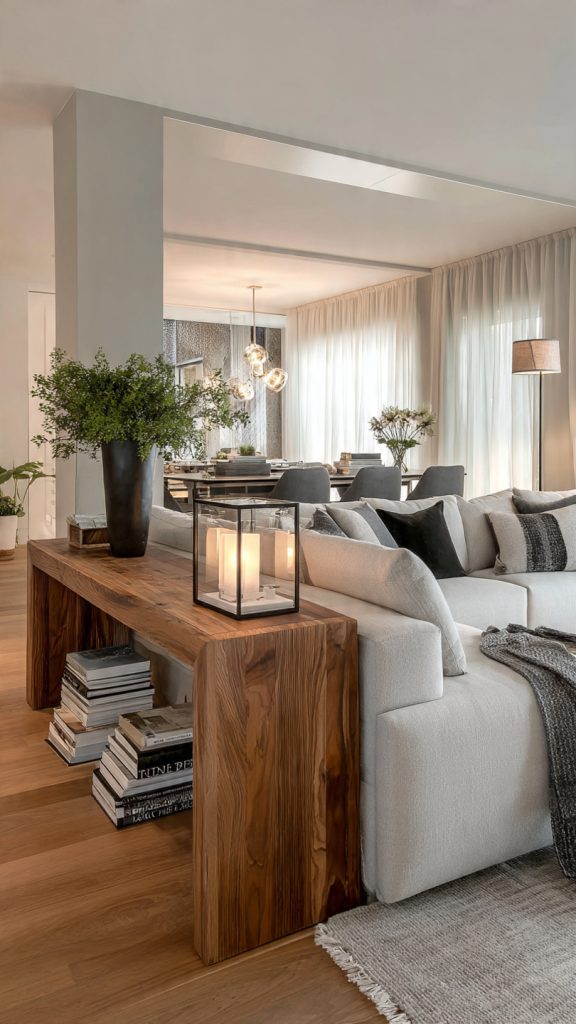
Low furniture pieces like console tables, credenzas, or benches can subtly define zones without blocking views. Positioned behind sofas or between areas, they add function while maintaining openness.
This approach is ideal for smaller spaces.
Why it works
- Keeps sightlines open
- Adds storage or display space
- Feels integrated into the layout
Low dividers should align with nearby furniture for cohesion.
8. Statement Plants or Green Dividers
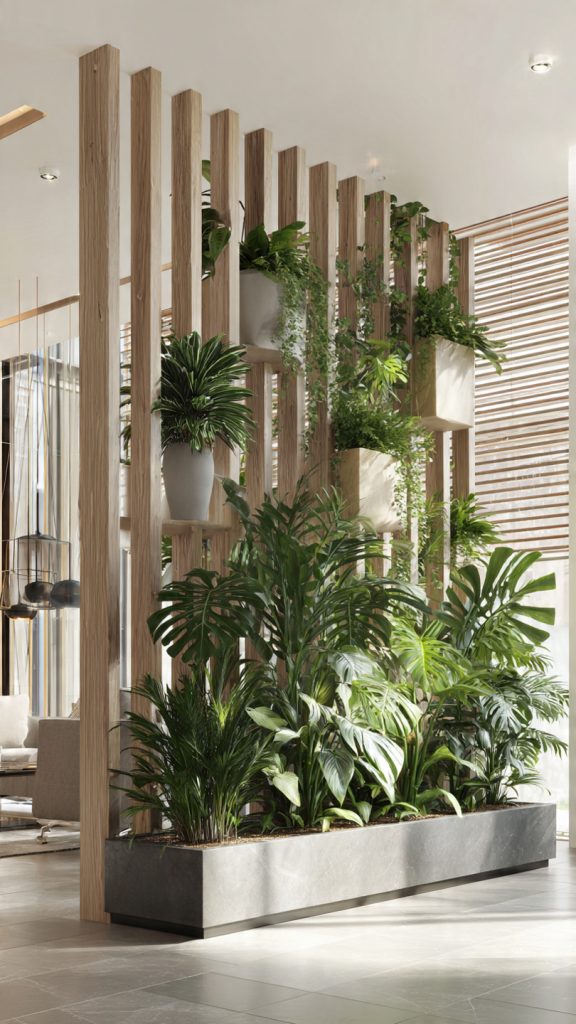
Large plants or grouped greenery can act as natural dividers. Tall plants, planters, or plant walls define zones while bringing life into the space.
This option feels organic and intentional when done with scale and repetition.
Why it works
- Softens the space
- Adds visual separation naturally
- Enhances warmth and comfort
Using consistent planters keeps the look polished.
9. Material Changes as Invisible Dividers
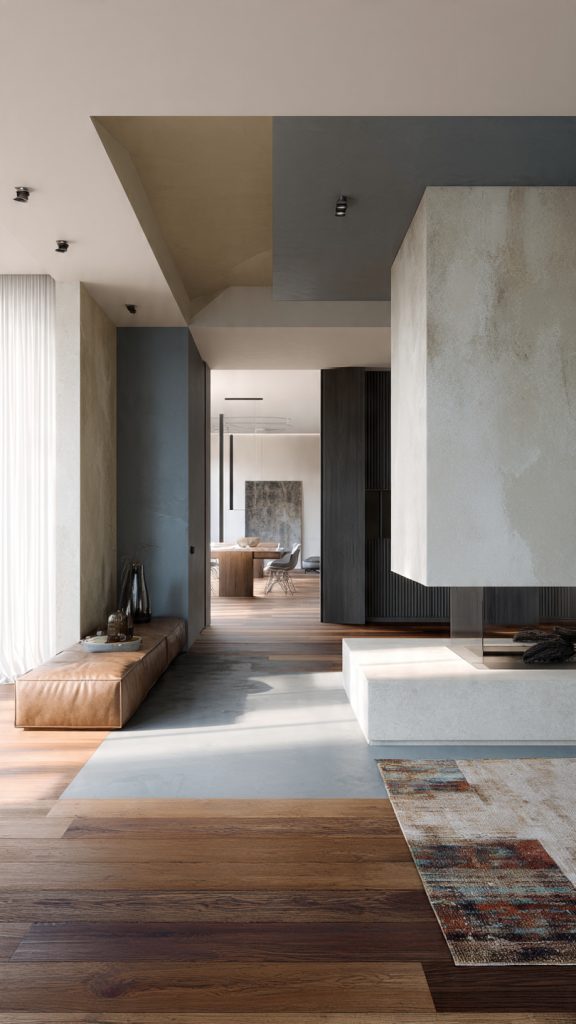
Sometimes the most stylish dividers are invisible. Changes in flooring, ceiling treatment, or wall finishes subtly define zones without adding physical barriers.
This approach works best in open-plan homes that prioritize flow.
Why it works
- Feels seamless and permanent
- Keeps the space visually open
- Adds depth and interest
Consistency in color palette ensures cohesion.
10. Custom Joinery or Architectural Elements
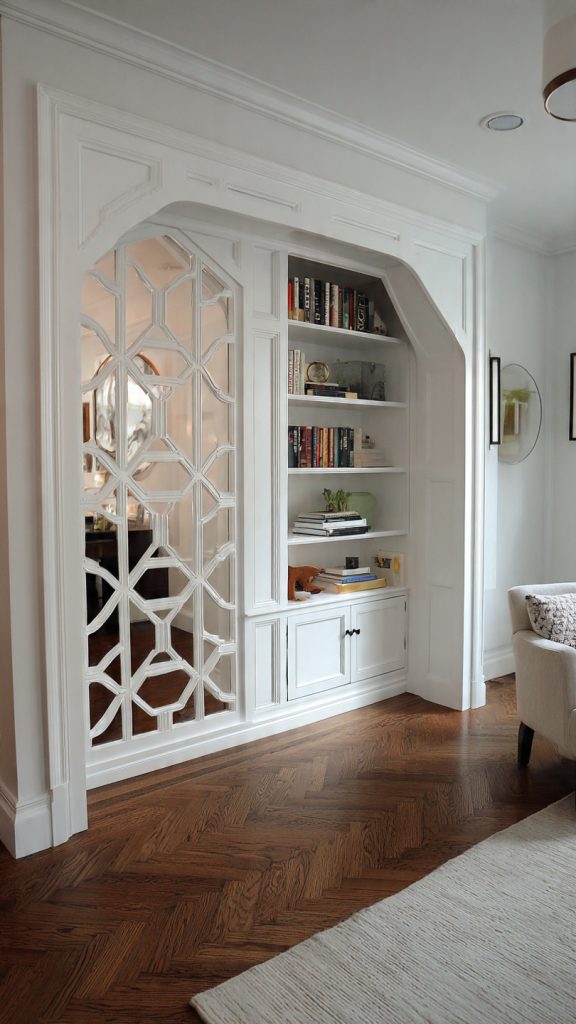
Custom joinery—such as built-in screens, arches, or partial partitions—creates a divider that feels fully integrated into the home’s design.
These elements blur the line between architecture and furniture, resulting in a highly polished look.
Why it works
- Feels permanent and intentional
- Elevates the overall design
- Tailored to the space
Even simple custom details can have a major impact.
Final Thoughts
A room divider doesn’t have to feel temporary or improvised. When thoughtfully designed, it can become a defining feature of the space—adding structure, style, and function all at once.
The key is choosing dividers that feel integrated rather than added on. Whether you opt for architectural elements, furniture-based solutions, or subtle visual cues, these 10 room divider ideas prove that separation can be both practical and beautiful.