A well-designed garden path does more than just guide your steps; it transforms your outdoor space into a charming, inviting retreat. Even small gardens can benefit from a thoughtfully crafted path, bringing structure, flow, and personality to your landscape. From natural stone to creative DIY solutions, there are countless ways to make a garden path both functional and visually stunning. Here are 10 small garden path ideas to inspire your next project.
1. Classic Stone Path: Timeless Elegance
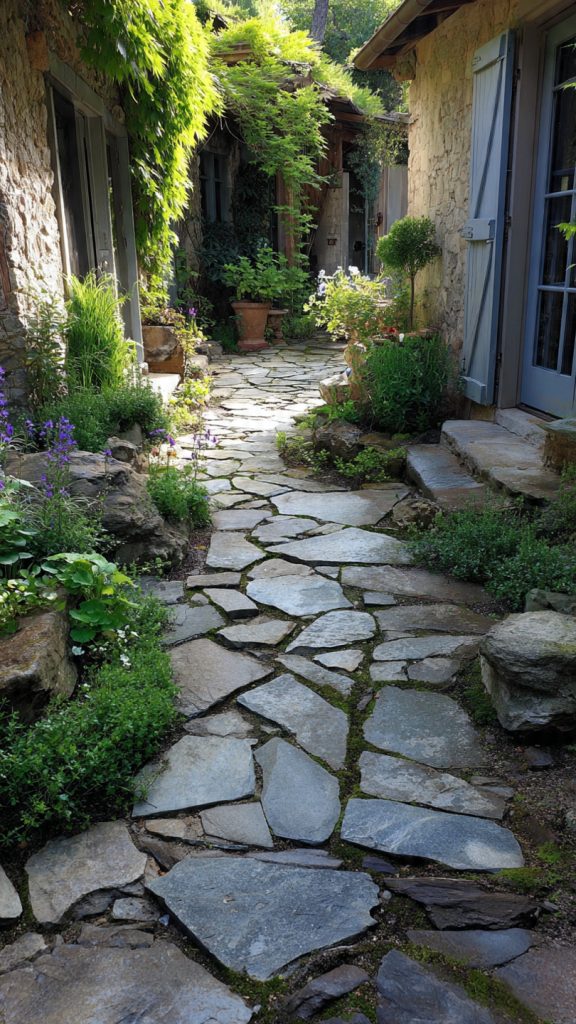
Stone paths are a classic choice, offering durability and a natural aesthetic that blends seamlessly into any garden. Small gardens benefit from using irregular flagstones or slate pieces to create an organic, flowing path. Arrange the stones with small gaps for moss or ground cover plants like creeping thyme to soften the edges and add greenery.
Visual Tip: Mix stones of varying shapes and shades to avoid uniformity, giving the path a natural, rustic charm.
Why It Works: Stones anchor the garden visually, create a tactile experience underfoot, and complement surrounding plantings without overwhelming a small space.
2. Brick Path: Warmth and Structure
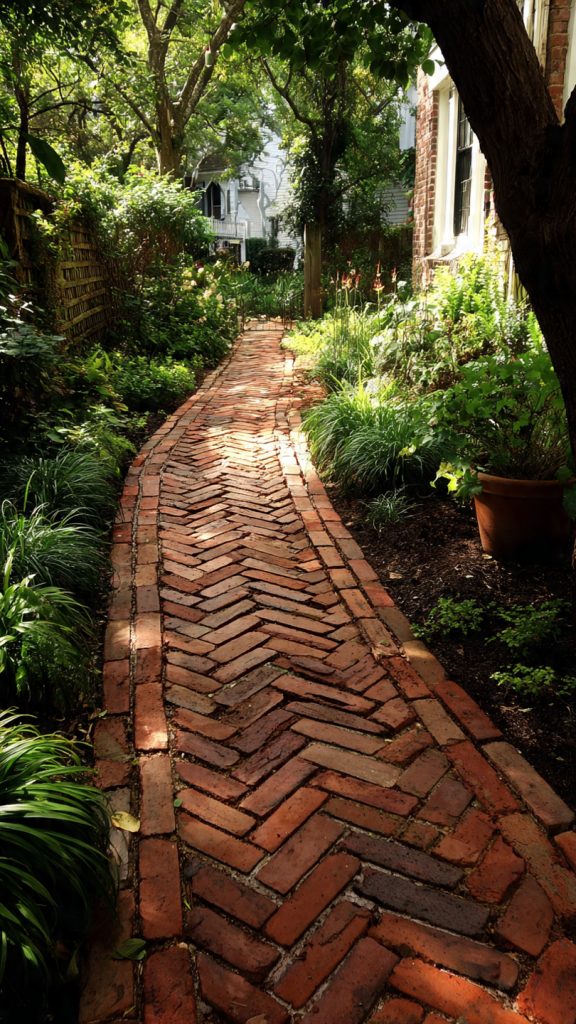
A brick garden path brings warmth and structure, perfect for smaller gardens that need a defined walkway. Bricks can be laid in classic herringbone, basketweave, or straight patterns. You can even mix traditional red bricks with weathered or painted bricks for a unique look.
Visual Tip: Use low-growing plants like moss or chamomile between the bricks to soften the lines and create a lush appearance.
Why It Works: Bricks are versatile, durable, and provide a neat, orderly look that contrasts beautifully with the softness of garden plants.
3. Gravel Path: Casual Charm
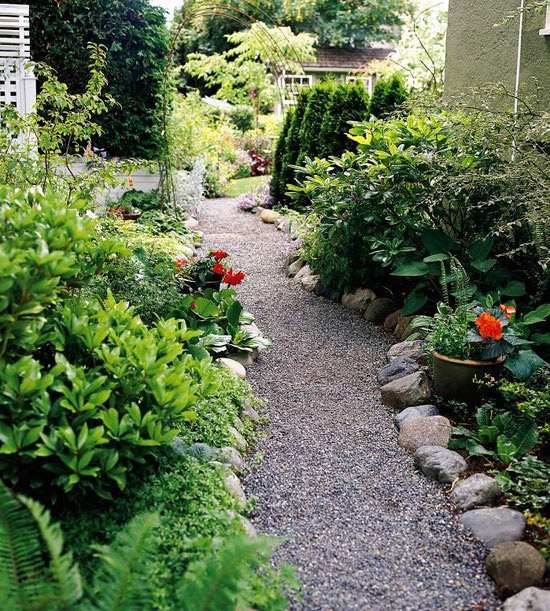
Gravel paths are an easy, budget-friendly option that adds texture and casual elegance to a small garden. Choose small pebbles or crushed stone to create a neat surface that is comfortable to walk on. Edging the path with metal, wood, or brick keeps the gravel contained and highlights the design.
Visual Tip: Incorporate stepping stones within the gravel to add interest and guide movement while creating a layered texture.
Why It Works: Gravel paths are flexible, can be reshaped easily, and their light-reflective surface can brighten shaded areas in your garden.
4. Wooden Plank Path: Natural Warmth
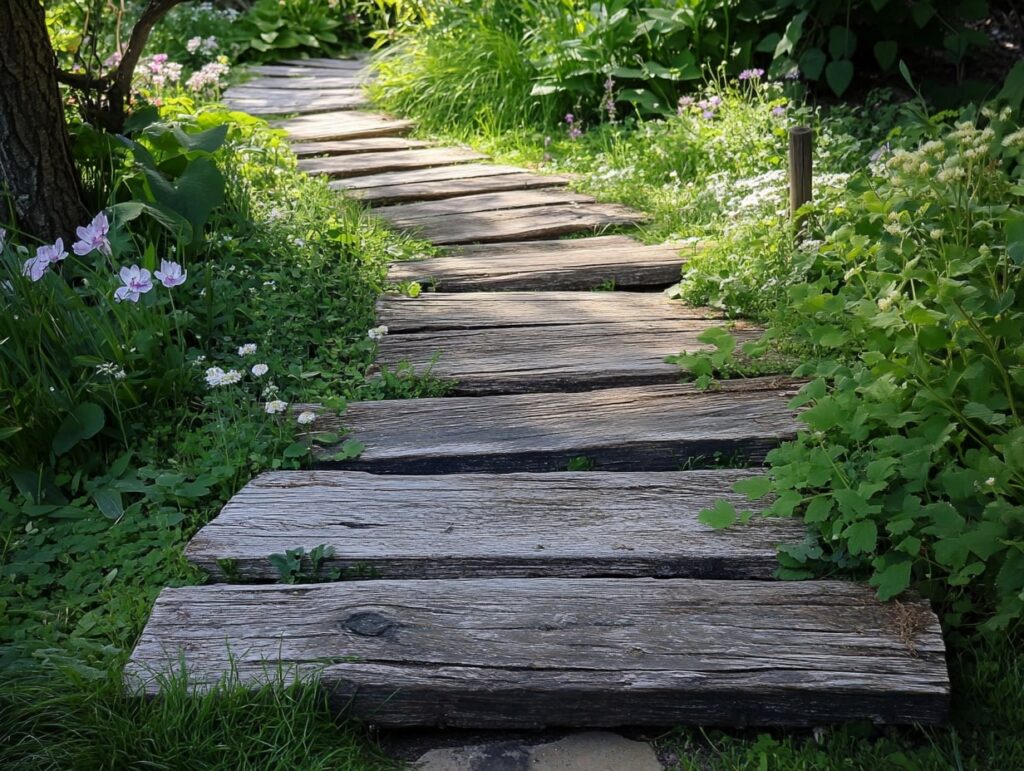
Wooden planks or sleepers create a warm, inviting path that integrates naturally with surrounding greenery. Ideal for small gardens, these paths work well in shaded areas where the wood’s rich tones contrast with lush foliage. Pressure-treated or naturally rot-resistant wood ensures longevity, while spacing the planks slightly apart allows grass or moss to grow between them for a soft, green touch.
Visual Tip: Stagger plank lengths to avoid a rigid look and create a more casual, woodland-inspired pathway.
Why It Works: Wooden paths add texture, warmth, and a natural vibe that complements flower beds, shrubs, or small trees.
5. Stepping Stone Path: Minimalist Beauty
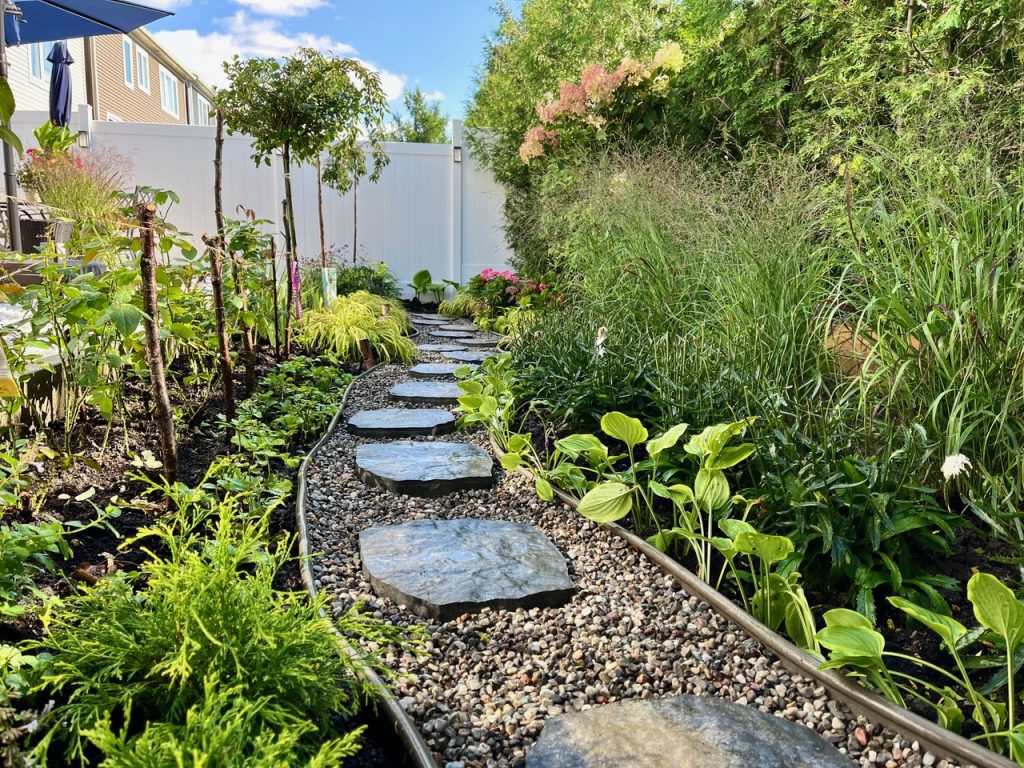
Stepping stones are perfect for tiny gardens or areas where you want a subtle, minimalist touch. Use large flat stones spaced apart to create a playful, floating effect. This works particularly well over lawns, moss, or ground-cover plants, giving the garden a sense of openness.
Visual Tip: Incorporate irregular shapes and unexpected curves to make the path feel organic and integrated with the landscape.
Why It Works: Stepping stones add charm without overwhelming a small space and allow greenery to peek through, keeping the garden airy and light.
6. Mosaic Tile Path: Artistic Flair
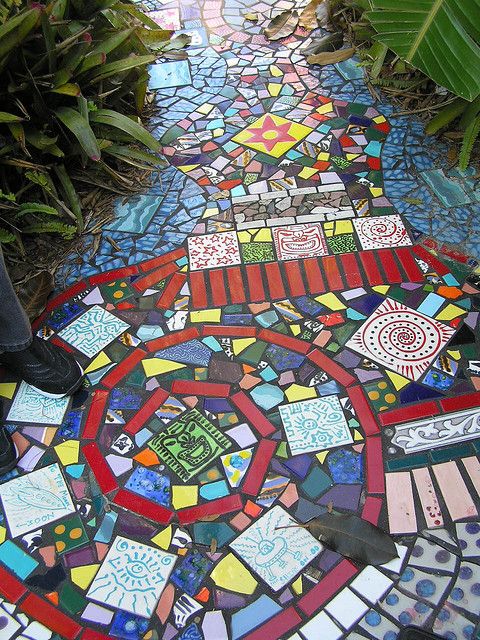
Mosaic tiles bring color and artistry to small garden paths. Combine broken tiles, pebbles, or patterned ceramics to create intricate designs that serve as focal points. Mosaic paths are ideal for narrow walkways or as highlights around patios and seating areas.
Visual Tip: Use contrasting colors and shapes to draw the eye along the path and create a visual journey through the garden.
Why It Works: Mosaic paths turn a functional walkway into a piece of art, adding personality and vibrancy to any garden space.
7. Curved Meandering Path: Natural Flow
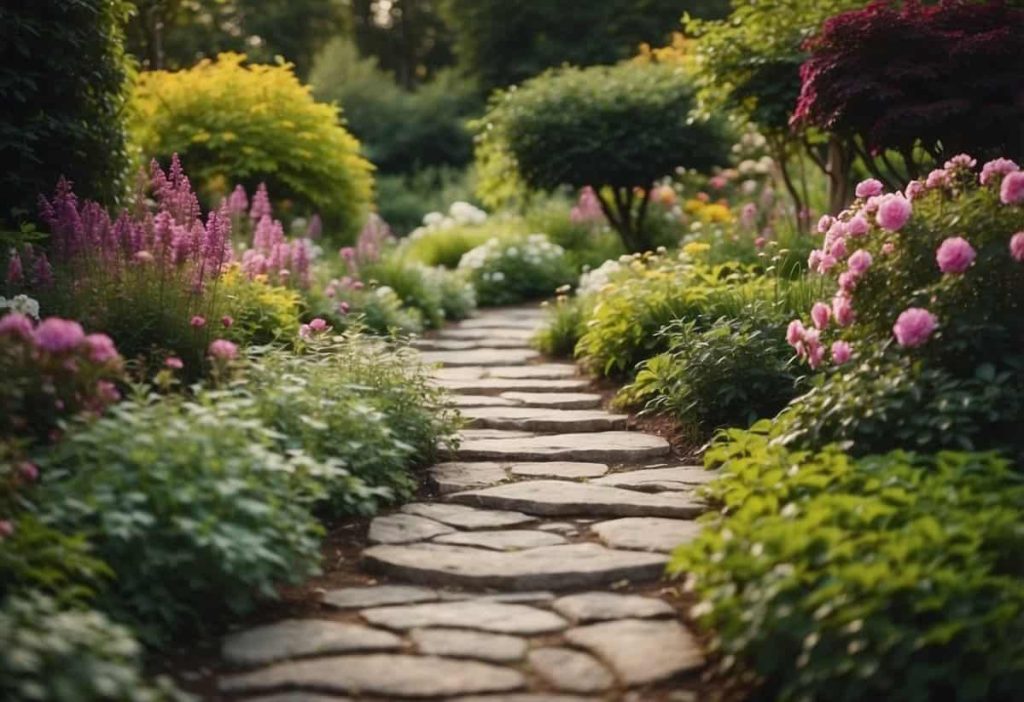
Curved paths break up the rigidity of straight lines and create a sense of discovery in a small garden. Whether made from stone, brick, or gravel, a gently winding path guides visitors through the garden, revealing different plants, seating areas, or garden ornaments along the way.
Visual Tip: Use curves to highlight focal points like a fountain, bench, or flower bed at the path’s end.
Why It Works: Curved paths make small gardens feel larger, encourage slower movement, and create a relaxing, natural flow.
8. Grass Path: Soft and Eco-Friendly
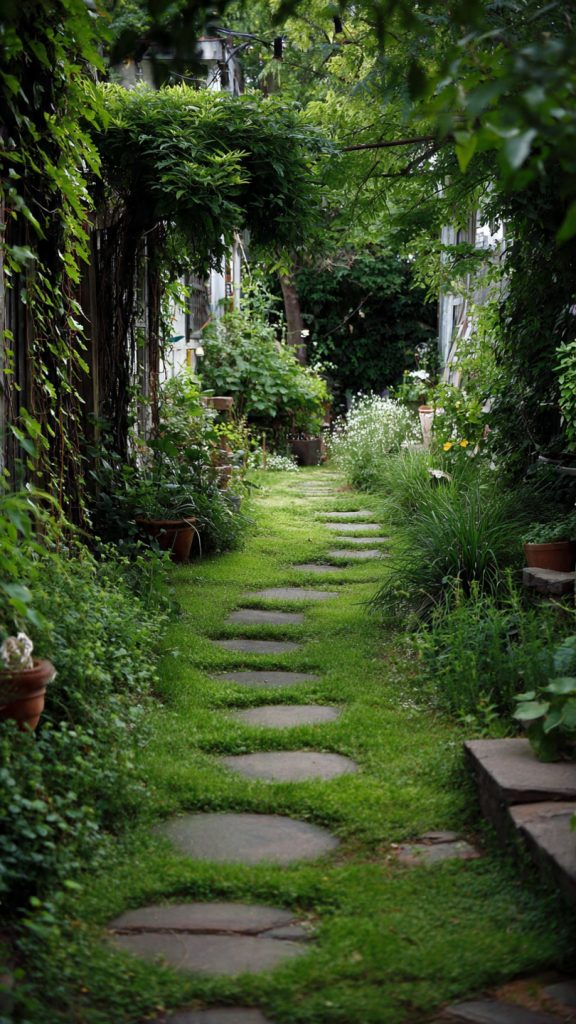
A grass path is a simple yet elegant option that feels soft underfoot and blends seamlessly with the lawn. Perfect for low-traffic areas, it can be created by laying stepping stones or simply mowing a distinct route through your garden.
Visual Tip: Keep edges crisp using metal or stone edging for a neat appearance while allowing the grass to soften the path.
Why It Works: Grass paths are eco-friendly, reduce hardscape, and give the garden a relaxed, lush appearance without adding extra materials.
9. Raised Wooden Boardwalk: Elevated Interest
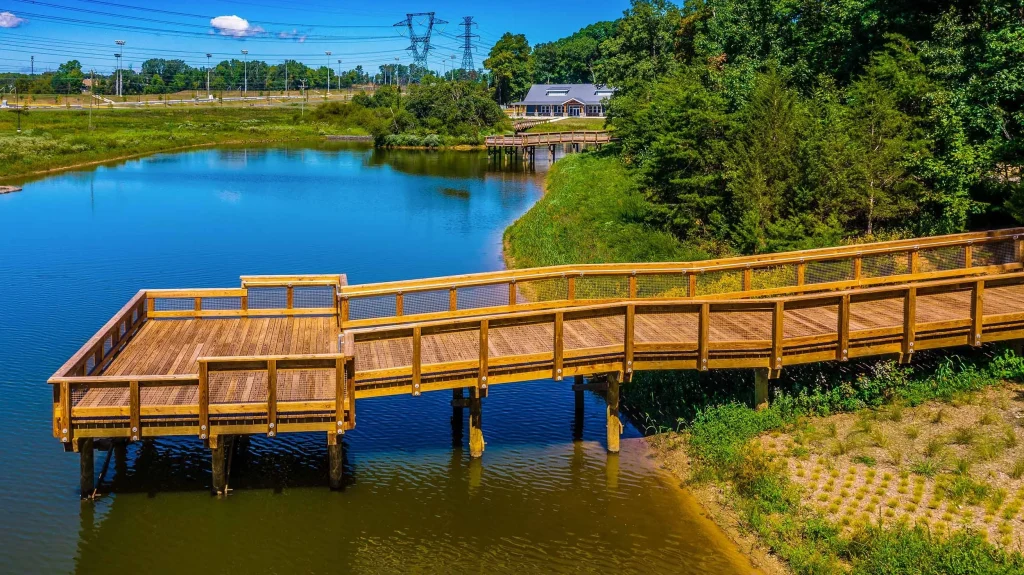
In small gardens with wet or uneven terrain, a raised wooden boardwalk adds dimension and keeps feet dry. Narrow boardwalks with rails or low borders can guide visitors while providing an elevated perspective of the garden’s design.
Visual Tip: Use naturally weathered wood to enhance the rustic charm, and pair with plants that spill over the edges for a romantic look.
Why It Works: Raised paths add structure, accommodate challenging terrain, and create a unique visual layer that contrasts with surrounding greenery.
10. Mixed Material Path: Eclectic Style
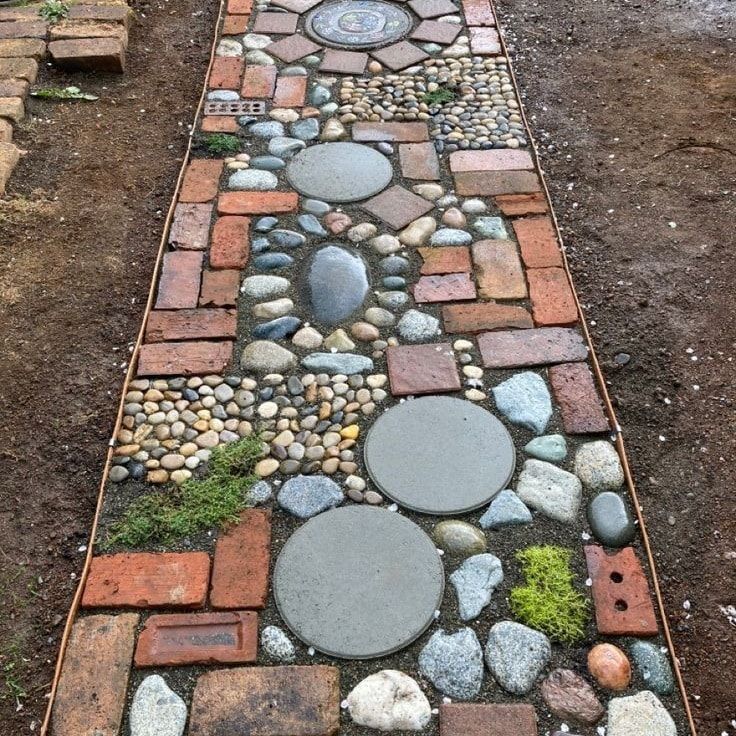
Combining different materials—such as stone with gravel, wood with brick, or concrete with pebbles—can create a unique, textured path that adds charm and individuality. Mixing materials allows you to balance durability, aesthetics, and functionality in small gardens.
Visual Tip: Keep the scale proportional to the garden size and choose materials with complementary colors and textures to maintain cohesion.
Why It Works: Mixed-material paths showcase creativity, prevent monotony, and let you highlight different parts of your garden in a cohesive yet visually engaging way.
Final Thoughts
Even small gardens can achieve maximum visual impact with a thoughtfully designed path. From natural stone and bricks to grass and mosaic tiles, the possibilities are endless. A well-planned garden path not only adds charm and structure but also enhances the overall experience of your outdoor space. By choosing materials, patterns, and shapes that complement your garden’s style, you can create a path that is both practical and visually captivating.
Whether you prefer the classic elegance of stone, the artistic flair of mosaics, or the playful simplicity of stepping stones, these small garden path ideas provide inspiration to transform your garden into a charming, inviting haven.