Small hallways are one of the trickiest spaces to design. They’re high-traffic, visually prominent, and often too narrow for traditional storage solutions. When handled poorly, storage can make a hallway feel cramped, dark, and cluttered.
Designers take a different approach. Instead of adding bulk, they focus on shallow, vertical, and visually quiet storage that supports function without closing the space in. The goal is storage that almost disappears—while still being highly practical.
Below are 10 small hallway storage ideas that keep narrow spaces functional, organized, and visually open.
1. Slim Wall-Mounted Cabinets
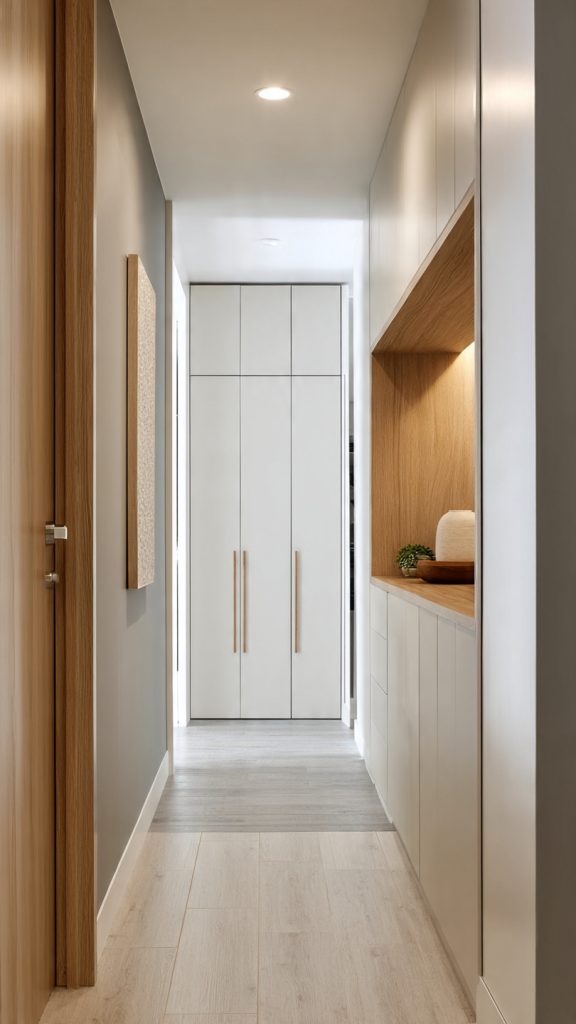
Wall-mounted cabinets with shallow depth provide valuable storage without intruding into the walkway. Designers favor handle-less or push-to-open fronts to keep the look clean.
When painted to match the wall, these cabinets visually recede.
Why it works
- Keeps the floor clear
- Adds hidden storage
- Feels light and unobtrusive
Depth matters—shallower is better in narrow halls.
2. Floating Shelves Placed High
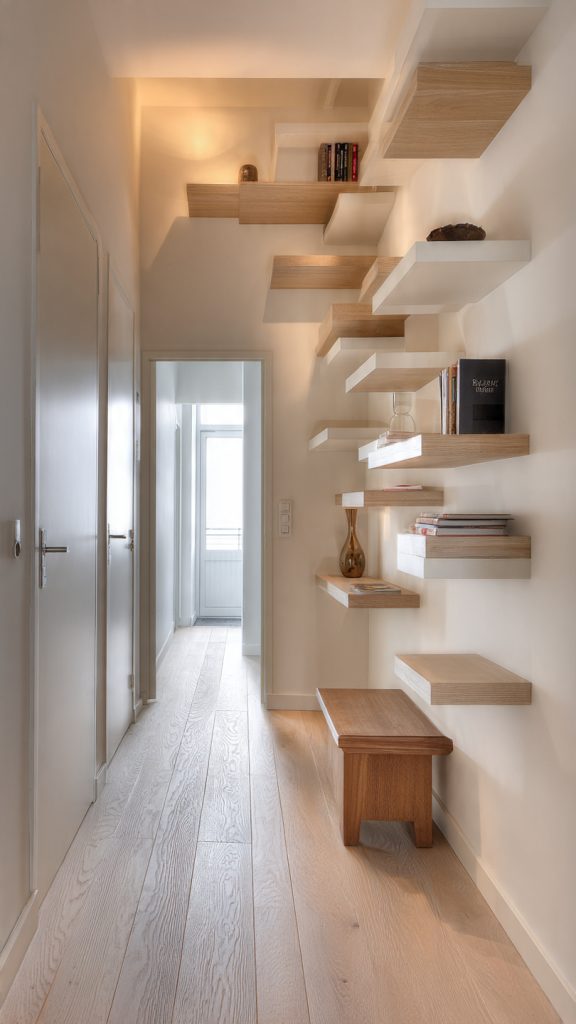
Instead of eye-level shelving, designers often mount floating shelves higher up on the wall. This keeps the hallway feeling open while still adding storage or display space.
High placement draws the eye upward, making the space feel taller.
Why it works
- Preserves walking space
- Enhances vertical scale
- Avoids visual congestion
Minimal styling keeps shelves from feeling heavy.
3. Built-In Storage That Matches the Wall
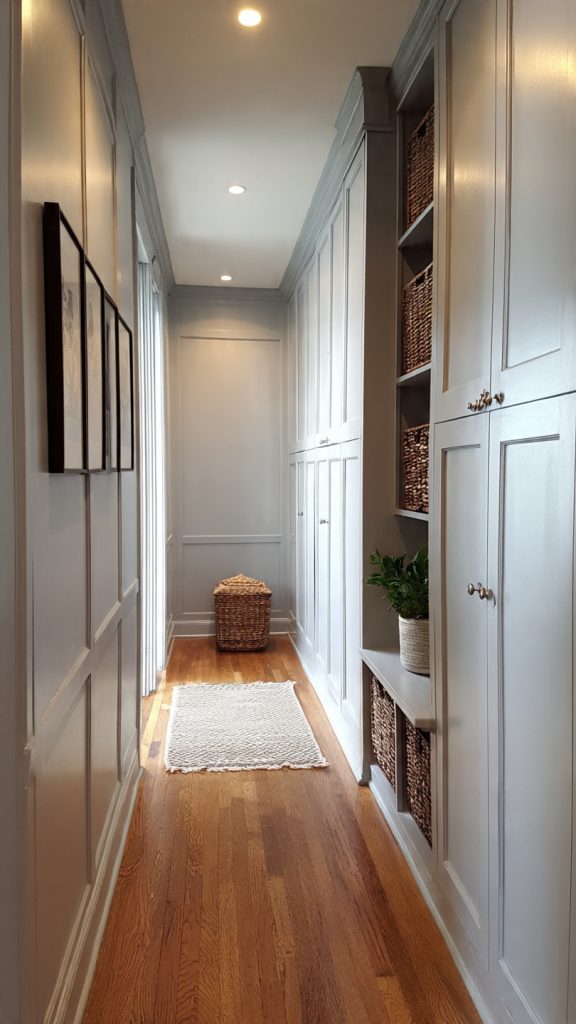
Built-in hallway storage painted the same color as the walls blends seamlessly into the space. This technique minimizes visual breaks, which is essential in narrow areas.
The result feels architectural rather than added on.
Why it works
- Reduces visual clutter
- Makes walls feel continuous
- Feels custom and intentional
This works especially well for full-height storage.
4. Low-Profile Consoles or Ledges
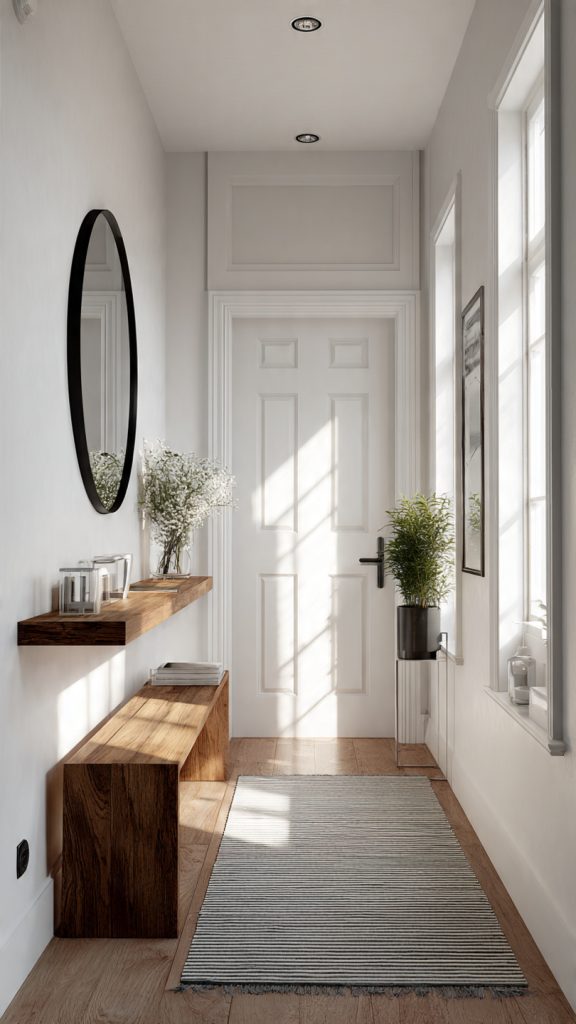
Instead of bulky furniture, designers use ultra-slim consoles or wall-mounted ledges. These provide a drop zone for essentials without visually narrowing the hallway.
Wall-mounted versions are especially effective.
Why it works
- Keeps the floor visually open
- Adds function without bulk
- Feels intentional
Slim proportions are key to success.
5. Recessed Storage Niches
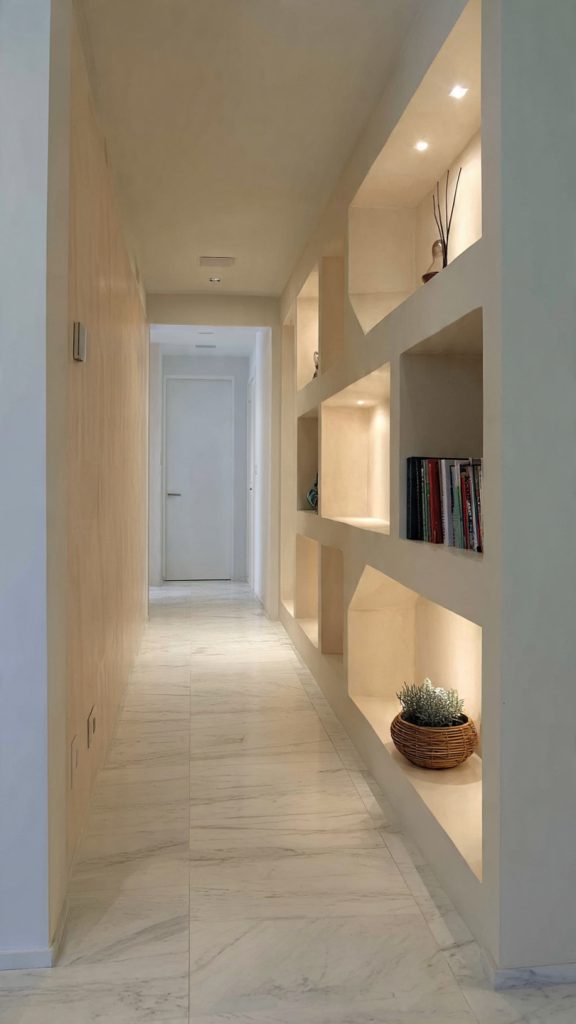
When possible, recessed niches built into the wall offer storage without reducing hallway width. These niches can hold decor, baskets, or functional items.
Because they sit flush with the wall, they maintain a clean profile.
Why it works
- Preserves hallway width
- Feels architectural
- Adds subtle interest
Even shallow niches make a difference.
6. Hooks with Spacing and Restraint
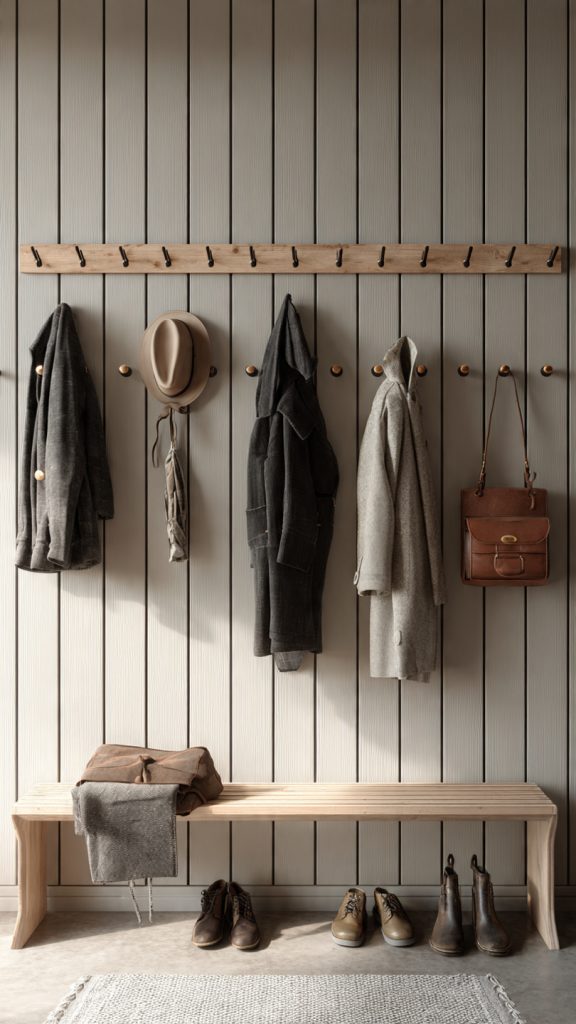
Hooks are useful, but overcrowding them can make a hallway feel chaotic. Designers limit hooks to essentials and space them evenly to maintain visual order.
This keeps the hallway functional without visual overload.
Why it works
- Keeps items off the floor
- Maintains clean sightlines
- Encourages organization
Fewer hooks always look better.
7. Vertical Storage Instead of Horizontal Spread
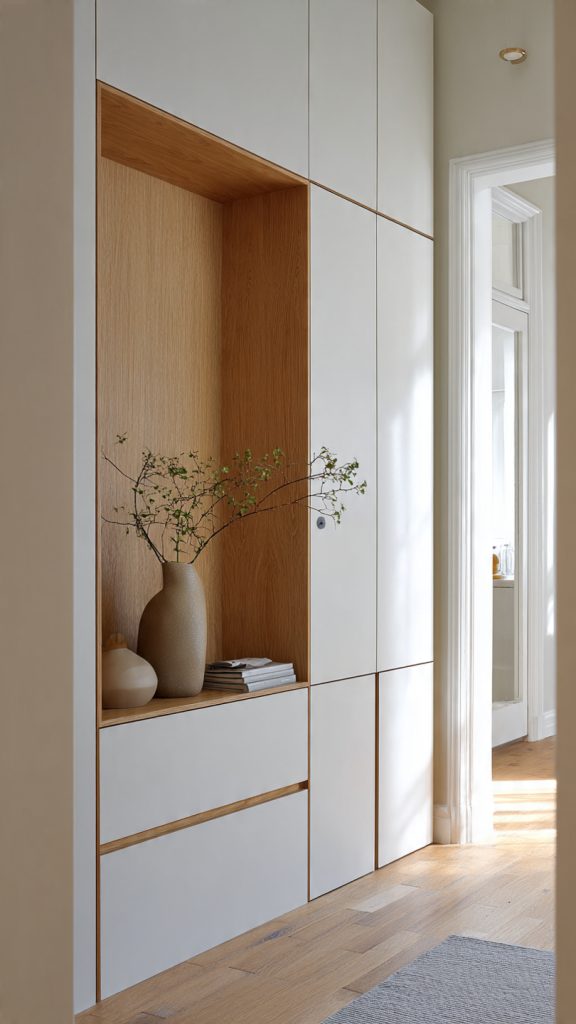
Tall, narrow storage units use height rather than width. Designers prefer vertical emphasis in hallways to avoid crowding the walkway.
This strategy also helps the hallway feel taller.
Why it works
- Saves floor space
- Enhances proportions
- Keeps the layout open
Matching finishes to the wall keeps storage subtle.
8. Mirror-Integrated Storage
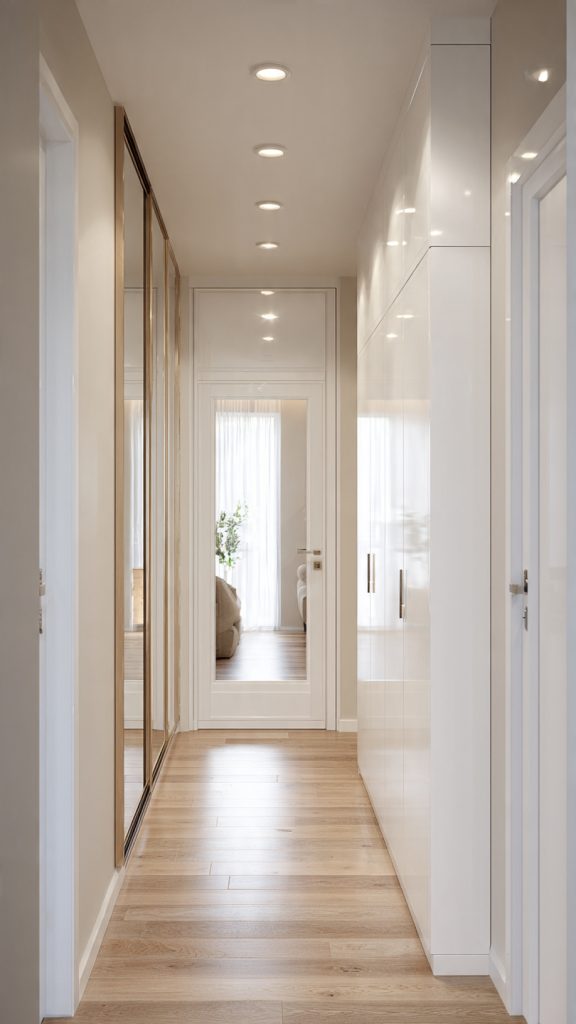
Mirrors visually expand narrow hallways, and when combined with hidden storage, they serve double duty. Designers use mirrored cabinets or panels with concealed compartments.
This keeps storage discreet while brightening the space.
Why it works
- Reflects light
- Hides storage effectively
- Makes hallways feel wider
Slim profiles are essential here.
9. Closed Storage Over Open Storage
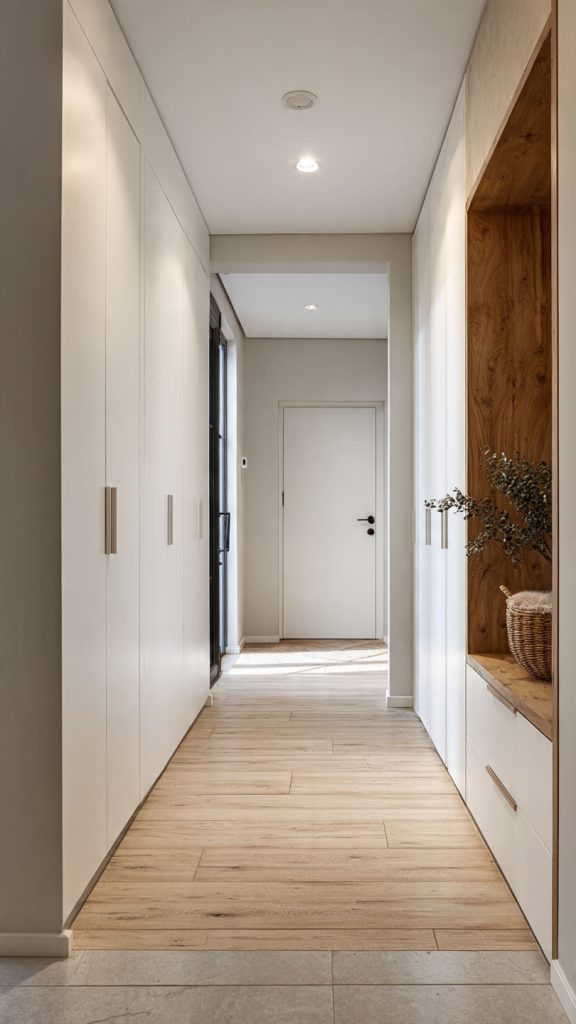
Open storage can quickly make a hallway feel busy. Designers favor closed cabinets, drawers, or concealed compartments to maintain visual calm.
Hidden storage keeps the focus on flow rather than objects.
Why it works
- Reduces visual noise
- Keeps hallways feeling calm
- Enhances a high-end look
Flat fronts keep things streamlined.
10. Storage Only Where It’s Needed
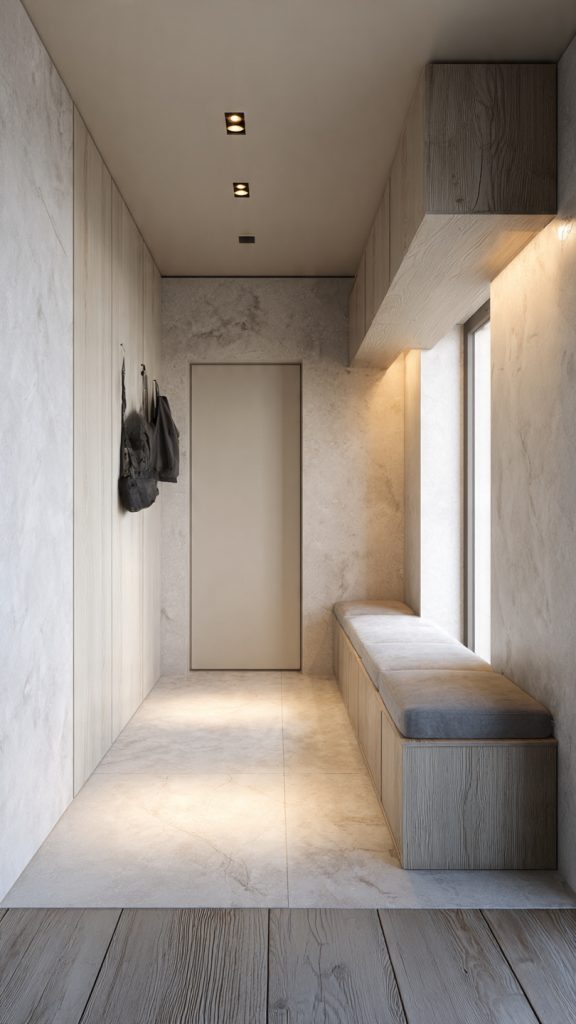
One of the most important designer rules is restraint. Storage should be added only where it serves a clear purpose—never wall to wall.
Leaving parts of the hallway empty is intentional and helps preserve openness.
Why it works
- Prevents overcrowding
- Maintains a sense of flow
- Makes storage feel purposeful
Less storage often looks better than more.
Final Thoughts
Small hallways don’t need to feel tight or cluttered to be functional. With thoughtful placement, shallow profiles, and visually quiet design choices, storage can exist without making the space feel narrow.
These 10 small hallway storage ideas prove that even the tightest spaces can feel organized, open, and intentional—without sacrificing everyday usability.