Not having a walk-in pantry doesn’t mean you’re stuck with cluttered cabinets or overflowing countertops. Many homes—especially apartments and smaller houses—rely on compact pantries, cabinet pantries, or no pantry at all. The key is using intentional storage strategies that maximize space without making the kitchen feel crowded.
Designers approach small pantries with a focus on vertical storage, visual calm, and smart containment. When done well, a small pantry can feel just as functional—and just as polished—as a walk-in.
Below are 10 small pantry ideas that work beautifully when space is limited.
1. Turn a Single Cabinet into a Dedicated Pantry
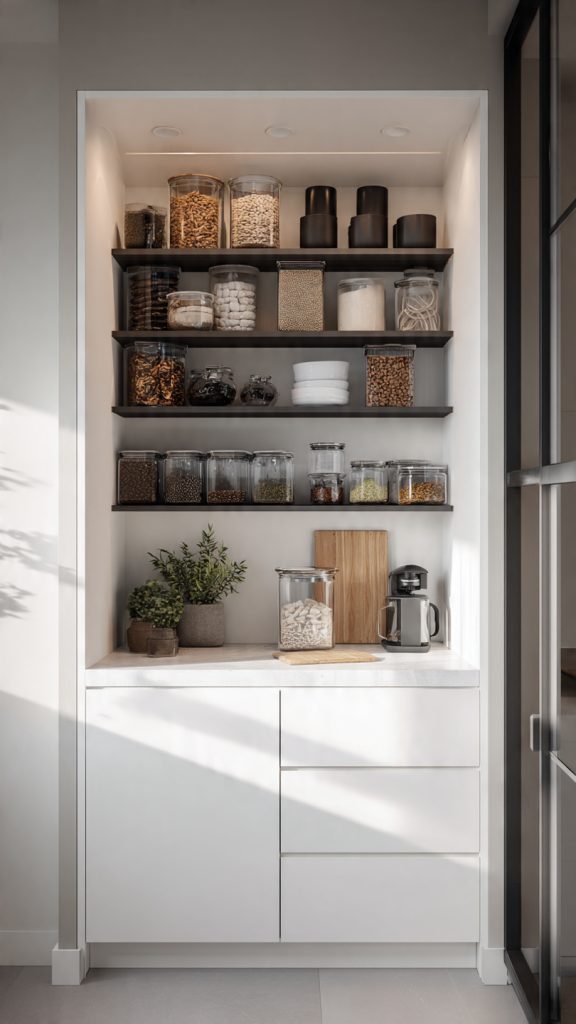
When there’s no pantry room, designers often designate one tall cabinet as the pantry. Everything food-related lives there—dry goods, snacks, and staples—creating a clear storage zone.
This keeps items from spreading across multiple cabinets.
Why it works
- Creates structure instantly
- Keeps food storage contained
- Makes organization easier
Consistency matters more than size.
2. Use Pull-Out Pantry Shelves Inside Cabinets
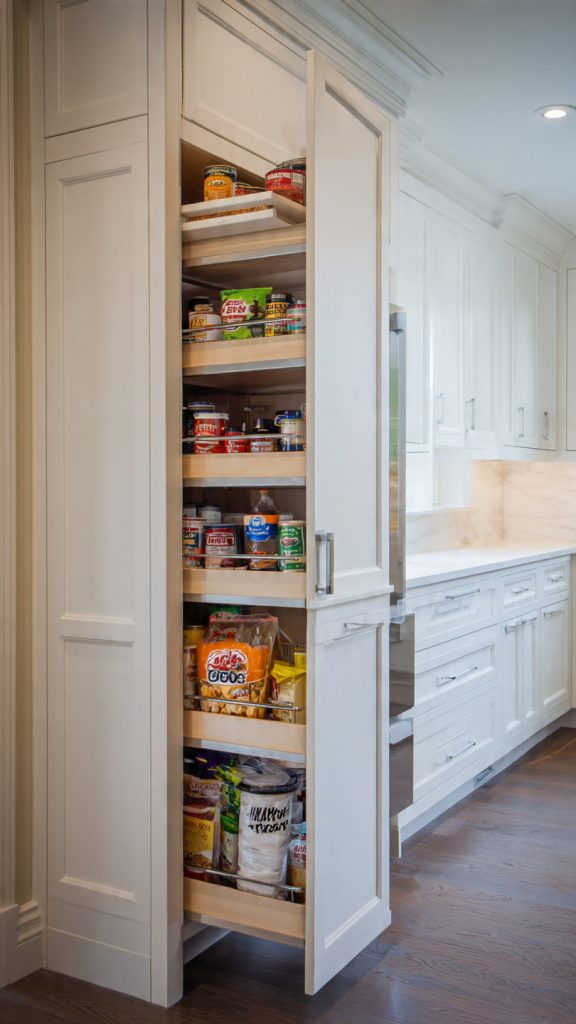
Pull-out shelves transform deep cabinets into efficient pantry storage. Instead of stacking items and losing visibility, everything slides out into view.
This is one of the most effective upgrades for small kitchens.
Why it works
- Maximizes cabinet depth
- Improves accessibility
- Prevents forgotten items
Even narrow pull-outs add value.
3. Decant Dry Goods to Save Space
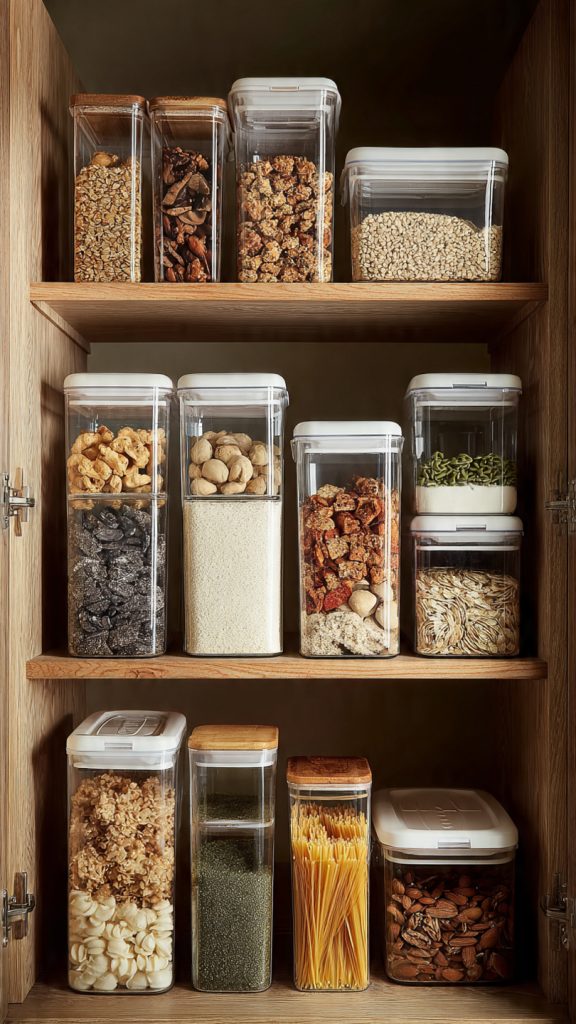
Original packaging wastes space and creates visual clutter. Designers decant pantry staples into stackable containers sized specifically for cabinets.
This allows shelves to hold more—without feeling crowded.
Why it works
- Uses space efficiently
- Reduces visual noise
- Makes restocking simple
Uniform containers make small pantries feel intentional.
4. Add Pantry Storage to Upper Cabinets Only
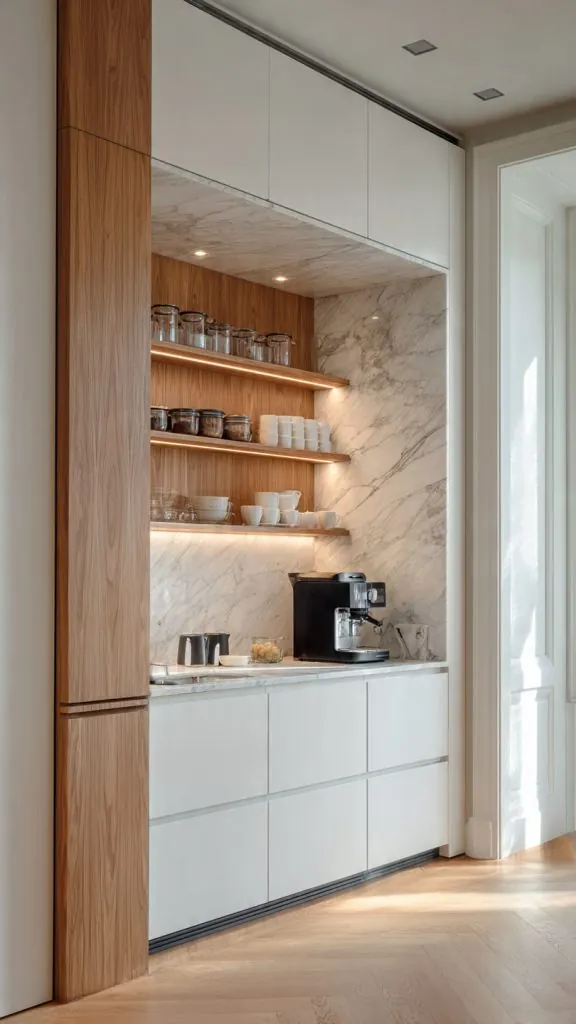
In kitchens without extra floor space, designers rely heavily on upper cabinets for pantry storage. Keeping food storage vertical frees up lower cabinets for cookware.
This approach works especially well in apartments.
Why it works
- Preserves floor space
- Keeps food off countertops
- Maintains a clean layout
Lightweight items belong up high.
5. Use Slim Pantry Units in Narrow Gaps
Slim pantry units fit into small gaps beside refrigerators or walls. These vertical units provide surprising storage without overwhelming the kitchen.
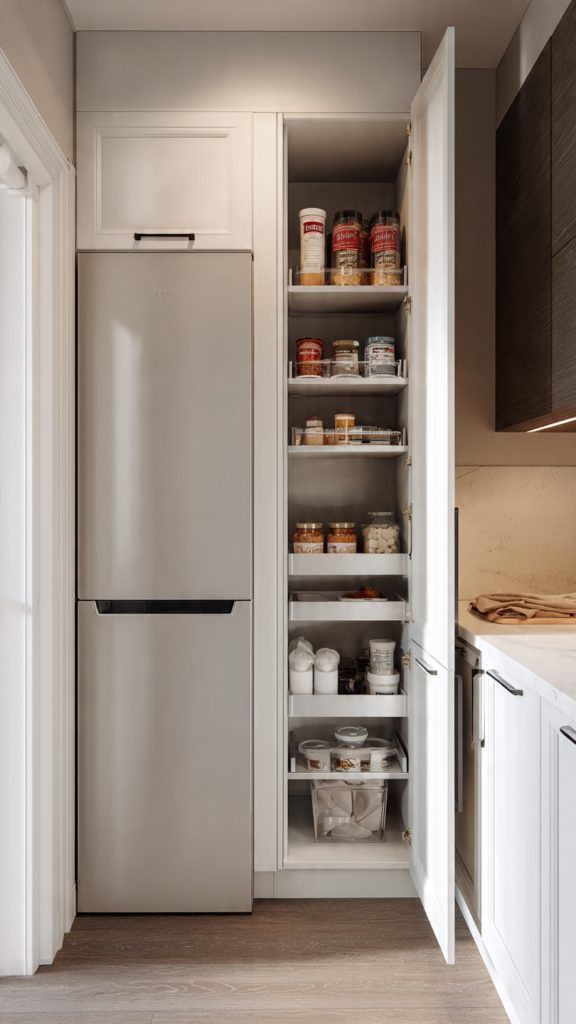
Designers favor closed-front styles to keep the look clean.
Why it works
- Uses overlooked space
- Adds vertical storage
- Feels intentional
Shallow depth is key.
6. Rely on Bins to Create Mini Pantry Zones
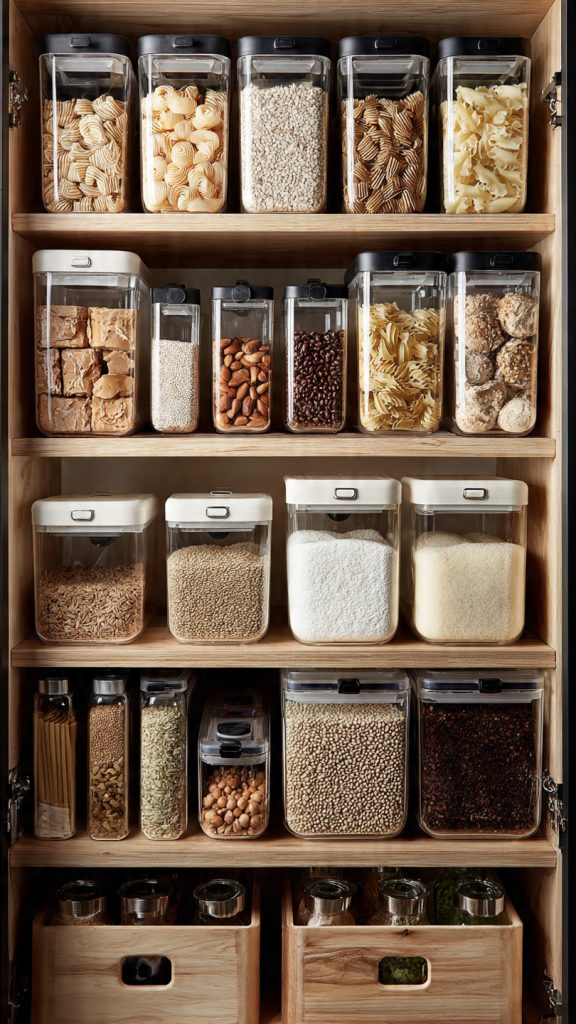
Bins act like drawers inside cabinets, grouping similar items together. Snacks, baking supplies, and breakfast foods each get their own container.
This prevents cabinet chaos.
Why it works
- Keeps categories separate
- Makes access easy
- Maintains visual order
Opaque bins feel calmer than mixed packaging.
7. Store Pantry Items in a Nearby Hallway Cabinet
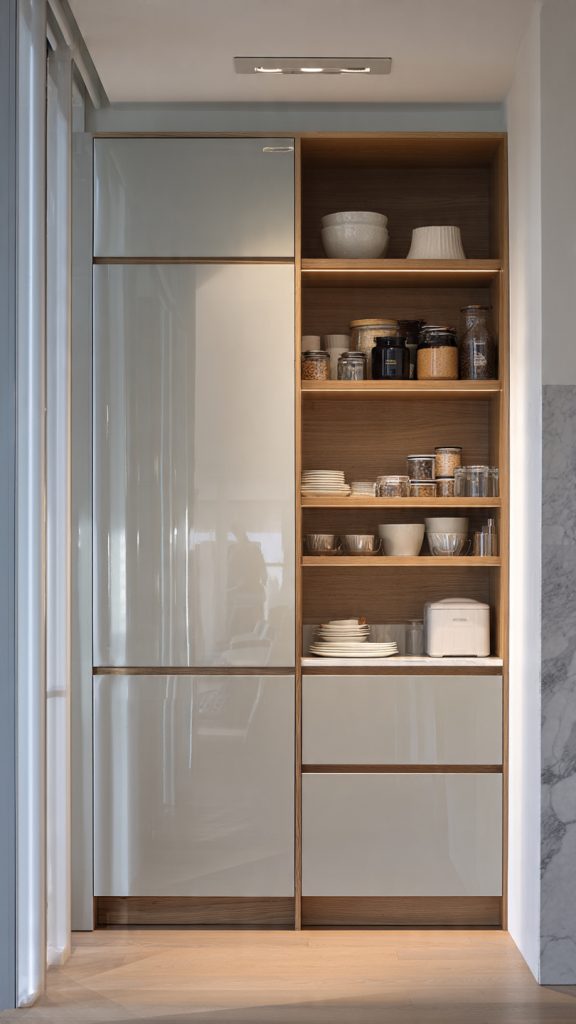
When kitchen space is extremely limited, designers move pantry storage just outside the kitchen. A hallway or utility cabinet can hold bulk items and dry goods.
This keeps the kitchen uncluttered.
Why it works
- Frees up kitchen storage
- Keeps food organized
- Works in small homes
Proximity matters more than location.
8. Use the Back of Doors for Extra Storage
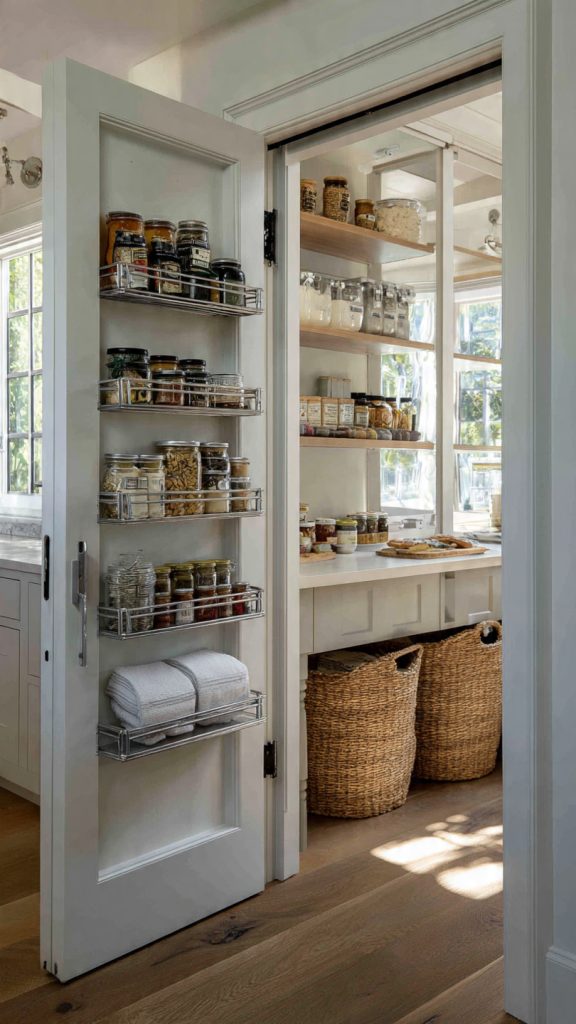
The inside of cabinet or closet doors is valuable pantry real estate. Slim racks or mounted organizers can hold spices, snacks, or small items.
When the door closes, everything disappears.
Why it works
- Uses unused space
- Adds storage without bulk
- Keeps shelves clear
Depth should stay minimal.
9. Keep Pantry Storage Minimal and Edited
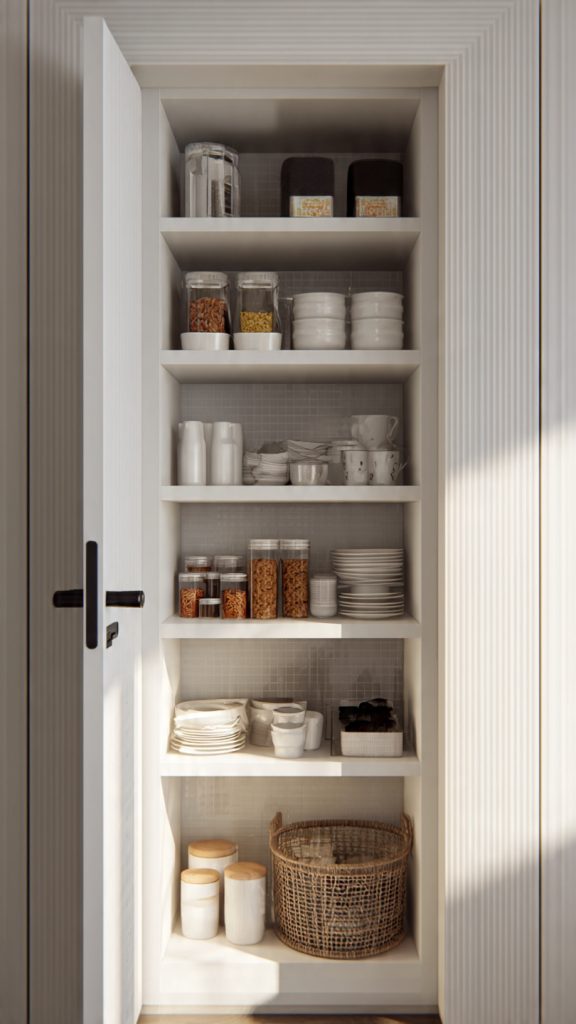
Small pantries work best when they aren’t overloaded. Designers recommend keeping only what you use regularly and storing overflow elsewhere.
Negative space makes storage feel calmer.
Why it works
- Prevents overcrowding
- Keeps items visible
- Makes organization sustainable
Less truly looks better.
10. Maintain One Consistent System
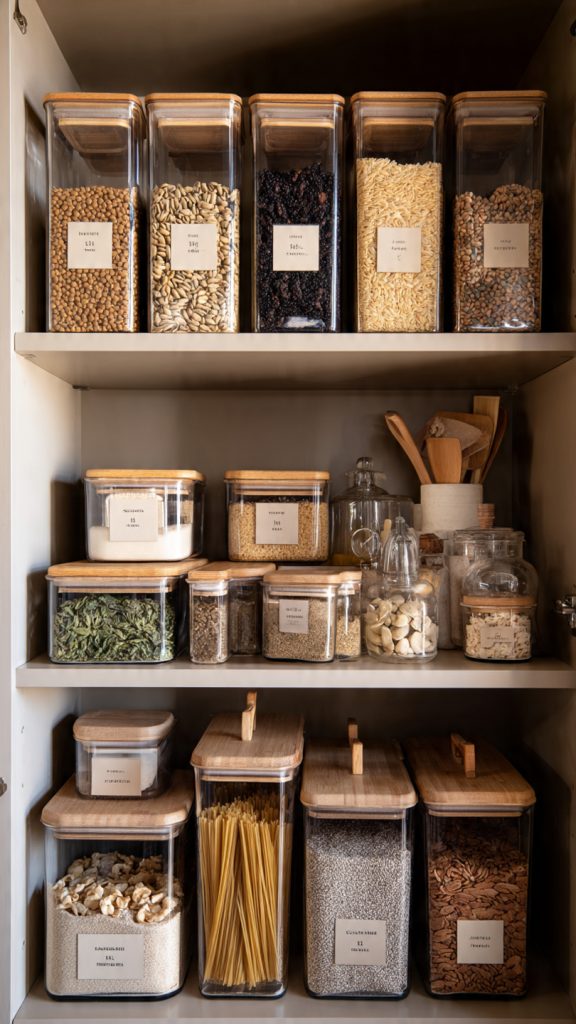
The biggest mistake in small pantries is mixing too many storage styles. Designers stick to one container type, one label style, and one organizational method.
Consistency creates order.
Why it works
- Reduces visual clutter
- Makes upkeep easy
- Elevates the entire kitchen
A simple system always lasts longer.
Final Thoughts
Not having a walk-in pantry doesn’t limit what’s possible—it just requires smarter choices. With thoughtful containment, vertical organization, and visual restraint, even the smallest pantry setup can feel efficient and polished.
These 10 small pantry ideas prove that size isn’t the deciding factor—intention is. When storage is planned carefully, a compact pantry can work just as hard as a walk-in, without overwhelming your kitchen.