Living in a studio apartment does not mean settling for cramped or chaotic. With the right layout choices, even the smallest studio can feel open, calm, and intentionally designed. The secret is not owning less. It is arranging space smarter.
Designers who work with compact homes focus on visual flow, clear zoning, and furniture that works harder than it looks. When those elements come together, a studio stops feeling like one room and starts feeling like a complete home.
Below are ten studio apartment layout ideas that consistently make small spaces feel larger, brighter, and more livable.
1. The Zoned Layout Using a Sofa Divider
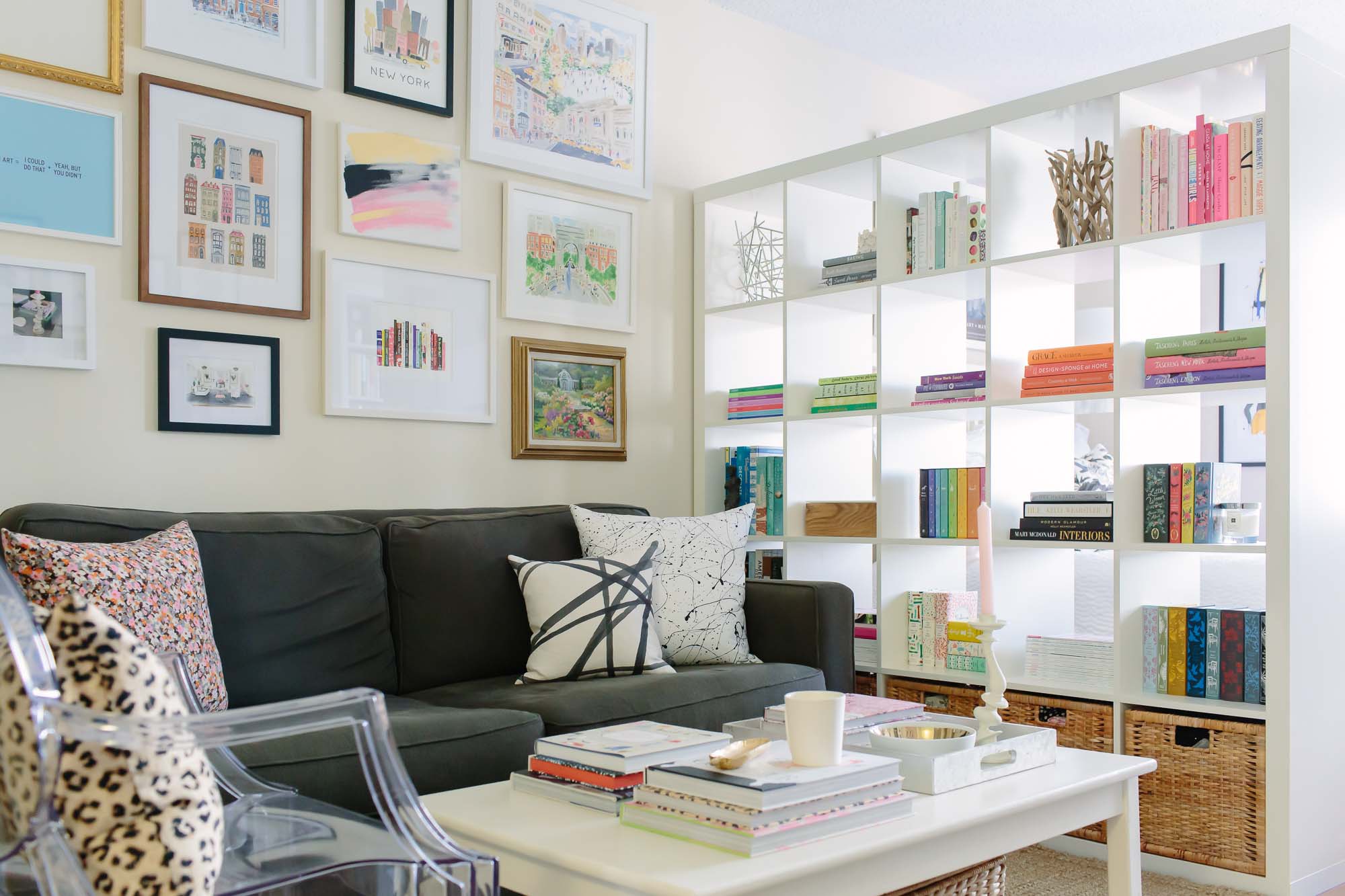
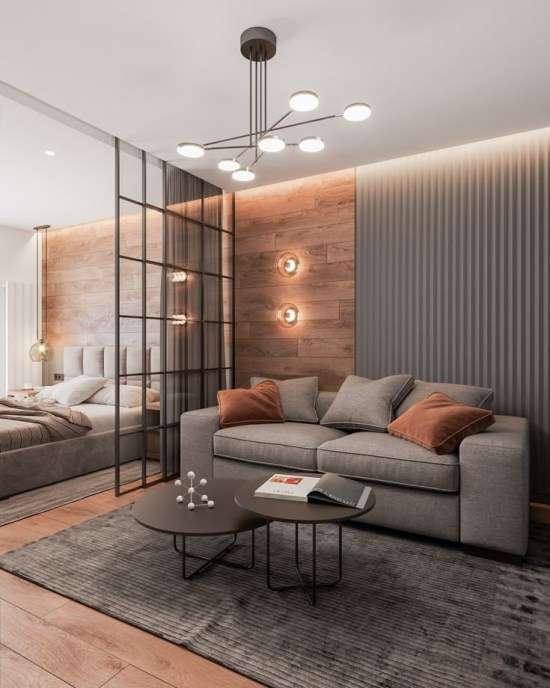

One of the most effective studio layouts uses the sofa as a visual wall. Instead of pushing furniture against the perimeter, the sofa is floated in the center of the space to divide sleeping and living zones.
This layout instantly creates the feeling of separate rooms without adding bulk. The key is choosing a sofa with a low back or slim profile so sightlines remain open. A rug placed under the sofa reinforces the living zone, while the bed sits calmly behind it.
This approach works especially well in rectangular studios where the bed can sit near a window and the sofa faces inward.
2. The Bed-First Layout Anchored by the Window
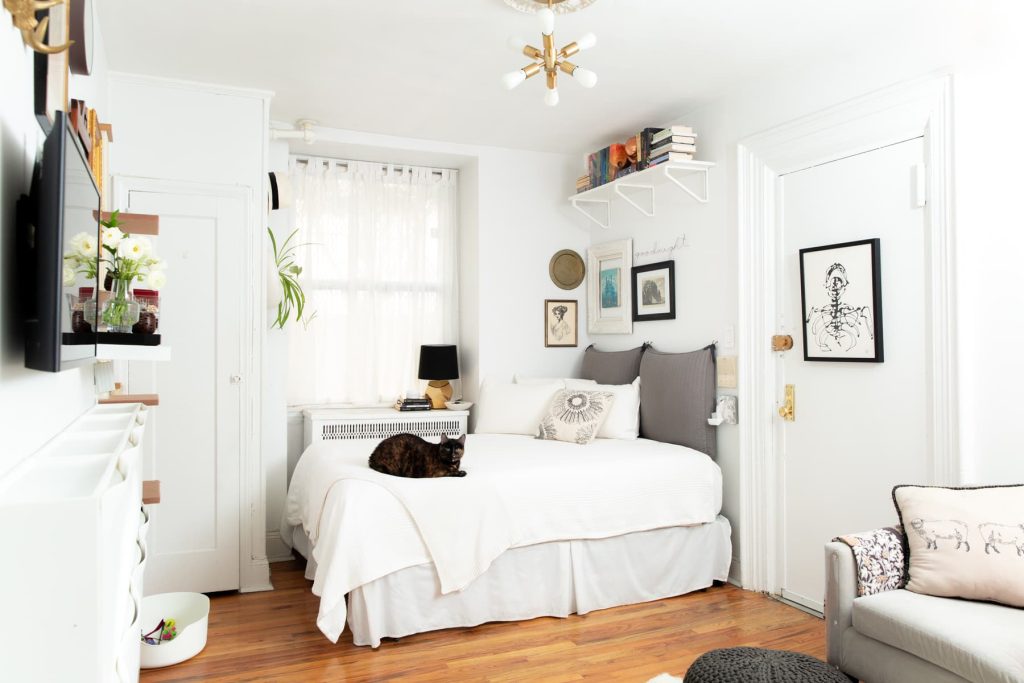
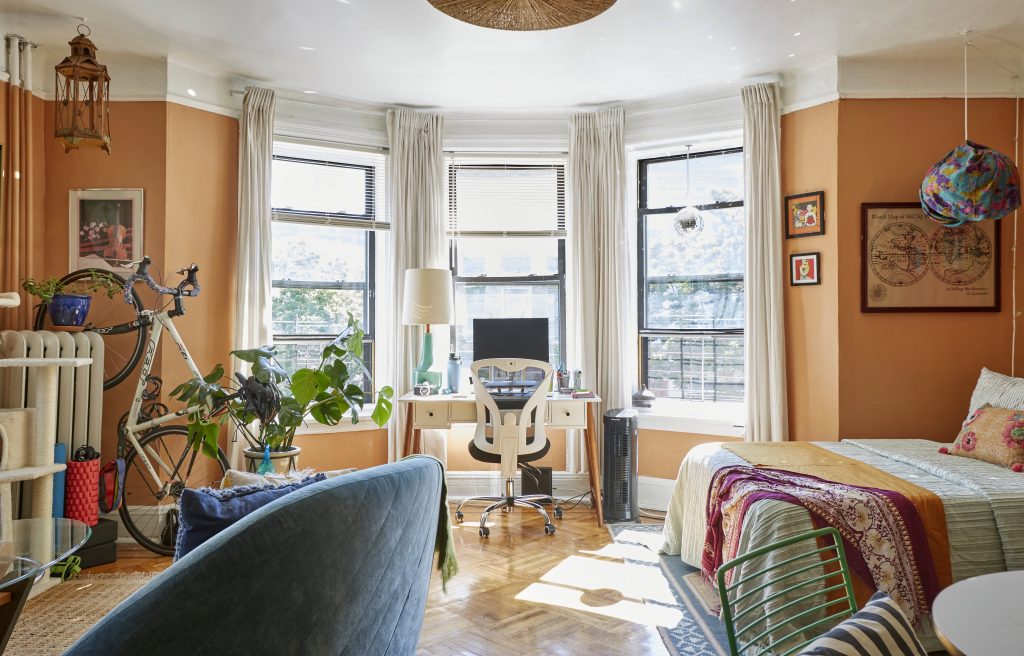

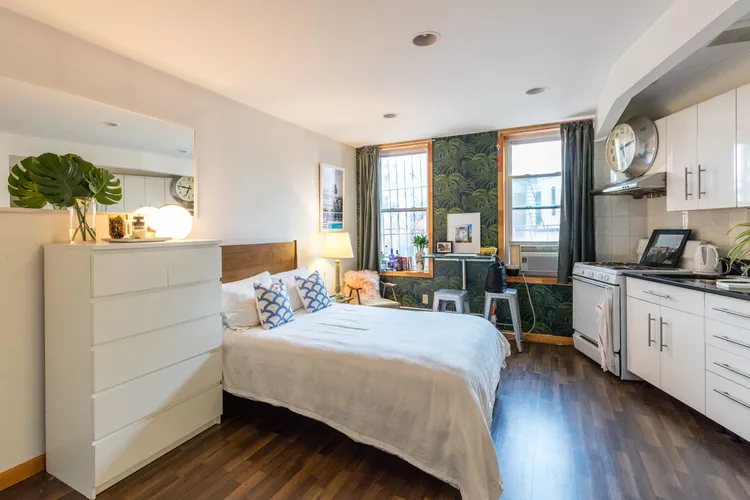
In studios with one strong natural light source, placing the bed closest to the window can make the entire space feel calmer and more intentional. Instead of hiding the bed, this layout treats it as a design feature.
A simple headboard, soft bedding, and minimal nightstands keep the look light. The living area then occupies the remaining space, benefiting from borrowed light rather than competing with the bed.
This layout works best when the bed is styled simply and elevated slightly, either on legs or a low platform, to keep the floor visually open.
3. The Studio With a Partial Divider Wall
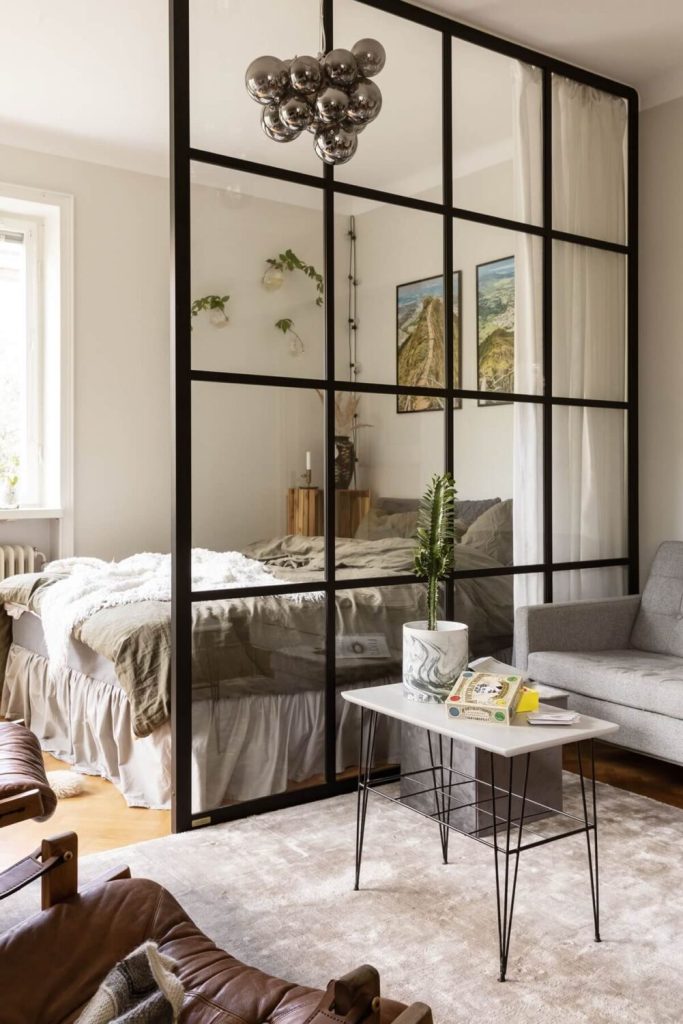
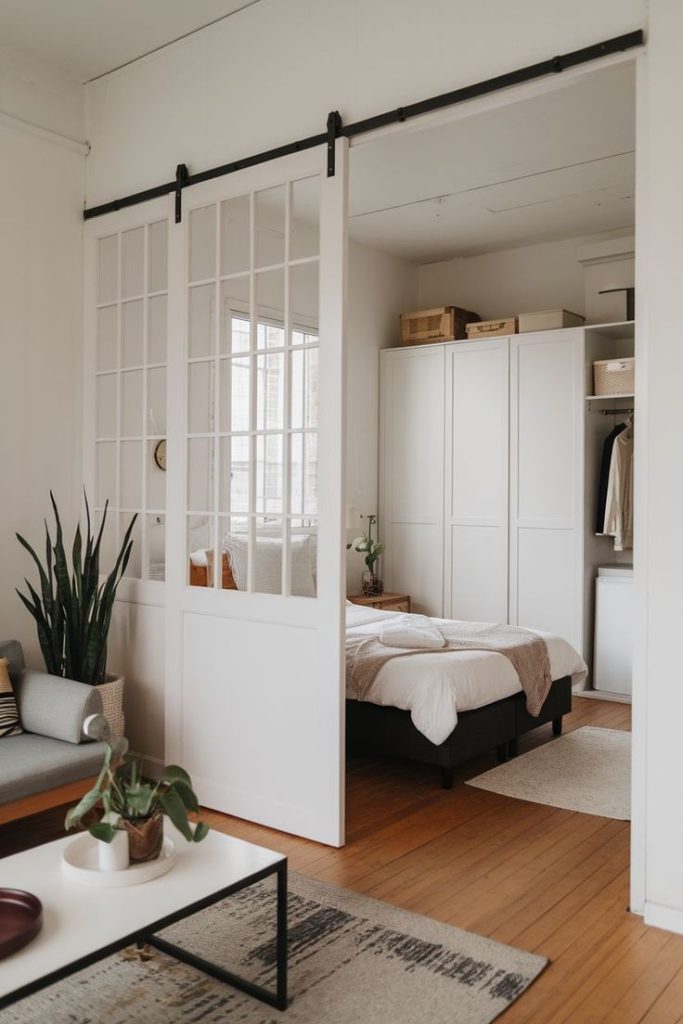
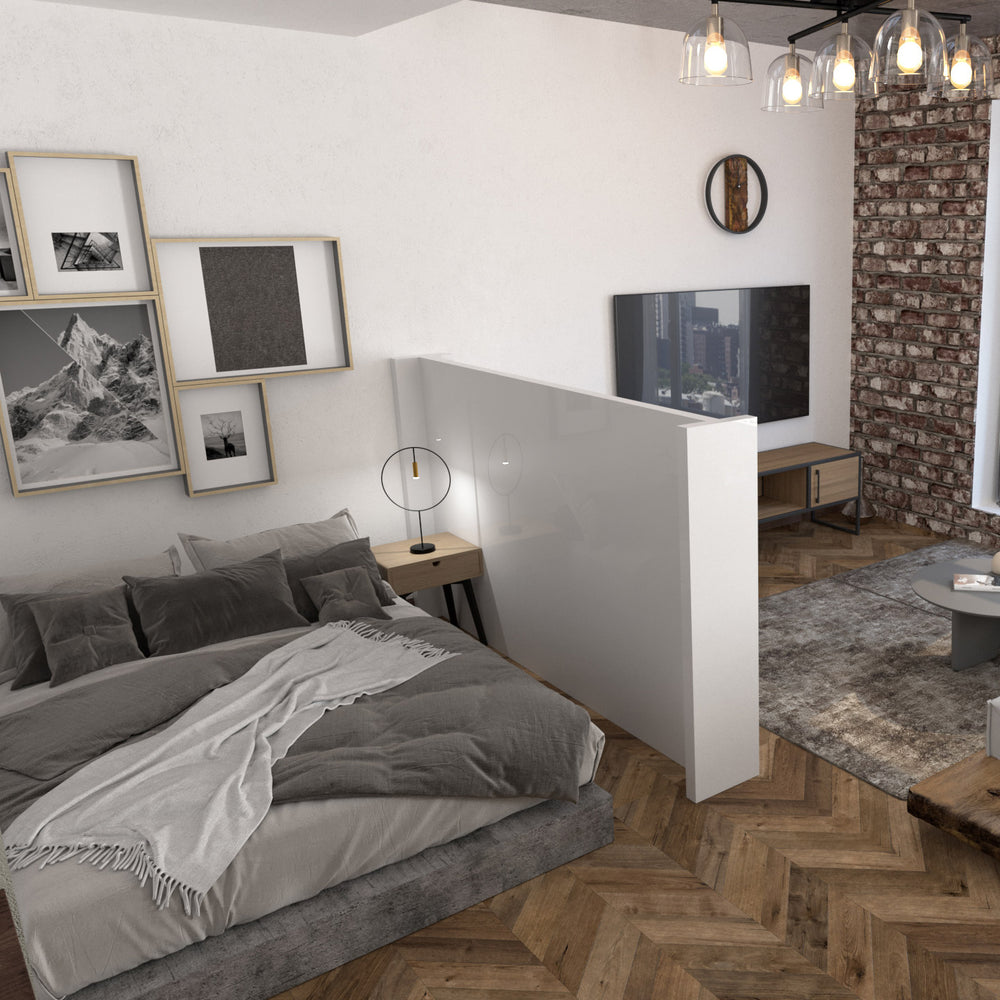
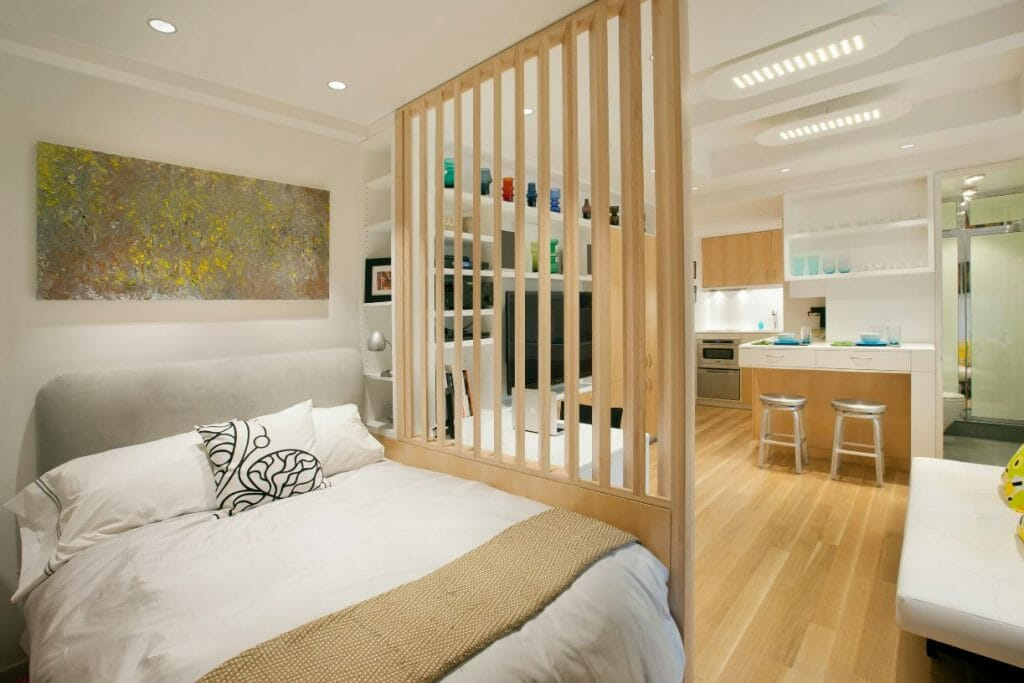
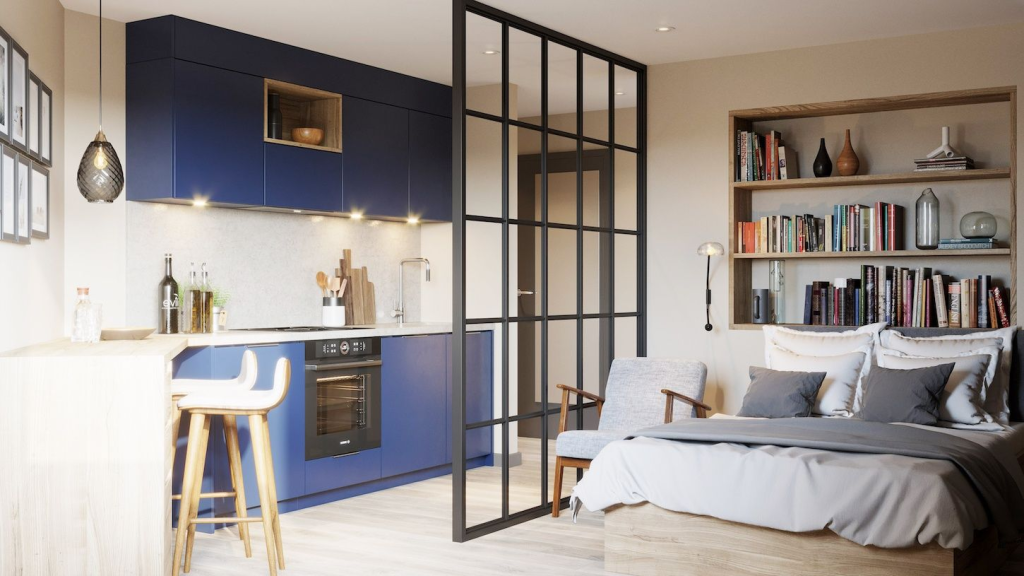
A half wall or open shelving divider creates separation while allowing light to pass through. Unlike full walls, these dividers add structure without shrinking the room.
Open shelves can double as storage and display, while slatted wood dividers or frosted panels add architectural interest. This layout gives the bed a sense of privacy while keeping the studio visually expansive.
It is ideal for renters who want definition without permanent construction. Many modular dividers achieve the same effect without drilling.
4. The Murphy Bed Living-Room-First Layout

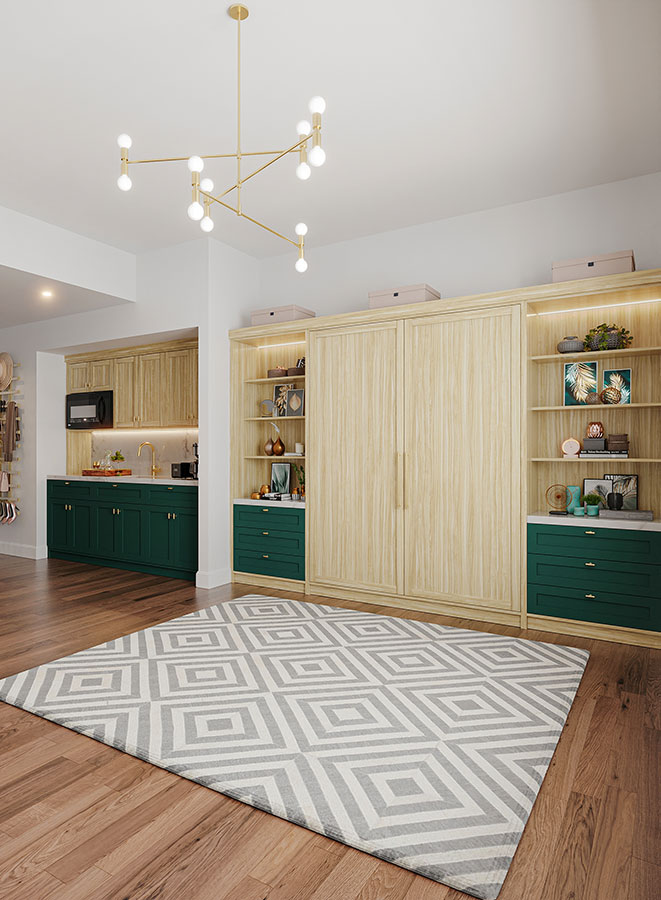
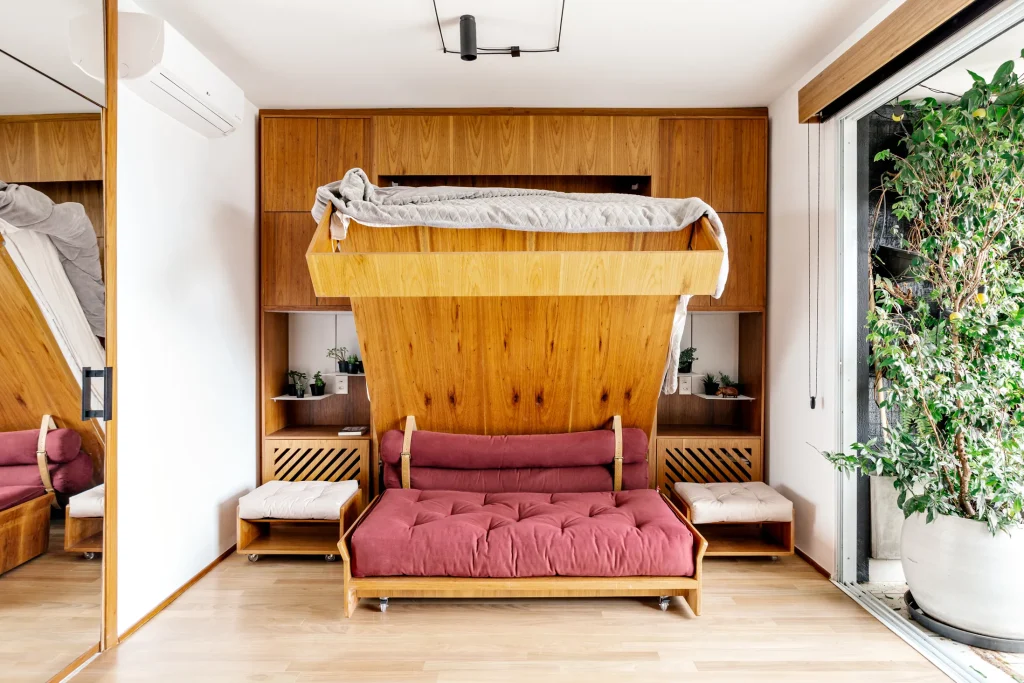
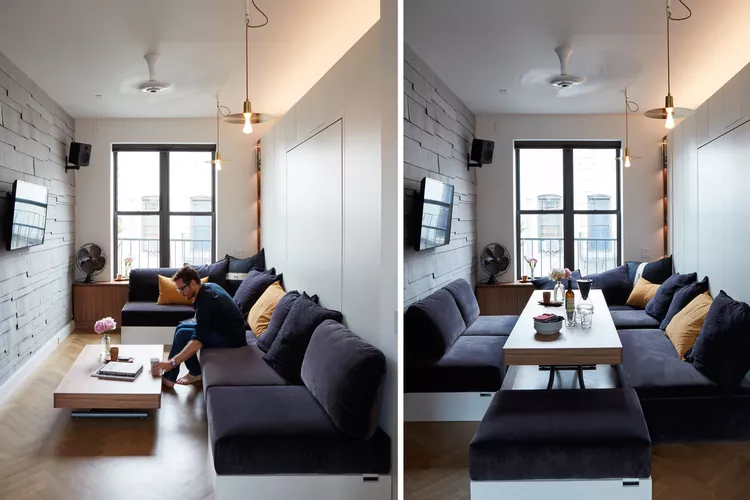
When the bed disappears during the day, the studio instantly feels twice as large. Murphy bed layouts prioritize the living area, turning the apartment into a lounge or workspace during waking hours.
Modern wall beds often include shelving or sofas integrated into the unit, making them feel built-in rather than temporary. This layout is perfect for people who entertain or work from home.
The key is committing fully to the system. Once the bed is hidden, the remaining furniture should be arranged like a true living room, not a compromise.
5. The Studio With a Central Rug Strategy
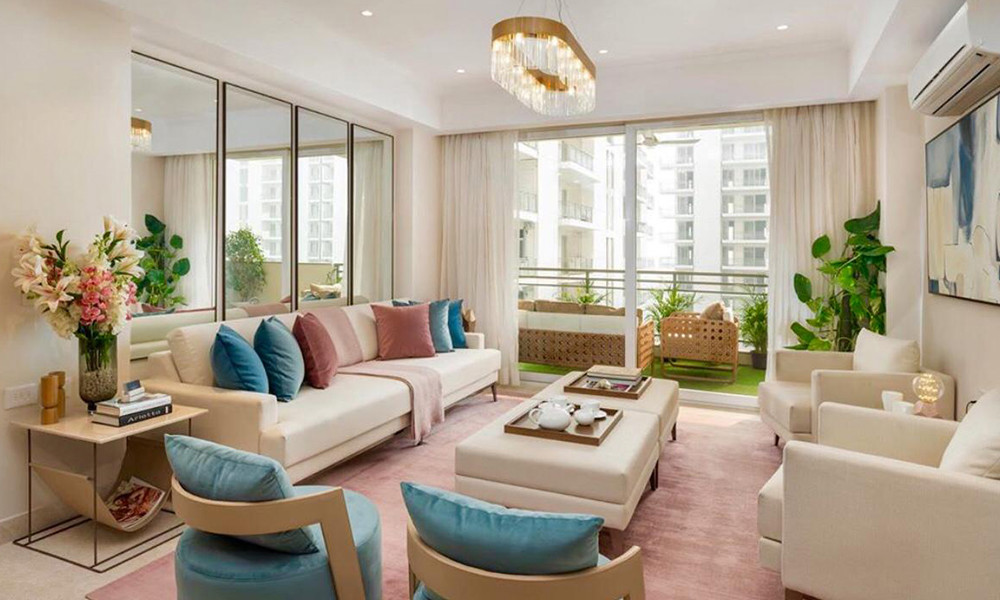
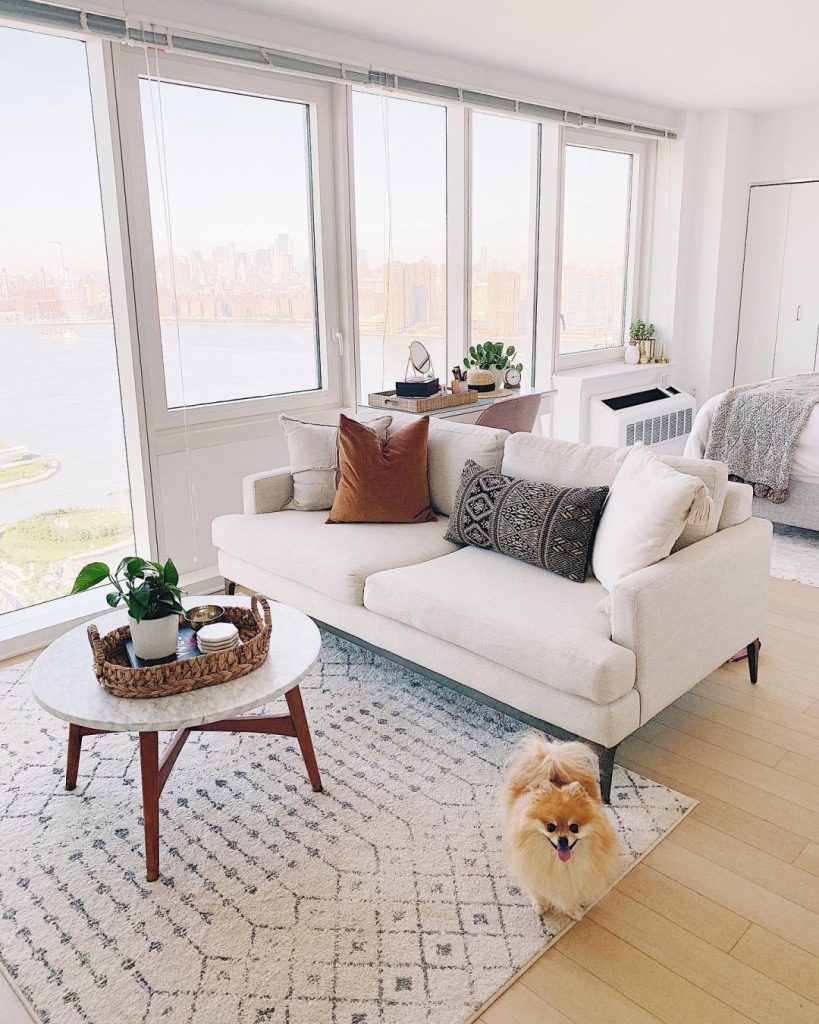

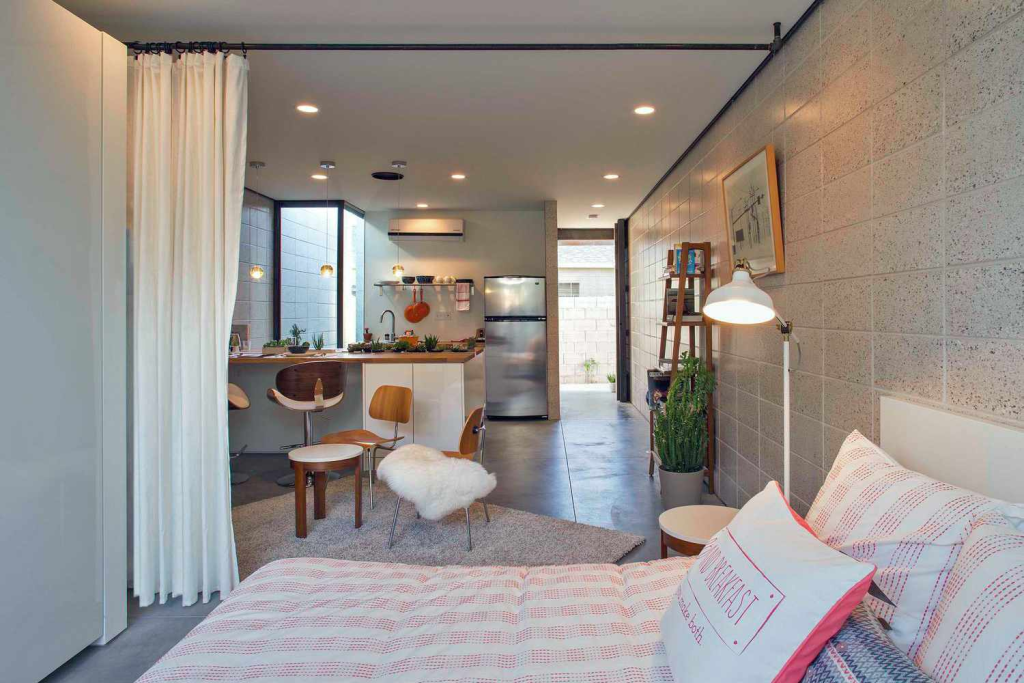
Rugs are one of the most powerful tools for making a studio feel larger. Instead of one oversized rug, this layout uses multiple rugs to define zones.
A rug under the bed signals rest. Another under the sofa anchors the living space. A runner can guide movement through the apartment. The floor remains visually connected, but the brain reads each area as intentional.
Choosing rugs in similar tones keeps the layout cohesive and avoids visual clutter.
6. The Linear Layout Along One Wall

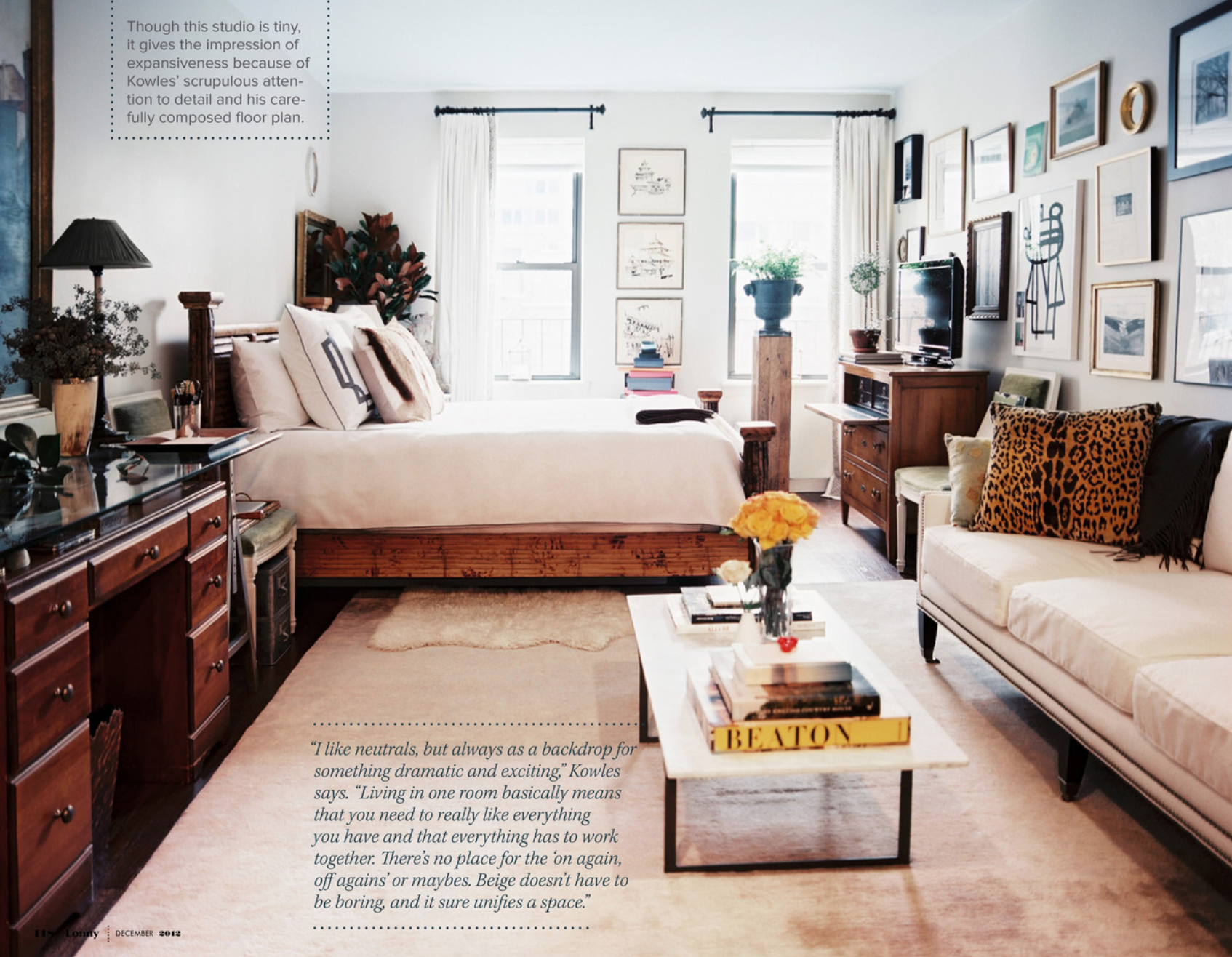

In very narrow studios, pushing most furniture along one long wall can dramatically improve flow. The bed, storage, desk, and shelving align in a clean line, leaving the rest of the space open.
This layout creates a gallery-like feeling and makes walking through the apartment effortless. It works especially well with low furniture and wall-mounted lighting.
Keeping the opposite wall mostly empty or lightly styled amplifies the sense of width.
7. The Raised Bed or Platform Layout
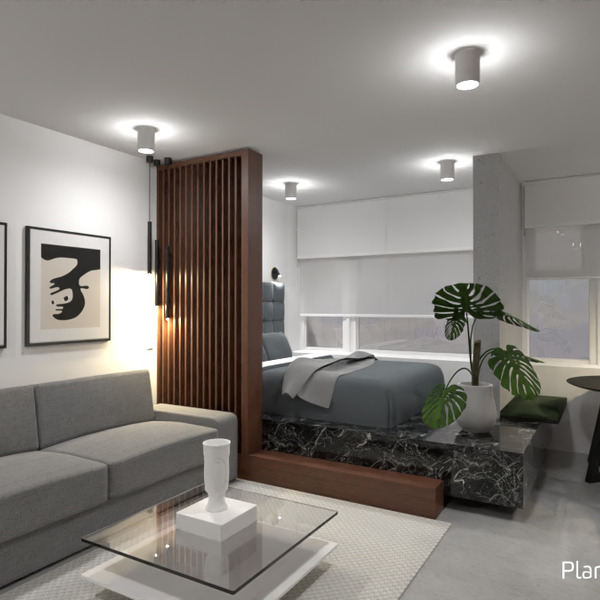
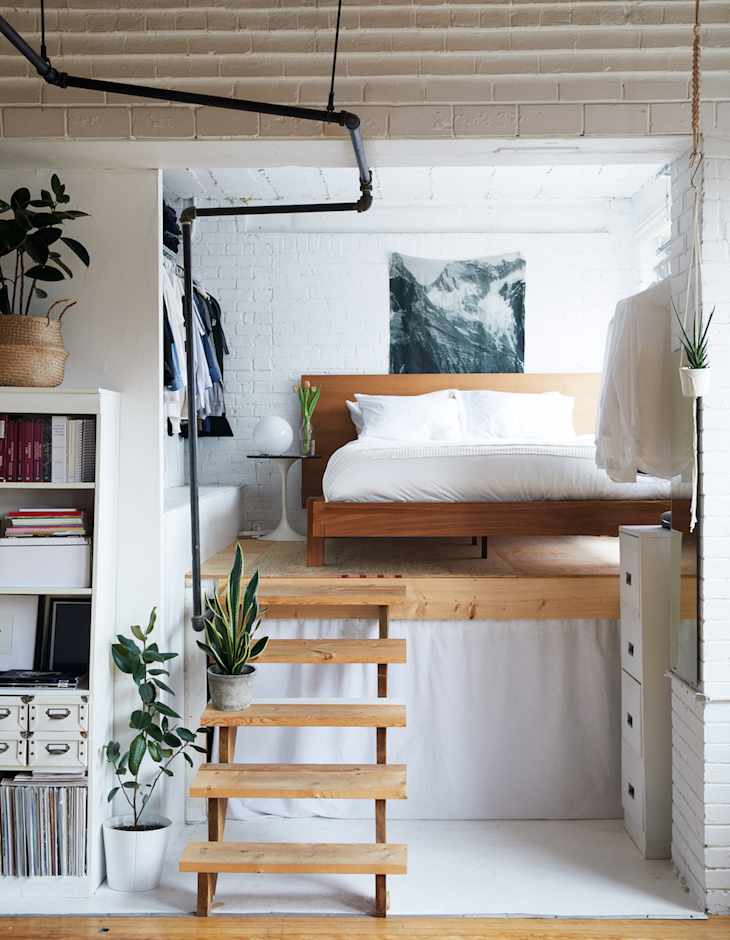

Raising the bed creates space underneath for storage, seating, or even a desk. This layout uses vertical space rather than floor space, which is essential in studios.
Platforms with drawers reduce the need for bulky dressers. In some cases, the bed platform becomes a room divider itself, visually separating sleep and living areas.
This approach works best in studios with higher ceilings and benefits from neutral finishes that keep the platform from feeling heavy.
8. The Studio With a Daybed as the Main Seating
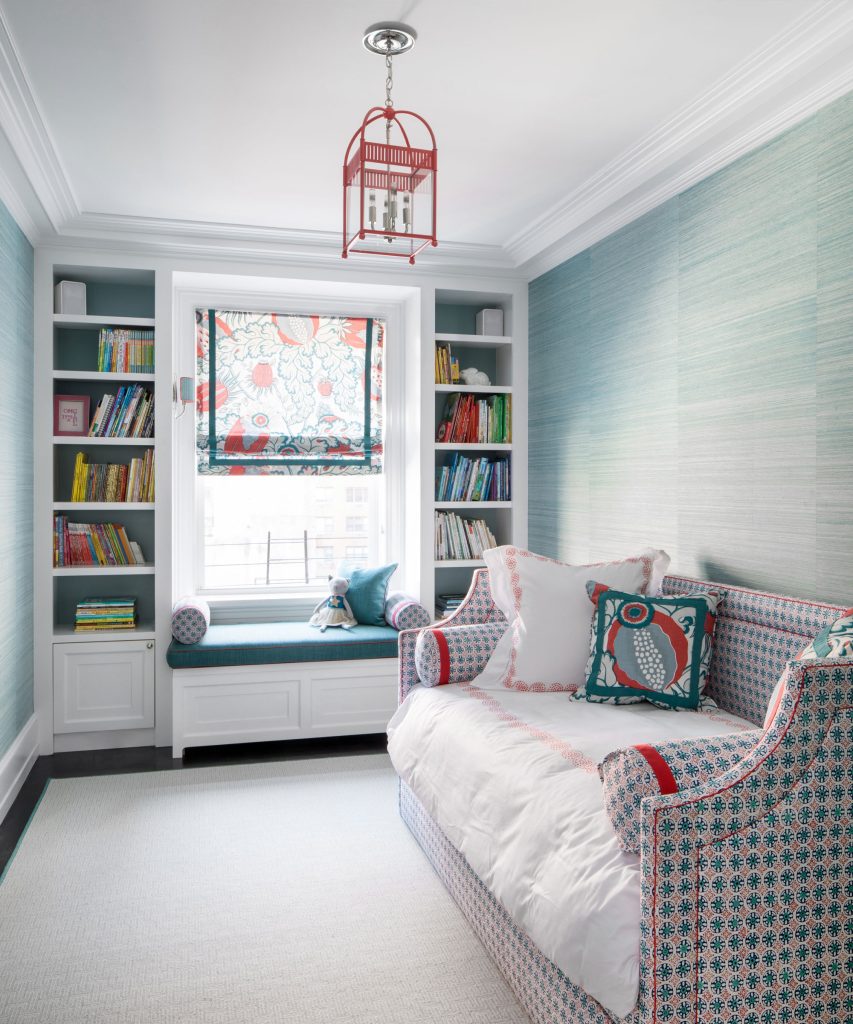

A daybed blurs the line between sofa and bed, making it ideal for studios where flexibility matters. During the day, it functions as seating. At night, it becomes the sleeping zone.
Placing the daybed against a wall or under a window keeps the layout open. Layered cushions make it feel intentional rather than temporary.
This layout is especially effective in studios where space does not allow for both a full sofa and a separate bed.
9. The Studio With Visual Continuity Through Color


Color choices directly affect how large a space feels. This layout relies on a tight, cohesive palette across all zones.
When walls, furniture, and textiles stay within a similar tonal range, the eye moves smoothly through the apartment. There are fewer visual stops, which makes the studio feel expansive.
Warm neutrals, light woods, and soft contrasts work better than stark black-and-white combinations in small studios.
10. The Minimal Furniture, Maximum Space Layout
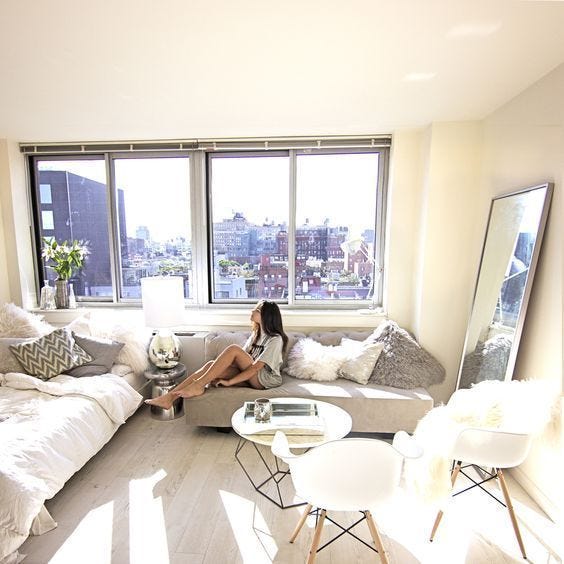


Sometimes the most effective layout is simply owning less furniture but choosing better pieces. This approach uses fewer items, each with a clear purpose.
A compact sofa, a slim dining table, and closed storage keep visual noise low. Negative space becomes part of the design rather than something to fill.
This layout feels calm, modern, and intentionally spacious, especially when paired with good lighting and thoughtful styling.
Browse more: Studio Apartment Layout Ideas



Final Thoughts: Making a Studio Feel Bigger Is About Intention
A studio apartment does not need more square footage to feel larger. It needs clarity. Clear zones. Clear pathways. Clear visual flow.
The layouts above prove that thoughtful placement, not constant buying, is what transforms small spaces. When each piece earns its place, the apartment begins to breathe.
Choose one layout idea and build around it. Studios feel biggest when they follow one strong plan instead of many competing ones.