The Architectural Nook Wardrobe.
If you have a deep wall recession or a former closet space, remove the doors entirely and install a single, simple hanging rod. Curate your clothes by color and fabric to turn the collection into an intentional, minimalist display. The openness is balanced by functional furniture nearby, like a small dresser for folded items.

The Sloped Ceiling Challenge.
Open, modular shelving systems are the ideal solution for irregularly shaped spaces like attics or under-stair nooks. Use adjustable shelves to maximize the vertical storage, and utilize the lower, narrow sections for organized hanging space and opaque storage boxes, keeping the overall aesthetic light and functional.

The Walk-Through Display.
In a narrow passage or dressing area, embrace an open, built-in system that acts as a continuous display. Arrange clothes by color and category for a styled look that makes the storage feel deliberate. The seamless transition from the open closet into the bedroom maximizes natural light and makes the space feel cohesive.
:max_bytes(150000):strip_icc():format(webp)/Snapinsta.app_242214530_673251920307111_344234989297622682_n_1080-8e1ff02890a74d4399367fbf5f6c92ac.jpg)
The Curated Corner.
When space is limited, a minimalist metal and wood shelving unit can serve as your entire wardrobe. The key to making it look intentional (not messy) is color-coding your hanging items and using clear acrylic containers on the shelves for accessories. The rack itself acts as a room divider, keeping the bedroom and dressing area visually separate.
:max_bytes(150000):strip_icc():format(webp)/Snapinsta.app_378694286_1163234187928145_3954689284206344841_n_1080-fcd075b1d6584a6e8880ef2adbfdc1a0.jpg)
The DIY Integrated System.
Combine standard modular storage (like wide drawer units) with a custom industrial pipe hanging rack mounted directly into the wall. This setup provides ample hidden storage below, while the exposed pipework and hanging clothes create a bold, minimalist, and highly affordable open wardrobe display.

The Curated Vertical Niche.
Use a shallow wall niche or the end of a wall as space for a floor-to-ceiling open wardrobe unit. This technique keeps the main floor area clear. Style the exposed shelving by folding clothes consistently and neatly, using matching woven baskets for smaller items, which keeps the display both warm and organized.

The Functional Room Divider.
In a studio apartment or open-concept bedroom, a tall, open shelving unit provides ample storage while effectively dividing the sleeping area from the dressing area. The exposed side can be styled with decorative objects, making the unit feel more like a piece of furniture than just a closet.

Framing the Display.
Use the depth of a wall or a partial dividing wall to build an open wardrobe that’s framed by the surrounding architecture. Choosing a natural wood finish adds warmth and texture. By keeping the color palette soft and using decorative elements like a mannequin, you transform the storage into an intentional and highly stylized part of the bedroom decor.
:max_bytes(150000):strip_icc():format(webp)/GettyImages-846723088-52984f39f57e4fb893071020e81b0395.jpg)
The Decorative Suspension Rack.
For a truly unique and spacious feel, skip the traditional closet and hang a simple rod from the ceiling using thick rope or chain. This technique, paired with light wood shelving and natural textures (like woven baskets and rattan lighting), creates a light, airy, and functional dressing area that leans heavily into stylish room decor.

The Display-Focused Modular Unit.
For a clean, upscale look, choose an open-shelf system with a mix of hanging and shelving compartments. The key to successful styling is arranging clothes by color and category, reserving shelves for small decorative plants, shoes, and organized accessories. This maintains a tidy display and uses the lack of doors as an intentional design feature.

The Simple Nook Wardrobe.
If you have a shallow space or recess, an open, minimalist unit can be built directly into the wall. The key to making this look tidy rather than messy is ruthless organization: keep only a tightly edited, color-coordinated selection of clothes hanging, and use the exposed shelves strictly for neat rows of shoes or folded items.
The Power of Consistent Containers.
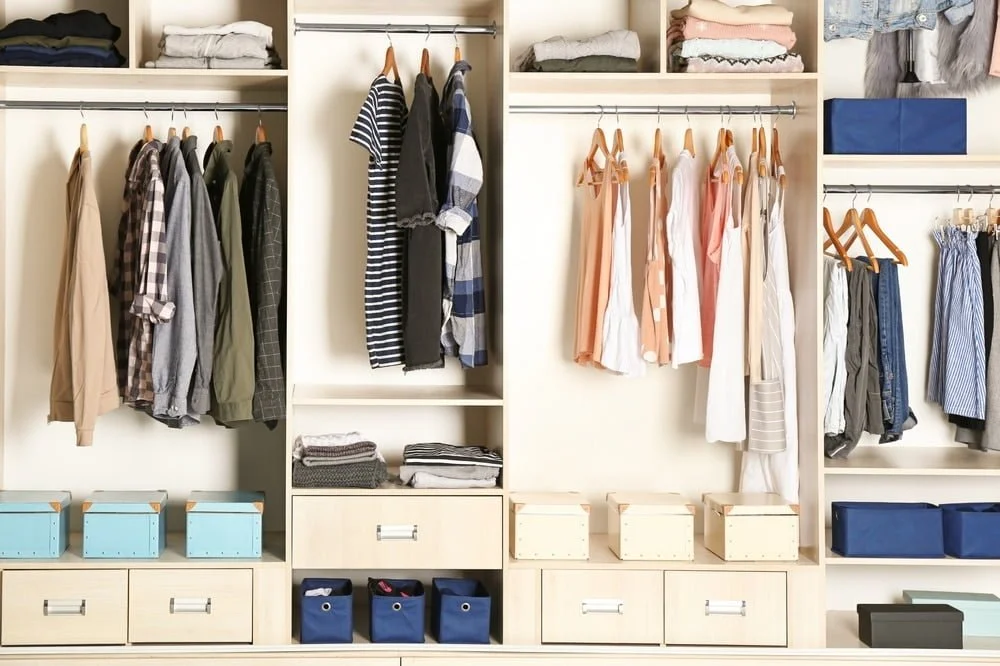
The secret to an aesthetically pleasing open wardrobe is meticulous organization and uniformity in storage aids. Using a mix of light-colored drawers and matching colored boxes (like the pale blue ones shown) creates blocks of color and hides clutter, ensuring that the visible items—especially the hanging clothes—read as a styled display rather than a heap.
The Ultimate Display: Behind the Glass.
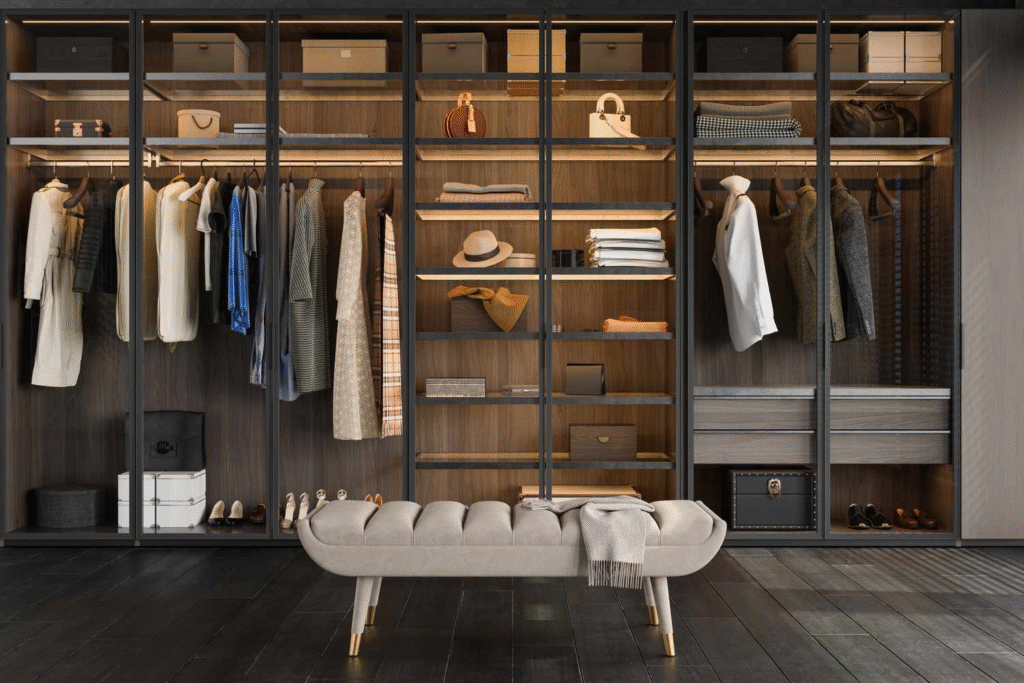
For a truly elevated “open” look, use glass-front cabinets with integrated strip lighting to illuminate your entire collection. The glass provides visual openness while the enclosure protects garments. Styling is paramount here—use consistent hangers, neatly folded items, and matching storage boxes to maintain the gallery-like aesthetic.
The Angled Shoe Display.
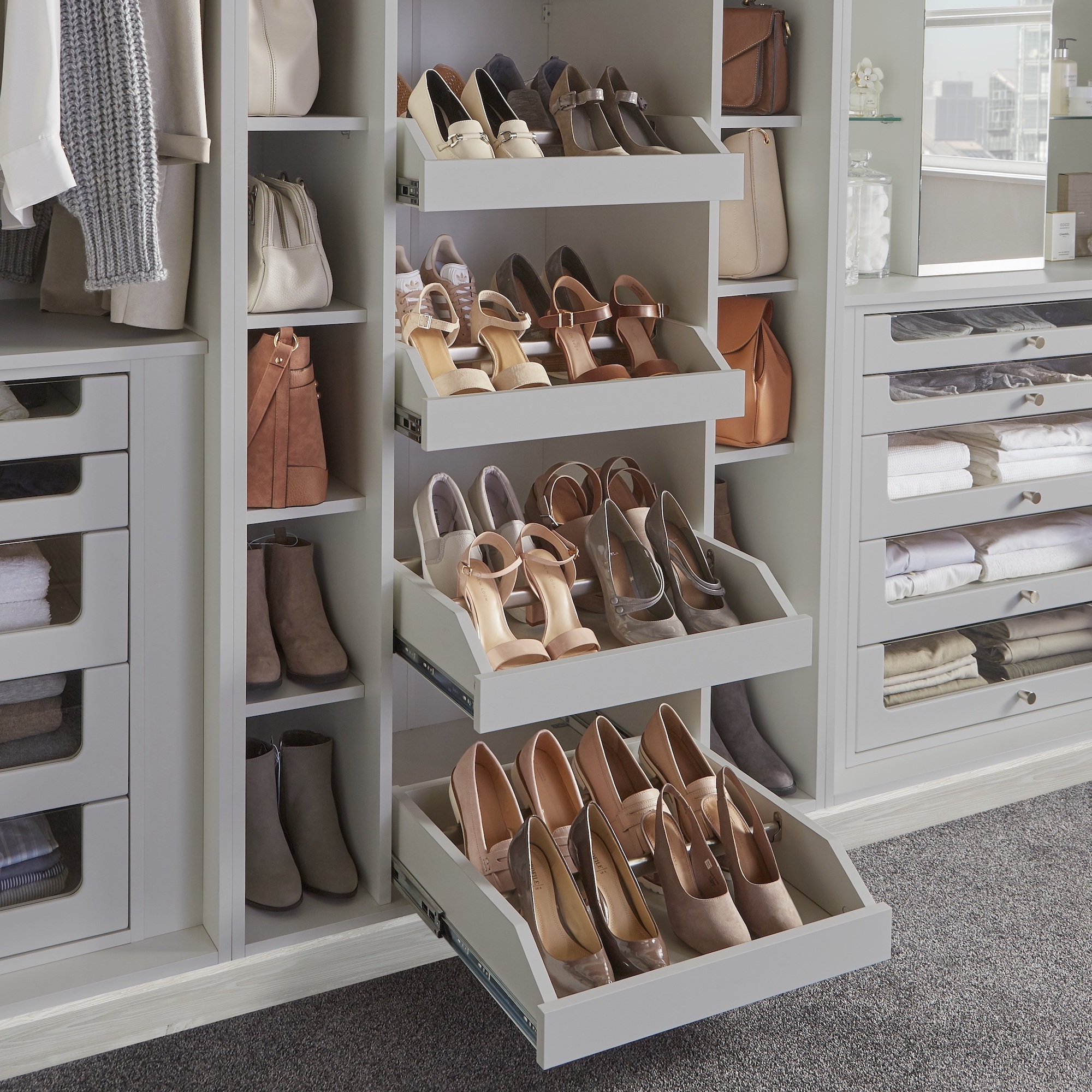
To maximize visibility and access for your footwear collection, incorporate angled, pull-out drawers. These drawers are specifically designed to hold shoes at a slight tilt, eliminating the need to stack and allowing you to see your entire collection at a glance. This feature provides a boutique-like display within your closet.
The Shoe Wall as Decor.
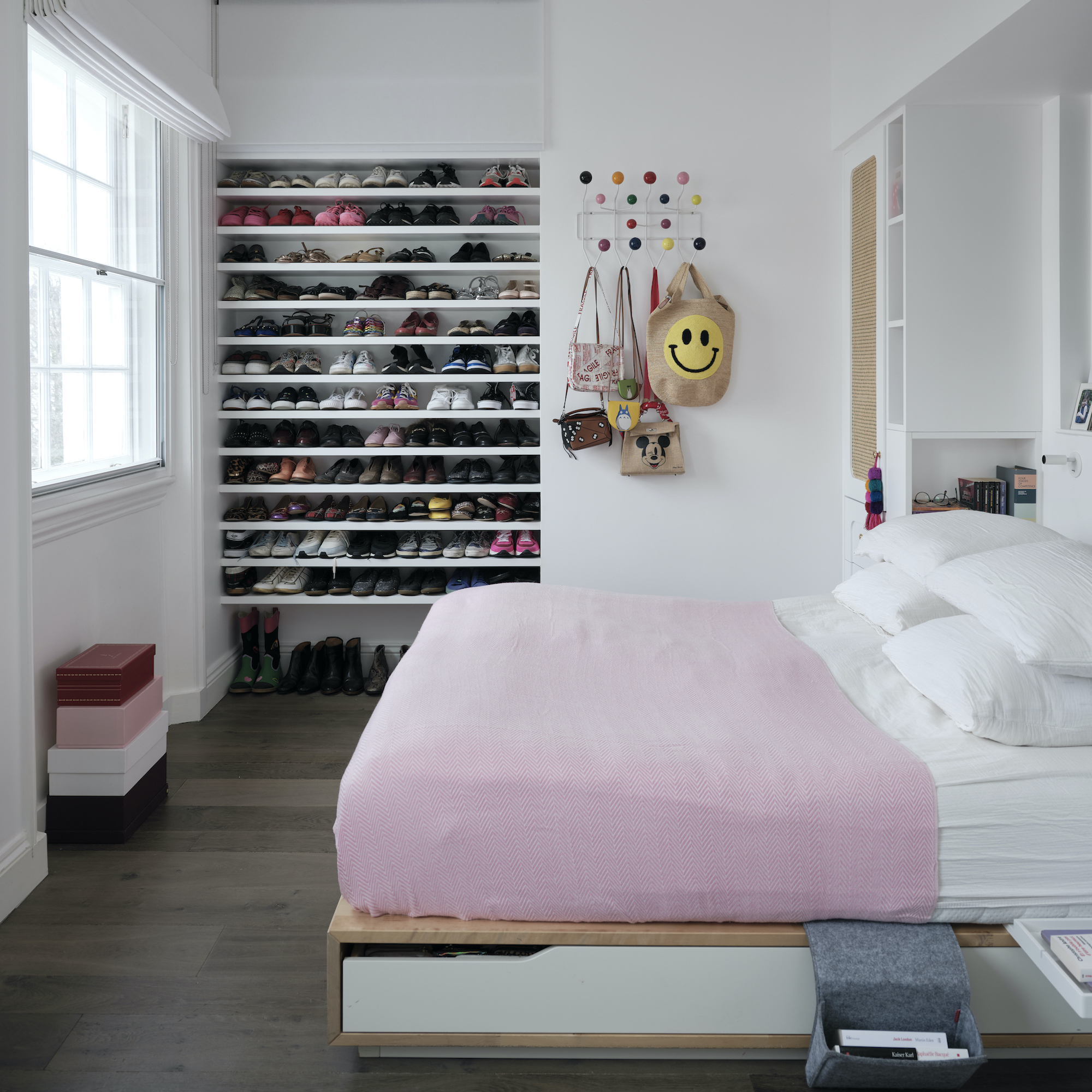
Turn your shoe collection into a visual asset by dedicating an entire wall to open shelving. Organizing shoes by type and color on tight, narrow shelves creates a “shoe library” that is functional, easy to access, and makes a bold, creative statement in the bedroom.
:max_bytes(150000):strip_icc():format(webp)/DesignbyLeaJohnson_PhotobySageEImagery-20-7794b6c3471b4044b2227d0c160b0cc7.jpg)
The Curated A-Frame Niche.
Don’t let awkward corners go to waste. A simple hanging rod installed under a sloped ceiling, paired with a low drawer unit, creates a deliberate and curated display. The key to success in this small, exposed area is maintaining a minimalist color palette (neutrals and earth tones, as shown) and styling the remaining floor space with sculptural accessories.
:max_bytes(150000):strip_icc():format(webp)/Snapinsta.app_89475916_2636623979905993_7971155570934609063_n_1080-1c8669d51ac74dccbaff7be8c3fb3e56.jpg)
The Stylish Closet Stand-In.
A tall, dedicated wardrobe rack is an ideal solution for renters or those with minimal space. The secret to making this look intentional is utilizing the base for structured storage (like large, matching woven baskets) and keeping the top shelf free for extra storage bins or decorative accessories. This keeps the look cohesive and maximizes the small footprint.

Open Concept with a Privacy Option.
For those who want the functionality of an open closet but sometimes need to hide clutter, install ceiling-mounted curtains in a tone that matches the room’s decor. Keep the interior styled with a mix of storage, like a small dresser and a decorative mirror, to make the nook feel like a dedicated, chic dressing room when the curtains are pulled back.

The Integrated Dressing Nook.
Transform a standard closet by removing the doors and painting the back wall a deep accent color. Incorporate a chest of drawers directly beneath the hanging space for folded storage. The mix of dark walls, a classic piece of furniture, and soft draping curtains elevates the open closet into a sophisticated, functional dressing corner.

The Versatile Modular Closet.
An affordable modular system offers maximum flexibility for mixing wire baskets (for ventilation), clear boxes, and hanging space. To give the open concept a tidy border and allow for quick concealment, install a simple rod above the unit and hang light, floor-length curtains. The curtains soften the hard edges and blend the storage into the bedroom decor.

The Built-In Dresser Nook.
Maximize a shallow closet space by removing the doors and placing a wide, low dresser directly beneath the hanging rod. This combines hidden drawer storage with open hanging space. Using curtains to frame the nook and a consistent color for the storage bins ensures the open closet appears intentional and sophisticated.

Ditching the Doors for Drapery.
If you have a standard built-in closet, simply remove the bulky doors and replace them with a decorative curtain rod and elegant floor-length curtains. This immediately opens up the space, adds a soft, luxurious texture to the room, and allows you to quickly conceal the closet contents when needed.

The Soft Corner Closet.
In a bedroom with an unused corner or a small, deep recess, install a track near the ceiling and use flowing white curtains to create a defined dressing area. The curtains partition the space without requiring permanent doors, while the visible light fixture (a chandelier, as shown) adds a luxurious, boutique feel to the ‘open’ closet interior.

The Gallery Corridor Effect.
Painting both side walls in a single dark color (like charcoal or deep grey) while leaving the ceiling and trim bright white creates a dramatic gallery corridor. This technique narrows the space visually but adds depth and sophistication. The white crown molding and baseboards provide the crisp contrast needed to frame the color block beautifully.

The Classic Horizontal Divide.
One of the most effective ways to achieve a two-tone look is with a horizontal split, often at chair rail height. Painting the lower section a light, textured white (like shiplap paneling) and the upper section a darker, solid color (like this rich gray) adds depth and character. This technique is particularly effective in visually expanding a narrow space.

Textured Contrast with Paneling.
For maximum impact, dedicate one long wall of the hallway to detailed paneling (like board and batten or shiplap) and paint it a deep, rich color like this taupe or olive green. Leave the opposing walls, ceiling, and trim white. The combination of the deep color and the geometric texture adds depth and high-end architectural appeal to the long, narrow space.
:max_bytes(150000):strip_icc():format(webp)/Snapinsta.app_275459569_1867458793454610_802033262206815728_n_1080-729cab4afadc420bbc8116df29c2ce92.jpg)
Texture on the Lower Half.
Instead of a simple paint split, use a textured wallpaper, beadboard, or, as shown here, a patterned tin or vinyl paneling on the lower section of the wall. Painting this textured surface a deep charcoal or black creates incredible depth and a luxurious, high-contrast effect against the simpler light gray or white upper walls. The dark color also helps to ground the busy architectural details.
:max_bytes(150000):strip_icc():format(webp)/GettyImages-14212728751-c8ab1106fd3c45ed92b042e39d38582e.jpg)
The Complementary Color Contrast.
Move beyond simple black and white by pairing a saturated, cool color (like this dusty blue) on the lower paneling with a warm, pale neutral (like soft apricot or peach) on the upper wall. This combination is rich and dynamic, especially when the paneling is detailed, giving the hallway a classic, layered, and inviting feel.
:max_bytes(150000):strip_icc():format(webp)/image-asset-595c7a496ec848778d58de95924501c9.jpeg)
The Timeless Paneled Divide.
The combination of deep blue paneling and a soft, warm neutral on the upper half is a timeless choice for long hallways. The height of the wainscoting should ideally reach chair rail level to create an anchor, grounding the space and preventing the hallway from feeling too top-heavy. The ornate moldings highlight the separation of the two colors beautifully.
:max_bytes(150000):strip_icc():format(webp)/Snapinsta.app_367509710_233843602959020_3569513276012055774_n_1080-4fce9069201144c299dd979fd1461af1.jpg)
The Anchored Color-Block.
This look leverages the architectural detail of wainscoting to create a clean horizontal divide. Using a bold, saturated color like deep blue on the lower half grounds the hallway, drawing the eye down, while the pale, warm upper half (a soft peach or bisque) keeps the ceiling feeling high and the space bright. The contrast feels dynamic yet timeless.
:max_bytes(150000):strip_icc():format(webp)/20220106_BeccaInteriors_Edits-60-79daf6c688ff4ae3856c80083ea3ff5b.jpg)
The Focused End-Wall Accent.
Instead of splitting the side walls horizontally, paint the end wall of a hallway a deep, dramatic color like black. By also using a texture like vertical shiplap paneling, you create both visual depth and an intentional focal point. The dark color draws the eye and makes the hallway feel shorter and wider, while the surrounding white walls keep the overall space bright.
:max_bytes(150000):strip_icc():format(webp)/Snapinsta.app_271876912_1000227910585608_1807119678426133372_n_1080-a558d932fbac499583edd5c5ccb2c582.jpg)
The Single-Wall Statement.
For narrow spaces, using two contrasting colors on opposite walls creates an immediate focal point and a dynamic sense of depth. Painting one wall a deep color (like black or forest green) and the parallel wall, ceiling, and trim bright white creates a dramatic, immersive corridor effect while keeping the center of the hallway feeling airy and bright.
:max_bytes(150000):strip_icc():format(webp)/bitter-7823654705c94d389d7eccb94de5f3fe.jpg)
Wainscoting to Anchor and Widen.
In a standard narrow hallway, painting the upper wall a rich, dramatic color (like deep charcoal or navy) creates sophisticated depth. The most crucial part of this two-tone look is keeping the lower half, especially if it includes horizontal paneling (wainscoting), a crisp white. This tricks the eye into seeing more width, while the white baseboard and trim maintain a clean, architectural border.
:max_bytes(150000):strip_icc():format(webp)/GettyImages-1049306094-2032bcb3783c44cba18a6c4ebb5999ef.jpg)
The Immersive Monochrome.
For a sleek, modern look, paint both side walls and the end wall a single, deep color like charcoal gray. The two-tone effect is achieved by ensuring all architectural trim—door casings, baseboards, and ceilings—remain a crisp white. This deep color contrast creates a sophisticated “gallery” feel, especially when paired with clean, white-framed artwork that pops off the wall.
:max_bytes(150000):strip_icc():format(webp)/GettyImages-537515746-6ad4e54f161e448992fbe0d7f5887d08.jpg)
The Contemporary High-Contrast Split.
For a sleek, contemporary hallway, embrace a crisp horizontal line using black and white. Painting the lower half matte black grounds the space and hides scuff marks, while the bright white upper section prevents the black from feeling too heavy and ensures the space remains airy. The black-and-white striped runner rug perfectly complements the two-tone color scheme, enhancing the corridor effect.
:max_bytes(150000):strip_icc():format(webp)/abm-2738358d734b4f8c8f9384d173cb4e95.jpg)