Open-plan living offers light, flexibility, and a sense of spaciousness—but without clear boundaries, it can quickly feel undefined or chaotic. When living, dining, and kitchen areas blend together without walls, the challenge becomes creating structure without closing the space off.
The solution isn’t adding partitions—it’s smart zoning. By using furniture placement, visual cues, lighting, and subtle design shifts, you can define distinct areas while preserving openness and flow.
Below are 10 open plan layout ideas that successfully define zones without walls, helping your space feel organized, intentional, and beautifully balanced.
1. Furniture Placement as a Natural Boundary
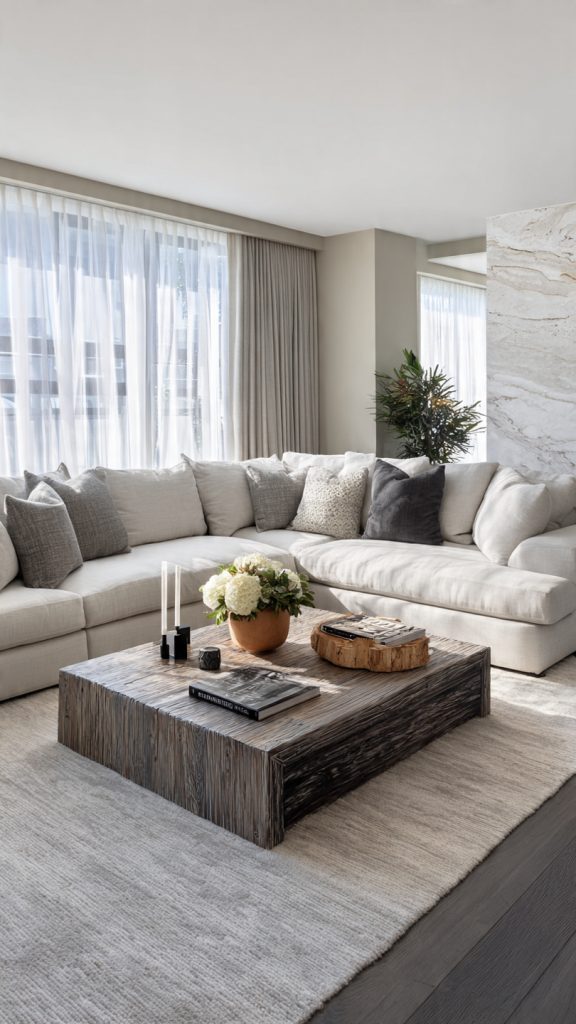
One of the most effective ways to define zones in an open-plan layout is through intentional furniture placement. A sofa, sectional, or pair of armchairs can act as a visual boundary between spaces without interrupting light or movement.
For example, positioning a sofa with its back toward the dining area naturally separates lounging from eating, even though the room remains fully open.
Why it works
- Creates clear zones instantly
- Requires no extra furniture or construction
- Maintains open sightlines
The key is floating furniture rather than pushing everything against walls.
2. Area Rugs to Visually Anchor Each Zone
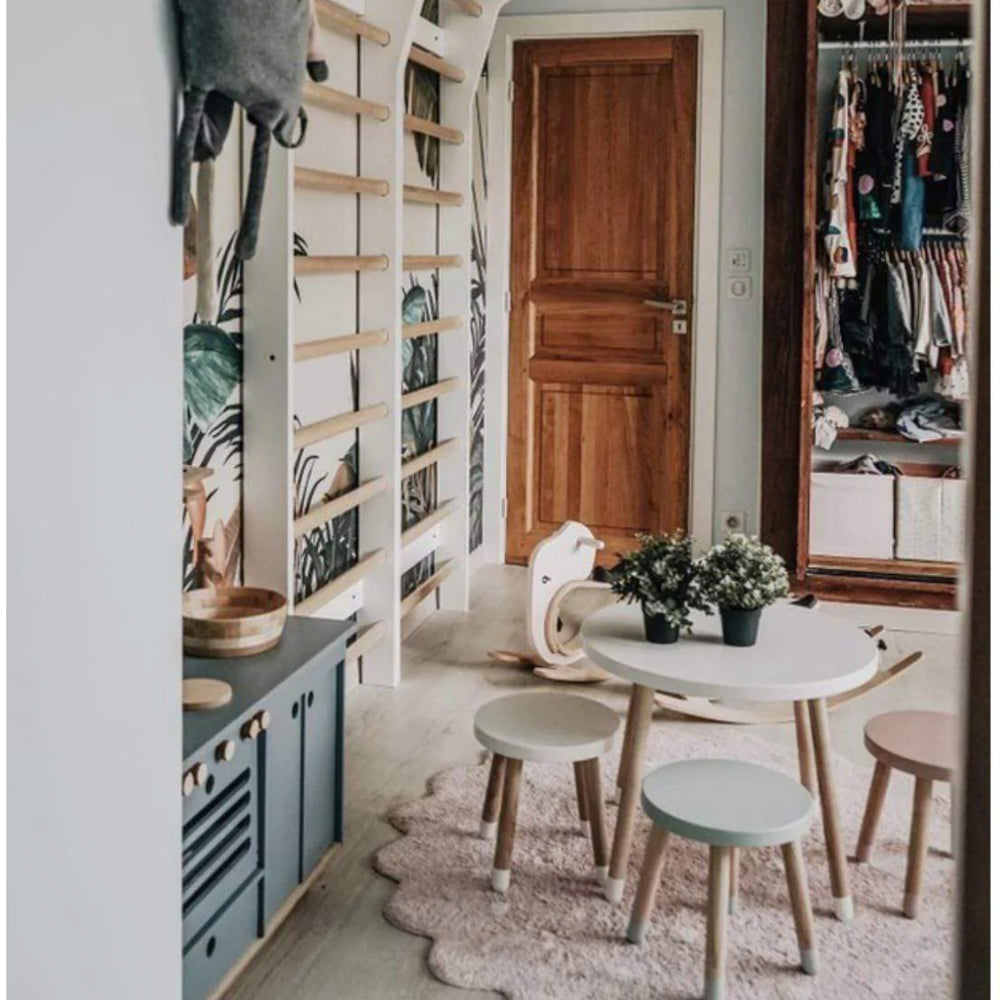
Area rugs are a designer favorite for open-plan spaces. They visually anchor each functional area—living, dining, or workspace—while adding texture and warmth.
Using different rugs for different zones helps the eye understand where one area ends and another begins, even when the flooring is continuous.
Why it works
- Defines zones without physical barriers
- Adds comfort and softness
- Works in both large and small layouts
Stick to a cohesive color palette so the rugs feel connected rather than competing.
3. Lighting to Define Function
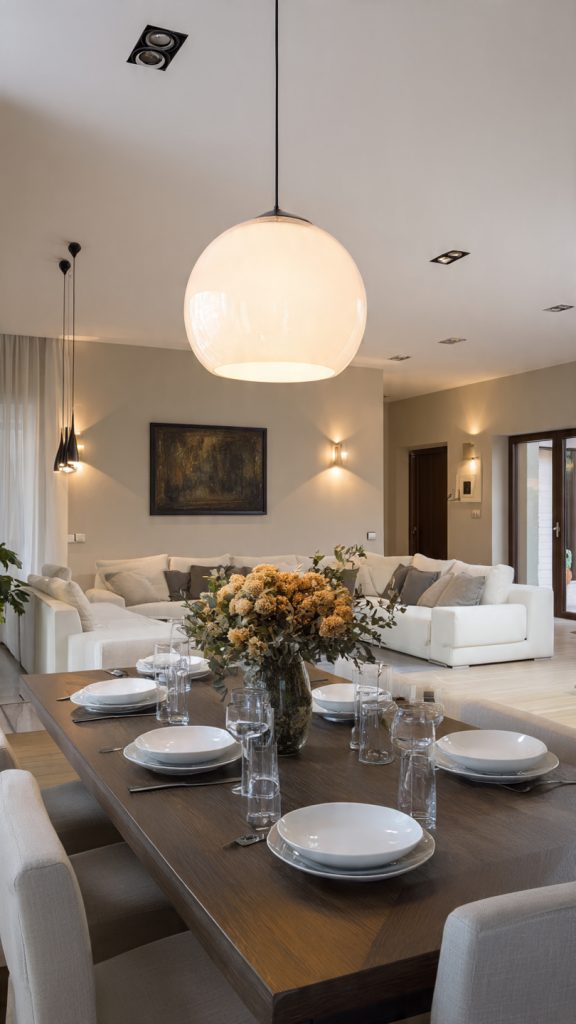
Lighting is one of the most overlooked zoning tools in open-plan design. A pendant light above a dining table, recessed lighting in the kitchen, and softer ambient lighting in the living area instantly establish purpose.
Each lighting type signals how the space is meant to be used—without a single wall.
Why it works
- Adds vertical zoning
- Enhances atmosphere and usability
- Keeps the layout visually open
Using similar finishes or tones across fixtures maintains cohesion.
4. Change in Furniture Scale or Shape
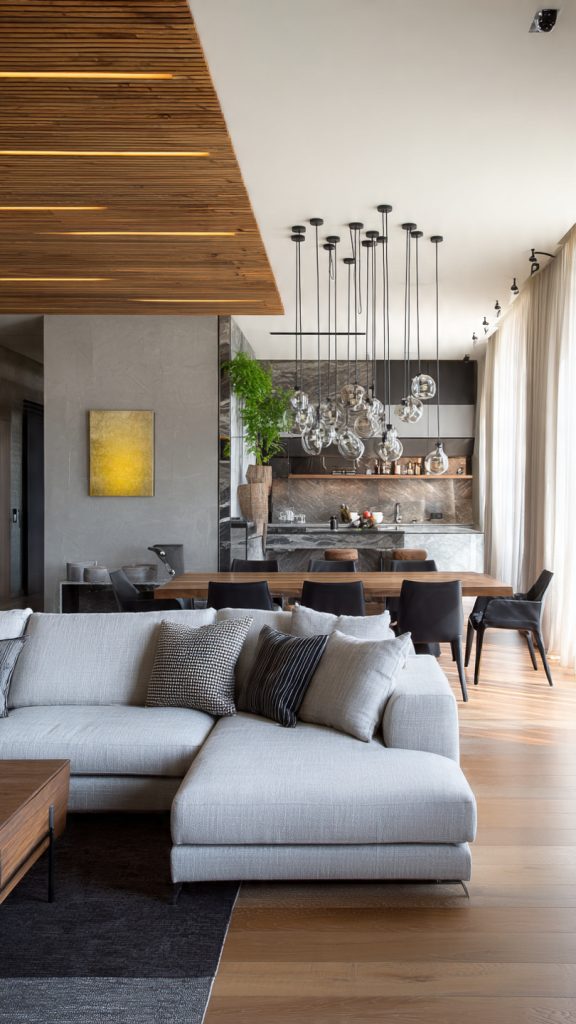
Varying furniture scale helps define zones organically. A large sectional may anchor the living area, while slimmer dining chairs keep the dining space visually lighter.
You can also use shape contrasts—curved seating in the living area paired with a rectangular dining table—to subtly differentiate functions.
Why it works
- Adds visual hierarchy
- Prevents the space from feeling flat
- Encourages natural separation
Balance is key—each zone should feel intentional, not overcrowded.
5. Console Tables and Low Dividers
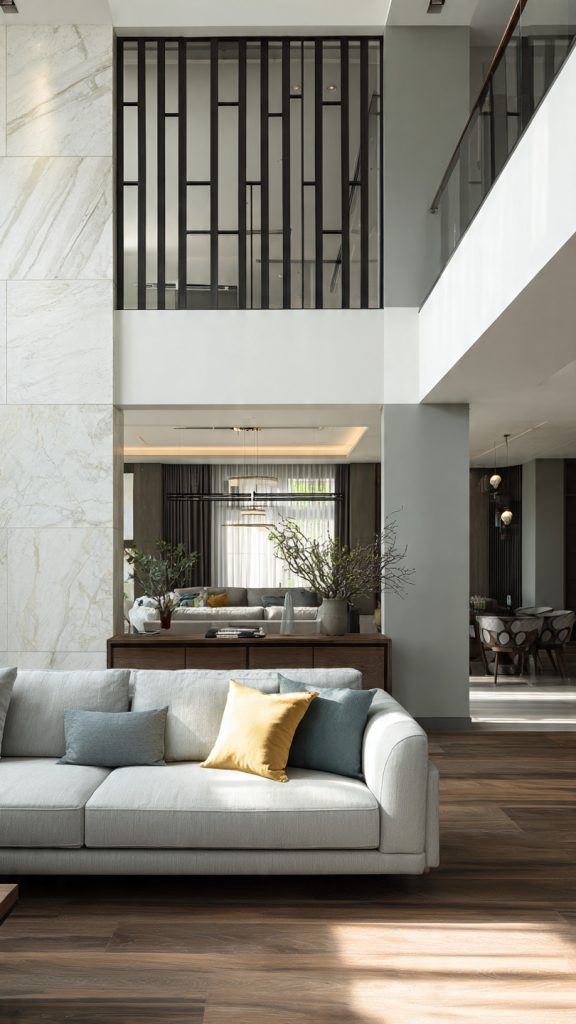
Low-profile furniture such as console tables, sideboards, or low shelving units create separation without blocking views or light. Placed behind a sofa or between zones, they offer structure while remaining unobtrusive.
They also add valuable storage or display space.
Why it works
- Defines zones subtly
- Adds function without bulk
- Preserves openness
Avoid tall shelving if your goal is an uninterrupted visual flow.
6. Color and Material Shifts
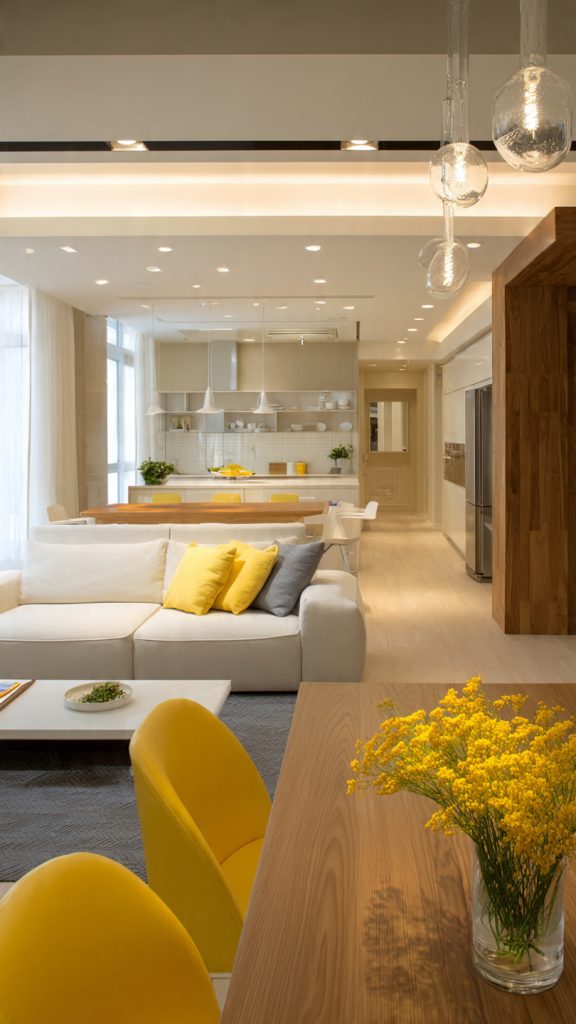
Using subtle color or material changes is an elegant way to define zones. For instance, warmer tones in the living area paired with cooler tones in the dining space create distinction while still feeling cohesive.
Material repetition—such as wood finishes or metal accents—helps unify the zones even as they differ.
Why it works
- Creates visual clarity
- Enhances depth and interest
- Works across all design styles
The contrast should be intentional but restrained.
7. Ceiling Treatments or Directional Elements
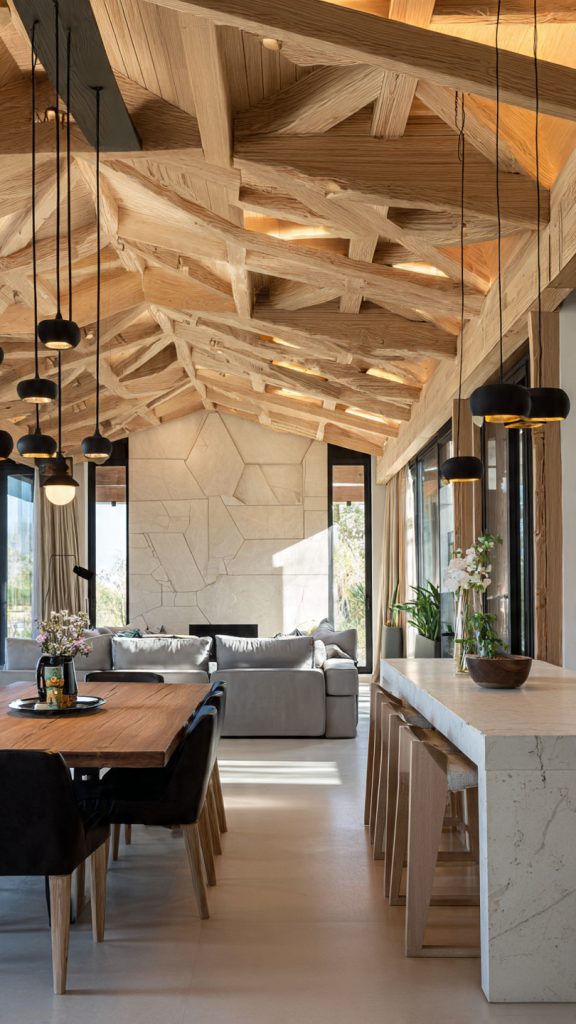
Even without walls, ceilings can help define space. Changes in ceiling height, exposed beams, or directional lighting tracks subtly indicate where one zone ends and another begins.
In homes without architectural changes, aligning furniture with ceiling features can reinforce zoning.
Why it works
- Adds architectural interest
- Defines zones vertically
- Keeps floor space uninterrupted
This method is especially effective in larger open-plan homes.
8. Strategic Walkways and Circulation Paths
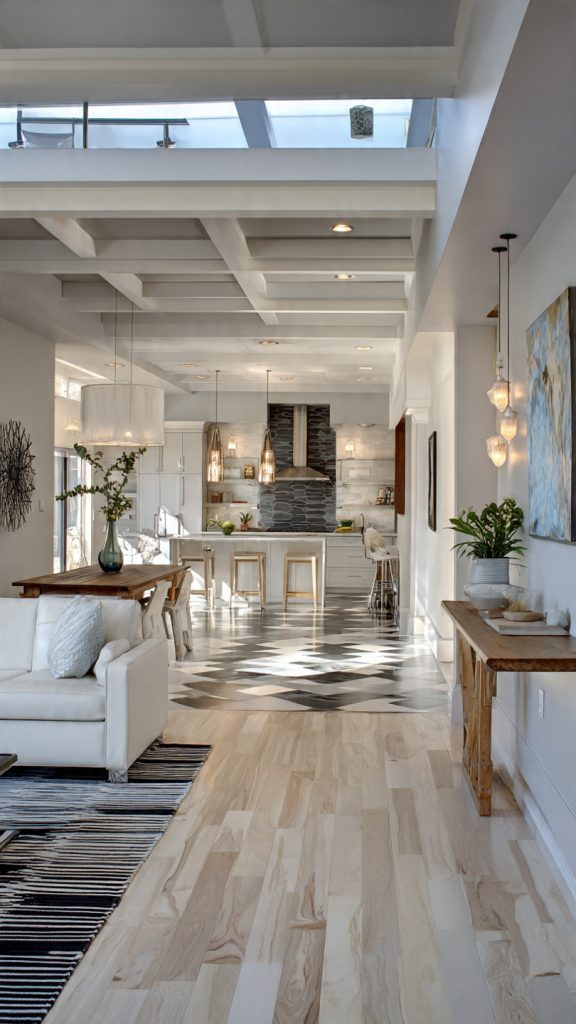
Flow isn’t just about looks—it’s about movement. Clear walkways naturally define zones by guiding how people move through the space.
When furniture placement creates obvious circulation paths, zones feel intuitive rather than forced.
Why it works
- Improves daily functionality
- Prevents cluttered layouts
- Makes zones feel purposeful
Aim for clear paths between major areas like seating, dining, and kitchen zones.
9. Statement Pieces as Visual Anchors
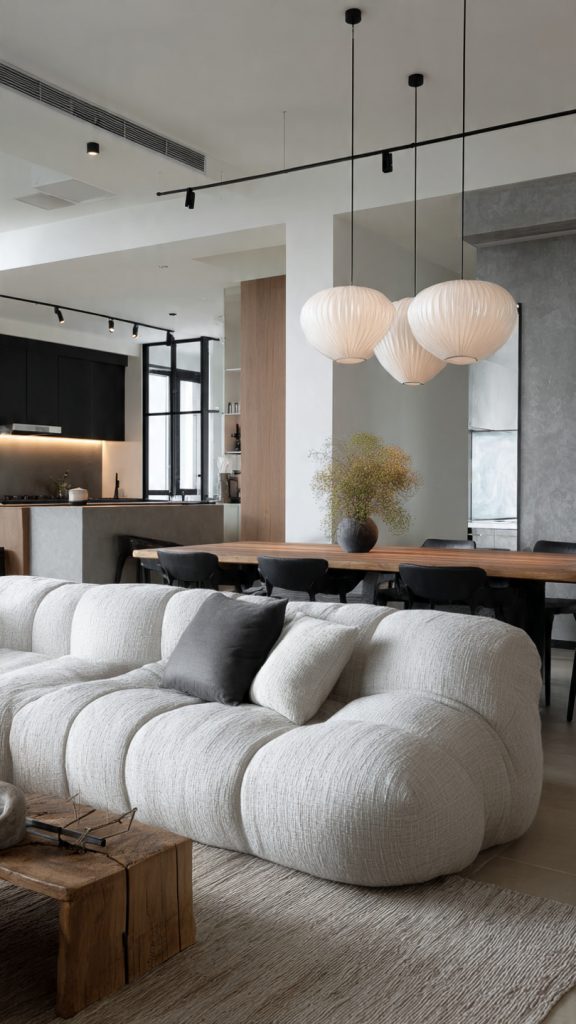
A statement piece—such as a bold sofa, a large dining table, or a standout light fixture—can anchor a zone visually. The eye naturally groups elements around focal points, creating invisible boundaries.
This works especially well in minimalist or modern spaces.
Why it works
- Defines zones through emphasis
- Reduces the need for multiple dividers
- Elevates the overall design
Limit statement pieces to one per zone to avoid visual overload.
10. Consistent Style with Subtle Variation
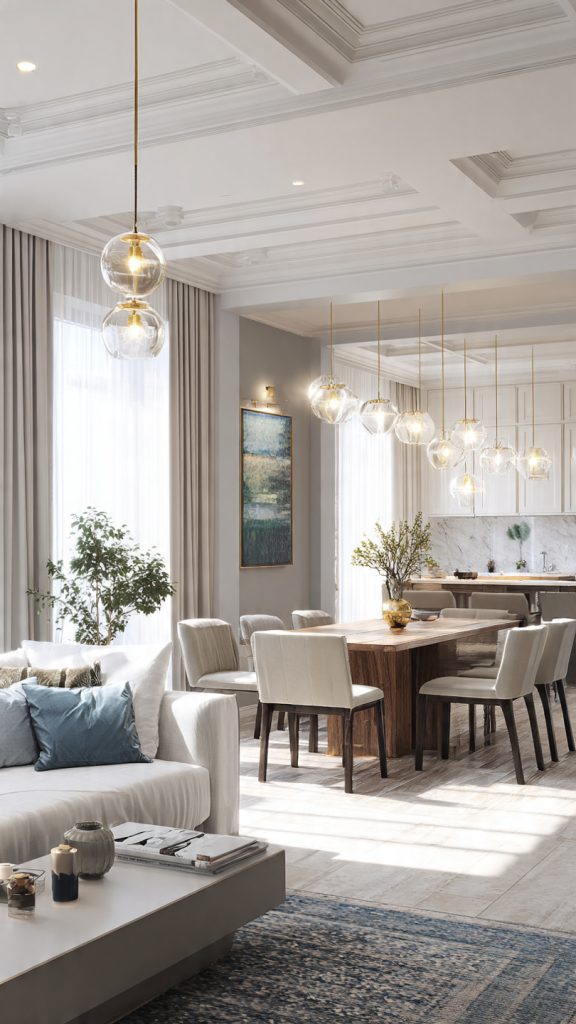
The most successful open-plan layouts maintain a consistent overall style while allowing each zone its own character. This could mean the same color palette across spaces, with different textures or finishes in each area.
Consistency ensures cohesion; variation adds clarity.
Why it works
- Keeps the space unified
- Prevents visual confusion
- Makes zones feel intentional
This balance is essential for open-plan layouts that feel calm and organized.
Final Thoughts
Defining zones in an open-plan layout doesn’t require walls—just thoughtful design decisions. When furniture placement, lighting, color, and circulation work together, each area feels distinct while remaining connected.
The goal is not separation, but clarity. By guiding how the space is used and experienced, you can enjoy the openness of an open plan without sacrificing structure or comfort.
With these 10 layout ideas, you can create an open-plan home that feels functional, cohesive, and beautifully defined—no walls required.
