When cooking feels slow or frustrating, the problem often isn’t the recipe—it’s the drawers. Utensils get tangled, tools are hard to find, and time is wasted searching instead of cooking. Well-organized drawers remove friction from every step of the process.
Designers organize kitchen drawers with speed, visibility, and task flow in mind. The goal is simple: open a drawer and immediately grab what you need—no digging, no reshuffling.
Below are 10 kitchen drawer organization ideas that streamline your workflow and make everyday cooking noticeably faster.
1. Assign Each Drawer a Single Purpose
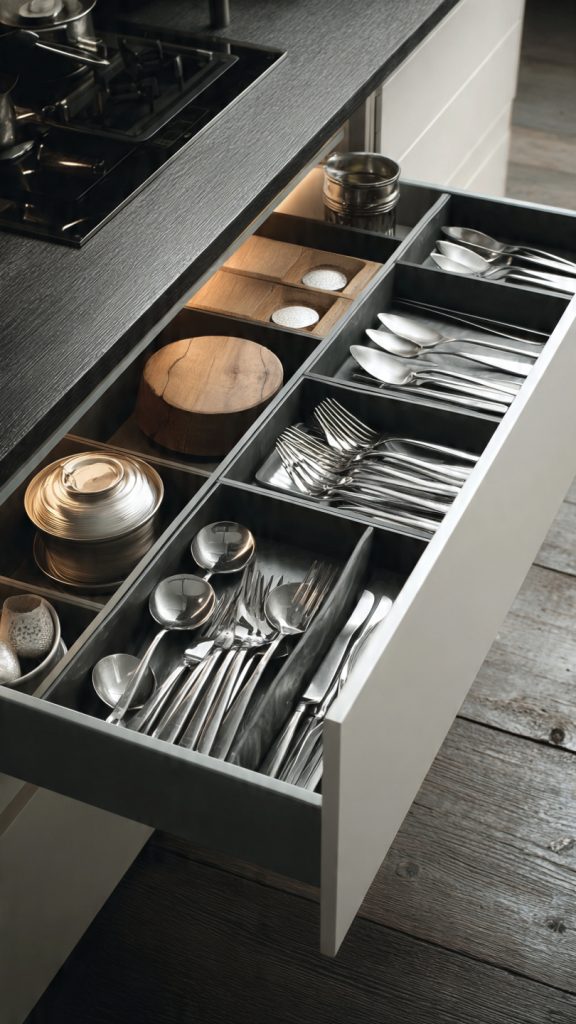
The fastest kitchens avoid mixed-use drawers. Designers dedicate each drawer to one task—prep tools, cooking utensils, baking tools, or cutlery.
This eliminates decision-making mid-cook.
Why it works
- Reduces searching time
- Keeps tools predictable
- Maintains order long-term
One job per drawer always works better.
2. Use Drawer Inserts That Match Tool Sizes
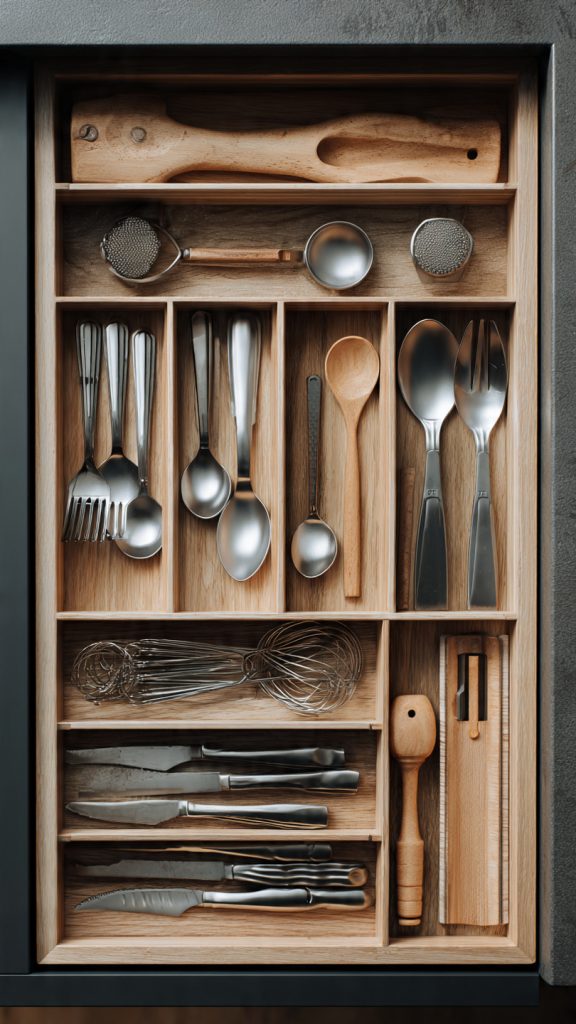
Generic inserts waste space and allow tools to slide around. Designers choose inserts sized specifically for the utensils stored inside.
Everything fits exactly where it belongs.
Why it works
- Prevents shifting
- Improves visibility
- Speeds up access
Custom or adjustable inserts work best.
3. Store Prep Tools Closest to the Prep Area
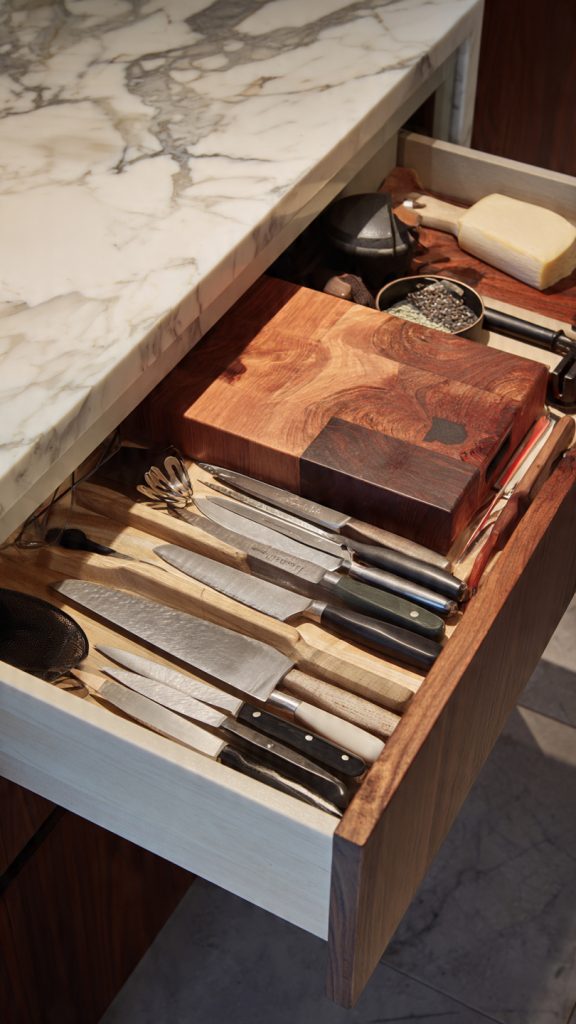
Drawer placement matters as much as organization. Knives, peelers, measuring spoons, and cutting tools should live near the main prep surface.
This minimizes movement while cooking.
Why it works
- Improves workflow
- Reduces back-and-forth
- Keeps prep efficient
Proximity saves time every meal.
4. Keep Cooking Utensils Near the Stove
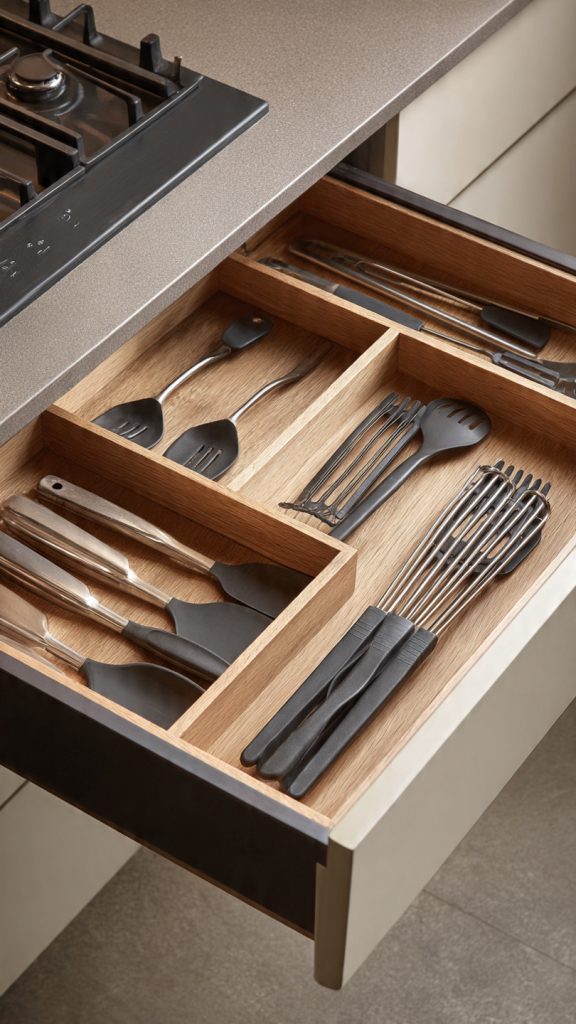
Spatulas, tongs, ladles, and wooden spoons belong in drawers closest to the cooktop. Designers avoid storing these across the kitchen.
This keeps cooking fluid and uninterrupted.
Why it works
- Speeds up cooking
- Prevents drawer hopping
- Keeps tools within reach
Only store daily-use tools here.
5. Use Vertical Storage for Long Utensils
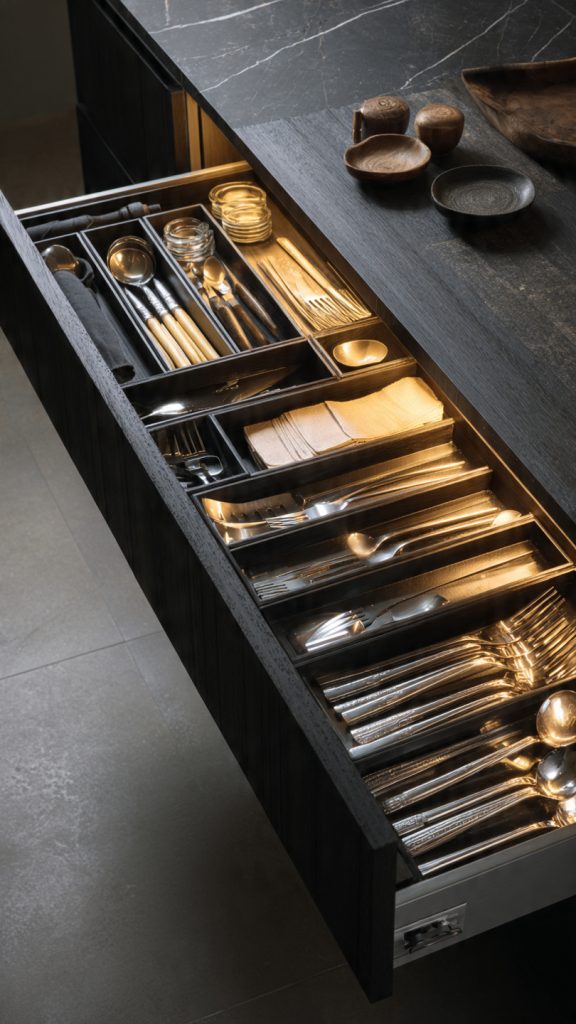
Instead of laying long utensils flat, designers store them vertically using narrow compartments or angled dividers.
This improves visibility and access.
Why it works
- Saves drawer space
- Prevents overlap
- Makes grabbing tools faster
Vertical storage works best in deep drawers.
6. Separate Measuring Tools by Type
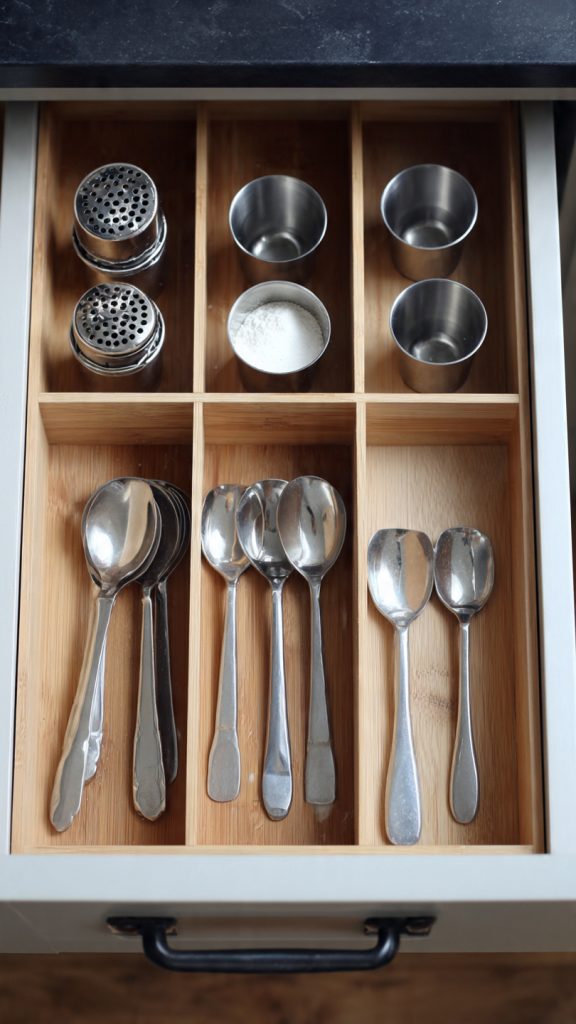
Measuring spoons and cups slow cooking when they’re tangled together. Designers separate dry measuring tools from liquid ones using small compartments.
This avoids unnecessary searching.
Why it works
- Keeps sets complete
- Improves speed
- Prevents clutter
Consistency helps muscle memory.
7. Dedicate a Drawer to Frequently Used Gadgets
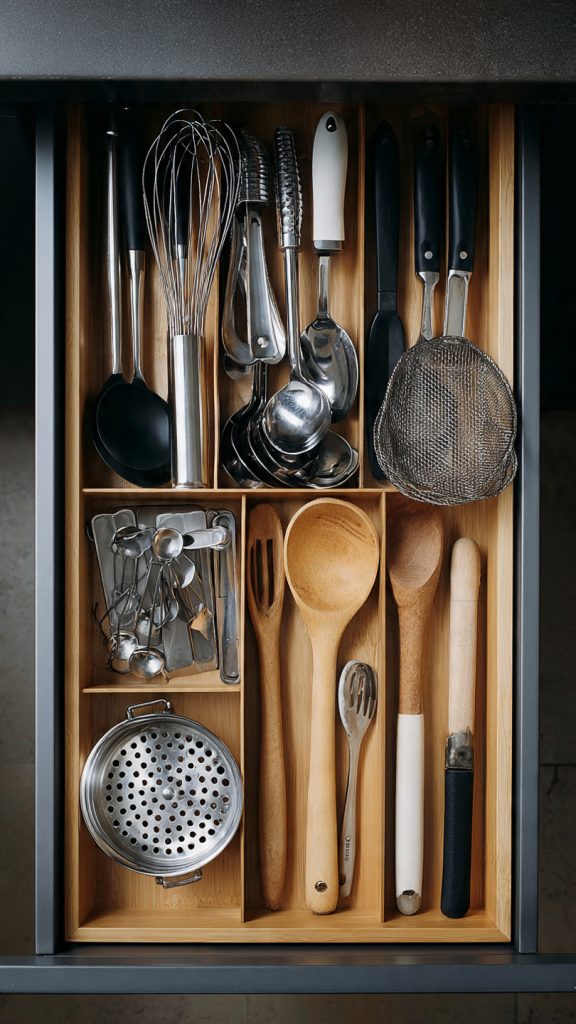
Rather than scattering gadgets across multiple drawers, designers group frequently used tools—like garlic presses, graters, and thermometers—into one drawer.
Less-used gadgets are stored elsewhere.
Why it works
- Reduces drawer clutter
- Keeps essentials together
- Makes cooking faster
Daily-use tools deserve prime space.
8. Store Flat Items in Shallow Drawers
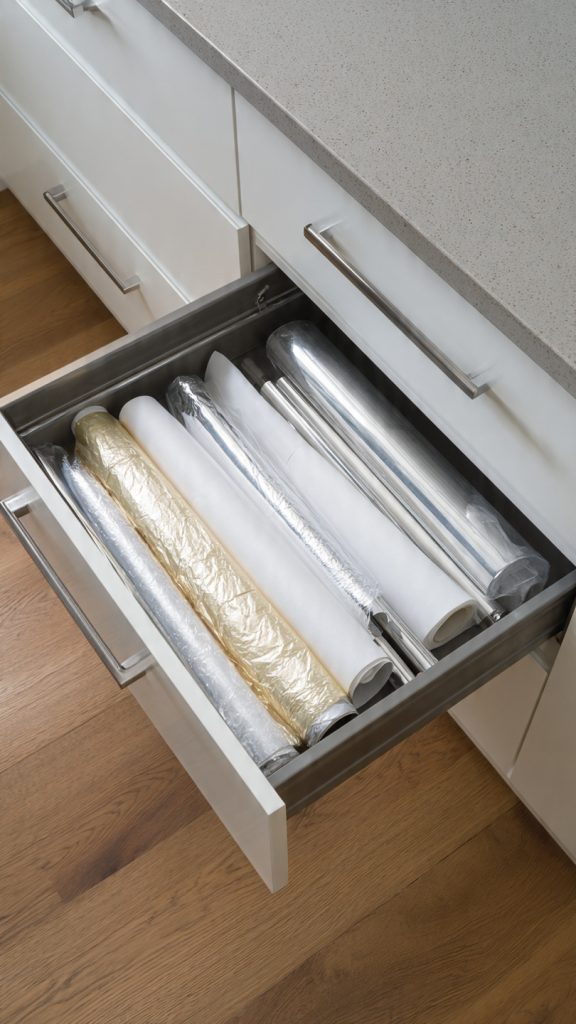
Wraps, foil, parchment paper, and baking mats work best in shallow drawers. Designers avoid stuffing these into cabinets where they get lost.
Flat storage improves access instantly.
Why it works
- Keeps items visible
- Prevents tearing and damage
- Saves cabinet space
Labeling dividers improves speed.
9. Keep Drawers Lightly Filled
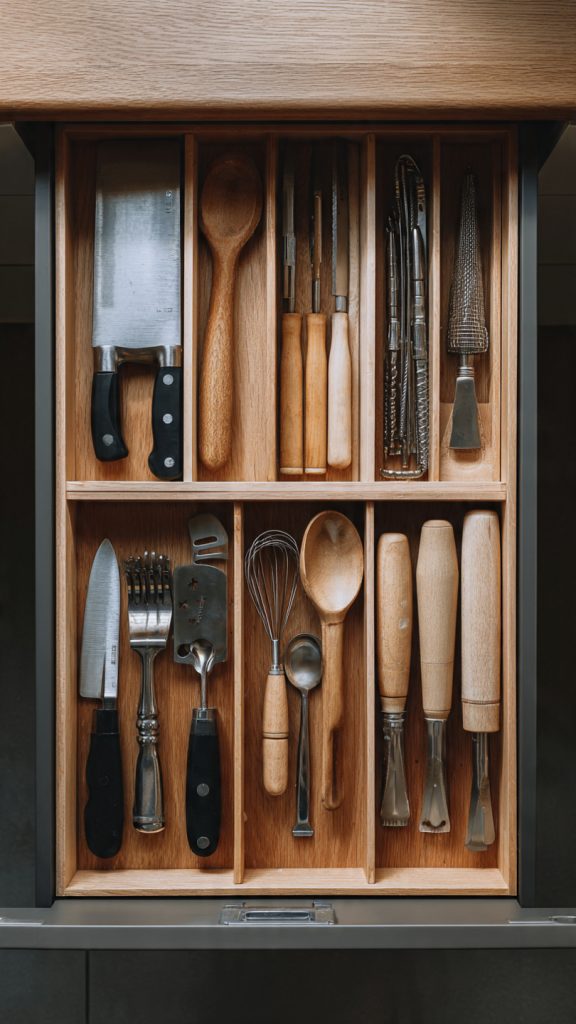
Overfilled drawers slow everything down. Designers leave intentional breathing room so tools can be removed and replaced easily.
Negative space increases efficiency.
Why it works
- Prevents jams
- Makes drawers easier to use
- Keeps systems sustainable
Fewer items always move faster.
10. Edit Drawer Contents Regularly
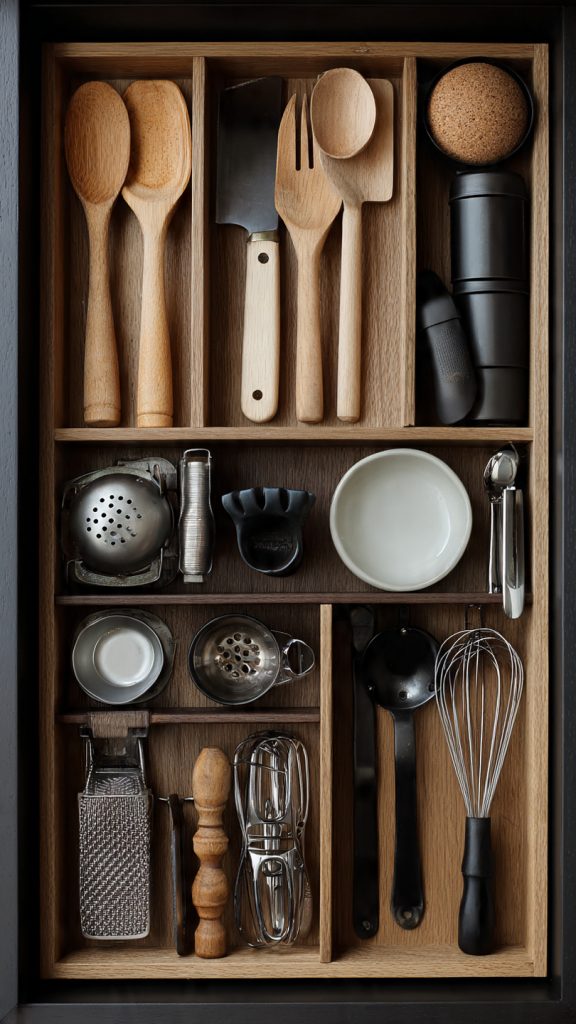
Fast kitchens stay edited. Designers recommend reviewing drawers every few months and removing tools that aren’t being used.
Less clutter equals faster cooking.
Why it works
- Maintains organization
- Keeps drawers efficient
- Prevents slowdowns
If you don’t use it, it doesn’t belong there.
Final Thoughts
Kitchen drawer organization isn’t about perfection—it’s about performance. When drawers are zoned, sized correctly, and placed intentionally, cooking becomes smoother, faster, and far more enjoyable.
These 10 kitchen drawer organization ideas focus on reducing friction at every step, helping you spend less time searching and more time cooking—with ease and confidence.
