If you have fine or thin hair, you’ve likely heard the myth that keeping your hair very short is the only way to make it look fuller. The truth? Medium length hairstyles—typically from the collarbone to just above the shoulders—are actually the “sweet spot” for thin hair. This length is long enough to provide styling versatility and softness around the face, yet short enough to prevent the weight from pulling hair flat against your scalp.
The right medium-length cut removes excess bulk where you don’t need it (the ends) and adds movement and texture where you do (the crown and mid-lengths).
Below are 11 expertly curated ideas to help you achieve the look of denser, more voluminous hair:
1. The Blunt Lob with Micro-Texture
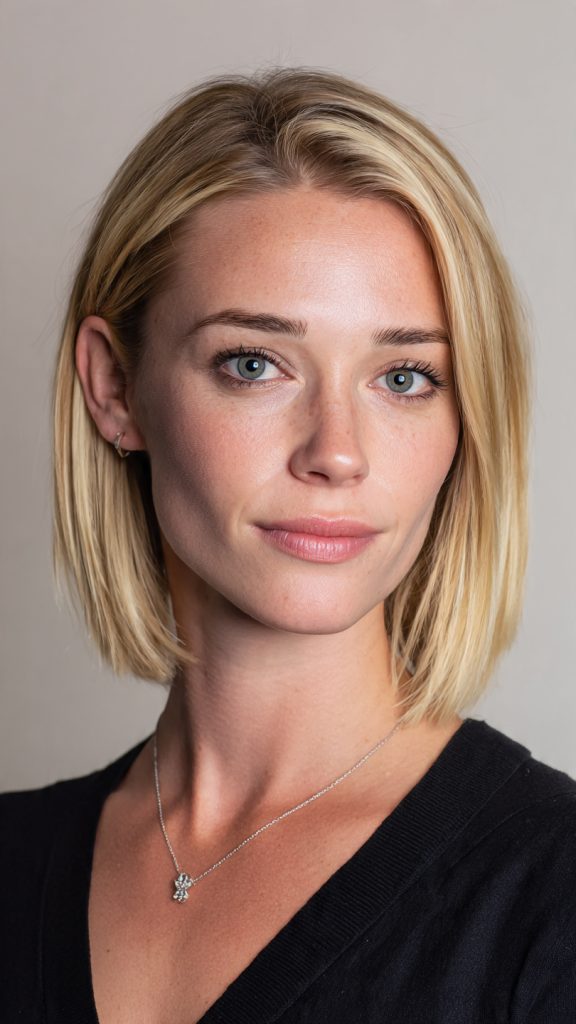
A blunt lob (long bob) cuts the ends straight across rather than wispy or feathered. This creates a strong, solid “line” of density at the bottom. To avoid a heavy, helmet-like look, ask your stylist for micro-texture—tiny, internal points cut into the underside of the hair. This technique removes weight from the interior while keeping the perimeter thick, allowing the hair to bounce up at the ends instead of collapsing.
2. Invisible Layers
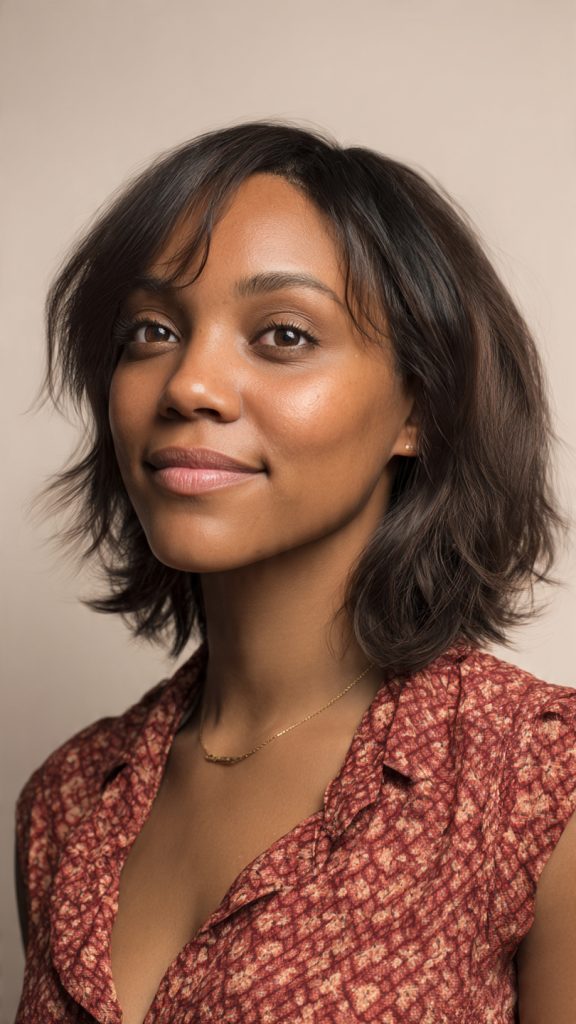
Traditional, chunky layers are the enemy of thin hair—they remove too much mass and leave ends looking sparse. Invisible layers, also known as whisper or ghost layers, are cut very close to the ends (only the last inch or two). This gives a subtle lift at the crown and a soft, rounded shape without sacrificing density. It’s the ideal cut for anyone who wants movement but fears looking “stringy.”
3. The French Bob (Chin-Length)
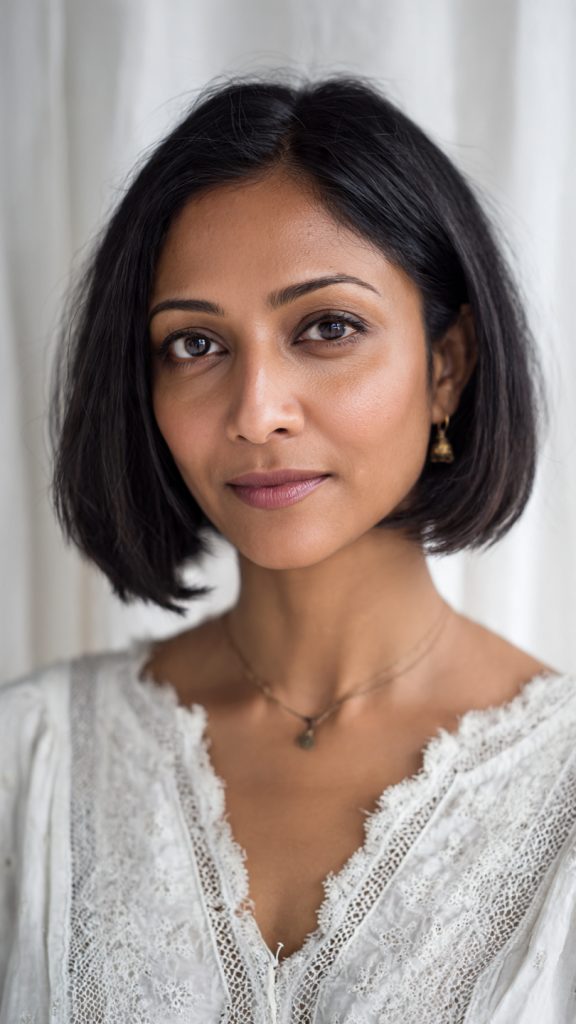
While technically on the shorter side of medium, a chin-grazing French bob is a powerhouse for thin hair. Its hallmark features are a blunt perimeter and soft, face-framing pieces. The shorter length naturally reduces drag on the roots, encouraging the hair to spring upward. Pair it with a deep side part to instantly create a “pouf” of volume at the crown, and the effect is immediate fullness.
4. Textured Shag (Collarbone Length)
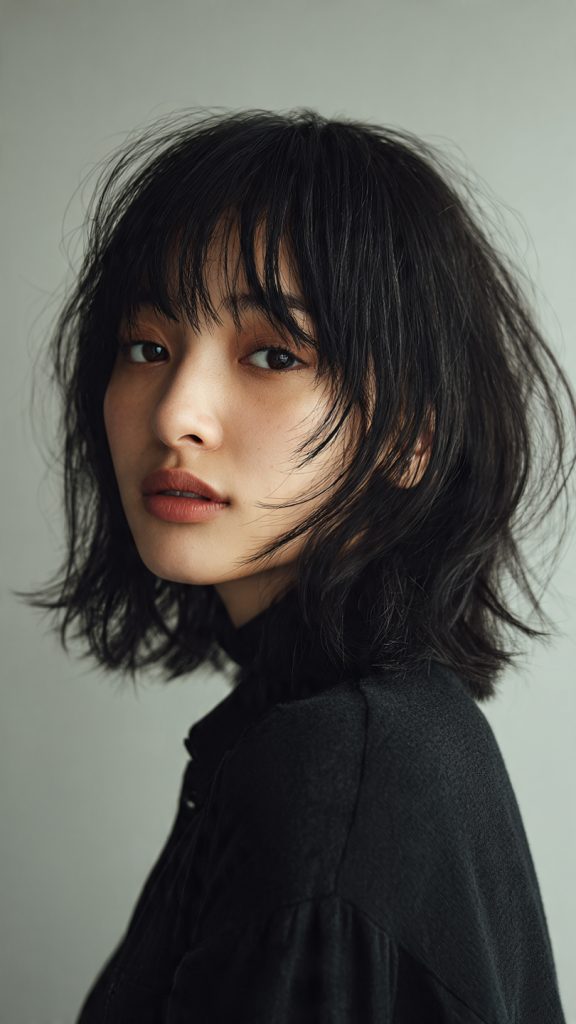
The modern shag has been reinvented for fine hair. Forget the heavily layered, rock-and-roll version of the past. A collarbone-length shag uses shorter, choppy layers concentrated at the crown and lighter, longer layers through the back. The result is a deliberately messy, piece-y texture that visually multiplies the hair’s surface area. Wispy, micro-bangs often accompany this style, drawing attention upward and creating the illusion of a thicker hairline.
5. The Curtain Bang Lob
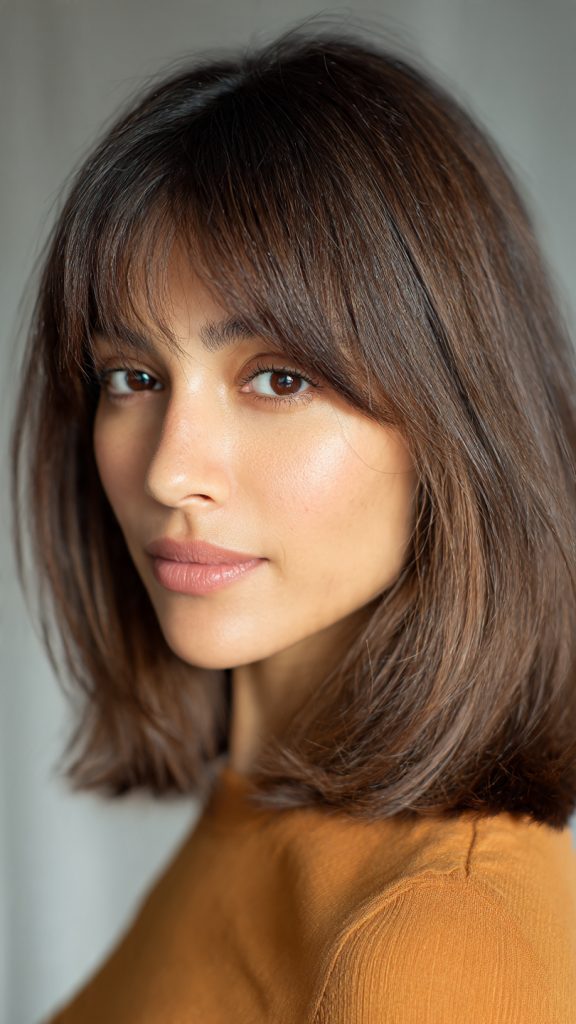
Curtain bangs are split down the middle and gently curve to blend into the rest of your hair. For thin hair, they are transformative. They add density around the temples and forehead without requiring you to cut heavy chunks from the crown. When paired with a lob that falls just above the shoulders, the curtain bangs create a frame that makes the entire head of hair look more substantial. They also grow out gracefully, requiring less maintenance than full bangs.
6. Asymmetrical Lob
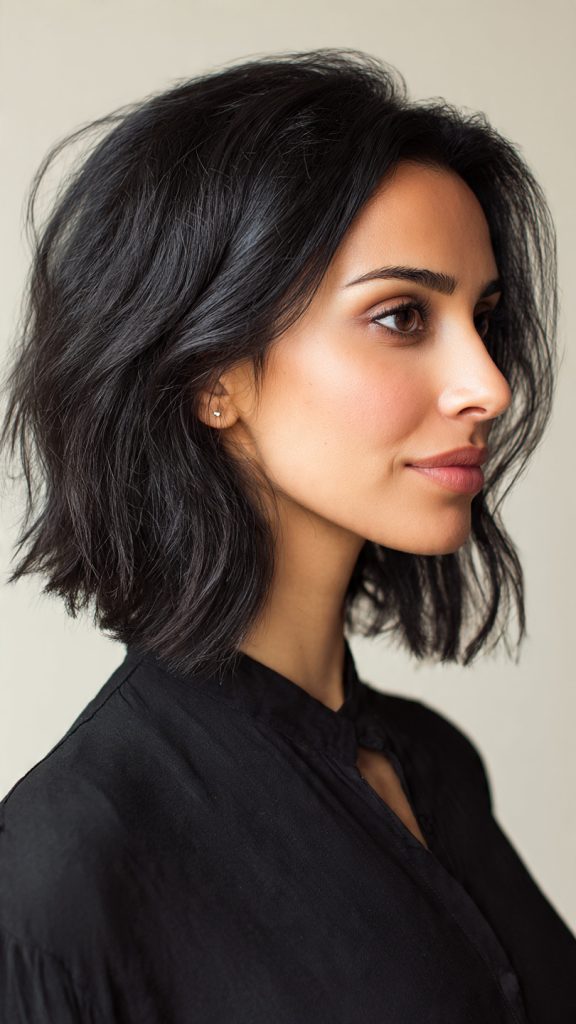
An asymmetrical cut (slightly longer in the front, shorter in the back) tricks the eye. The diagonal line creates dynamic movement, which distracts from any see-through areas. The shorter back naturally lifts off the nape of the neck, adding height, while the longer front pieces provide coverage and can be styled forward to create the illusion of thicker strands. This is an excellent low-effort option for those who air-dry their hair.
7. Voluminous Blowout Layers
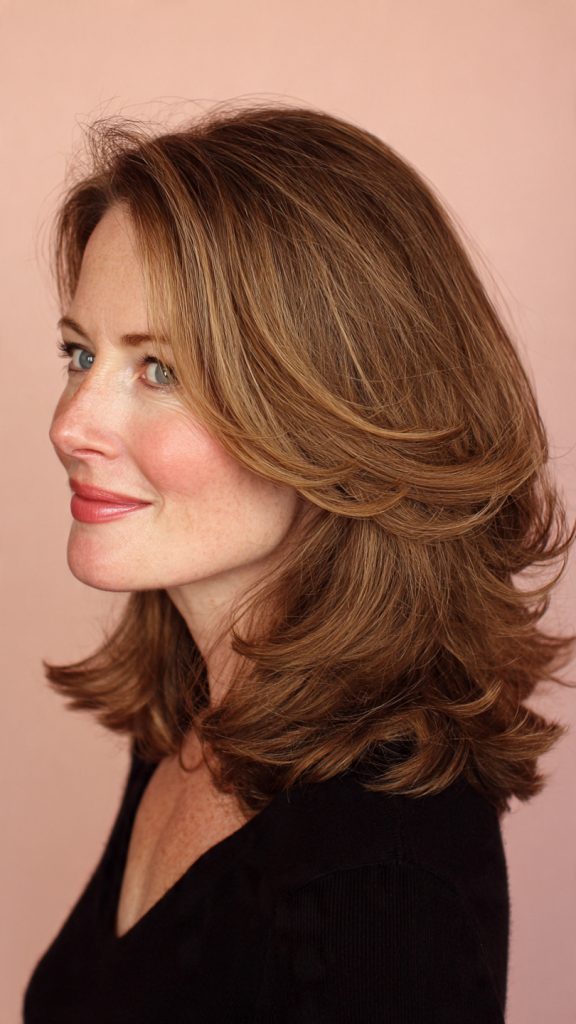
This is less about a specific cut and more about how the layers are styled. Ask for a cut where the shortest layer hits the occipital bone (the bump at the back of your head) and all other layers are graduated to support that point. When blown out with a large round brush, these layers stack on top of each other, creating a cushion of volume. A light-hold mousse applied to damp roots before blow-drying is essential to lock this shape in place.
8. The Undone Italian Bob
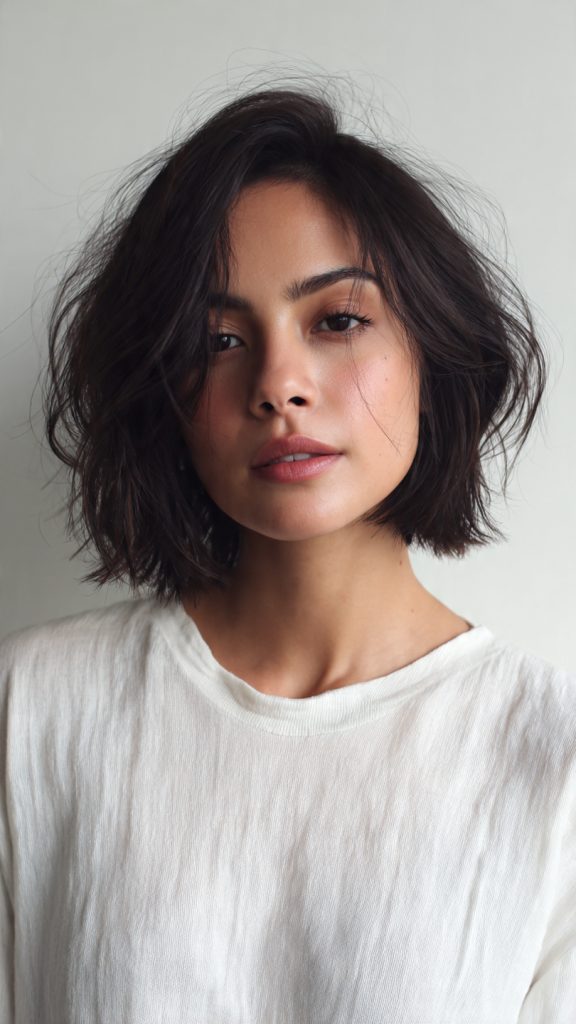
The Italian bob is a softer, more rounded cousin of the classic French bob. It sits at the jawline but has a slight A-line (longer in front). The key for thin hair is the “undone” finish: slight bends and waves created with a flat iron or waver. These soft S-waves create valleys and peaks of light and shadow, making each strand appear thicker. This style works best with a middle part and a dry texture spray at the roots.
9. Feathered Ends (Not Feather Layers)
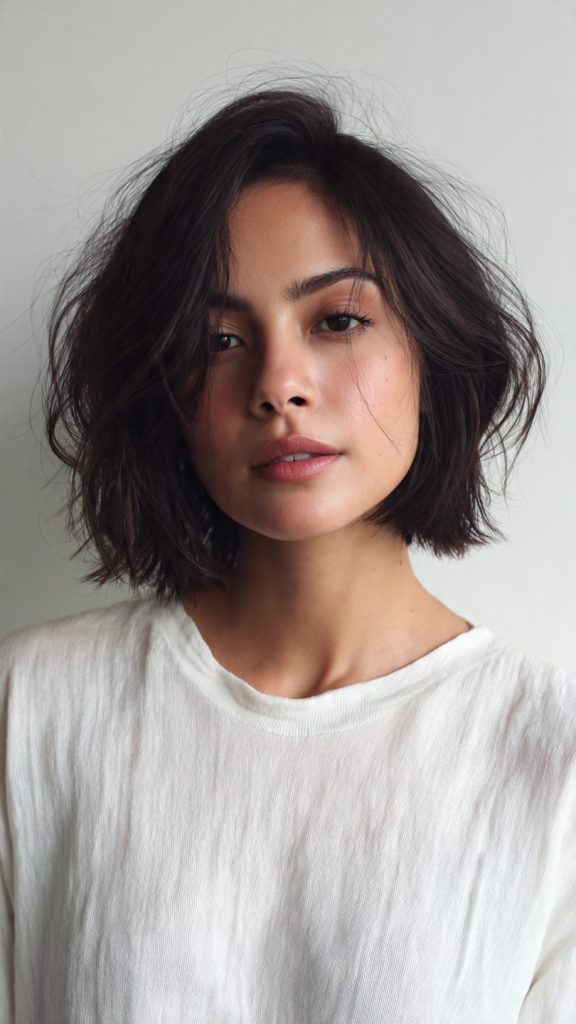
There is a crucial difference: feathered ends refers to lightly point-cutting the very tips of a blunt cut so they fall softly, like the end of a bird’s feather. This prevents the “cutting board” look while maintaining most of the weight. Pair feathered ends with a round, bowl-like shape (no sharp angles). This soft, rounded perimeter reflects light evenly, making fine hair look plush and healthy rather than flat and limp.
10. The Pivot Point Cut (Hidden Volume)
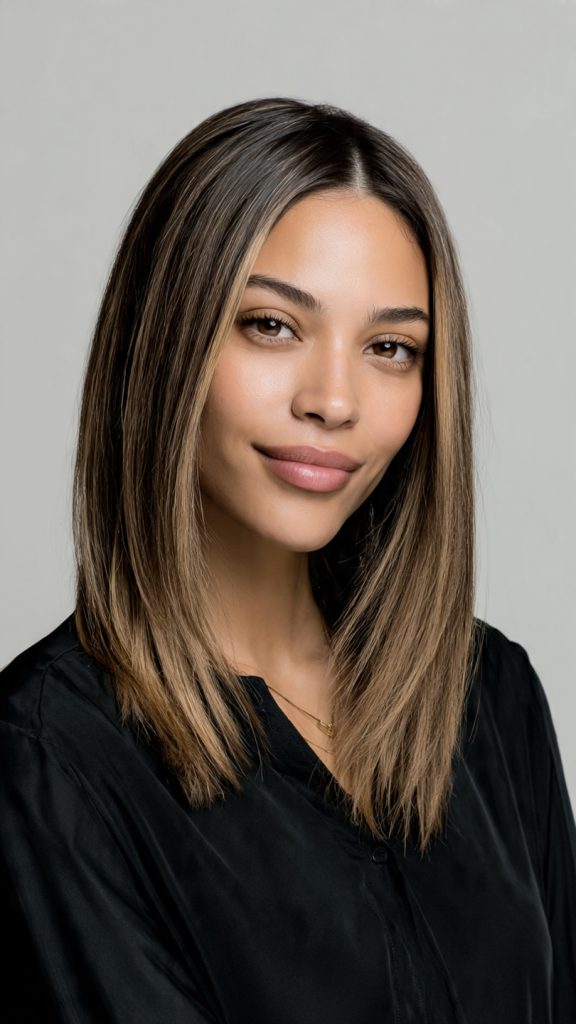
This is a professional technique worth asking your stylist for. A pivot point cut uses a specific elevation angle (between 90 and 180 degrees) when cutting layers, which builds volume into the haircut itself. When the hair dries, the internal structure pushes the hair up and away from the head. On thin hair, this creates a bubble of volume that lasts for days without backcombing or harsh products.
11. Tousled Bob with Root Shadow
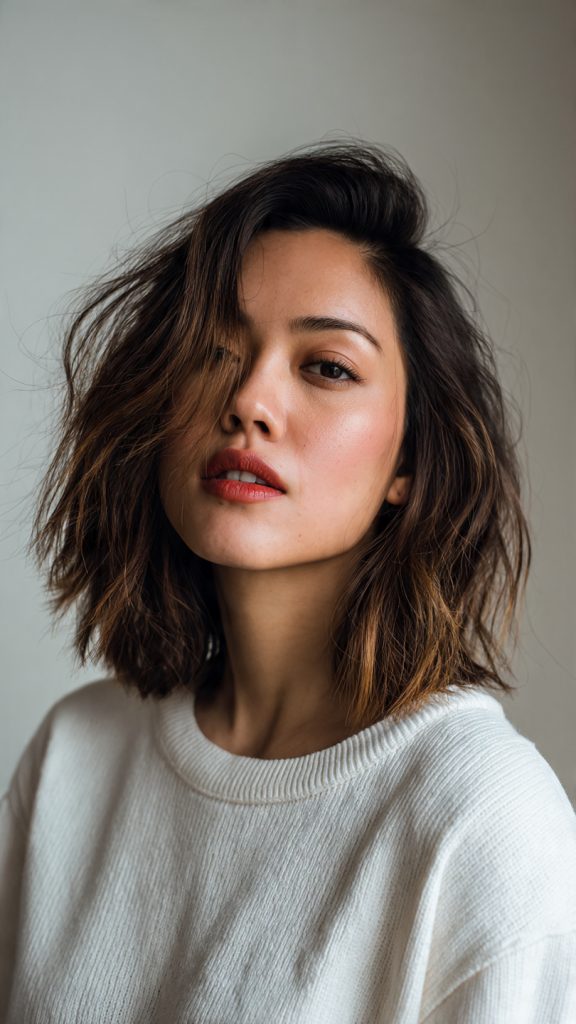
Last but not least, a medium tousled bob that lives between the chin and shoulders. The cut itself is simple: one-length with subtle point-cutting for movement. The real magic is the root shadow—a color technique where a shade slightly darker than your base is applied only to the roots and blended down. Darker roots create depth and the optical illusion of a fuller scalp, while the lighter ends keep things fresh. Tousle with a salt spray, and you have effortless, daily volume.
How to Style Medium Length Thin Hair for Maximum Volume
A great cut is only half the battle. The way you style your hair each day will either enhance the volume built into your haircut or flatten it completely. Follow these four foundational techniques:
1. Start with the right products at the roots.
Apply a lightweight volumizing mousse or spray to damp roots only—not the lengths. Thin hair gets weighed down easily, so avoid creamy conditioners or oils near your scalp. Flip your head upside down while blow-drying to create immediate lift.
2. Use a round brush strategically.
A medium-sized (1.5 to 2 inch) round brush is your best friend. Focus on lifting sections at the crown and pulling them upward and away from the head, not downward. For the ends, roll the brush under slightly to create a soft curve that mimics thickness.
3. Master the art of dry shampoo.
Even if your hair isn’t oily, a dry texture spray or volumizing powder applied to clean, dry roots adds grip and separation. This friction is what prevents fine strands from sliding flat against each other. Apply at night before bed so it absorbs while you sleep.
4. Cool-shot everything.
Heat makes hair pliable; cold makes it set. After each round-brush section, blast it with the cool button on your dryer for five seconds. This “freezes” the volume and keeps thin hair from collapsing within an hour.
What to Avoid If You Have Thin Hair (At Medium Length)
Even the most flattering cut can be ruined by common mistakes. Here is what to skip:
| Avoid | Why It Hurts Thin Hair | Better Alternative |
|---|---|---|
| Heavy layering | Removes too much density, leaving ends see-through | Invisible or whisper layers (ends-only) |
| Over-conditioning | Coats strands and makes them limp and flat | Condition only the mid-lengths to ends |
| Long hair past the collarbone | Weight pulls roots flat, emphasizing thinness | Keep length between chin and collarbone |
| Wet-looking gels or oils | Clumps strands together, exposing scalp | Powder-based or dry texture products |
| One-length, no texture | Creates a flat, curtain-like effect | Blunt cut with micro-texture or feathered ends |
| Washing every day | Strips natural oils, causing rebound oiliness and flatness | Wash every 2–3 days with dry shampoo in between |
The Best Hair Colors to Create the Illusion of Density
Color is a powerful optical tool for thin hair. The right shade and application can make your hair look twice as full without any cutting.
Root shadowing (also called root smudge).
Keeping the roots one to two shades darker than your ends creates depth at the scalp, which mimics a fuller hairline. This is the single most effective color technique for thin hair.
Highlights, not lowlights.
Fine, thin hair reflects light better when it has thin, delicate highlights woven throughout. The contrast between highlight and base color creates “dimension”—peaks and valleys of light that trick the eye into seeing more strands than actually exist. Avoid chunky highlights, which create harsh stripes that emphasize sparseness.
Glossy, not matte.
A clear or semi-permanent gloss adds reflective shine. Shiny hair catches light and appears smoother and denser, while matte or dull hair looks flat and thinner. Ask your stylist for a gloss treatment every 6–8 weeks.
Balayage on the ends only.
Keeping your base color solid at the roots and adding soft, painted color only to the last few inches preserves visual weight at the top while adding interest below.
Maintenance Schedule for Medium Length Thin Hair
To keep your cut performing at its best, follow this simple schedule:
| Frequency | Action |
|---|---|
| Every 6–8 weeks | Trim to maintain the blunt perimeter and remove any wispy, see-through ends |
| Every 2–3 days | Wash with volumizing shampoo (sulfate-free but not heavy) |
| Every wash day | Apply root-lifting product to damp hair before drying |
| Daily | Refresh roots with dry shampoo or texture powder (even on clean hair) |
| Every 4 weeks | Clarifying wash to remove product buildup (use a clear, deep-cleansing shampoo) |
| Every 8–10 weeks | Root shadow touch-up if you use color |
Frequently Asked Questions
Can I wear my thin hair completely straight with a medium length cut?
Yes, but with a modification. Straight styles emphasize thinness unless you have a blunt, one-length perimeter. If you prefer straight hair, choose the blunt lob with micro-texture (Idea #1) and add a deep side part to create an instant wave of volume at the crown.
Will curtain bangs make my thin hair look even thinner?
No, when cut correctly. Curtain bangs should be wide and shallow—meaning they start further back on the head and only the bottom inch is textured. Avoid short, dense fringe bangs, which can expose the forehead and make the rest of the hair look sparse by comparison.
Is it true that thin hair should never be layered?
That is an outdated myth. Thin hair can have layers, but only the right kind. Invisible layers (Idea #2) and pivot point cuts (Idea #10) are specifically designed for thin hair. The rule is: layers should be internal and subtle, not external and chunky.
How do I ask my stylist for the right cut?
Use these exact phrases: “I want to keep density at the perimeter,” “Please use point-cutting or micro-texture instead of razor or thinning shears,” and “I want volume built into the cut, not removed from it.” A good stylist will immediately understand.
What if my thin hair is also curly or wavy?
All 11 ideas work for wavy or loosely curly thin hair, with one adjustment: ask for the cut to be done on dry hair in its natural state. Curly thin hair shrinks, so a collarbone-length cut when dry will be chin-length when curly. Also, avoid any texturizing near the roots—curly hair needs that weight for shape.
Conclusion
Thin hair is not a limitation—it is simply a different starting point. The medium length range, from the chin to the collarbone, offers the ideal balance of weight reduction and styling freedom. Whether you choose a blunt lob with micro-texture, an undone Italian bob, or a tousled style with a root shadow, the goal is always the same: to create the optical illusion of density through smart cutting, strategic coloring, and lightweight styling.
Remember that the best hairstyle for thin hair is not the one that hides its thinness, but the one that works with its natural texture. Fine hair moves beautifully. It catches light well. It dries quickly and holds a curl longer than coarse hair. When you stop fighting against its nature and start enhancing its strengths, you will wonder why you ever thought short was your only option.
Take these 11 ideas to your stylist. Experiment with the prompts to visualize your next cut. And most importantly, stop apologizing for your hair type—thin hair, styled correctly, looks modern, elegant, and effortlessly full.
Now go get the volume you deserve.
