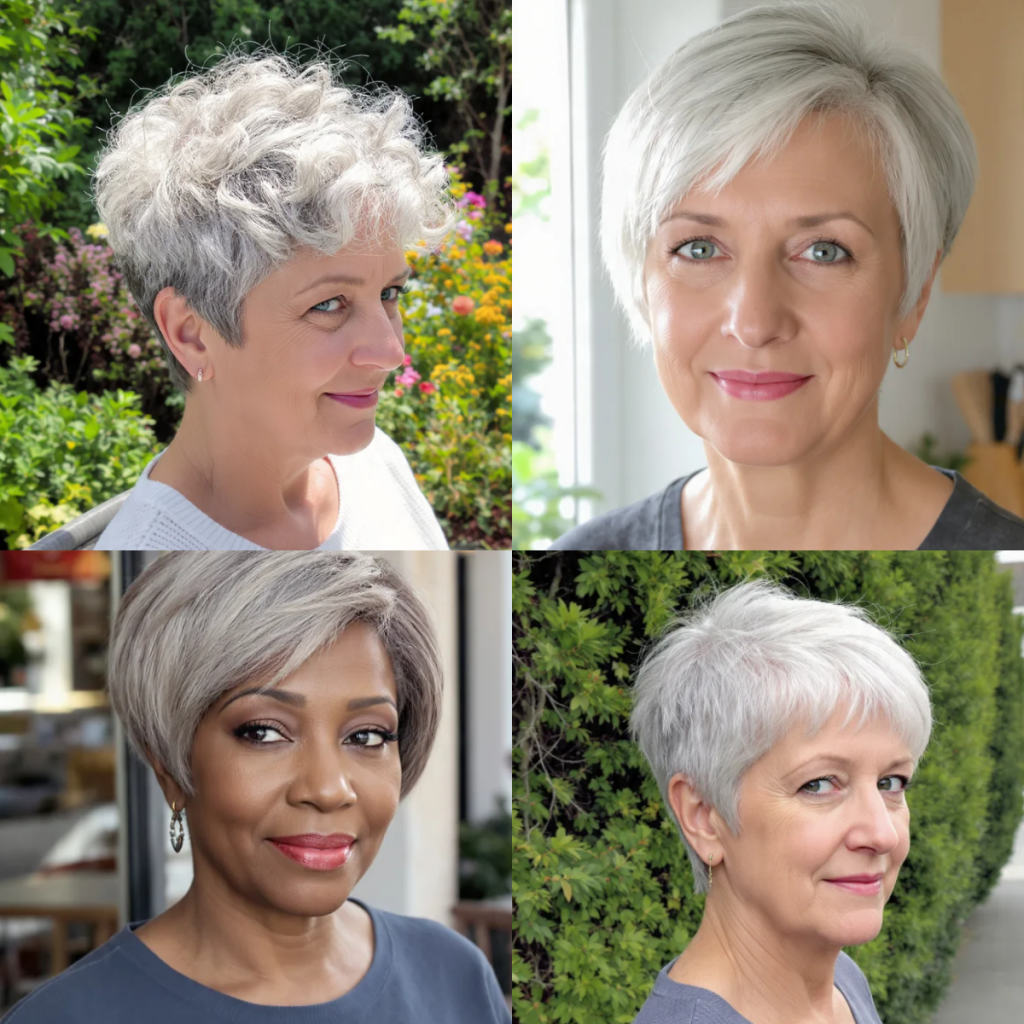
For decades, older women were told to “shorten, soften, and blend in.” The classic uniform pixie or the one-length bob became safe defaults. But today’s over-50 woman isn’t interested in disappearing. She wants style that moves with her – not against her.
Enter the asymmetrical pixie bob. This hybrid cut combines the cropped ease of a pixie with the body of a bob, then adds a single daring element: imbalance. One side is deliberately longer, creating instant lift, angles that soften jowls, and a visual lift to the eye. It’s low-maintenance yet high-impact – and it works beautifully with grey, silver, or colored hair.
Below are 10 distinct asymmetrical pixie bob ideas, each designed to flatter different face shapes, hair textures, and styling preferences for mature women.
Why Asymmetry Works So Well for Mature Hair
As we age, hair naturally changes. It often becomes finer, thinner, or more brittle. The once-reliable blunt bob can look flat. A uniform pixie can emphasize scalp show-through.
Asymmetry solves these problems without adding complexity:
- Creates instant volume — The longer side visually lifts the shorter side.
- Distracts from thinning areas — The eye follows the angled line, not sparse patches.
- Softens sagging jawlines — A well-placed longer piece breaks up a drooping轮廓.
- Adds movement — Uneven ends bounce naturally, while one-length cuts stay static.
- Works with grey texture — Silver hair is often coarser; asymmetry handles that texture better than a precise blunt cut.
10 Well-Structured Ideas
1. The Classic Long-Short Contrast

- Description: One side (usually the heavier side) sits at the earlobe, the other is cropped tight to the temple.
- Best for: Oval or square faces; fine to medium hair.
- Styling: Blow-dry the long side forward with a round brush; use a dab of pomade on the short side for definition.
- Upkeep: Trim the short side every 3–4 weeks; the long side can go 6–8 weeks.
2. The Textured Silver Sweep
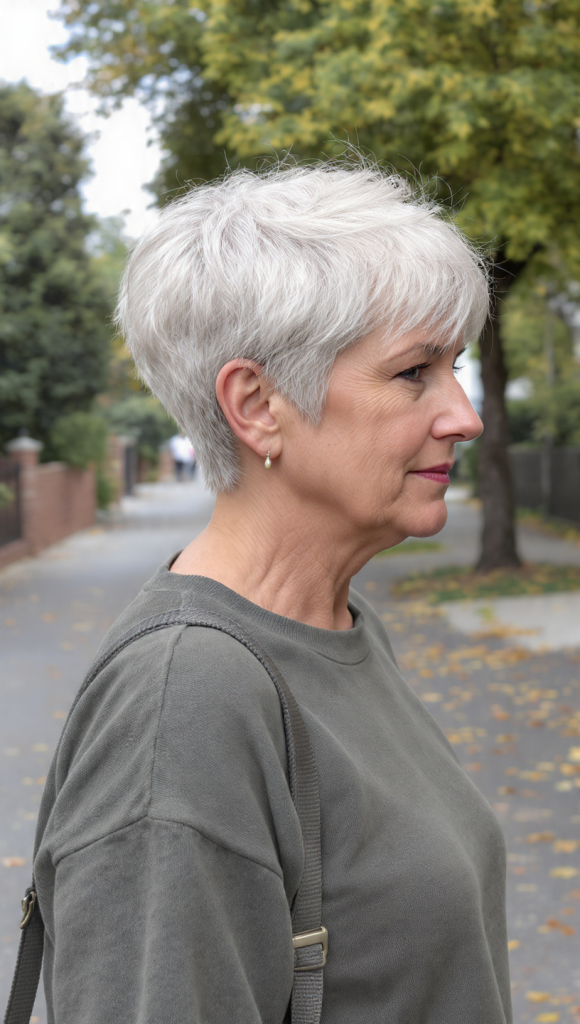
- Description: Deep asymmetrical line with longer side swept across the forehead; choppy layers throughout.
- Best for: Very fine hair or thinning areas (texture creates fullness).
- Styling: Work in a volumizing mousse on damp hair, then finger-dry. No perfect blowout needed – imperfection is the point.
- Color note: Works brilliantly with natural silver or white; ask your stylist for “micro-texturing” to avoid a blunt line.
3. The Curly Asymmetrical Bob-Pixie
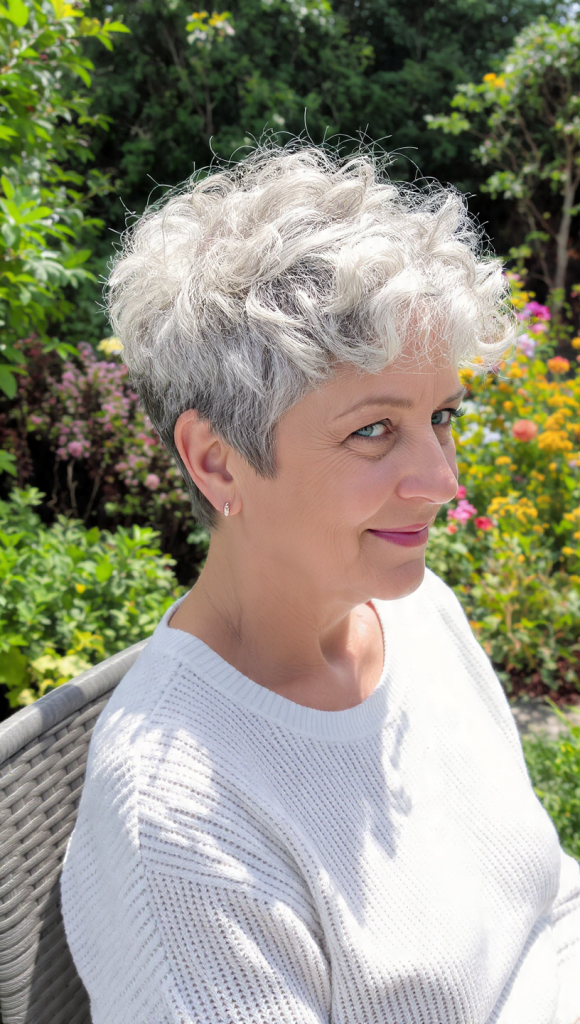
- Description: Longer side hits chin level when dry (shorter when curls spring up); opposite side is shorn to 1 inch.
- Best for: Naturally curly or wavy hair; round or heart-shaped faces.
- Styling: Apply curl cream and air-dry or diffuse. The asymmetry prevents the dreaded “triangle head” of uniform curls.
- Pro tip: Keep the longer side’s weight line slightly forward to frame the jaw.
4. The Undercut Pixie Bob
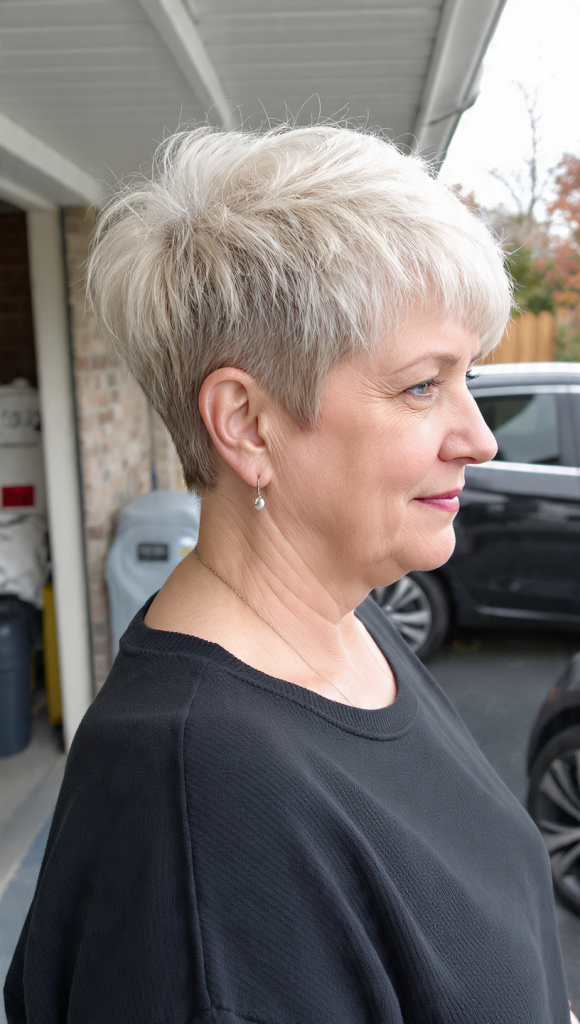
- Description: Longer top and one side (jaw-length) with the back and opposite side clippered very short, even shaved.
- Best for: Bold personalities; thick or coarse hair that wants weight removal.
- Styling: Zero styling needed – wake up and go. Use a light wax on the long piece for separation.
- Consideration: Best if you’re comfortable with frequent maintenance (shaved part needs refreshing every 2 weeks).
5. The Layered “Mop Top” Asymmetry

- Description: Both sides are relatively long (chin on one, mid-ear on the other), but the crown is heavily layered and tousled.
- Best for: Women transitioning from longer bobs; those who want to keep some “pull-back” length.
- Styling: Use a salt spray and scrunch. Can be tucked behind one ear for extra asymmetry.
- Face-flattering: Softens angular or oblong faces.
6. The Severe Side-Parted Dramatic
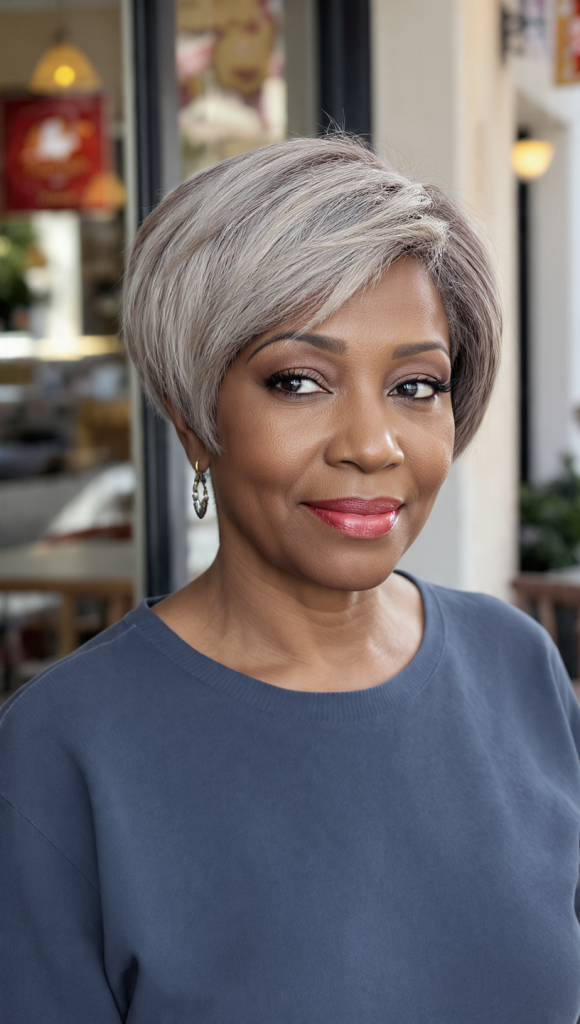
- Description: Extreme asymmetry – one side cropped to the scalp, the other side a full bob past the ear. Deep side part.
- Best for: Strong bone structure; high contrast between short and long is intentional.
- Styling: Flat iron the long side for a sleek finish; short side can be left matte or polished with gel.
- Caution: Best for straight or straightened hair; not ideal for very tight curls.
7. The Soft Granny-Chic (No Shave)

- Description: A gentle asymmetry – only about 1–2 inches difference. Longer side curved softly under the chin; shorter side just above the ear.
- Best for: Thinning or delicate hair; women who want modern but not shocking.
- Styling: Light blowout with a slight bend inward. Can be pinned back on the shorter side for variety.
- Why it works: Creates the illusion of lift without removing much length.
8. The Asymmetrical Pixie Bob with Fringe
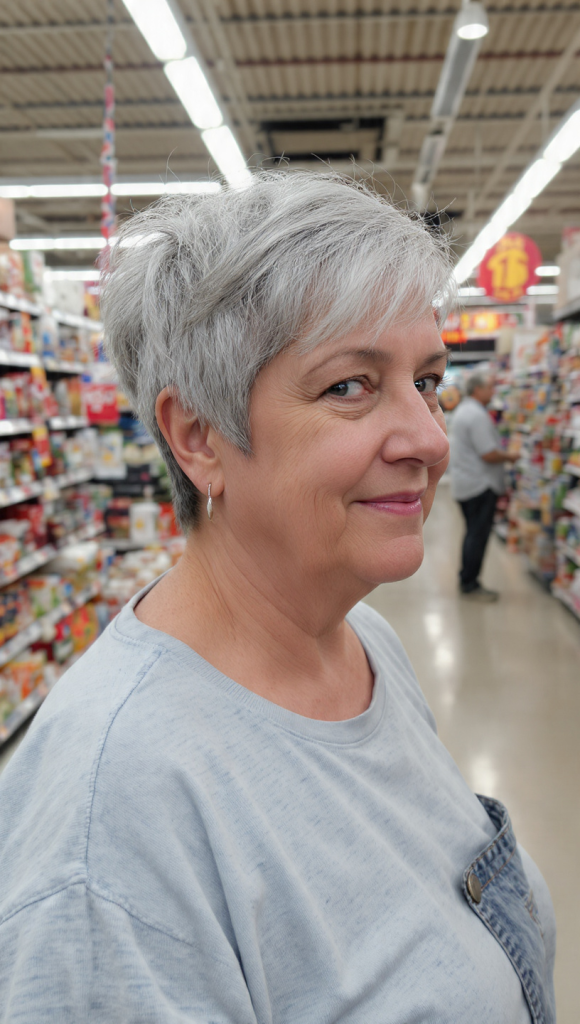
- Description: Longer side includes a sweeping, side-swept bang that reaches the brow; opposite side is very short. Back is cropped close.
- Best for: High foreheads; women who want to camouflage brow wrinkles.
- Styling: Blow the fringe to one side with a flat brush; keep the rest piecey with paste.
- Upkeep: Fringe needs trimming every 2–3 weeks, but the rest stays neat for longer.
9. The Spiky-Top Asymmetrical Bob
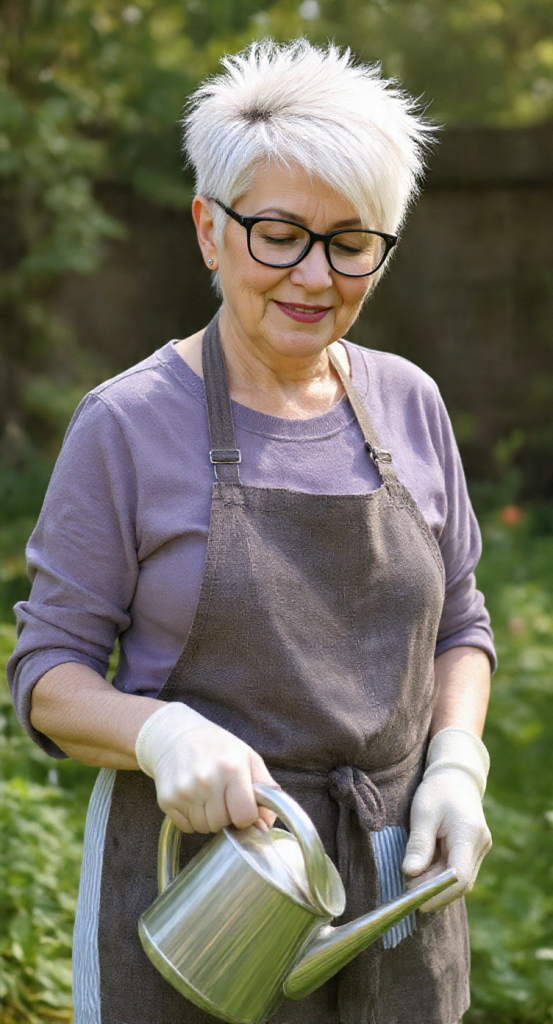
- Description: Very short on both sides (clippered) but the top is left longer and spiky – except one side’s spikes extend into a tiny pointed “tail” toward the jaw.
- Best for: Adventurous dressers; women with petite features.
- Styling: Use a strong-hold fiber wax; twist ends into points.
- Note: Not for extremely thin hair – needs some density to hold spikes.
10. The Low-Maintenance “Grey Grow-Out” Asymmetry

- Description: Designed specifically for transitioning from dyed to natural grey. One side is slightly longer to divert attention from the demarcation line.
- Best for: Growing out color; naturally straight or slightly wavy hair.
- Styling: Air-dry with a leave-in conditioner. The asymmetry makes uneven color look intentional.
- Pro stylist tip: Ask for “invisible layers” – very fine internal cuts that help the grey blend upward.
ace Shape Guide: Which Asymmetry for You?
Not all asymmetrical cuts are the same. Use this quick cheat sheet before taking the idea to your stylist.
| Face Shape | Best Asymmetry Strategy | Which Idea to Pick |
|---|---|---|
| Oval | Almost anything works | #1, #2, #6, #8 |
| Round | Longer side that starts below the ear to elongate | #3, #5, #7 |
| Square | Soft, curved longer side (not blunt) with texture | #2, #4, #7 |
| Heart | Longer side with volume at chin level, not above | #3, #5, #10 |
| Long/Oblong | Avoid extreme length difference; keep both sides visible | #1, #7, #8 |
| Diamond | Longer side with side-swept fringe to soften cheekbones | #8, #9, #10 |
One universal rule: The shorter side should never feel like a mistake. It must look intentional. That comes from a clean, precise line or a deliberate texture contrast.
Talking to Your Stylist: A Script
Many women love asymmetrical cuts on Pinterest but freeze in the salon chair. Use this script to get what you want.
Step 1 – Start with what you don’t want:
“I don’t want a uniform pixie. I don’t want a blunt bob. I don’t want to look like I’m trying to hide my age.”
Step 2 – Name the asymmetry:
“I want one side clearly shorter than the other. Not dramatic and punk — just enough to create lift and movement.”
Step 3 – Show the length difference in inches:
“I want about [1–3] inches difference between the two sides.”
Step 4 – Specify the back:
“Keep the back close but not shaved. I still want some weight there so it doesn’t look like a mullet.”
Step 5 – Texture request (very important):
“Use point-cutting or texturizing shears. Do not cut a straight, heavy line. I want softness at the ends.”
Step 6 – Ask for a demo:
“Before you cut the shorter side, can you pin it up so I see the balance?”
Pro tip: Bring one photo from the 10 ideas above. Stylists need a visual reference even when you describe it perfectly.
Daily Styling: Less Than 5 Minutes
The myth: Asymmetrical cuts are high-maintenance.
The reality: They’re easier than symmetrical cuts because you don’t need perfection.
For straight or wavy hair (2 minutes):
- Spray damp hair with a lightweight volumizer.
- Rough-dry with your head flipped over (no brush needed).
- Flip back. Use a tiny bit of paste or wax on fingertips.
- Twist the longer side forward. Done.
For curly or coily hair (4 minutes):
- Apply leave-in conditioner or curl cream to wet hair.
- Scrunch with a microfiber towel.
- Diffuse on low heat for 2 minutes (or air-dry).
- Use a pick to lift the shorter side slightly higher.
- Smooth the longer side with a dab of oil.
For the laziest day (1 minute):
- Wet your hands. Run them through your hair.
- Tuck the longer side behind one ear.
- Fluff the shorter side with fingers.
What you never need: Perfect blowouts, hot rollers, or hairspray helmets.
How Often to Maintain
Asymmetrical cuts have one non-negotiable rule: The shorter side sets the timeline.
| Cut Type | Trim Schedule | What to Ask For |
|---|---|---|
| Very short undercut (#4, #6, #9) | Every 2–3 weeks | “Just clean the shaved part and leave the longer side untouched.” |
| Classic asymmetrical (#1, #2, #7, #8, #10) | Every 4–5 weeks | “Refresh the short side only. Do not touch the long side.” |
| Longer, softer asymmetry (#3, #5) | Every 6 weeks | “Light dusting on both sides. Keep the length difference.” |
Warning sign you’ve waited too long: When the two sides look almost equal. That defeats the purpose. Book your next appointment as you leave the salon.
What to Avoid (Common Mistakes)
Even good stylists can get asymmetry wrong. Watch for these red flags:
❌ The mullet effect — Back too long while sides are short.
Fix: Ask for the back to be blended, not grown out.
❌ The accidental bowl cut — Short side not short enough; long side not long enough.
Fix: Insist on at least 1.5 inches of visible difference.
❌ Over-texturing — So many choppy layers that the shape disappears.
Fix: Say “soft texture, but keep the silhouette clear.”
❌ The heavy side that flops — Longer side has no weight removal and falls flat.
Fix: Internal layering only on the longer side.
❌ Mismatched to your lifestyle — You love the extreme undercut but won’t maintain it.
Fix: Be honest with yourself. Start with idea #7 or #10, then go shorter later.
Colour and Asymmetry: A Perfect Pair
If you color your hair (or are growing out color), asymmetry is your best friend.
| Colour Situation | How Asymmetry Helps |
|---|---|
| Growing out grey | The uneven line hides the demarcation zone naturally |
| Bold fashion colors (purple, red, blue) | One visible side shows the color; the other side is a surprise |
| Highlights | Place heavier highlights on the longer side for depth |
| Solid dark colour | Asymmetry adds shape so the color doesn’t feel heavy |
| Root regrowth | Longer side can be swept to cover roots between appointments |
Best colour for mature asymmetry: Soft silver-white with a darker grey on the shorter side creates natural contrast without dye.
Real-Life Benefits Women Report
From stylist interviews and women wearing these cuts:
“I stopped wearing earrings because my old haircut hid them. Now I buy big hoops.” — Diane, 67
“People think I lost weight. I didn’t. The angle of the cut just lifts my whole face.” — Patricia, 62
“I wash and go. My husband asked if I got a blowout. I said no, it’s just cut well.” — Yvonne, 59
“For the first time in 20 years, strangers compliment my hair — not my outfit.” — Carol, 71
“The short side never gets in my food. The long side still covers my neck when it’s cold. Best of both.” — Linda, 64
Conclusion
The asymmetrical pixie bob is not a trend. It’s a solution. For women over 50, 60, and beyond, it solves the three biggest hair frustrations: flatness, daily work, and that invisible feeling that comes with a “safe” haircut.
You don’t need perfect bone structure. You don’t need thick hair. You don’t need a daring personality. You just need a stylist who understands the math of asymmetry — one side shorter, one side longer, and a clear line between them.
Start small. Try idea #7 (the soft granny-chic) or idea #10 (the grey grow-out). Live with it for two weeks. Almost no one goes back to a symmetrical cut afterward.
Because here’s the truth: You’ve earned the right to stop apologizing for your hair. Stop hiding thinning spots. Stop spending 20 minutes with a curling iron. The asymmetrical pixie bob gives you back time, confidence, and the simple joy of a haircut that works with you — not against you.
Cut the imbalance. Wear it proudly. Let the other side catch up later.