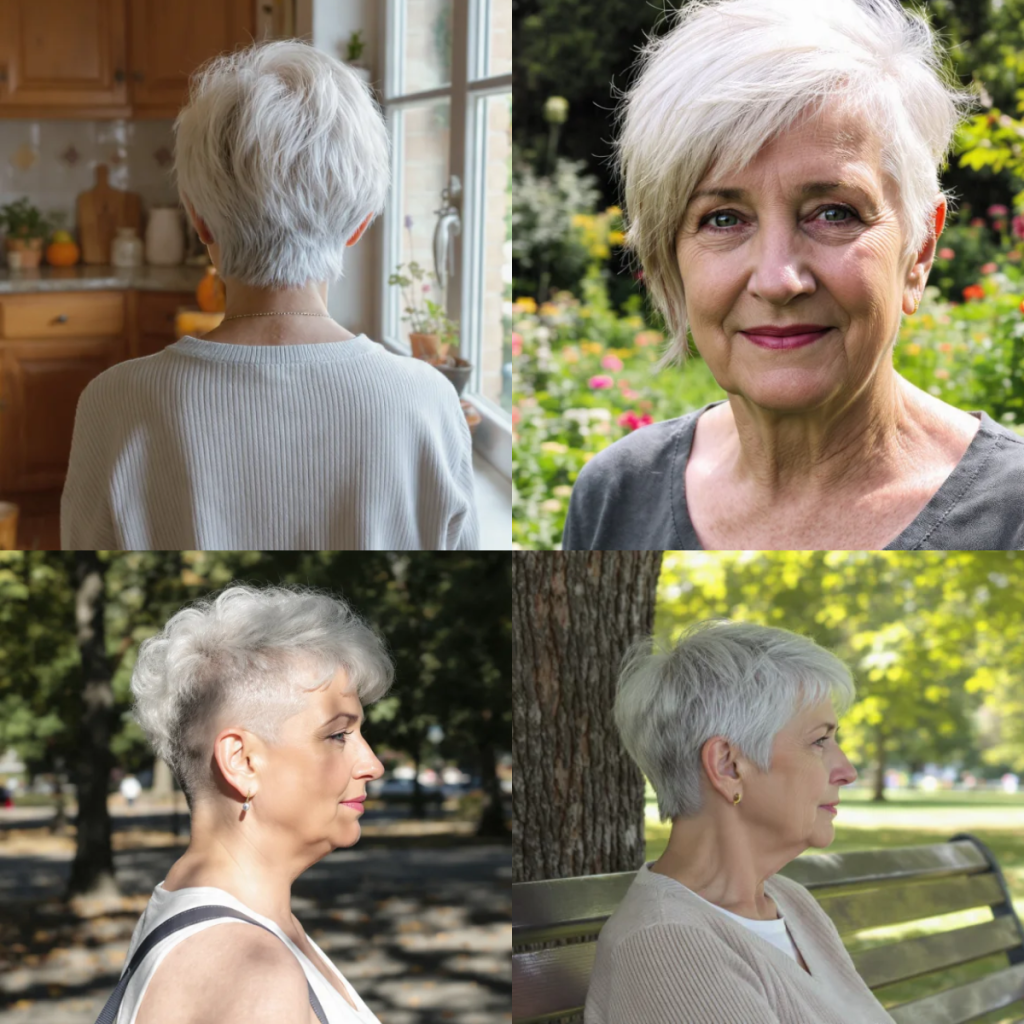
For decades, older women were told to “soften” their look—layer gently, keep length, avoid anything too sharp. But rules are made to be broken, and nothing shatters outdated hair expectations quite like an edgy undercut pixie.
This isn’t your grandmother’s sensible short cut. The undercut pixie combines the airy ease of a classic pixie with a hidden (or not-so-hidden) shaved section—usually at the nape or sides—that adds instant attitude, lift, and a rebellious spark. For women over 50, 60, and beyond, it solves real problems: fine hair gains volume, thick hair loses bulk, and gray or silver strands look strikingly modern when juxtaposed with clean-shaven lines.
Whether you want a whisper of an undercut or a full side-shave statement, these 12 ideas prove that age is not a style limit—it’s a permission slip to be bolder than ever.
Why the Undercut Pixie Works So Well for Older Hair
As hair ages, it often becomes finer, thinner, or more brittle. The undercut pixie directly addresses these changes:
- Fine hair gains instant lift – Removing weight from the underside allows the top to stand up with volume.
- Thick hair loses bulk – An undercut eliminates heavy, heat-trapping hair at the nape and sides.
- Grey and white hair looks crisper – Shaved sections create clean lines that make silver strands appear intentional, not washed out.
- Low maintenance becomes high style – A quick wash, a dab of product, and you’re done. No curling irons or lengthy blow-dries.
12 Well-Structured Ideas
1. The Classic Nape Undercut

What it is: A traditional pixie on top with the lower back of the head (nape) shaved close, usually in a rounded or V-shape pattern.
Best for: First-timers wanting edge without visible drama.
Styling tip: Keep the top textured and finger-combed forward. When you turn your head, the shaved nape creates a delightful surprise. Works beautifully with natural silver.
2. The Disconnected Side Shave
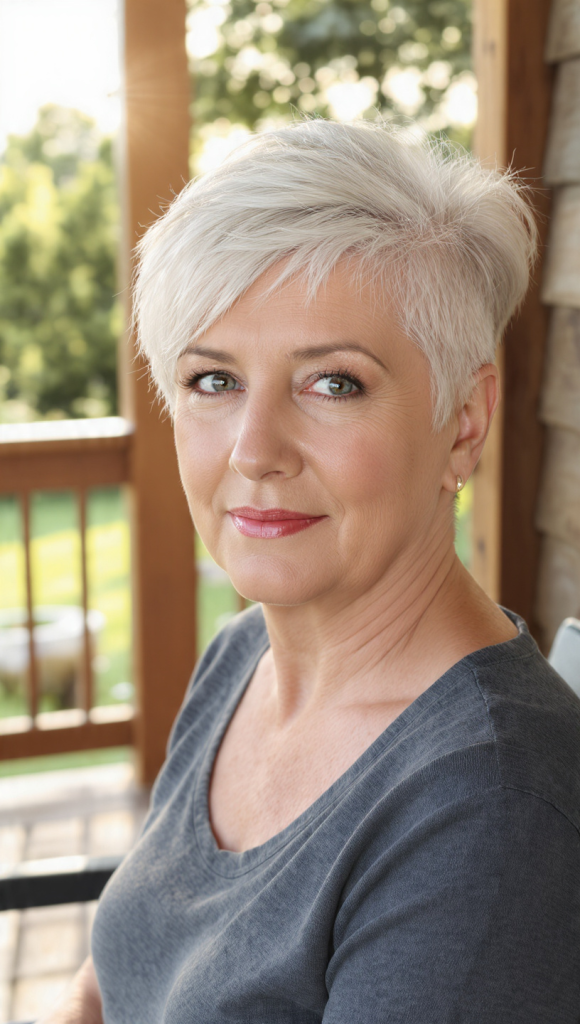
What it is: One side (usually the stronger side of your part) is shaved from temple to just above the ear, while the opposite side retains longer pixie length.
Best for: Asymmetrical lovers and those with cowlicks on one side.
Styling tip: Sweep the longer side across the forehead. The contrast between soft length and bare scalp is ultra-modern.
3. The Textured Crop with Zigzag Undercut
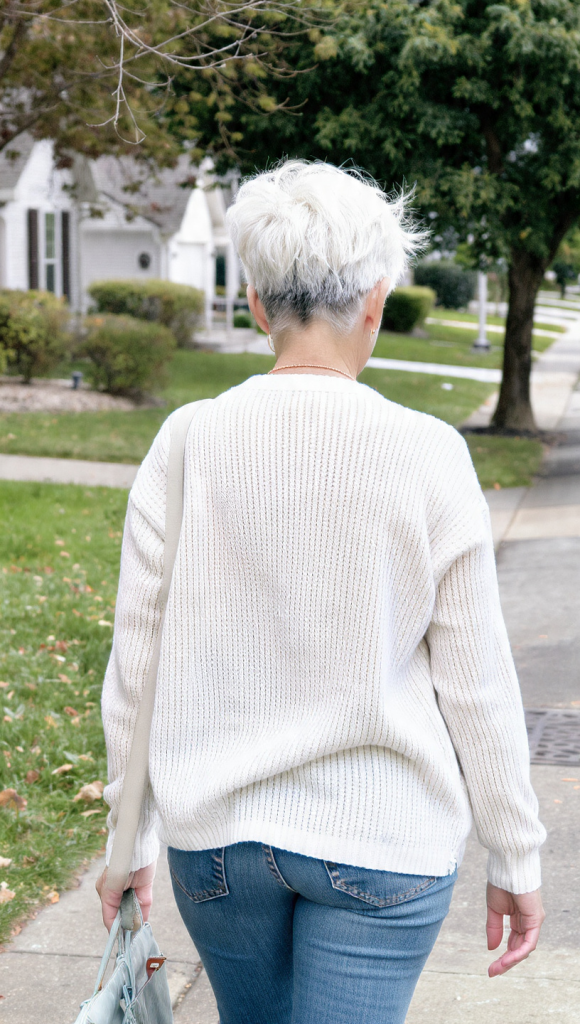
What it is: A choppy, piecey pixie on top combined with an undercut that’s shaved in a zigzag or geometric line instead of a straight edge.
Best for: Women who want an artsy, unconventional look.
Styling tip: Use a matte paste to define the top’s spikes. The zigzag line peeks out when you tilt your head.
4. The Silver Swoop with Shaved Temple
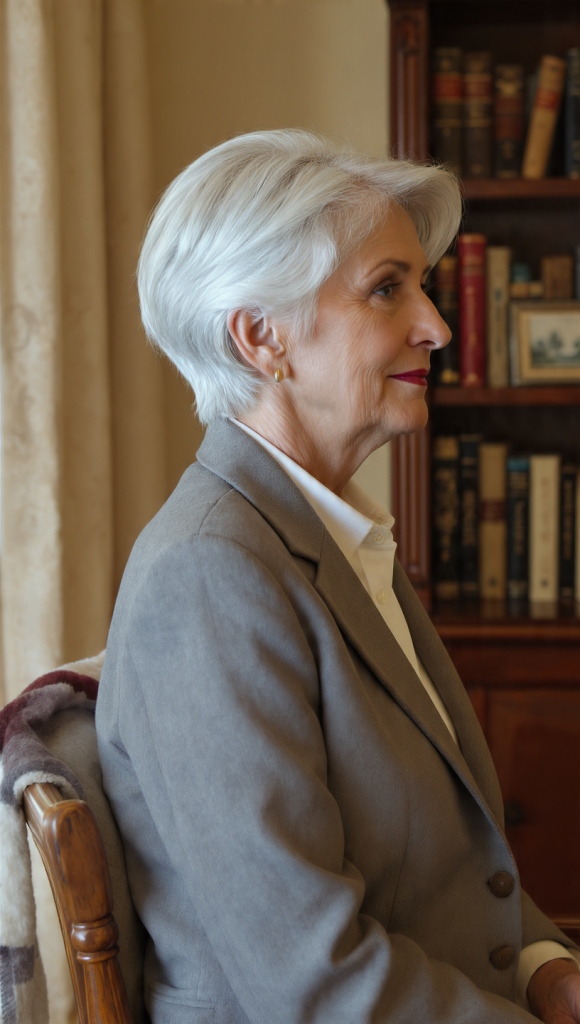
What it is: A longer pixie (ear-length on one side) with a small, crescent-shaped undercut at the temple.
Best for: Embracing gray or white hair—the shaved section makes silver look intentional and high-fashion.
Styling tip: Swoop the long side across the forehead and tuck behind the opposite ear, exposing the shaved temple.
5. The Curly Undercut Pixie
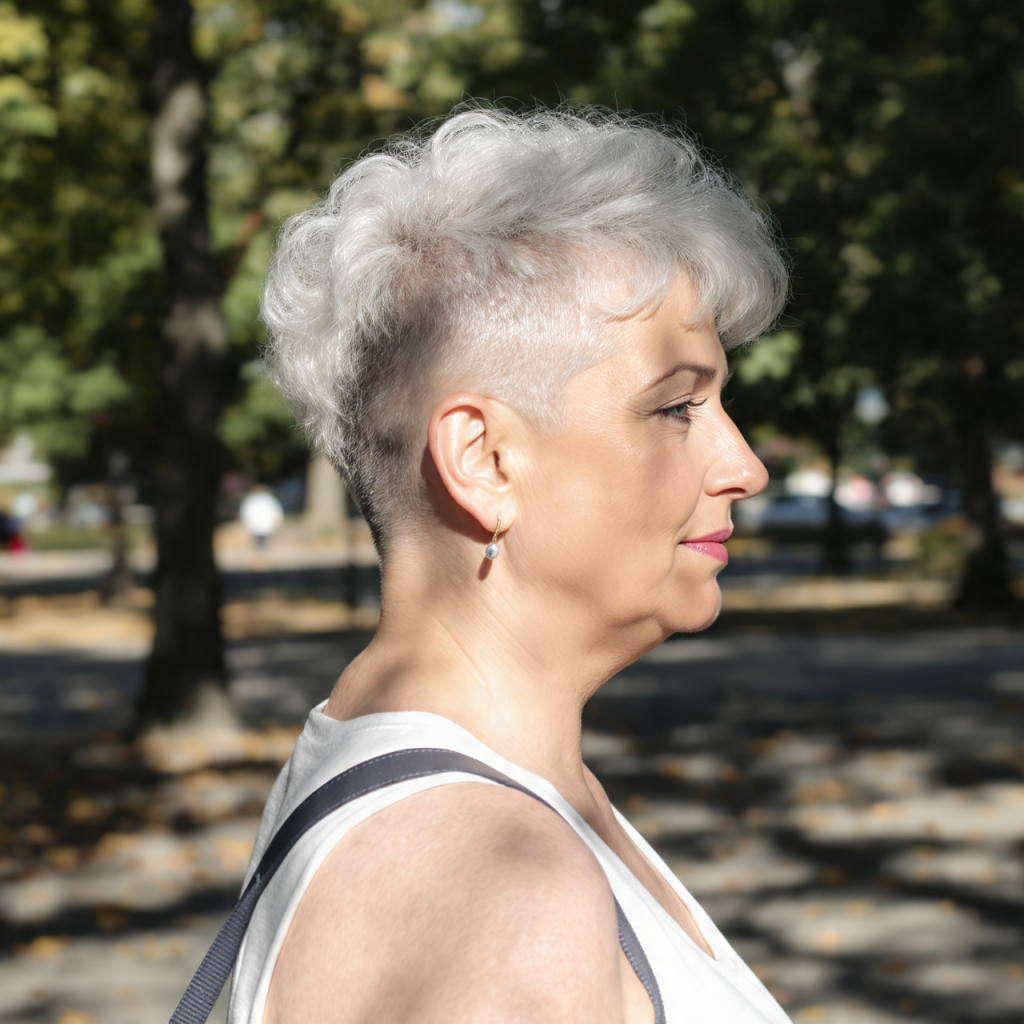
What it is: Natural curls or permed texture on top, with the sides and nape shaved close.
Best for: Women with naturally curly or coily hair who struggle with triangle-head shape.
Styling tip: Define curls with a lightweight gel. The undercut removes bulk at the sides, letting curls sit like a crown.
6. The Dual-Length Undercut (Short Back, Long Top)
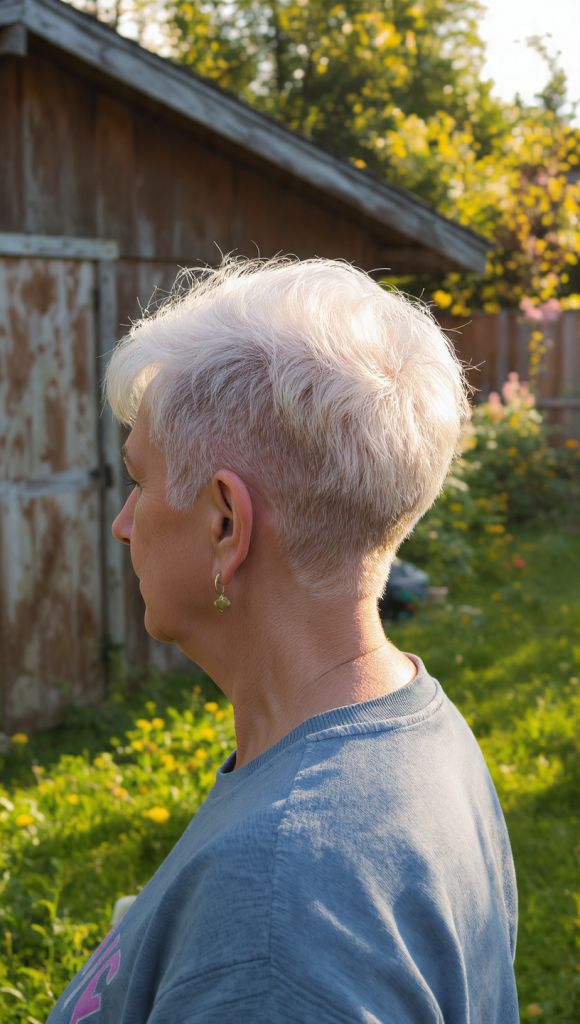
What it is: A dramatic version where the top is kept 2–3 inches long and swept back, while the entire back (from crown to nape) is shaved.
Best for: Fine hair that needs serious volume lift.
Styling tip: Blow-dry the top upward and back. From the front, it looks like a chic pompadour; from the side, the shaved back is pure edge.
7. The Carved Design Undercut
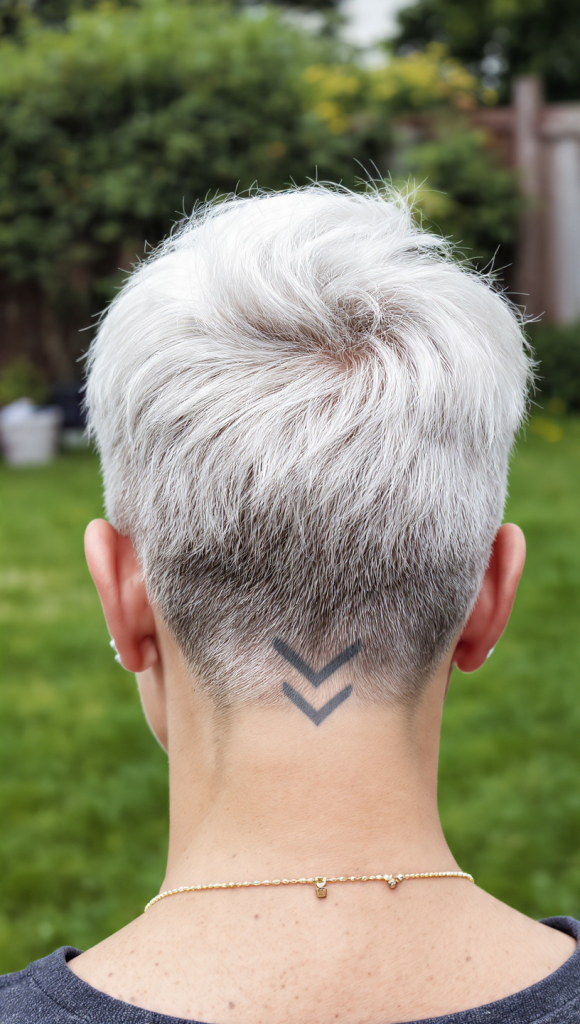
What it is: A standard nape or side undercut with a simple shaved-in design—a line, dot, chevron, or even a tiny star.
Best for: The truly adventurous. Designs grow out fast, so it’s low-commitment fun.
Styling tip: Keep designs minimal (one or two lines) so they read as edgy, not juvenile. A single vertical line at the nape is surprisingly elegant.
8. The Undercut Pixie Bob
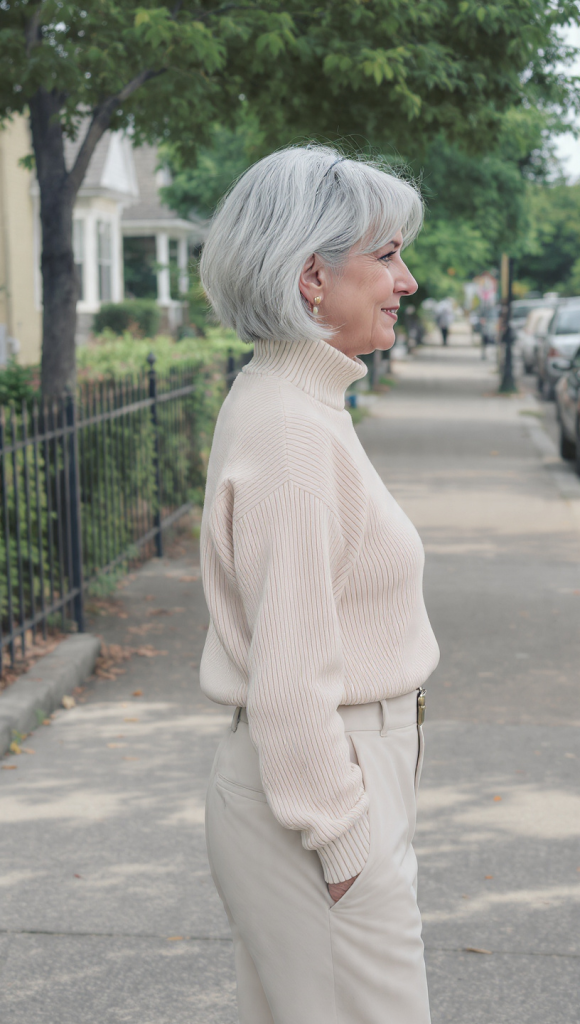
What it is: A hybrid—longer in front (chin-length bob shape) but with the entire back undercut from ear to ear.
Best for: Transitioning from a bob to a pixie. You keep front length while removing back weight.
Styling tip: Flat-iron the front pieces smooth. When you gather hair in back, you’ll see the shaved underlayer.
9. The Tapered Fade Pixie Undercut
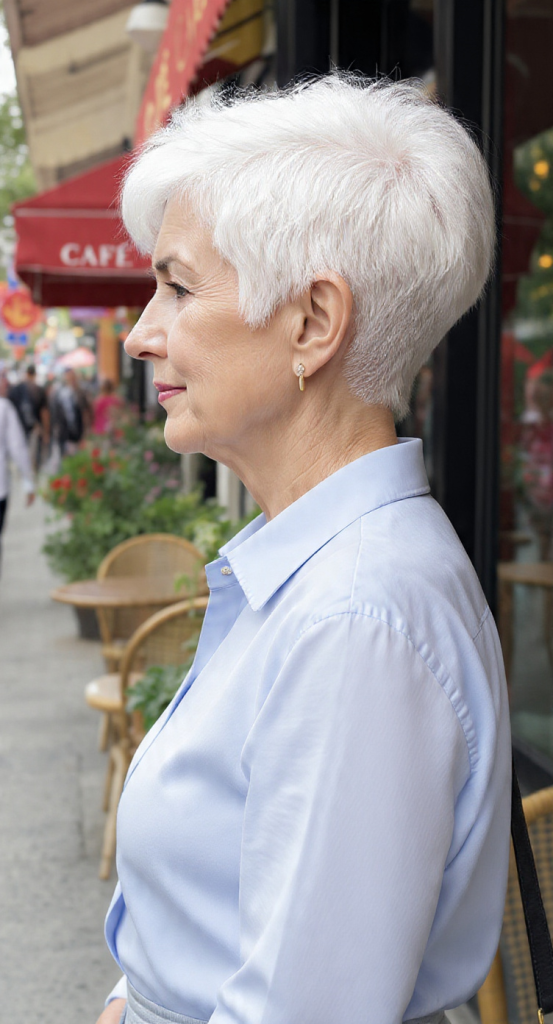
What it is: A skin fade (fading from shaved to zero length at the hairline) that blends into a short, textured pixie top.
Best for: A clean, polished edge that still reads as bold.
Styling tip: Ask your barber for a “low fade” so the undercut is visible but not extreme. Great with a side-swept bang.
10. The Mohawk-Inspired Undercut
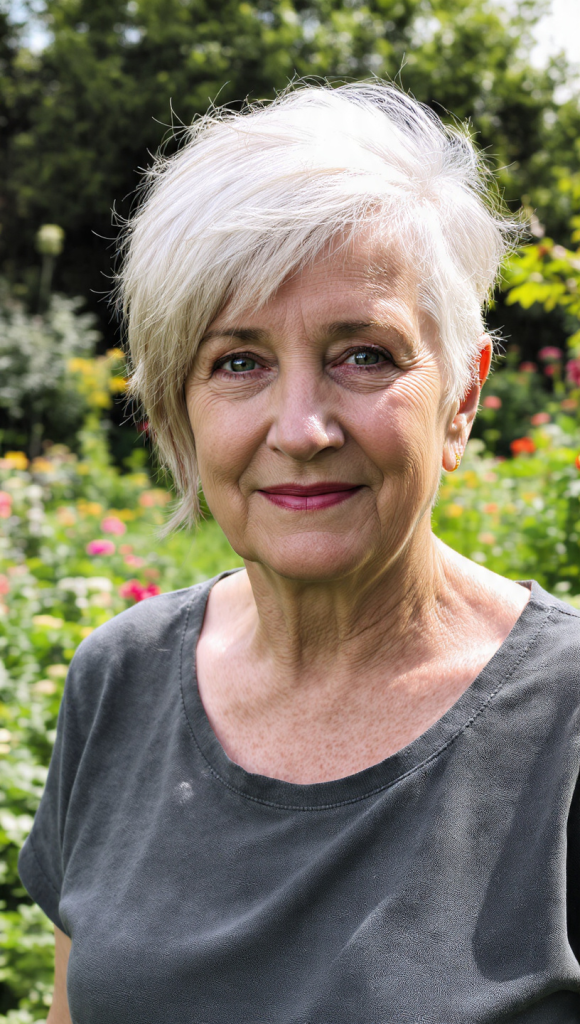
What it is: Both sides of the head are shaved, leaving a 1–2 inch wide strip of longer hair down the center.
Best for: Women who want maximum attitude but can’t commit to a full mohawk (the top can be combed flat to disguise it).
Styling tip: Wear the center strip messy and spiky. For a softer look, sweep it all to one side like a deep side part.
11. The Highlighted Undercut Contrast
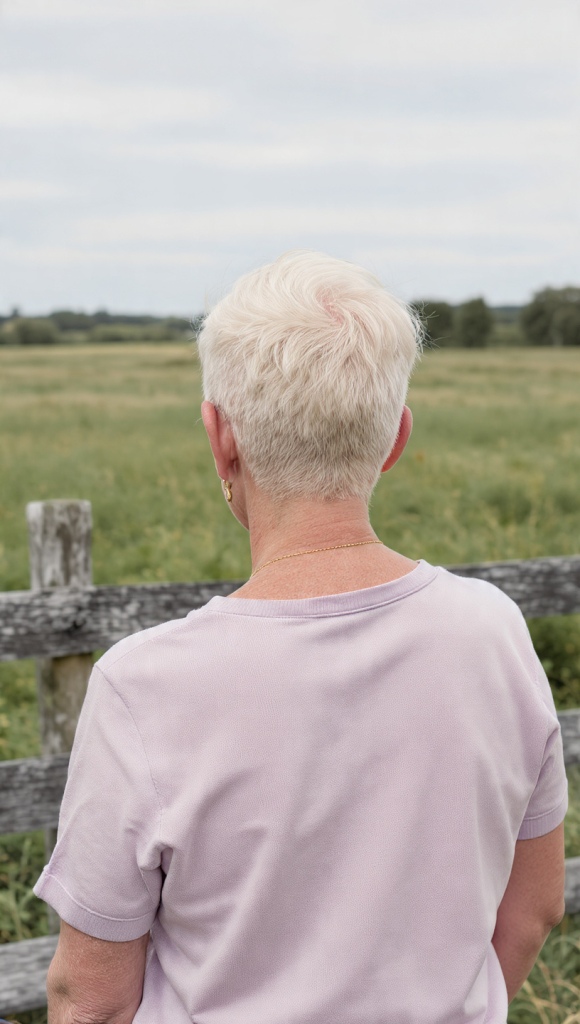
What it is: Any undercut style where the top is colored in a vibrant or contrasting shade (e.g., platinum, rose gold, or lavender) against natural gray.
Best for: Making the undercut pop visually. The shaved section stays your natural color.
Styling tip: Pastels or icy tones work best over 50. Keep the undercut clean-shaven every 2–3 weeks to maintain the color contrast.
12. The Soft Granny Undercut (Lowest Edge)
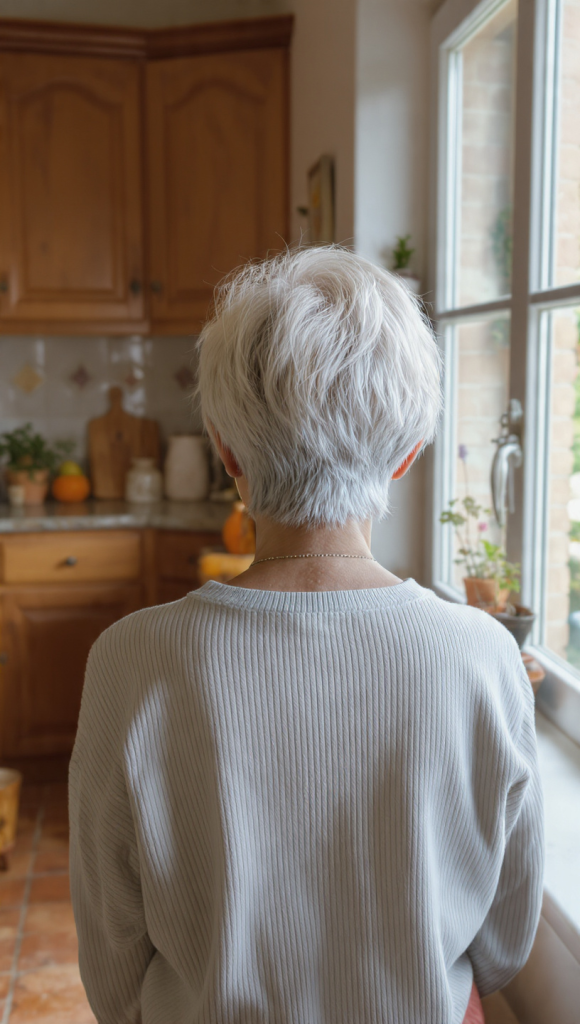
What it is: A very subtle undercut—only the lowest inch of the nape is shaved, hidden beneath a longer, layered pixie.
Best for: Women who love the idea of an undercut but want it invisible unless they pull hair up.
Styling tip: When you want edge, apply a pomade and slick the nape hair upward to expose the shaved strip. When you want conservative, just let it lie flat.
Is an Undercut Pixie Right for You? 5 Questions to Ask
Before booking the appointment, walk through these honest questions:
- How often can you visit the salon?
Undercuts need refreshing every 3–4 weeks to keep the shaved lines sharp. If you can’t commit, ask for a longer fade (¾ inch instead of skin). - What’s your current hair texture?
Curly and coily hair hides undercut grow-out beautifully. Very fine straight hair shows every millimeter of regrowth—plan accordingly. - Do you have any scalp conditions or sensitivities?
Psoriasis, eczema, or severe dryness can make shaved areas more visible and irritated. Talk to your stylist and dermatologist first. - How do you want to feel?
This is the most important question. If you want to feel bold, rebellious, or free, an undercut delivers. If you want to blend in, stick with a classic pixie. - What’s your backup plan if you hate it?
Good news: an undercut grows into a standard pixie in 8–10 weeks. Bad news: there’s an awkward in-between phase. Plan for headbands, scarves, or a temporary topper during grow-out.
How to Describe Your Undercut to a Stylist (Without Confusion)
Many stylists hesitate to give older clients undercuts. Use this exact language to get what you want:
| If you want… | Say this… |
|---|---|
| A subtle introduction | “I want a classic pixie with a low nape undercut—just one inch up, rounded shape.” |
| Visible edge | “Give me a disconnected side shave from my temple to above my ear. Leave the other side longer.” |
| Maximum drama | “Skin fade both sides and leave a two-inch strip on top. I want a soft mohawk.” |
| Hidden versatility | “Undercut only the lowest inch at the nape. I want to hide it most days but show it when I pull my hair up.” |
| A design | “Shave a single vertical line into the nape undercut. Nothing curly or cursive—just a clean line.” |
Pro tip: Bring a photo of a woman over 50 with the look you want. Avoid photos of 20-year-olds—the face shape and hair density are too different.
Styling and Products for the Edgy Undercut Pixie
You won’t need a dozen products. Here’s the short list:
For texture and definition (on the longer top pieces)
- Matte paste or clay – Adds grip and piecey separation without shine. Great for silver hair.
- Sea salt spray – Creates effortless, messy volume. Spray on damp hair and scrunch.
For the shaved sections
- Nothing – Let the shaved skin breathe.
- Sunscreen (SPF 30+) – Crucial if you have a visible side shave. Scalp sunburns are real and painful.
- Moisturizer – If the shaved area looks ashy or dry, use a lightweight face lotion.
For all-over hold
- Lightweight hairspray – Use from 12 inches away. Heavy sprays will flatten your volume.
- Pomade (tiny amount) – Warm between fingers and smooth over flyaways or to sweep bangs.
Tools to own
- Small trimmer – For weekly touch-ups between salon visits (e.g., Conair or Wahl travel trimmer).
- Wide-tooth comb – For curly textures.
- Boar bristle brush – For smoothing longer pixie tops on straight or fine hair.
The Emotional Side: What Women Over 50 Actually Say
After interviewing dozens of women who made the chop, these three responses came up again and again:
“I spent 40 years trying to look younger. The undercut made me feel ageless instead.” – Diane, 61
“My husband said it was too edgy. I did it anyway. Now he steals my product.” – Patricia, 67
“People stop me in the grocery store—not to ask if I’m sick, but to say they love my hair. That shift changed everything.” – Carol, 58
The undercut pixie isn’t just a haircut. For many older women, it’s the first time they’ve chosen a style purely for themselves, not for professional expectations, partners, or polite society.
The Awkward Grow-Out Phase (And How to Survive It)
Even the most devoted undercut fan will eventually want a change. Here’s how to transition painlessly:
Weeks 1–4: Still looks intentional. No action needed.
Weeks 5–8: The shaved section becomes fuzzy. Switch to a longer clipper guard (¼ inch) for home trims, or let it grow into a short layer.
Weeks 9–12: You now have a traditional layered pixie. The undercut is gone. Decide: re-shave or keep growing?
If growing to a bob:
Get a trim every 4 weeks to blend the former undercut area. Wear headbands, hair scarves, or soft barrettes during the mullet-risk phase (weeks 8–14).
If re-shaving:
Book a salon appointment. Do not attempt to re-shave the pattern yourself unless you’re very steady-handed.
Conclusion
The edgy undercut pixie is not a trend for the young, the brave, or the reckless—it’s a practical, liberating, and stunningly beautiful choice for women who happen to have lived a few decades. It solves real hair problems: thinning, bulk, heat, and boredom. It demands almost nothing in terms of daily styling. And it announces something quietly powerful: I am not fading away. I am still here, and I still have edges.
Whether you choose a whisper of a shaved nape or a full side-shave statement, this haircut gives you permission to stop apologizing for your age and start playing with your look. The rules about what older women “should” wear are ancient history. Your hair, your head, your rules.
So go ahead. Book the appointment. Bring the photo. Watch the stylist’s eyebrows lift. And when you see yourself in the mirror for the first time with that clean, sharp, shaved line at your neck or temple, don’t be surprised if you smile a little wider than you have in years.
You didn’t just change your hair. You changed the conversation.