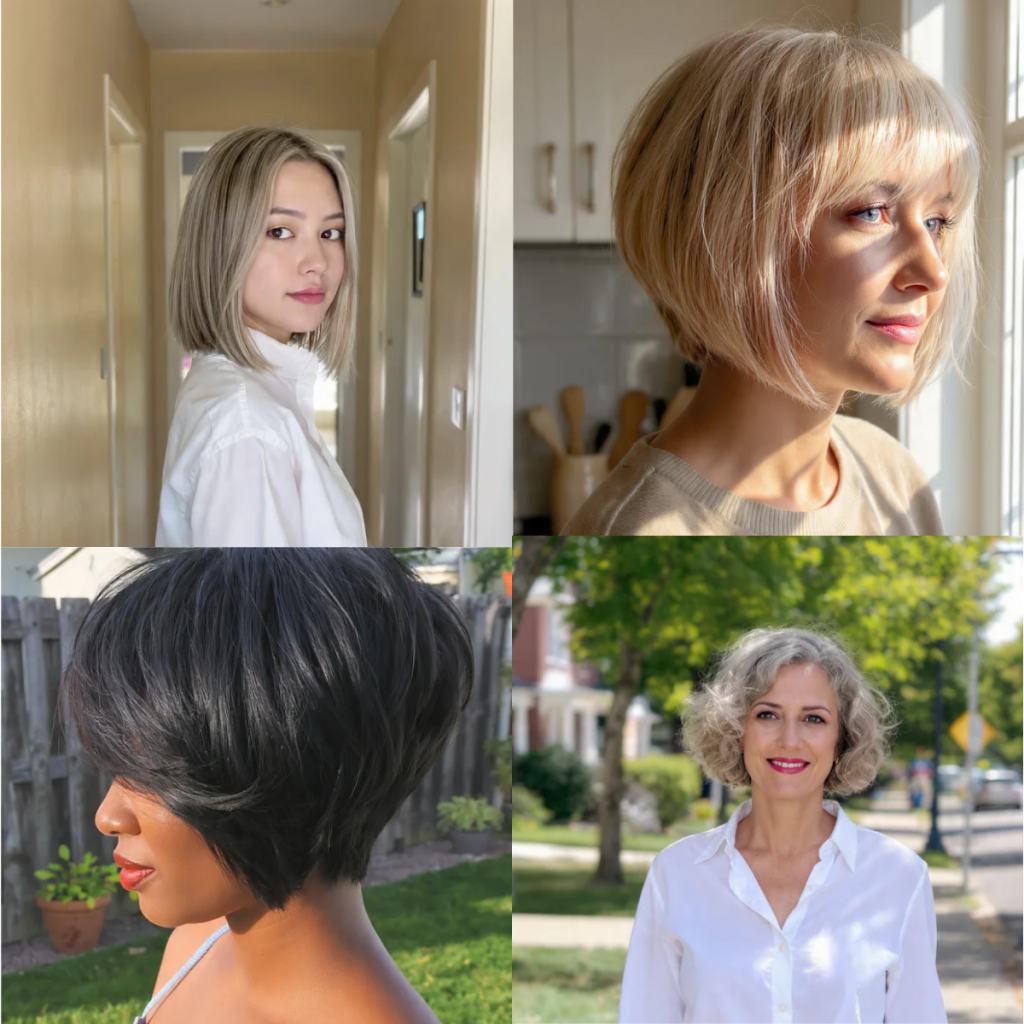
If you have thin hair, you’ve likely experienced the frustration of limp, flat styles that lack volume and movement. But here’s the good news: a well-cut bob can be your secret weapon. Unlike long hair that weighs fine strands down, a bob removes excess length, creating the illusion of density and bounce.
The right bob works with your hair’s natural texture, adds strategic layers, and incorporates cutting techniques like blunt ends or internal graduation to maximize fullness. In this article, we’ll walk you through 10 bob hairstyles specifically designed for thin hair—each one easy to style, modern, and proven to give you that thick, luscious look you’re after.
Why Length Matters More for Thin Hair Than You Think
Thin hair loses volume primarily because of gravity. The longer the hair, the more each strand is pulled downward, exposing the scalp and making part lines appear wider. A bob solves this by cutting off the heaviest, thinnest ends — often the most see-through part of fine hair.
Optimal lengths for thin hair:
- Ear to chin: Best for maximum volume and bounce
- Chin to collarbone: Good balance of length and body
- Below collarbone: Usually too heavy for very thin hair
10 Well-Structured Bob Hairstyles for Thin Hair
1. The Classic Blunt Bob
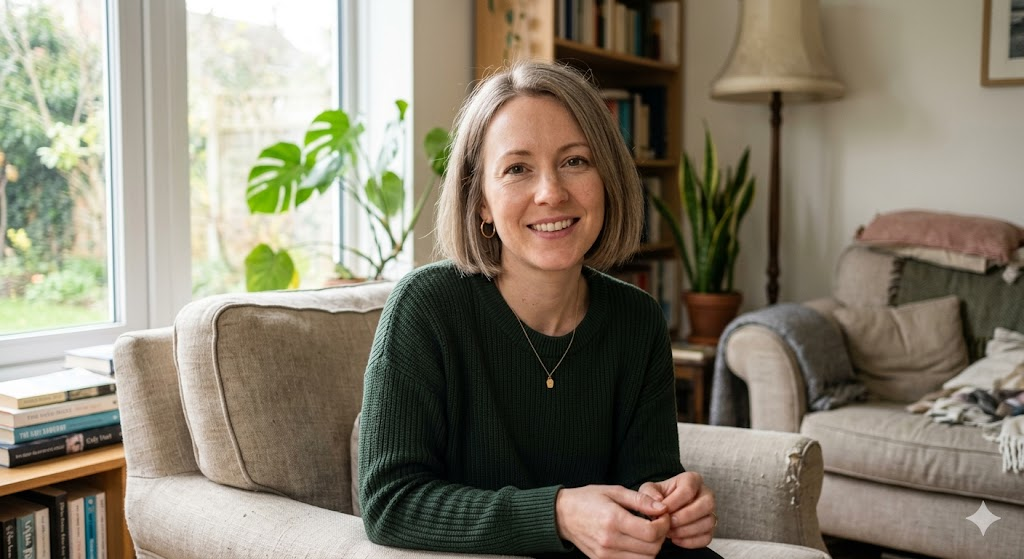
- Length: Jaw to chin-length
- Why it works for thin hair: No layers means all hairs end at the same point, creating a solid, weighty line that mimics thicker hair.
- Styling tip: Blow-dry with a round brush, tucking ends under slightly for a dense, polished shape.
2. The Textured French Bob
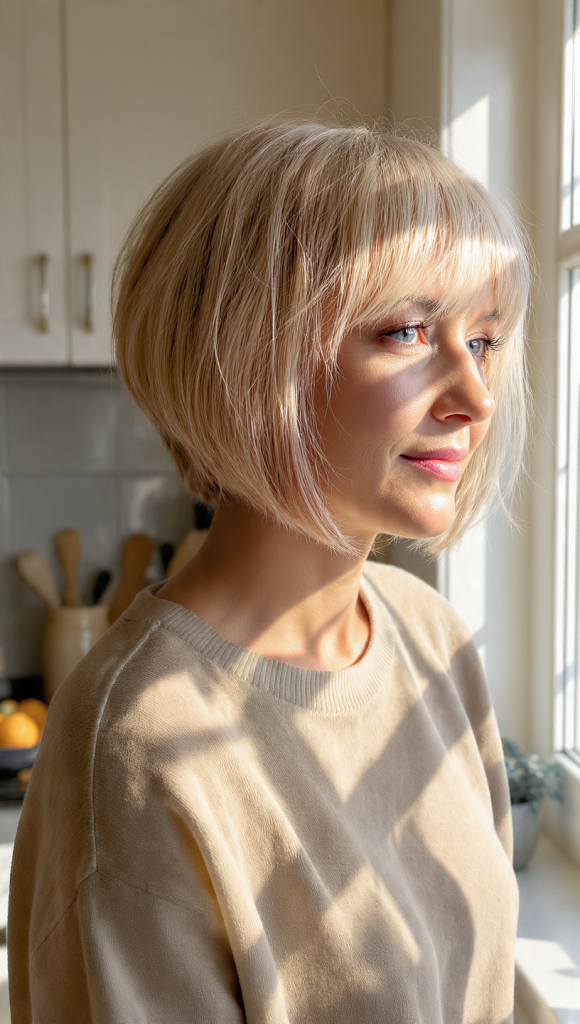
- Length: Above the chin, often with micro-bangs
- Why it works for thin hair: Light, piece-y texture adds movement without removing bulk. The short length prevents thinning ends from looking sparse.
- Styling tip: Use a texturizing spray and scrunch dry with fingers for effortless volume.
3. The Asymmetrical Bob

- Length: Shorter in back (nape length), longer in front (collarbone grazing)
- Why it works for thin hair: The diagonal line creates optical fullness. The stacked back adds density at the crown.
- Styling tip: Flat iron the ends slightly forward for a modern, face-framing effect.
4. The Inverted Bob
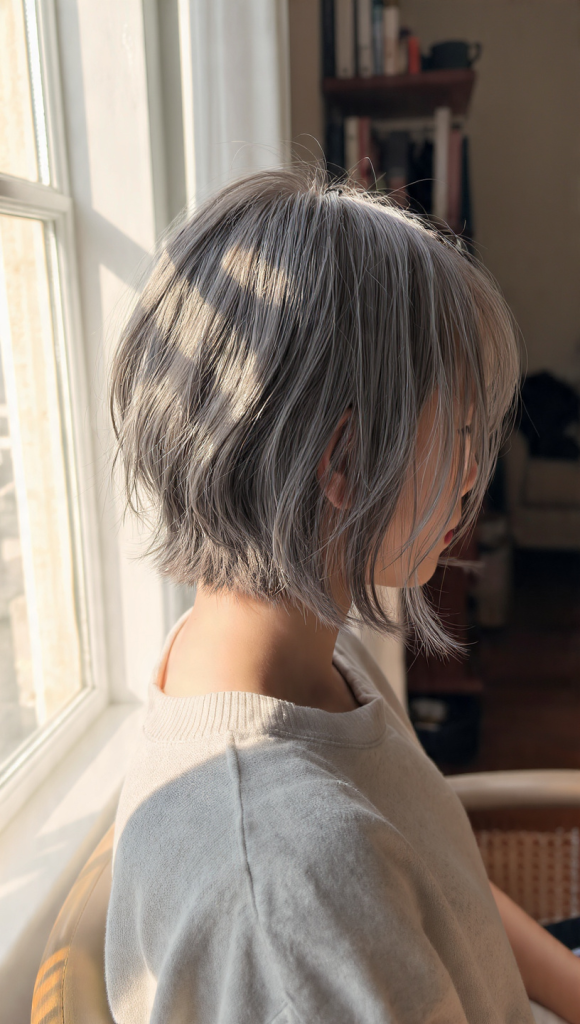
- Length: Short stacked layers in back, angling to longer front pieces
- Why it works for thin hair: Stacking at the nape lifts hair off the neck, giving instant volume at the crown.
- Styling tip: Apply mousse to damp roots, then blow-dry upside down for maximum lift.
5. The Sleek Lob (Long Bob)
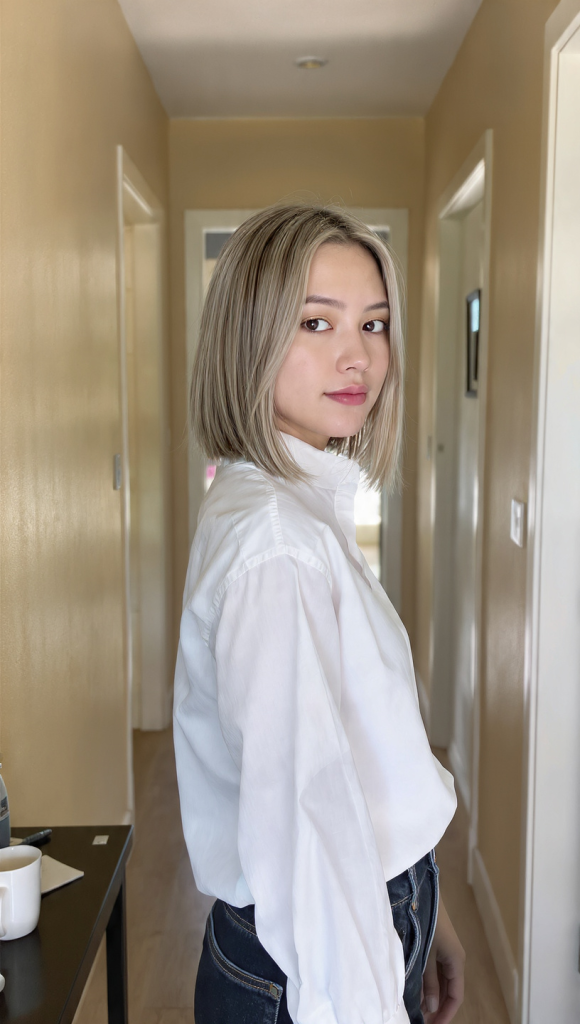
- Length: Just above the shoulders
- Why it works for thin hair: One length from root to tip preserves every strand’s density. The longer length allows for low ponytails while avoiding the “stringy” look of very long thin hair.
- Styling tip: Use a lightweight shine serum and flat iron for a mirror-smooth finish that reflects light and hides thinning.
6. The Wavy Micro-Bob

- Length: Ear to chin length
- Why it works for thin hair: Soft waves create multiple light-reflecting surfaces, making hair look fuller and more textured.
- Styling tip: Use a 1-inch curling iron, curl away from the face, then gently finger-comb. Lock in with a flexible hold hairspray.
7. The Stacked A-Line Bob
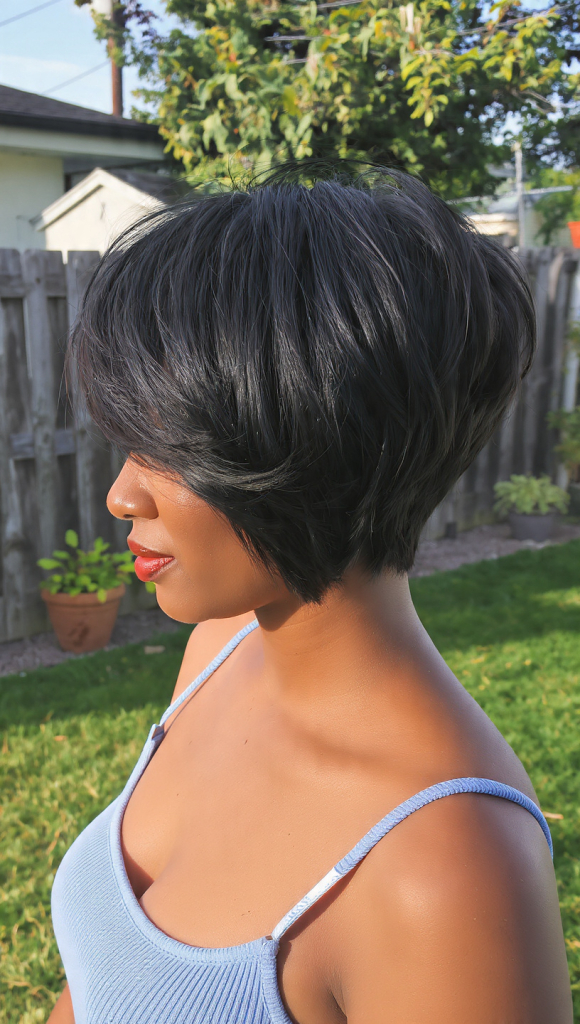
- Length: Very short stacked back (sometimes buzzed nape), sharply angled to longer front
- Why it works for thin hair: The dramatic stack builds volume exactly where thin hair needs it most—the crown and upper back.
- Styling tip: Work a volumizing powder at the roots, then backcomb gently before smoothing the top layer.
8. The Choppy Pixie-Bob Hybrid

- Length: Cropped at the ears, slightly longer on top
- Why it works for thin hair: Disconnected, choppy layers remove weight without revealing scalp through sparse areas.
- Styling tip: Rub a pea-sized amount of matte paste between palms and rake through dry hair for an undone, dense finish.
9. The Layered Bob with Heavy Bangs
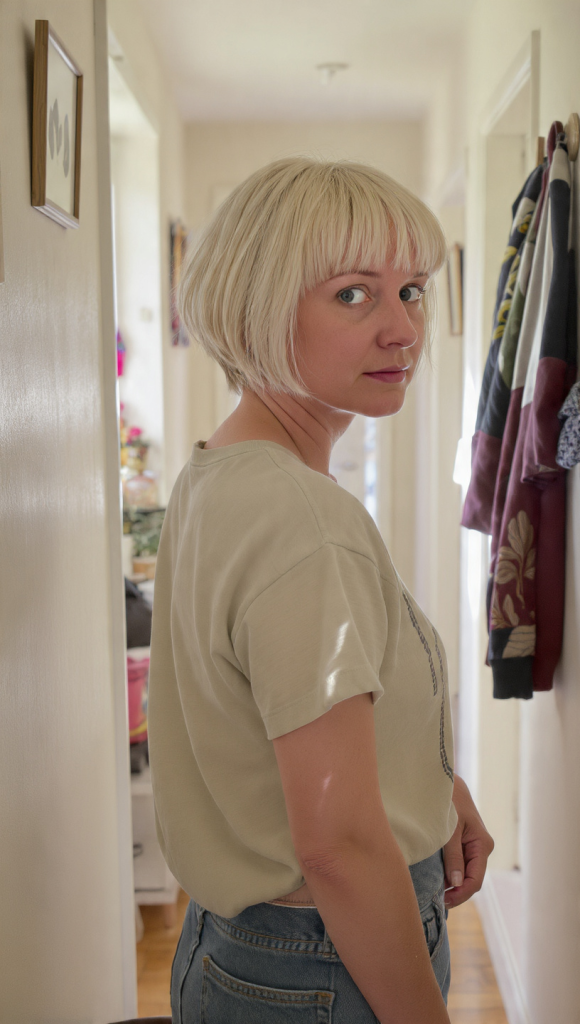
- Length: Chin to shoulder, with blunt, eyebrow-skimming bangs
- Why it works for thin hair: Full bangs hide a thinning hairline and create a focal point that distracts from low density elsewhere.
- Styling tip: Keep bangs dry-shampooed for texture. Blow-dry the rest of the bob using a large round brush for rounded volume.
10. The Curly or Wavy Bob (Natural Texture)

- Length: Shorter when dry—aim for shrinkage (e.g., cut to ear length so curls land at chin)
- Why it works for thin hair: Curls naturally create pockets of air and volume. A bob removes the weight that pulls curls flat.
- Styling tip: Use a lightweight curl cream and diffuse upside down. Never brush dry curls—only separate with fingers.
The Best Haircuts to Ask Your Stylist For
When booking your appointment, use these exact terms:
| If you want… | Ask for… |
|---|---|
| More density | “A blunt, one-length bob with no layers” |
| Crown volume | “An inverted bob with light stacking at the nape” |
| Movement without thinning | “Point-cutting or texturizing, not razor cutting” |
| Fuller ends | “No feathering or slicing at the perimeter” |
| A soft, modern look | “Micro-tapered ends, not chunky layers” |
What to avoid:
Razor cuts, over-texturizing shears, long layers, and anything that removes weight from the ends — all of these make thin hair look sparser.
How to Style a Bob on Thin Hair (Step by Step)
Step 1 – Wash correctly
Use a volumizing shampoo and lightweight conditioner on ends only. Heavy conditioners flatten fine hair.
Step 2 – Apply products on damp hair
Work a pea-sized mousse or root-lifting spray into the roots. Avoid oils, creams, or serums near the scalp.
Step 3 – Dry upside down
Flip your head forward and blow-dry roots first, then ends. Heat activates volume.
Step 4 – Use the right brush
A small round brush (1–1.5 inches) creates bend and body. For straight styles, a flat paddle brush prevents kinks.
Step 5 – Finish with texture
Lightly spray dry shampoo or texture powder at the roots. Flip hair side to side to break any stiffness.
Time saved: A bob dries in 5–10 minutes versus 20+ for long hair.
The Best Products for Thin Hair With a Bob
These product types consistently perform well for fine, thin hair:
| Product category | What to look for | What to avoid |
|---|---|---|
| Shampoo | “Volumizing”, “thickening”, sulfate-free | “Moisturizing”, “smoothing” |
| Conditioner | Lightweight spray or rinse-out only | Leave-in creams or butters |
| Styling primer | Heat protectant with grip | Heavy oils |
| Mousse | Alcohol-free, level 2–4 hold | Extra-firm or wet-look formulas |
| Dry shampoo | Tinted or transparent powder | Aerosol with heavy fragrance |
| Hairspray | Flexible hold, low shine | High-gloss or ultra-firm |
One affordable routine:
Volumizing shampoo → lightweight conditioner → root mousse → dry shampoo as needed.
Maintenance & Growth Tips for Thin Hair
Cutting schedule:
Every 4–6 weeks. Thin hair shows split ends and unevenness faster than thick hair. Regular trims keep the bob’s shape intact.
Night routine:
- Sleep on a satin or silk pillowcase (reduces friction and breakage)
- Loose ponytail on top of the head (prevents sleeping flat on the bob’s shape)
- Avoid tight elastics or scrunchies with metal
Washing frequency:
Every other day or every two days. Daily washing strips natural oils that give thin hair its only natural body.
What to avoid for healthier thin hair:
- Tight ponytails or buns (traction alopecia risk)
- Heavy hairsprays or gels (they weigh hair down)
- Over-brushing (causes static and breakage)
- Hot tools above 350°F / 175°C
Frequently Asked Questions
Will a bob make my thin hair look even thinner?
Only if cut incorrectly. A choppy, over-layered, or razor-cut bob can expose the scalp. A blunt or lightly stacked bob does the opposite.
Can I still wear my bob in a ponytail?
Yes, especially a lob (long bob). Use small, soft elastics and leave out face-framing pieces for fullness.
What if I have a cowlick or flat crown?
Ask your stylist for “crown graduation” — short interior layers that lift without removing density at the ends.
Is a bob harder to maintain than long hair?
Different, not harder. You’ll style it more often (since you can’t rely on a bun), but drying and washing are much faster.
Will my hair grow back thinner if I cut it short?
No. Cutting does not affect hair follicles or future thickness. That’s a myth.
Conclusion
Thin hair doesn’t have to mean flat, lifeless styles. The right bob — whether blunt, inverted, wavy, or asymmetrical — transforms fine strands into a look that reads as intentionally chic, not thinning. The secret lies in three choices: a length that removes excess weight, a cut that preserves end density, and styling techniques that lift the roots.
You don’t need expensive products or hours of work. A good bob cut every five weeks, a lightweight volumizing routine, and a few simple tools are enough to create daily volume and shape.
If you’ve been hiding thin hair in long, see-through lengths or tight buns, consider this your sign to go shorter. Thousands of women with fine hair have made the switch — and very few ever go back.
Your best bob is waiting just above your shoulders.
