Designing a small bedroom is all about using every inch with intention. When space is limited, the layout becomes the most important design decision you make. The right arrangement can make a tiny room feel open, balanced, and surprisingly functional, while the wrong one can make it feel cramped or cluttered. In this guide, you’ll find simple, practical small bedroom layout ideas that show how much is possible even in tight square footage. Whether you need room for a desk, storage, or just a peaceful sleep zone, these layouts offer clear inspiration you can recreate at home without major renovations.
15 Small bedroom layout ideas
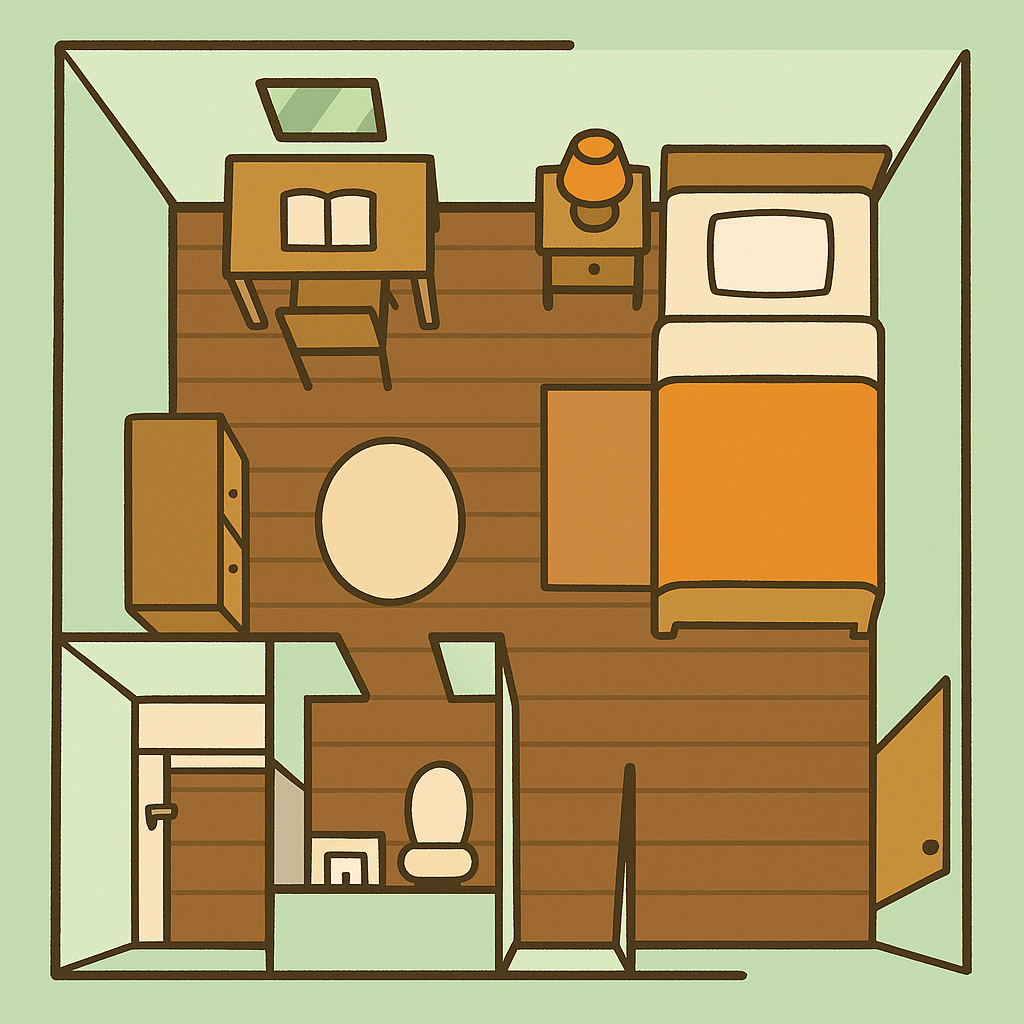
Small Bedroom Layout With Built-In Efficiency and Clear Traffic Flow
This layout makes excellent use of a compact bedroom by keeping each functional area clearly defined. The twin bed is positioned along the right wall, leaving the center of the room open and easy to move through. A small nightstand beside the bed provides just enough space for essentials like a lamp or alarm clock.
A streamlined desk is placed opposite the bed, creating a dedicated workspace without overwhelming the floor area. The placement near the top wall allows natural light (from a window above the desk) to brighten the study zone. A dresser sits neatly against the left wall, maximizing vertical storage while keeping the pathways uncluttered.
The bathroom is located in the lower-left corner of the layout and partitioned off with simple, space-saving walls, allowing for privacy without taking up excessive bedroom space. A compact round rug softens the center of the room and visually divides the sleeping and working areas.
Overall, this design shows how thoughtful furniture placement—keeping pieces against the perimeter and preserving an open center—can make even a small bedroom feel organized, functional, and comfortable.
Small Bedroom Layout With a Centered Bed and Balanced Symmetry
This small bedroom layout uses symmetry and smart furniture placement to create a calm, well-balanced space. The bed is positioned centrally against the window wall, immediately drawing the eye upward and taking advantage of natural light. This placement also frees up both sides of the bed for small nightstands or stools, making the room feel more open and functional.
A soft layering of rugs defines the sleeping zone and brings texture underfoot without overwhelming the compact footprint. At the foot of the bed, a mid-height dresser provides essential storage while keeping clear sightlines throughout the room. The open wall opposite the bed is used thoughtfully with floating shelves and plants, adding vertical interest without crowding the floor.
Greenery plays a major role in this layout—potted plants are placed strategically around the room to add depth, soften corners, and bring life to small spaces. A slim console or vanity on the right wall adds another functional surface, ideal for décor, storage baskets, or a morning routine.
This layout works beautifully in small rooms because it keeps the center open, uses the perimeter for storage and styling, and relies on symmetry to create a peaceful, visually cohesive bedroom.

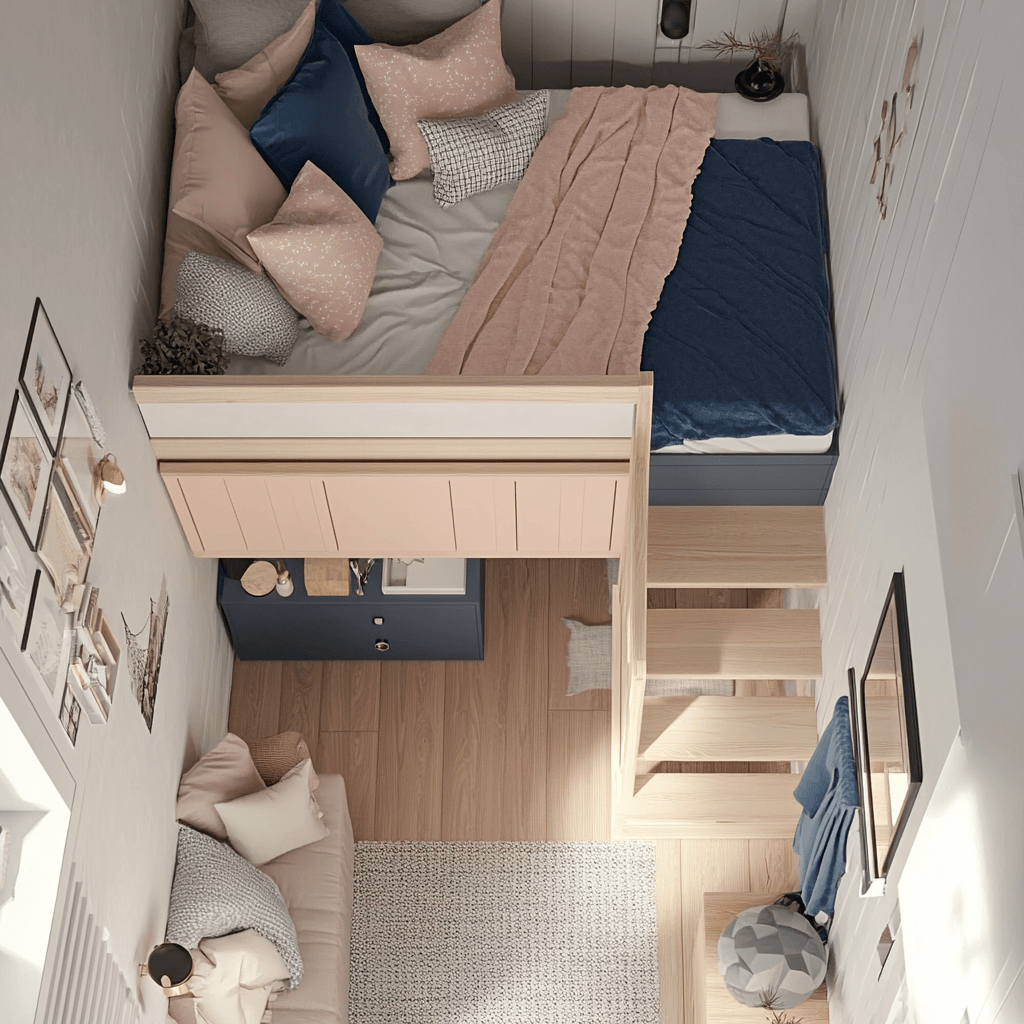
Small Bedroom Layout With a Lofted Sleep Zone and Cozy Lounge Area
This clever small bedroom layout uses vertical space to its fullest by elevating the sleeping area and freeing up valuable floor space below. The bed is positioned on a raised platform accessed by a short staircase, instantly creating separation between the sleep zone and the rest of the room. Soft bedding in blush, navy, and gray tones adds warmth and comfort to the compact but inviting loft.
Beneath the elevated bed, built-in cabinetry provides hidden storage and helps keep the room tidy—an essential feature in small spaces. The remaining floor area is transformed into a cozy lounge nook with a compact sofa, accent pillows, and a textured rug. This secondary seating area adds functionality to the bedroom, making it a relaxing spot for reading, studying, or unwinding.
Light wood flooring and white walls keep the space bright and open, while framed artwork and soft lighting add personality and charm. Thoughtful styling—like a pouf, woven baskets, and layered textiles—enhances the cozy atmosphere without overwhelming the room.
This layout is ideal for maximizing space in tiny bedrooms, offering separate zones for sleeping, lounging, and storage—all within one beautifully organized footprint.
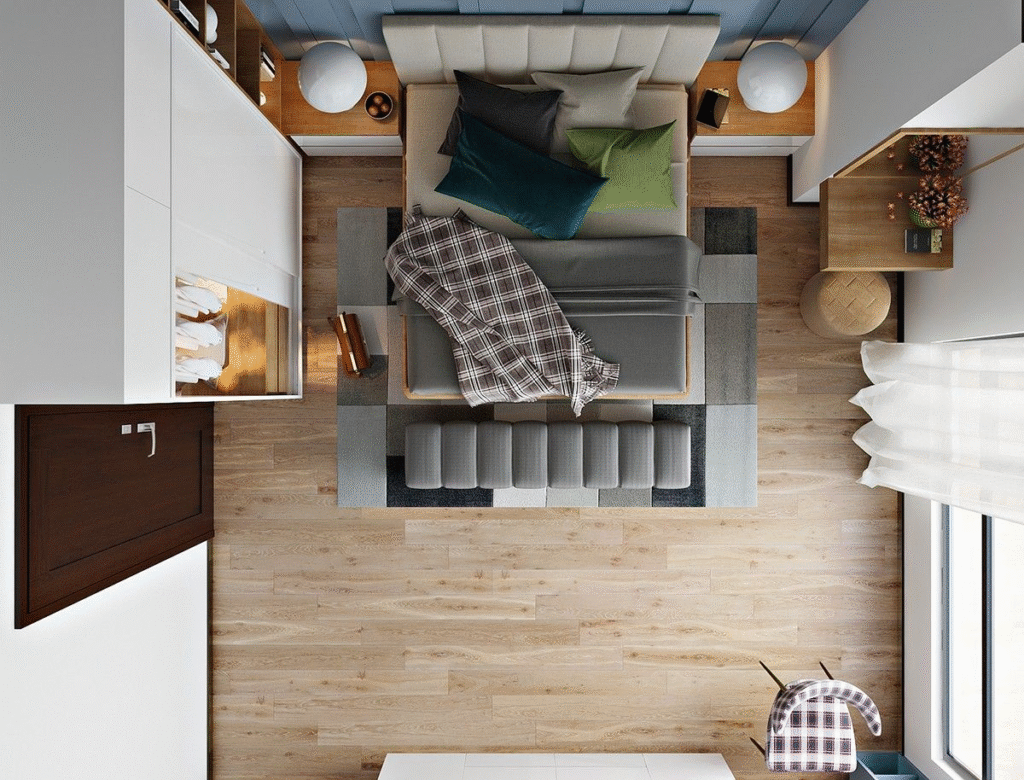
Small Bedroom Layout With Central Bed Positioning and Multi-Zone Functionality
This smart small-bedroom layout places the bed at the heart of the room, creating a natural focal point while allowing the surrounding space to function efficiently. The bed sits centered on a patterned area rug, which anchors the room and visually divides the sleeping zone from the rest of the layout. Coordinating accent pillows tie together the room’s earthy and cool tones, adding a layer of comfort and style.
On either side of the bed, built-in nightstands blend seamlessly into the design, providing practical lighting and storage without taking up extra space. The left wall features a sleek wardrobe that maximizes vertical storage and keeps clothing neatly organized, while still leaving ample floor clearance for easy movement.
On the right side of the room, a compact wooden desk creates a dedicated workspace beside the window. Natural light floods this corner, making it ideal for studying, writing, or remote work. A round pouf serves as flexible seating that tucks away easily when not in use.
Soft wood flooring and modern textiles keep the room feeling warm, while the large window and airy curtains prevent the space from feeling cramped. Everything in this layout is thoughtfully placed to maintain balance, openness, and practicality.
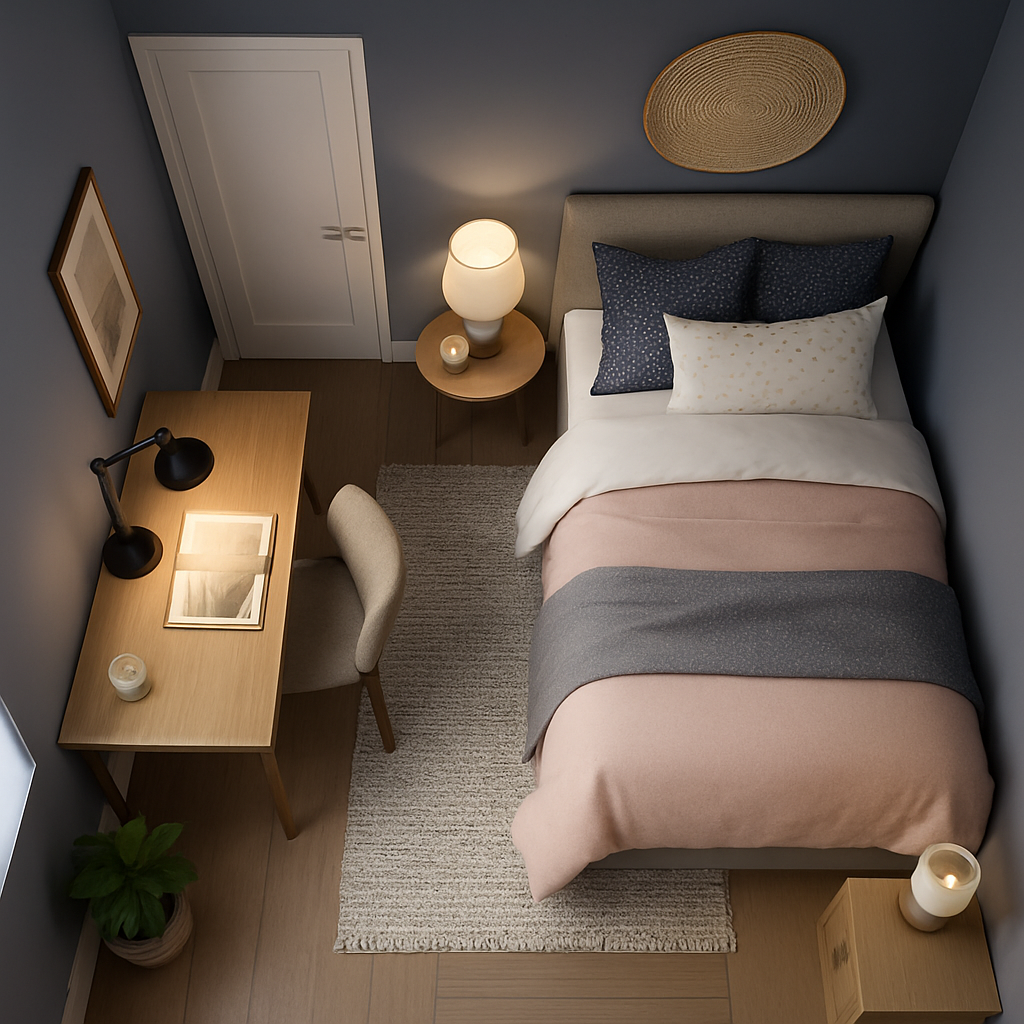
Small Bedroom Layout With a Narrow Floor Plan and Perfect Bed–Desk Balance
This layout demonstrates how to make a long, narrow bedroom feel intentional and serene. The twin bed is placed lengthwise against the far wall, maximizing walkway space and allowing for a clean visual flow from the door to the sleep area. Soft, layered bedding in blush, cream, and charcoal tones adds warmth and comfort without overwhelming the compact footprint.
A small round nightstand sits conveniently next to the bed, holding a sculptural lamp and candle—essentials that don’t take up much room. A textured rug runs the length of the room, grounding the sleeping area while also adding cozy softness underfoot.
Opposite the bed, a slim wooden desk provides a functional workspace. Its placement along the wall maximizes floor space and avoids blocking the natural pathway through the room. A minimalist desk lamp adds focused lighting, and neutral artwork keeps the design cohesive. A small plant in the corner adds life without cluttering the layout.
This layout works beautifully because everything stays aligned along the walls, keeping the center open and making the small space feel warm, tidy, and thoughtfully arranged.
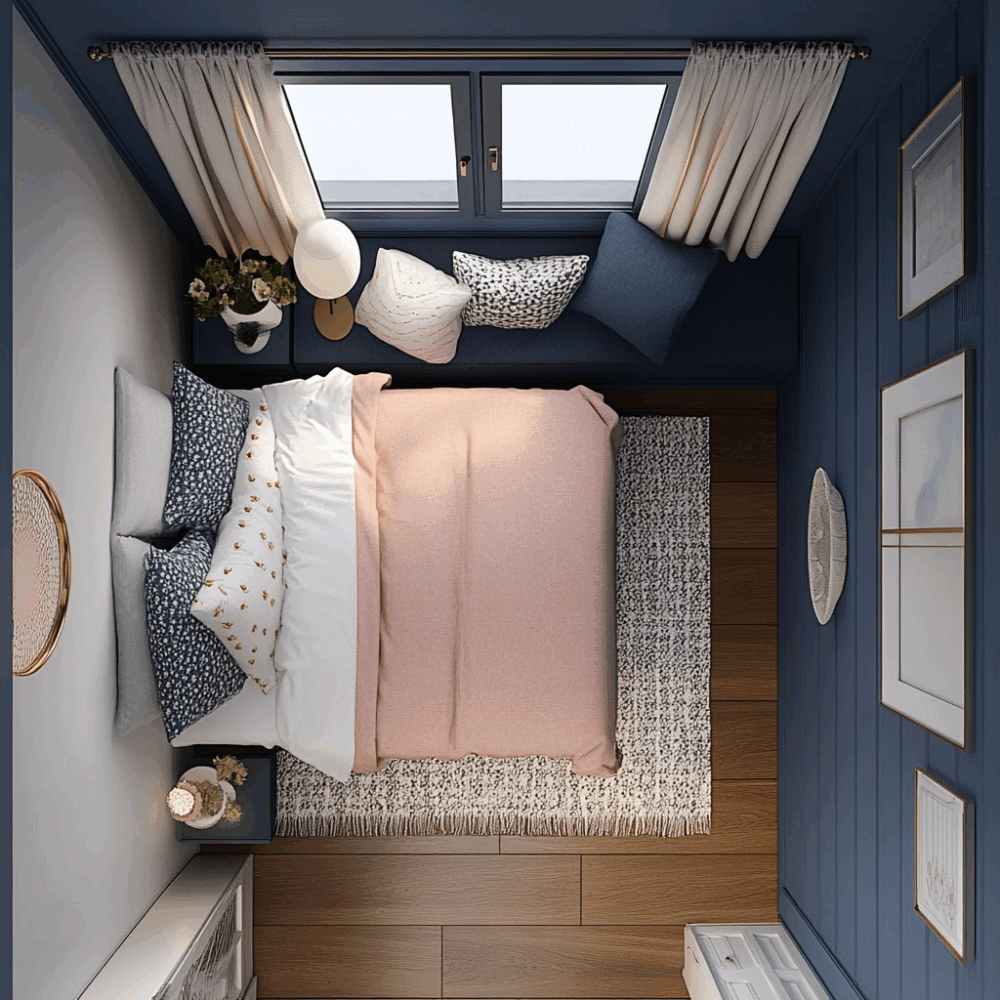
Small Bedroom Layout With a Built-In Window Seat and Clever Use of Corners
This layout makes a compact bedroom feel incredibly cozy and functional by using every inch with intention. The bed is positioned snugly against one wall, leaving enough space for a walkway along the foot and side—a practical choice in narrow rooms. Soft, layered bedding in peach, cream, and navy creates a calming palette that complements the rich blue accent wall.
At the top of the room, a built-in window seat transforms a small, otherwise unused corner into a relaxing nook. Overflowing with cushions in coordinating colors and patterns, it becomes the perfect spot for reading, morning coffee, or simply enjoying the natural light streaming through the windows. A small round lamp adds a warm glow to this area, making it functional day or night.
A textured wool rug is placed under the lower half of the bed, visually grounding the space while adding softness to the wood floors. Wall art is hung thoughtfully along the right wall, drawing the eye upward and making the small room feel more spacious.
This layout shines because it tucks the big elements neatly along the edges—bed on one side, seating on the other—while keeping the center open. It’s an ideal arrangement for tiny bedrooms that need maximum comfort in minimal space.
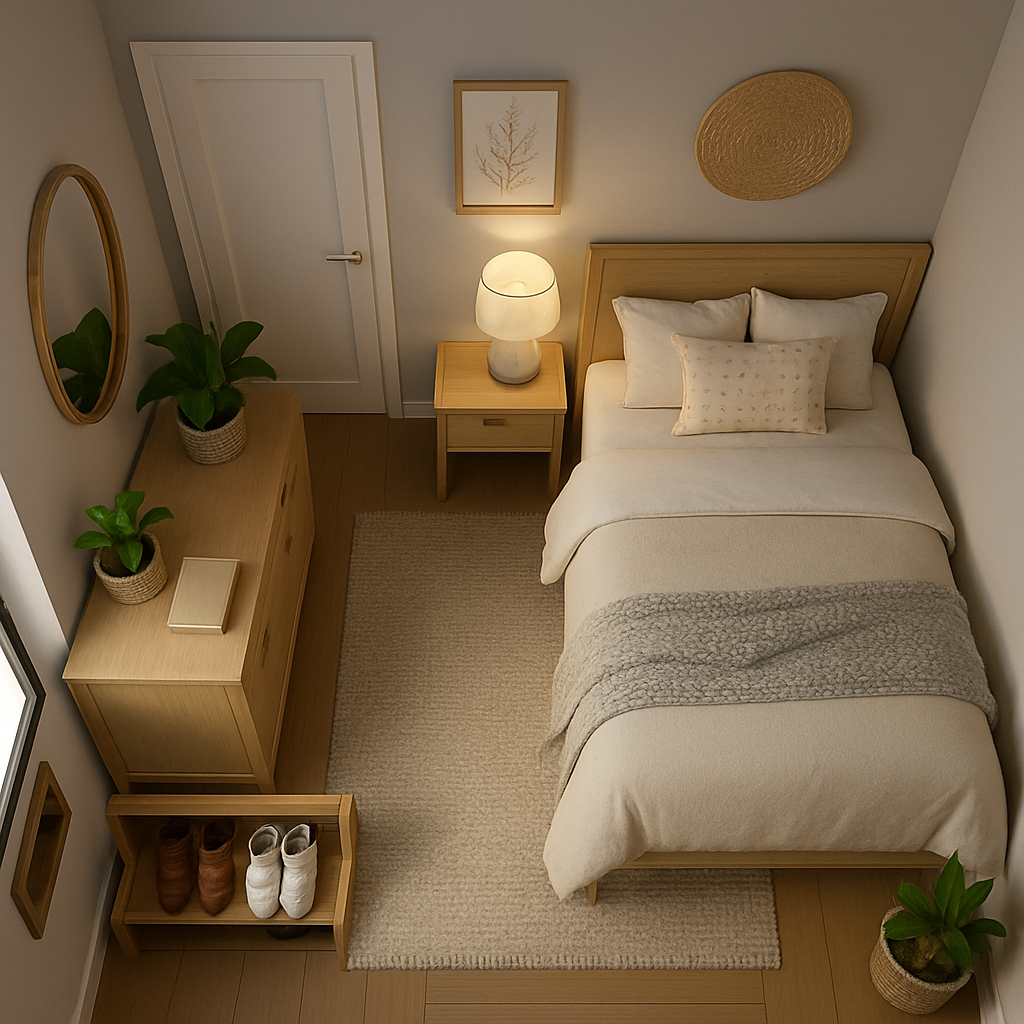
Small Bedroom Layout With a Clean Linear Arrangement and Warm Minimalism
This layout showcases a beautifully simple and efficient use of space, perfect for small bedrooms that need to feel calm, uncluttered, and inviting. The bed is positioned along the right wall with its headboard centered, instantly creating a clear focal point without disrupting the room’s traffic flow. Soft cream bedding and a textured throw keep the palette warm and serene.
A compact nightstand sits beside the bed, offering just enough space for a lamp and essentials while maintaining an airy feel. On the opposite wall, a low dresser provides ample storage without overpowering the room. Two potted plants add life and freshness, while the round wall mirror helps bounce light around, making the space feel larger.
A simple shoe bench at the foot of the dresser adds functionality and keeps the entry area tidy. The long, textured rug visually elongates the room and creates a soft pathway from the doorway to the bed.
Light wood tones dominate the furniture, creating a cohesive minimalist look that’s bright, natural, and effortlessly cozy. Wall decor is kept subtle—one framed botanical print and a woven wall accent add character without overwhelming the small space.
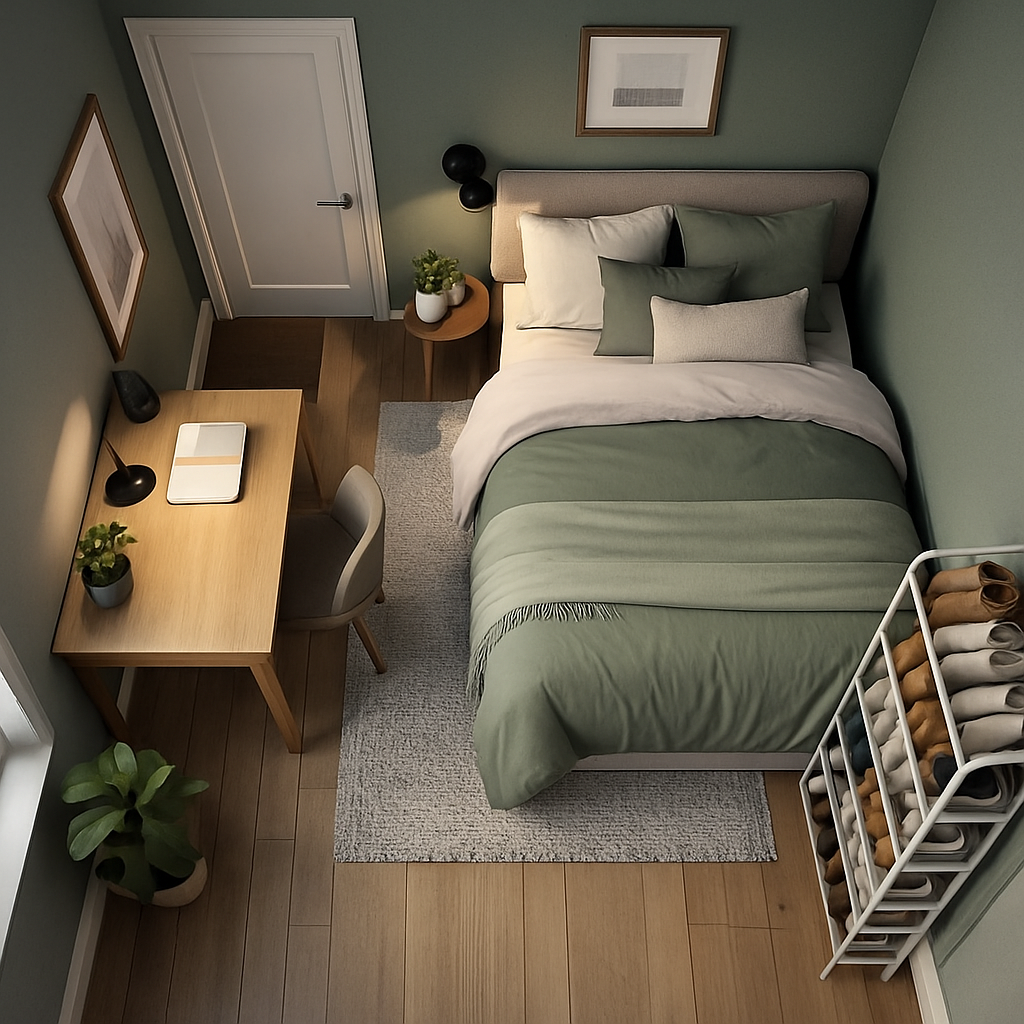
Small Bedroom Layout With a Bed–Desk Duo and Soft Green Palette
This layout is a perfect example of how to make a small bedroom feel both practical and soothing. The bed is placed along the right wall with its headboard centered, creating a natural focal point while keeping the walkway open. Soft, layered bedding in sage green and cream adds a calm, restful atmosphere that makes the room feel cozy but not crowded.
Directly across from the bed, a slim wooden desk maximizes functionality without overwhelming the limited space. Its placement along the left wall ensures a smooth flow from the door to the window, and the compact chair fits neatly under the desk to save valuable floor area. A black task lamp and small potted plant add personality while maintaining a minimalist feel.
A narrow shoe rack at the foot of the bed provides vertical storage—an excellent space-saving move for tiny bedrooms. A textured rug helps define the sleeping zone and warms up the wood flooring.
Soft lighting, including a round bedside table lamp and a sculptural wall sconce, creates a layered glow ideal for nighttime relaxation. With its efficient furniture placement, subdued palette, and thoughtful accessories, this layout turns a compact room into a stylish and highly functional retreat.
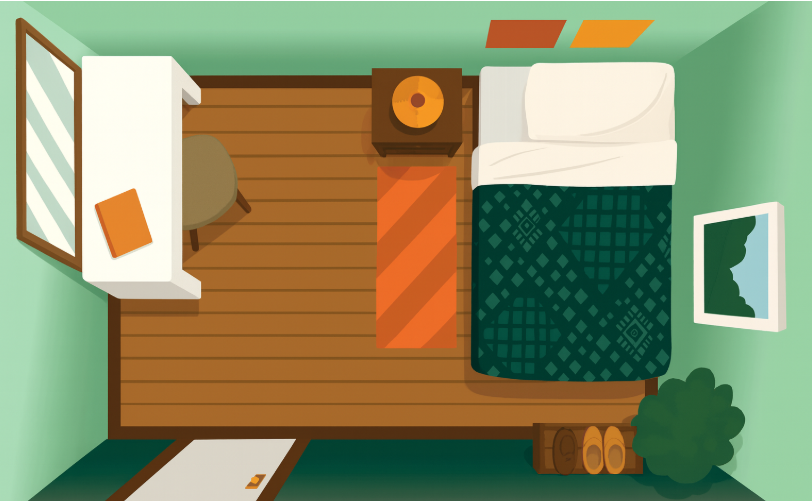
Small Bedroom Layout With a Simple Bed–Desk Arrangement and Open Floor Space
This layout shows how keeping furniture along the walls can make a compact bedroom feel open, uncluttered, and easy to navigate. The bed is placed in the upper right corner of the room, creating a cozy sleep zone while freeing up the center for movement. The bedding design adds richness and depth, grounding the corner visually without overwhelming the room.
A small nightstand sits beside the bed, perfectly positioned for a lamp and nighttime essentials. Below the bed, a slim bench or shoe rack offers extra storage while keeping the floor tidy. A touch of greenery in the corner softens the lines of the room and adds a refreshing natural element.
Opposite the bed, a simple desk and chair create a dedicated workspace. The desk is placed near the window, ensuring plenty of natural light—ideal for reading, studying, or working. Its clean, angled placement maximizes the usable wall space while leaving the room feeling airy.
A narrow runner rug in the middle of the room subtly defines pathways and adds a pop of warmth without taking up too much visual space. Wall art above the bed and on the side wall brings personality to the layout without overcrowding the compact floor plan.
This layout works beautifully for small rooms because it keeps the furniture streamlined, the center clear, and the natural light unobstructed.
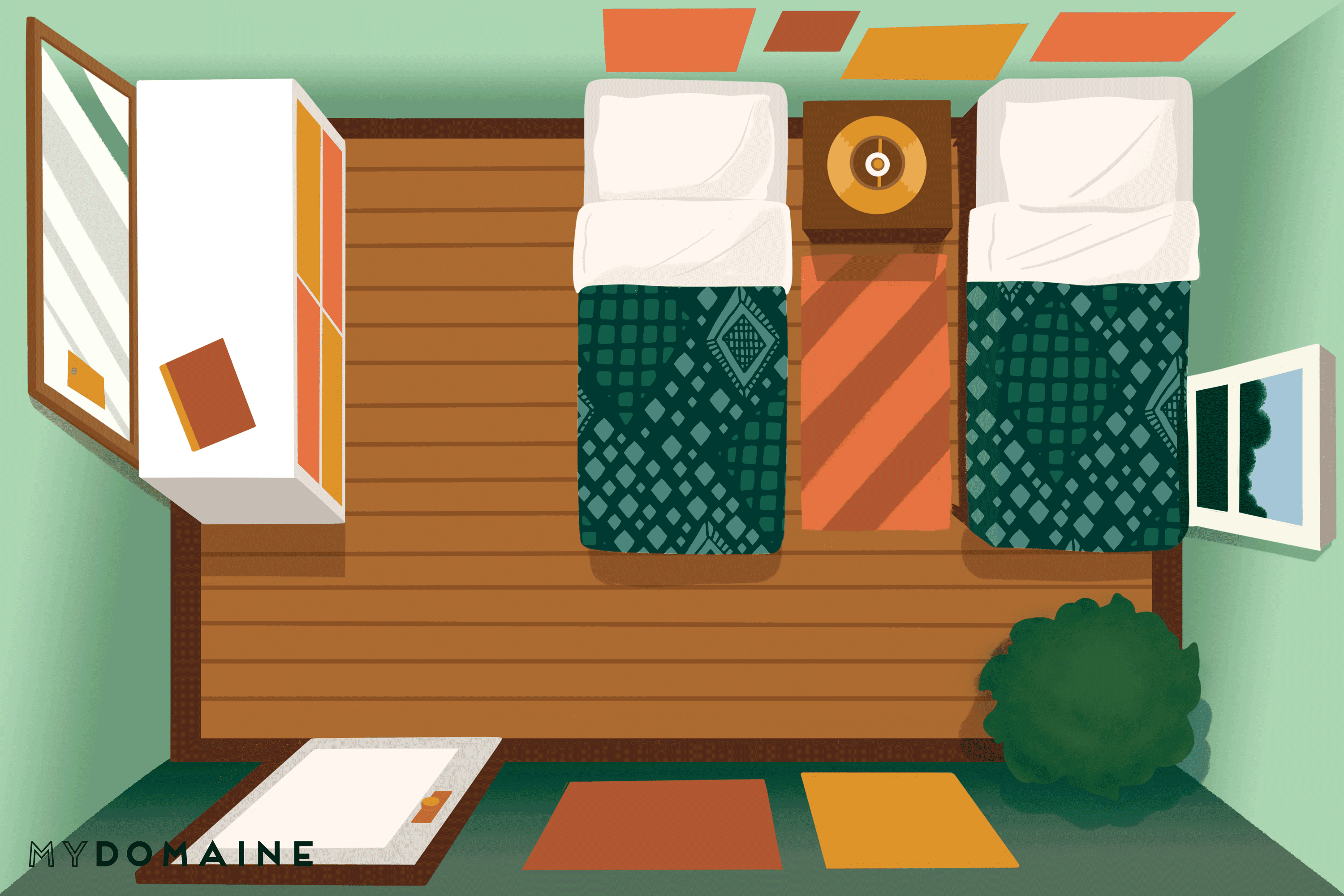
Small Bedroom Layout With Two Twin Beds and a Shared Nightstand
This layout beautifully demonstrates how even a compact bedroom can comfortably accommodate two people without feeling cramped. The room features two twin beds placed symmetrically along the upper wall, creating a balanced and organized arrangement that instantly feels calm and structured.
Between the beds sits a single shared nightstand, a smart space-saving choice that keeps the center of the room open while still providing a place for a lamp or small essentials. A slim rug runs vertically between the beds, helping visually divide the sleeping zones and adding a warm, cozy touch.
To the left, a wall-mounted desk with a mirror above makes clever use of vertical space. The floating design keeps the floor clear and creates the impression of a larger room. It also doubles as a vanity or workspace depending on the need, making this layout ideal for kids’ rooms, guest rooms, or shared student spaces.
Bright geometric wall art over the beds adds personality without crowding the room, while the window on the right lets natural light fill the space. At the foot of the room, a cluster of rugs and a potted plant introduce color and comfort, softening the look of the hardwood floor.
This setup works especially well for shared rooms because it keeps each person’s space defined while maintaining a clean, open walkway in the center.
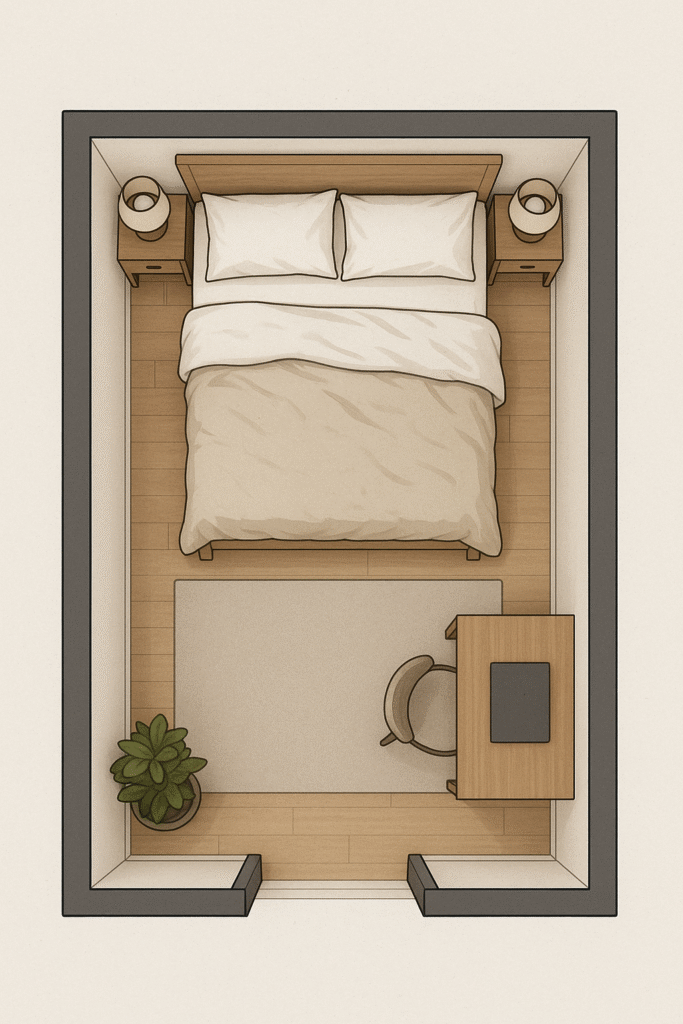
Small Bedroom Layout With a Centered Bed and a Minimal Desk Zone
This layout shows how to keep a small rectangular bedroom feeling open, balanced, and effortlessly calm. The bed is placed along the top wall, perfectly centered between two identical nightstands. This symmetry immediately creates visual order—a great trick for making compact rooms feel more intentional and serene.
A soft, neutral rug anchors the lower half of the room, breaking up the wood flooring and defining a cozy walkway from the entrance. The warm, earthy tones of the bedding, wood furniture, and flooring keep the space inviting without feeling heavy.
Along the bottom-right wall sits a compact desk and chair, sized just right for a narrow bedroom. Because the desk is placed opposite the foot of the bed rather than beside it, the room maintains a clean line of sight and avoids feeling cramped. This setup is ideal for those who need a workspace inside their bedroom without overwhelming the space.
A leafy plant in the lower-left corner adds a natural touch and helps soften an otherwise structured layout.
Overall, this design uses symmetry, minimal furniture, and warm textures to create a small bedroom that feels peaceful, clutter-free, and easy to move around in.
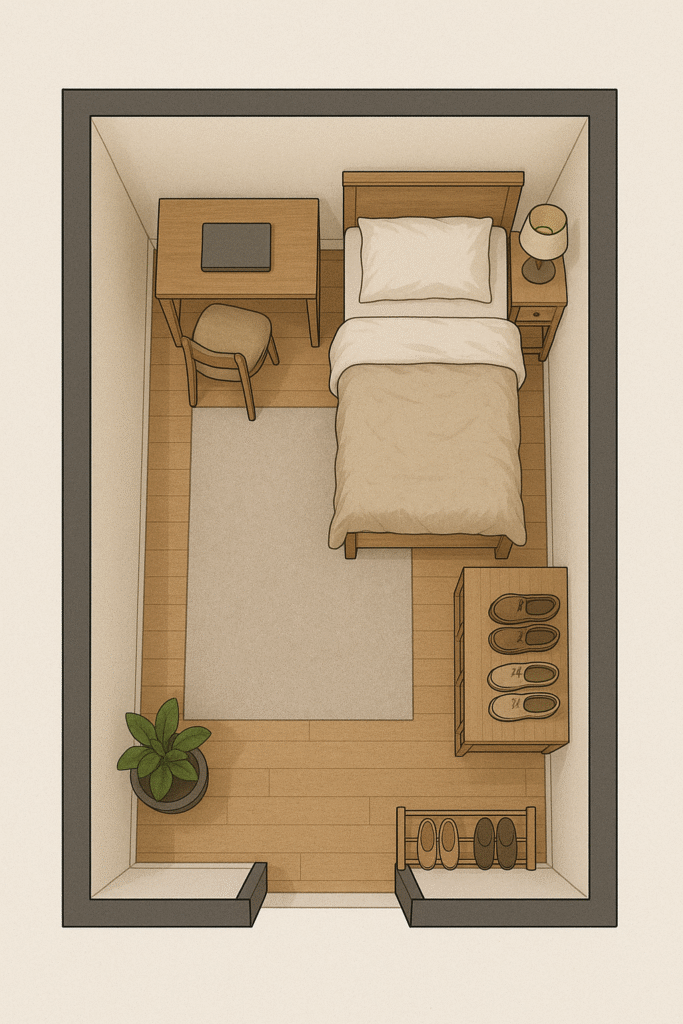
Narrow Bedroom With a Smart Single-Bed Layout and Functional Work Corner
This layout is a perfect example of how to make a narrow, compact bedroom feel organized, comfortable, and highly functional. The single bed is placed along the right wall, allowing the longest dimension of the room to stay open for movement. Positioning the bed this way maximizes floor space and keeps the room from feeling cramped.
At the top-left corner, a small writing desk and chair create a tidy workspace without overwhelming the room. Because the desk is tucked neatly into the corner, it leaves the central area uncluttered—an essential strategy in small bedroom design.
A soft, neutral rug anchors the middle of the room, adding warmth and visually dividing the sleeping and working zones. On the lower right wall, a slim dresser provides essential storage while keeping the walkway clear.
A potted plant in the lower-left corner softens the straight lines of the furniture and introduces a calming, natural element.
Overall, this layout balances practicality with visual flow, making a small, narrow bedroom feel thoughtfully arranged and surprisingly spacious.

Small Bedroom Layout With a Cozy Bed Corner and Efficient Storage
This layout makes excellent use of a compact rectangular room by placing the twin bed in the top-right corner, creating a cozy sleeping nook while freeing up the central floor area. A small bedside table with a warm lamp sits within arm’s reach, giving the bed area a grounded, inviting feel.
To the left of the bed, a compact desk and chair form a simple, functional workspace. Its placement against the wall saves space and keeps the room visually organized, ideal for studying or light computer work.
The center of the room is anchored by a soft neutral rug, helping define zones and adding comfort underfoot. Along the right wall, a small dresser provides essential storage without overwhelming the room. Below it, a low shoe rack keeps footwear organized and prevents clutter near the entrance.
A single potted plant in the bottom-left corner introduces a natural touch, softening the room’s straight lines and making the layout feel fresh and balanced.
Overall, this arrangement proves that even tiny bedrooms can feel calm, functional, and thoughtfully styled with the right furniture placement.
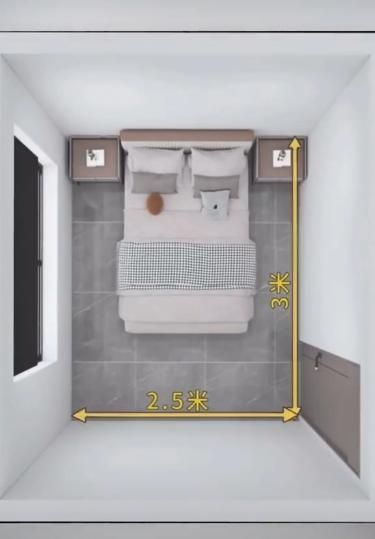
Ultra-Small Bedroom Layout (2.5m × 3m) With a Perfectly Centered Bed
This compact 2.5m by 3m bedroom demonstrates how even the smallest rooms can feel balanced and livable with smart, minimal placement. The bed is centered along the longer wall, creating symmetry and making the space feel more intentional and less cramped. Two small nightstands flank the bed, offering just enough room for lighting and essentials without overwhelming the limited floor area.
Because the dimensions are tight, the bed’s placement leaves clear walkways on both sides, helping the room feel functional. The door opens into an uncluttered area, showing that traffic flow has been carefully considered. A single, large window on the left wall brings in natural light—an essential element in rooms this small—preventing the space from feeling boxed in.
The grey floor tiles give the room a modern, streamlined look, while the simple bedding keeps things airy and understated. This layout proves that you don’t need much square footage to create a comfortable, stylish bedroom—just intentional furniture sizing and symmetrical placement.
Small Bedroom Layout With a Bed-and-Desk Parallel Arrangement
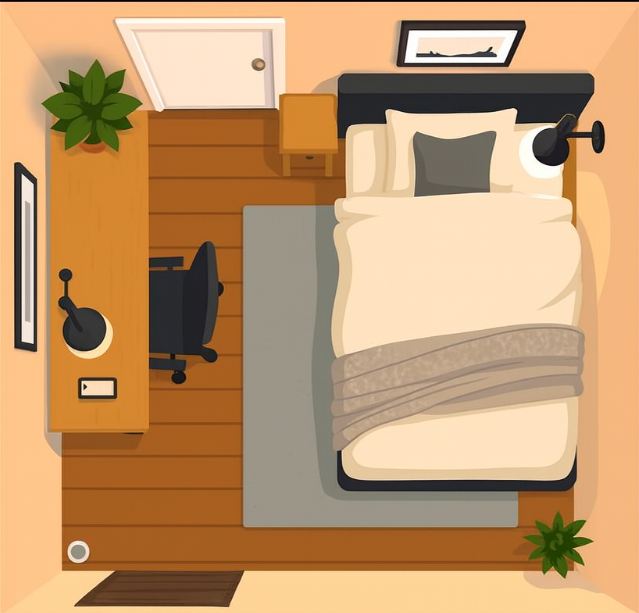
This layout is a smart solution for long, narrow rooms that need to function as both a sleeping area and a workspace. The bed is positioned against the right wall, leaving a generous walkway along the left side and creating a natural division between rest and work zones. A soft, oversized area rug grounds the bed visually and adds warmth to the space, helping define the sleeping area without adding bulk.
On the opposite wall, a long, streamlined desk runs nearly the full length of the room. This placement makes excellent use of wall space while keeping the center of the room open. The desk is paired with a simple rolling chair and styled with a task lamp, a small framed print, and a plant—creating a functional, calm workspace that doesn’t overwhelm the small footprint.
A compact nightstand sits beside the bed near the door, offering a place for lighting and essentials. The room also benefits from greenery at both ends, adding balance and a refreshing, natural touch. A single piece of artwork above the headboard keeps the design simple and cohesive.
This layout is ideal for small rooms where a desk is essential, maximizing every inch while keeping the space airy and uncluttered.
1. How to Choose the Right Layout for Your Room Shape
• Narrow rectangular rooms work best with furniture pushed to one side.
• Square rooms benefit from centered beds with minimal furniture.
• Awkward rooms with nooks can hide storage or desks.
• Window placement can determine where the bed should go.
2. Essential Furniture for a Small Bedroom
• Choose a bed size proportionate to the room. Full or twin beds work better in tight rooms.
• Opt for nightstands with drawers instead of open shelves.
• Slim-profile desks and wall-mounted shelves free floor space.
• A narrow dresser can replace bulky wardrobes.
3. Smart Storage Solutions That Don’t Take Up Space
• Under-bed drawers or lift-up storage beds
• Wall-mounted sconces instead of lamps to free bedside space
• Peg rails, floating shelves, and tall vertical dressers
• Storage ottomans at the foot of the bed
• Over-the-door organizers for accessories or shoes
4. How to Make a Small Bedroom Feel Bigger
• Use a light or monochrome color palette
• Keep bedding simple and airy
• Add mirrors to bounce light and expand the look of the room
• Choose curtains that reach the ceiling to stretch the height
• Limit décor to meaningful accents only
• Use rugs to zone the room and anchor the bed
5. Desk-Friendly Layout Ideas for Small Rooms
• Place the desk near the foot of the bed or beside it
• Use a floating wall desk to save floor space
• Choose a foldable or narrow-depth workstation
• Let natural light fall on the desk area if possible
CONCLUSION
Small bedrooms can be some of the most comfortable and efficient spaces in a home when the layout is well planned. By choosing the right furniture, positioning key pieces with purpose, and using smart storage solutions, even the tightest rooms can feel open and organized. The layouts and diagrams in this article show that you don’t need a large space to create a beautiful, restful, and functional bedroom. With a few thoughtful decisions, your small bedroom can look bigger, feel brighter, and work better for your daily life.