If you have thin hair, the instinct might be to grow it long to make up for the lack of density. However, physics often works against you. Longer hair weighs more, pulling fine strands down flat against your scalp, which makes thinning areas more noticeable. The secret to fuller-looking hair isn’t length—it’s strategic cropping.
Short hairstyles are the ultimate solution for thin hair. By removing excess weight, you allow your roots to lift and your ends to appear thicker. The right cut can create the illusion of density through texture, blunt lines, and strategic layering. Below are 15 expert-approved short hairstyles engineered to make thin hair look voluminous, bouncy, and beautifully full.
15 WELL-STRUCTURED IDEAS
1. The Textured Pixie Cut
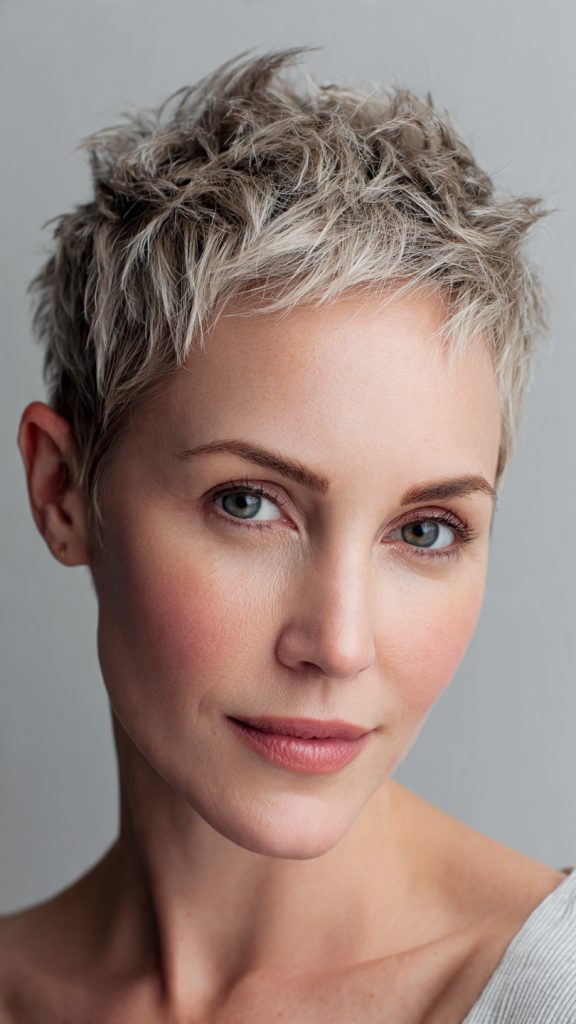
This is the gold standard for fine hair. By keeping the back and sides short while leaving slightly more length on top with choppy, point-cut texture, you remove weight so the hair stands up off the scalp. Use a matte paste to piece out the ends for maximum volume.
2. The Blunt Bob (Chin-Length)
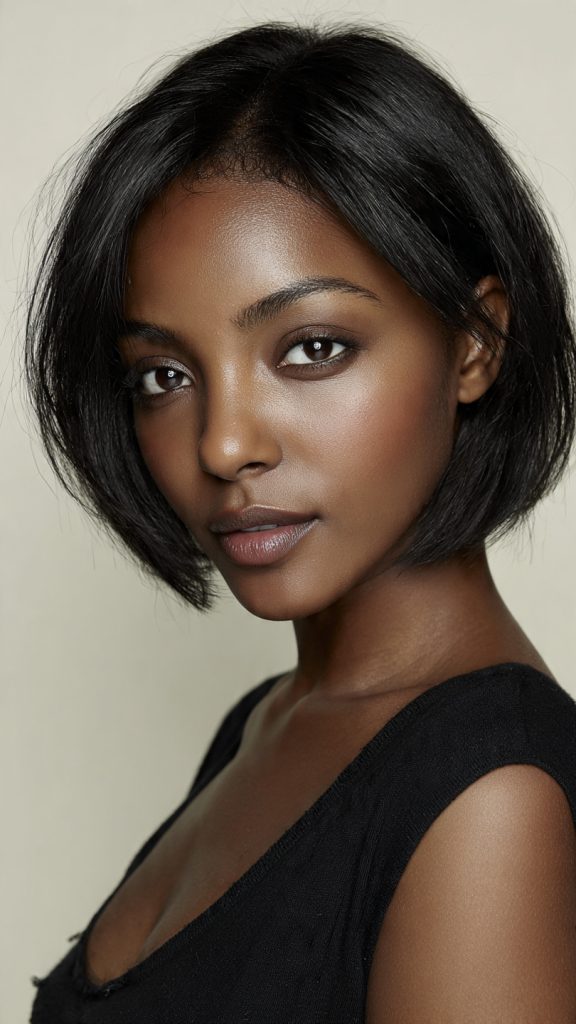
Contrary to popular belief, layers aren’t always your friend. A blunt, one-length bob cuts straight across at the chin. This creates a heavy, solid “line of demarcation” that makes the ends look thick and dense, preventing the see-through effect common with thin hair.
3. The Asymmetrical Lob
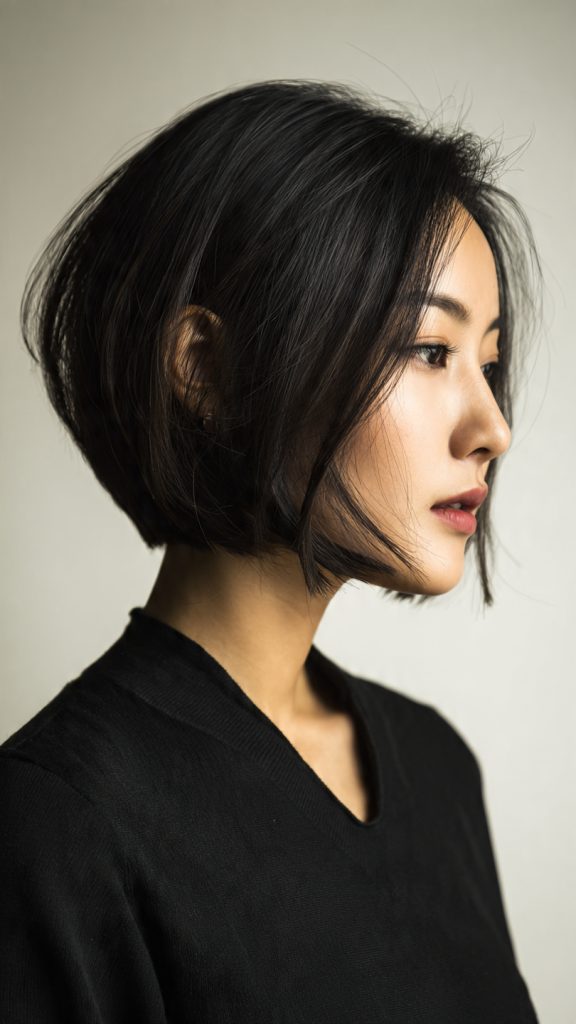
A long bob (lob) that is shorter in the back and longer in the front creates movement without losing density. The asymmetry tricks the eye into focusing on the angled line rather than the scalp. Keep the ends blunt, not feathered, for the best results.
4. The French Girl Crop
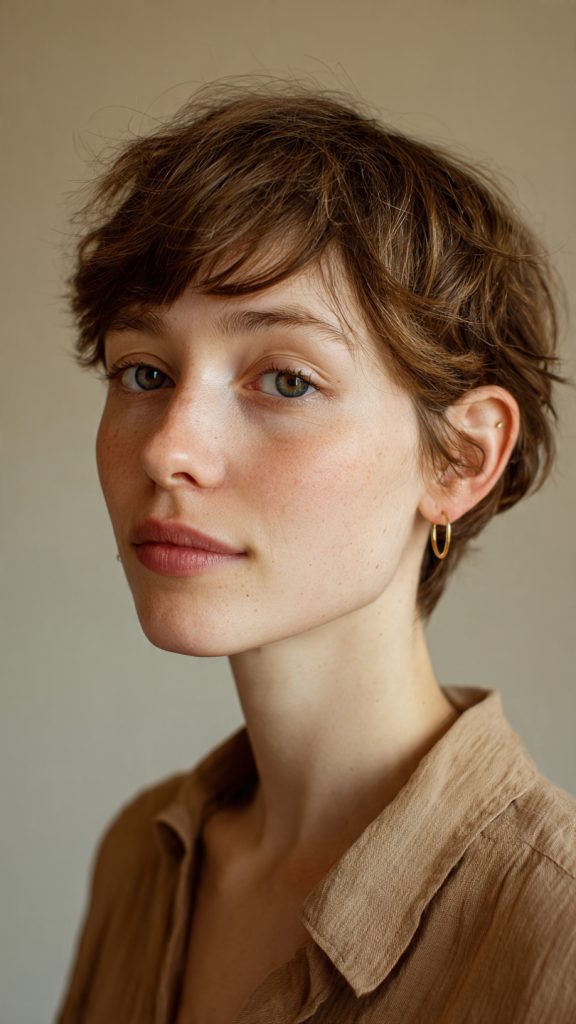
This is a very short, almost boyish cut with micro-bangs and slightly longer top layers. Because the hair is so short (1–2 inches), it stands up naturally via gravity defiance. The fringe adds a focal point that distracts from any visible scalp areas.
5. The Stacked Bob
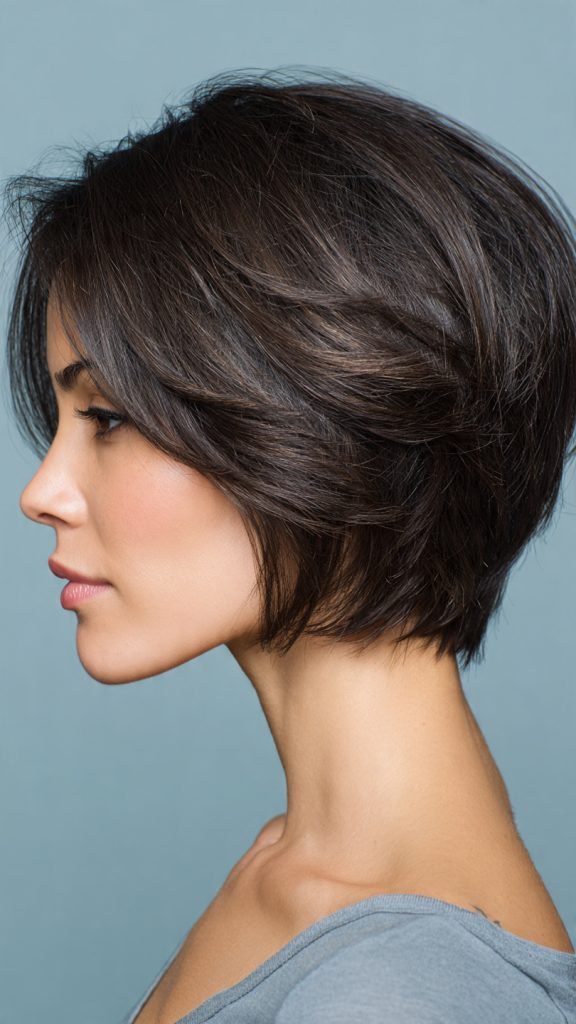
A classic for thin hair. The back is cut in graduated layers (stacked), pushing the hair forward and creating a 45-degree angle of volume at the crown. The front remains longer. This internal architecture literally builds a shelf of hair that supports itself.
6. The Buzz Cut (Number 4 or 5 Guard)
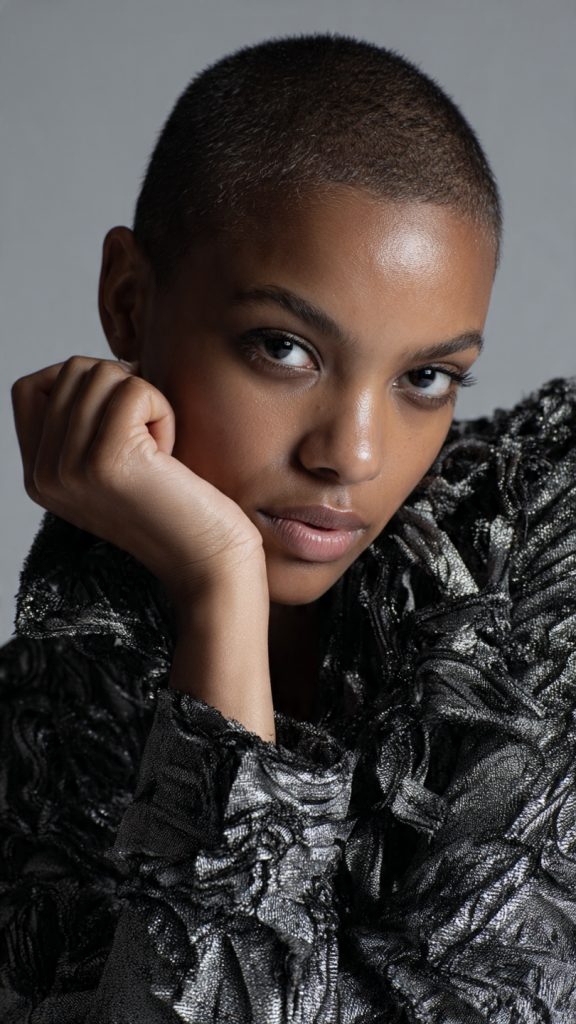
Radical but incredibly effective. When you cut thin hair down to a uniform ½ inch to ¾ inch, you remove all evidence of sparseness. Uniform length makes every hair follicle stand upright, creating the appearance of a dense, velvety carpet of hair. Low maintenance, high impact.
7. The Side-Swept Pixie with Undercut
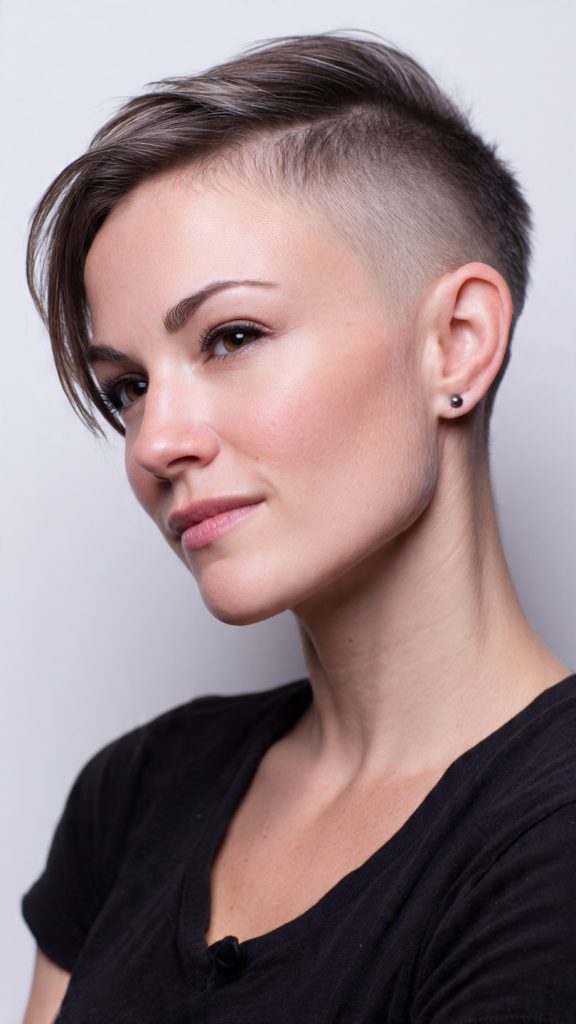
To maximize volume on top, shave or clip the sides very short (undercut). This removes the weight of the side hair, allowing the longer top section to be swept dramatically to one side. The deep side part creates an instant “height bubble” at the root.
8. The Wavy Bob (Beach Wave Lob)
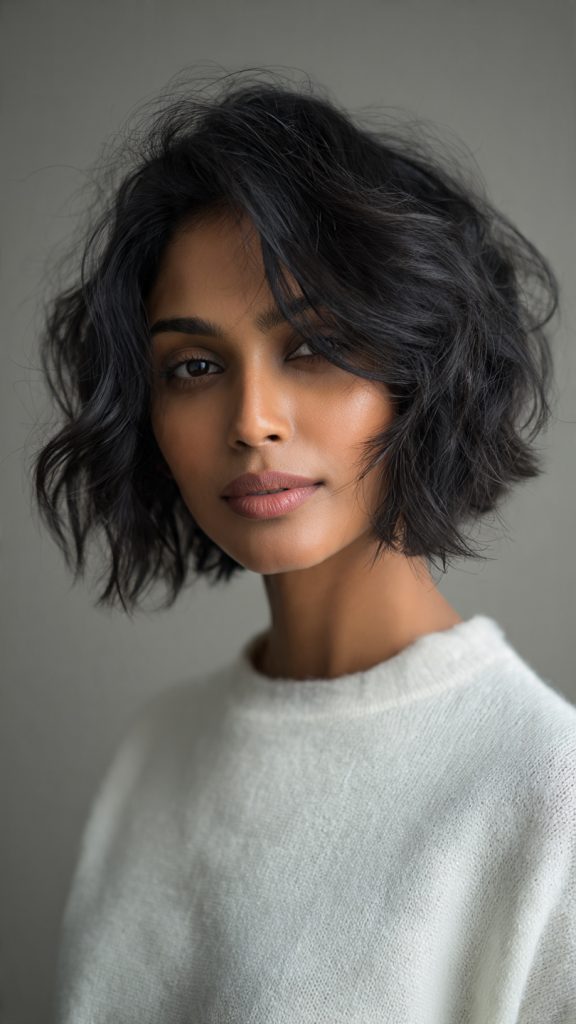
Thin hair is often straight because there isn’t enough bulk to hold a wave. Use a small-barrel curling iron (1 inch) to create loose, disjointed waves. The bends in the hair shaft create friction between strands, making the hair look 3x thicker than it is.
9. The Cropped Shag

This cut features heavy, blunt bangs and short, choppy layers throughout. The “shaggy” texture removes weight evenly so the hair doesn’t fall flat, while the fringe hides a thin hairline. The disheveled look actually hides the scalp better than a sleek style.
10. The Italian Bob
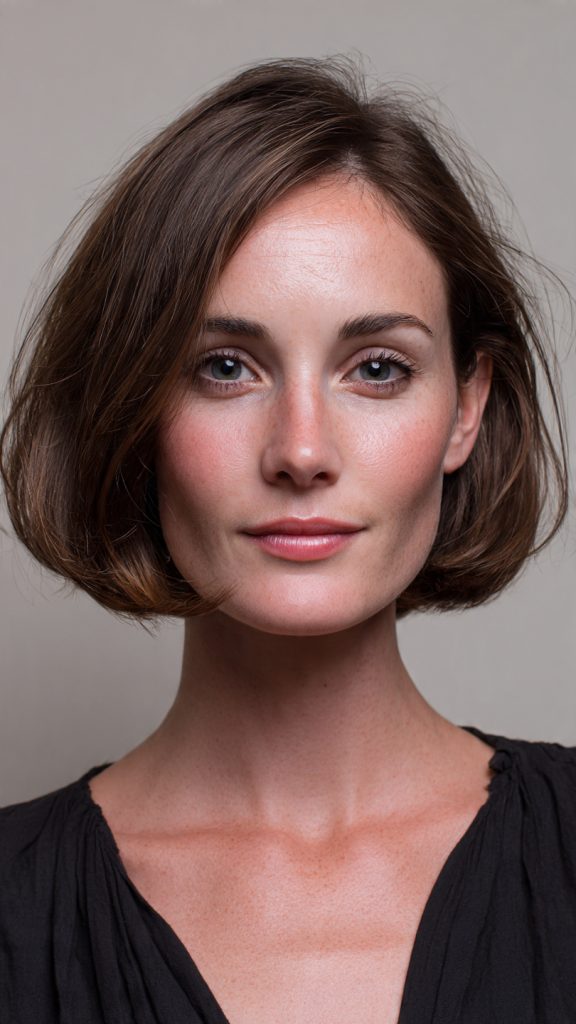
A modern take on the bob that sits between the chin and the shoulders with a slight inward curve. Unlike the stacked bob, this has minimal layers but a lot of internal movement. It works best on fine hair because the rounded shape reflects light, which adds visual weight.
11. The Faux Hawk Pixie
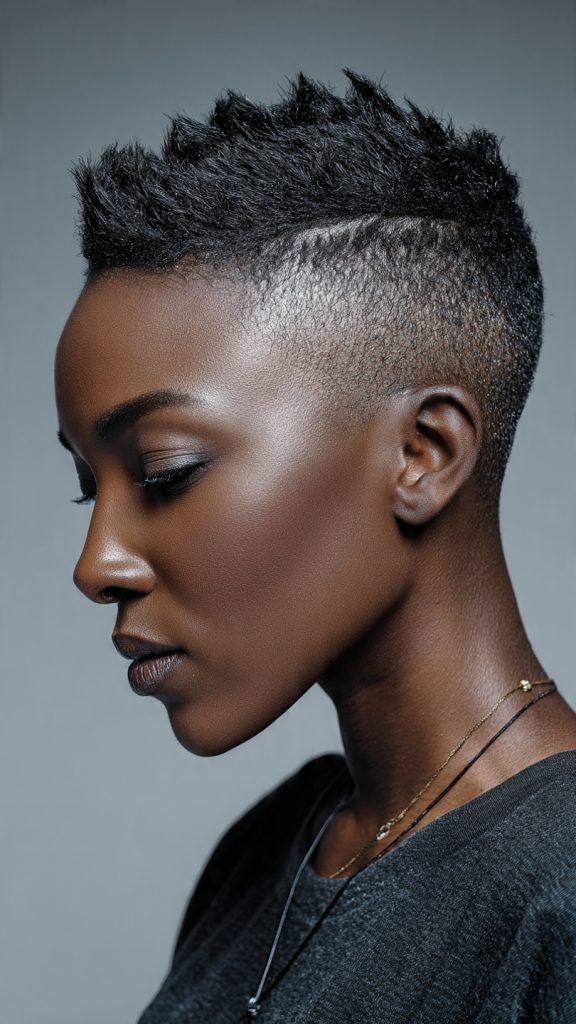
Keep the sides tight (skin fade or clipper size 2) and leave a strip of longer, textured hair down the center of your head. This central ridge of hair stands at attention. When styled with a volumizing powder, this cut creates a shocking amount of perceived density.
12. The Micro Bob (Earlobe Length)
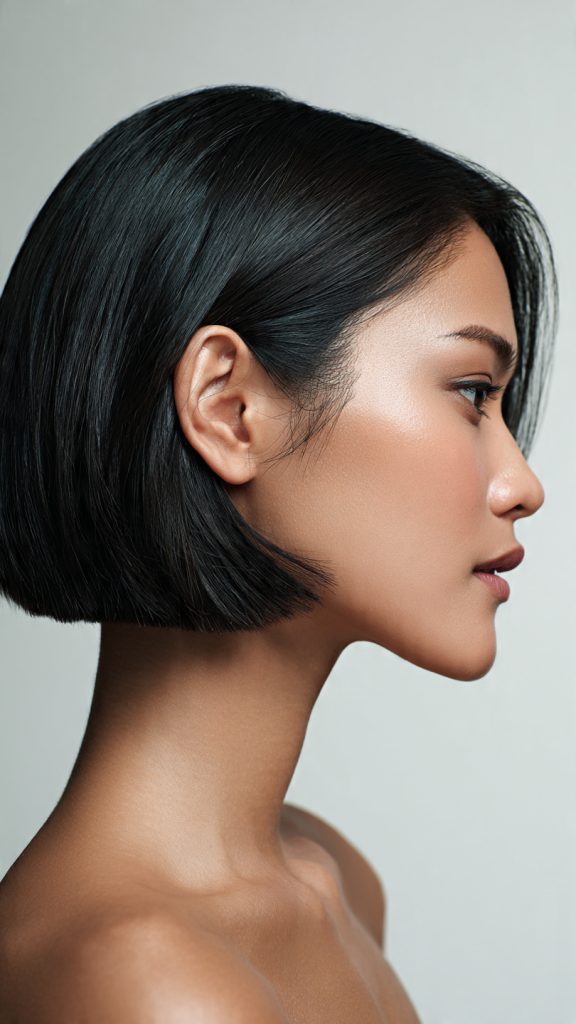
Shorter than a traditional bob but longer than a pixie. Hitting right at the earlobe, this cut removes the “heavy end” that causes thin hair to flip out. The shorter length encourages the hair to tuck behind the ear, creating a clean, dense silhouette.
13. The Gamine Cut
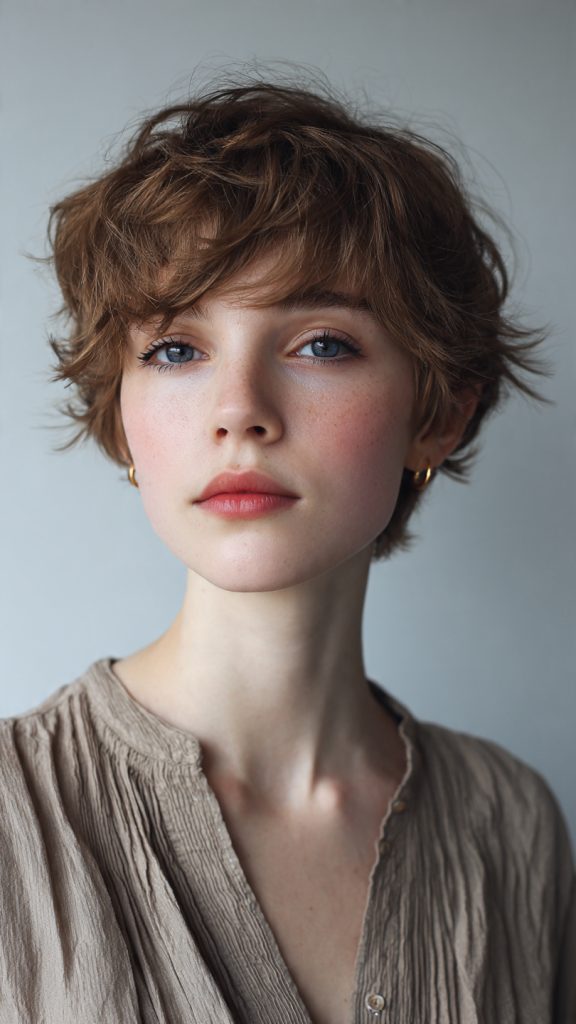
Think Audrey Hepburn or Mia Farrow. This is a very short, layered cut with wispy bangs and soft edges all over. Because every layer is disconnected, there is no weight pulling down on any single strand. It relies on “air” between the layers to look fluffy, not flat.
14. The Curly Pixie (For Naturally Wavy/Curvy Thin Hair)
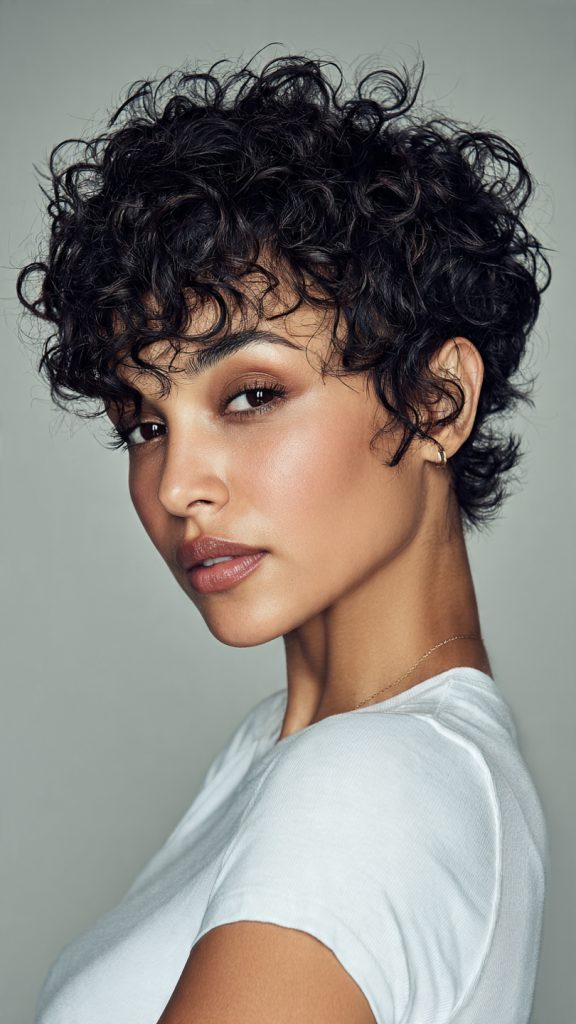
If you have thin density but curly texture, shrinkage is your enemy. A curly pixie (2-3 inches long) allows your curls to spring up tightly. The shrinkage actually condenses your curls into a small space, making the hair look extremely dense and full of life.
15. The Sliced Bob with Deep Side Part
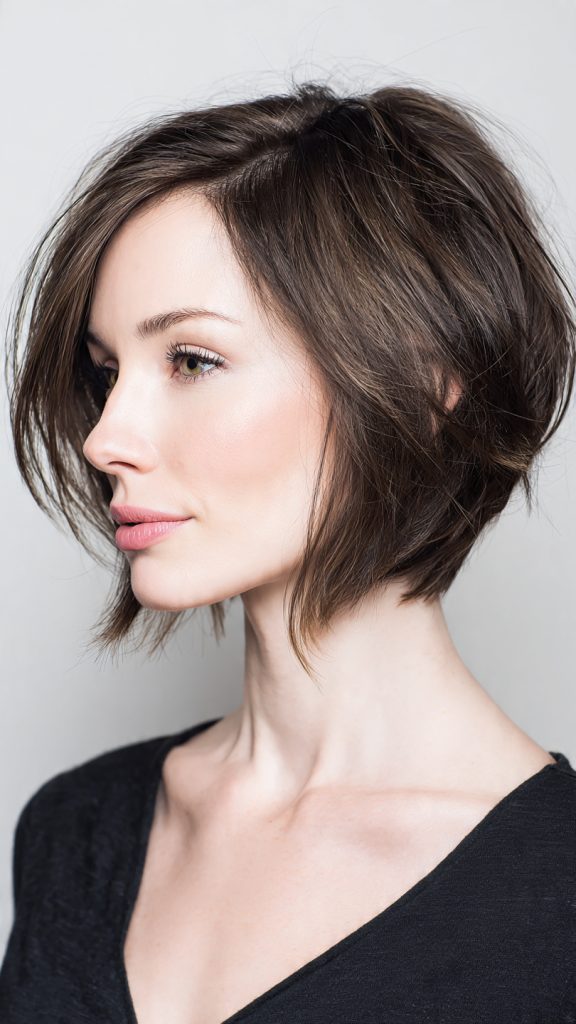
Ask your stylist for “slice cutting” rather than traditional layering. Slice cutting removes vertical lines of weight without creating visible steps. Combined with a dramatic deep side part (the farthest point from your natural part), this lifts the roots instantly, hiding any thin spots at the crown.
WHAT TO ASK YOUR STYLIST (EXACT PHRASING)
Communication is everything. Do not walk into a salon and say “give me volume.” Instead, use these specific phrases when booking or sitting in the chair:
- “I have thin density hair. I want to keep as much weight in the ends as possible.” (This prevents your stylist from over-texturizing.)
- “Please use blunt, one-length cutting where possible, not thinning shears.” (Thinning shears are the enemy of fine hair.)
- “Cut my hair dry, not wet.” (Wet hair sticks together and hides true density. Dry cutting shows exactly where the thin spots are.)
- “Leave the perimeter heavy.” (The outer line of your cut should feel solid, not wispy.)
- “Point-cut into the ends for texture, but don’t layer the top too much.” (This gives movement without sacrificing crown volume.)
Avoid stylists who immediately reach for texturizing scissors or suggest long, feathered layers. Those techniques work for thick hair, not thin hair.
STYLING PRODUCTS THAT ACTUALLY HELP (AND ONES TO AVOID)
Even the best cut will fail with the wrong products. Thin hair needs grip and lift, not weight.
Do Use These:
- Volumizing mousse (applied to damp roots): Look for “root lift” formulas. Mousse adds friction between strands.
- Dry shampoo (applied to dry roots before it gets greasy): This is texture in a can. Spray it at night, let it absorb, and brush out in the morning.
- Sea salt spray: Creates “grit” that stops fine hair from sliding flat.
- Matte styling powder: A tiny puff at the roots gives instant, all-day lift.
- Lightweight hairspray (hold level 2 or 3): Never use “maximum hold”—it will glue strands together and expose the scalp.
Avoid These Like the Plague:
- Heavy oils (coconut, argan, castor): These coat fine hair and weigh it down into submission.
- Creams, butters, or leave-in conditioners: Too emollient. They collapse volume.
- Silicone-based serums: They make hair slippery, which means it won’t hold any style.
- “Smoothing” or “anti-frizz” shampoos: These are designed to flatten the cuticle—the opposite of what you want.
MAINTENANCE SCHEDULE (HOW OFTEN TO CUT)
Short hairstyles for thin hair are not “get it and forget it.” Because thin hair shows every stray millimeter of growth, maintenance is tighter than for thick hair.
| Cut Type | Recommended Interval | Why |
|---|---|---|
| Pixie cuts (all varieties) | Every 3–4 weeks | The back and sides grow out fast, losing the clean shape that creates volume. |
| Blunt bobs and lobs | Every 5–6 weeks | Ends start to fray and look see-through. A fresh blunt line restores density. |
| Buzz cuts | Every 2–3 weeks (or DIY touch-up) | Visible regrowth ruins the uniform “velvet” effect. |
| Cropped shags | Every 6–8 weeks | The shag is forgiving, but bangs will need trims every 3 weeks. |
Pro tip: Book your next appointment before you leave the salon. If you wait until your hair looks flat again, you will live with bad hair for two extra weeks.
CONCLUSION
Thin hair is not a limitation—it is a specific texture that requires a specific strategy. The instinct to hide thin hair by growing it long is exactly what creates flat, lifeless, see-through ends. The solution, counterintuitively, is to go shorter.
The 15 cuts above work because they obey one rule of physics: less weight equals more lift. A textured pixie, a blunt bob, or a cropped shag removes the burden of length and allows your roots to finally stand up. The right cut, paired with lightweight styling products and regular trims, can make thin hair look twice as dense as it actually is.
You do not need more hair. You need a smarter shape. Take these ideas to your stylist, ask for blunt lines and dry cutting, and watch how a strategic short cut transforms not just your hair, but how you feel about it.
Your thin hair has never looked fuller.