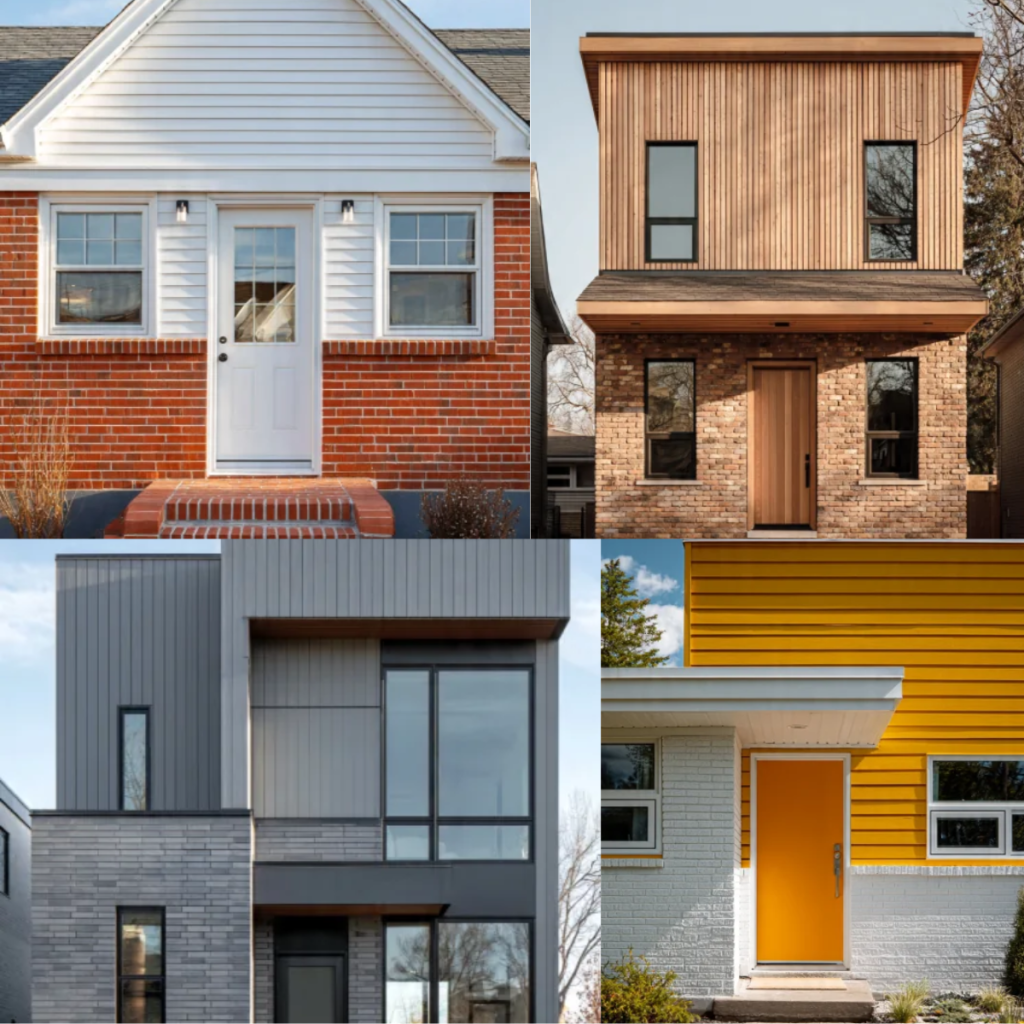
Struggling to choose between the timeless durability of brick and the versatile charm of siding? You don’t have to. The “half brick, half siding” look is a rising trend in modern architecture that combines texture, color, and function—using brick on the lower portion for grounding and resilience, while siding above keeps costs manageable and design flexible.
Design Tips for a Successful Half-and-Half Exterior
1. Mind the transition line
The horizontal line where brick meets siding should align with a natural architectural feature—such as the bottom of windows, a belt course, or the top of a foundation wall. Avoid cutting the line through the middle of windows or doors.
2. Choose complementary, not clashing, colors
Pull an undertone from the brick (e.g., gray, tan, or red) and repeat it lightly in the siding color. High contrast works best when one color is neutral and the other is muted—avoid two bright colors competing for attention.
3. Use a physical or shadow transition strip
Install a metal Z-flashing, a cedar trim board, or a PVC drip cap where brick meets siding. This prevents water from seeping behind the siding and gives the line a crisp, intentional finish.
4. Let function guide the material placement
Brick on the lower half is ideal for high-impact areas (near driveways, kids’ play zones, or snowy regions) because it resists dents, rot, and splashing mud. Siding above stays cleaner and is easier to repaint or replace.
5. Test proportions before committing
Half-and-half doesn’t always mean literally 50/50. On a two-story home, a one-third brick (lower) to two-thirds siding (upper) ratio often looks more balanced. Use painter’s tape on the actual facade to visualize the split.
Whether you’re building new or refreshing a facade, here are 10 well-structured ideas to inspire your next project.
10 Half Brick, Half Siding Ideas
1. Classic white siding + red brick
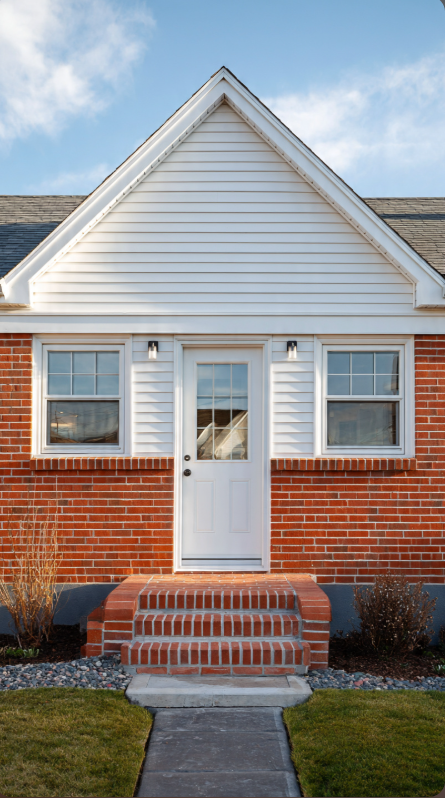
Crisp white horizontal siding paired with traditional red brick creates a timeless farmhouse look that feels both welcoming and refined.
2. Dark charcoal siding + pale gray brick
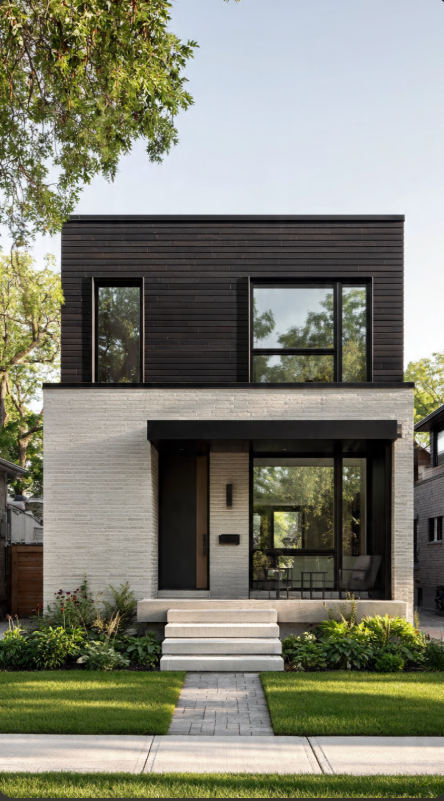
Deep charcoal siding above light gray brick offers a dramatic, contemporary contrast that emphasizes clean lines and modern minimalism.
3. Vertical cedar siding + tumbled brick
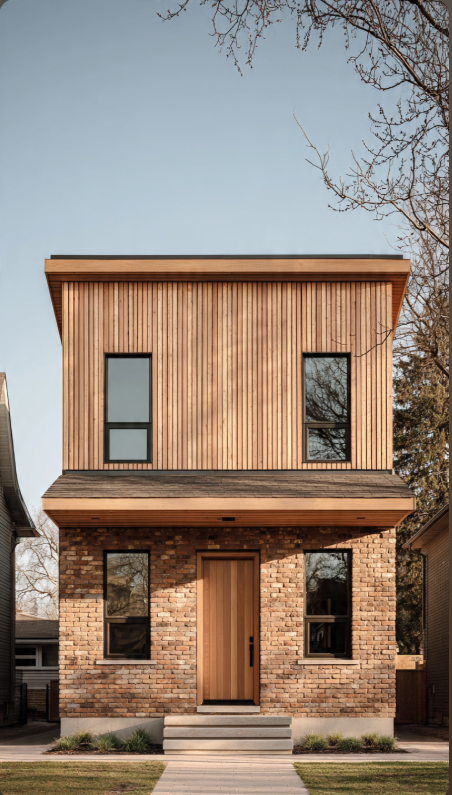
Use vertical cedar planks above rustic, tumbled brick for a craftsman-style exterior that blends natural warmth with old-world texture.
4. Board-and-batten siding + painted white brick
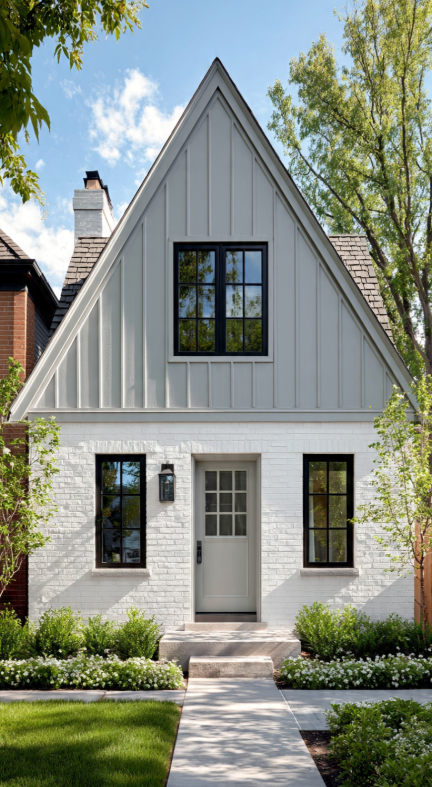
Whitewashed or painted brick below with board-and-batten siding above delivers a fresh, coastal farmhouse aesthetic perfect for cottage-style homes.
5. Black metal siding + reclaimed brick
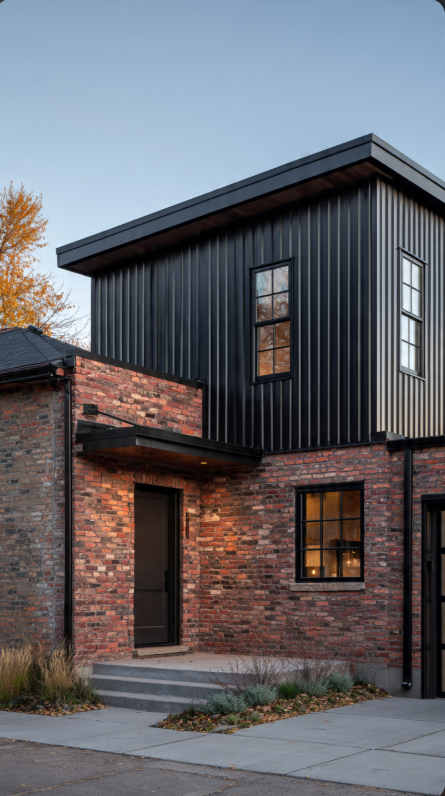
Sleek black corrugated metal panels over reclaimed brick create an industrial-chic facade that works especially well for urban lofts or modern barns.
6. Blue lap siding + earthy tan brick
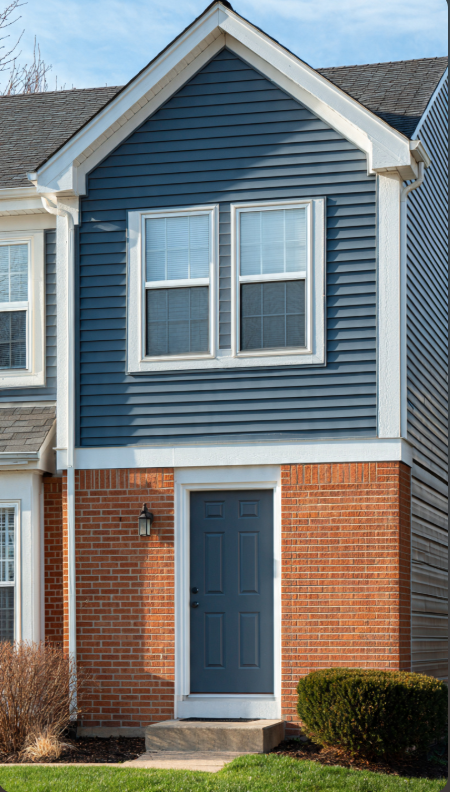
Soft navy or slate-blue lap siding above tan or beige brick adds a pop of subtle color while keeping the overall look grounded and traditional.
7. Stone-look siding + rough-hewn brick
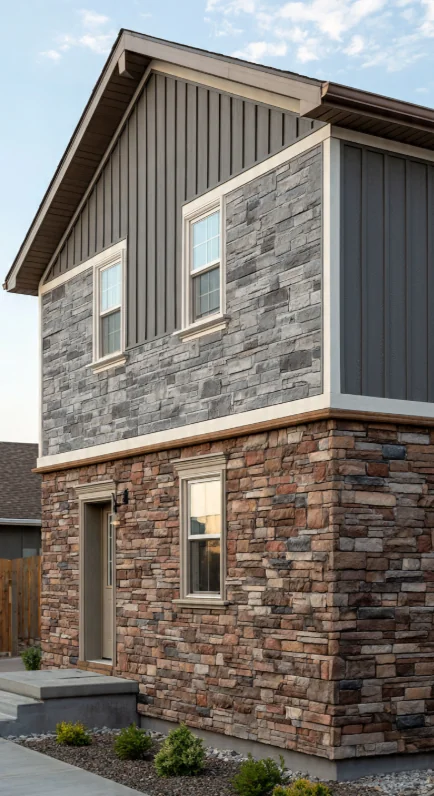
Use faux-stone siding panels on the upper half with rough, multi-toned brick below for a rugged, cabin-inspired exterior that blends natural and built textures.
8. Cement board siding + smooth gray brick
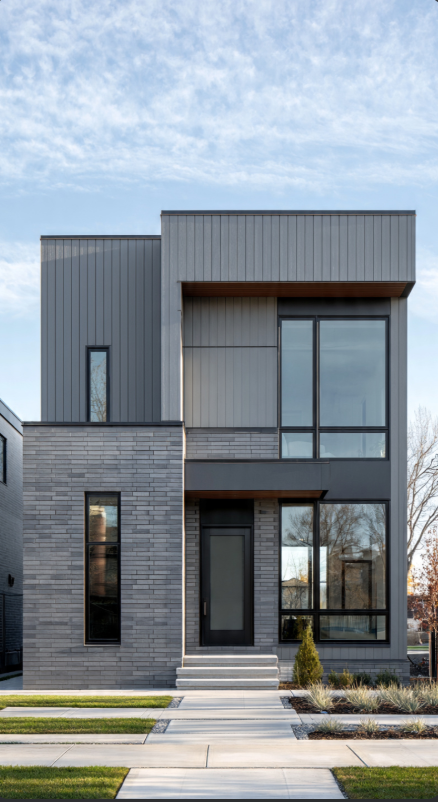
Smooth, uniform gray brick as the base with fiber cement siding above (in a matching gray tone) creates a monochromatic, ultra-modern silhouette.
9. Yellow or ochre siding + white brick
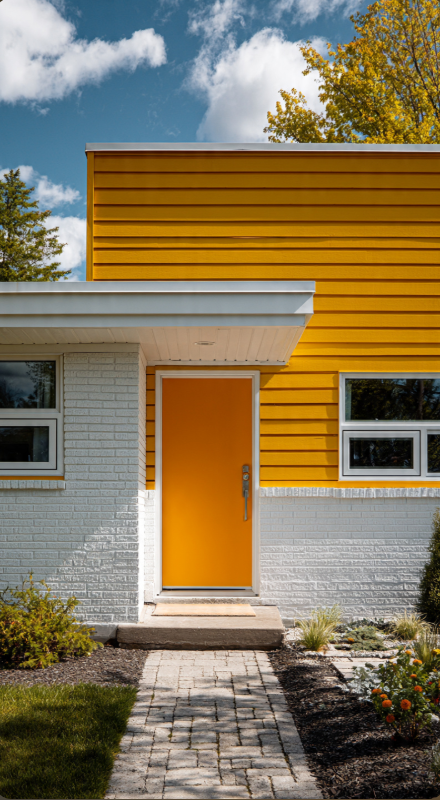
Cheerful yellow or ochre siding above crisp white brick adds a playful, mid-century modern vibe that stands out in any neighborhood.
10. Horizontal cedar siding + clinker brick
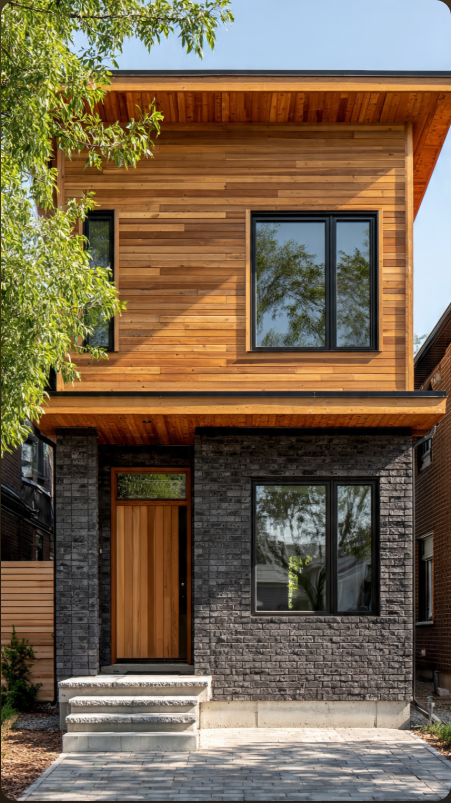
Rough, dark clinker brick at the bottom paired with warm horizontal cedar siding above gives a Japanese-inspired, organic look rich with texture and depth.
Material Comparison: Brick vs. Siding
| Feature | Brick (Lower Half) | Siding (Upper Half) |
|---|---|---|
| Cost per sq. ft. | 6–15 (installed) | 2–12 (depending on material) |
| Lifespan | 50–100+ years | 20–40 years (wood: 20–30, fiber cement: 40+) |
| Maintenance | Very low (no painting, occasional wash) | Moderate (repainting every 5–10 years for wood/vinyl) |
| Weather resistance | Excellent against impact, fire, and rot | Good against rain; poor against impact (vinyl) |
| Insulation value | Low (R-value ~0.2 per inch) | Low to medium (foam-backed siding adds R-value) |
| Best for | Ground-level durability, resale value | Upper-level flexibility, color changes |
Common Mistakes to Avoid
- Skipping the flashing – Without a metal or plastic transition strip, water wicks behind the siding and rots the sheathing.
- Using two high-contrast textures – Busy brick (like multicolor tumbled) paired with busy siding (like rough board-and-batten) creates visual chaos. Keep one texture simple.
- Forgetting about brick ledges – Brick requires a structural shelf or lintel at the transition line. Don’t just stack brick on top of siding—it will sag or crack.
- Mixing warm and cold undertones – Red brick (warm) with blue-gray siding (cool) often clashes unless a neutral trim color bridges them.
- Ignoring local climate – In heavy rain zones, extend brick higher than the splash line (minimum 18 inches above grade). In earthquake zones, brick on upper stories is risky.
Cost Considerations
| Item | Estimated Cost (US, materials only) |
|---|---|
| Brick veneer (lower half, 1,000 sq. ft.) | 6,000–15,000 |
| Vinyl siding (upper half, 1,000 sq. ft.) | 2,000–5,000 |
| Fiber cement siding (upper half, 1,000 sq. ft.) | 5,000–10,000 |
| Wood siding (upper half, 1,000 sq. ft.) | 7,000–12,000 |
| Flashing / transition strip | 100–400 |
| Brick ledge or shelf angle (if not existing) | 800–2,500 |
| Painting (siding only, professional) | 1,500–4,000 |
Typical total for a 2,000 sq. ft. house (lower half brick, upper half fiber cement): 12,000–12,000–25,000 installed.
Maintenance Tips by Season
Spring – Inspect the transition line for cracks or gaps. Reseal flashing if needed. Power-wash brick gently (low pressure).
Summer – Check siding for loose or warped panels. Touch up paint on wood siding before humidity peaks.
Fall – Clean gutters to prevent overflow onto brick (wet brick accelerates efflorescence—white salt stains). Trim back vines or shrubs touching the brick.
Winter – Never use metal shovels near brick. Avoid pressure-washing frozen siding. Use calcium chloride (not rock salt) near brick to prevent spalling.
Conclusion
The half brick, half siding exterior is more than a trend—it’s a smart, stylish compromise that gives you the best of both worlds. Brick grounds your home with durability, fire resistance, and timeless character, while siding above offers flexibility in color, texture, and cost. Whether you lean toward a classic farmhouse white-and-red combo or a daring black metal over reclaimed brick, the key lies in careful planning: a clean transition line, complementary colors, and proper flashing.
Before you break ground, test your chosen pairing with large swatches, walk around your neighborhood to see what works in your climate, and always hire a mason who understands brick-ledger details. Done right, a half-and-half facade doesn’t look like a compromise—it looks like a deliberate, beautiful design choice that will boost curb appeal and resale value for decades.
Now it’s your turn: Which of these 10 ideas fits your home best?
