For years the backsplash played a supporting role: a strip of white subway tile, chosen quickly and rarely noticed. That is changing. Heading into 2027, designers are treating the backsplash as one of the first decisions in a kitchen, not one of the last, and the materials going up on the wall are warmer, more textured and far more personal than before.
The shift mirrors the wider move in kitchen design for 2027: away from cool, glossy perfection and toward natural stone, handmade tile and colors pulled from nature. Here are 11 backsplash trends set to define kitchens in 2027.
11 Kitchen Backsplash Trends 2027
1. The Countersplash: Stone That Climbs the Wall
One slab, zero grout lines
The biggest backsplash story of 2027 is not a tile at all. Designers are running the countertop stone straight up the wall—to the range hood, the underside of the upper cabinets or all the way to the ceiling—so the counter and backsplash read as one continuous surface. Quartzite, marble and engineered quartz are the go-to choices, and many designers bookmatch the veining so the pattern mirrors across the wall.
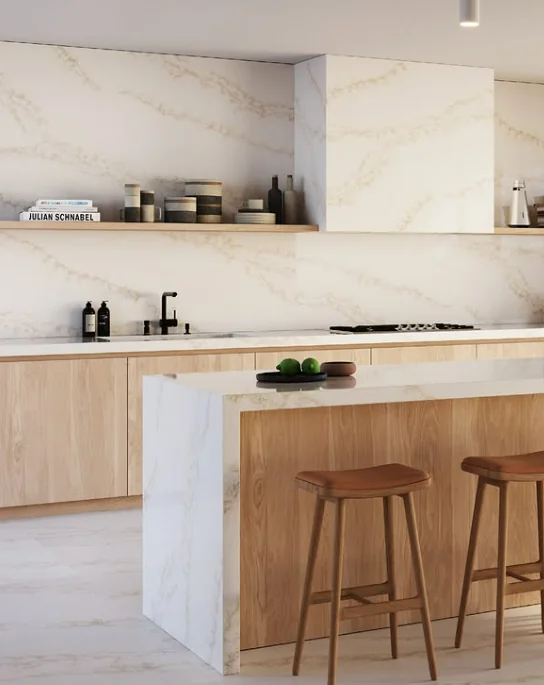
Without grout lines, there is far less to scrub, and the kitchen feels calmer and more architectural. The trade-off is cost: a full-height slab uses more material than tile and needs professional fabrication and installation.
2. Large-Format Porcelain Tiles
The slab look, without the slab price
For homeowners who love the countersplash but not the price tag, oversized porcelain is the answer. Tiles that mimic marble, quartzite, travertine and limestone now come in sizes large enough to cover a backsplash with only a handful of joints. Designer Ruchi Mohan told Homes & Gardens that 18×24 or 24×24-inch tiles suit a typical backsplash height, because the minimal grout lines keep the look seamless.
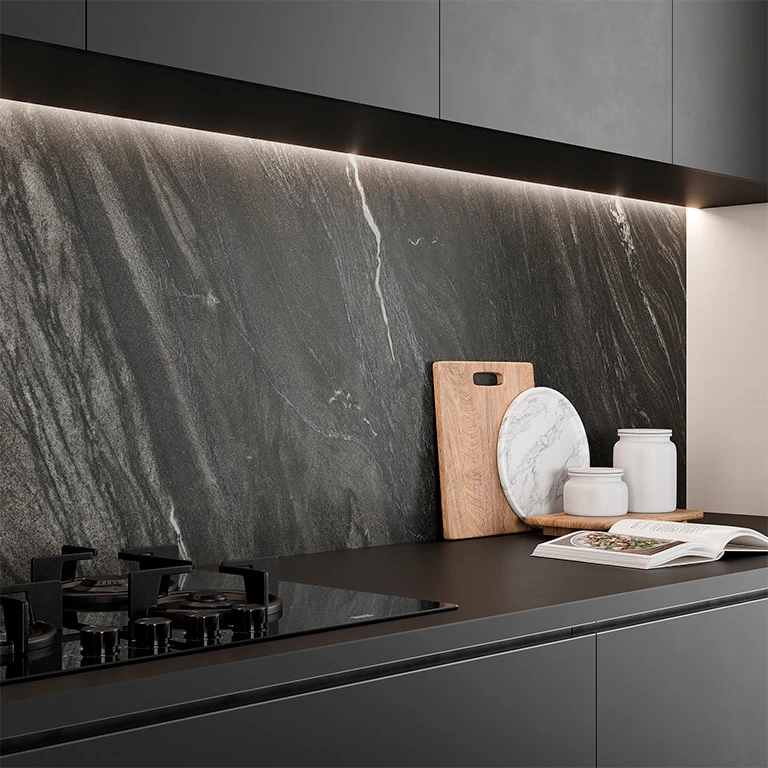
The catch is installation. Large tiles need a perfectly flat wall and an experienced tile setter, so budget for skilled labor even if the tile itself costs less than stone.
3. Zellige and Handmade Glazes
Imperfect on purpose
Handmade tile is replacing mass-produced subway tile, and zellige leads the way. Each hand-cut piece has a slightly uneven surface and a glaze that shifts as the light moves through the day, so a single wall of it never looks flat. Classic white is still popular, but warmer shades—terracotta, sage and deep cream—are gaining ground fast.
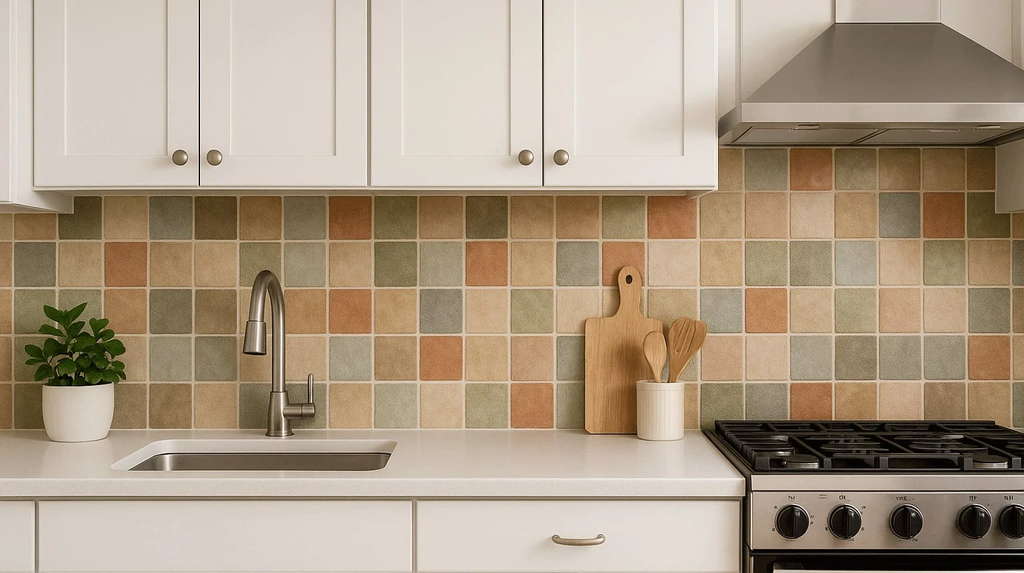
Zellige works especially well in kitchens with wood cabinetry or open shelving, where its organic character can sit alongside other natural textures.
4. Heritage Patterns and Hand-Painted Tile
A little bit of history behind the stove
Patterns borrowed from another century are having a moment. Delft-inspired blue-and-white tiles, Moorish geometrics and hand-painted florals bring a story to the kitchen and contrast beautifully with modern cabinetry. Homes & Gardens points to collections like Ca’ Pietra’s collaboration with Sanderson as examples of the look.
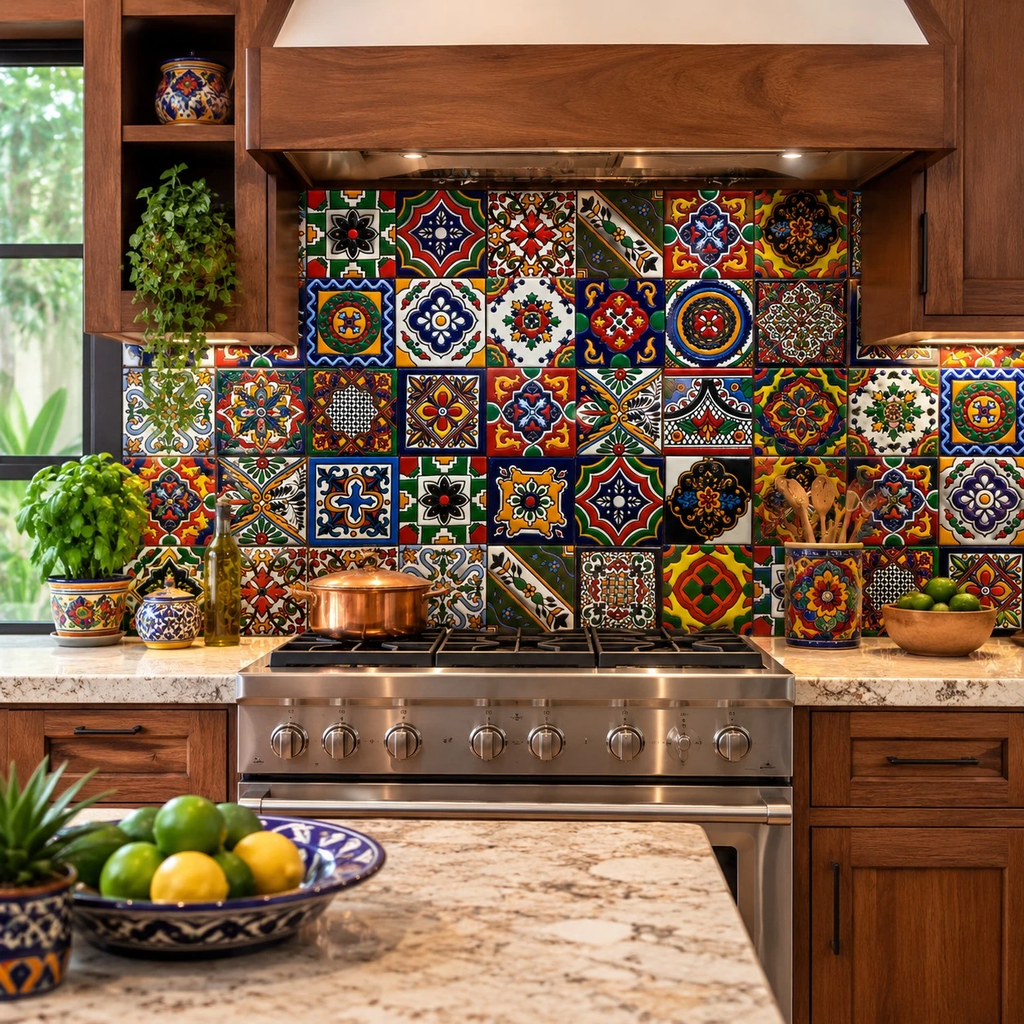
The key is restraint. Designers suggest limiting heritage tile to one wall or the area behind the range, and pairing it with simple shaker cabinets and plain hardware so the pattern stays the focus.
5. Fluted and Ribbed Tile
Texture you can see from across the room
Fluting has moved from furniture and cabinet doors onto the wall. Vertical ribbed tiles catch light along their ridges and cast soft, shifting shadows, adding depth to a backsplash without adding color or pattern. Fluted lines were a major theme at Cersaie, the international tile fair in Bologna, which signals plenty more on the way.
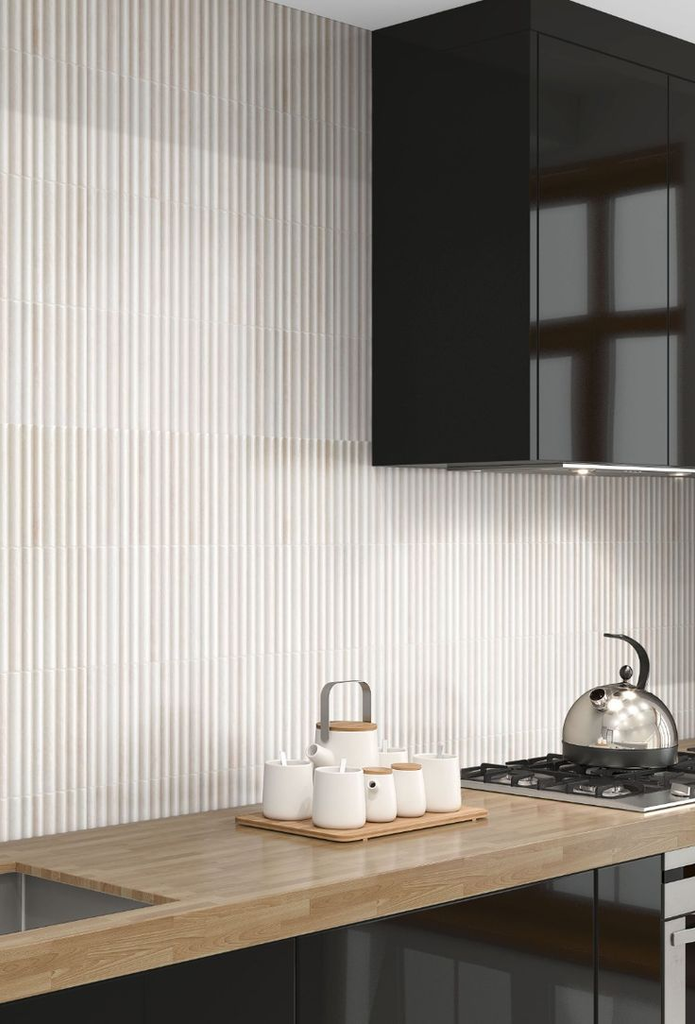
White, cream and soft gray show off the effect best, letting the shadows do the work without competing with the cabinetry.
6. Small Mosaics on a Big Scale
Quiet detail, wall to wall
Mosaics are back, but the 2027 version is tonal and natural rather than glossy and colorful. Think honed marble hexagons, tumbled limestone penny rounds and travertine, all in matte finishes and close shades. Designer Christina Cruz described the look to Homes & Gardens as a detail layer that reads as texture before pattern.
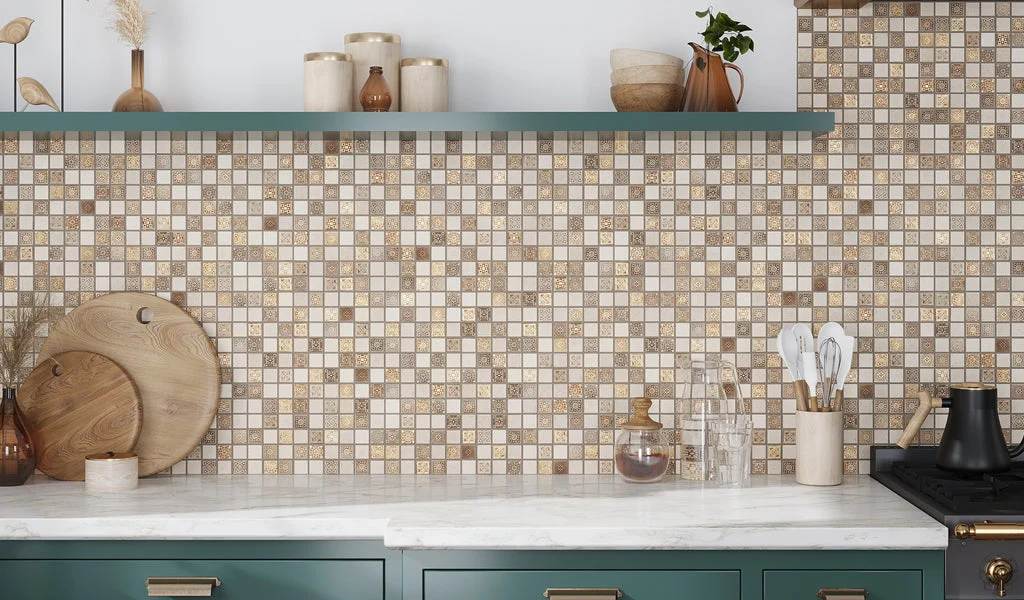
These mosaics pair well with marble, soapstone, warm woods and plaster, and they look especially good behind a range or inside a niche. Natural stone mosaics do cost more than ceramic alternatives.
7. Green in Every Shade
The color of 2027, from celery to forest
Green has been building in kitchens for a few years, and 2027 is when it takes over the backsplash. Sage, celery, olive and deep forest green are all in play. The timing is no accident: Sherwin-Williams named Celery (SW 6421), a soft yellow-green, its 2027 Color of the Year, and several other paint brands picked greens too.
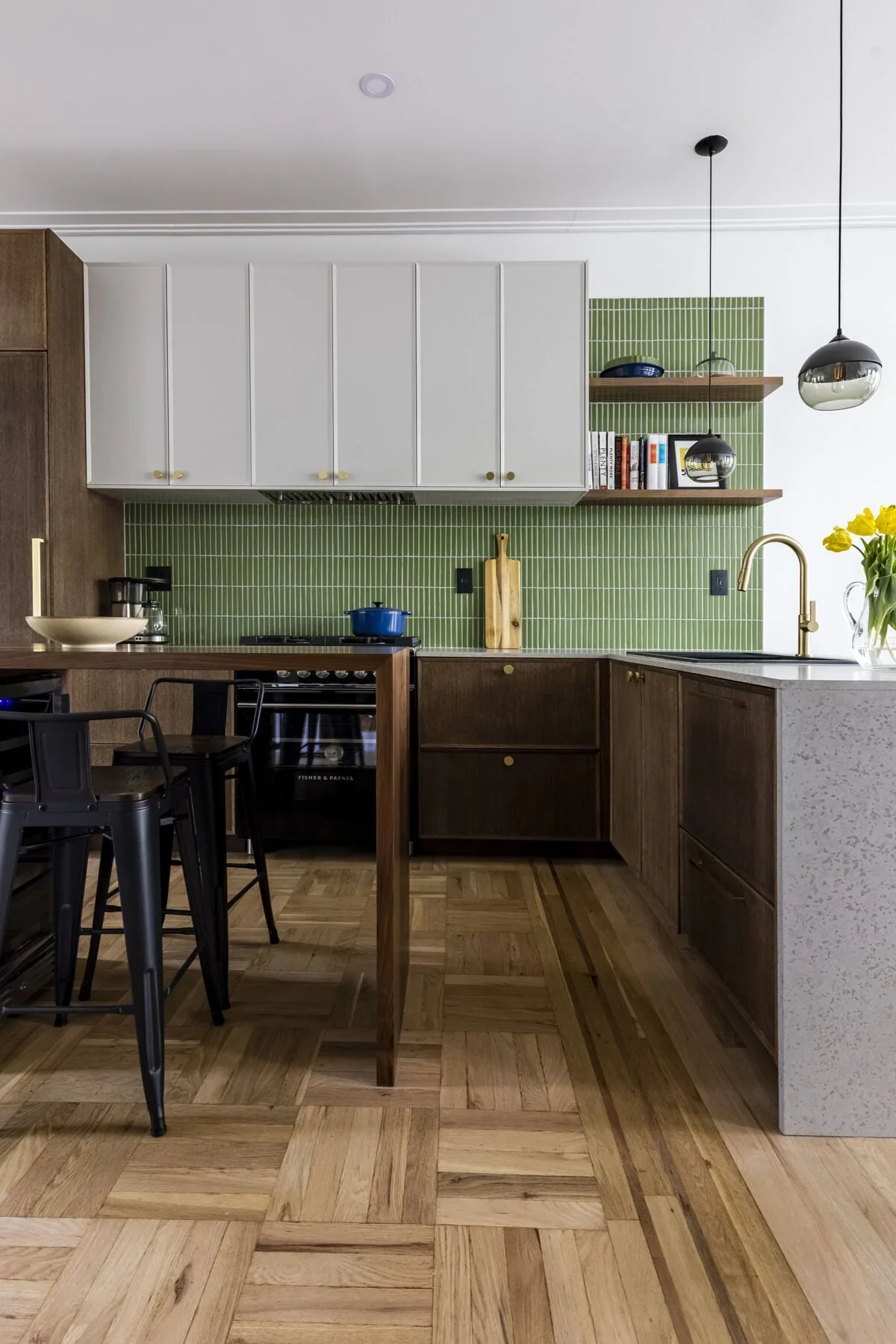
A green backsplash works with both wood and painted cabinets. For a softer take, see how a sage green kitchen backsplash brings calm to a kitchen.
8. Warm Neutrals Replace Cool Gray
Goodbye blue-gray, hello mushroom
The cool gray and stark white kitchen has been softening for several seasons, and 2027 completes the shift. Greige, mushroom, taupe and creamy off-white are taking over from blue-toned grays. In stone, warm-veined marbles such as Calacatta Oro and Crema Marfil are in demand, along with matte cream and putty-colored tiles.
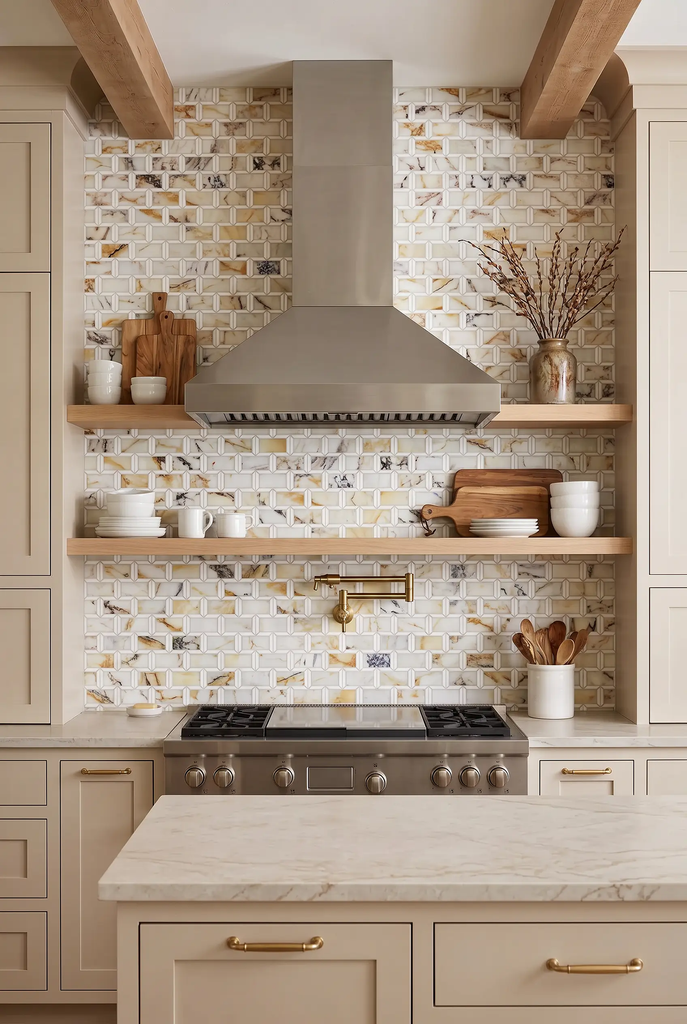
Designers recommend running these neutrals from the counter all the way to the cabinets, rather than stopping at a short strip, for a fuller, more finished look.
9. Matte and Honed Finishes
Less shine, fewer smudges
High-gloss backsplashes are giving way to honed stone, matte ceramic and satin porcelain. The appeal is practical as well as visual: matte surfaces hide fingerprints, water spots and splashes far better than shiny ones, and they look softer under kitchen lighting.
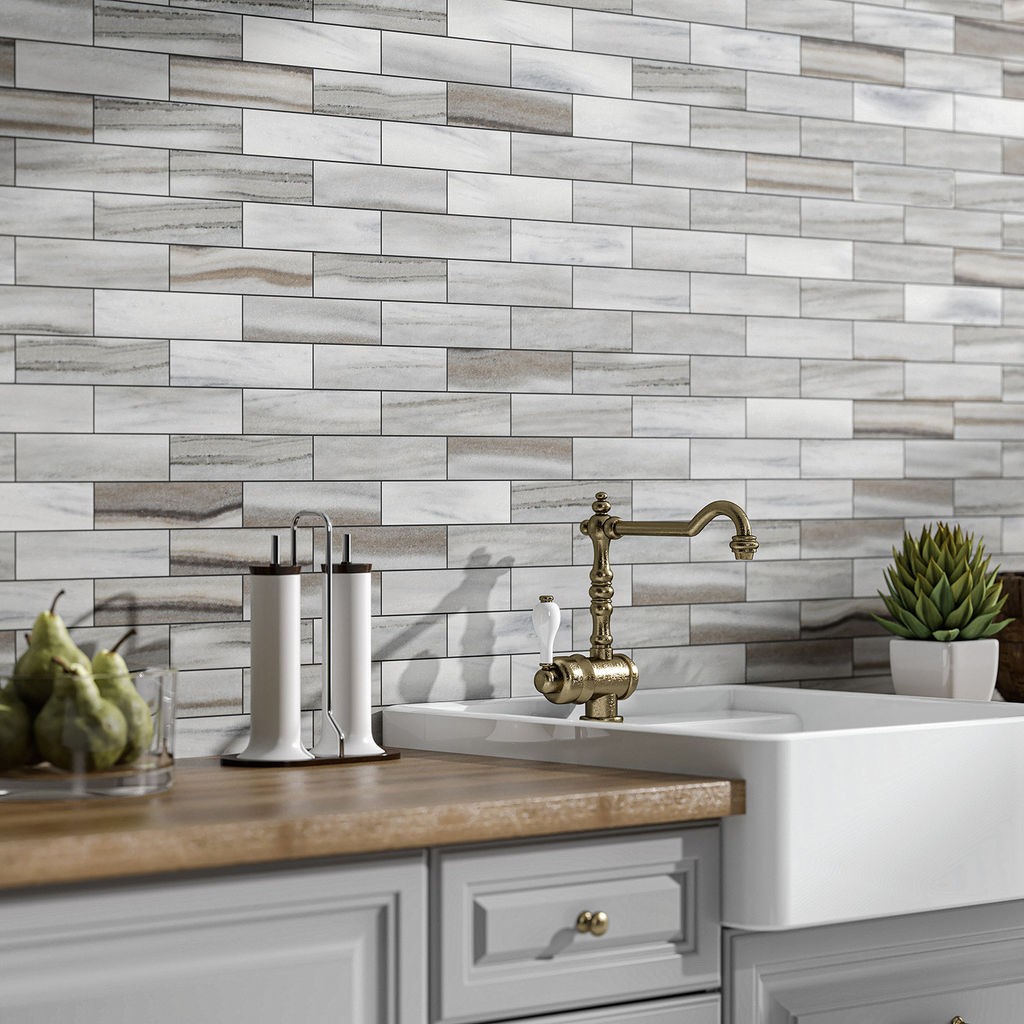
There is one thing to know before committing. Honed stone should be sealed when it is installed and resealed about once a year, since matte and honed surfaces can show oil stains more readily than polished ones.
10. Counter-to-Ceiling Subway Tile in a Brick Bond
The classic, taken all the way up
Subway tile isn’t going anywhere, but it is growing taller. Cream and off-white tiles now run from the countertop to the ceiling, sometimes wrapping the range hood for a uniform, tailored look. Designer Jessica Helgerson told Homes & Gardens she prefers a simple brick bond, noting that herringbone has passed its peak.
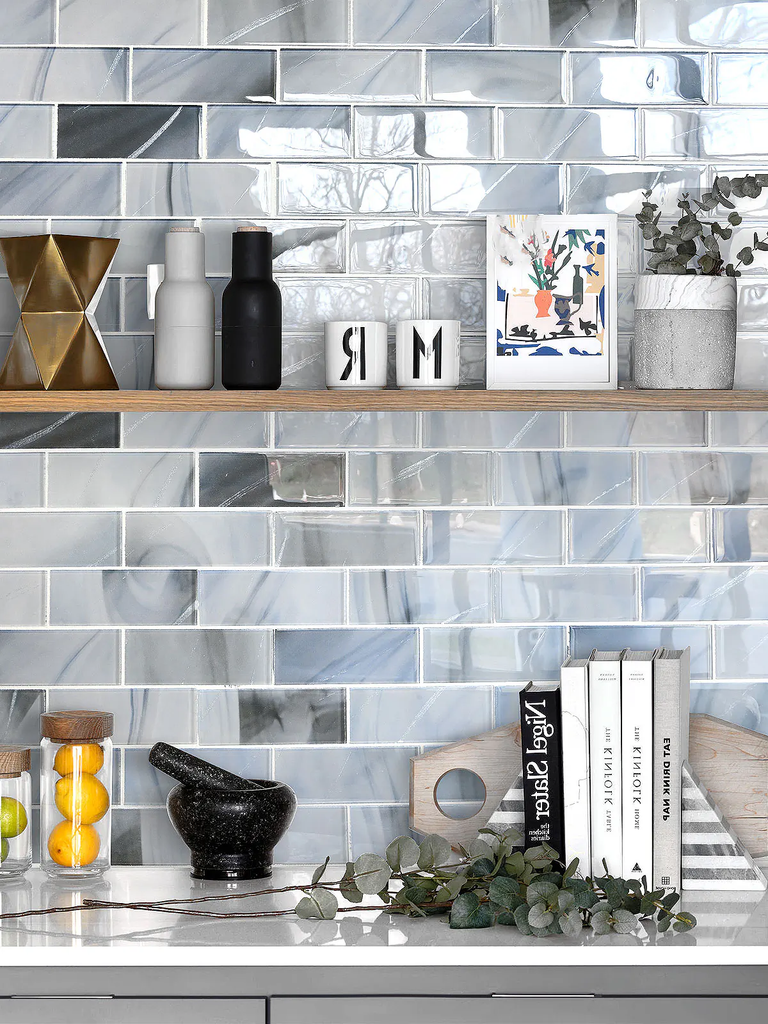
It’s an affordable way to make a kitchen feel taller and more finished, and it suits almost any cabinet style.
11. Sculptural Backsplashes
When the backsplash becomes architecture
Some designers are now treating the backsplash like millwork. Curved or arched shapes, crisp edges and white oak trim tie the backsplash into the cabinetry, turning a practical surface into a feature. An arched tile niche behind the range is one of the most popular ways to try it.
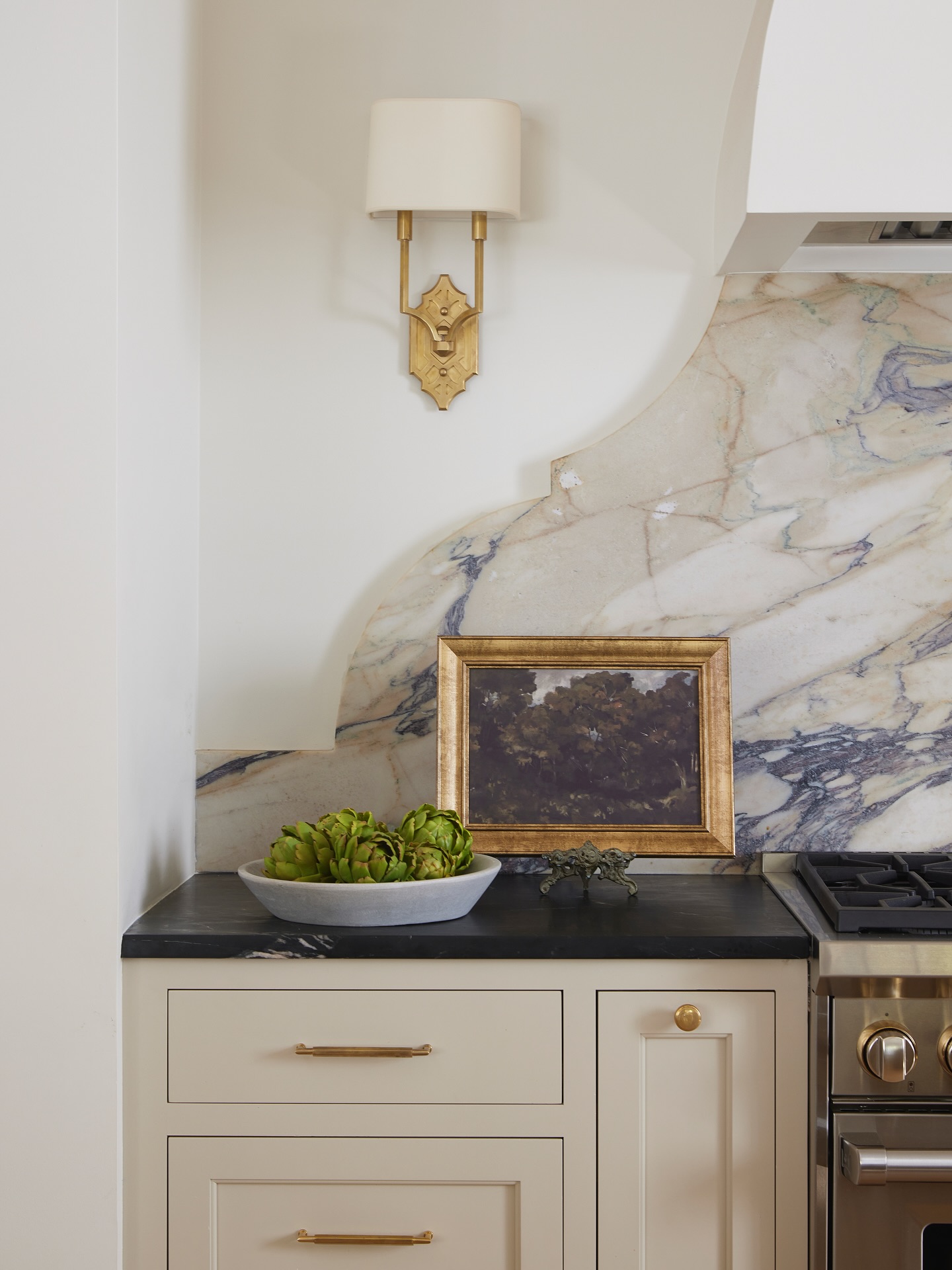
The best sculptural designs echo something else in the room, such as an arched window, a curved island or a rounded range hood, so the shape feels intentional rather than added on.
How to Choose the Right Backsplash Trend for Your Kitchen
Start with Your Countertop
The countertop and backsplash should work as a pair. A busy, heavily veined stone usually calls for a quiet backsplash, while a plain quartz counter leaves room for zellige, fluting or pattern. If you love your countertop, the countersplash is the most cohesive option.
Match the Trend to Your Cabinets
Warm wood cabinets pair naturally with zellige, terracotta and green tile, while painted shaker cabinets are the ideal partner for heritage patterns. Flat, handleless cabinetry suits seamless slabs and large-format tile.
Think About Cleaning
The area behind the range takes the most splashes. Slabs and large-format tiles have the fewest grout lines to clean, while handmade tile and mosaics need a good sealer and a little more care.
Set a Realistic Budget
A full-height slab is the most expensive choice, followed by natural stone mosaics and handmade tile. Large-format porcelain and subway tile deliver a high-end look for much less. If the budget is tight, splurge only on the wall behind the range and use a simpler tile elsewhere.
Backsplash Looks Fading in 2027
As warmer materials take over, a few looks are losing ground: glossy cool-gray tile, stark all-white kitchens, busy high-contrast patterns covering every wall and herringbone layouts used everywhere. None of them is wrong in an existing kitchen, but they are no longer the first choice for a remodel. For more on what’s on the way out, read our guide to kitchen trends to avoid in 2027.
Conclusion
The kitchen backsplash trends of 2027 share one idea: surfaces that feel real. Stone that climbs the wall, tiles made by hand, ribbed textures that play with light and a palette taken from nature all point toward kitchens that are warmer and more personal. Whether you invest in a full countersplash or simply swap glossy gray for matte cream, choose a backsplash you’ll still love in ten years. For more inspiration, browse these kitchen backsplash ideas.
