There comes a time in every woman’s life when she craves a hairstyle that works for her, not against her. Enter the “Pixie Bob” – the perfect hybrid of the short, sassy pixie and the classic, chin-grazing bob. For older women, this cut is nothing short of a revelation. It offers the ease of a pixie with the softness of a bob, framing the face to highlight your best features while minimizing signs of aging. Whether you have fine hair, thick curls, or a busy schedule, the pixie bob delivers volume, style, and confidence.
Below are 13 well-structured ideas to inspire your next salon visit:
1. The Textured Pixie Bob (For Fine Hair)
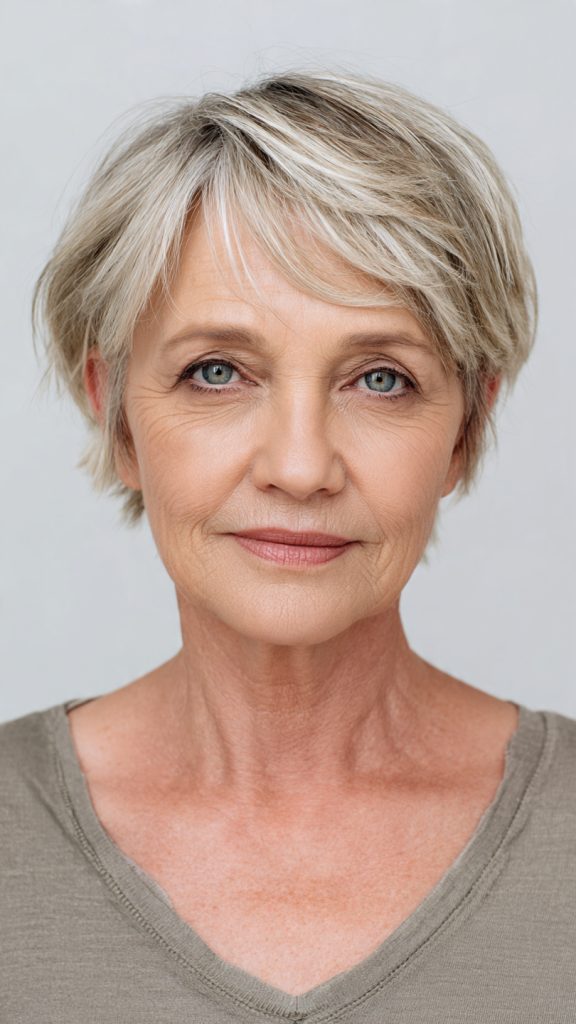
Fine hair can often look flat, but a textured pixie bob adds instant lift. By keeping the back short and the front slightly longer (jaw-length), your stylist can point-cut the ends to create choppy layers. This illusion of density is perfect for women who want fullness without heavy product.
2. The Silver Sizzle (Embrace the Grey)
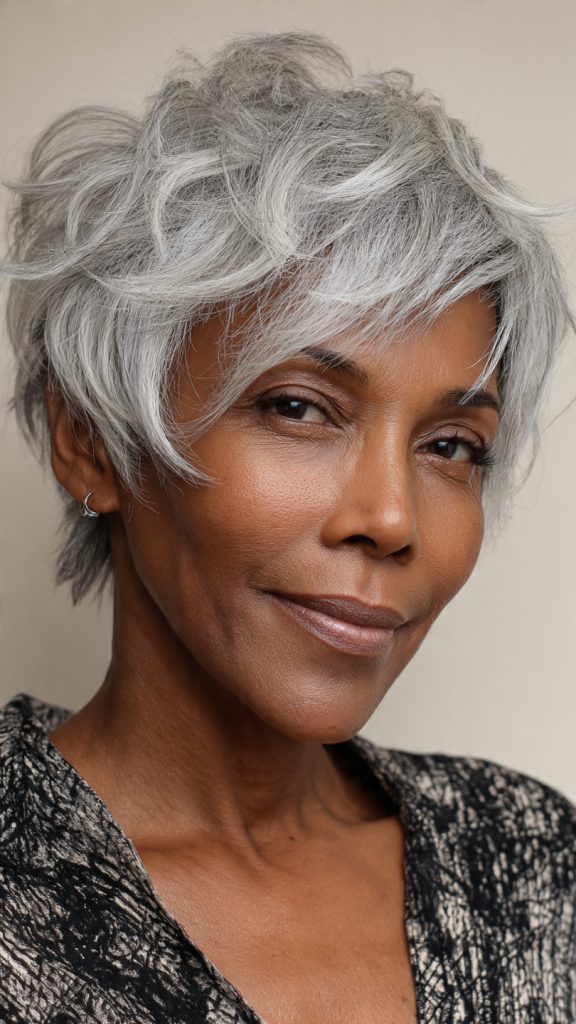
Why hide your natural silver or white hair? A pixie bob is the ultimate canvas for grey hair. The shorter length makes the color look brighter and more intentional. Ask for a “diamond dry cut” to enhance the natural shimmer of your silver strands, turning your grey into your greatest accessory.
3. The Side-Swept Bang Solution (For a Forehead Lift)
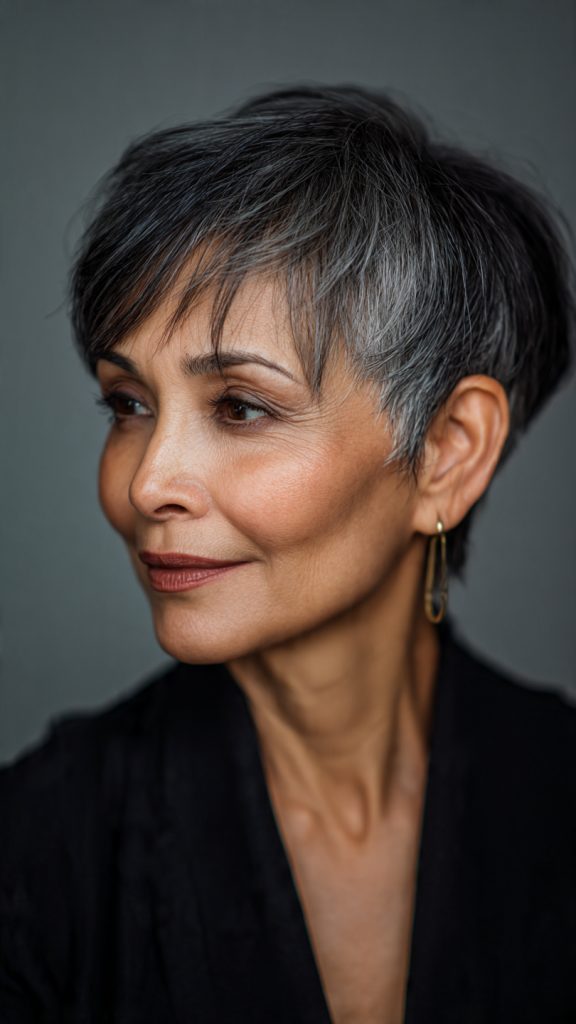
As we age, the forehead can become more prominent. A pixie bob with deep, side-swept bangs solves this instantly. The long, sweeping fringe draws the eye diagonally across the face, creating a lifting effect that softens wrinkles around the eyes and brow line.
4. The Curly Crop (For Natural Texture)
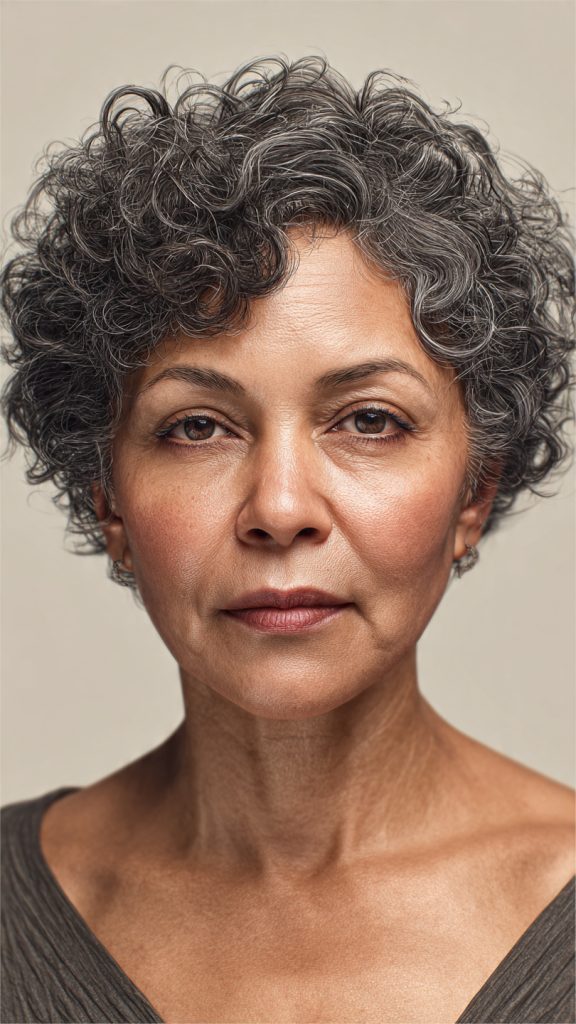
Older women with curls often struggle with shrinkage. The pixie bob keeps curls short enough to bounce but long enough to show their pattern. By cutting the curls dry (curl by curl), you get a rounded shape that avoids the dreaded “triangle head,” making mornings as simple as spritzing and scrunching.
5. The Asymmetrical Edge (For a Modern Vibe)
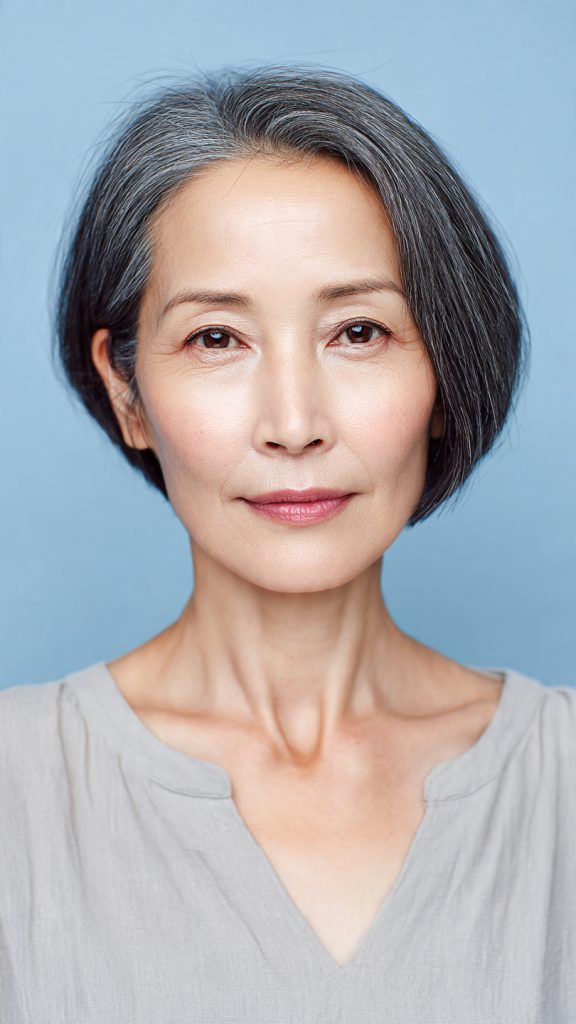
To look current, not dated, try an asymmetrical pixie bob. One side is cropped close to the ear, while the other side dips to chin length. This unexpected geometry draws attention upward and away from the neck, offering a bold, artistic look that works beautifully on straight or wavy hair.
6. The Stacked Nape (For Neck Definition)
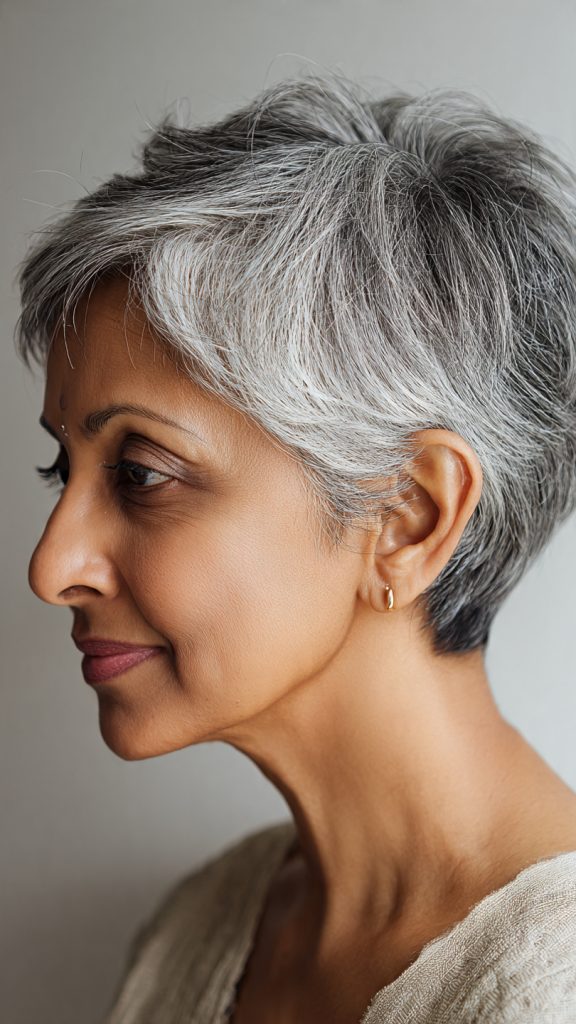
The neck is one of the first areas to show age. A stacked pixie bob keeps the nape area closely tapered (or even shaved), while the crown and top are left longer. This creates a clean, lifted silhouette that elongates the neck and adds a touch of elegance to any outfit.
7. The Wispy Ends (For Softness)
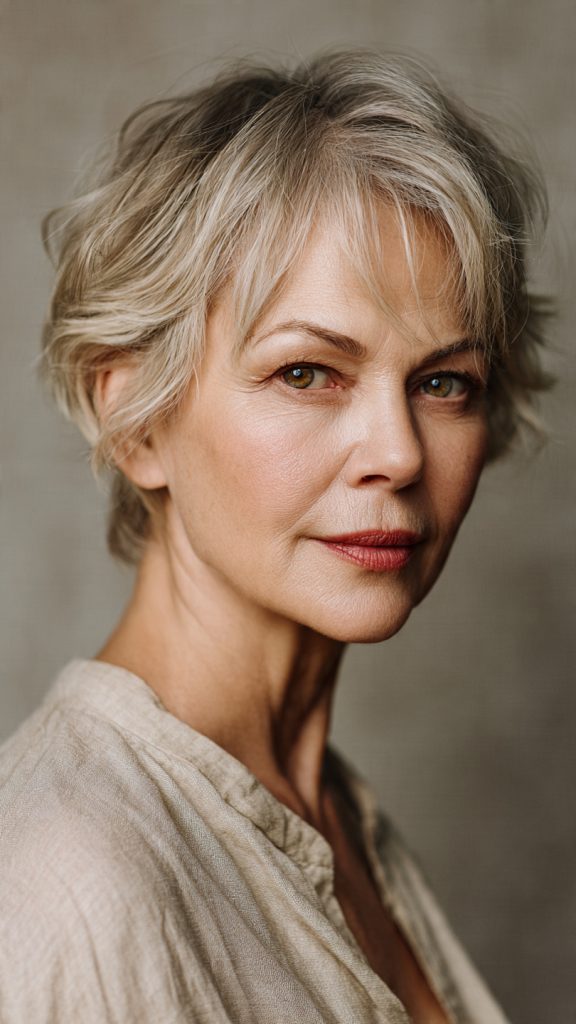
Harsh, blunt lines can look severe on mature faces. Instead, request wispy, feathery ends. This version of the pixie bob has light, airy tips that flutter around the cheekbones and jawline. It softens angular features and adds a romantic, youthful feel without being childish.
8. The Long Top Pompadour (For Volume)
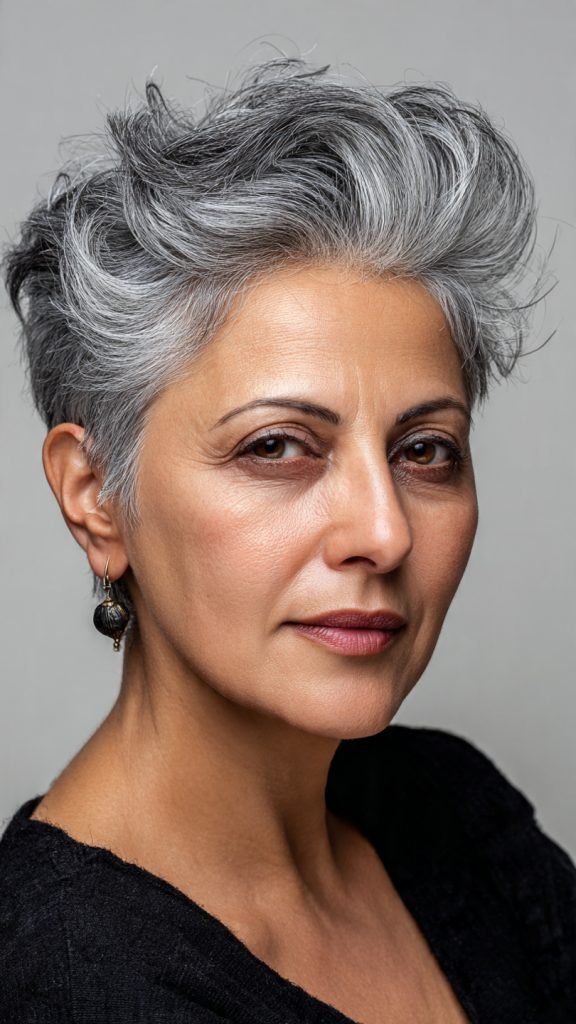
If you have thick hair and miss height, this is your cut. The back and sides are kept short, but the top is left long enough to create a soft pompadour (lifted at the roots and swept back). This style opens up the entire face, highlights the eyes, and works wonders for women with long faces or high cheekbones.
9. The Low-Maintenance Taper (For Active Lifestyles)
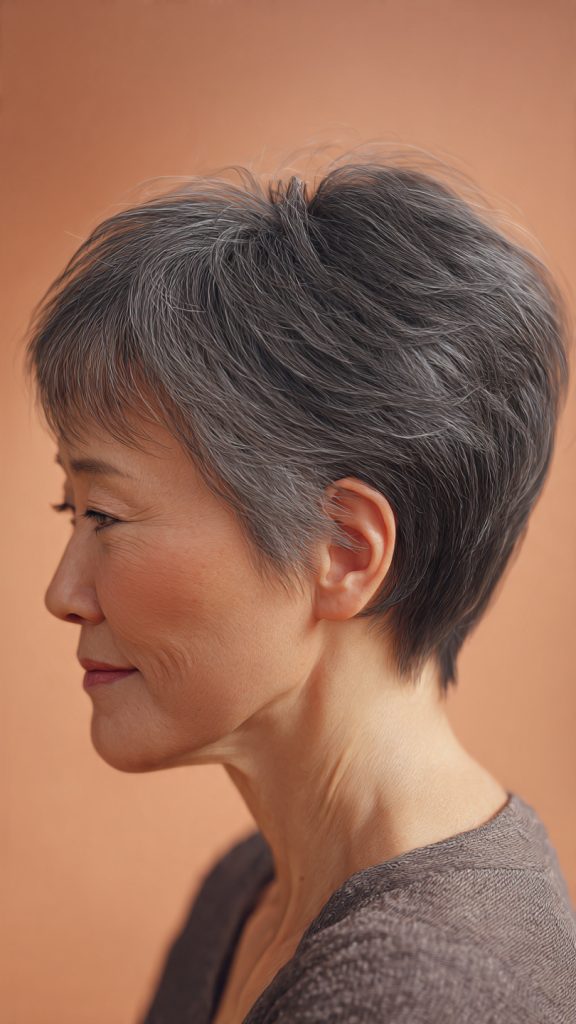
For the woman who swims, golfs, or travels, a tapered pixie bob is a dream. The hair is gradually shortened from the crown down to the neckline. It requires no blow-drying—just a dab of styling paste and finger-combing. It looks deliberately “undone” and polished at the same time.
10. The Baby Bang Combo (For Strong Features)
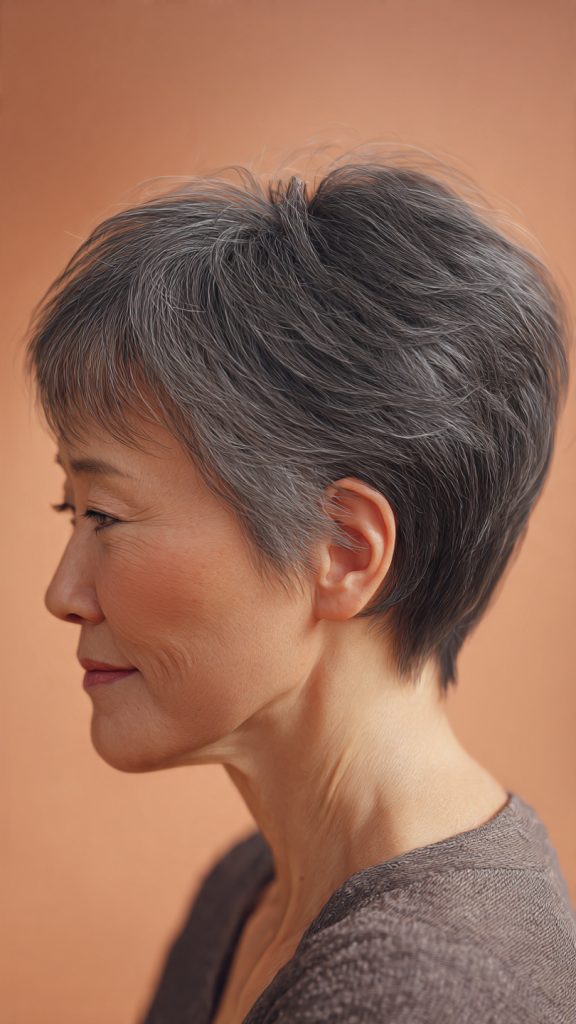
Brave and beautiful, the baby bang (micro-bang) paired with a short bob is for the confident older woman. Keep the rest of the pixie bob smooth and rounded to the ear. The short, straight bangs highlight the eyebrows and draw attention to the eyes, making them look larger and more expressive.
11. The Salt-and-Pepper Blend (For Dimensional Color)
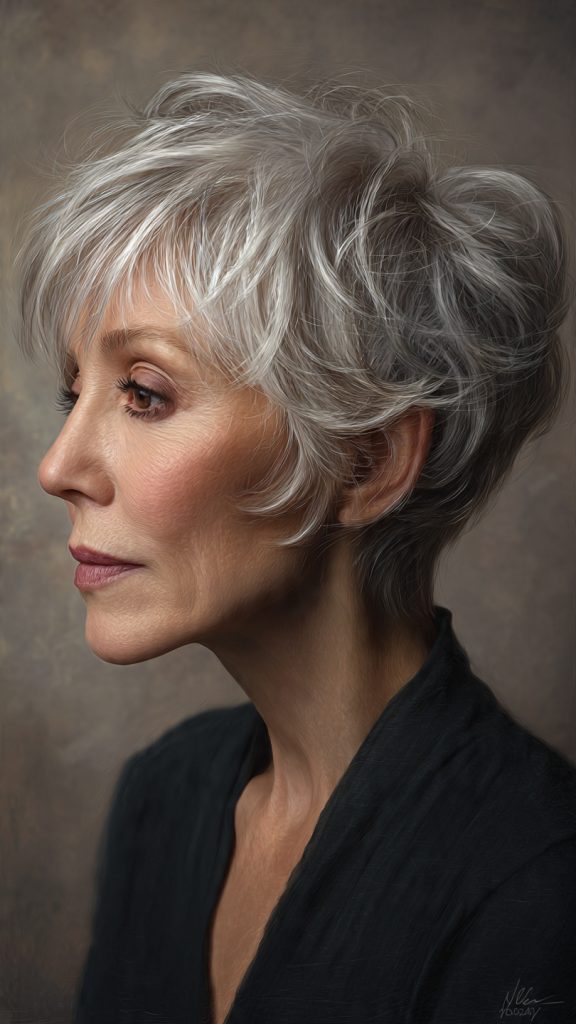
Don’t just cut it—color it smartly. A pixie bob showcases dimensional color like no other cut. Ask your colorist for a salt-and-pepper blend or chunky highlights in silver and charcoal. The short layers reflect light differently, creating movement and depth that washes away a decade.
12. The Piece-y Pixie Bob (For Easy Styling)
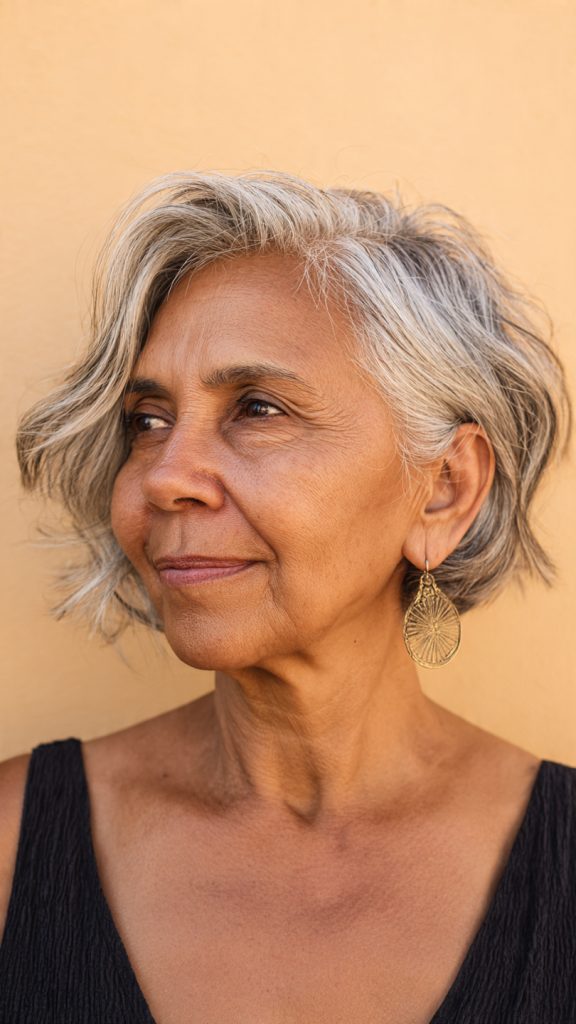
This is the “wash-and-go” champion. Using a texturizing spray or wax, you break the hair into separate, defined pieces. The cut has internal layers that prevent bulk, so you can simply mess it up with your fingers. It’s effortlessly chic and perfect for women with arthritis or limited hand mobility.
13. The Curtain Bang Pixie Bob (For Transitioning)
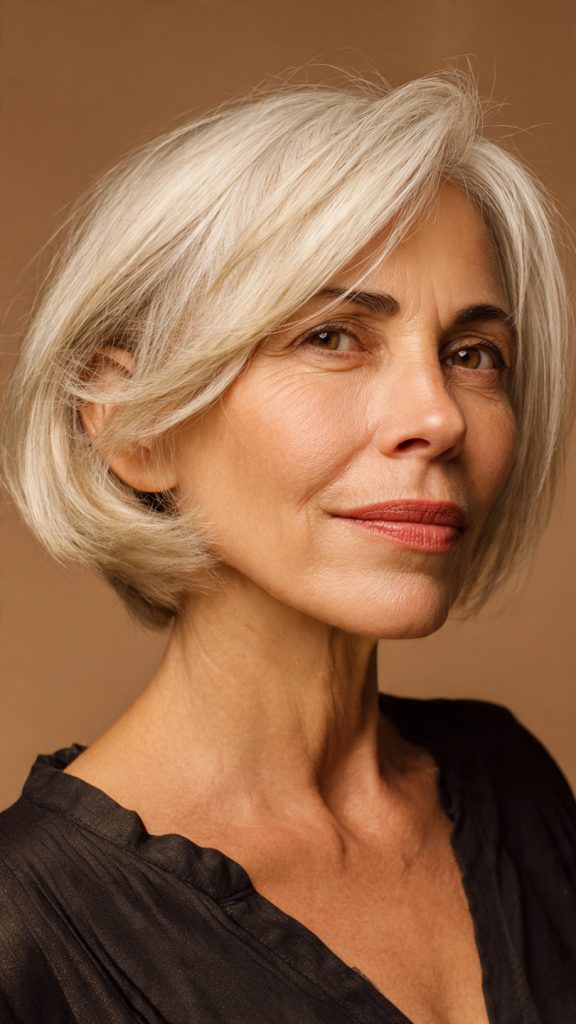
Not ready to go fully short? This transitional cut keeps the length at the chin but adds curtain bangs that part in the middle. The bangs swing away from the face like open curtains, blending into the longer sides. It hides temple thinning, softens a square jaw, and gives you the option to tuck it behind your ears.
How to Choose the Right Pixie Bob for Your Face Shape
Not every pixie bob suits every face, and that’s a good thing—it means there’s a perfect version for you.
- Round face: Go for height on top (like the Long Top Pompadour, Idea #8) to elongate your silhouette. Avoid round, full shapes.
- Oval face: Almost any pixie bob works. Try the Asymmetrical Edge (Idea #5) for added interest.
- Square face: Softness is key. Choose the Wispy Ends (Idea #7) or Curtain Bang Pixie Bob (Idea #13) to soften a strong jawline.
- Heart-shaped face: Side-swept bangs (Idea #3) balance a wider forehead and narrower chin perfectly.
- Long face: A Stacked Nape (Idea #6) adds width and volume at the crown, shortening the appearance of the face.
Ask your stylist to hold a mirror and show you the proposed length before cutting—communication is everything.
Styling Tips for Busy Mornings (Under 5 Minutes)
The pixie bob is low-maintenance, but a few small habits make it effortless:
- Invest in a good texturizing powder or spray. This adds instant grip and volume to fine or flat hair.
- Dry your roots first. Flip your head over and focus the blow-dryer on the crown for 30 seconds.
- Use your fingers, not a brush. Brushes can make a pixie bob look too neat and dated. Messy is modern.
- Refresh with dry shampoo. Even short hair gets oily at the roots. A quick spritz absorbs oil and adds second-day texture.
- Sleep on a silk pillowcase. This prevents bedhead and frizz, so you wake up closer to ready.
For curly or coily pixie bobs, a satin scarf at night and a water-based curl refresher in the morning are your best friends.
Common Mistakes to Avoid
Even a great pixie bob can go wrong. Here’s what to watch for:
- Too much weight on top. This creates a mushroom shape. Insist on internal layering to remove bulk.
- Cutting the bangs too short on the first visit. Start with brow-grazing length. You can always go shorter later.
- Ignoring your neckline. A grown-out nape looks messy fast. Schedule a neck trim every 3-4 weeks between full cuts.
- Using heavy oils or creams. These flatten a pixie bob. Stick to lightweight mousses, sea salt sprays, or dry textures.
- Letting a stylist talk you into a “safe” cut. If you want the asymmetrical edge or baby bangs, find a stylist who specializes in short, edgy cuts for older women.
What to Tell Your Stylist Before the Cut
Clear communication prevents disappointment. Say these exact things during your consultation:
- “I want a pixie bob, not a traditional short bob. I want the back shorter than the front.”
- “Please show me where my natural cowlicks are so we can work with them.”
- “I prefer [textured / smooth / curly / piece-y] ends, not blunt.”
- “I am willing to come in every 4 weeks for a neck and bang trim.”
- “Show me a photo of your work on a woman over 60 with similar hair to mine.”
Bring two reference photos: one of a pixie bob you love, and one of a bob you hate (to show what you don’t want).
Conclusion
The pixie bob is not a hairstyle you “settle for” as you get older—it is a hairstyle you choose because you know exactly what works. It lifts where you need lift, softens where you need softness, and saves you time without sacrificing style. From the textured crop for fine hair to the silver sizzle that celebrates your natural grey, there is a version of this cut for every woman, every race, and every texture.
Yes, it requires regular trims. Yes, the first chop feels dramatic. But the women who make the switch almost never go back. They describe the feeling as lighter, freer, and more visible—because when your hair isn’t hiding you, the world sees you.
So take these 13 ideas, find the prompt that matches your vision, and book that consultation. Your most confident decade might just start with one very good haircut.