Some interior trends disappear almost as quickly as they arrive. Others return decades later and prove they were never truly outdated. Fluted glass belongs firmly in the second category.
Recognizable by its vertical ridges, fluted glass has been used in homes, restaurants, offices, and commercial buildings for more than a century. It gently distorts whatever sits behind it, allowing light to pass through while providing more privacy than ordinary clear glass.
Once associated with vintage cabinets, Art Deco doors, and old-fashioned room dividers, this textured material is returning with a noticeably modern look. Designers are now using it in kitchen cabinetry, shower enclosures, pendant lights, home bars, wardrobes, and architectural partitions.
Its comeback also reflects a broader shift in interior design. Homes are moving away from cold, featureless minimalism and toward warmer rooms filled with texture, personality, and natural materials. This same transition can be seen in the kitchen trends expected to shape 2027 and the warmer bathroom trends emerging for 2027.
Whether you are planning a complete renovation or simply searching for one distinctive design detail, these fluted glass ideas show why this 100-year-old trend could be everywhere in 2027.
What Is Fluted Glass?
Fluted glass, sometimes called reeded or ribbed glass, is made with a series of raised vertical lines. These ridges bend and scatter light, creating a soft, slightly blurred view through the panel.
The amount of privacy it provides depends on the thickness, spacing, and depth of the pattern. Some designs only create subtle distortion, while heavily textured panels can almost completely obscure whatever is behind them.
Unlike frosted glass, which produces a cloudy appearance, fluted glass maintains a more decorative and architectural quality. Light still catches the raised surface, creating shadows and movement throughout the day.
Why Fluted Glass Is Returning in 2027
Fluted glass solves several modern decorating challenges at once.
It brings texture into a room without introducing a bold color or busy print. It lets natural light move between spaces without sacrificing all privacy. It also makes ordinary cabinets, doors, and lighting fixtures feel more customized.
The material works especially well with the natural woods, warm metals, handmade finishes, and soft neutral colors now replacing stark white interiors. Its vertical lines also echo other architectural treatments, including the decorative wall details featured in these wall molding ideas.
Most importantly, fluted glass is versatile. It can feel vintage in a dark wood cabinet, industrial in a black metal frame, coastal beside pale oak, or luxurious when paired with marble and brass.
1. Upgrade Kitchen Cabinets With Fluted Glass
Replacing selected solid cabinet doors with fluted glass can make a kitchen feel brighter and more layered.
Unlike clear glass, it does not place every plate, mug, and food container completely on display. The ridged surface provides enough distortion to soften the contents while maintaining a lighter appearance than solid cabinet fronts.
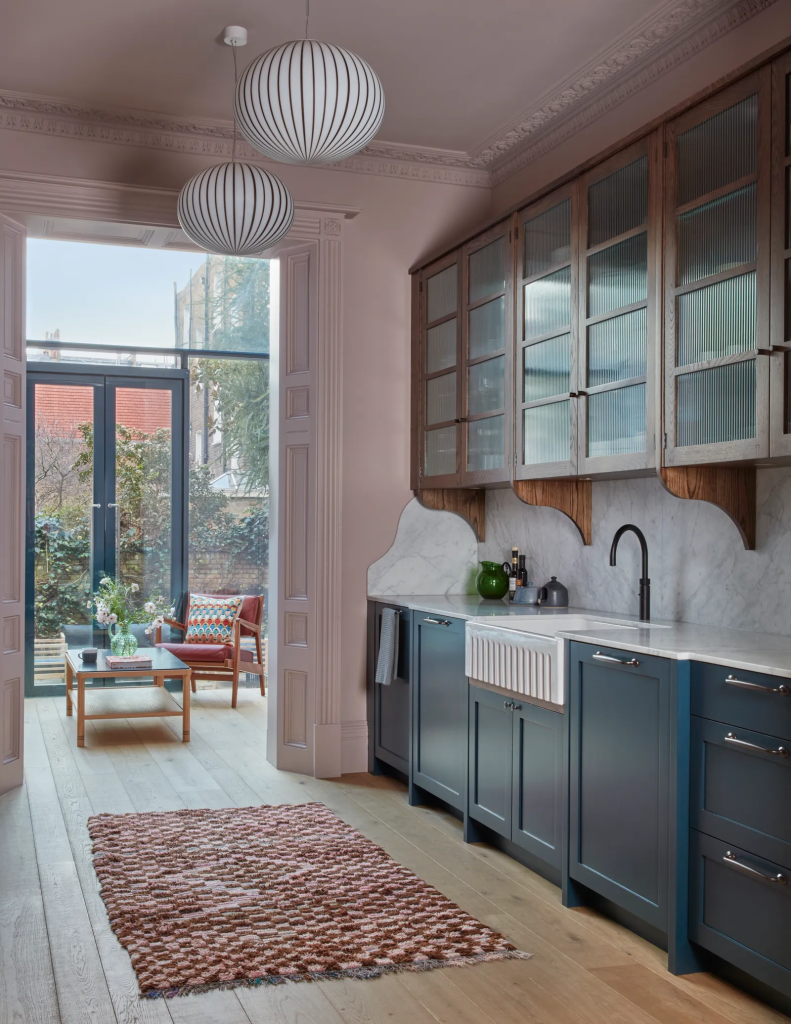
Fluted glass works particularly well on upper cabinets, built-in beverage stations, coffee bars, and cabinets positioned above a kitchen peninsula. It can also break up a large wall of matching cabinetry and keep the room from feeling visually heavy.
Pair it with warm oak, walnut, soft green, cream, or mushroom-colored cabinets. These finishes align beautifully with the move from cool white kitchens toward the warmer palettes discussed in The 2026 Kitchen Cabinet Color Revolution.
For a subtle result, use fluted glass on only two or three cabinet doors rather than across the entire kitchen.
2. Turn the Pantry Door Into a Feature
A pantry door is often treated as a purely practical part of the kitchen, but fluted glass can turn it into an architectural focal point.
The glass allows light to filter into a dark pantry while softly concealing shelves, appliances, and stored food. It creates the impression of openness without requiring the pantry to remain perfectly arranged at all times.
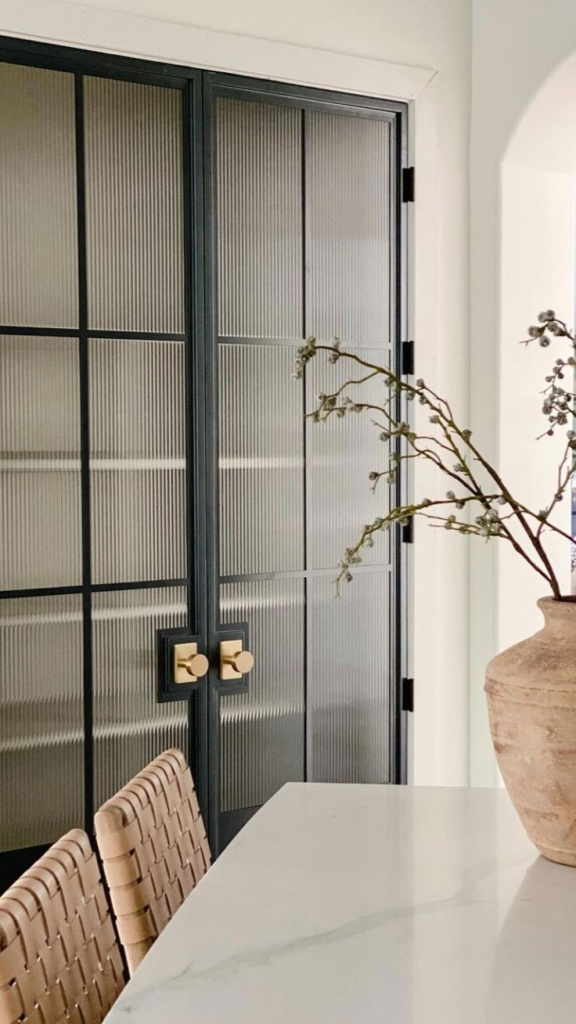
Choose a slim black frame for an industrial appearance, painted wood for a traditional kitchen, or natural oak for a softer contemporary look.
This idea is especially effective in narrow kitchens where heavy doors can make the room feel more enclosed. It can complement the space-saving principles shown in these stylish and functional galley kitchen layout ideas.
3. Create a Boutique-Hotel Bathroom
Fluted glass can give an ordinary bathroom the polished atmosphere of a boutique hotel.
Use it on vanity doors to soften the appearance of toiletries, towels, and grooming products. It can also be added to a tall linen cabinet, a wall-mounted medicine cabinet, or a built-in storage niche.
The ribbed texture looks especially sophisticated beside marble, travertine, limestone, warm timber, and brushed metal fixtures.
Mixing more than one metal finish can make the room feel collected rather than overly coordinated. The key is choosing a dominant finish and repeating each secondary metal intentionally, as explained in this guide to mixing metals in the bathroom.
4. Replace a Clear Shower Screen
Fluted shower glass provides more privacy than a clear enclosure without making the bathroom feel closed off.
The vertical pattern softens the outline of the shower while allowing natural and artificial light to travel through the room. This makes it particularly useful in shared bathrooms, guest bathrooms, and compact spaces where a solid wall would feel too heavy.
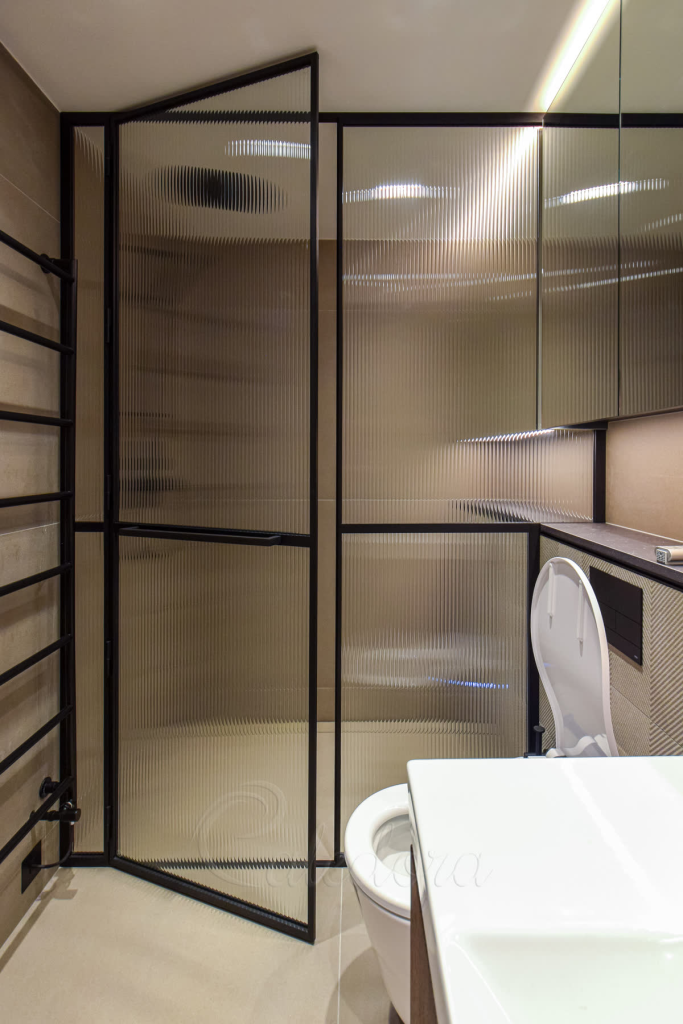
A frameless fluted panel creates a clean contemporary look, while a black-framed enclosure introduces stronger architectural contrast. Brass framing can feel glamorous, especially when repeated in the faucets and lighting.
For a calm palette, combine the shower panel with muted green walls and thoughtful illumination inspired by these sage green bathroom lighting ideas.
One practical consideration is cleaning. Although the pattern can make small water marks less noticeable from a distance, the textured side still needs regular care to prevent mineral buildup.
5. Divide Rooms Without Blocking Light
After years of completely open floor plans, many homeowners are looking for ways to create more defined rooms.
Fluted glass partitions offer a useful middle ground. They establish a visual boundary while preserving brightness and a sense of connection.
A floor-to-ceiling panel can separate an entryway from a living room. Sliding fluted doors can close off a home office when privacy is needed. A smaller partition can distinguish a dining area without creating another solid wall.
The material is especially compatible with the clean shapes and layered textures found in these modern room ideas for 2026.
For the strongest architectural effect, frame the glass in wood or metal that already appears elsewhere in the room.
6. Make a Home Bar Feel More Luxurious
Fluted glass is almost made for home bars.
Its distorted surface gives bottles and glassware an elegant, softly concealed appearance. It also prevents the cabinet interior from becoming the dominant visual feature when the bar is not being used.
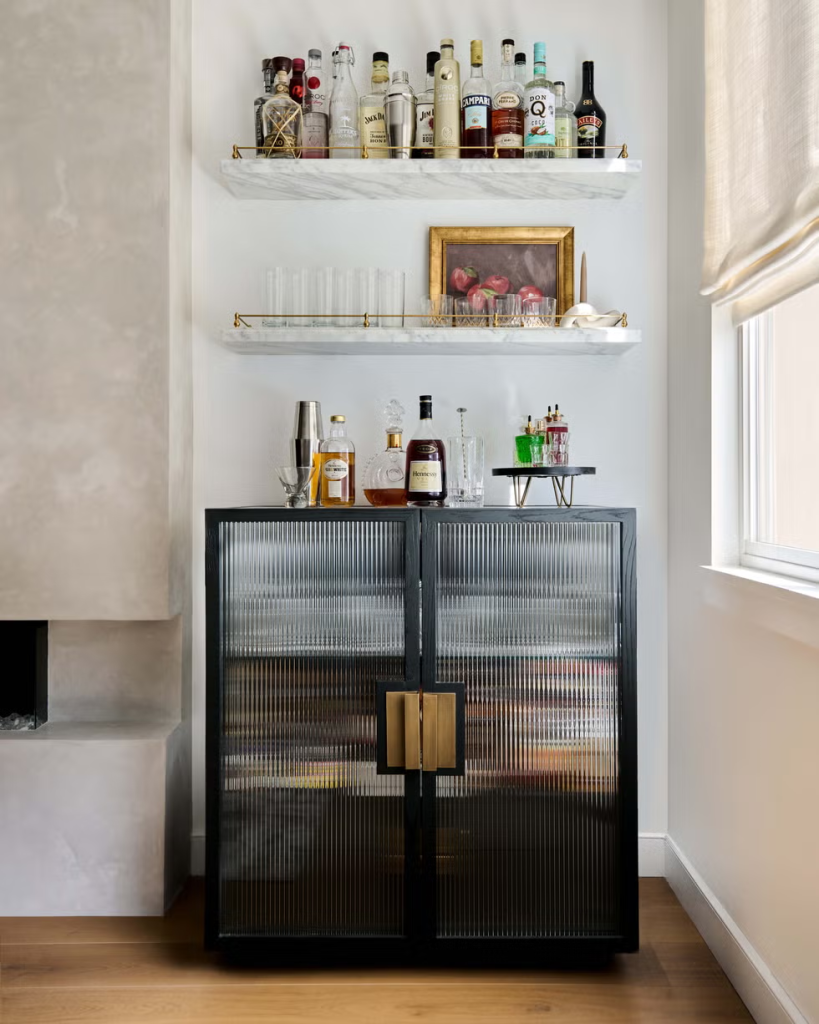
Install fluted panels on upper cabinet doors and add warm lighting inside. The glow will catch the vertical ridges and produce a subtle ripple effect, particularly in the evening.
Dark walnut, deep green paint, brass hardware, and stone counters can make the bar feel dramatic and intimate. In a lighter room, pale oak and creamy glass can create a more relaxed coastal interpretation.
Decorative trim or paneling behind the bar can add another layer of detail without competing with the glass.
7. Refresh a Display Cabinet
Traditional display cabinets can sometimes look overly formal, while open shelving can appear cluttered. Fluted glass offers a balance between the two.
The textured doors keep books, ceramics, serving pieces, and collectibles visible in a softened way. Shapes and colors can still be seen, but small inconsistencies are less noticeable.
This makes fluted glass useful in living rooms where storage needs to look attractive as well as practical. It works particularly well in the warm, layered spaces shown in this guide to living room decor with a brown couch.
Keep the cabinet interior intentional. The glass can disguise minor clutter, but it will not completely hide an overcrowded collection.
8. Use Fluted Glass Lighting
Fluted glass is not limited to doors and cabinets. It is also becoming a prominent lighting material.
Pendant lights, wall sconces, chandeliers, and table lamps with ribbed shades scatter light more gently than clear glass. The result is warmer and less clinical, making these fixtures ideal for rooms designed around relaxation or conversation.
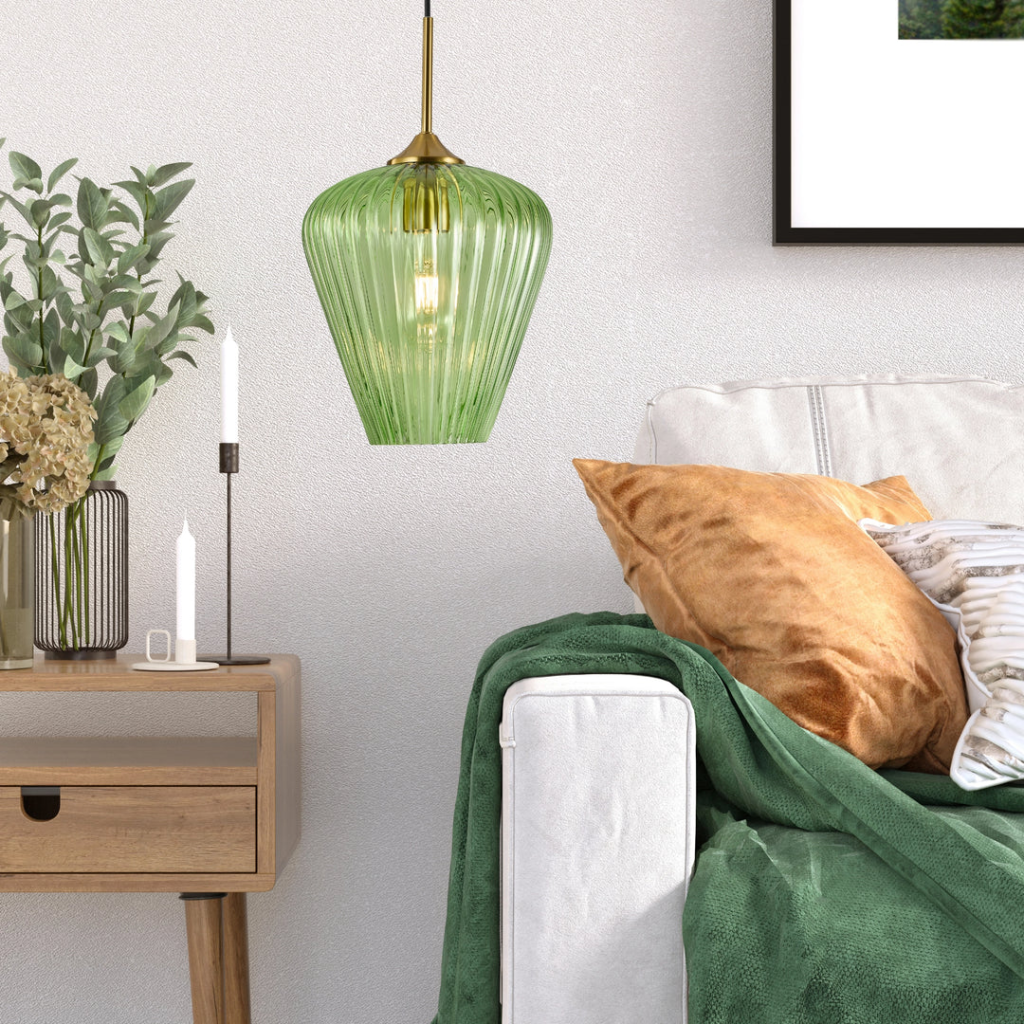
Use fluted pendants above a dining table, kitchen island, or bedside table. A pair of ribbed sconces can frame a bathroom mirror or create soft background lighting in a hallway.
The warm glow complements the relaxed, elegant feeling associated with the coastal grandmother style and the earthy materials found in modern Mediterranean living rooms.
Avoid relying on heavily fluted fixtures as the only source of task lighting. Their main strength is ambiance, so combine them with more focused illumination where needed.
9. Add Fluted Glass to a Wardrobe
Large wardrobes can dominate a bedroom, particularly when every door is made from heavy solid wood.
Fluted glass panels reduce that visual weight while still concealing most clothing and accessories. They make the furniture feel lighter without exposing the entire interior.
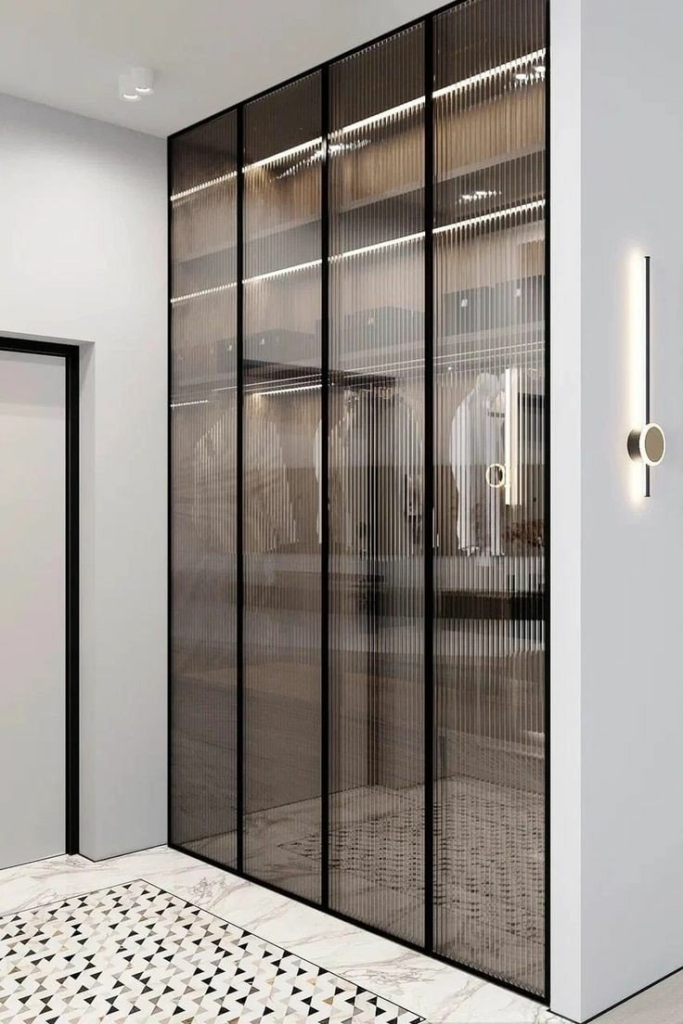
The look works well with slim timber frames, painted cabinetry, and brushed brass handles. For a minimalist bedroom, select pale glass and light oak. For something moodier, combine darker glass with walnut or charcoal-painted wood.
This approach suits the calm, layered aesthetic seen in these warm modern bedroom ideas and cozy cottage-style interiors.
Interior lighting can make the wardrobe even more dramatic, but use warm LEDs rather than harsh cool-toned bulbs.
10. Add Character to Interior Doors
A standard interior door can become a striking design feature when part of it is replaced with fluted glass.
The material lets daylight enter hallways and enclosed rooms while maintaining more privacy than clear panels. It works especially well for pantries, laundry rooms, home offices, dining rooms, and passages between kitchens and living spaces.
A painted door with a single glass panel feels traditional, while a full-height metal-framed version has a more contemporary appearance.
Fluted glass is also a useful choice for rooms that borrow light from neighboring spaces. A windowless corridor, for example, can feel significantly brighter when connected to a naturally lit room through textured glass.
11. Bring It Into Smaller Furniture
Fluted glass can make an impact without becoming part of a renovation.
Look for side tables, consoles, nightstands, or coffee tables that combine ribbed glass with wood or metal. A small furniture piece allows you to experiment with the trend before committing to permanent cabinetry or partitions.
A fluted glass side table can catch light beautifully beside a sofa, while a console with textured doors can conceal entryway essentials.
Use the material selectively and surround it with softer finishes such as woven rugs, linen upholstery, warm woods, and ceramic accessories. This prevents the room from becoming too hard or reflective.
12. Combine Fluted Glass With Natural Materials
One reason fluted glass feels so appropriate for 2027 is its ability to complement the materials currently shaping interior design.
It works particularly well with:
- White oak
- Walnut
- Travertine
- Marble
- Limestone
- Brushed brass
- Blackened steel
- Linen
- Rattan
- Handmade ceramics
The contrast is what makes the combination successful. Glass introduces lightness and precision, while wood, stone, and woven materials add warmth and imperfection.
This balance is visible in the natural finishes and inviting color palettes highlighted throughout Kitchen Trends 2027 and Bathroom Trends 2027.
How to Use Fluted Glass Without Overdoing It
Fluted glass is distinctive, so a small amount can make a meaningful difference.
Choose one or two prominent applications in each room. That might mean upper cabinets and pendant lights in a kitchen, or a shower screen and vanity doors in a bathroom. Using the material on every possible surface may make the design feel repetitive.
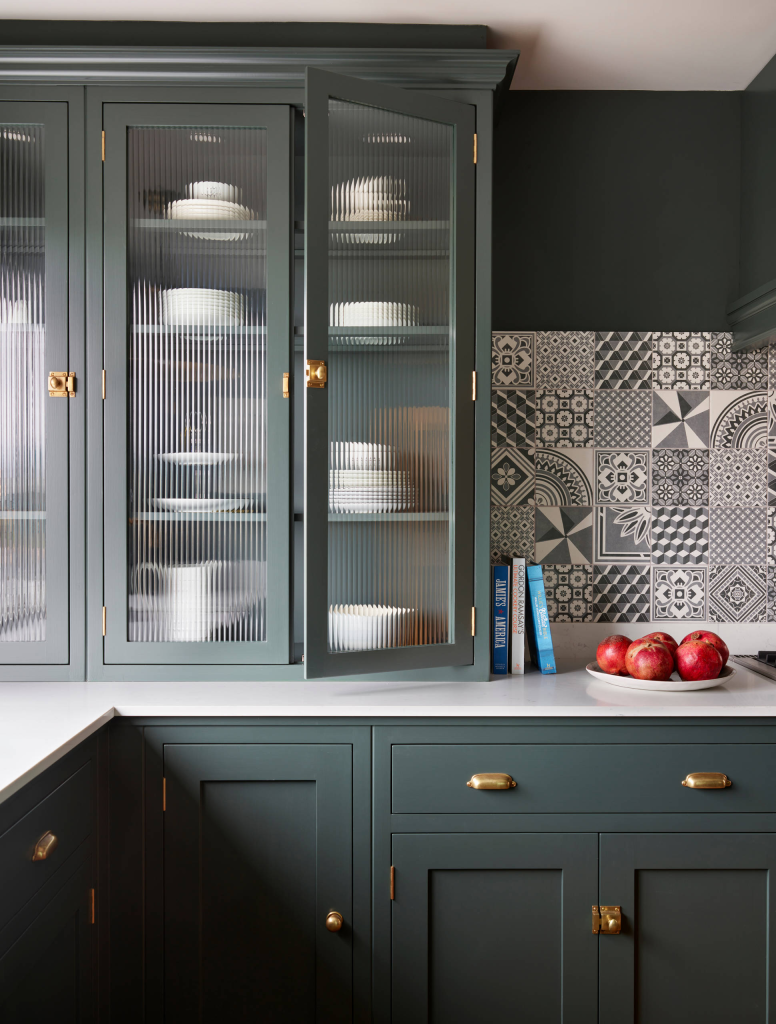
It also helps to vary the surrounding textures. Pair smooth glass with matte walls, natural wood, soft fabrics, or honed stone rather than combining it with several other highly reflective finishes.
Consider the direction of the pattern as well. Vertical fluting can make cabinets and doors appear taller, while horizontally ribbed glass creates a broader, more contemporary look.
Is Fluted Glass Practical?
Fluted glass is generally practical, but the right application matters.
For cabinets, it provides moderate concealment rather than complete privacy. The contents will still influence the overall appearance, especially when strong lighting is installed inside.
For showers, check whether the textured side will face inward or outward. A smoother interior surface is usually easier to wipe clean.
For doors and dividers, use safety glass that meets the appropriate local building requirements. Tempered or laminated products may be necessary depending on the panel size and location.
Quality also matters. Cheap plastic panels can imitate the appearance of fluted glass, but they may scratch, yellow, or look less refined over time. Real glass generally produces clearer reflections and a more substantial finish.
Fluted Glass Mistakes to Avoid
Using It Everywhere
A few carefully selected panels will feel elegant. Covering every cabinet, door, and light fixture can make the pattern lose its impact.
Expecting It to Hide Major Clutter
Fluted glass blurs objects but does not make them disappear. Cabinets still need a reasonable level of organization.
Ignoring Lighting
The ridges look most impressive when light reaches them from the side or behind. Poorly lit glass may appear flat.
Mixing Too Many Textures
Fluted glass already creates strong visual movement. Pair it with quieter materials so the room does not feel overly busy.
Choosing the Wrong Pattern Scale
Fine narrow fluting tends to feel delicate and traditional. Wider ribs often look more modern and dramatic. Match the scale to the size and style of the room.
Final Thoughts
Fluted glass is proof that a material does not need to be new to feel exciting.
After more than a century, its ability to filter light, introduce privacy, and add texture makes it remarkably relevant to modern homes. It can soften a minimalist kitchen, bring elegance to a bathroom, divide an open-plan room, or turn an ordinary cabinet into a focal point.
Its return also fits the wider direction of 2027 interiors: warmer colors, richer materials, practical layouts, and details that give homes a sense of history and individuality.
Used thoughtfully, fluted glass feels neither old-fashioned nor overly trendy. It occupies the rare space between the two, offering a distinctive update that could remain beautiful long after 2027 has passed.
