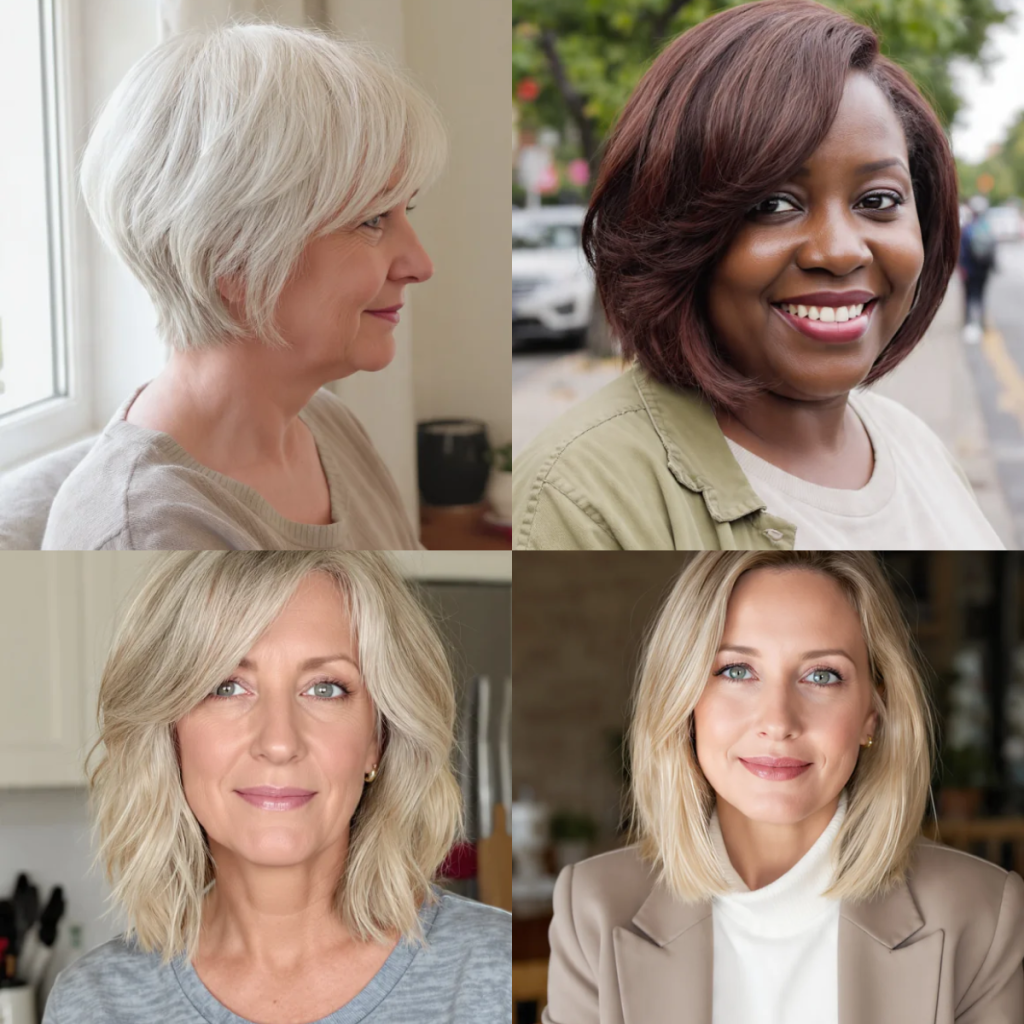
If you’re a woman over 40 with fine or thinning hair, you already know the struggle: flat roots, wispy ends, and styles that lose their shape by lunchtime. But 2026 is rewriting the rules. This year, medium hairstyles—the sweet spot between too-short and too-long—are engineered for volume, movement, and modern elegance. Think graduated layers that lift at the crown, soft texture that creates density, and razor-sharp techniques that remove weight without sacrificing body. The old advice of “just cut it shorter” is out. In 2026, it’s all about strategic length, airy shapes, and low-maintenance finishes that make thin hair look effortlessly thick. Below, discover 14 expert-backed medium hairstyles designed specifically for women over 40 who want youthfulness, sophistication, and real, lasting volume.
Why Medium Length Is the Sweet Spot for Thin Hair After 40
As we age, hair naturally becomes finer, less dense, and more prone to breakage. Very long hair pulls down, exposing thinness at the roots. Very short hair can sometimes reveal scalp or lack of styling versatility. Medium length—typically from chin to just below the shoulders—offers the best of both worlds:
- Weight management: Enough length for movement and styling, but not so much that hair collapses.
- Volume illusion: Strategic layering at this length lifts the mid-shaft and crown.
- Youthful framing: Medium cuts hit at flattering points (jaw, collarbone) that soften age-related facial changes.
- Low commitment: Easier to grow out or change than a pixie, but more impactful than long hair.
14 Well-Structured Ideas for Medium Hairstyles (2026)
1. The Italian Blunt Bob with Micro-Layers
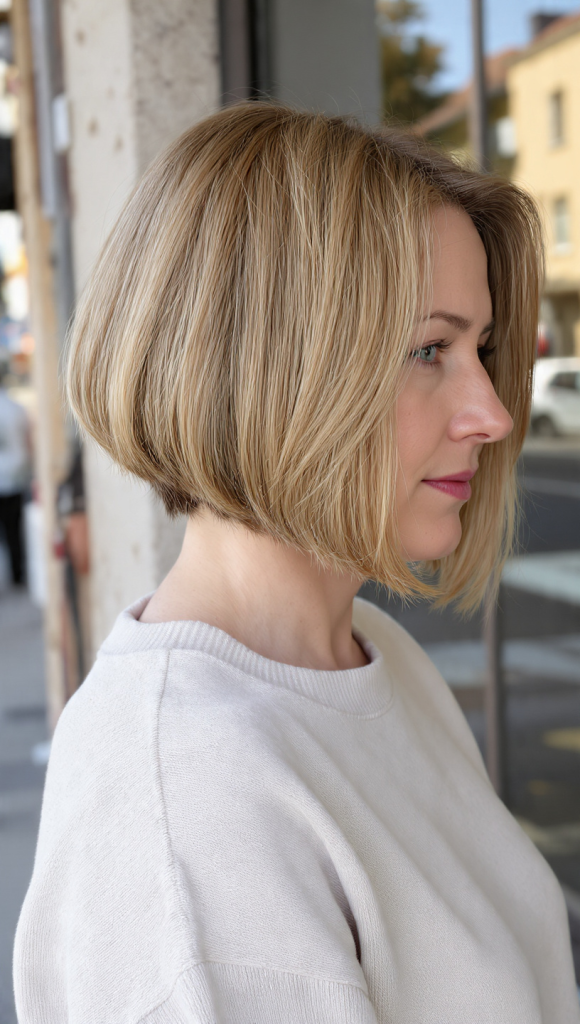
- Length: Chin to collarbone.
- Why it works for thin hair: A blunt baseline creates the illusion of density, while barely-there internal micro-layers (cut only on the underside) lift roots without removing visible bulk.
- 2026 twist: Ask for “invisible graduation”—the line is blunt from the front, but slightly shorter in the back for subtle volume.
2. The Airy French Lob (Long Bob)

- Length: Just above the shoulders.
- Why it works for thin hair: Point-cutting and slice-layering remove weight from the interior, so fine hair doesn’t collapse. Ends look soft and feathery, not see-through.
- Styling tip: Use a root-lifting spray and diffuse upside down for 2026’s preferred “lived-in volume.”
3. The Curtain Bang Lob

- Length: Shoulder-skimming.
- Why it works for thin hair: Curtain bangs add width around the temples and eyes, disguising sparse hair at the hairline. The rest stays one-length to preserve fullness.
- 2026 update: Bangs are longer (brow to cheekbone) and wispy, not heavy.
4. The Disconnected Shag (Medium Length)

- Length: Ear to collarbone.
- Why it works for thin hair: Disconnected layers create separate “zones” of movement, making thin hair look deliberately piecey and textured rather than flat.
- Best for: Wavy or naturally textured fine hair.
5. The Soft A-Line Bob

- Length: Shorter in back (nape), longer in front (collarbone).
- Why it works for thin hair: The forward weight line concentrates hair at the front, creating a thicker silhouette. The lifted back adds immediate height.
- 2026 finish: A “wet-look” gel for sleekness or a matte powder for dry texture.
6. The Undone Mullet (Modern, Feminine)

- Length: Short top layers (ear-length), longer back (shoulder-length).
- Why it works for thin hair: Short, choppy top layers give dramatic crown volume. The longer back retains length, so hair never looks sparse. Surprisingly chic for over 40 in 2026.
7. The Hollow-Form Lob

- Length: Collarbone.
- Why it works for thin hair: Hair is cut in a concave shape—longer in the front and slightly hollowed under the occipital bone. This removes weight from the dense middle section, preventing flatness.
- Styling: Blow-dry with a round brush only at the roots.
8. The Textured Bowl Cut (Reimagined)

- Length: Jaw to chin, with a rounded silhouette.
- Why it works for thin hair: A precise rounded shape creates density through geometry. The 2026 version is heavily textured and asymmetrical, not the flat helmet of the past.
- Ideal for: Very fine, straight hair that lacks body.
9. The Voluminous Medium Stack

- Length: Nape to shoulders.
- Why it works for thin hair: Stacked layers in the back (classic but updated) push hair upward. In 2026, the stack is softer and lower, blending into longer front pieces.
- Pro tip: No heavy product—use a volumizing mousse on damp hair.
10. The Wispy Bixie (Bob + Pixie)

- Length: Jaw-length at longest, cropped at the nape.
- Why it works for thin hair: The bixie removes weight drastically, yet keeps just enough length for feminine softness. Wispy, razor-cut ends mimic natural thickness.
- Perfect for: Very thin or actively thinning hair.
11. The Asymmetrical Under-Scissor Lob
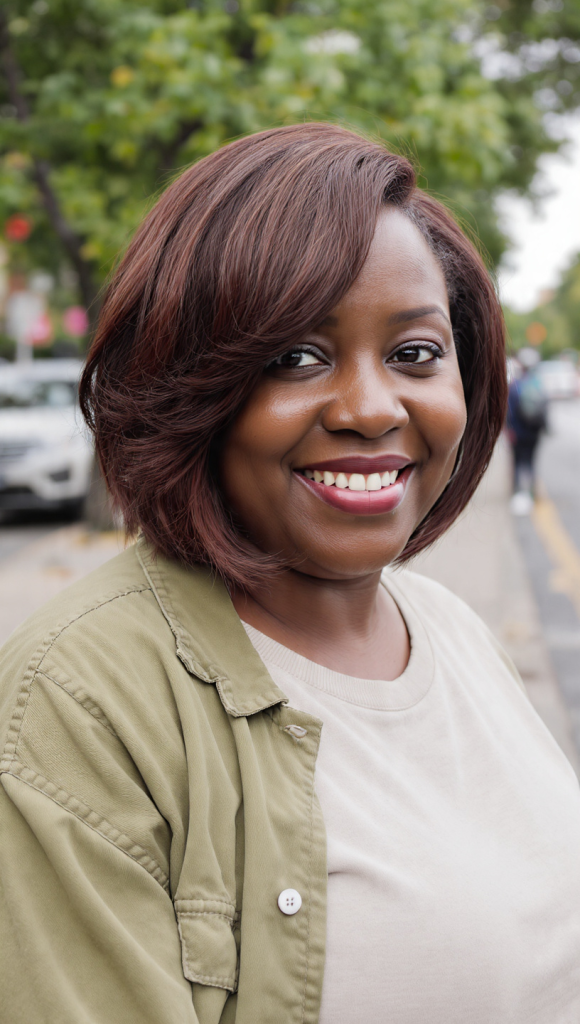
- Length: One side chin, one side collarbone.
- Why it works for thin hair: Asymmetry tricks the eye into seeing more volume. The shorter side is under-cut with scissors (not clippers) to lift without exposing scalp.
- 2026 detail: The longer side has a soft point-cut edge.
12. The Softly Layered Pageboy

- Length: Mid-neck, rounded shape.
- Why it works for thin hair: A classic pageboy’s inward curve makes thin hair look dense and polished. 2026’s version adds invisible internal layering so it moves naturally.
- Best styled: Smooth with a light shine spray—not heavy serums.
13. The Fluid Perm (Low-Damage, Loose Waves)

- Length: Shoulder to armpit.
- Why it works for thin hair: A modern, large-rod perm creates waves that cross over each other, literally doubling the visual density. 2026 formulas are protein-based and less damaging.
- Aftercare: Use a salt-free wave spray; avoid brushing.
14. The Clean-Edged Negative Layer Cut

- Length: Collarbone.
- Why it works for thin hair: “Negative layers” are cut shorter underneath and longer on top—the reverse of traditional layering. This creates a clean, heavy top line that covers thinness beneath.
- Finish: Tuck behind ears to show off the sharp, weighty line.
2026 Cutting Techniques That Transform Thin Hair
Not all haircuts are created equal. These four advanced techniques are responsible for the volume you see in the 14 styles above:
1. Point Cutting
Instead of a straight scissor line, stylists cut vertically into the ends. This removes bulk from thick areas while keeping length, creating soft, airy tips that look denser than they are.
2. Slide Cutting
A razor or scissors glides down the hair shaft, thinning the interior without shortening the perimeter. Ideal for fine hair that needs movement without losing its outline.
3. Negative Layering
Traditional layering puts shorter hair on top and longer underneath. Negative layering reverses this—longer on top, shorter beneath. The top layer lays smoothly over thinner under-layers, hiding sparseness.
4. Under-Scissor Cutting
Removing weight from the underside of the hair (especially at the crown and occipital bone) lifts the top layers naturally. No clippers—just precise scissor work that preserves a soft finish.
Ask your stylist for these by name. A good cutter in 2026 will know exactly what you mean.
2026 Styling Rules for Fine, Thin Hair
You’ve got the cut. Now keep the volume from 8 AM to 8 PM.
Do:
- Wash less often: 2–3 times per week. Over-washing strips natural oils that give fine hair grip.
- Use lightweight, volumizing products: Look for words like “body,” “lift,” or “thickening.” Avoid anything with “smoothing,” “butter,” or “oil” in the name.
- Blow-dry upside down: At least for the first 80% of drying. This trains roots away from the scalp.
- Use a small round brush (1–1.5 inches): Larger brushes flatten fine hair. Smaller barrels create genuine lift.
- Dry shampoo at night: Apply before bed, not in the morning. It absorbs oil while you sleep, giving morning volume without white residue.
- Texture spray, not hairspray: 2026’s preferred finish is a matte or low-shine texture spray that adds grip and separation, not a stiff helmet.
Don’t:
- Over-condition: Condition only the mid-lengths and ends. Never the roots.
- Use heavy serums or oils: These weigh thin hair down immediately.
- Brush dry hair: Use a wide-tooth comb or your fingers. Brushing flattens and breaks fine strands.
- Skip heat protectant: Thin hair damages faster. Always protect before hot tools.
- Sleep on cotton: Switch to a silk or satin pillowcase to reduce friction and morning flatness.
Products Thin Hair Needs in 2026 (No Heavy Formulas)
| Product Type | What to Look For | What to Avoid |
|---|---|---|
| Shampoo | Volumizing, clarifying, protein-infused | Hydrating, moisturizing, creamy |
| Conditioner | Lightweight spray-on or rinse-out only on ends | Leave-in creams, heavy butters |
| Mousse | Flexible hold, alcohol-free | Maximum hold, crunchy finishes |
| Texture spray | Sea salt alternatives (rice protein, tapioca) | Heavy salt sprays that dry out |
| Dry shampoo | Tapioca or rice starch based | Aerosol with talc |
| Heat protectant | Spray, not cream | Oily serums |
2026 cult favorites (ask your stylist or search these terms): rice protein sprays, fermented rice water rinses, peptide-based root lifters, and vegan keratin mists.
Salon Consultation: What to Say to Your Stylist in 2026
Walking into a salon with thin hair can be intimidating. Use this exact script:
*“I’m over 40 and my hair has gotten finer. I want a medium-length cut that creates volume, not just less length. Please use point cutting or slide cutting—no blunt chopping. I want the illusion of density, not a heavy shape. Also, show me how to style it at home with just a blow-dryer and one product.”*
Red flags if your stylist says:
- “Let’s just take off a few inches” → No strategy.
- “You need layers all over” → That will expose thinness.
- “Use this oil to add shine” → That will flatten you.
Green flags:
- “I’ll remove weight from the interior so the top lifts.”
- “I recommend a concave or negative layer shape.”
- “Let me show you how to dry your roots forward.”
Do not leave without a styling demo. A great cut is useless if you don’t know how to finish it.
Maintenance Schedule for Medium Thin Hair Over 40
| Frequency | Action |
|---|---|
| Every 6–8 weeks | Trim to maintain shape. Fine hair loses its cut line faster than coarse hair. |
| Every 3–4 months | Clarifying shampoo to remove product buildup (mineral oil, dry shampoo residue). |
| Every 6 months | Reevaluate length. If ends look see-through, go shorter by 1–2 inches. |
| Yearly | Blood work (iron, ferritin, thyroid, vitamin D). Hair thinning after 40 often has internal causes. |
When to Consider a Professional Volumizing Service
If styling at home still leaves you flat, 2026 offers low-commitment professional options specifically for thin hair:
1. Keratin Volume Infusion
Not the old straightening treatment. This is a lightweight protein application that swells each hair strand by 5–10%. Lasts 6–8 weeks. No downtime.
2. Root Perm (Spot Waving)
Only the roots at the crown are permed with very large rods. The rest of the hair stays natural. Creates 24/7 lift that lasts 3–4 months.
3. Nano-Bonding Extensions for Density
Not for length—just for fullness. Tiny bonds are added to the mid-shaft of thin hair (10–20 bonds total). Undetectable. Lasts 8 weeks. Expensive but transformative.
4. Scalp Micropigmentation (SMP) for Visible Part Lines
If your part has widened, SMP tattoos tiny dots that mimic hair follicles. Not a haircut—but it makes any medium style look twice as dense.
Ask for consultations before committing. A reputable stylist will show you before-and-afters.
Conclusion
Thin hair after 40 is not a limitation—it’s a design problem with 2026 solutions. The era of hiding fine hair under short, tight cuts or limp long layers is over. Today’s medium hairstyles use geometry, strategic weight removal, and modern cutting techniques to create real, lasting volume that looks natural, not theatrical.
The 14 styles above give you a roadmap. The styling rules and product list give you the daily tools. And the salon consultation script ensures you leave the chair with a cut that works for your life—not a Instagram fantasy.
Your hair in 2026 can be softer, fuller, and more effortless than it was at 35. Not because you fight it, but because you work with it. Medium length. Thin hair. Over 40. That’s not a compromise. That’s the winning combination.
Now go book that cut.