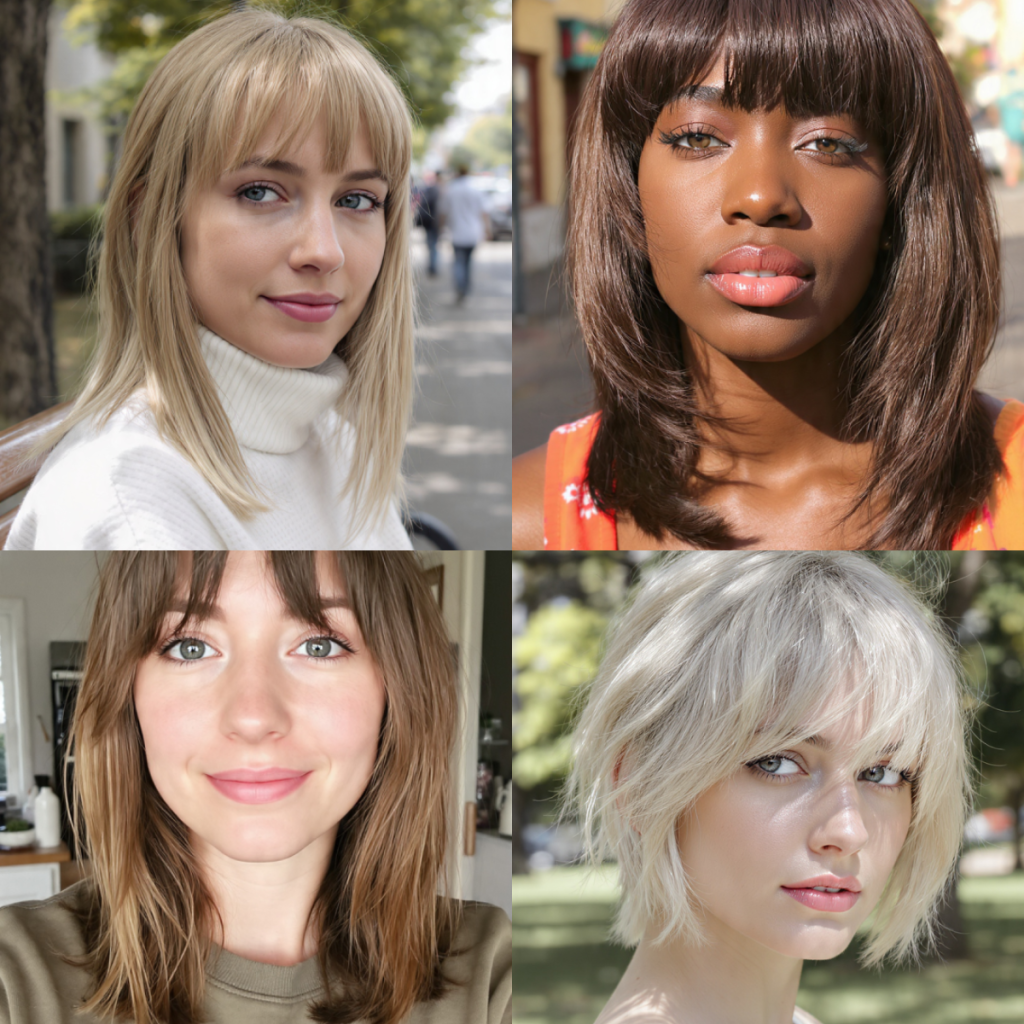
If you have thin hair, you already know the struggle: styles fall flat, volume disappears by noon, and finding a cut that looks full can feel impossible. But here’s the secret weapon – medium-length hair paired with the right bangs. Why medium? Because it’s long enough to pull back but short enough to prevent the weight that drags fine hair down. And bangs? They create the illusion of density right at your hairline, framing your face while adding movement and texture.
In this guide, you’ll discover 12 expertly curated medium hairstyles for thin hair with bangs – each designed to boost volume, hide sparse areas, and give you that effortless, lived-in fullness. No heavy layers, no outdated teasing tricks. Just smart cuts that work with your hair’s natural texture. Ready to finally love your fine hair? Let’s dive in.
Why Medium Length Works Best for Thin Hair
Thin hair faces two main enemies: weight and oil. Long hair pulls strands down, exposing the scalp and flattening roots. Short hair, while voluminous at first, often requires frequent trims and can lack styling versatility. Medium length – anywhere from chin to collarbone – hits the sweet spot. It’s light enough to allow natural lift at the crown but long enough to create soft movement. When you add bangs, you break up the forehead area, making the entire head appear fuller. Medium cuts also make it easier to use texturizing products without weighing hair down.
Choosing the Right Bangs for Your Face Shape
Not all bangs work equally well for thin hair. Here’s a quick guide:
- Round face: Side-swept or curtain bangs lengthen the face and add diagonal volume.
- Oval face: Almost any bang works, but wispy or see-through bangs keep thin hair from looking sparse.
- Square face: Arched or bottleneck bangs soften a strong jawline.
- Heart face: Bardot or curtain bangs balance a wider forehead and narrower chin.
- Long face: Blunt or micro bangs shorten the face visually and add density at the hairline.
12 Well-Structured Ideas
1. The Textured Lob with Wispy Bangs

A chin- to shoulder-length lob (long bob) with light, point-cut ends prevents bulk while creating movement. Wispy bangs – thinly sliced and feathered – blend seamlessly into the sides, making the hairline appear denser without looking heavy.
2. Soft Shag with Curtain Bangs

The modern shag’s internal layers add lift at the crown. Curtain bangs (longer on the outer edges, shorter in the middle) part down the center, framing the face and visually widening thin hair. Style with a round brush for soft volume.
3. Blunt Medium Cut with Micro Bangs

A precise, one-length cut from chin to shoulders makes thin hair look thicker at the ends. Pair with micro bangs (straight, 1–2 inches above brows) to draw attention upward and create a bold, density-enhancing contrast.
4. Layered Mid-Length with Side-Swept Bangs

Long layers (not too many) keep weight off the top. A deep side part plus heavy side-swept bangs that graze the brows add instant body. The diagonal line tricks the eye into seeing more volume at the root.
5. Feathered ’70s Cut with Bardot Bangs

Soft, feathery layers throughout give a light, airy feel. Bardot bangs (full but slightly parted in the middle, ending just below brows) add retro fullness. Ideal for straight or slightly wavy thin hair.
6. Asymmetric Medium Cut with Choppy Bangs

An uneven hemline (shorter on one side) creates the illusion of thicker ends. Choppy, piece-y bangs with irregular lengths add texture and hide scalp show-through. Use a volumizing powder for extra grip.
7. Collarbone-Length with Bottleneck Bangs

Bottleneck bangs are narrow at the center and widen toward the cheekbones. On a collarbone-grazing cut with subtle face-framing layers, this shape directs volume toward the mid-face, perfect for very fine hair that loses shape easily.
8. Wavy Medium Shag with See-Through Bangs

For wavy or permed thin hair, a shag with lighter “see-through” bangs (sparser, piece-y bangs that show small gaps of forehead) reduces weight while adding movement. The waves create natural lift at the roots.
9. Inverted Bob (Medium Length) with Arched Bangs

An inverted bob is shorter in the back, longer in the front – stacking at the nape boosts volume. Arched bangs (curved to follow the brow line) lift the face and prevent a heavy forehead line. Best blown dry with a small round brush.
10. Messy Mid-Length with Long, Layered Bangs

Think “undone” texture: rough-dry your hair, then tuck long, layered bangs (reaching just below brows) to the side. The lack of precision actually adds volume for thin hair – it’s all about controlled chaos.
11. Sleek Medium Cut with Blunt, Straight Bangs

Fine hair can go sleek – just keep length between chin and shoulders. Blunt, straight-across bangs (eyebrow-skimming) create a solid line of density. Use a light mousse and flat iron for a glossy, thick-looking finish.
12. Textured Pageboy with Rounded Bangs

A classic pageboy (chin-length, curved inward) with internal texturing prevents the “bowl cut” effect. Rounded bangs that cup the forehead add softness and make thin hair appear fuller from every angle. Excellent for oval or heart-shaped faces.
Styling Tips for Volume That Lasts
These techniques make every medium cut with bangs perform better:
- Blow-dry bangs first while hair is damp – this sets their shape and prevents mid-day droop.
- Use a root lifter only at the crown, not near bangs (bangs need smoothness, not lift).
- Dry shampoo is your best friend – spray at the roots before bed to wake up with volume.
- Avoid heavy oils or creams near your scalp. Stick to mousses, powders, or salt sprays.
- Change your part occasionally to prevent flatness and give roots a break.
- Ask for “internal layers” – layers hidden underneath the top layer – to add movement without removing surface density.
Products to Use (and Avoid) for Thin Hair with Bangs
| Use these | Avoid these |
|---|---|
| Volumizing mousse | Heavy styling creams |
| Texturizing powder | Thick waxes or pomades |
| Light dry shampoo | Coconut oil near roots |
| Root lifting spray | Silicone-heavy serums |
| Salt or beach spray | Leave-in conditioners on scalp |
For bangs specifically: keep a mini dry shampoo and a small round brush handy for daily touch-ups. Never wash bangs alone before styling – re-wet and blow-dry them with the rest of your hair for seamless blending.
Common Mistakes to Avoid
- Over-layering – too many layers make thin hair look stringy, not full.
- Cutting bangs too thick – they’ll overpower the rest of your fine hair.
- Skipping trims – bangs grow out fast and lose their shape every 2–3 weeks.
- Using too much product – thin hair gets greasy quickly; start with half the amount you think you need.
- Blow-drying on high heat – fine hair breaks easily. Use medium heat and a nozzle attachment.
How to Communicate with Your Stylist
Walk in with clear language. Say these exact phrases:
- “I have thin hair and want a medium cut that adds volume.”
- “Please use point-cutting or texturizing shears – no blunt internal layers.”
- “I want bangs that are wispy, see-through, or curtain – not heavy.”
- “Keep the perimeter length from chin to collarbone.”
- “Show me how to style my bangs at home with a round brush.”
Bring a photo reference of a real person (not a styled magazine ad). This makes the conversation faster and results more predictable.
Maintenance Schedule
| Task | Frequency |
|---|---|
| Bang trim | Every 2–3 weeks |
| Full haircut | Every 6–8 weeks |
| Dry shampoo application | Every other day |
| Clarifying wash (remove buildup) | Once a week |
| Deep conditioning (ends only) | Once a week |
Conclusion
Thin hair doesn’t have to mean flat, lifeless styles. A medium-length cut with the right bangs transforms fine strands into a look that’s full, fresh, and surprisingly easy to maintain. Whether you choose a textured lob with wispy bangs, a soft shag with curtain fringe, or a sleek blunt cut with micro bangs, the key is working with your hair’s natural texture – not fighting it.
Remember: bangs hide sparse hairlines, layers create movement without weight, and medium length keeps everything balanced. Use the styling tips and product guide above, avoid common mistakes, and communicate clearly with your stylist. Your thin hair can absolutely deliver volume, shape, and confidence.
Now go book that trim – your best hairstyle is waiting just a few inches away.
