The bathroom has undergone a remarkable transformation. No longer just a functional space for daily hygiene, it has become a wellness retreat—a place to decompress, reset, and escape the relentless pace of modern life. As we look toward 2027, bathroom design is shifting toward warmth, authenticity, and emotional comfort. Cold minimalism is defrosting, and sterile all-white schemes are finally being retired.
But with every design evolution comes a fresh set of pitfalls. Trends that seem exciting in the moment can quickly become costly regrets—especially in a room where finishes are expensive and difficult to replace. “If it is trendy, ask yourself if you love it anyway,” advises designer Elizabeth Valkovics. “If it makes you smile, then go for it”. However, when bold choices become permanent fixtures, the risk of dating your space is real.
To help you navigate the bathroom of 2027 without falling into common traps, we’ve identified 11 trends that interior designers are ready to leave behind—and what to do instead.
The Cost of Renovation: Where to Splurge and Where to Save
One of the most common mistakes homeowners make is misallocating their renovation budget. Designers agree: certain elements are worth the splurge, while others offer opportunities for savings without compromising quality.
Splurge on:
- Plumbing fixtures: Cheap faucets and showerheads will need replacing within a few years. Invest in solid brass or stainless steel with ceramic cartridges—they last decades.
- Tile installation: Skilled labor ensures proper waterproofing, level surfaces, and straight lines. Poor installation ruins even the most expensive tile.
- Lighting: Quality fixtures and thoughtful placement transform the entire experience of the space.
- Ventilation: A high-performance exhaust fan protects every other investment you make.
Save on:
- Tile itself: Beautiful ceramic and porcelain tiles offer excellent value compared to natural stone, especially for floors.
- Vanities: Ready-to-assemble or semi-custom options can look high-end with the right hardware and countertop choice.
- Accessories: Towel bars, soap dispensers, and mirrors are easy to upgrade later—prioritize the fixed elements.
- Painting: Unless the space has complex features, painting is a DIY-friendly task that can save thousands.
1. The All-White Bathroom
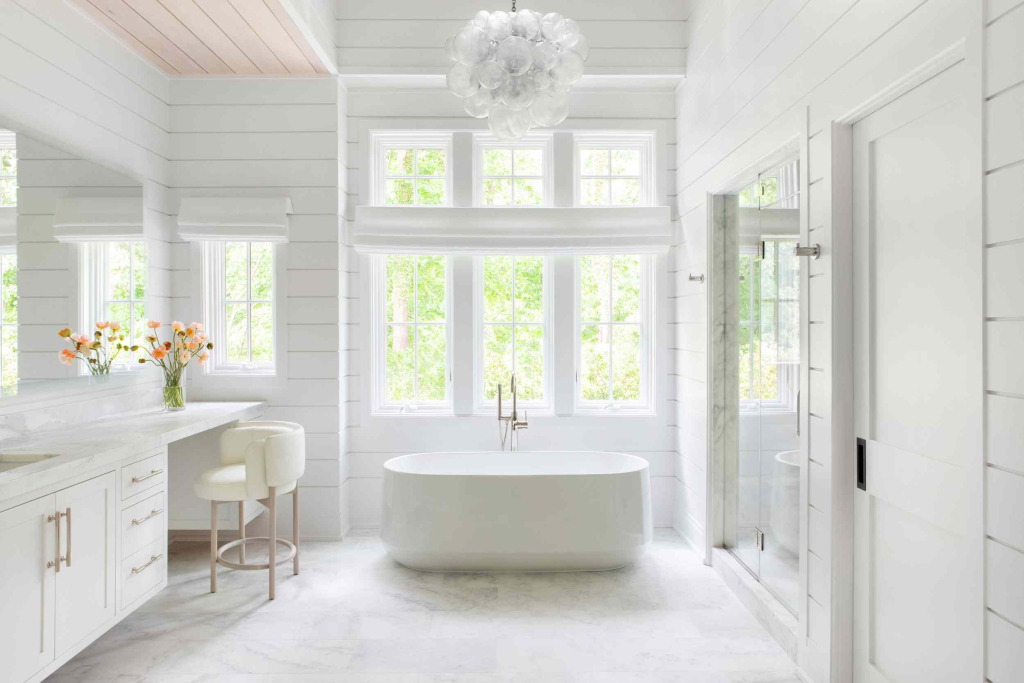
The all-white bathroom has been the staple of builder-grade homes for years—and designers are officially over it. “The glaring bathroom trend that gives me the ick is all-white bathrooms,” says Shamika Lynch, owner of Maximizing Tiny Interiors. “It looks good enough to get by at first, then quickly exposes all the scum and grime you’ll try desperately to hide no matter how often you clean”.
The same goes for all-beige palettes. “Straight from the ’90s, beige-on-beige bathroom color palettes are a thing of the past,” warns designer Ashley Ferguson. In 2027, bathrooms are embracing warmth and depth. Think soft sand, mushroom gray, clay, and muted greens inspired by moss and eucalyptus. These tones reduce visual stress and hide water marks better than bright whites while creating a genuinely calming atmosphere.
2. Subway Tile
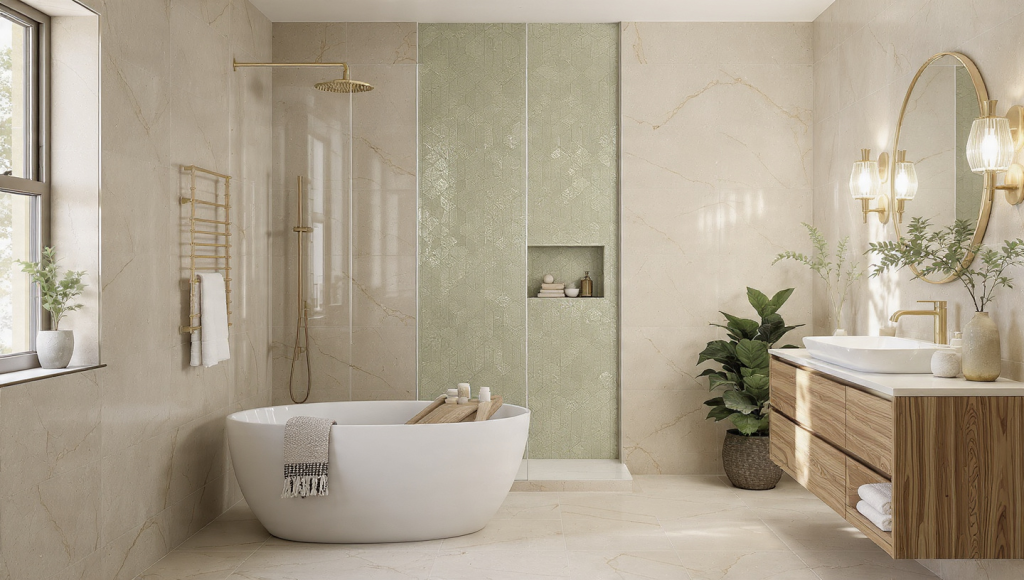
Once the darling of bathroom renovations, subway tile has officially jumped the shark. “At one point, subway tile was a big bathroom design trend, but its overuse and minimalist design has made the feature feel outdated,” says interior designer Lindye Galloway. While it can work for maintaining cohesion, it no longer adds anything exciting or eye-catching to a space.
Designers are instead gravitating toward large-format tiles that reduce grout lines, creating a cleaner and more expansive feel. Vertical stacking of handmade-look zellige tiles in deep greens and teals is another fresh alternative—the vertical stack elongates short walls and makes standard ceilings feel taller.
3. Overly Bold or Trendy Tile Patterns
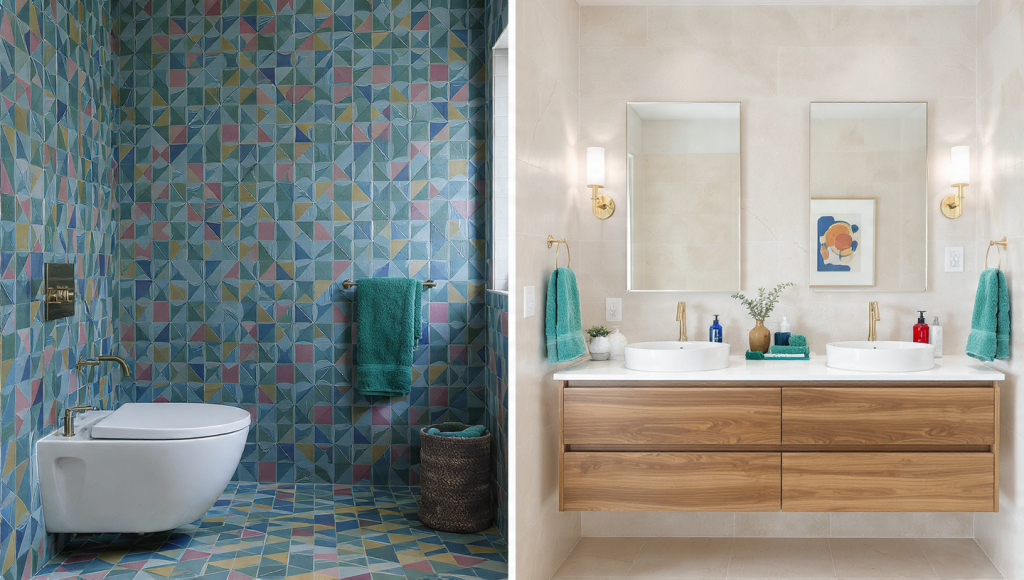
It’s tempting to have fun with bold, colorful tile, but designers warn this is one of the quickest ways to date a renovation. “Sometimes it can be fun to see these really glamorous, interesting, modern, artsy tiles, but that is one of the quickest ways to date a renovation,” says Pamela O’Brien, principal designer of Pamela Hope Designs. “Like fashion, these things work in trends, and the trends move pretty quickly now”.
Even dramatic stone patterns can become overwhelming. “Using really extreme stone patterns is another way to make something so loud and so dominant that you might end up either getting tired of it or even disliking it”. The smarter approach? Keep permanent surfaces neutral and add personality through accessories, towels, and artwork that are easily changed. “Neutral hues and designs feel more serene and stand up to shifting aesthetics better than a loud pattern”.
4. Matching Bathroom Sets
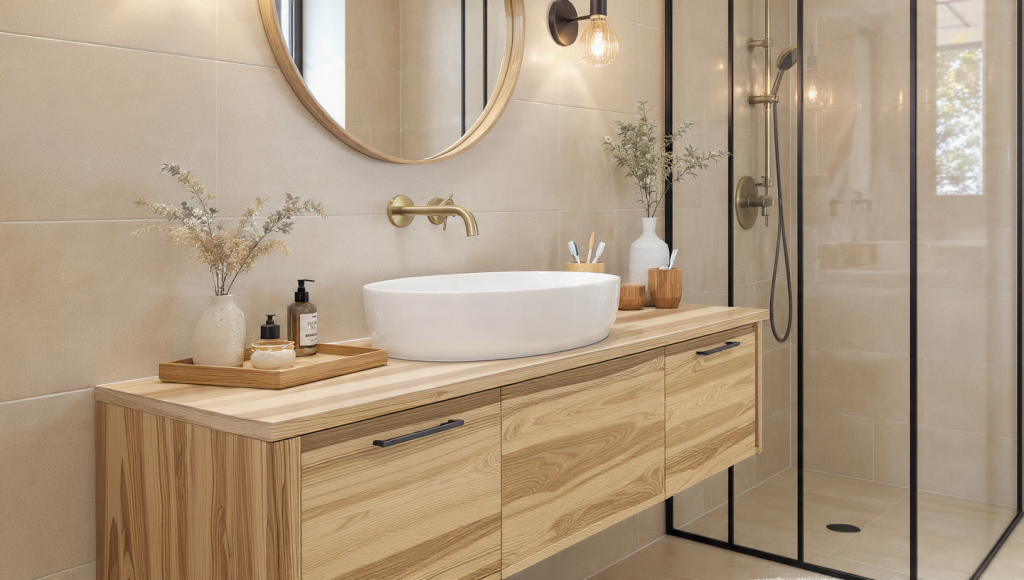
Remember when the wood tone from the vanity had to match the mirror’s frame? Or when all the metal finishes had to be exactly the same? “Those days are gone,” says Ashley Ferguson. “Thoughtful selections and custom features are in”.
Designers are embracing the interplay of textures, colors, and materials that complement one another in a fresh way—think aged brass fixtures paired with matte black hardware and natural wood accessories. This approach creates visual depth and feels far more curated than the flat, generic look of matching sets. “Matching bathroom sets may look convenient on the shelf, but they often make a space feel generic once everything is installed”.
5. Shiplap
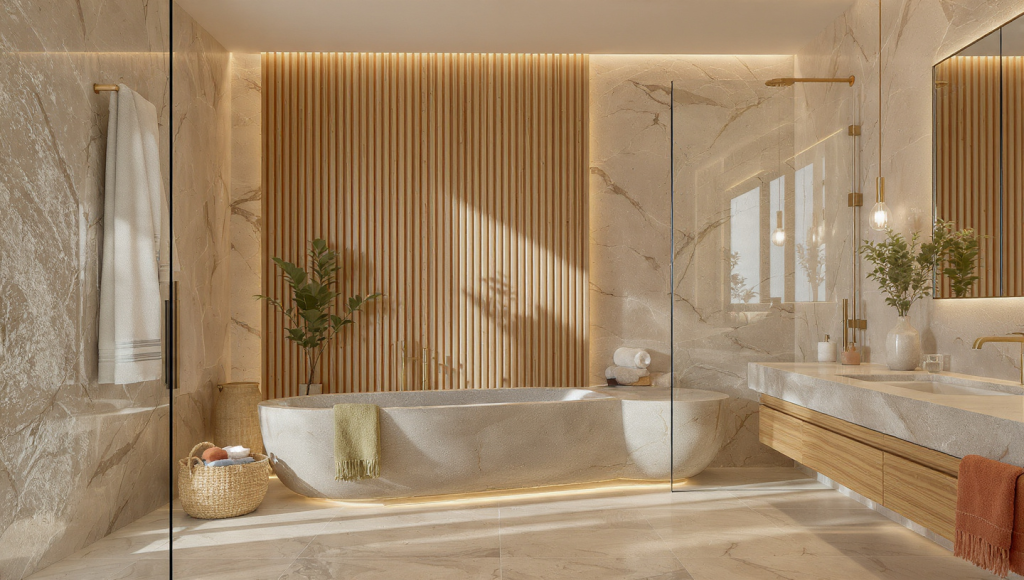
Unless you’re renovating a beach house, shiplap belongs in the 2010s. “Much to our dismay, shiplap has been suggested by some contractors,” say designers Mary Flo Ouellette and Steven Santosuosso. “The only place this doesn’t look dated almost immediately is a beach house”.
In 2027, the focus is on authentic, tactile materials that feel grounded—natural stone, fluted wood panels, and textured plaster finishes that bring depth without visual noise.
6. Vessel Sinks
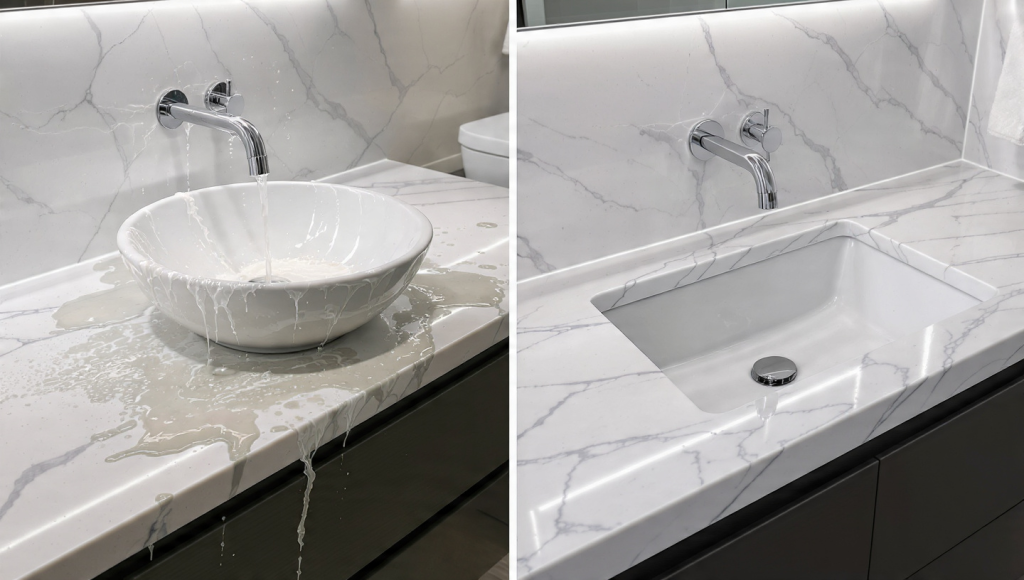
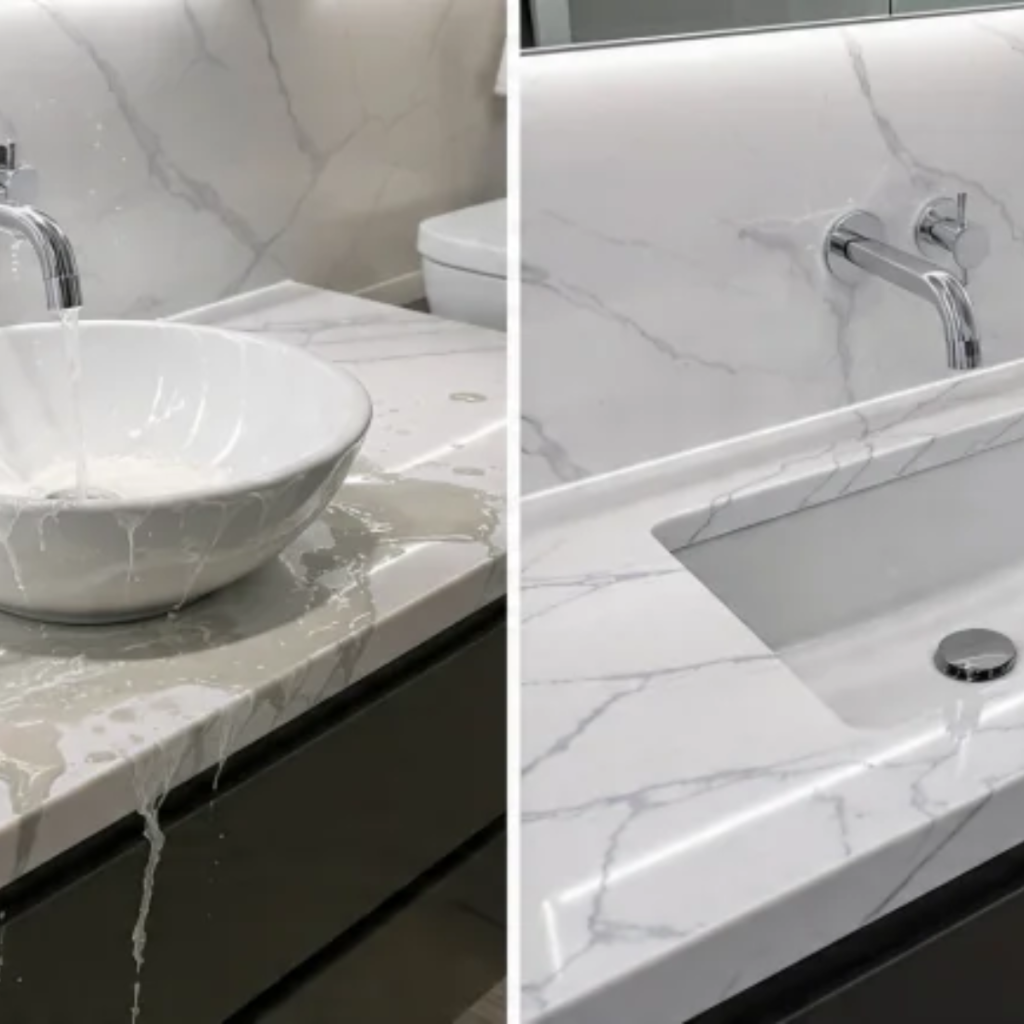
They may look sculptural, but vessel sinks come with a host of practical frustrations. “In practice they tend to splash, are harder to clean, and don’t always integrate seamlessly with the countertop,” says designer Kerrie Kelly. There’s also the awkward problem of finding a place to set styling tools when a vessel sink is hogging the countertop.
Over time, vessel sinks “can feel more trendy than timeless”. Instead, designers are favoring integrated basin designs that sit flush with the countertop—cleaner lines, easier maintenance, and a more cohesive look.
7. Above-the-Mirror Vanity Lights
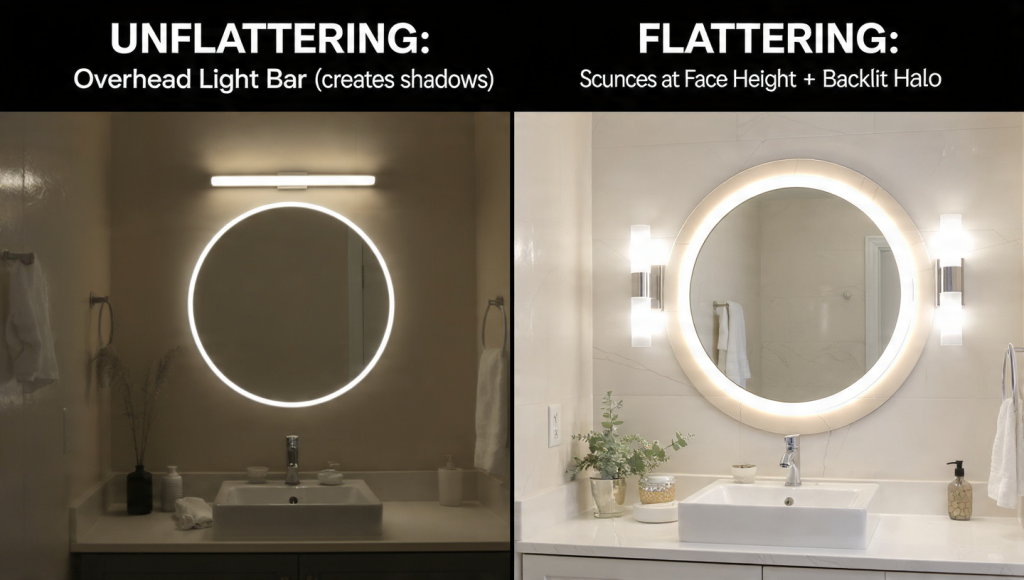
If there’s one lighting mistake designers are united against, it’s the bulbous light bar perched above a mirror. “Personally I hate any lighting over a mirror; it’s just not flattering!” says designer Mackenzie Wood. “I usually opt for sconces at face height instead”.
The problem is practical and aesthetic: overhead lighting creates unflattering shadows and makes the space feel dated. Sconces on both sides of the mirror reduce facial shadows, while backlit halo mirrors with adjustable warmth are becoming the new standard. “Add in sconces or mirrors with LEDs, so you have even facial lighting,” recommends Valkovics.
8. Jetted Tubs and Shower Body Sprays
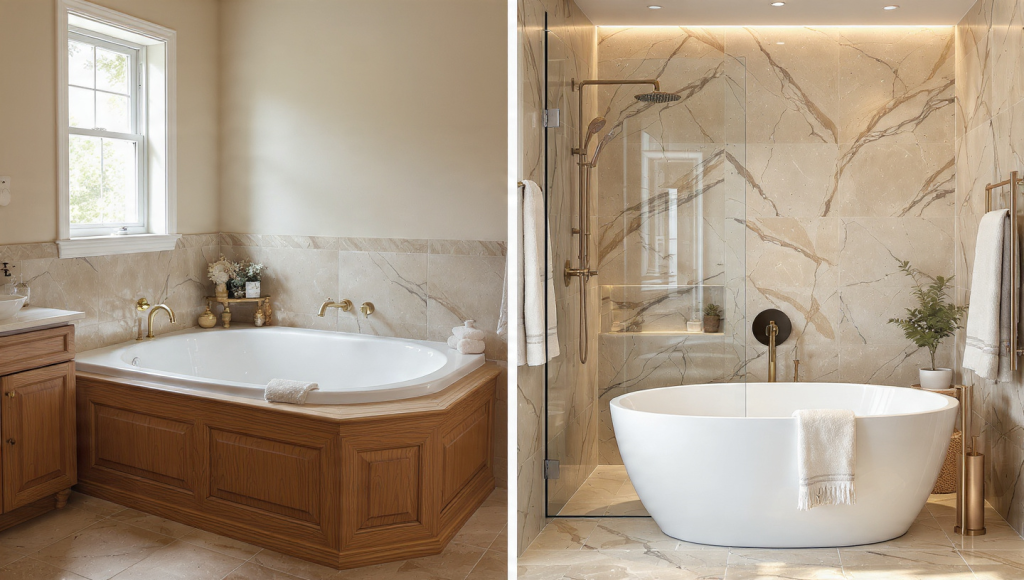
Those ’90s-era drop-in Jacuzzis framed by wood? They’re not just dated—they’re often in poor condition. “The wood has often warped from water damage, the caulking has gaps, and the polished brass hardware is chipped,” says designer Maggie Griesbeck.
Shower body sprays and jets face a similar fate. “We find that homeowners rarely use shower body sprays and jets,” says Griesbeck. “They are shiny and exciting when installed but are rarely turned on”. The same goes for integrated jet tubs—”they often come with maintenance challenges over time, especially with pumps and cleaning,” adds designer Burcu Ercetin.
The wiser investment? A beautiful freestanding tub or a well-designed shower with excellent water pressure.
9. Red Marble Everywhere
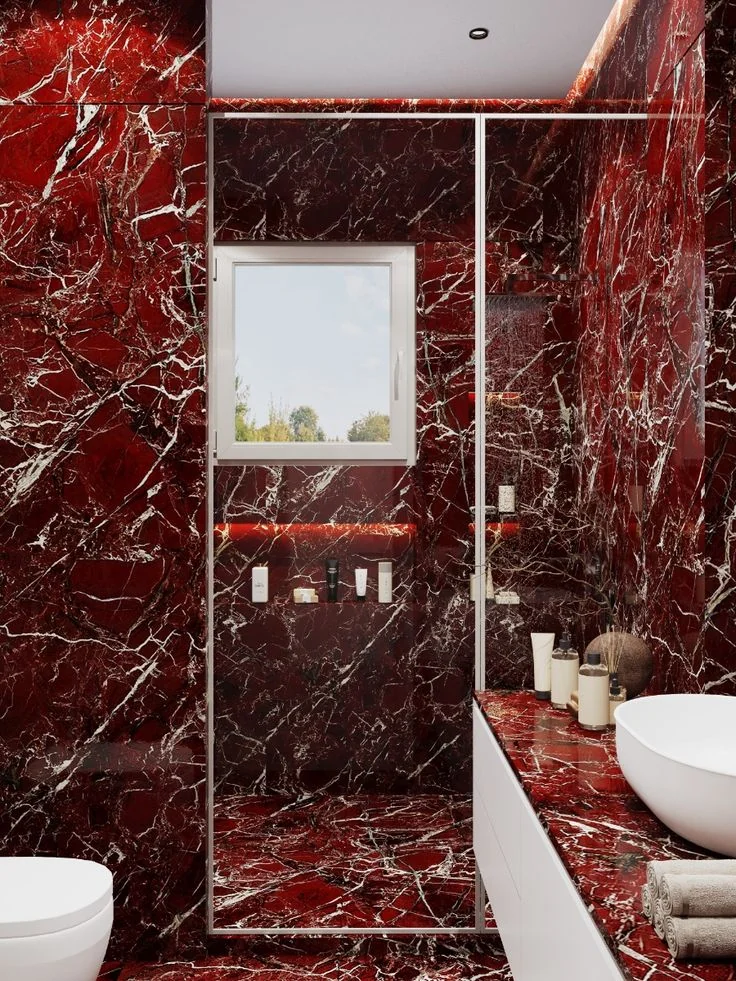
While neo-deco style is surging—Pinterest reports an 80% increase in searches for red marble bathrooms—designers are warning against going overboard. “Homeowners are taking the red marble trend to an extreme level and tiling entire showers or floors in deep red marble,” says designer Sayonara Rell. “In most small residential bathrooms, this type of heavy stone absorbs all the light. This creates a feeling of being in a claustrophobic and aggressive space instead of a luxurious one”.
Her advice? “Only treat red marble as lipstick, not as a foundation. Use red marble for a vanity countertop or soap dish, but do not put it on the walls. The surrounding tile color should always be either cream or soft beige so the red marble can breathe and create a visually balanced space”.
10. Light, Thick Grout Lines
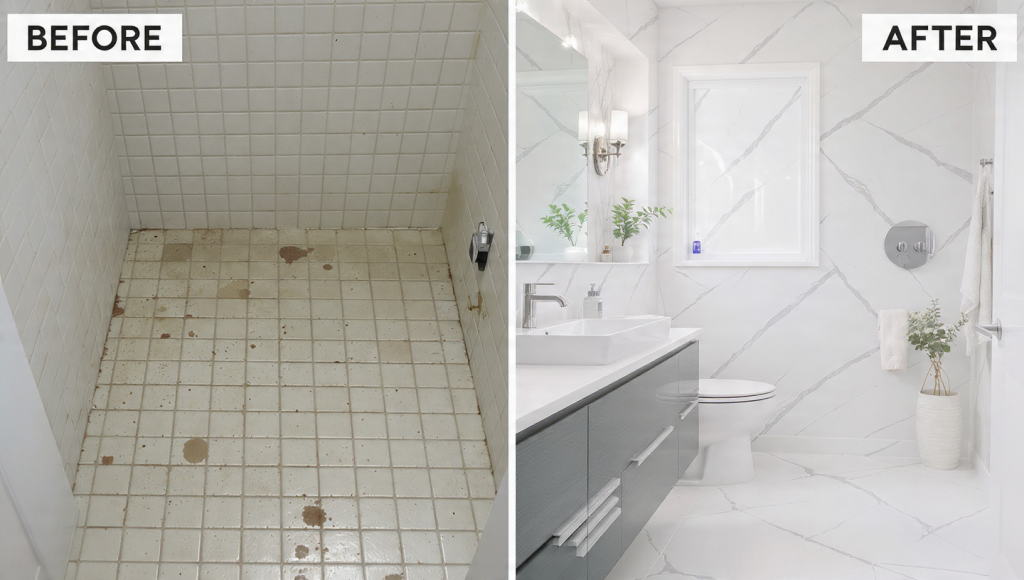
Wide grout lines in white or tan were once fashionable—but they haven’t just fallen out of style; they’ve become dirt traps. “This is just a dirt trap!” says designer Sacha Jacq. “Grout lines—unless they’re intentionally part of a mosaic pattern—should be carefully considered and, when possible, [applied in] a darker contrasting tone”.
Lighter, thicker grout lines age poorly in terms of both style and practicality, making a space feel tired fast. The 2027 alternative? Large-format tiles with minimal grout lines for a seamless, clean look, or carefully chosen grout colors that enhance rather than detract from the tile design.
11. Low-Quality Plumbing Fixtures
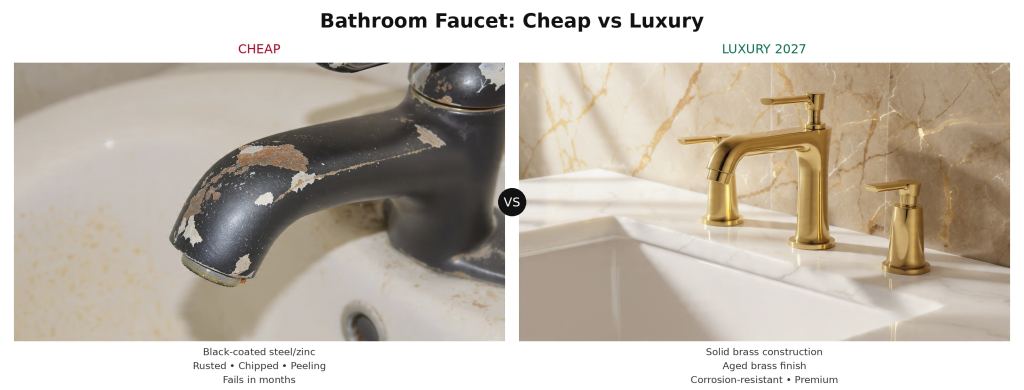
Choosing the cheapest fixtures may save money upfront, but it’s a decision you’ll regret quickly. “There is a reason why some are more expensive, and you can feel it day after day,” says Valkovics. Cheap fixtures rust, chip, and peel over time—particularly black finishes. “If you’re going to be investing in that, prepare to have them switched out very quickly, because you’ll see markings and scratches,” warns designer Isfira Jensen. “It will wear extremely poorly”.
Instead, invest in quality materials like solid brass fixtures. They last longer, look better over time, and actually improve your bathroom’s resale appeal. In 2027, aged and brushed brass is the default finish for taps, shower rails, and mirror frames—but quality matters more than the specific finish.
Common Bathroom Renovation Mistakes to Avoid
Even with the best intentions, bathroom renovations can go wrong. Here are the most frequent missteps designers see—and how to avoid them.
Skipping the Building Permit: “I’ve seen homeowners fined thousands for unpermitted electrical or plumbing work,” warns contractor David Morales. “And when you sell the house, unpermitted work can derail the entire sale.” Always check local requirements before starting.
Underestimating the Timeline: Bathroom renovations almost always take longer than expected. Add 20-30% to your estimated timeline for deliveries, unexpected issues, and installation delays.
Forgetting Storage: Beautiful bathrooms become cluttered nightmares without adequate storage. Include a mix of open shelving for display and closed cabinetry for essentials. Medicine cabinets with integrated outlets are a clever space-saving solution.
Choosing Form Over Function: That stunning matte black tile might look gorgeous—but does it hide water spots? Does the textured floor feel comfortable underfoot? Always prioritize daily usability.
Neglecting the Ceiling: The ceiling is often the last thing homeowners consider, yet it significantly impacts the room’s feel. Consider a dramatic wallpaper, wood planks, or even a subtle metallic paint finish to draw the eye upward and make the room feel larger.
Conclusion
The bathroom of 2027 is defined by a clear departure from the sterile, trend-chasing designs of recent decades. What emerges is a space that prioritizes warmth, authenticity, and lasting quality over fleeting fashion. The bathrooms that will still look good in 2032 commit to one direction—whether that’s warm stone minimalism, vintage-and-brass character, or a full spa treatment—and execute it consistently.
“If it’s your forever home, lean into your personal style and create something you truly love,” advises Ercetin. “If resale is even a small consideration, we guide clients toward more grounded colors for tiles and vanities—earthy tones, like warm whites, soft browns, greens, and tans. You can always bring in personality through lighting and accessories, which are much easier to update later.”
The key is intention. Choose trends that align with how you actually use the space, budget for quality where it matters most, and remember that the best bathrooms feel intuitive—not overdesigned. Consider the flow of your morning routine, the natural light that moves through the room, and the tactile pleasure of surfaces you’ll touch every day.
Ultimately, a bathroom should do more than just function—it should restore. In a world that moves faster than ever, carving out a space that feels grounded, personal, and genuinely soothing is not a luxury. It’s a necessity. And in 2027, that’s the only trend worth following.
