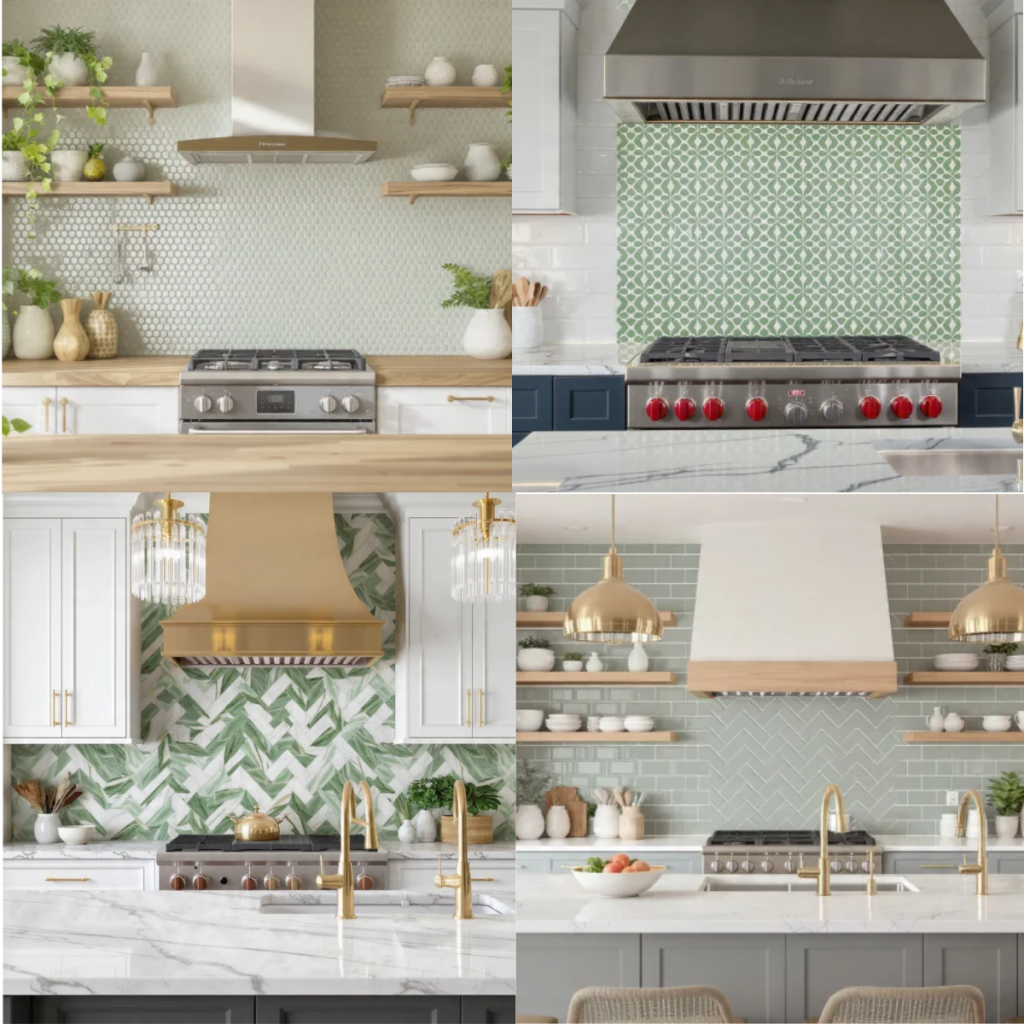
If there’s one color defining kitchen design in 2026, it’s sage green. According to the National Kitchen and Bath Association’s 2026 Kitchen Trends Report, earthy neutrals and organic shades have become the undisputed leaders in kitchen design, with greens—particularly sage—following close behind neutrals as a dominant choice. Designers are favoring soft, muted shades over bright colors or glossy finishes, making sage green the perfect candidate for a backsplash that feels both current and timeless.
What makes sage green so compelling? It reads simultaneously as neutral and colorful—behaving almost like a warm gray when surrounded by white cabinets and stone countertops, while adding life and warmth that gray never can. This versatility, combined with its calming, nature-inspired quality, positions sage green as the sophisticated choice for kitchens that want to feel serene without sacrificing style.
Why Sage Green is Dominating 2026 Kitchen Design
The rise of sage green in kitchen design is no accident. Several converging trends have elevated this muted hue to must-have status in 2026.
Biophilic Design Movement: As homeowners increasingly seek connections to nature indoors, sage green offers an organic, calming presence that mimics the outdoors. It pairs effortlessly with natural materials like wood, stone, and clay.
Shift Toward Tranquility: Post-pandemic living has prioritized homes as sanctuaries. Sage green’s low-contrast, soft appearance promotes relaxation in a room that has historically been high-energy and bustling.
Versatility Across Styles: Unlike bolder greens that lock you into a specific aesthetic, sage green adapts seamlessly—from farmhouse to contemporary, coastal to industrial.
Sustainability Connection: The color’s association with natural landscapes aligns with 2026’s focus on sustainable living and eco-conscious materials. Many sage tiles now come in recycled or low-VOC options.
Whether you’re planning a full renovation or simply refreshing your backsplash, these 14 ideas will help you bring this tranquil hue into your kitchen with confidence.
14 Sage Green Backsplash Ideas for 2026
1. Classic Subway Tile with a Sage Update
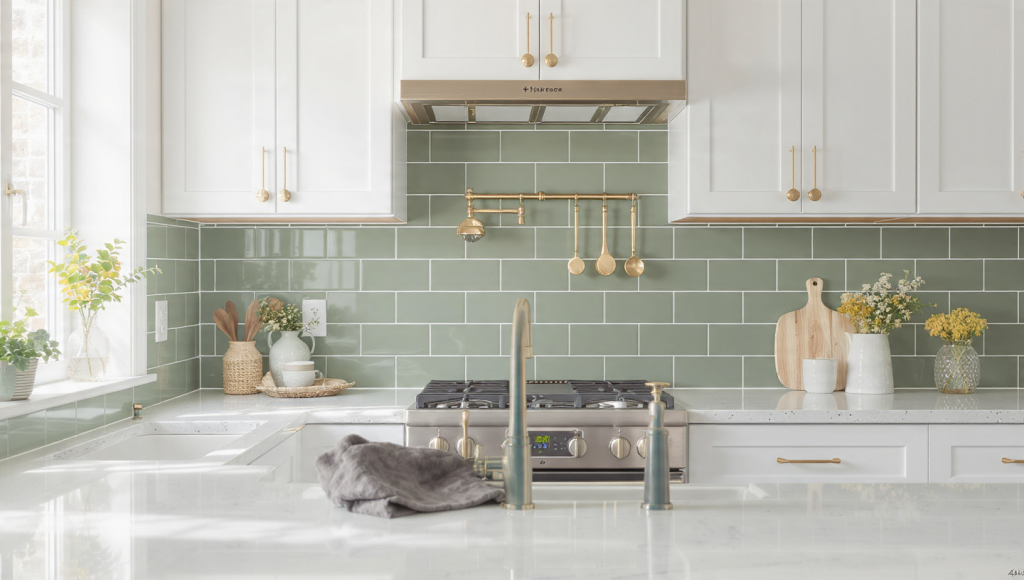
The humble subway tile gets a sophisticated refresh in matte sage green. This combination is arguably the most popular green backsplash choice in 2026. Pair it with white shaker cabinets, warm white grout, and unlacquered brass hardware for a look that works across traditional, transitional, and modern kitchens. The matte finish softens light reflection, making it ideal for galley kitchens where glare can be an issue.
Pro Tip: Install tiles in a vertical stack pattern to draw the eye upward and make ceilings feel taller.
2. Herringbone Pattern for Dynamic Texture
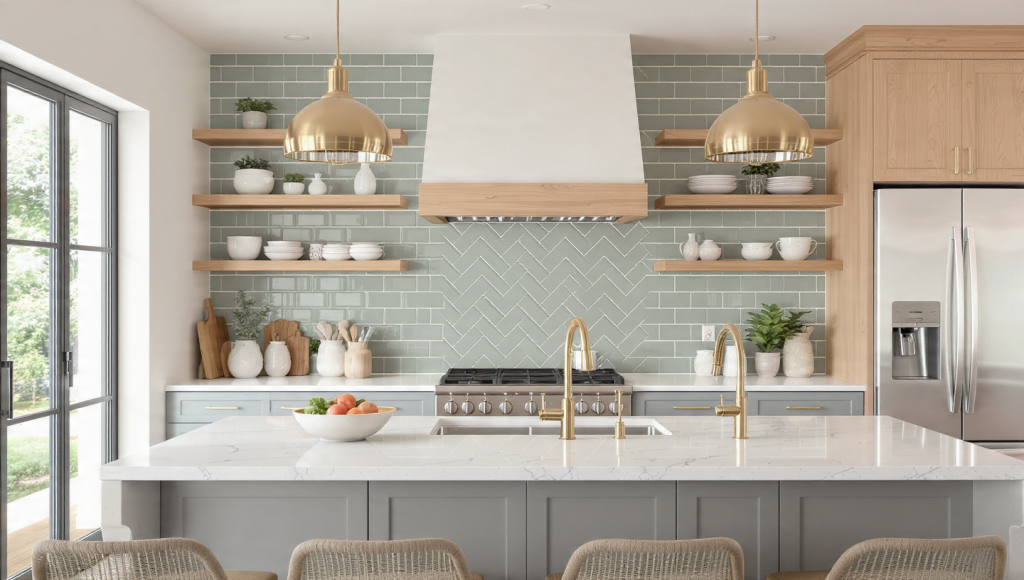
Arranging sage green subway tiles in a herringbone pattern transforms a simple backsplash into a compelling focal point. The angled configuration creates movement and visual energy, with light interacting dynamically across the tile surface. This geometric approach adds depth without relying on bold color, making it perfect for kitchens where cabinetry and countertops are relatively quiet.
Best For: Kitchens where you want the backsplash to do more visual work.
3. Artisanal Zellige for Organic Charm
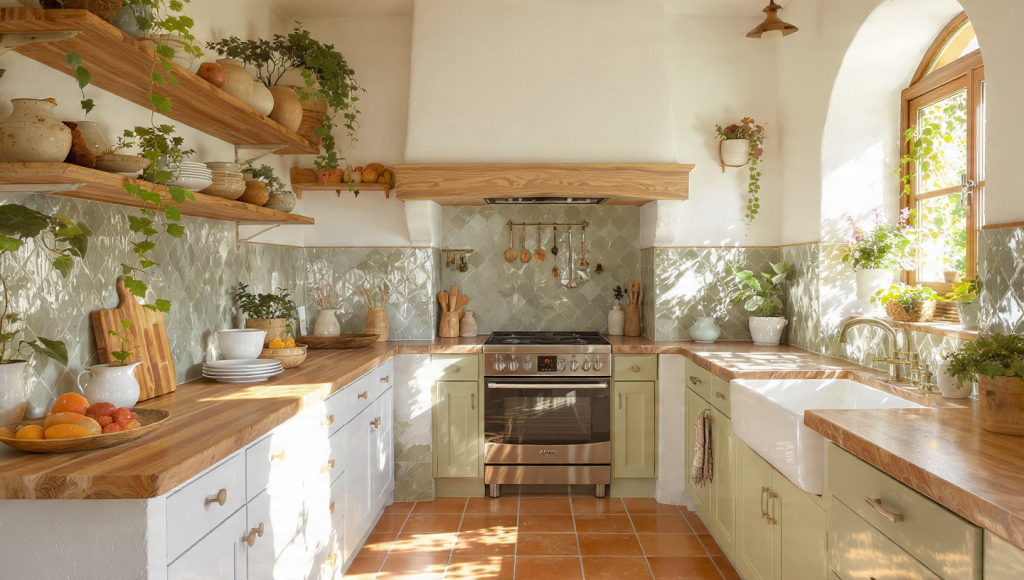
Handmade Zellige tiles in sage green introduce subtle irregularities and authentic texture that mass-produced options simply cannot replicate. Rooted in Mediterranean tradition, these tiles offer a timeless aesthetic while supporting biophilic design principles. The natural clay composition and glossy finish enhance light reflection while celebrating the artisan’s touch.
Material Insight: Each tile’s unique variation in shade and form makes every installation one-of-a-kind.
4. Marble and Sage Mosaic for Luxe Appeal
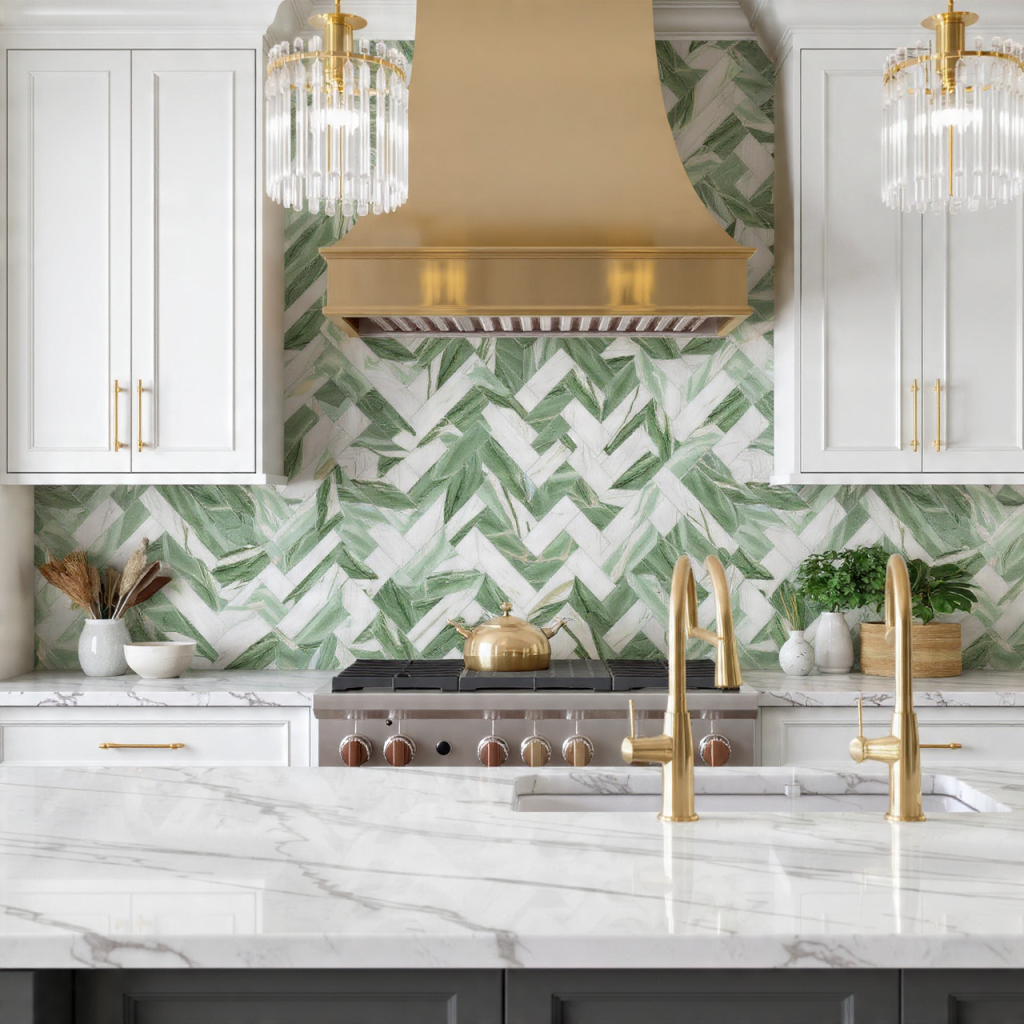
The interplay between natural marble veining and muted sage green creates multidimensional visual interest that feels both fresh and timeless. Mosaic patterns featuring sage green and marble in herringbone or chevron configurations deliver elegance while the durable materials ensure functional longevity. Adding brass or gold accents further refines the look.
5. Full-Height Tile Walls for Spatial Impact
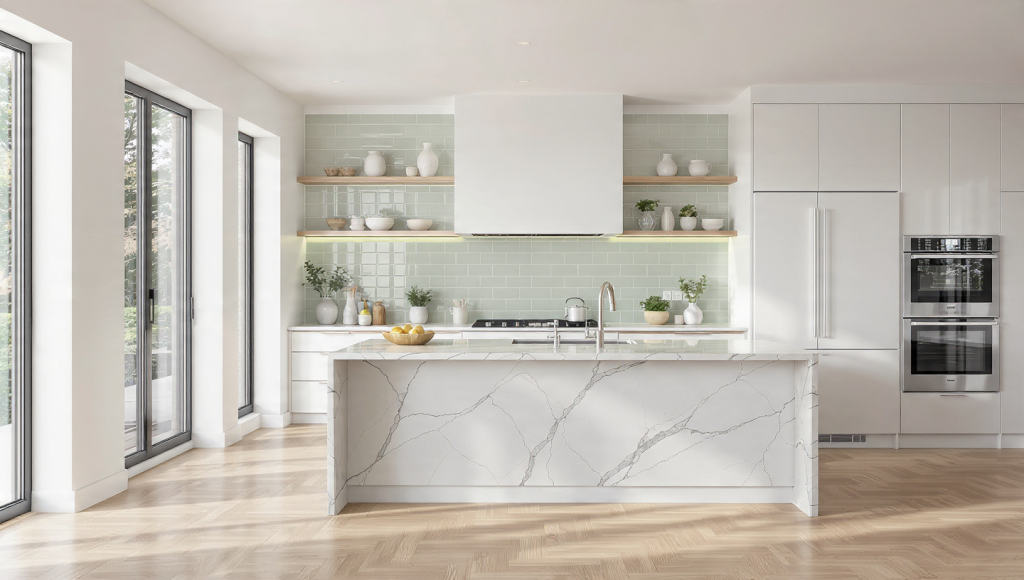
Taking sage green tiles from countertop to ceiling creates a unified backdrop that visually expands the space and fosters tranquility. This approach is particularly effective in open-concept layouts, seamlessly linking the kitchen with adjacent living areas. Elongated ceramic tiles in muted sage contribute subtle texture and visual interest without overwhelming the senses.
6. Fish Scale Tiles for Playful Whimsy
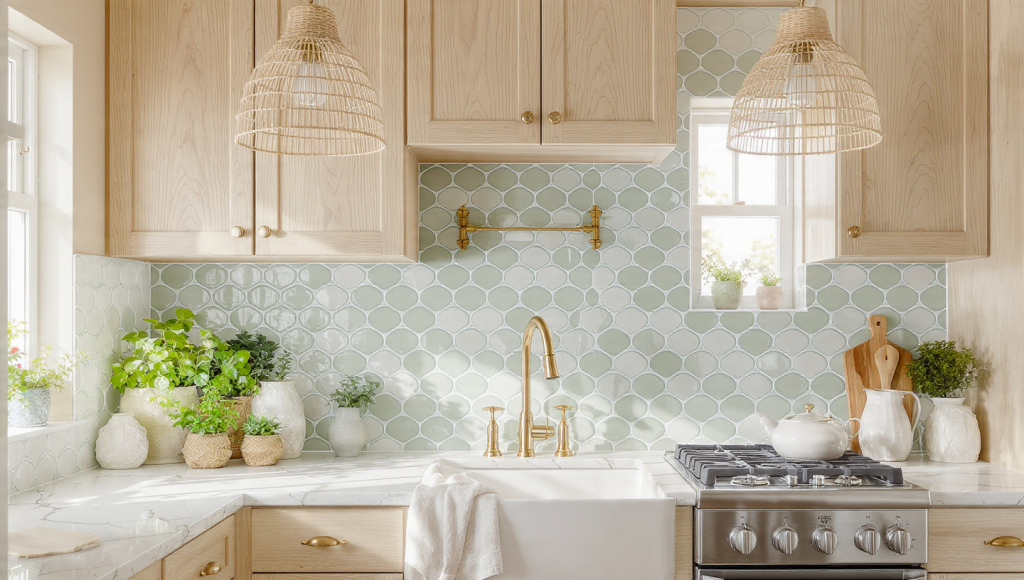
Sage fish scale tiles introduce an oceanic motif that infuses the kitchen with artistic movement and textured visual interest. The curved profiles amplify light play across the backsplash, generating dynamic depth. Paired with light wood cabinetry and brass hardware, this combination achieves a harmonious blend of whimsy and sophistication.
7. Sage and Gray Combination for Modern Sophistication
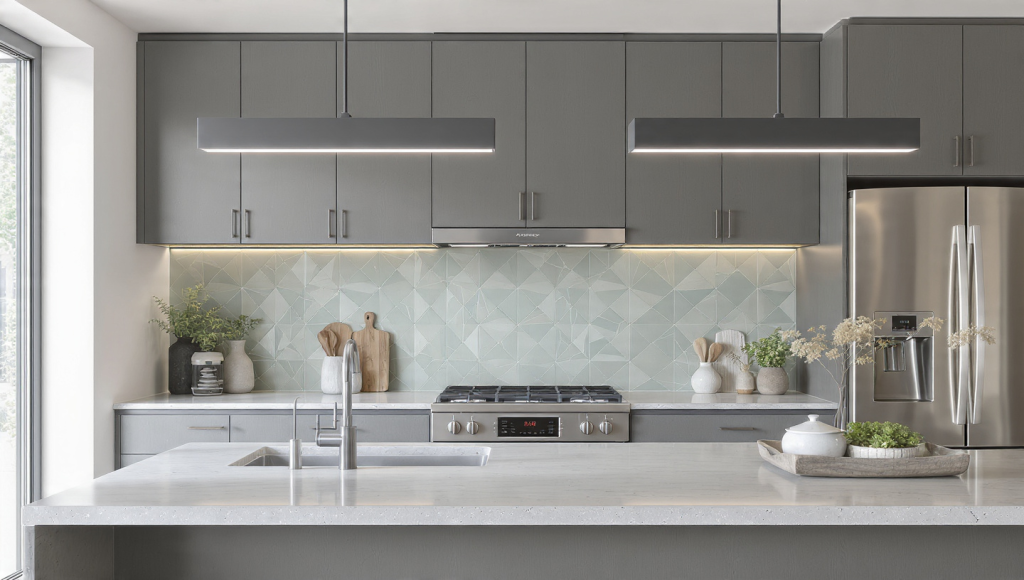
The interplay of sage green and gray tile delivers a sophisticated palette that exemplifies modern design sensibilities. This pairing enhances aesthetic dimension while increasing design versatility, accommodating both minimalist and transitional motifs. The subtle contrast keeps the look grounded and timeless.
8. Mixed Textures: Matte Tile with Glass Accents
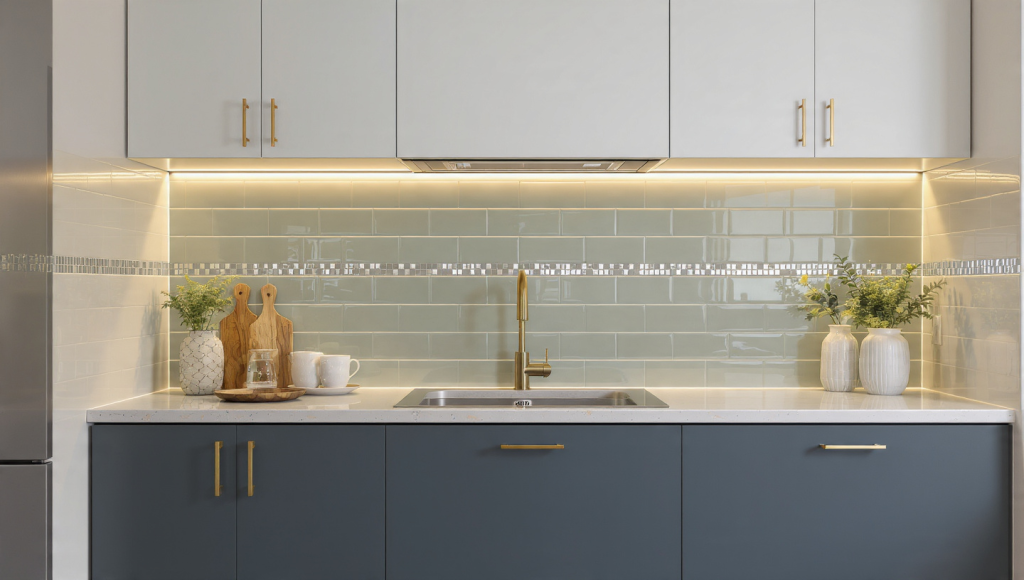
Combine matte sage ceramic with a thin strip of translucent glass tile for a modern twist. The glass reflects light into the workspace while sage keeps things grounded. This approach works particularly well in apartments or smaller kitchens where both warmth and shine are desired. Be mindful of different cleaning requirements for each material.
9. Monochrome Layering with Sage Cabinetry
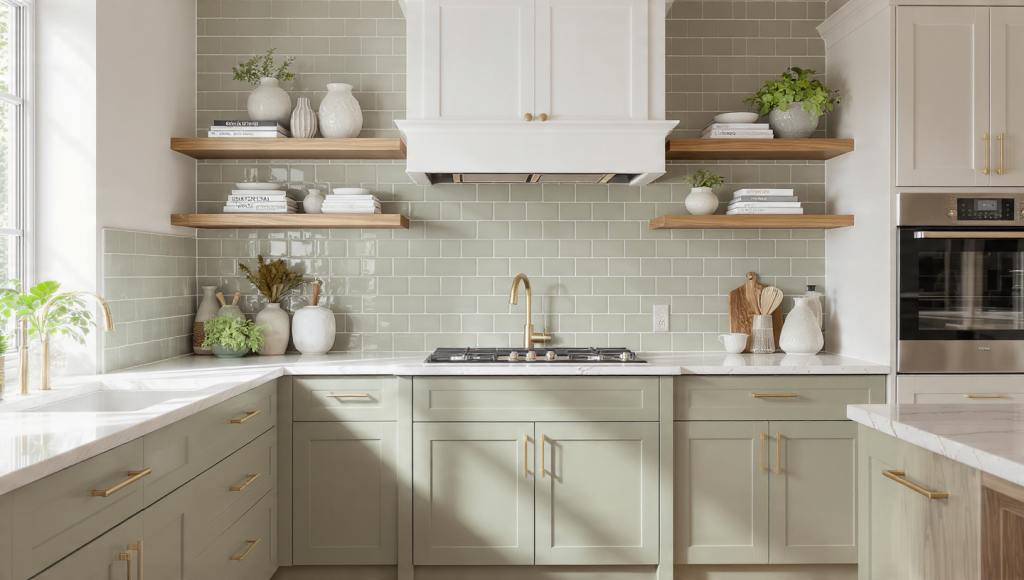
Matching sage base cabinets or open shelving with a sage backsplash creates a layered, serene look. To avoid a flat appearance, add warm wood or brass hardware for contrast. This approach works beautifully on a budget by painting existing shelves to match the tile hue.
10. Statement Backsplash Behind the Range
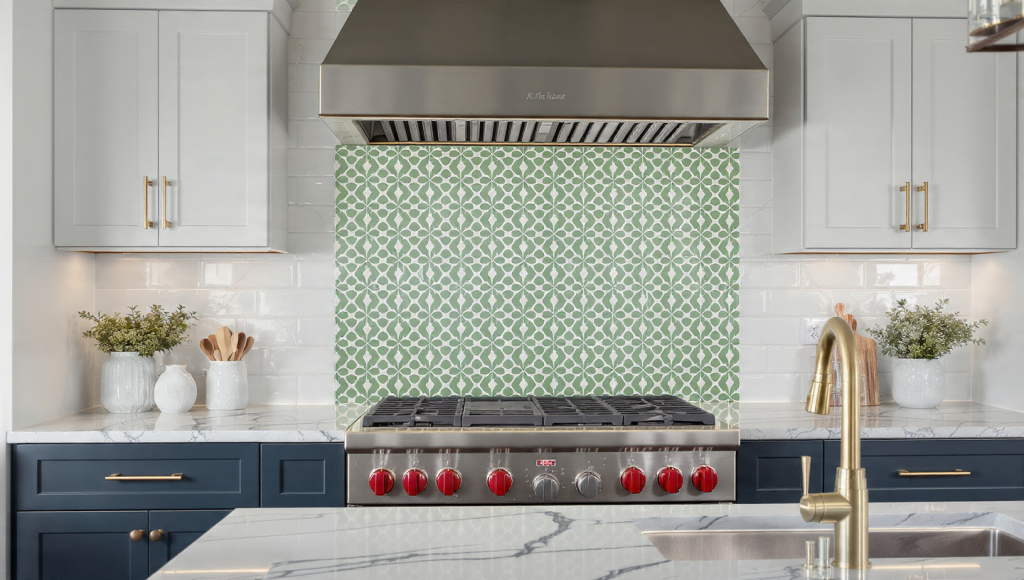
Make the area behind the cooktop the focal point with patterned sage tiles while keeping the rest neutral. Patterned sage rectangles framed by white tiles make the range pop without overpowering the kitchen. This approach concentrates visual interest and reduces cost compared to tiling the entire wall.
11. Sage Green with Dark Cabinets
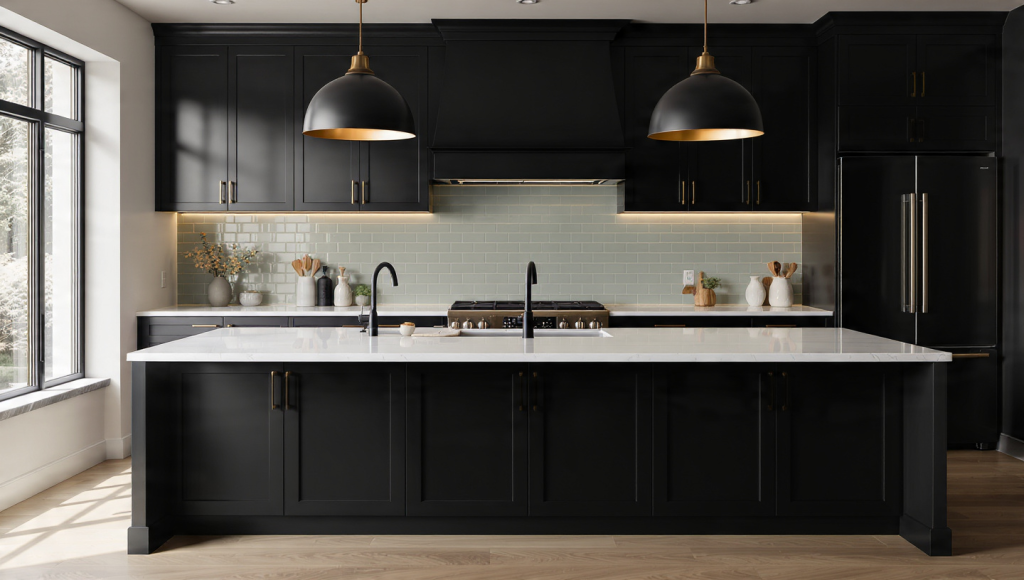
For those who love bold contrasts, pairing dark kitchen cabinets with sage subway tiles creates a striking effect. Dark wood or black cabinetry makes the sage tiles pop, adding drama and elegance to the kitchen. This unexpected pairing feels contemporary and sophisticated.
12. Soft Sage Penny Round Tiles
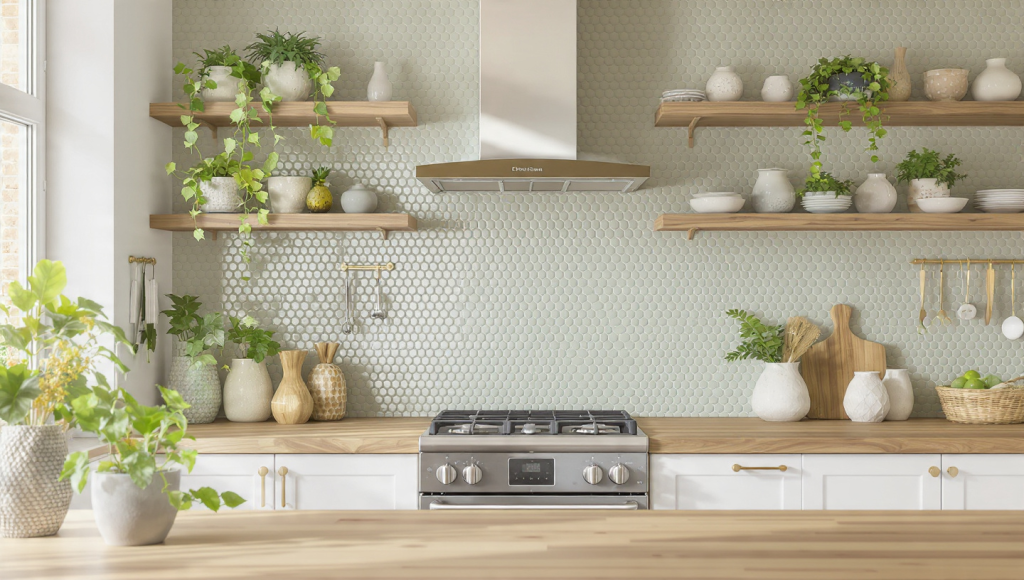
Soft sage green penny round tiles lend a gentle pop of color without overwhelming the space. Pair these tiles with open shelving and potted plants to create a fresh, organic feel. The round shape adds playful texture while maintaining a calm, natural aesthetic.
13. Large-Format Seamless Slabs
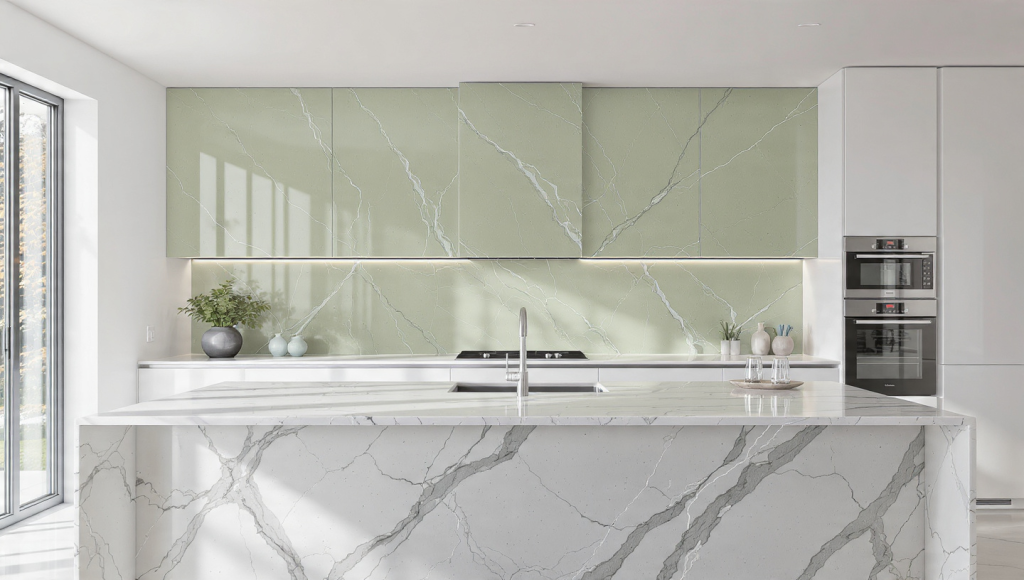
Large-format porcelain tile in sage green creates a seamless, minimalist backsplash with very few visible grout lines. This look is especially effective in modern and contemporary kitchens where visual simplicity is the priority. The color does all the work without smaller tile patterns competing for attention. Book-matching the slab at the seams creates an uninterrupted, stone-like flow.
14. Sage Glass Tile for Luminous Depth
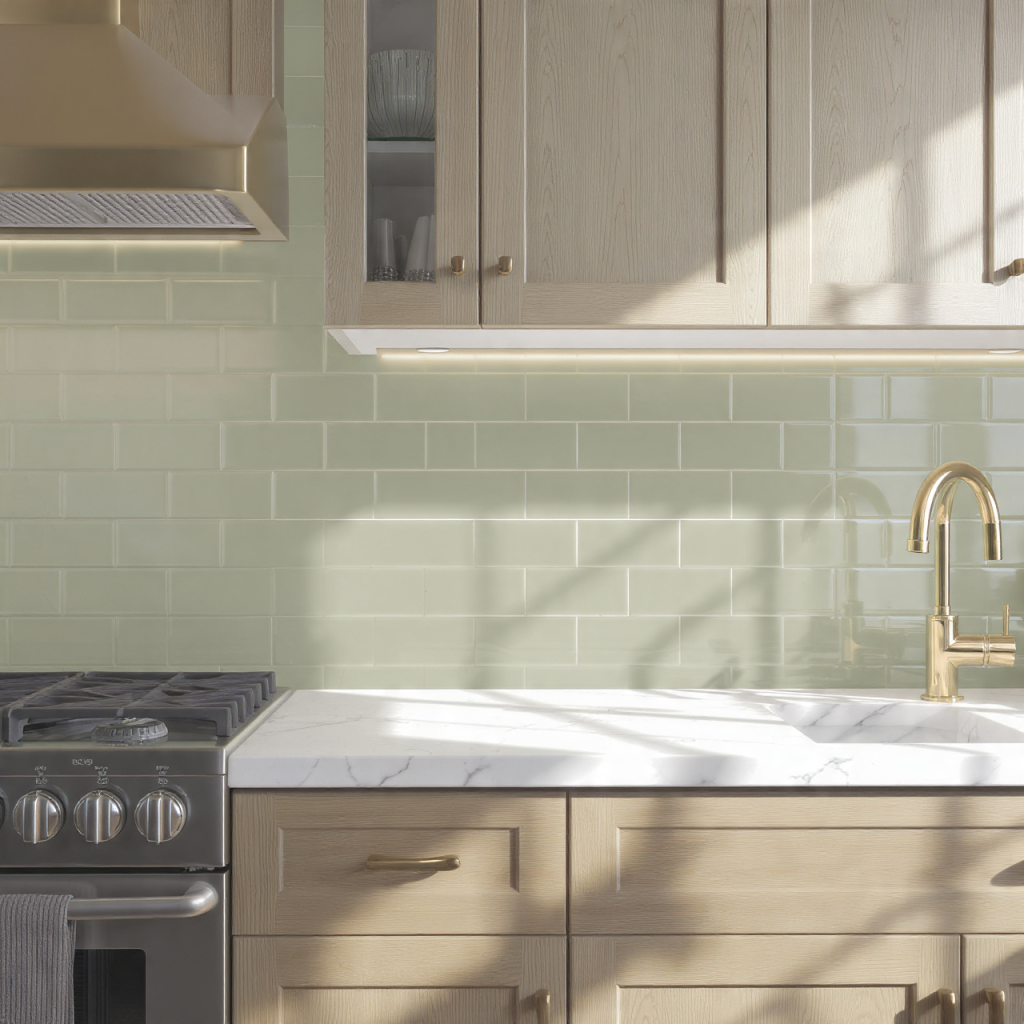
Glass sage tiles introduce luminous depth, reflecting natural light to make smaller spaces feel bigger. The subtle shine remains sophisticated despite the shimmer, pairing effortlessly with marble and brass finishes. Use white thinset mortar with glass tile to maintain the true color of the sage glaze.
Benefits of Choosing Sage Green for Your Backsplash
1. Light Reflectivity: Sage green sits in the mid-tone range, reflecting enough light to keep kitchens bright without the starkness of white or the heaviness of dark hues. This makes it excellent for both small galley kitchens and expansive open-plan spaces.
2. Hide Imperfections: Its natural, earthy quality means small splatters, water spots, and everyday wear blend in more gracefully than with pure white or glossy finishes.
3. Resale Value: Neutral enough to appeal to a broad range of buyers yet distinctive enough to feel curated, sage green backsplashes are considered a safe but stylish investment according to real estate design experts.
4. Seasonal Adaptability: The color shifts beautifully with changing seasons—cool and refreshing in summer, cozy and warm in winter when paired with appropriate lighting and accessories.
5. Color Pairing Potential: Sage green works with warm metallics, cool grays, stark whites, rich woods, and even unexpected accents like terracotta or navy. This flexibility means you can change cabinet colors or decor without replacing the backsplash.
How to Choose the Right Shade of Sage Green
Not all sage greens are created equal. Here’s how to select the perfect tone for your space.
Undertones Matter: Sage green can lean warm (yellow-based) or cool (blue-gray-based). Warm undertones pair beautifully with brass, oak, and cream. Cool undertones complement marble, chrome, and gray.
Test in Your Lighting: Natural light, warm incandescent, and cool LED all affect how sage reads. Always test samples on your actual wall at different times of day.
Consider Your Cabinet Color: Sage works with nearly every cabinet finish, but the intensity matters. Lighter sage balances dark cabinets; deeper sage grounds white cabinets.
Grout Color Impact: Grout significantly affects the final look. White grout brightens and modernizes, while gray or matching grout creates a seamless, more traditional appearance.
Material Options for Sage Green Backsplashes
| Material | Best For | Key Consideration |
|---|---|---|
| Ceramic Tile | Budget-friendly, classic look | Durable, easy to clean |
| Porcelain | High-traffic kitchens | More water-resistant than ceramic |
| Glass Tile | Small kitchens needing light | Shows water spots, requires care |
| Zellige | Organic, artisanal aesthetic | Higher cost, unique variations |
| Natural Stone | Luxury appeal | Requires sealing |
| Peel-and-Stick | Renters, temporary updates | Lower durability |
Cost Considerations
Sage green backsplash costs vary significantly based on material and installation.
Budget Options ($5–$15/sq ft): Ceramic subway tiles and peel-and-stick options offer an affordable entry point. These are ideal for DIY installations and smaller kitchens.
Mid-Range ($15–$30/sq ft): Porcelain tiles, glass mosaics, and larger-format ceramics fall here. Professional installation is recommended for best results.
Premium ($30–$80+/sq ft): Artisanal Zellige, natural stone, and custom mosaics command higher prices. These materials often require specialized installation and sealing.
Additional Costs: Grout, thinset, trim pieces, and labor (typically $8–$20/sq ft) should be factored into your budget. Complex patterns like herringbone or chevron increase labor costs.
Installation Tips for Your Sage Green Backsplash
1. Hire a Professional for Complex Patterns: Herringbone, chevron, and mosaic installations require precision. Paying for expertise prevents costly mistakes.
2. Seal Natural Stone: If choosing marble or other natural stone sage tiles, apply a high-quality sealer to protect against stains and moisture.
3. Choose the Right Grout Color: Test grout samples against your tile in your kitchen’s lighting. White brightens, matching grout creates continuity, and contrasting grout emphasizes pattern.
4. Consider Under-Cabinet Lighting: Proper lighting enhances sage green’s depth. Warm LED strips (2700K–3000K) bring out yellow undertones; cool light (4000K) emphasizes blue-gray notes.
5. Order Extra Tile: Always purchase 10–15% more than your calculation to account for cuts, breakage, and future repairs.
Maintenance and Care Guide
Ceramic and Porcelain: Wipe with mild soap and warm water. Avoid abrasive cleaners that can dull matte finishes.
Glass Tile: Use a squeegee after cleaning to prevent water spots. Glass-specific cleaners prevent streaking.
Natural Stone: Use pH-neutral stone cleaners. Reapply sealer annually or as recommended by your installer.
Zellige: Its textured surface requires gentle cleaning with a soft sponge. Avoid acidic cleaners that can damage the glaze.
Grout Maintenance: Seal grout lines after installation. Clean with grout-specific brushes and sealers annually to prevent discoloration.
Common Mistakes to Avoid
Choosing the Wrong Undertone: Not testing tile samples in your specific lighting is the most common error. Sage can shift dramatically from warm to cool.
Skipping the Grout Sample: Grout transforms the final look. Always test before committing.
Overlooking Cabinet Contrast: If your cabinets are also green-toned, ensure the backsplash has enough contrast to avoid a flat, muddy appearance.
Forgetting About Outlets and Switches: Brass, white, or matching switch plates integrate better than standard white plastic.
Neglecting Ventilation: In high-humidity kitchens, ensure proper ventilation to protect tile and grout longevity.
Conclusion
Sage green has earned its place as the defining backsplash trend of 2026 for good reason. It strikes that rare balance—visually interesting yet calming, trendy yet timeless, versatile yet distinctive. Whether you choose the classic comfort of subway tile, the artisanal charm of Zellige, or the dramatic impact of a full-height installation, this muted hue brings the outdoors in while elevating the heart of your home.
What makes sage green so special is its ability to grow with you. It adapts to changing decor, shifting seasons, and evolving design preferences without feeling dated. In a world that increasingly craves calm and connection to nature, sage green delivers both—without sacrificing style for substance.
So as you plan your 2026 kitchen refresh, consider sage green not just as a color choice, but as an investment in a space that feels grounded, serene, and endlessly beautiful. The right backsplash, thoughtfully chosen and properly installed, will serve as the foundation of a kitchen you’ll love for years to come.
Remember: The best design choice is one that reflects your personal style while standing the test of time. Sage green does exactly that.
