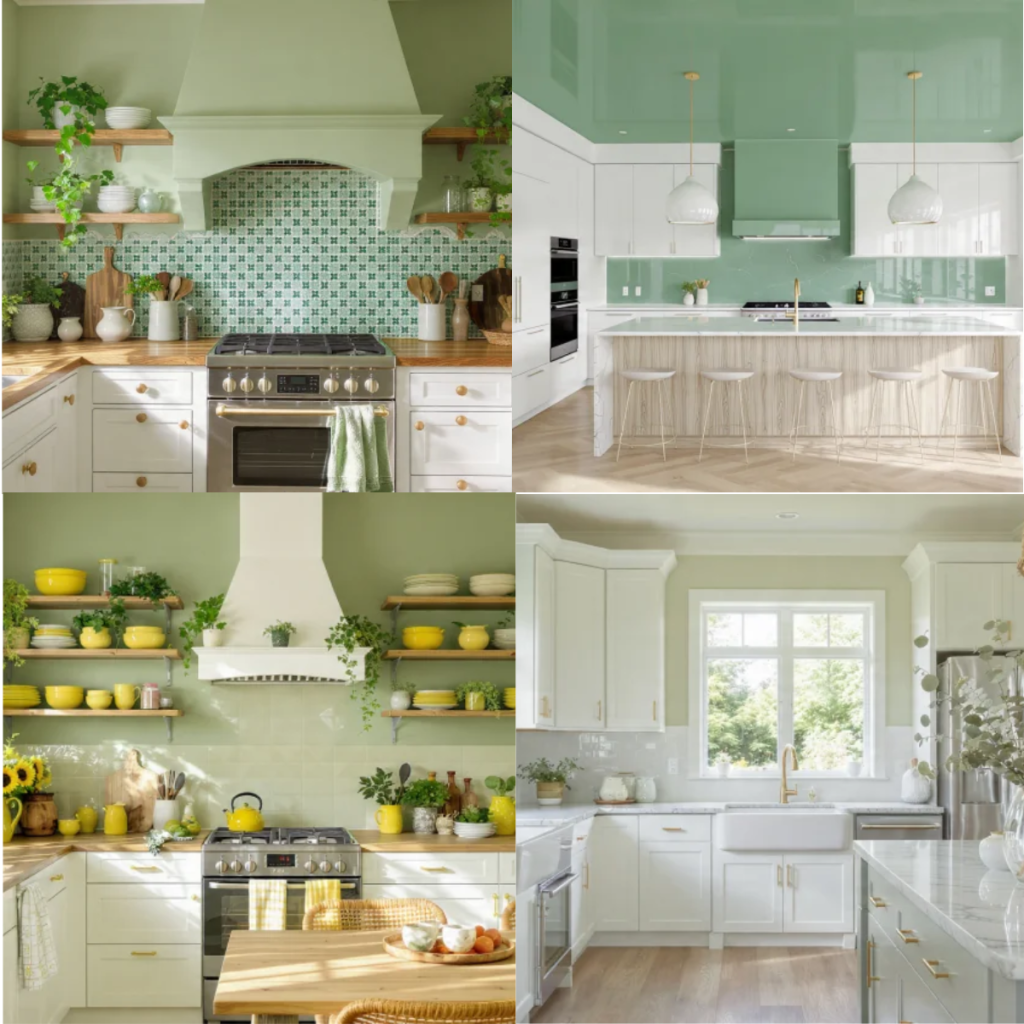
In the ever-evolving world of interior design, few colours have demonstrated the staying power of sage green. While trends come and go, this muted, earthy hue has firmly established itself as a modern classic, offering the perfect antidote to the stark greys that dominated kitchens for years . Sage green strikes an exquisite balance—soft and sophisticated, tranquil yet present—making it an exceptional choice for the heart of the home .
What makes sage green truly remarkable is its versatility. It evokes a sense of calm and brings the outdoors in, creating a serene environment where families gather, cook, and connect . Whether you dream of a rustic farmhouse kitchen, a sleek contemporary space, or something in between, sage green walls can serve as the perfect canvas . Its subtle grey undertones prevent it from feeling overwhelming while ensuring the space remains bright and inviting .
Why Sage Green? Understanding the Psychology of Colour
Before diving into specific design ideas, it’s worth understanding why sage green has such a profound impact on our living spaces. Colour psychology reveals that green is universally associated with nature, tranquillity, and renewal. Sage green, with its grey undertones, takes this a step further—it feels sophisticated without being cold, calming without being dull.
The Psychological Benefits of Sage Green Kitchens:
| Benefit | Description |
|---|---|
| Stress Reduction | The connection to nature helps lower cortisol levels and promotes relaxation |
| Improved Concentration | Green is known to enhance focus and mental clarity—perfect for busy family kitchens |
| Appetite Appeal | Green is naturally associated with fresh, healthy food, subtly encouraging mindful eating |
| Versatile Mood | Works equally well for energising morning routines and calming evening gatherings |
| Timelessness | Unlike trend-driven colours, sage green remains aesthetically pleasing across decades |
Scientific studies have shown that exposure to green tones can reduce anxiety and create a sense of balance. In a kitchen—often the busiest room in the house—this calming influence can transform the space from a source of stress into a sanctuary of domestic peace.
This article explores fifteen carefully curated ideas to help you transform your kitchen with sage green walls, demonstrating that this timeless colour is not just a passing trend but a lasting investment in your home’s beauty and warmth.
15 Inspiring Sage Green Kitchen Wall Ideas
1. Classic Sage Green with Crisp White Cabinetry
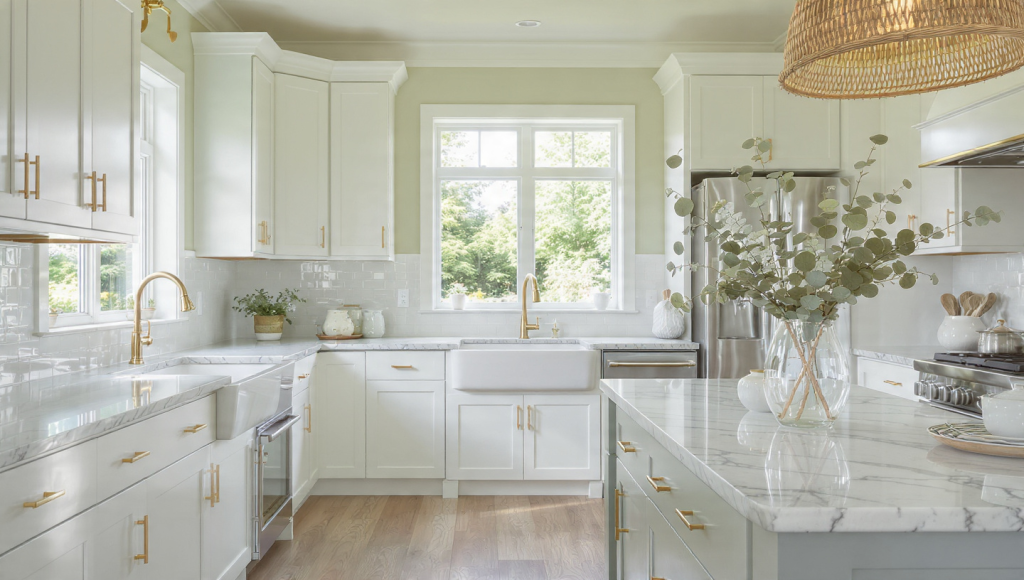
The combination of sage green walls with white cabinets is perhaps the most celebrated pairing, and for good reason. This timeless duo creates a clean, airy feel that makes the kitchen appear larger and more luminous . The crisp white cabinetry provides a striking contrast against the soft green backdrop, allowing architectural details to shine . For added warmth, consider incorporating brass or gold hardware, which beautifully complements the green while adding a touch of elegance . This approach works particularly well in smaller kitchens where maximising light is essential.
2. Create Depth with Layered Greens
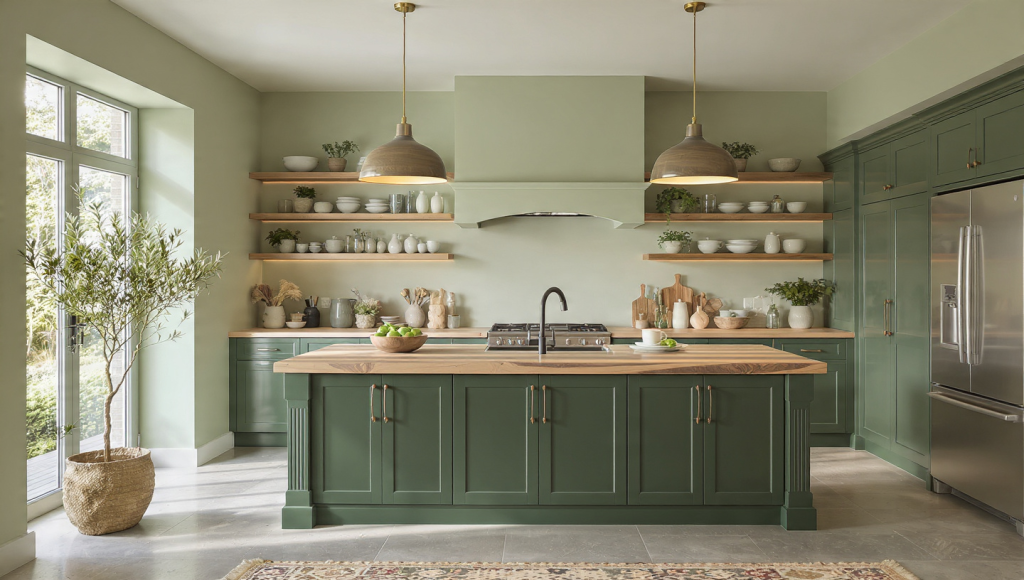
For those who want to make a bolder statement without introducing competing colours, layering different shades of green can add remarkable depth and sophistication . Consider painting your walls a soft sage while opting for forest green on your kitchen island or lower cabinets . This monochromatic approach feels harmonious and curated rather than busy, creating visual interest through tonal variation. To maintain balance, incorporate natural wood elements that ground the space and prevent it from becoming too monochromatic .
3. Warm it Up with Wood Accents
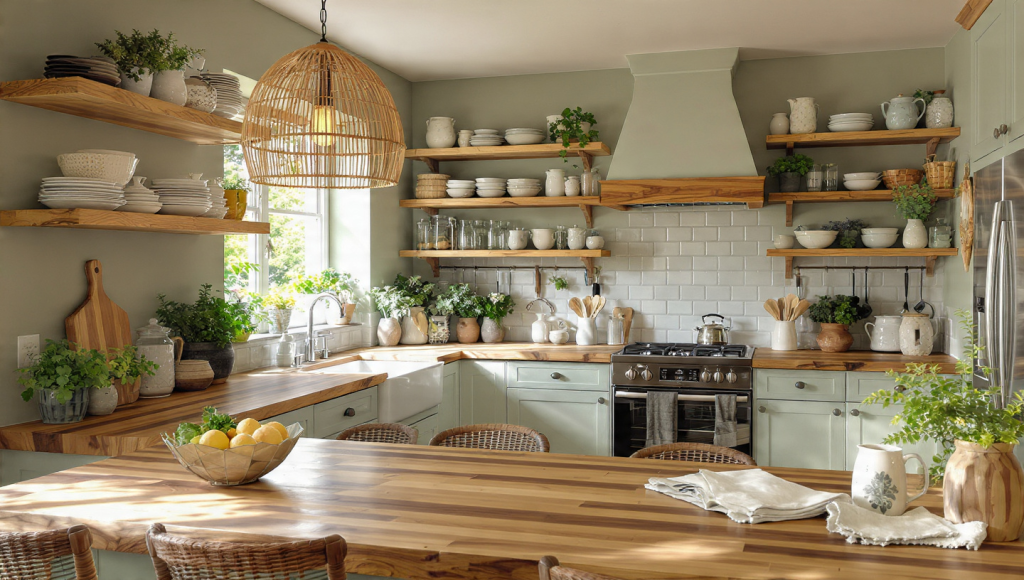
Sage green and wood are a match made in design heaven . The cool undertones of sage beautifully offset the warmth of natural timber, creating a kitchen that feels both grounded and inviting . Introduce light oak flooring, open shelving, or a butcher block worktop to bring this combination to life . Walnut and smoked oak offer a richer contrast, particularly effective in more traditional or rustic schemes . This pairing evokes a natural, organic feel that makes the space feel lived-in and welcoming.
4. The Modern Edge: Sage Green with Black Accents
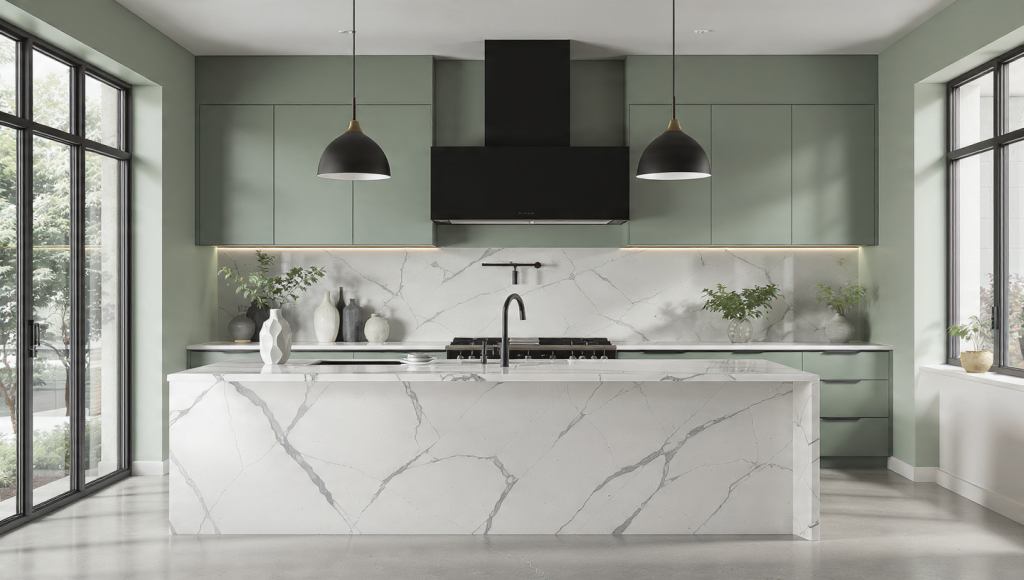
For a contemporary, edgy aesthetic, pair sage green walls with black fixtures and hardware . The stark contrast between the soft, organic green and bold black creates a striking visual dynamic that feels both modern and grounded . Matte black handles, light fittings, or even a statement range hood can provide this dramatic counterpoint . This combination works particularly well in minimalist schemes where clean lines and simplicity are key.
5. Country Cottage Charm with Cream Tones
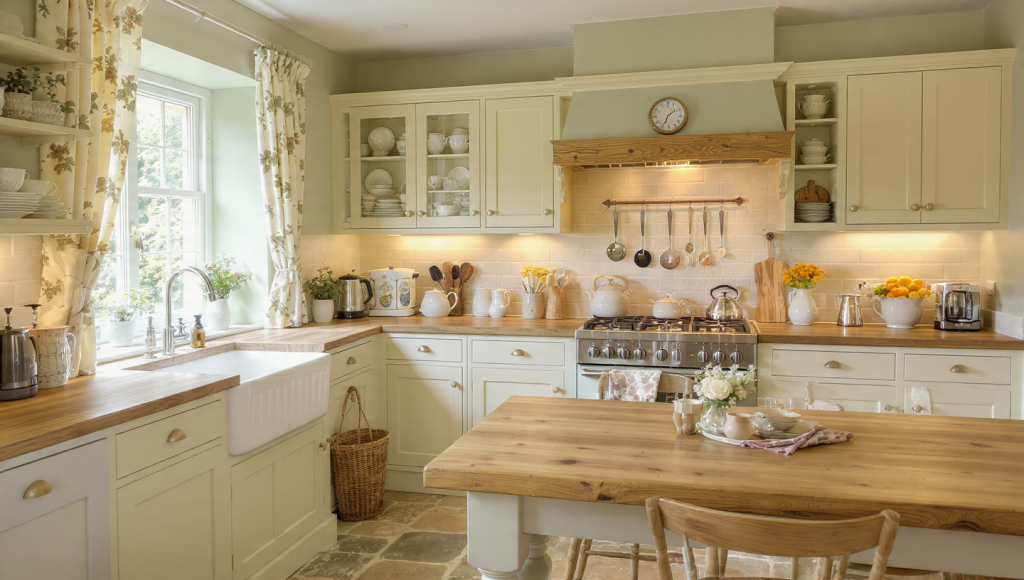
For a softer, more traditional look, pair sage green walls with cream or off-white accents . This combination creates a cosy, welcoming atmosphere reminiscent of English country kitchens. Incorporate cream curtains beneath a butler sink or display cream-coloured dishes on open shelving to break up the green and add warmth . The gentle interplay of these tones produces a serene, elegant space that feels both timeless and personal.
6. Sophisticated Contrast with Navy Blue
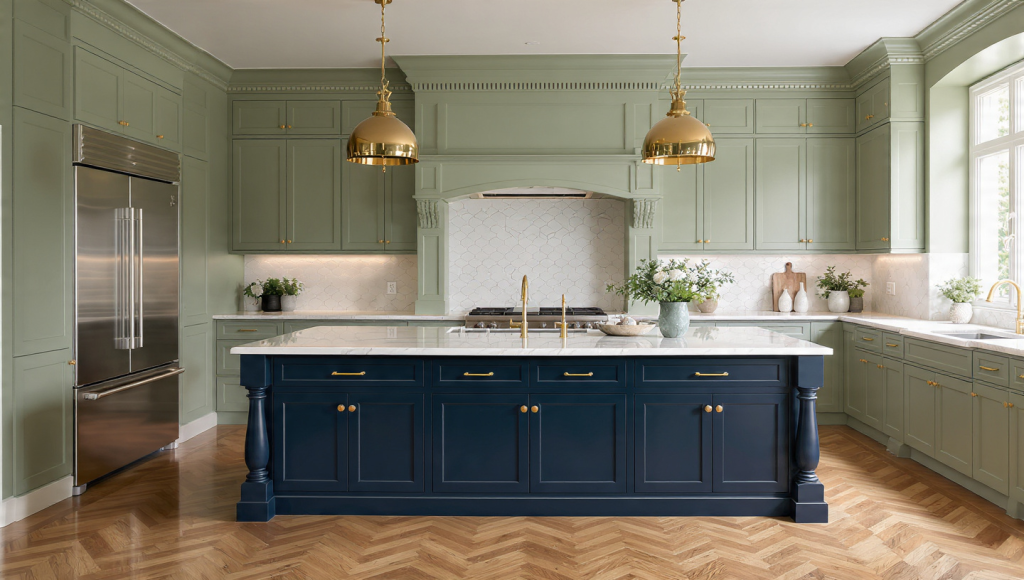
For a more refined, structured look, consider introducing navy blue accents alongside sage green walls . This sophisticated pairing adds depth and a sense of tailored elegance, ideal for formal dining spaces or more traditional kitchen designs . A navy kitchen island or strategically placed navy accessories can provide the perfect counterpoint to the softness of sage green, creating a space that feels both calm and distinguished.
7. Rustic Charm with Exposed Brick
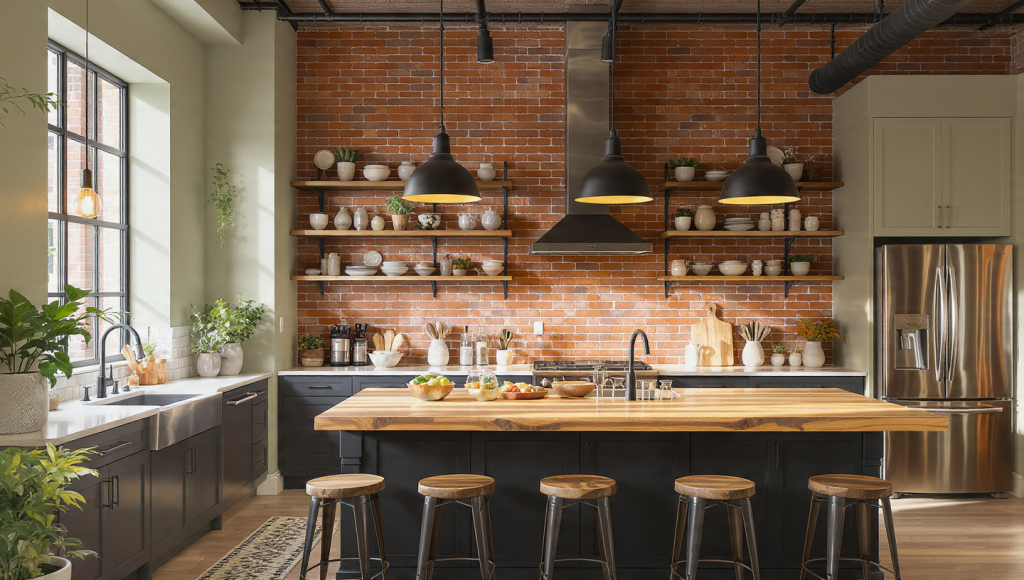
Introduce an industrial edge by pairing sage green walls with exposed brick . The textured, rustic quality of the brick provides a beautiful contrast to the smooth, soft green, roughening up the overall aesthetic to create an inviting, characterful space . This combination works particularly well in loft-style or urban kitchens, adding warmth and historical texture without overwhelming the senses.
8. Subtle Sophistication with Grey
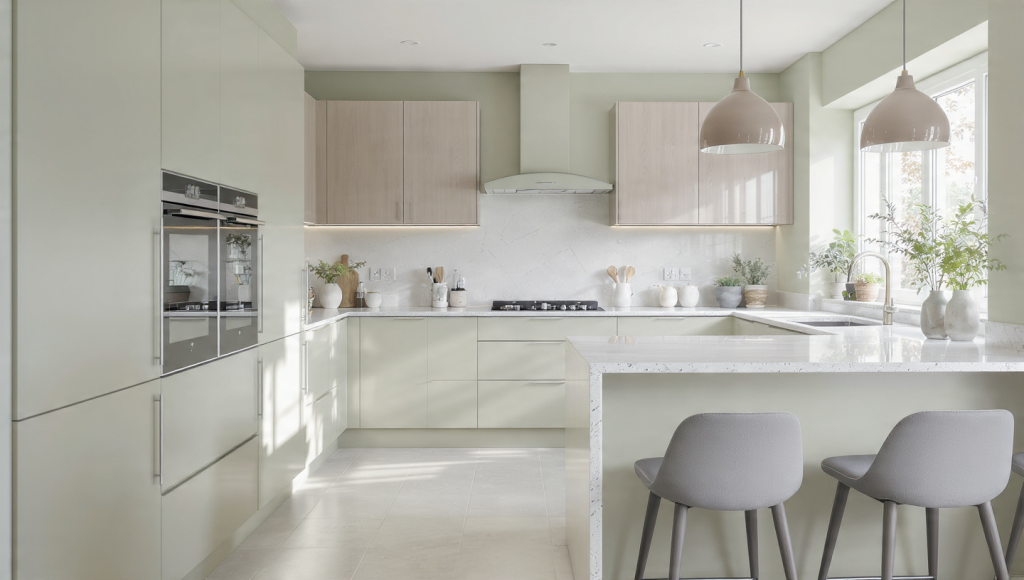
For those who prefer a more neutral palette, grey offers a sophisticated complement to sage green walls . Light grey walls or worktops bring a calm, understated elegance, while darker grey accents create a more contemporary feel . This combination is particularly effective in modern kitchens where you want the green to be the hero without competing with other bold colours.
9. Botanical Inspiration with Yellow Accents
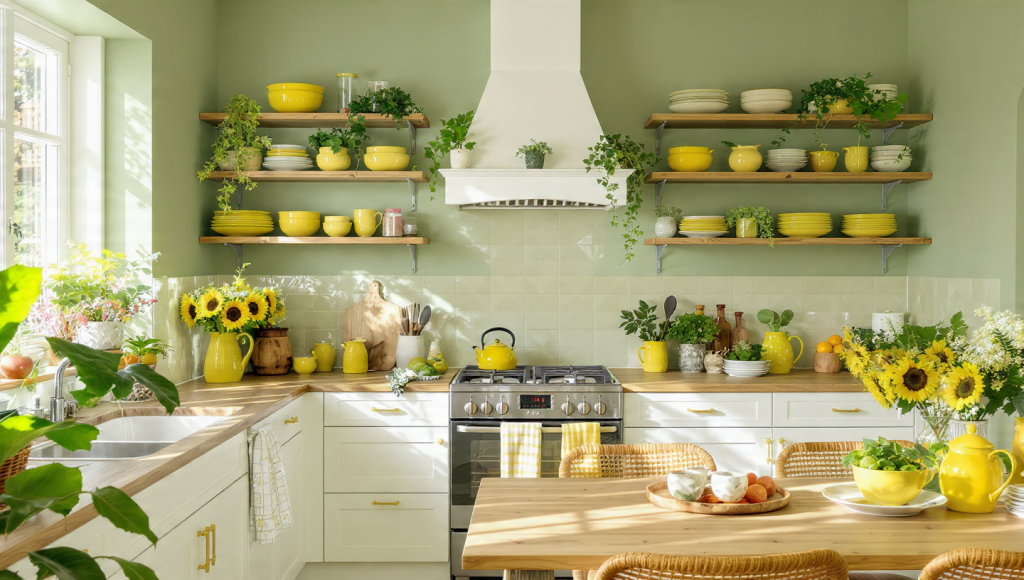
Inject energy and warmth into your sage green kitchen with yellow accents . Whether through small appliances, glassware, or fresh floral displays, yellow adds a cheerful, sun-drenched quality that beautifully complements the natural, organic feel of sage green . This combination brings a vibrant, happy energy to the kitchen, perfect for spaces where you want to feel uplifted.
10. Textured Elegance with Limewash
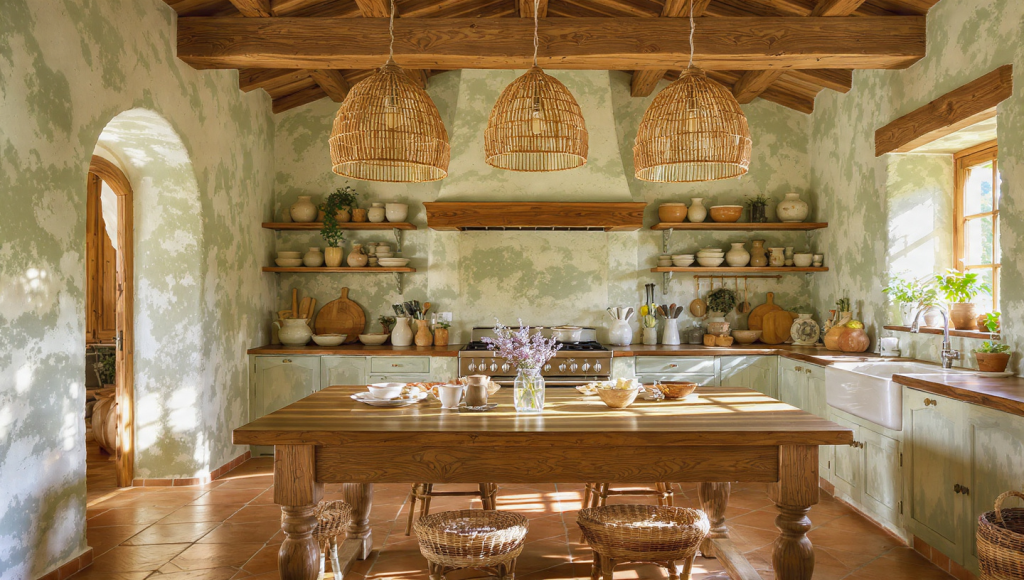
For a truly unique finish, consider limewash paint for your sage green kitchen walls . This traditional technique creates a soft, chalky texture with subtle movement, adding an artisanal quality that feels both timeless and contemporary . The breathable, matt finish is ideal for kitchens with variable humidity, and the soft, diffused texture helps to create a calm, restful space . This is an excellent choice for creating a rustic or Mediterranean-inspired kitchen.
11. Use a Feature Wall for Impact
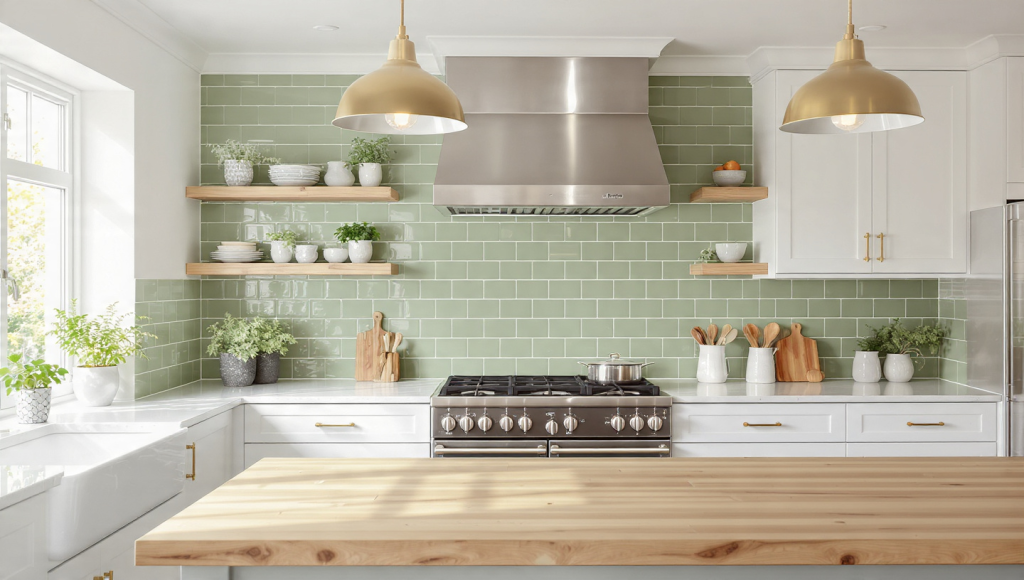
If you’re hesitant to commit to fully painted walls, a sage green feature wall is an excellent compromise . This approach allows you to introduce the colour without overwhelming the space, creating a focal point that draws the eye. Consider painting the wall behind your range or sink area, or use sage green tiles on a single wall as a more durable alternative . This technique is particularly effective in larger kitchens where you want to create visual interest without dominating the entire room.
12. Embrace Patterned Wallpaper
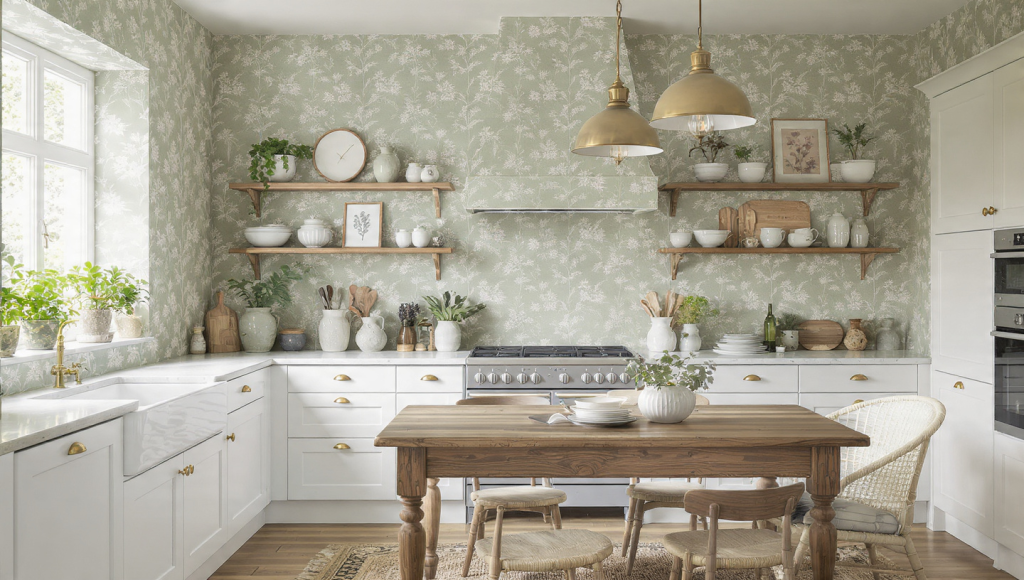
Patterned wallpaper in sage green offers a wonderful alternative to solid paint, introducing both colour and texture to your kitchen walls . Choose from subtle botanical motifs or more graphic geometric designs, depending on your personal style . Patterned wallpaper can brighten darker corners and make the space feel more open and inviting, adding a layer of visual interest that flat paint simply cannot match.
13. Paint the Ceiling for an Unexpected Pop
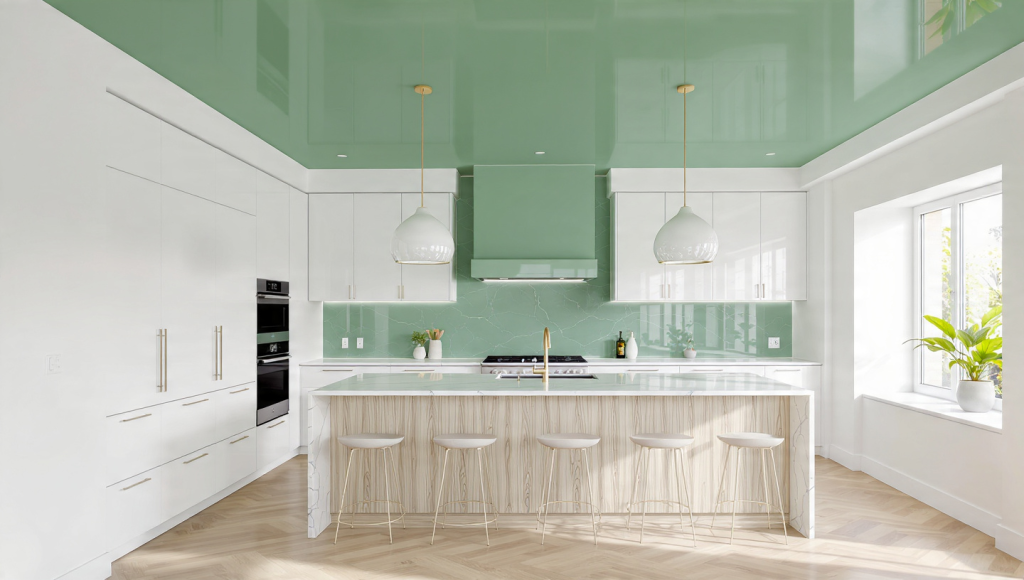
For the more adventurous, consider painting the kitchen ceiling in a shade of sage green . This unexpected choice creates a striking visual effect, drawing the eye upward and making the space feel larger and more dynamic. Using a high-gloss finish will reflect light, further enhancing the sense of openness. This technique is particularly effective when combined with lighter walls, as it creates a beautiful contrast that feels both modern and bold.
14. Accessorise with Sage Green
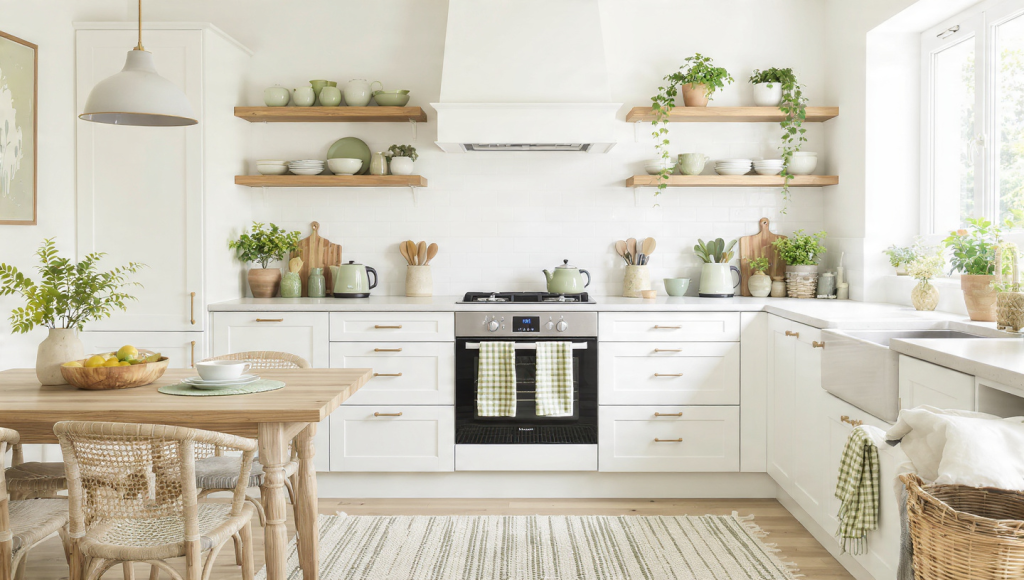
If you’re not quite ready to commit to painting your walls, introduce sage green through accessories to test the colour in your space . Tea towels, dishes, plant pots, and oven mitts in sage green can bring a subtle yet effective pop of colour to your kitchen . This low-commitment approach allows you to enjoy the benefits of sage green while maintaining flexibility to change your design easily in the future .
15. Green-on-Green with Patterned Tiles
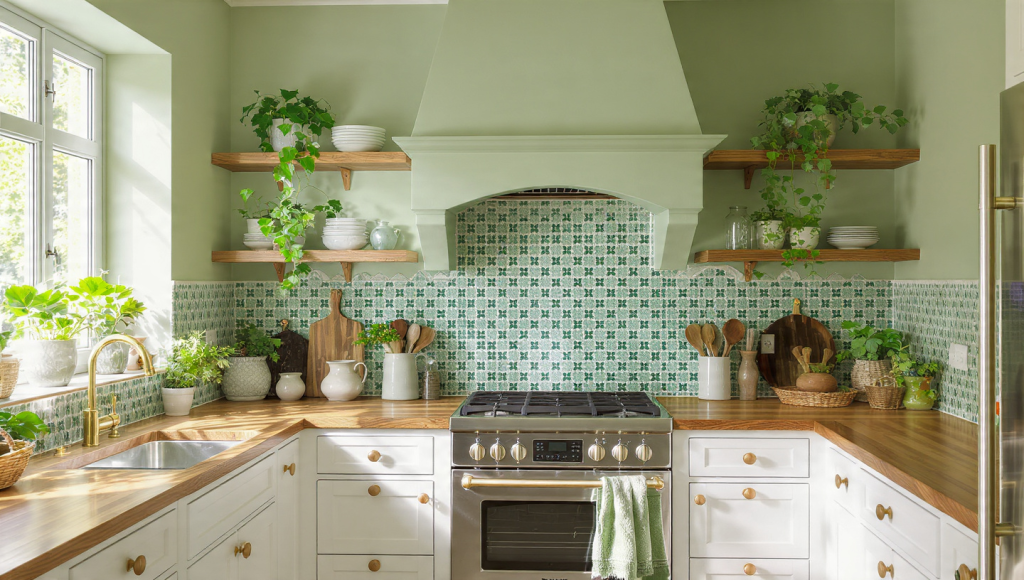
Combine a solid sage green wall with a patterned green tile backsplash to create a cohesive and texturally rich scheme . This approach layers different shades and textures within the same colour family, adding depth and visual interest without introducing competing hues . The use of patterned tiles on the backsplash can create a beautiful focal point, while the solid sage walls provide a calm, grounding backdrop.
How to Choose the Perfect Shade of Sage Green
Not all sage greens are created equal. The perfect shade for your kitchen depends on several factors, including natural light, room size, and your overall design vision.
Understanding Sage Green Undertones:
| Undertone | Best For | Example Shades |
|---|---|---|
| Grey-Green | Modern, minimalist spaces | Pale Sage, Silver Sage |
| Yellow-Green | Warm, traditional kitchens | Olive Sage, Moss Green |
| Blue-Green | Coastal, airy spaces | Eucalyptus, Seafoam Sage |
| Brown-Green | Rustic, earthy designs | Khaki Sage, Herb Green |
Practical Tips for Choosing Your Shade:
- Test in Natural Light: Paint large sample boards and move them around the room at different times of day
- Consider Your Flooring: Dark floors need lighter sage; light floors can handle deeper tones
- Match Your Cabinetry: White cabinets pair with any sage; wood cabinets need warmer sage tones
- Room Size Matters: Smaller kitchens benefit from lighter shades; larger spaces can handle deeper, richer sages
- North-Facing Rooms: Choose warmer sage shades to compensate for cooler light
- South-Facing Rooms: Cooler sage tones balance the warm, intense sunlight
The Best Finishes for Sage Green Kitchen Walls
The finish you choose for your sage green walls dramatically affects the final look and feel of your kitchen. Each finish offers distinct advantages and considerations.
Paint Finish Guide:
| Finish | Appearance | Durability | Best For |
|---|---|---|---|
| Matt/Flat | Non-reflective, velvety | Low | Low-traffic walls, creating a soft, cosy feel |
| Eggshell | Subtle sheen, elegant | Medium | Most kitchen walls—balances durability and aesthetics |
| Satin | Smooth, pearl-like | High | High-traffic areas, easy to wipe clean |
| Semi-Gloss | Shiny, reflective | Very High | Trim, doors, feature walls—adds a modern edge |
| High-Gloss | Mirror-like, dramatic | Extreme | Statement ceilings, bold contemporary designs |
| Limewash | Chalky, textured | Medium | Rustic, Mediterranean, or artisan-style kitchens |
Expert Recommendation: For most kitchen walls, an eggshell or satin finish offers the ideal balance of durability and aesthetic appeal. These finishes are wipeable enough to handle cooking splashes while maintaining a sophisticated, non-plastic appearance.
Lighting Considerations for Sage Green Kitchens
Lighting plays a crucial role in how sage green appears in your kitchen. The same paint can look dramatically different under various lighting conditions.
How Lighting Affects Sage Green:
- North-Facing Light (Cool): Sage appears greyer and cooler—counter with warm bulbs and wood accents
- South-Facing Light (Warm): Sage appears vibrant and true—enjoy the natural warmth
- East-Facing Light (Morning): Sage looks fresh and bright—perfect for breakfast kitchens
- West-Facing Light (Afternoon/Evening): Sage takes on golden tones—consider warmer sage shades
- LED Bulbs (Cool): Can make sage appear flat—choose warm (2700K-3000K) bulbs
- LED Bulbs (Warm): Enhance the richness of sage—ideal for cosy evenings
Lighting Tips for Your Sage Kitchen:
- Layer lighting with ambient, task, and accent fixtures
- Use under-cabinet lighting to prevent the walls from looking dark
- Choose warm-toned bulbs (2700K-3000K) to enhance sage’s natural warmth
- Consider dimmer switches to adjust the mood throughout the day
- Position pendant lights to highlight the green walls as a feature
Complementary Colours and Materials
One of sage green’s greatest strengths is its versatility in pairing with other colours and materials. Here’s a comprehensive guide to creating harmonious combinations.
Perfect Colour Pairings:
| Colour | Effect | Best Used For |
|---|---|---|
| White | Classic, bright, clean | Cabinetry, trim, ceilings |
| Cream/Oatmeal | Warm, cosy, traditional | Walls, textiles, accessories |
| Navy Blue | Sophisticated, structured | Islands, cabinets, statement pieces |
| Black | Modern, edgy, dramatic | Hardware, fixtures, lighting |
| Terracotta | Warm, earthy, Mediterranean | Tiles, accessories, pots |
| Mustard Yellow | Energetic, cheerful | Accents, small appliances |
| Blush Pink | Soft, romantic, contemporary | Accessories, textiles |
| Warm Wood | Natural, grounded, inviting | Flooring, shelving, worktops |
Material Pairings:
| Material | Texture | Best Application |
|---|---|---|
| Marble | Smooth, luxurious | Worktops, backsplash |
| Brass | Warm, metallic | Hardware, lighting, taps |
| Copper | Rich, rustic | Pendants, cookware, accessories |
| Concrete | Industrial, cool | Worktops, flooring |
| Terrazzo | Speckled, contemporary | Flooring, splashback |
| Zellige Tile | Textured, artisan | Backsplash, feature walls |
| Reclaimed Wood | Rustic, characterful | Shelving, dining tables |
| Linen | Soft, natural | Curtains, cushions, tablecloths |
Cabinet and Worktop Selection Guide
The cabinets and worktops you choose will define the overall look of your sage green kitchen. Here’s a detailed guide to making the right selections.
Cabinetry Options:
| Style | Best Sage Pairing | Vibe |
|---|---|---|
| Shaker | Any sage shade | Classic, timeless |
| Slab/Flat-Panel | Light to mid-sage | Modern, minimal |
| Inset/Beaded | Mid to dark sage | Traditional, high-end |
| Open Shelving | Any sage shade | Casual, airy |
| Glass-Front | Light sage | Elegant, spacious |
Worktop Options:
| Material | Best Sage Pairing | Durability | Cost |
|---|---|---|---|
| White Marble | All sage shades | Medium | High |
| Quartz | All sage shades | High | Medium-High |
| Butcher Block | Warm sage shades | Medium | Medium |
| Granite (Light) | Mid to dark sage | High | Medium-High |
| Concrete | Grey-green sage | High | Medium |
| Laminate | All sage shades | Medium | Low-Medium |
| Soapstone | Dark sage | High | High |
Flooring Options for Sage Green Kitchens
Your flooring choice sets the foundation for the entire kitchen design. Here’s how different flooring options work with sage green walls.
Flooring Guide:
| Flooring | Best Sage Pairing | Benefits | Considerations |
|---|---|---|---|
| Light Oak | All sage shades | Warm, natural, timeless | Can scratch |
| Walnut | Light to mid-sage | Rich, sophisticated | Darkens room |
| Pale Grey Wood | Mid to dark sage | Modern, bright | Trend-driven |
| Terracotta Tiles | Warm sage shades | Rustic, Mediterranean | Requires sealing |
| Grey Stone | All sage shades | Cool, elegant | Can feel cold |
| White Tiles | All sage shades | Bright, clean | Shows dirt |
| Herringbone Wood | All sage shades | Elegant, classic | Higher installation cost |
| Concrete | Grey-green sage | Industrial, modern | Hard underfoot |
Hardware and Fixture Selection
The finishing touches—hardware and fixtures—can elevate your sage green kitchen from beautiful to extraordinary.
Hardware Finishes:
| Finish | Effect | Best With |
|---|---|---|
| Brass | Warm, luxurious | White cabinets, cream tones |
| Polished Chrome | Cool, contemporary | Grey-green sage, modern styles |
| Matte Black | Bold, dramatic | All sage shades—adds edge |
| Bronze | Rustic, earthy | Warm sage, wood accents |
| Copper | Rich, artisan | Mediterranean, rustic styles |
| Nickel | Neutral, versatile | All sage shades and styles |
Fixture Recommendations:
- Taps: Choose finishes that complement your hardware
- Lighting: Pendants, under-cabinet, and task lighting in matching or contrasting finishes
- Handles and Knobs: Consider mixing finishes for a curated, collected look
- Range Hood: A statement piece in black, copper, or stainless steel
Storage Solutions for Sage Green Kitchens
Smart storage solutions help maintain the clean, calm aesthetic that sage green kitchens are known for.
Storage Ideas:
- Open Shelving: Display beautiful dishes and glassware against sage walls
- Glass-Front Cabinets: Add depth and break up wall colour
- Pull-Out Pantries: Maximise storage without visual clutter
- Corner Solutions: Lazy Susans and magic corners utilise every inch
- Drawer Organisers: Keep utensils tidy and accessible
- Pot Racks: Ceiling-mounted racks add rustic charm
- Magnetic Knife Strips: Keep knives accessible while saving counter space
- Towel Bars and Hooks: Add practicality without sacrificing style
Pro Tip: In a sage green kitchen, aim for a balance between closed storage (cabinets) and open display (shelving). This prevents the room from feeling too heavy or too cluttered.
Decorative Accents and Styling
The beauty of sage green lies in its ability to serve as a backdrop for personal expression through decor.
Accessory Ideas:
- Fresh Flowers: White blooms, sunflowers, or eucalyptus create stunning contrasts
- Artwork: Botanical prints, vintage kitchen signs, or abstract art in complementary tones
- Textiles: Linen tea towels, woven runners, and natural-fibre rugs add warmth and texture
- Plants: Trailing plants, herbs in pots, and statement houseplants reinforce the natural connection
- Ceramics: Handmade pots, decorative bowls, and artisan vases in contrasting or matching tones
- Cookbooks: Display colourful cookbooks on shelves or countertops
- Fruit Bowls: Fresh fruit adds natural colour and life to the space
- Candles: Scented candles in warm, natural fragrances enhance the atmosphere
Styling Principles:
- Less is More: Avoid overcrowding—let the sage walls breathe
- Layer Textures: Combine smooth, rough, shiny, and matte surfaces
- Add Personal Touches: Family heirlooms and personal collections add character
- Seasonal Changes: Update accessories with the seasons to keep the space fresh
Frequently Asked Questions
Is sage green a good colour for a small kitchen?
Yes, lighter shades of sage green can make a small kitchen feel larger and more open. Pair with white cabinets and plenty of lighting for the best effect.
Will sage green go out of style?
Sage green is a classic, timeless colour that has remained popular across multiple design eras. It’s considered a safe, long-lasting choice.
What colours clash with sage green?
Avoid pairing sage green with neon brights or clashing earth tones. Stick to the recommended complementary colours for the best results.
How do I make sage green look more modern?
Pair with black accents, clean lines, and contemporary materials like concrete or terrazzo. Use a high-gloss finish for a modern edge.
Can I use sage green in a north-facing kitchen?
Yes, but choose a warmer sage shade and use warm-toned lighting to compensate for the cool natural light.
Is sage green suitable for rental properties?
Yes! Use peel-and-stick wallpaper, removable tiles, or accessories to add sage green without permanent commitment.
How often should I repaint sage green walls?
With proper care, quality paint can last 5-10 years before needing a refresh.
Can I mix sage green with other greens?
Absolutely! Layering different shades of green is a sophisticated and on-trend approach.
Conclusion
Sage green kitchen walls represent more than just a design trend—they are a thoughtful, timeless investment in your home’s beauty and functionality. From its calming psychological effects to its remarkable versatility across styles and eras, sage green has earned its place as a modern classic.
Key Takeaways:
- Sage green offers a unique balance of calmness and sophistication
- The colour’s versatility allows it to adapt to any kitchen style
- Proper planning—from shade selection to lighting and materials—ensures success
- Quality paint and professional application are worth the investment
- Maintenance is straightforward with the right knowledge
- Sustainability and timelessness make sage green an eco-conscious choice
The fifteen ideas presented in this article demonstrate the incredible range of possibilities that sage green offers. Whether you opt for the timeless elegance of white cabinetry and brass hardware, the bold contrast of black accents, or the rustic charm of exposed brick and wood, sage green provides the perfect foundation for creating a kitchen that is uniquely yours.
Ready to transform your kitchen? Here’s your action plan:
- Test the Shade: Paint sample boards and observe them in your kitchen at different times of day
- Plan Your Palette: Decide on complementary colours and materials before purchasing anything
- Choose Quality Paint: Invest in durable, washable paint suitable for kitchen environments
- Consider Professional Help: Hire a professional painter for flawless results
- Layer Lighting: Plan ambient, task, and accent lighting to showcase your new walls
- Add Personal Touches: Complete the look with accessories and decor that reflect your personality
Remember, your kitchen is the heart of your home—it deserves to be a space that nurtures, welcomes, and inspires. With sage green walls, you’re not just painting a room; you’re creating an atmosphere of warmth, tranquillity, and timeless elegance that will be enjoyed for years to come.
