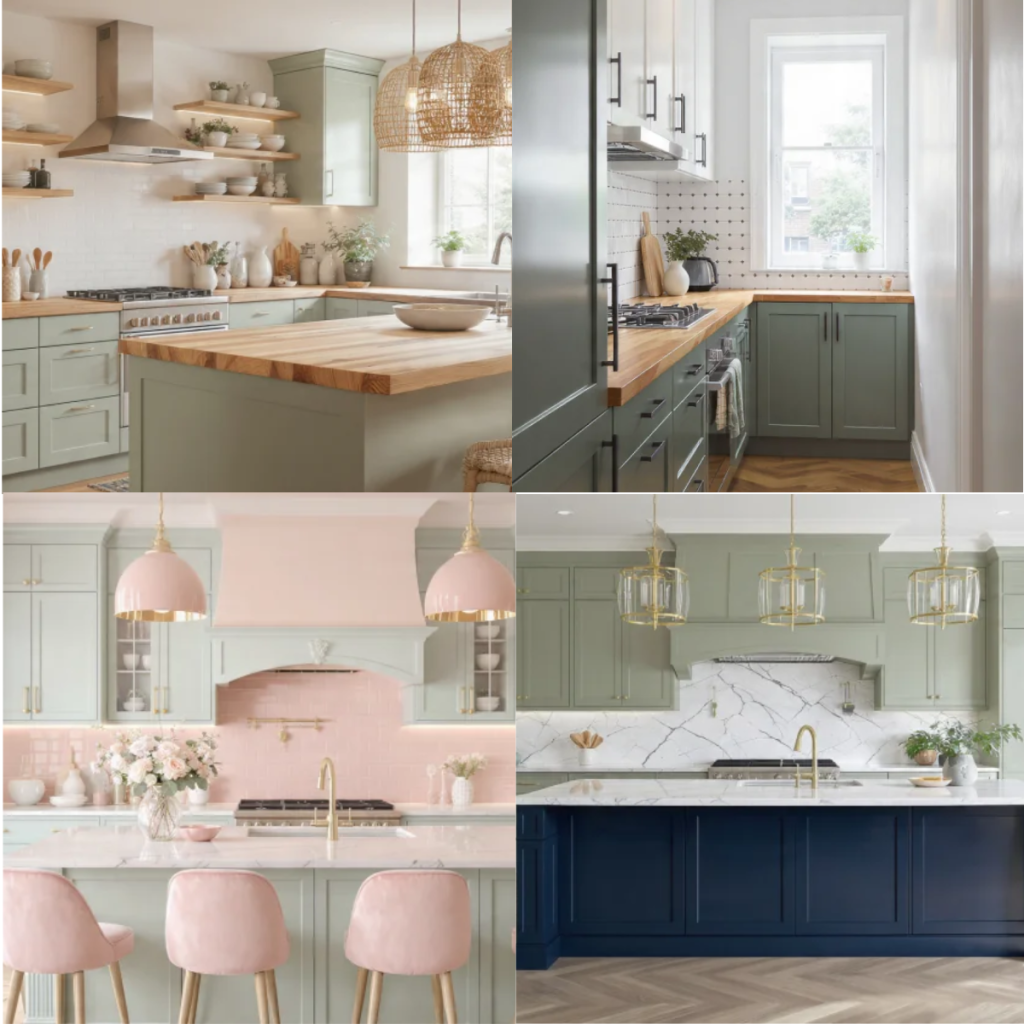
Soft, sophisticated, and surprisingly versatile—discover why sage green has become the new neutral for kitchens in 2026
In a world of fleeting design trends, some colors transcend the moment to become enduring classics. Sage green kitchen cabinets have emerged as one such shade—a hue that sits perfectly between gray and green, offering warmth, calmness, and understated elegance that feels both contemporary and timeless .
What makes sage green so compelling for kitchens? It’s the color’s remarkable ability to act like a neutral while still delivering personality. Unlike bold, saturated colors that can overwhelm a space or feel dated within a few years, sage green brings a gentle sense of calm to the heart of the home without dominating it . As interior designer Kerrie Kelly puts it, “Unlike trend-driven colors that feel tied to a specific moment, sage has a familiarity that feels grounded and reassuring” .
This versatility means sage green works across virtually every kitchen style—from modern minimalist to cozy farmhouse, from compact urban galley kitchens to sprawling open-plan spaces . Whether you’re planning a complete renovation or considering a cabinet refresh, sage green offers a sophisticated alternative to basic white or gray, bringing the tranquility of nature indoors while maintaining a timeless appeal that won’t feel dated in years to come.
Choosing the Right Shade of Sage
Understanding Undertones
Not all sage greens are created equal. The shade you choose will dramatically impact the final look and feel of your kitchen:
| Undertone | Best For | Pair With |
|---|---|---|
| Yellow/Gold Undertone | Warm, cozy spaces; traditional kitchens; rooms with northern light | Warm woods, cream, brass, terracotta |
| Gray/Blue Undertone | Modern, cool spaces; contemporary kitchens; rooms with southern light | White, marble, chrome, navy, black |
| Olive/Green Dominant | Heritage, established looks; country kitchens | Butcher block, brick, copper, dark wood |
| Mint/Pale Sage | Small spaces; airy, light kitchens | White, pink, gold, light woods |
13 Sage Green Kitchen Cabinet Ideas to Inspire Your Design
1. All-Sage Cohesion: The Full Commitment
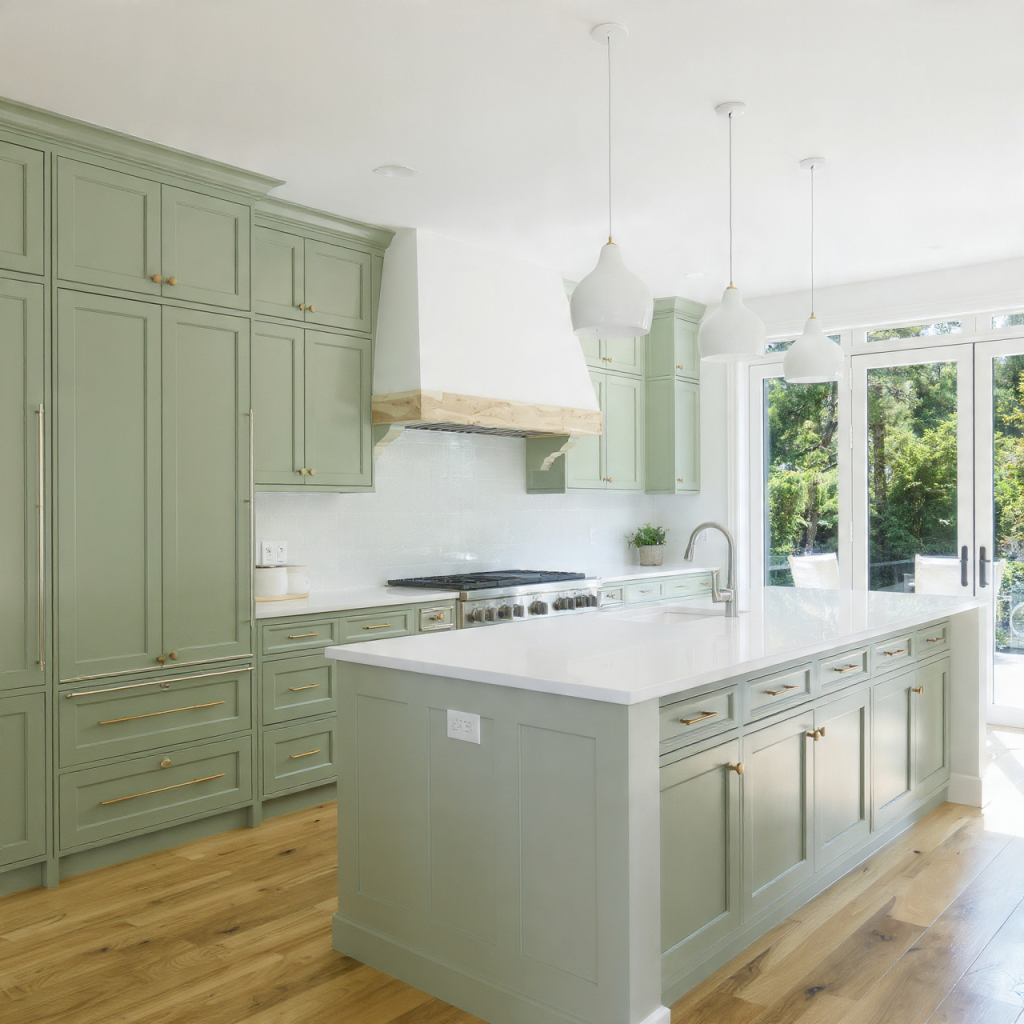
For a kitchen that feels serene and unified, paint every cabinet—upper, lower, and island—in a consistent sage green shade. This approach creates a calming, cohesive environment where the color acts as architecture rather than accent . The continuous green surface grounds the space beautifully, especially when balanced with white countertops and pendant lighting that carve out contrast. Choose slab-style doors for a modern edge or shaker profiles for timeless charm.
2. Two-Tone Balance: Sage Base + White Uppers
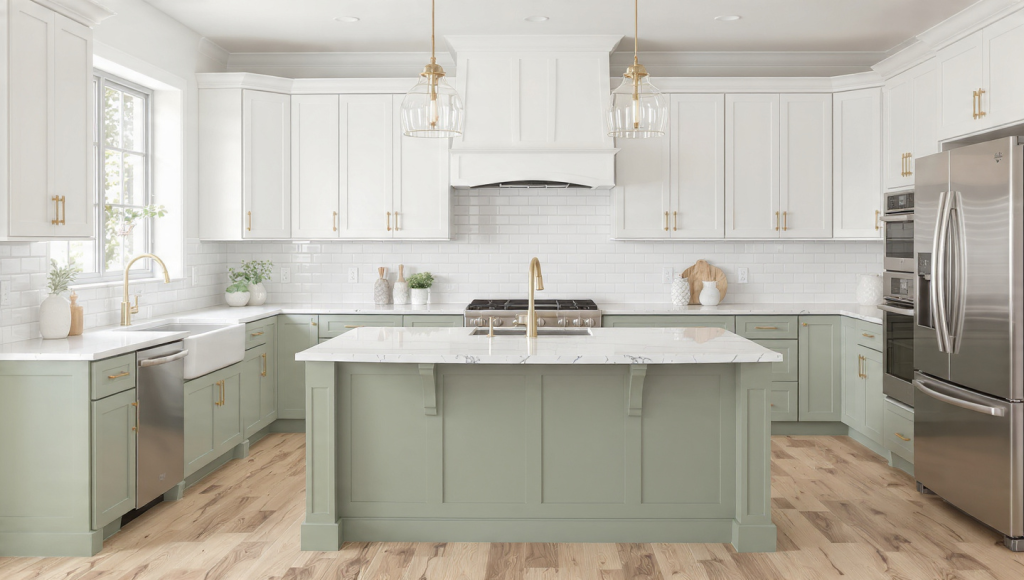
One of the most popular approaches for both aesthetic and practical reasons, this combination uses sage green on lower cabinets while keeping upper cabinets crisp white . The white uppers reflect light and visually lift the ceiling, making the room feel wider and brighter—particularly effective in smaller kitchens. The sage bases ground the space and hide scuffs and marks better than lighter colors . Complete the look with a white subway tile backsplash for a fresh, clean aesthetic.
3. Sage Island Statement
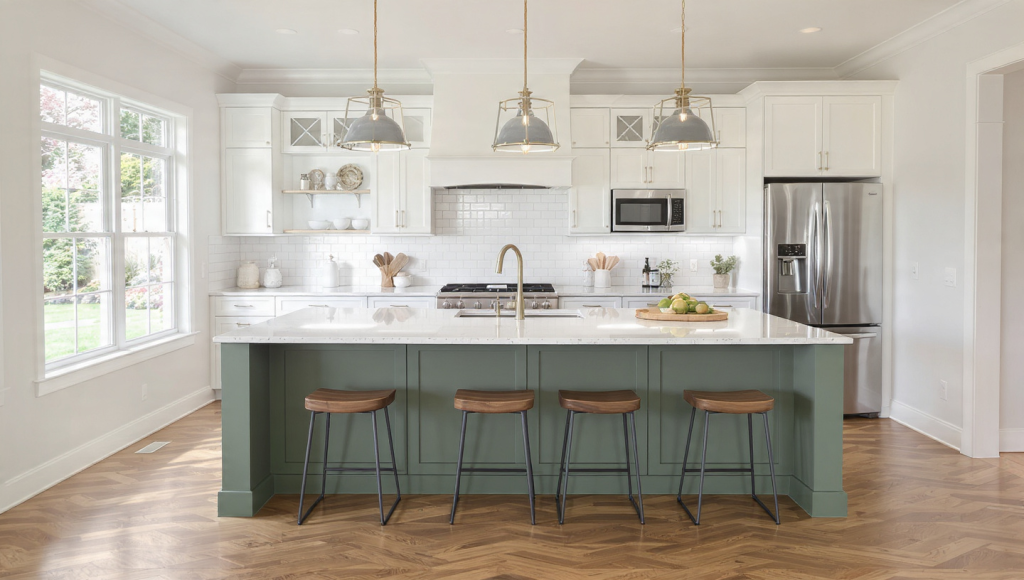
If you’re not ready to commit to full sage cabinetry, make your kitchen island the focal point by painting it sage green while keeping surrounding cabinets in a lighter neutral. This approach adds personality and defines the island as a distinct zone within the kitchen. Pair with white quartz countertops and natural wood bar stools for a balanced look that feels both modern and inviting .
4. Natural Wood Warmth
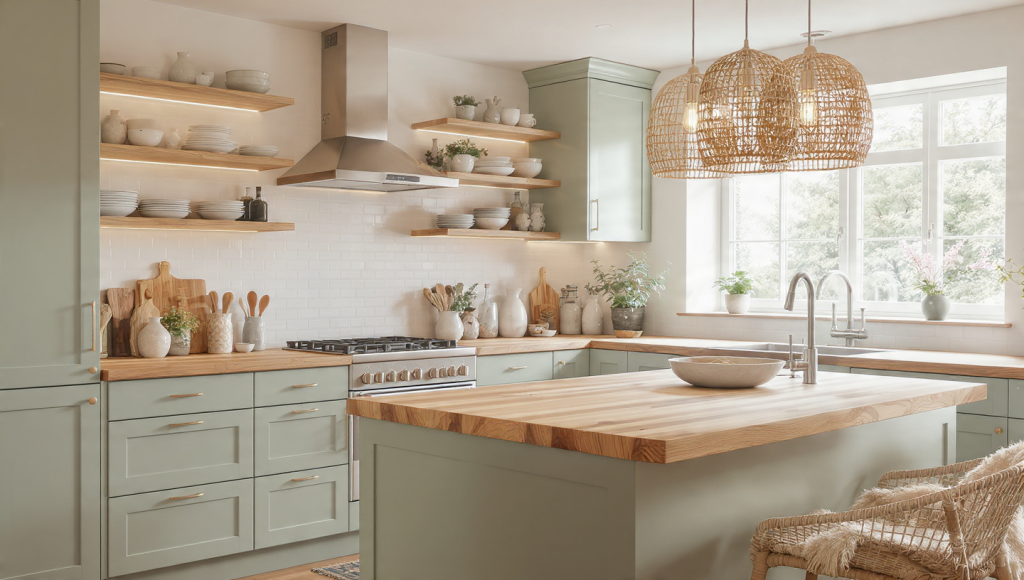
Sage green and timber are natural companions, creating a warm, organic feel that’s particularly suited to country or Scandinavian-inspired kitchens. Lighter woods like oak bring a relaxed, almost Nordic feel, while darker timbers such as walnut introduce more contrast and depth . Open wood shelving, butcher block countertops, or a wooden island are excellent ways to introduce this pairing without committing to full wood cabinetry .
5. Marble and Sage Elegance
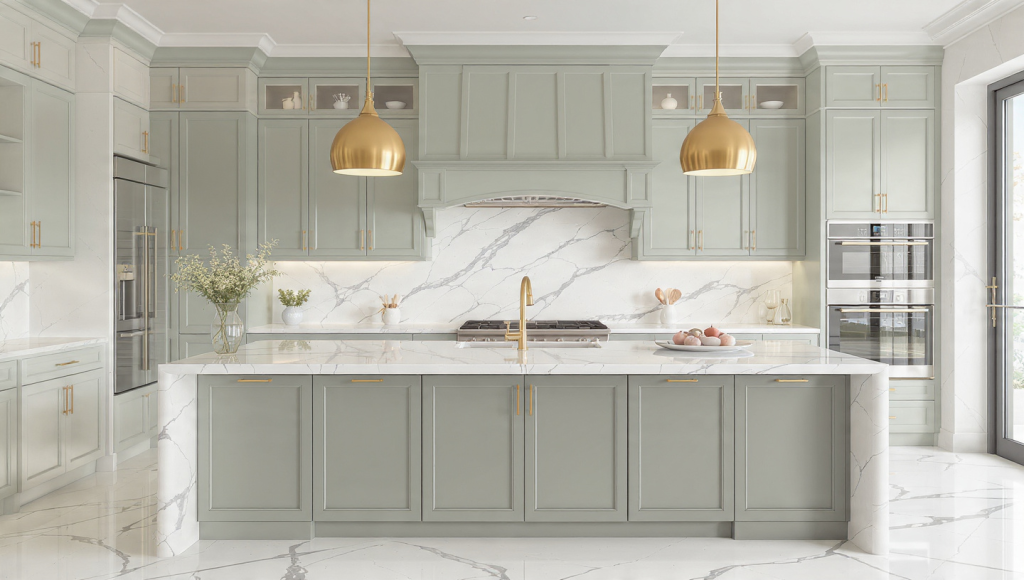
For a kitchen that feels luxurious and high-end, pair sage green cabinets with marble countertops and backsplashes. The soft green tone tempers the drama of marble veining, keeping the space cohesive rather than overwhelming . Choose white or light gray marble with subtle veining to maintain a light, airy feel, or go for bolder veining for more visual impact. Brass hardware elevates the look further, adding warmth and precision.
6. Brass and Gold Accents
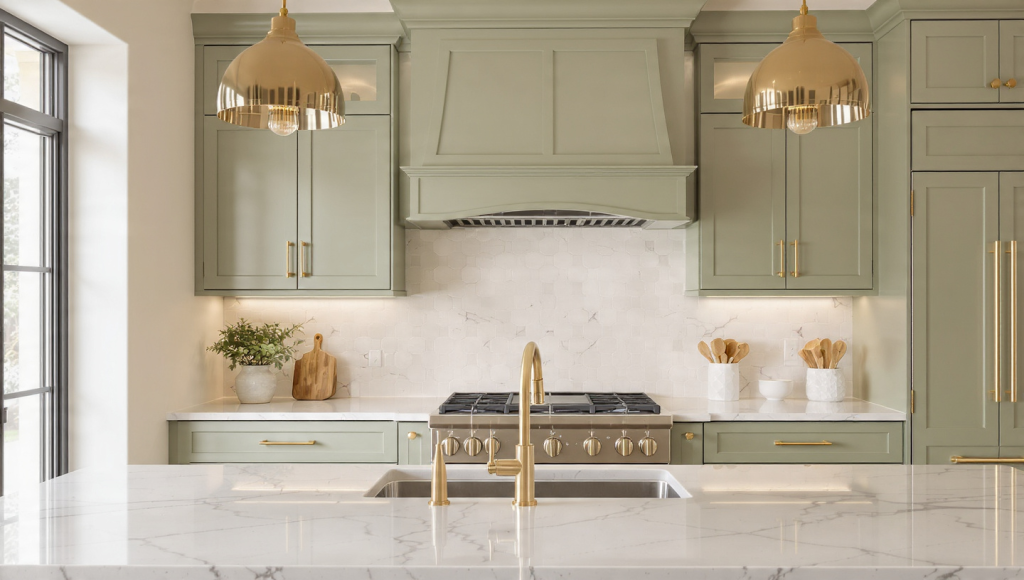
Hardware choices significantly shape the overall style of a sage green kitchen. Brushed brass and champagne gold finishes add warmth and elegance, bringing out the earthy undertones in the green . The contrast between soft sage and warm metal creates a curated, intentional look that feels sophisticated and timeless. Use brass on cabinet pulls, faucets, and pendant lighting to weave a consistent metallic thread throughout the space .
7. Matte Black Contrast
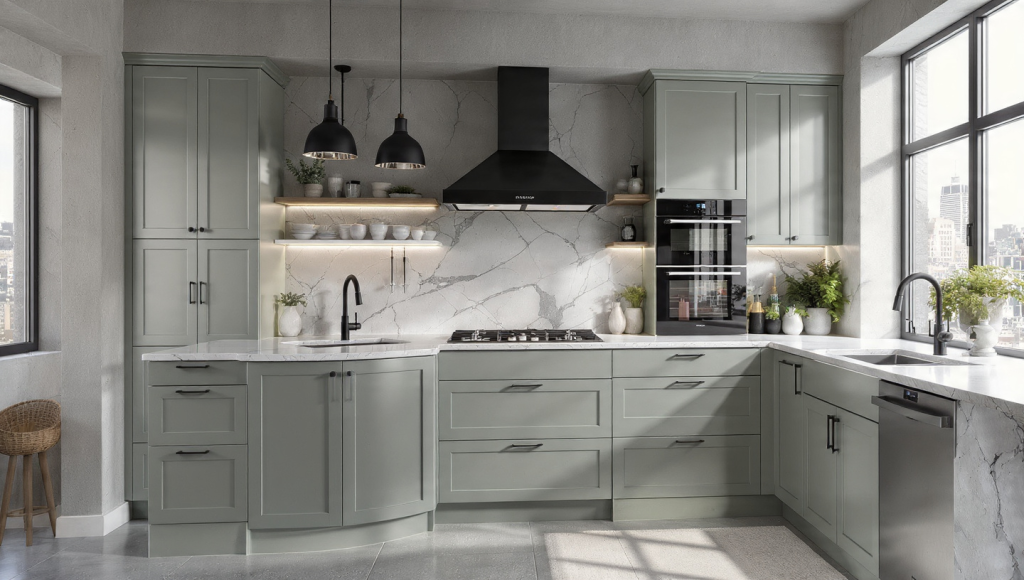
For a more contemporary, edgy aesthetic, pair sage green cabinets with matte black hardware, fixtures, and lighting. This combination creates sharp, graphic lines that give the soft green a modern edge . Black range hoods, cabinet pulls, and light fixtures create striking contrast against sage cabinetry, lending an industrial-inspired feel that works particularly well in modern kitchens .
8. Glass-Front Sage Classics
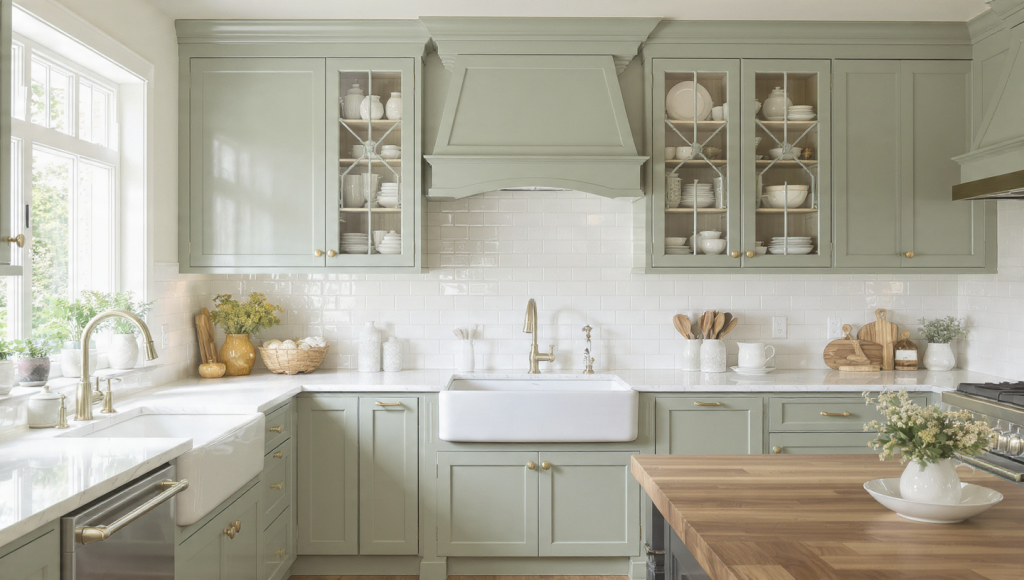
Introduce rhythm and transparency to your sage kitchen with glass-front upper cabinets. The soft green tone on classic shaker doors balances beautifully with white quartz countertops and pale backsplashes, creating a layered but controlled palette . Glass-front cabinets also offer the opportunity to display dishware or glassware, adding visual interest and breaking up the expanse of solid cabinetry.
9. Galley Kitchen Sage Solution
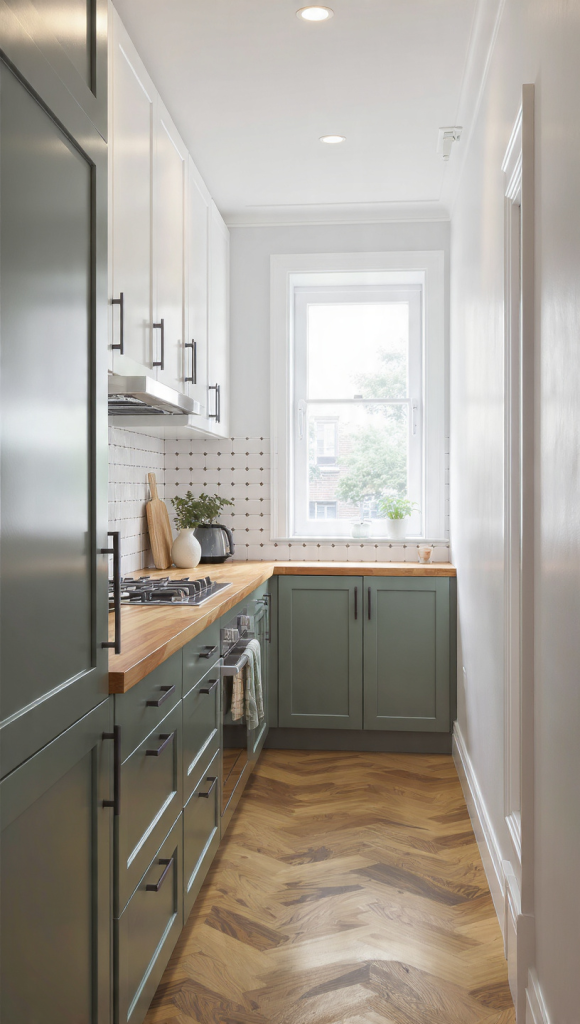
In narrow galley kitchens, sage green lower cabinets bring depth to a tight footprint while white uppers keep the corridor feeling open and airy . Wood countertops add warmth and texture, while matte black hardware sharpens the green and gives it a modern outline. This approach proves that sage green works just as effectively in compact spaces as it does in large, open-plan kitchens.
10. Rustic Brick and Sage
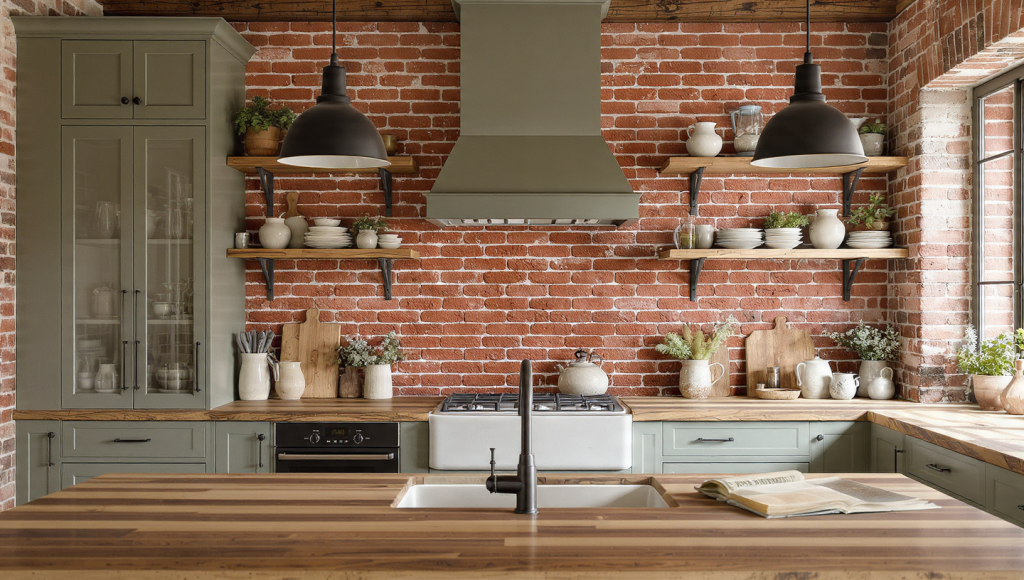
For a kitchen with character, pair sage green cabinetry with exposed brick walls or a brick feature wall. The muted green shade bridges old and new materials, connecting rustic brick texture with painted panels . Black metal brackets and natural wood shelves break up the green while maintaining flow, and the sage acts as a quiet backdrop that lets the architectural materials stand out.
11. Heritage Green with Butcher Block
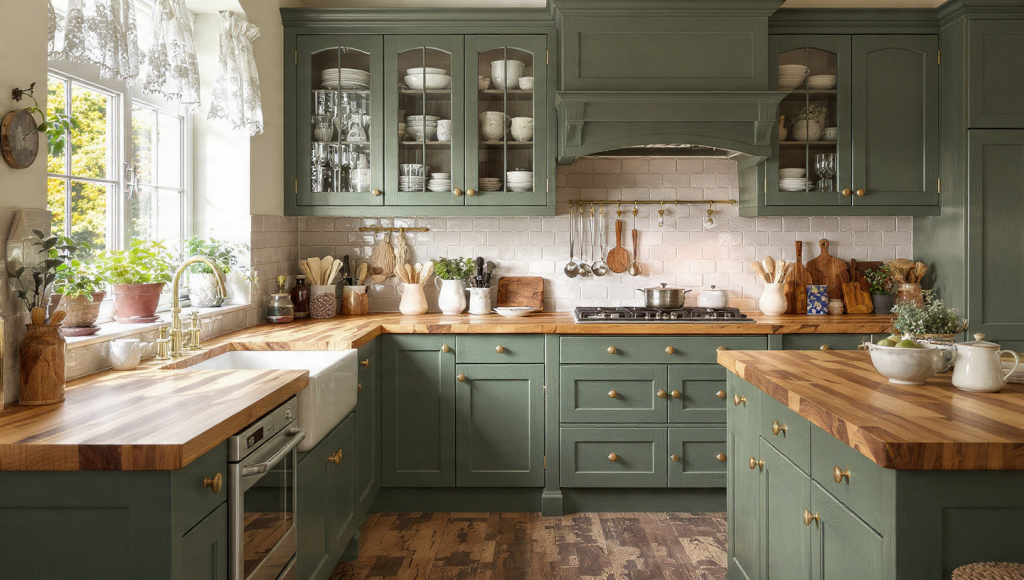
For a deeper, more heritage feel, choose a richer sage tone that leans toward olive and pair it with a butcher block prep surface. This combination brings pattern and warmth to the kitchen, creating a space that feels established and confident . Glass-front uppers lighten the upper wall, preventing the darker green from feeling heavy, while dark wood floors add to the grounded, traditional atmosphere.
12. Soft Sage with Pink Accents
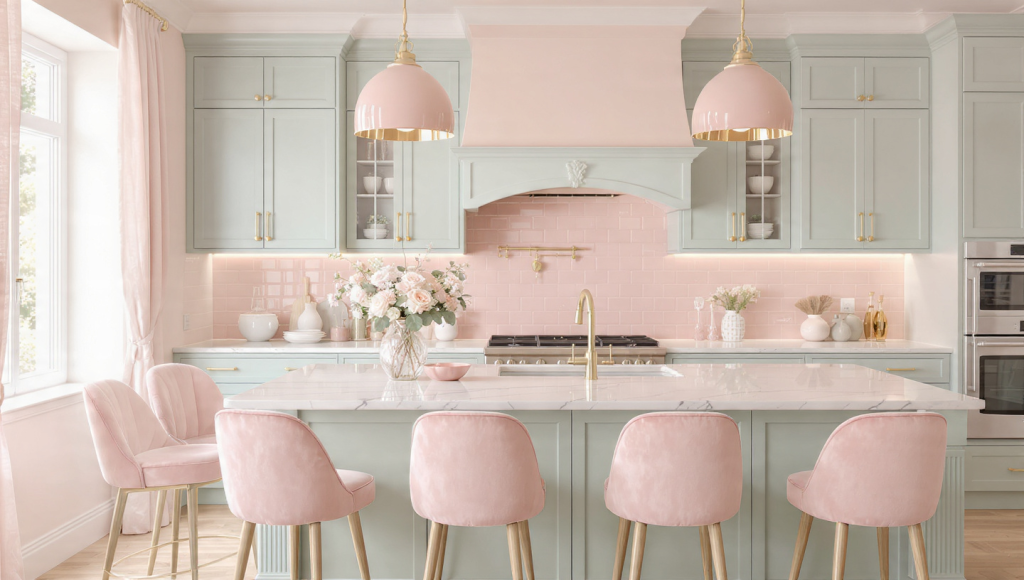
A fresh and unexpected combination, pale pink accents paired with sage green create a romantic, inviting atmosphere. Introduce this pairing through pink bar stools, pendant lights, or decorative items to add gentle warmth to the room . For a bolder statement, use blush pink on a feature wall or backsplash tiles. The combination feels whimsical yet sophisticated, and the soft hues work together harmoniously without competing.
13. Navy Blue Contrast for Sophistication
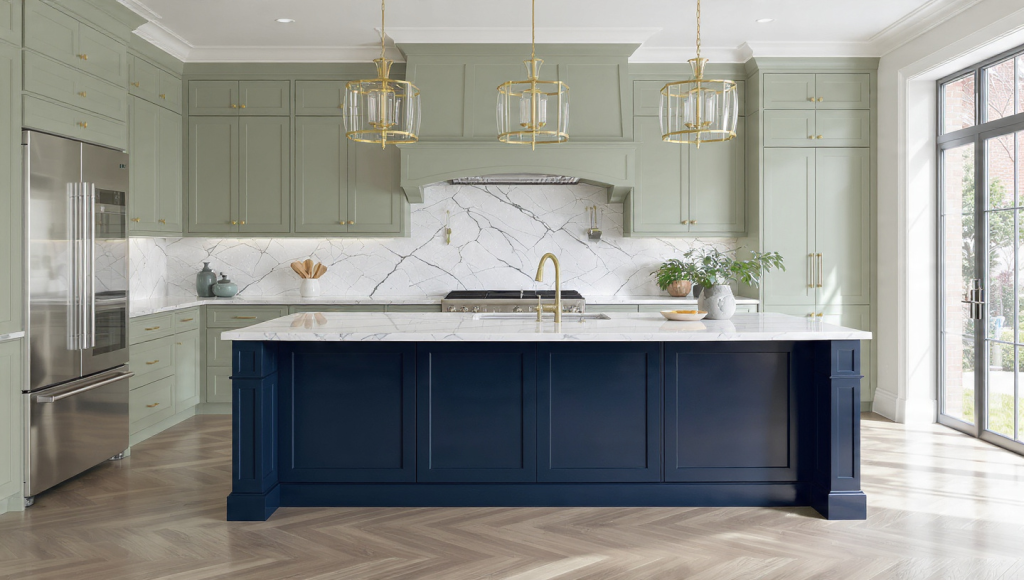
For a rich, elegant contrast, pair sage green cabinetry with navy blue accents. This could mean navy blue walls, a navy island paired with sage perimeter cabinets, or navy accessories and textiles . The deep blue provides a sophisticated counterpoint to the soft green, creating a kitchen that feels layered, intentional, and visually dynamic.
Best Countertop Materials for Sage Green Cabinets
Choosing the right countertop is crucial to achieving a cohesive look. Here’s how different materials complement sage green:
White Quartz or Marble
The classic pairing, white countertops create the cleanest, crispest contrast with sage green. Marble adds luxury and drama with its veining, while quartz offers durability and a more uniform appearance.
Butcher Block Wood
For warmth and texture, natural wood countertops are unbeatable. Oak, walnut, and maple all work beautifully, with lighter woods creating a Scandinavian feel and darker woods adding heritage richness.
Dark Granite or Soapstone
For a more dramatic, grounded look, dark countertops provide stunning contrast. Black or charcoal surfaces make sage cabinets feel substantial and sophisticated.
Concrete or Terrazzo
For contemporary kitchens, concrete or terrazzo countertops add industrial texture and subtle patterns that complement sage’s earthy nature.
Hardware and Fixture Pairings
The hardware you choose will define the overall style of your sage kitchen:
| Hardware Finish | Style Vibe | Best With |
|---|---|---|
| Brushed Brass | Elegant, warm, timeless | Traditional, transitional, classic kitchens |
| Matte Black | Modern, edgy, graphic | Contemporary, industrial, minimalist kitchens |
| Chrome/Silver | Clean, crisp, cool | Modern, coastal, contemporary kitchens |
| Oil-Rubbed Bronze | Rustic, earthy, heritage | Farmhouse, country, traditional kitchens |
| Unlacquered Brass | Evolving, authentic, patina | Vintage, classic, European-inspired kitchens |
Backsplash Ideas for Sage Green Kitchens
The backsplash ties the entire kitchen together. Consider these options:
- White Subway Tile – The timeless classic that never fails
- Zellige or Handmade Tile – Adds texture and artisanal character
- Marble or Stone Slab – Creates a seamless, luxurious look
- Geometric or Patterned Tile – Adds personality and visual interest
- Brick or Exposed Material – Brings rustic, industrial charm
- Glass Tile – Reflects light and adds a modern touch
Lighting Considerations for Sage Green Cabinets
Lighting can make or break a sage green kitchen. Here’s what to consider:
Natural Light
In north-facing rooms with cooler light, choose sage with warmer, yellow-based undertones to prevent the space from feeling too cold. In south-facing rooms with warm light, cooler gray-based sages will appear balanced and fresh.
Artificial Light
LED lighting with a warm color temperature (2700K-3000K) will bring out the warmth in sage green, while cool white light can make it appear dull and flat. Under-cabinet lighting is essential for illuminating work surfaces and preventing the green from feeling heavy.
Statement Lighting
Pendant lights above an island or dining area offer an opportunity to introduce accent colors or metallic finishes that complement your sage cabinets.
Flooring Options to Complete the Look
| Flooring Type | Effect on Sage Cabinets |
|---|---|
| Light Oak/Wood | Creates a bright, Scandinavian, airy feel |
| Dark Walnut/Wood | Adds richness, warmth, and heritage depth |
| Whitewashed Wood | Enhances the fresh, coastal, cottage aesthetic |
| Natural Stone/Tile | Grounds the space with organic texture |
| Dark Tile/Slate | Creates dramatic contrast and modern edge |
| Terracotta | Adds warmth and Mediterranean character |
Styling Your Sage Green Kitchen
Once the major elements are in place, styling brings your kitchen to life:
Accessories and Decor
- Plants and Greenery – The obvious but perfect choice; fresh herbs, ferns, or trailing plants enhance the natural vibe
- Wooden Utensils and Boards – Reinforce the organic, warm aesthetic
- Ceramic and Stoneware – White, cream, or terracotta pottery looks stunning against sage
- Cookbooks – Stacked cookbooks add color, texture, and personality
- Fresh Flowers – Provide seasonal pops of color that change with the months
Textiles and Soft Furnishings
- Window Treatments – Linen or cotton curtains in cream, white, or soft patterns
- Rugs – Natural fiber rugs like jute or sisal add texture; patterned rugs can introduce accent colors
- Seat Cushions – An opportunity to introduce accent colors like mustard, rust, navy, or blush pink
Maintenance and Care for Sage Green Cabinets
Cleaning Tips
- Use a soft, damp cloth with mild soap for regular cleaning
- Avoid abrasive cleaners or scrubbers that can damage the finish
- Wipe up spills immediately to prevent staining
- Dry cabinets thoroughly to prevent water spots
Touch-Ups
- Keep a small amount of your cabinet paint color for touch-ups
- Address chips or scratches promptly to prevent further damage
- Consider using a high-quality cabinet paint that’s durable and washable
Long-Term Care
- Avoid placing cabinets in direct, harsh sunlight to prevent fading
- Use cabinet hardware that’s durable and easy to clean
- Consider a clear protective topcoat for high-use areas
Cost Considerations and Budgeting
Factors Affecting Cost
| Factor | Impact |
|---|---|
| Cabinet Material | Solid wood is more expensive than MDF or plywood |
| Cabinet Style | Custom or semi-custom costs more than stock cabinets |
| Door Style | Shaker is most affordable; intricate designs cost more |
| Paint Quality | Professional spray painting costs more but yields better results |
| Hardware | Quality hardware adds cost but improves longevity and appearance |
| Installation | Professional installation ensures quality but adds to budget |
Budget-Friendly Alternatives
- Paint existing cabinets rather than replacing them entirely
- Choose stock cabinets in a primed finish and paint them yourself
- Start with just the island or lower cabinets in sage and use white for the rest
- Update hardware and styling first to see if you love the color before committing fully
Common Mistakes to Avoid
1. Choosing the Wrong Undertone
Not testing your sage shade in your specific lighting conditions is one of the most common and costly mistakes. Always test before committing.
2. Overlooking Hardware Impact
The wrong hardware can make sage green feel dated or mismatched. Choose hardware that complements both the color and your overall style.
3. Forgetting About Lighting
Dark, poorly lit spaces can make sage green look muddy and dull. Plan for adequate lighting, especially under-cabinet lighting.
4. Ignoring the Rest of the Palette
Sage green doesn’t exist in isolation. Consider how it works with your flooring, countertops, backsplash, and adjacent rooms.
5. Being Too Matchy-Matchy
Avoid using the exact same green on every surface. Vary textures and tones for a more sophisticated, layered look.
6. Skimping on Paint Quality
Kitchen cabinets endure daily wear and tear. Use high-quality cabinet paint that’s durable and washable.
Sage Green with Different Design Styles
Modern Minimalist
- Flat-panel or slab doors in sage
- Simple, clean lines
- Minimal hardware or integrated pulls
- White or concrete countertops
- Sparse styling
Farmhouse
- Shaker-style doors in sage
- Open shelving
- Butcher block or marble countertops
- Vintage-inspired hardware
- Apothecary jars and fresh flowers
Traditional/Classic
- Detailed cabinet doors
- Brass or bronze hardware
- Marble or granite countertops
- Glass-front upper cabinets
- Classic styling
Contemporary
- Mix of sage and bold accent colors
- Sleek hardware in matte black or chrome
- Innovative materials
- Statement lighting
Coastal
- Lighter, cooler sage tones
- White or light wood elements
- Natural textures
- Beach-inspired accessories
13 Sage Green Kitchen Cabinet Ideas (Summary)
| # | Idea | Key Feature |
|---|---|---|
| 1 | All-Sage Cohesion | Uniform sage on all cabinets for a serene, unified look |
| 2 | Two-Tone Balance | Sage base + white uppers for light and grounded contrast |
| 3 | Sage Island Statement | Bold island in sage, neutral perimeter cabinets |
| 4 | Natural Wood Warmth | Sage + butcher block or oak for organic appeal |
| 5 | Marble and Sage Elegance | Luxurious pairing with marble countertops |
| 6 | Brass and Gold Accents | Warm metallic hardware for sophistication |
| 7 | Matte Black Contrast | Edgy, modern look with black fixtures |
| 8 | Glass-Front Sage Classics | Transparency and display with glass-front uppers |
| 9 | Galley Kitchen Sage Solution | Sage lower + white upper in narrow spaces |
| 10 | Rustic Brick and Sage | Exposed brick adds character and texture |
| 11 | Heritage Green with Butcher Block | Deeper sage tones with wooden surfaces |
| 12 | Soft Sage with Pink Accents | Romantic, whimsical combination |
| 13 | Navy Blue Contrast | Sophisticated pairing with deep navy |
Conclusion
Sage green kitchen cabinets represent more than just a passing trend—they embody a shift toward colors that are calming, versatile, and timeless. In an era where our homes have become sanctuaries, the kitchen’s role as the heart of the home demands a color that soothes rather than overwhelms.
The beauty of sage green lies in its remarkable adaptability. It can be paired with warm woods for a cozy, traditional feel or with sleek metals for modern sophistication. It works equally well in a cramped city galley kitchen as in a sprawling suburban open-plan space. It changes with the light, offering subtle variations that keep the space interesting throughout the day.
Perhaps most importantly, sage green ages gracefully. Unlike trend-driven colors that feel dated after a few seasons, sage has a timeless quality that feels just as relevant today as it did decades ago. Its connection to nature—to forests, gardens, and the outdoors—gives it an enduring appeal that transcends passing fads.
Whether you commit to full sage cabinetry or introduce the color through an island or lower cabinets, this gentle green shade brings warmth, sophistication, and a welcome connection to nature into the heart of your home. It’s a choice that reflects not just a design preference but a lifestyle—one that values calm, balance, and timeless beauty.
As you plan your kitchen renovation, consider sage green not just as a color choice but as an investment in a space that will bring you daily joy for years to come. The right shade, paired thoughtfully with complementary materials and finishes, will create a kitchen that feels both contemporary and classic—a space where memories are made and meals are shared, wrapped in the serene embrace of nature’s most calming hue.
