The basement often gets overlooked when it comes to thoughtful design—but what if it could become the most beloved space in your home? A well-designed basement guest bedroom offers more than just a place for visitors to sleep; it provides a quiet retreat, a private sanctuary, and valuable extra living space that increases your home’s functionality .
The key lies in working with the space rather than against it. While basements may lack abundant natural light and sometimes have low ceilings, these very characteristics can become assets when approached with the right design strategy . Warm layered lighting, carefully chosen colors, and thoughtful textures can transform a potentially dim room into a cozy haven that guests genuinely look forward to staying in .
Whether you’re working with a compact nook or a spacious lower level, the following 12 ideas will help you create a welcoming basement guest bedroom that feels intentional, comfortable, and stylish—never like an afterthought.
12 Basement Guest Bedroom Ideas
1. Embrace Warm Neutrals with Intentional Color
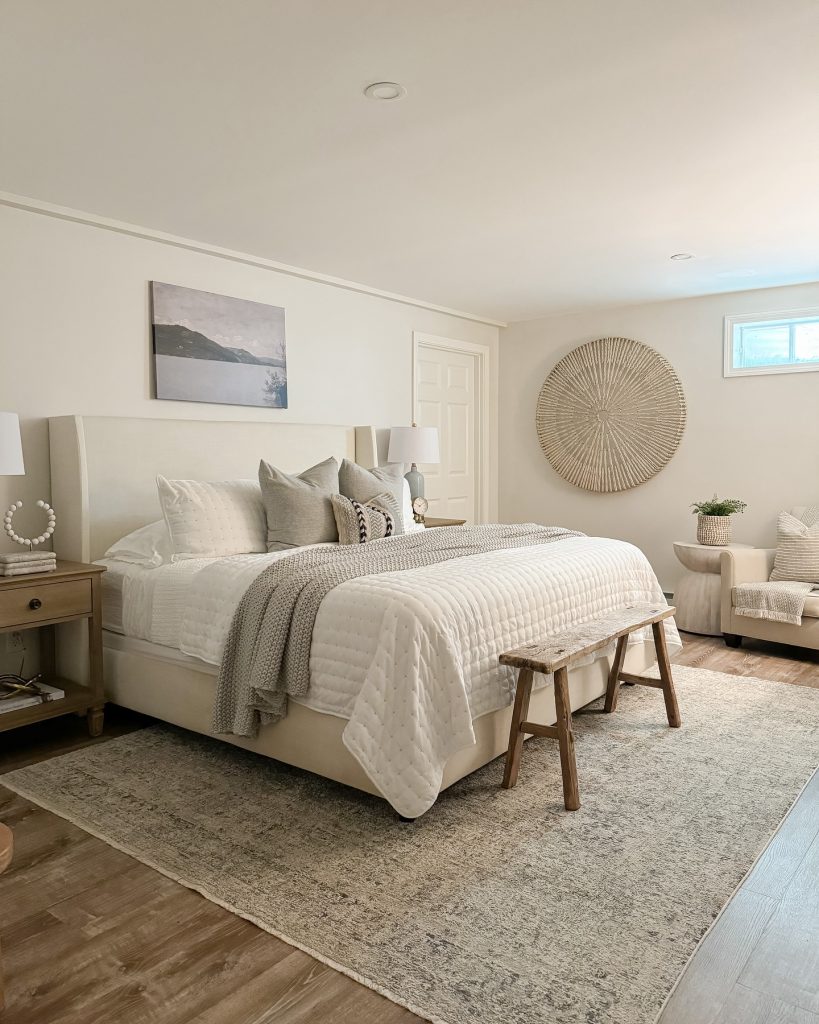
While pure white can feel sterile in a basement, warm neutrals like greige, soft beige, cream, and warm gray create a soothing atmosphere and help bounce existing light around the room . A clever trick for low ceilings is to paint the walls, trim, and ceiling the same warm shade to remove visual breaks and create the illusion of taller walls .
Pro Tip: Colors with a higher Light Reflective Value (LRV), such as pale sage green or warm cream tones, reflect light more effectively than cooler shades in windowless spaces .
2. Layer Your Lighting
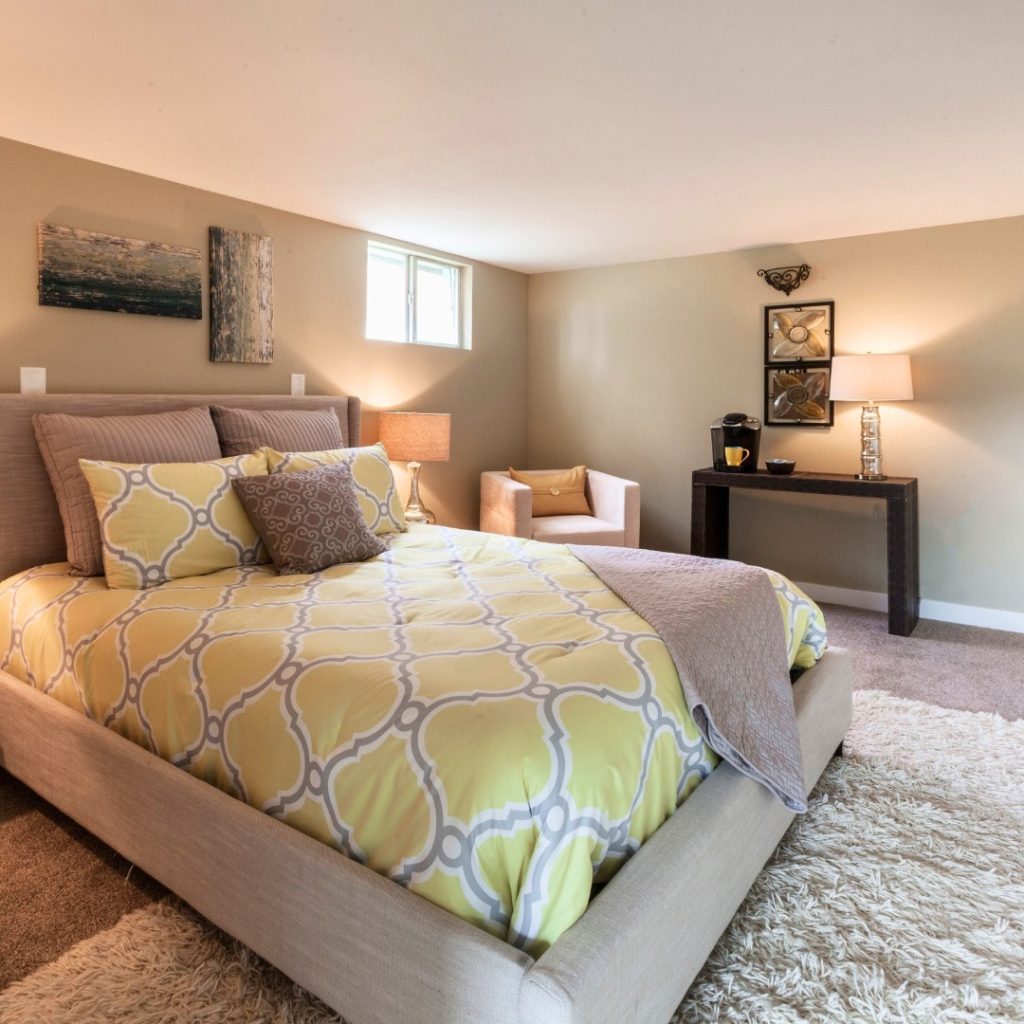
One overhead fixture alone will cast unflattering shadows and make the ceiling feel lower . Instead, incorporate a mix of table lamps, wall sconces, floor lamps, and recessed lighting. Choose bulbs in a warm color temperature (2700K–3000K) to mimic the cozy glow of traditional incandescent lighting .
Pro Tip: Install dimmer switches for flexibility—bright for cleaning or reading, soft and low for winding down .
3. Add a Large Mirror to Bounce Light
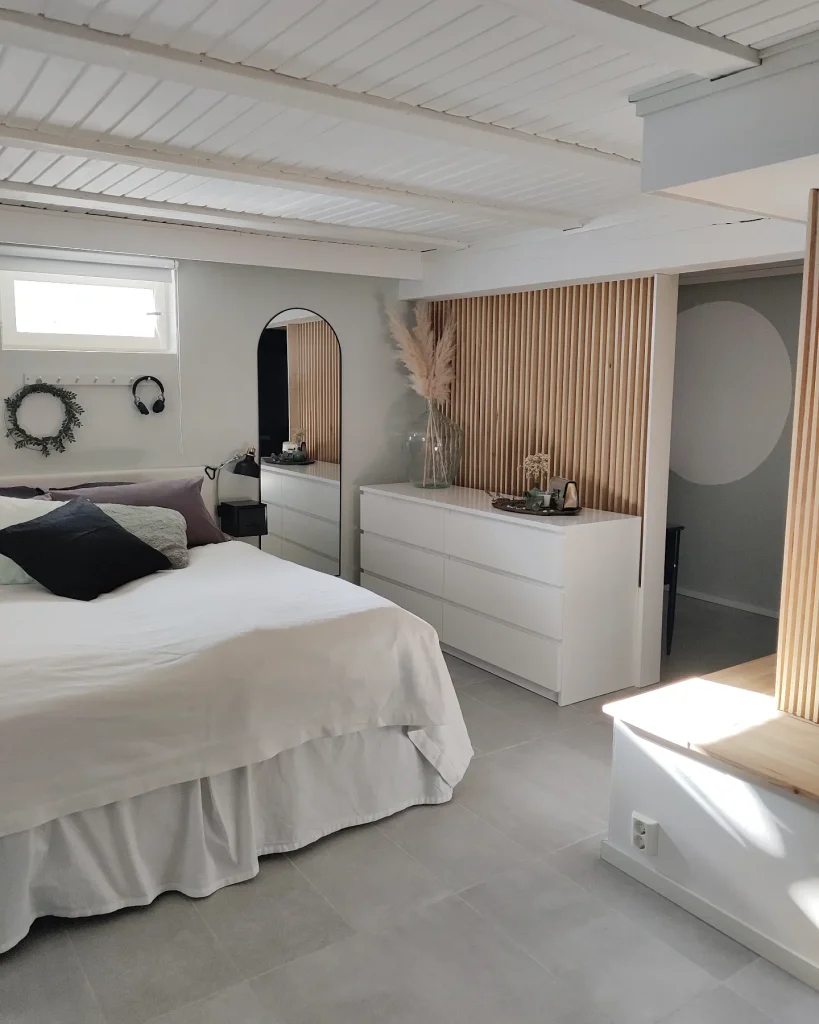
Mirrors are essential tools for basement bedrooms. Placing a large mirror opposite a light source reflects brightness and creates the illusion of depth, making the space feel larger and more open . A vintage or decorative mirror can also serve as a stunning focal point .
Pro Tip: A full-length mirror on the back of the closet door serves double duty for guests and amplifies light in the room.
4. Choose a Multifunctional Bed
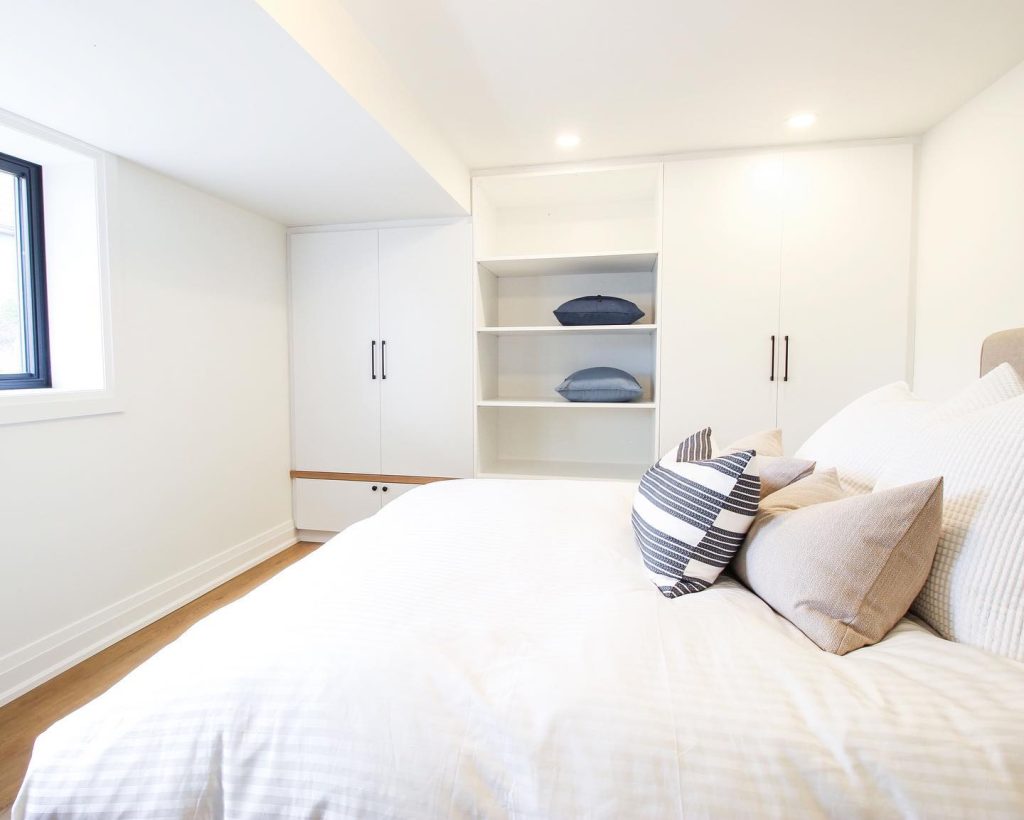
If space is tight, a Murphy bed (wall bed) frees up floor space during the day, allowing the room to serve as a home office, gym, or reading nook when guests aren’t visiting . Daybeds with trundles also work well for smaller basements, offering seating by day and sleeping by night .
Pro Tip: A queen bed typically offers the best balance of comfort and fit for most basement guest rooms—roomy enough for couples but not overwhelming in a small space .
5. Incorporate Built-in Storage
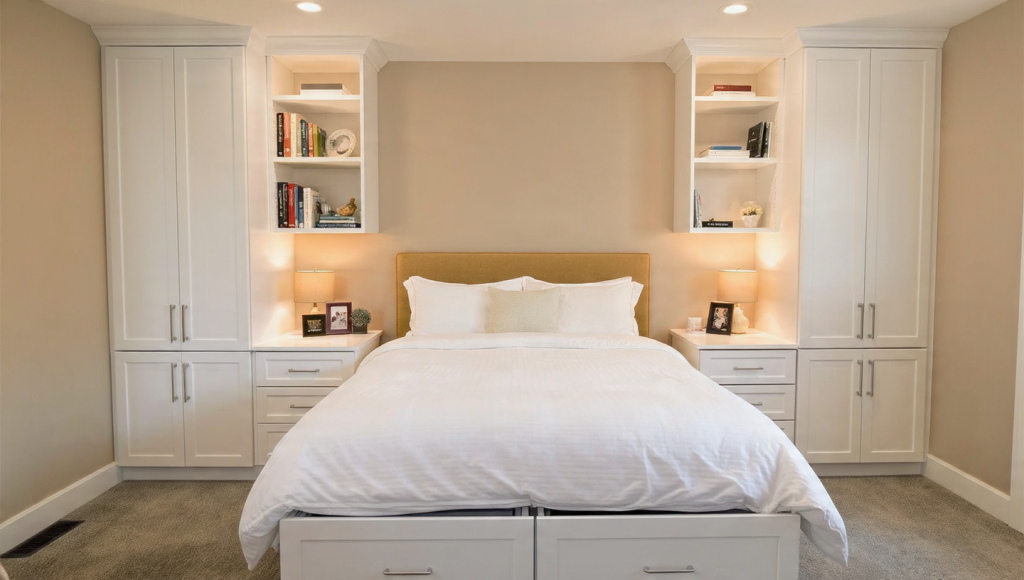
Basement guest rooms often lack closets or have limited square footage. Floor-to-ceiling cabinetry, floating shelves, and under-bed storage drawers keep clutter hidden while maximizing vertical space . A built-in bench with hidden storage at the foot of the bed adds seating and practicality .
Pro Tip: Custom built-ins can be designed to fit around awkward support beams or sloped ceilings, making the space feel polished and intentional .
6. Create a Cozy Reading Nook
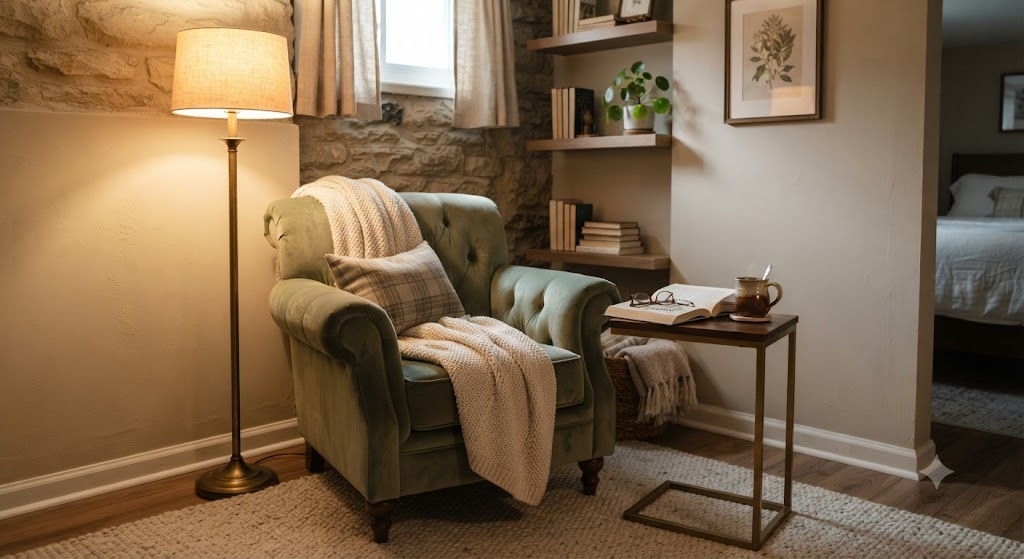
A small armchair with a soft throw and a floor lamp transforms an unused corner into a welcoming retreat where guests can relax with a book or enjoy their morning coffee . This simple addition signals that the room was designed for comfort, not just function.
Pro Tip: A C-shaped side table or a small floating shelf next to the chair provides a spot for books, glasses, or a mug without taking up floor space.
7. Soften the Floor with Rugs
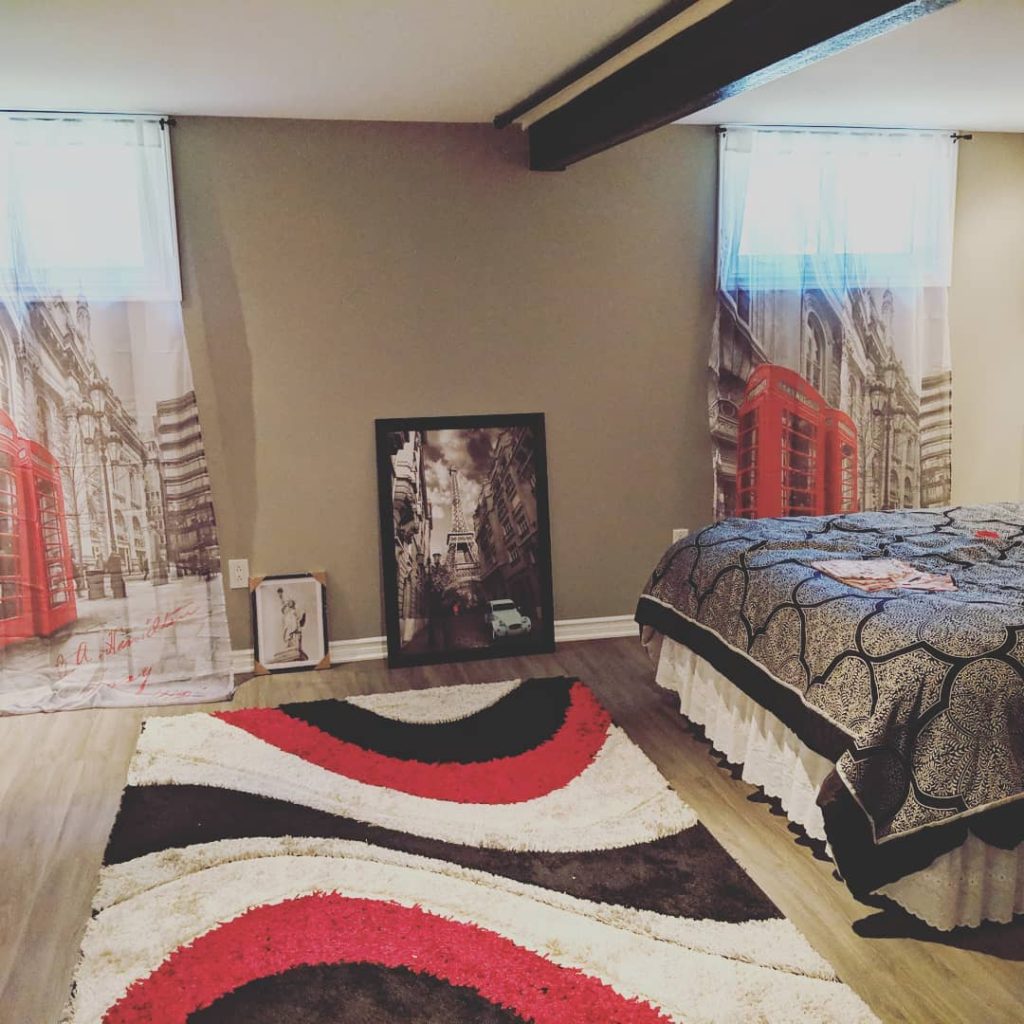
Basement floors—whether concrete, tile, or even carpet—can feel cold underfoot. A large area rug layered under the bed anchors the room and adds warmth, texture, and color . For added comfort, choose a rug with a thick pile or layer two rugs for a collected, cozy look .
Pro Tip: If you’re renovating, consider luxury vinyl plank in a warm wood tone for a durable, moisture-resistant foundation that still feels inviting .
8. Add Window Treatments for Softness
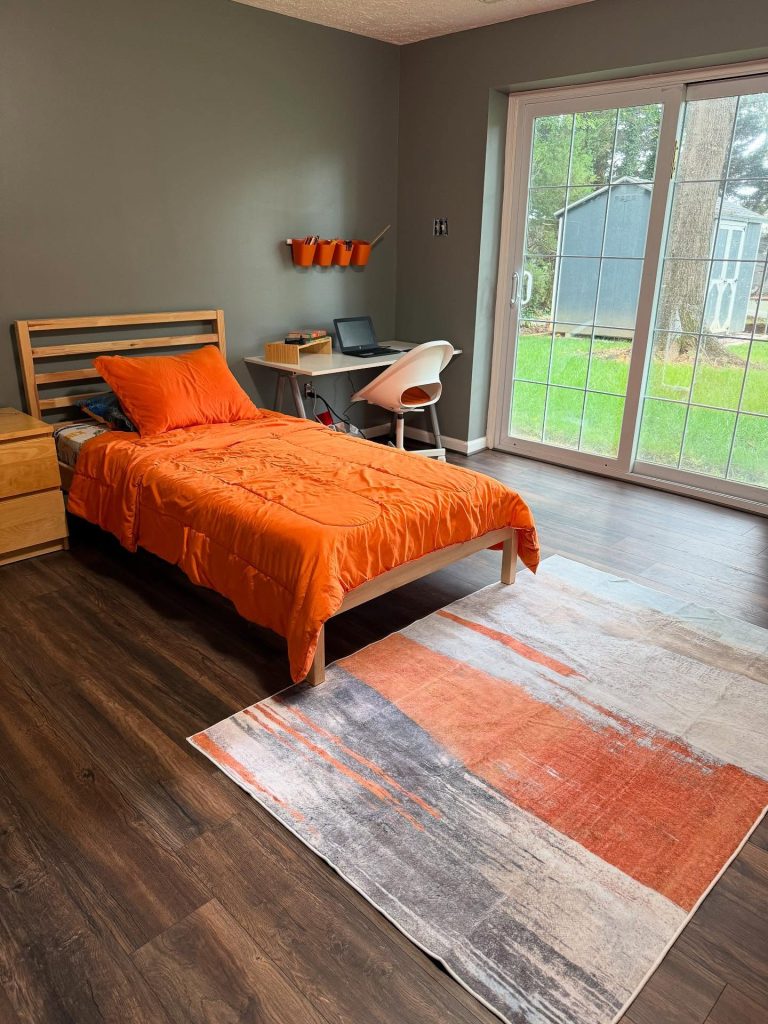
Even if your basement has small or high windows, soft drapery or Roman shades add a residential feel and soften hard architectural lines . Fabric panels also help absorb sound and can create the illusion of a window where none exists—simply hang curtains across a blank wall .
Pro Tip: Treat the walls like you would an above-grade bedroom; floor-length curtains add elegance and depth even without a window behind them .
9. Design with Textures and Layers
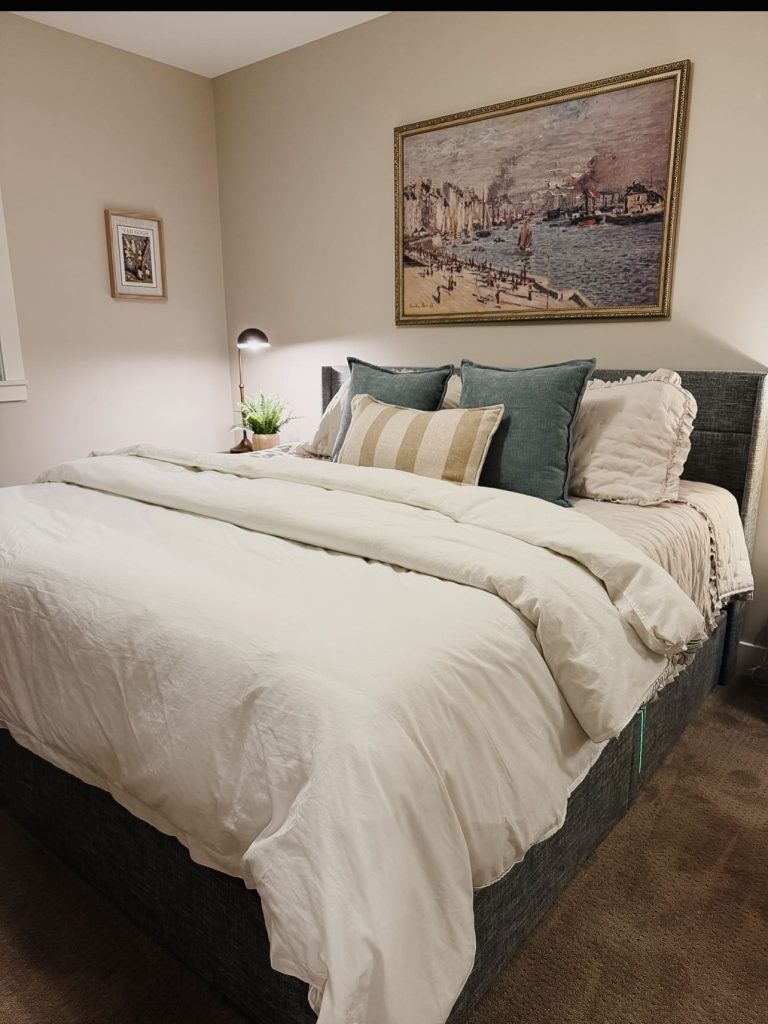
Cozy textiles make a basement feel warm and inviting. Layer bedding with a duvet, quilt, throw blankets, and an assortment of pillows in varying textures—boucle, velvet, faux fur, and chunky knits all add depth . A plush upholstered headboard or a bench at the foot of the bed adds comfort and visual softness .
Pro Tip: Add an extra blanket in a basket or at the end of the bed so guests can adjust their own comfort level .
10. Go Bold with an Accent Wall
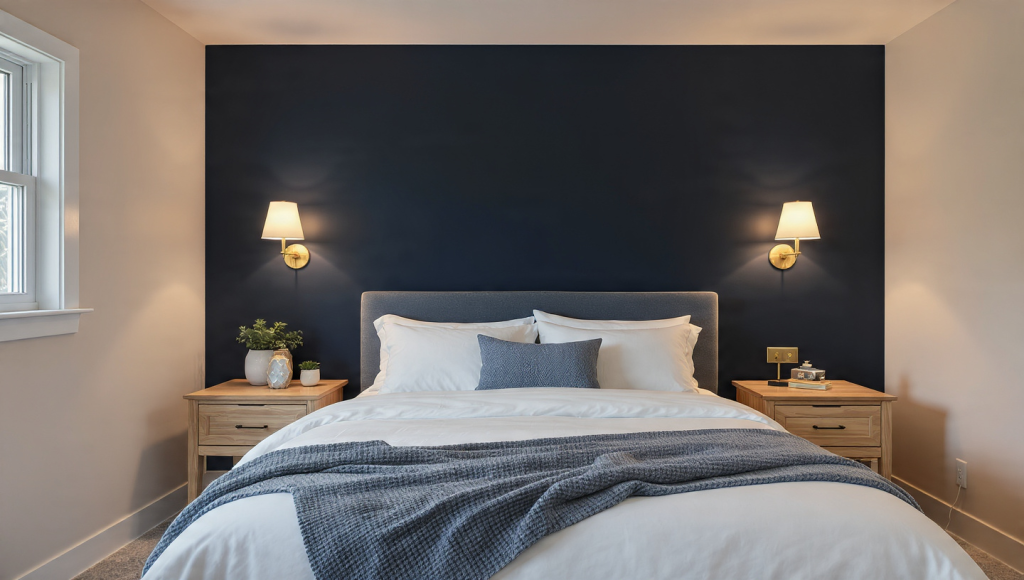
A deep navy, charcoal, or forest green accent wall can make a basement feel intimate and sophisticated rather than dark and gloomy . Pair bold walls with warm lighting and light bedding for balance. Alternatively, patterned wallpaper on one wall adds personality and becomes a natural focal point .
Pro Tip: “Accent walls are outdated,” says one designer, so consider creating a wallpaper panel framed by molding for a more timeless look .
11. Include Warm Wood Accents
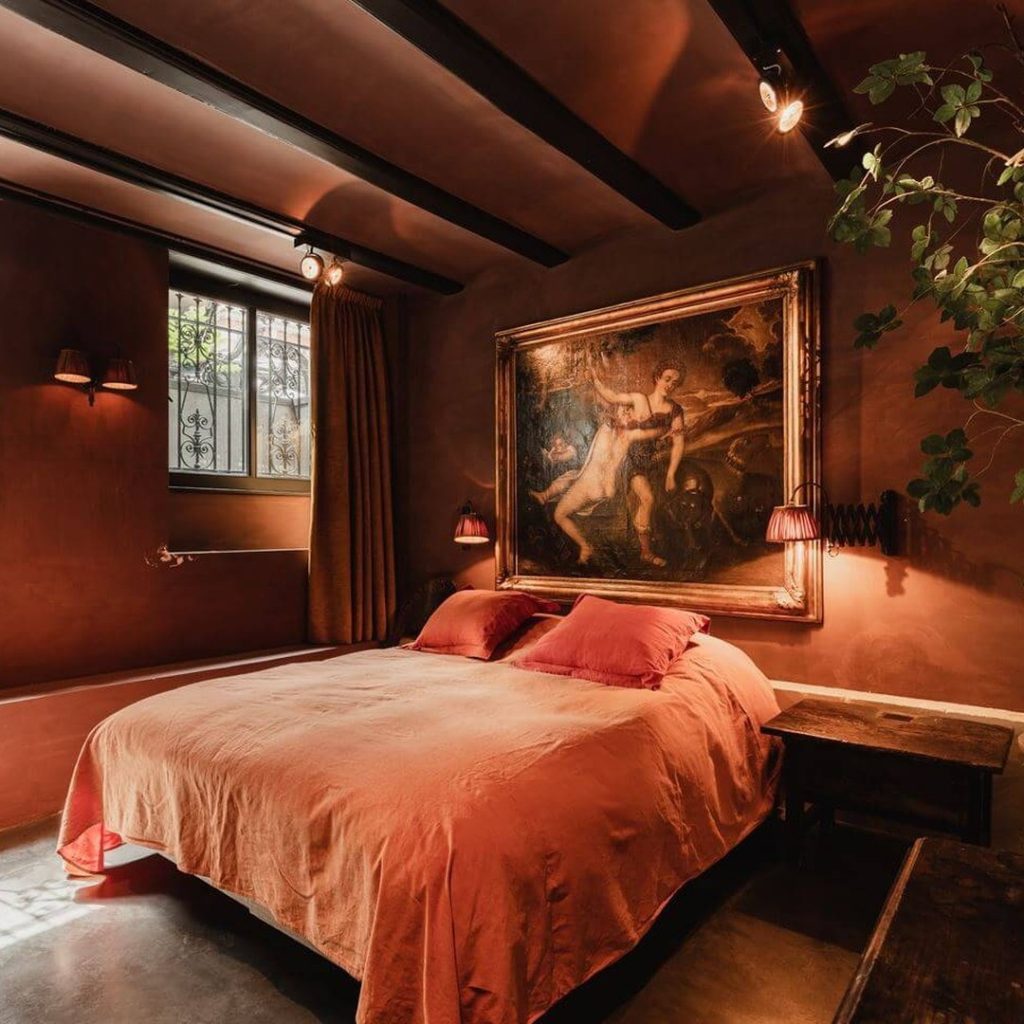
Wood tones add natural warmth to any basement. Whether it’s a rustic headboard, reclaimed wood ceiling, or a simple wooden side table, natural materials prevent the space from feeling cold or sterile . Light pine paneling can even evoke a cozy cabin feel .
Pro Tip: In a windowless space, a wood element with a warm finish adds the organic texture that makes a room feel livable rather than temporary.
12. Add Thoughtful Guest Amenities
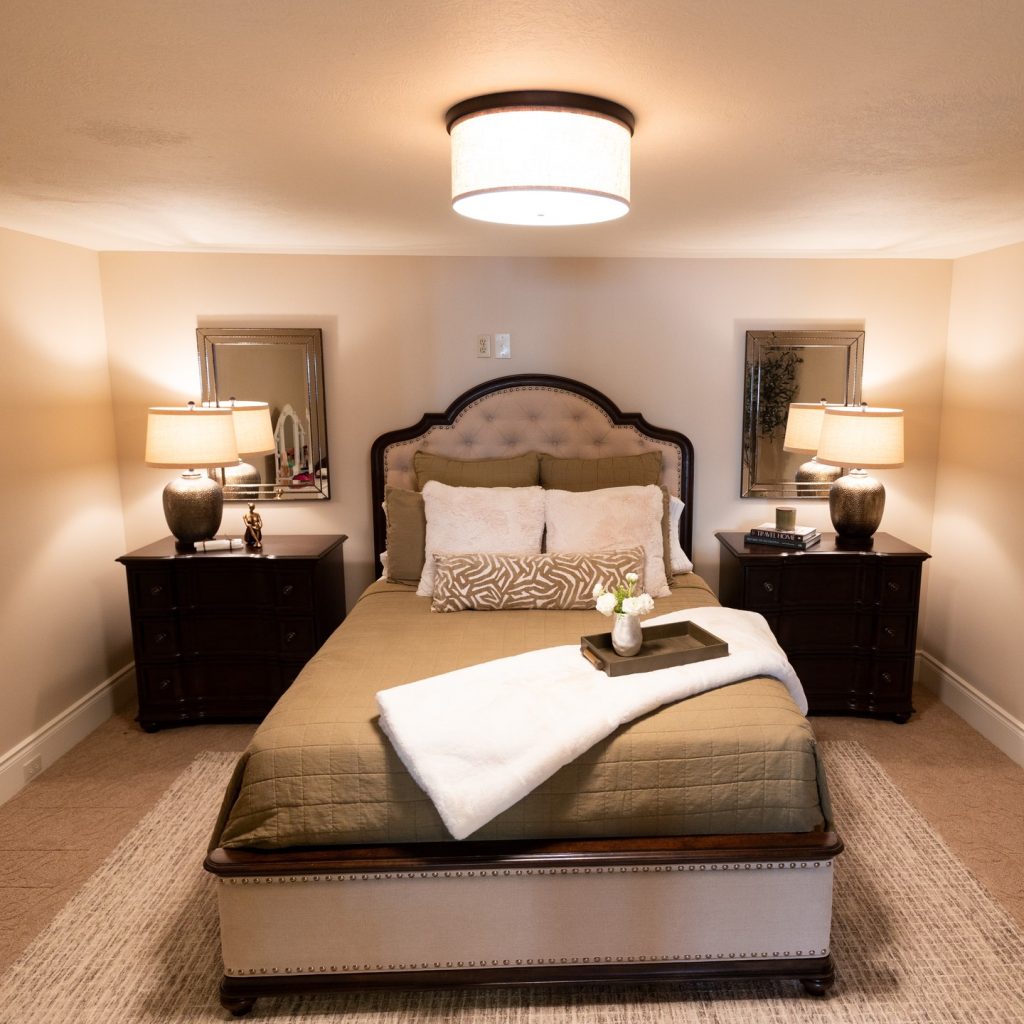
The small touches transform a basic bedroom into a memorable guest retreat. Provide a water carafe, phone chargers, a small coffee or tea station, and a basket with extra blankets and slippers . A wall-mounted TV and a small console table for luggage show that you’ve considered every detail of their stay .
Pro Tip: Keep a few essentials—toothbrush, travel-sized toiletries, and a lint roller—stocked in the closet. Guests will appreciate the thoughtful preparation.
Planning and Preparation: Before You Begin
Before diving into design choices, address the foundational elements that make a basement bedroom safe, comfortable, and functional.
Assess the Space
Start by measuring your basement’s dimensions, ceiling height, and noting any obstructions like support beams, utility pipes, or ductwork. These structural elements will influence furniture placement and built-in design.
Check Building Codes
Basement bedrooms must meet specific safety requirements:
- Egress window: Every bedroom requires a window large enough for emergency escape (minimum 5.7 square feet opening, with a sill height no more than 44 inches from the floor).
- Ceiling height: Most codes require at least 7 feet of clearance.
- Smoke detectors and carbon monoxide alarms: Must be hardwired and interconnected with the rest of the home.
Address Moisture and Humidity
Basements are prone to dampness. Before finishing the space:
- Test for radon and address any issues.
- Install a dehumidifier to maintain humidity levels below 50%.
- Use waterproofing treatments on walls and floors.
- Choose moisture-resistant materials like luxury vinyl plank, tile, or treated wood.
Plan for HVAC
Ensure your heating and cooling system extends to the basement. Proper ventilation prevents stuffiness and maintains comfortable temperatures year-round. Consider adding a dedicated zone or supplemental heating/cooling if needed.
Budget Considerations
Understanding costs helps you prioritize and plan effectively.
| Expense Category | Estimated Cost Range | Notes |
|---|---|---|
| Egress window installation | $2,500–$5,000 | Often the largest mandatory expense |
| Flooring (LVP or carpet) | $1,500–$4,000 | For a 12×14 room |
| Painting and wall finishing | $500–$1,500 | DIY vs. professional |
| Lighting fixtures | $200–$800 | Including installation |
| Furniture (bed, nightstands) | $800–$3,000 | Varies widely by quality |
| Area rug and textiles | $300–$1,000 | |
| Built-in storage solutions | $500–$3,000 | Custom vs. ready-made |
| Decor and accessories | $200–$600 | |
| Contingency fund | 15–20% of total | For unexpected issues |
Space Planning: Layout Considerations
Proper layout makes a small basement feel generous and a large basement feel purposeful.
For Small Basements (Under 120 sq ft)
- Choose a full or queen bed and position it against the longest wall.
- Use floating shelves instead of bulky nightstands.
- Opt for a wall-mounted TV to save floor space.
- Consider a Murphy bed for maximum flexibility.
For Medium Basements (120–200 sq ft)
- Create distinct zones: sleeping area, reading nook, and storage.
- Position the bed off-center to allow for a seating area.
- Include a small desk or vanity if space permits.
- Use area rugs to define separate zones.
For Large Basements (Over 200 sq ft)
- Consider adding a sitting area with a loveseat or two armchairs.
- Install a wet bar or coffee station.
- Create a walk-in closet area with built-in shelving.
- Leave room for a small table and chairs for meals or work.
Traffic Flow Tips
- Allow at least 30 inches of walking space around the bed.
- Ensure doors swing open fully without obstruction.
- Keep paths to the egress window clear at all times.
Storage Solutions: Making the Most of Every Inch
Basement guest rooms often lack traditional closets. Here are creative storage alternatives:
Built-in Wardrobes
Floor-to-ceiling built-ins with a combination of hanging rods, shelves, and drawers maximize vertical space. Paint them to match the walls for a seamless look.
Under-Bed Storage
Platform beds with integrated drawers or rolling bins underneath keep extra linens, pillows, and guest belongings organized and out of sight.
Wall-Mounted Storage
Floating shelves, pegboards, and wall hooks provide accessible storage without consuming floor space. Use decorative baskets to keep smaller items tidy.
Multifunctional Furniture
Ottomans with storage, benches with hinged tops, and headboards with built-in shelving all serve double duty.
Luggage Rack
A simple folding luggage rack is a thoughtful addition that keeps suitcases off the floor and furniture.
Color Palette Guide
Choosing the right colors can transform a dark basement into a bright, welcoming space.
| Color Family | Best Uses | Effects |
|---|---|---|
| Warm Neutrals (beige, greige, cream, warm gray) | Walls, ceilings, large surfaces | Reflect light, create warmth, make ceilings feel higher |
| Cool Neutrals (cool gray, white) | Use sparingly as accents | Can feel cold if overused; pair with warm textures |
| Pastels (pale sage, blush, soft blue) | Accent walls, bedding, accessories | Add softness and personality without overwhelming |
| Bold Darks (navy, charcoal, forest green) | Feature walls, furniture | Create drama and intimacy; balance with light bedding |
| Earthy Tones (terracotta, ochre, olive) | Accessories, throw pillows, rugs | Add organic warmth and depth |
Color Application Rules
- 80/20 Rule: Use 80% light, warm colors and 20% accent colors.
- Ceiling Strategy: Match the ceiling to the walls to eliminate visual breaks.
- Trim: Keep trim white or match it to wall color for a seamless look.
- Furniture: Dark furniture works well with light walls; light furniture suits bold accent walls.
Lighting Master Plan
A well-lit basement guest room relies on a strategic combination of light sources.
Ambient Lighting (General Illumination)
- Recessed ceiling lights with dimmer switches
- Flush-mount or semi-flush ceiling fixtures for lower ceilings
- Track lighting for directional flexibility
Task Lighting (Focused Illumination)
- Bedside table lamps for reading
- Wall-mounted swing-arm lamps for adjustable positioning
- Desk lamps if a workspace is included
Accent Lighting (Atmosphere)
- Wall sconces for warm, indirect glow
- LED strip lighting behind headboards or under shelves
- Candles (battery-operated for safety) for mood
Natural Light Enhancement
- Keep egress windows uncovered or use sheer curtains
- Use window film to diffuse light while maintaining privacy
- Place mirrors opposite windows to maximize reflection
Light Bulb Guide
- 2700K–3000K: Warm white (cozy, inviting)
- 3500K–4100K: Cool white (bright, task-focused)
- Daylight (5000K+): Avoid—too harsh and clinical
Essential Safety Considerations
Safety should never be compromised when designing a basement bedroom.
Egress Window Requirements
- Must provide a clear opening of at least 5.7 square feet
- Minimum opening width of 20 inches
- Minimum opening height of 24 inches
- Sill height no more than 44 inches from the floor
- Must be operable from the inside without keys or tools
Fire Safety
- Install smoke detectors in the bedroom and in the hallway outside
- Install carbon monoxide detectors near the sleeping area
- Ensure all detectors are hardwired and interconnected
- Create and share a fire escape plan with guests
Electrical Safety
- All outlets should be GFCI-protected
- Avoid overloading circuits with too many devices
- Use UL-listed extension cords temporarily only
Air Quality
- Maintain humidity below 50% to prevent mold
- Test for radon and install mitigation system if needed
- Ensure adequate ventilation from HVAC system
Maintaining Your Basement Guest Room
Regular maintenance keeps the space fresh and ready for visitors.
Weekly Tasks
- Dust surfaces and shelves
- Vacuum or sweep floors
- Change bedding between guests
- Check for musty odors
Monthly Tasks
- Test smoke and carbon monoxide detectors
- Check dehumidifier and empty as needed
- Inspect for any signs of moisture or mold
- Rotate pillows and fluff duvets
Seasonal Tasks
- Deep clean carpets and rugs
- Clean windows and window wells
- Check weatherstripping around egress windows
- Refresh air filters in HVAC system
Before Guest Arrival
- Air out the room 24 hours in advance
- Provide fresh towels and toiletries
- Add fresh flowers or a small plant
- Leave a welcome note with Wi-Fi password and house rules
Basement Guest Bedroom Checklist
Use this handy checklist to ensure no detail is overlooked.
Structural Essentials
- Egress window installed and compliant
- Ceiling height meets code requirements
- HVAC extends to the room
- Dehumidifier in place
- Radon test completed and safe
- Smoke and CO detectors installed
Design Elements
- Warm wall color selected
- Layered lighting plan (ambient, task, accent)
- Large mirror positioned for light reflection
- Area rug chosen for warmth
- Window treatments added
- Closet or storage solution in place
Furniture
- Bed (Murphy, daybed, or traditional)
- Quality mattress and bedding
- Nightstand or bedside surface
- Storage for guest belongings
- Seating (chair, bench, or ottoman)
- Luggage rack
Guest Amenities
- Phone charger available
- Water carafe and glass
- Coffee/tea station
- Extra blankets and pillows
- Bath towels and toiletries
- Wi-Fi password displayed
- House instructions (HVAC, lighting, locks)
Frequently Asked Questions
Q: Do I need a permit to add a basement bedroom?
A: Yes, most municipalities require building permits for finishing basements and adding bedrooms, especially when installing egress windows. Always check local regulations.
Q: How much does it cost to finish a basement bedroom?
A: Costs typically range from $10,000 to $30,000 for a basic bedroom, with higher-end finishes reaching $50,000 or more. The egress window is often the single largest expense.
Q: Can a basement room legally be called a bedroom?
A: To be legally considered a bedroom, the space must have an egress window, a closet (depending on local code), minimum ceiling height, and proper heating/cooling.
Q: How do I make a windowless basement feel bright?
A: Use warm light paint colors, layer multiple light sources, incorporate mirrors, choose light-colored furniture, and use LED lighting with warm color temperatures.
Q: What flooring works best in a basement?
A: Luxury vinyl plank, ceramic tile, and engineered wood are moisture-resistant options. If using carpet, choose a low-pile, moisture-resistant variety with a quality pad.
Q: How can I reduce basement humidity?
A: Use a dehumidifier, ensure proper grading outside, seal foundation cracks, install a sump pump if needed, and improve ventilation.
Conclusion
Transforming a basement into a guest bedroom is one of the most rewarding home improvements you can undertake. What might feel like a dark, neglected space can become a warm, welcoming retreat that adds significant value to your home and creates memorable experiences for your visitors.
The journey starts with the fundamentals—ensuring safety through proper egress windows, addressing moisture concerns, and planning adequate lighting. From there, your design choices bring the room to life. Warm neutrals, layered lighting, and thoughtful textures turn potential liabilities into assets. Mirrors and strategic color choices maximize light, while multifunctional furniture makes even the smallest spaces work hard. The extra touches—a reading nook, a coffee station, soft rugs underfoot—elevate the experience from basic accommodation to genuine hospitality.
Remember that the best basement guest bedrooms are those designed with intention. Every element, from the placement of a mirror to the choice of a throw pillow, contributes to the overall feeling of comfort and care. Your guests may not notice every detail consciously, but they will feel the result—a space that says, “We’re glad you’re here.”
Whether your budget allows for custom built-ins and professional finishes or you’re working with thrifted furniture and a fresh coat of paint, the principles remain the same. Focus on warmth, functionality, and those thoughtful details that make a stay special. With the right approach, your basement guest bedroom will become a favorite destination—a place guests look forward to returning to, and a source of pride in your home.
Final Thought: A well-designed basement guest bedroom isn’t just about giving visitors a place to sleep—it’s about giving them a place to feel truly at home.
