Monochromatic Drama with Leather Texture.
To create a truly decadent, cocooning space, embrace a monochromatic scheme. Here, the deep burgundy wall color is mirrored by a low-slung leather sofa in a similar wine-red hue. The texture of the leather provides subtle variation from the matte walls. This boldness is balanced by bright white accents (cushions and art matting) and the soft organic lines of flowering branches, which provide a delicate counterpoint to the room’s rich saturation. A light-colored rug and wooden furniture prevent the deep color from feeling too heavy.

Mid-Century Modern with Playful Accents.
Burgundy is a classic color, but it can be modernized effortlessly when paired with mid-century modern (MCM) pieces. The warm wood of the slatted credenza harmonizes perfectly with the wine-colored walls. To prevent the look from becoming too serious, incorporate playful, sculptural elements: stack organic-shaped white ceramics, introduce brightly colored candles (like twisted orange and magenta), and use a piece of graphic, modern art. The contrast of the rich, dark wall against the crisp white lampshade keeps the space feeling curated and fresh.

Velvet Texture and Jewel-Toned Accents.
Burgundy and velvet are a match made in luxury. To achieve this look, use a deep matte burgundy paint on the walls and anchor the room with a plush velvet sofa in a similar, but slightly darker, shade. The depth of the velvet fabric catches the light, adding a tactile richness the paint cannot. Introduce pops of color using jewel tones—mustard yellow and burnt orange are perfect companions—and complement this palette with vibrant modern art that contains all these colors. The room feels incredibly warm and collected, with wood beams on the ceiling adding a rustic balance to the drama.

Minimalist Modern with Concrete and Glass.
Burgundy isn’t just for traditional or ornate spaces. In a modern, loft-style setting, use the deep color on a single wall to create a massive pop of warmth against cool industrial materials like concrete floors and light, structural columns. The clean lines of the furniture—a simple sofa and chaise in matching velvet—are emphasized by their thin black metal legs. Neutral art pieces with texture (like cracked plaster or canvas) break up the color saturation, while huge floor-to-ceiling windows flood the space with light, essential for balancing such a bold color choice.

Pairing Deep Crimson with Gold Metallics.
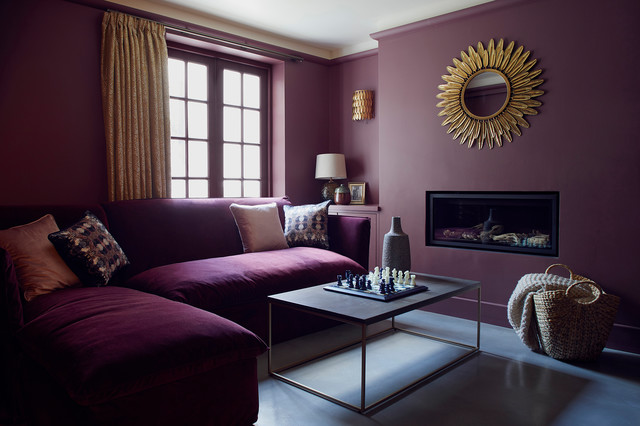
When using a burgundy that leans toward plum or crimson, brass and gold accents become mandatory for illumination. The sunburst mirror serves as the immediate focal point, reflecting light and adding necessary warmth and sparkle against the dark, moody walls. The look is grounded by a sumptuous velvet sectional, and the gold metallic threading in the curtains provides a second, textured source of brilliance near the window. By keeping the floor and coffee table dark, the focus remains entirely on the rich color and shimmering accents.
Accent Chairs and Pillows Against Cool Grey.
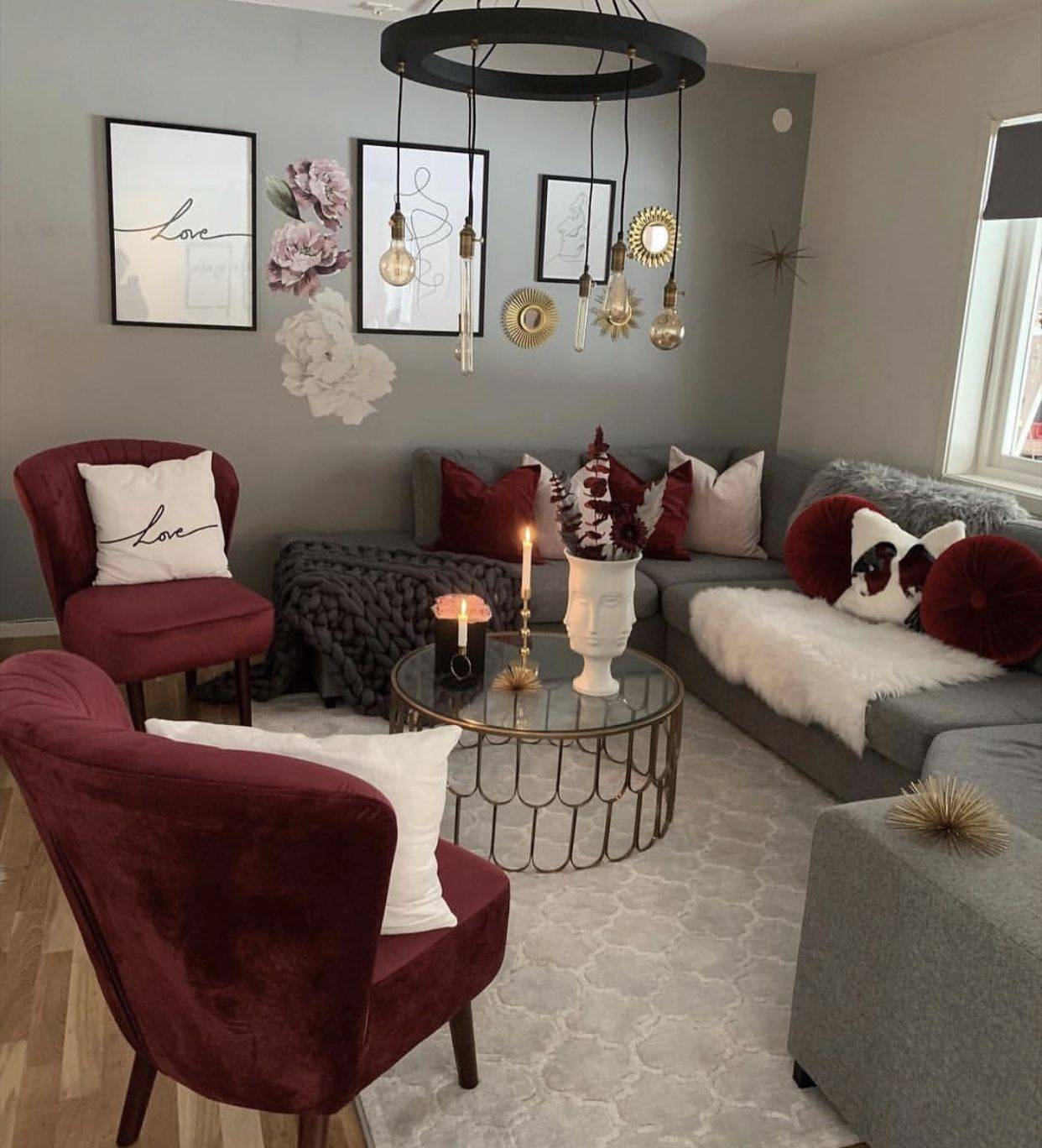
If committing to an entire burgundy wall feels too bold, use the color in high-impact accessories instead. This room uses a cool, light-grey palette for the walls and large sectional sofa, creating a clean, modern envelope. The drama comes from the burgundy velvet slipper chairs and circular pillows, which provide strategic splashes of rich color. This approach is highly versatile; the chairs become the warm focal points, and the deep hue is carried throughout the space via throws and throw pillows, adding depth without dominating the light feel of the room. Metallic sunburst mirrors add light and shine to the grey wall.
Crisp Accent Wall with Light Furniture.
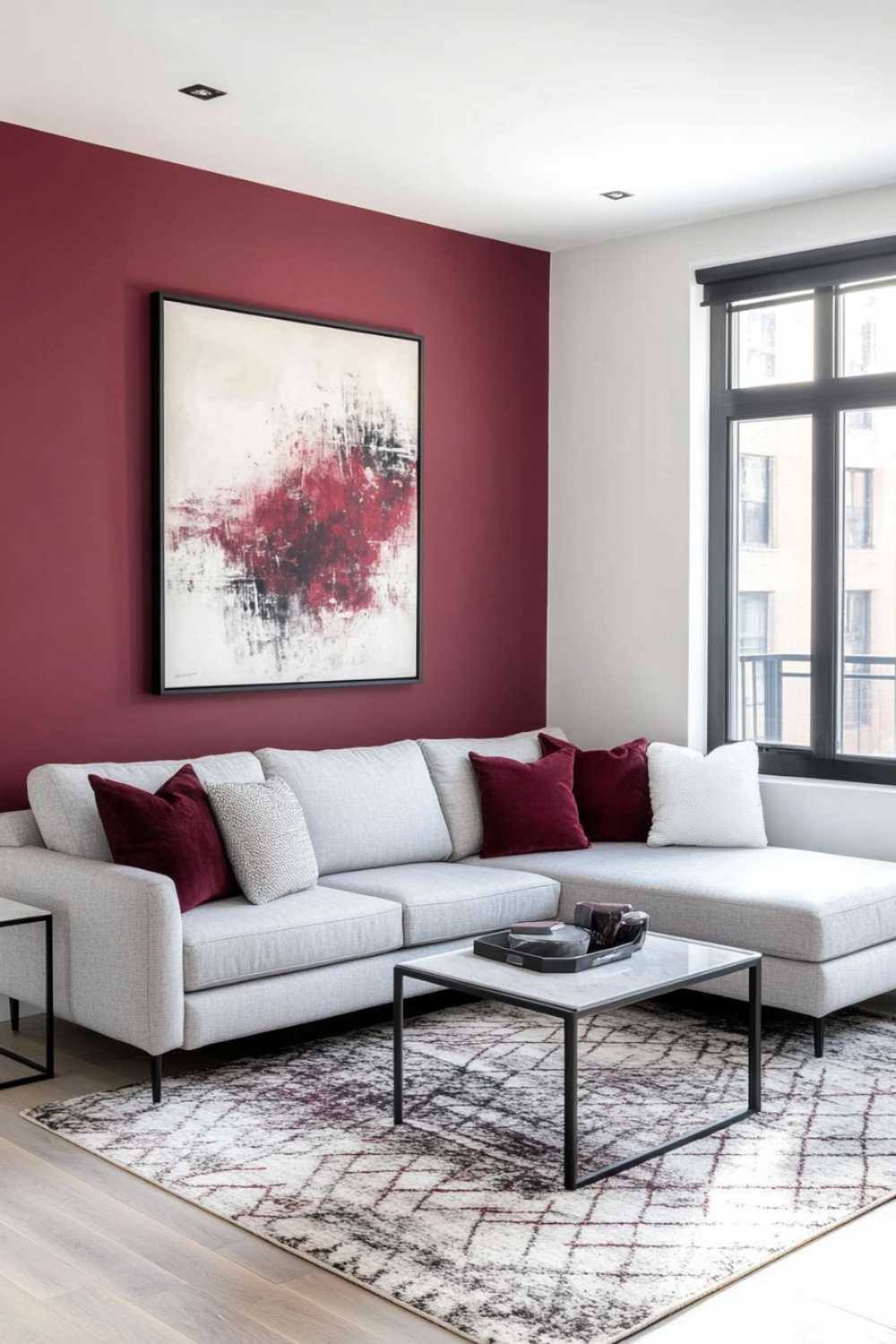
This approach utilizes burgundy to define a specific area without overwhelming the room. By painting just the feature wall in a clean, sharp burgundy, you create an immediate focal point. The depth of the color makes the artwork—which strategically incorporates the same burgundy hue—pop vividly. The rest of the room is kept airy and bright using white surrounding walls, a light grey sectional sofa, and a marble coffee table. This balance is perfect for rooms with ample natural light, ensuring the space feels cozy but never dark or heavy.
Layering Tones with Pink and Brass.
This approach shows how to use burgundy’s color family to create warmth without painting a single wall. The base is light and neutral (grey sofa, light rug, white walls). Burgundy is introduced through layers: a dark red throw blanket, deep crimson pillows, and a velvet accent chair. To soften this deep color, incorporate blush pink and rose tones (like the shaggy sheepskin rug and lighter pillows). The final, crucial element is brass or gold lighting, which provides a dramatic contrast and a high-end glow to the room’s warm palette.

Traditional Paneling with Chartreuse Contrast.
For a highly traditional space, embrace the rich, historic feel of burgundy by applying it to detailed millwork or wall paneling. This creates an enveloping, library-like atmosphere. The key to modernizing this highly saturated look is the contrast color: pairing the deep red tone with a bright, sharp color like chartreuse or lime green prevents the room from feeling old or stuffy. The chartreuse cushions act like a vibrant spotlight, providing unexpected energy against the rich, moody backdrop, while a gold-framed painting reinforces the classic luxury of the space.

Terracotta and Coral Contrast.
Don’t limit burgundy to purely neutral pairings. For a Mediterranean or maximalist feel, pair deep burgundy with warm, complementary tones like soft terracotta, coral, or dusty rose. This color-blocking technique, with a deep shade on the bottom half and a brighter shade on top, adds unexpected depth and dimension. This combination is highly effective when balanced by crisp white trim, clean lines, and simple metallic fixtures, making the room feel simultaneously vibrant and grounding.

Architectural Depth: The Burgundy Feature Wall
This vibrant living room showcases a striking accent wall painted in a warm, deep burgundy (or reddish-terra cotta), which creates an immediate sense of drama and height. The bold wall color is beautifully contrasted by crisp white crown molding and trim, framing a plush, tufted mustard-yellow sofa. Two rich, rust-red armchairs and a contrasting lime-green ottoman with burgundy fringe pull together a luxurious and unexpected color palette.

Cozy Intimacy: Structural Burgundy and Warm Light
This image illustrates how burgundy can be used in built-in structural elements, featuring a fireplace mantel and hearth painted or tiled in a deep, warm burgundy shade. The rich color creates a cozy, intimate atmosphere, amplified by the warm, dim lighting. The space utilizes layered textiles, including a traditional patterned area rug featuring burgundy, navy, and gold tones, harmonizing with the rustic wood-burning stove and bohemian decor.

Full Saturation: Enveloping Walls and Ceiling
This bold interior demonstrates the high drama of full color saturation, where the paneled walls and the ceiling are completely painted in a rich, deep, matte burgundy. This enveloping color choice creates a cocoon-like intimacy. The deep tones are brilliantly contrasted by a striking brass Sputnik-style chandelier, white drapery, and a crisp white chaise, while the dark, intricately carved wooden console and plush fur throw add rich texture and warmth.

Soft Drama: Monochromatic Burgundy in a Period Home
This charming living space features walls and window trim painted in a warm, muted burgundy with soft brown undertones, creating a sophisticated and cozy monochromatic look. The color is deepened by the presence of a large velvet sectional sofa in a similar rust or terracotta shade. The period details, such as the ceiling medallion and crown molding (highlighted in cream), and the black fireplace, provide a beautiful contrast to the warm, enveloping wall color.

Defining Spaces: Burgundy in the Threshold
This image showcases the dramatic power of using a deep, moody burgundy to define a transitional space or hallway. The rich color is applied to the walls, ceiling, and built-in elements surrounding the doorway, creating a bold, intimate vestibule that starkly contrasts with the bright white walls and light hardwood floors of the adjoining room (featuring built-in shelving). This application highlights how burgundy can add depth and structure to a floor plan.
