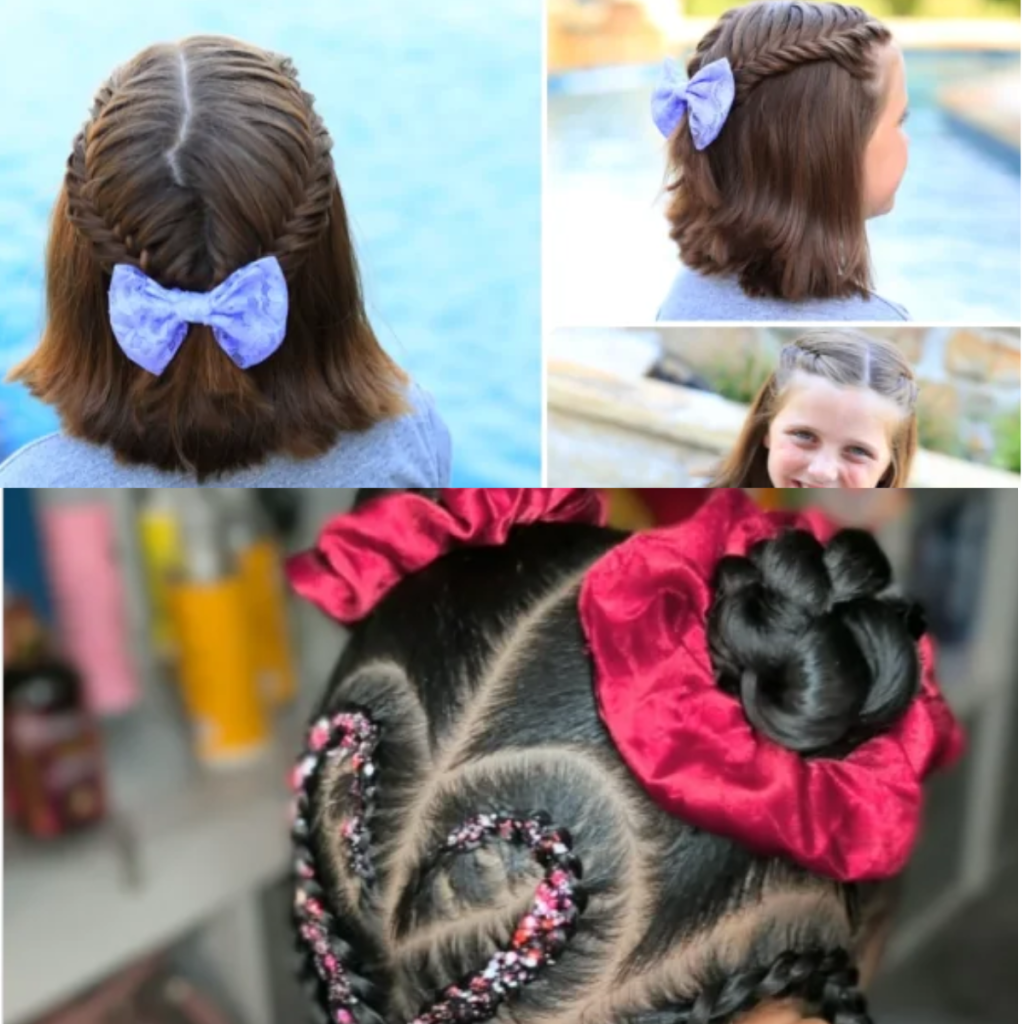
Short hair on kids is adorable, low-maintenance, and perfect for playdates, school, and sports. But just because the hair is short doesn’t mean it can’t be braided! In fact, braiding short hair can keep little ones cool, prevent tangles, and add a splash of creativity to everyday looks.
Whether your child has fine, wispy strands or a thick bob, these 10 braided hairstyles are designed to work with shorter lengths—no extensions or complex techniques required. From mini cornrows to playful pigtail twists, each idea is kid-friendly, fast to create, and gentle on the scalp. Let’s dive in.
What You’ll Need Before You Start
Having the right tools on hand makes braiding short hair faster and more comfortable for both you and your child.
- Wide-tooth comb – for gentle detangling on wet or dry hair
- Small, soft-bristle brush – to smooth short layers without pulling
- Clear or colored small elastics – the tiny, no-snag kind (avoid rubber bands)
- Snake clips or duckbill clips – to hold sections out of the way
- Spray bottle with water – to lightly dampen hair before braiding
- Leave-in conditioner or detangling spray – to reduce friction and flyaways
- Bobby pins that match hair color – for tucking short ends
- Soft headband – optional, for keeping bangs or loose pieces back
10 Well-Structured Braided Hairstyle Ideas for Kids with Short Hair
1. Mini Dutch Crown Braid
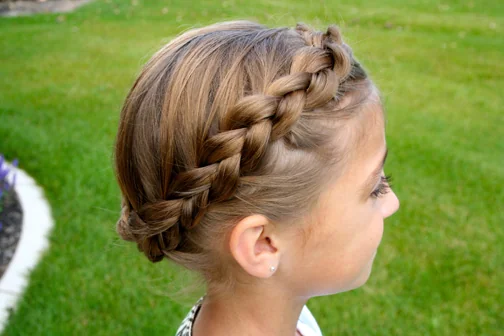
- Best for: Shoulder-length to chin-length hair
- How to do it: Part the hair horizontally from ear to ear. Below the part, create a small Dutch braid (braiding under instead of over) along the hairline. Secure with a tiny elastic and tuck the end under the rest of the hair. Repeat on the other side for a “crown” effect.
- Why it works: Keeps hair off the face and looks like a delicate headband.
2. Two-French-Braid Bob

- Best for: Fine to medium hair just above the shoulders
- How to do it: Divide hair down the middle. Starting at the forehead, French braid each side down to the nape. At the ends, fold the tiny tail under and pin with a bobby pin or small claw clip.
- Why it works: Stays secure all day and looks neat even when the braids are short.
3. Side-Swept Waterfall Braid
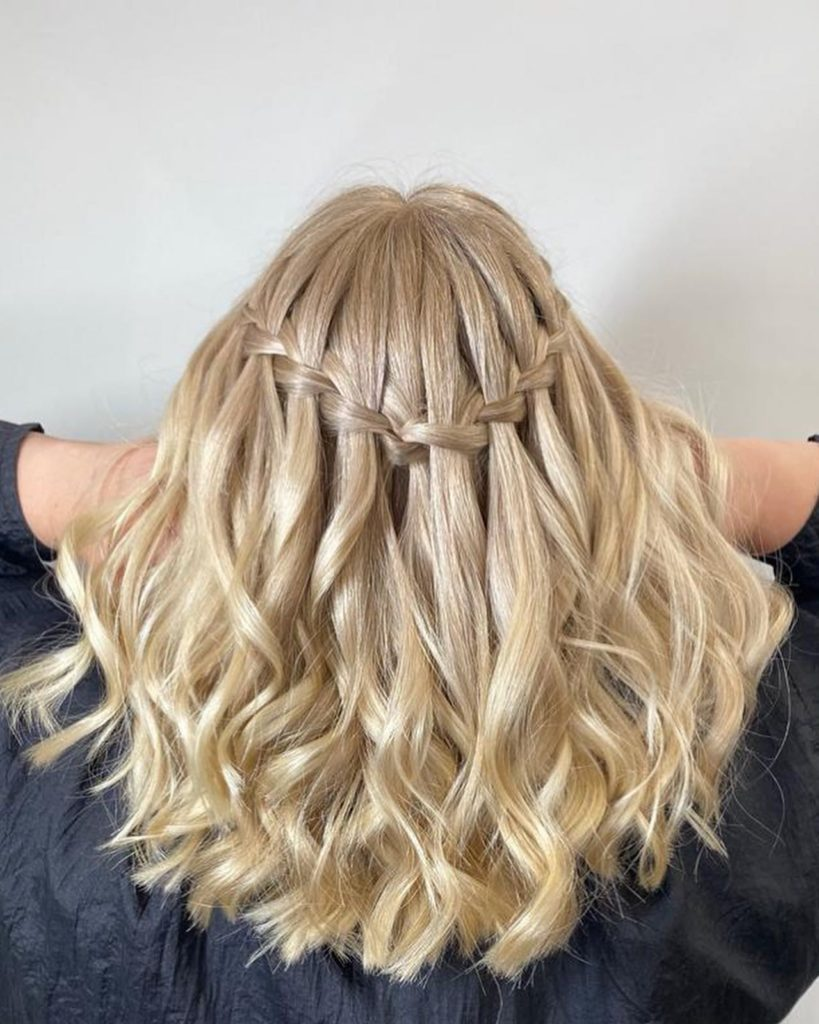
- Best for: Longer bobs (lob) with layers
- How to do it: Take a small section near one temple. Begin a waterfall braid (drop the bottom strand each time and pick up new hair). Braid diagonally toward the opposite ear. Secure with a clear elastic behind the ear.
- Why it works: Adds elegance without needing long hair to complete the braid.
4. Five-Strand Mini Cornrows (Two or Three Rows)
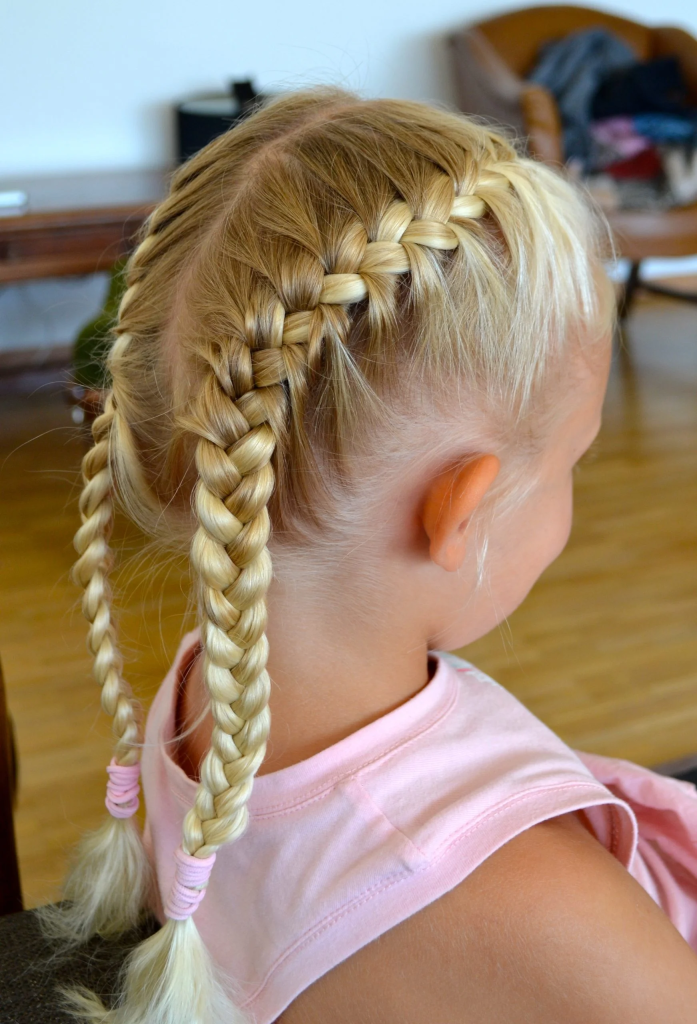
- Best for: Very short hair (pixie to chin length)
- How to do it: Create 2–3 straight parting lines from forehead to nape. Cornrow each section tightly but gently using small added pieces. End each braid with a bead or small elastic.
- Why it works: Great for summer, swimming, and sweaty play—lasts several days.
5. Simple Three-Strand Pigtail Braids
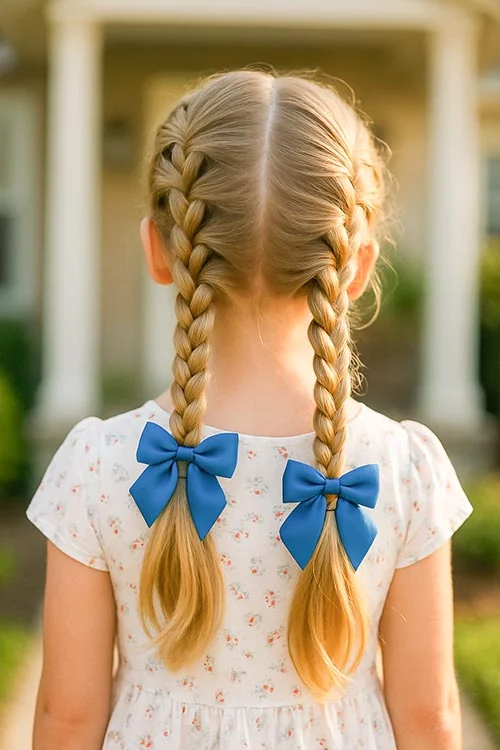
- Best for: Chin-length hair that just reaches the jaw
- How to do it: Split hair into two even sections at the back. Make a low pigtail on each side. Braid each pigtail using a basic three-strand braid (no pulling or pancaking). Tie with soft elastic bands.
- Why it works: Takes under 2 minutes. No parting skills needed. Stays neat and symmetrical.
6. Twisted Rope Braid Headband
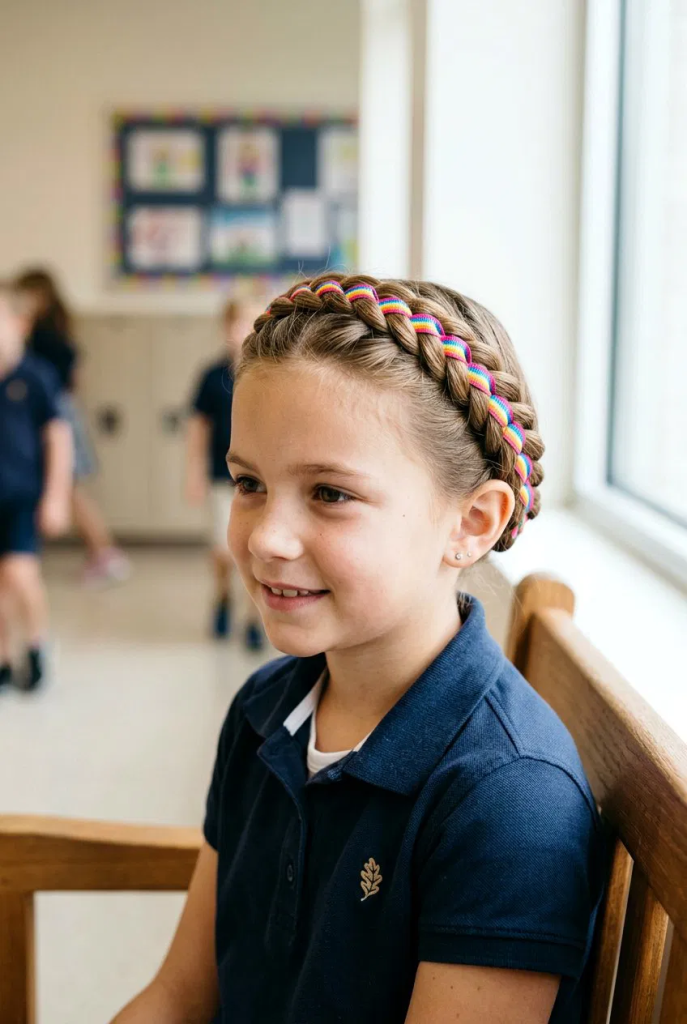
- Best for: Very fine or short hair (ear length)
- How to do it: Take a 1-inch section above each ear. Twist each section tightly toward the back of the head. Cross the two twists over each other at the crown and pin flat. Tuck ends under.
- Why it works: No elastic needed; perfect for keeping bangs or layers out of eyes.
7. Single Basic Side Braid
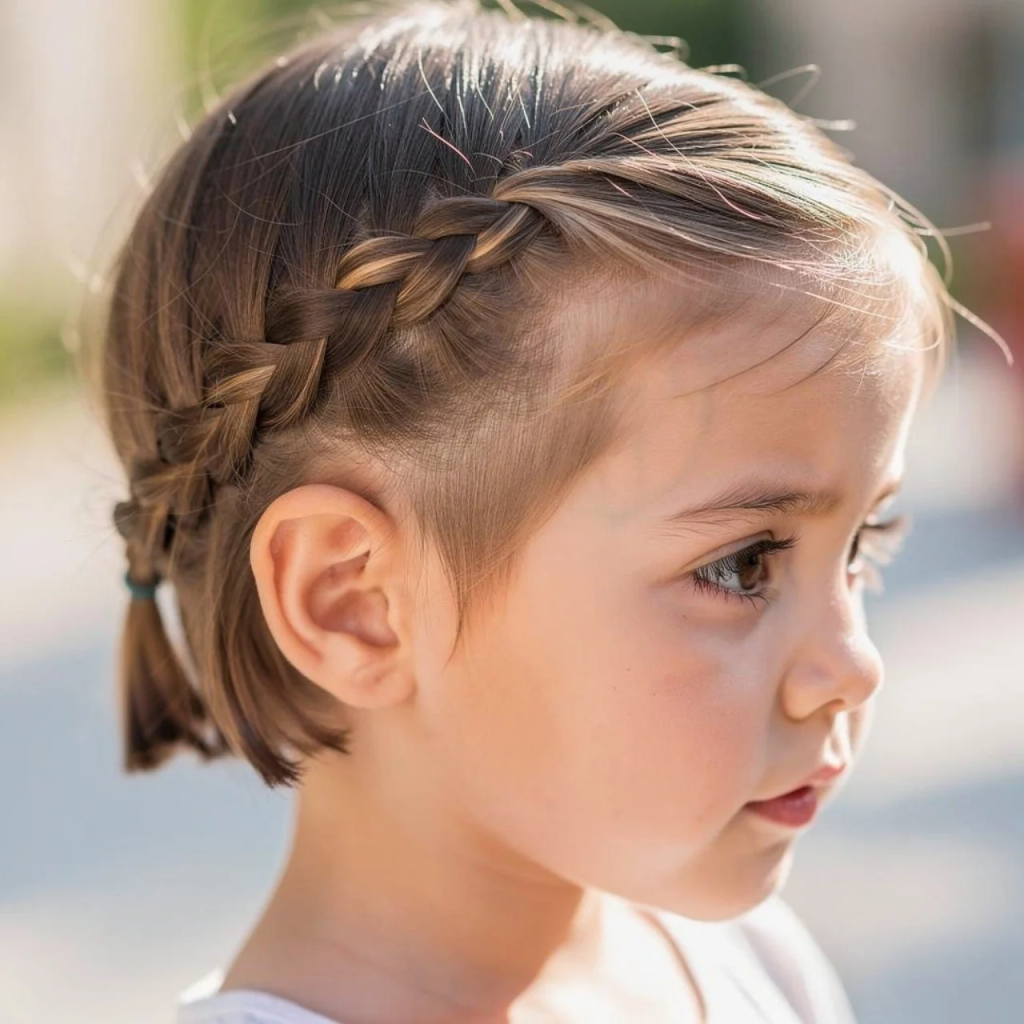
- Best for: Straight or slightly wavy short hair (bob length)
- How to do it: Brush all hair to one side (left or right). Gather it loosely near the shoulder. Make one simple three-strand braid all the way to the ends. Secure with a small elastic.
- Why it works: Only one braid to manage. Works even if hair is too short for two braids. Looks cute and careless in a good way.
8. Heart-Shaped Back Braids (Two Interlocking Cornrows)
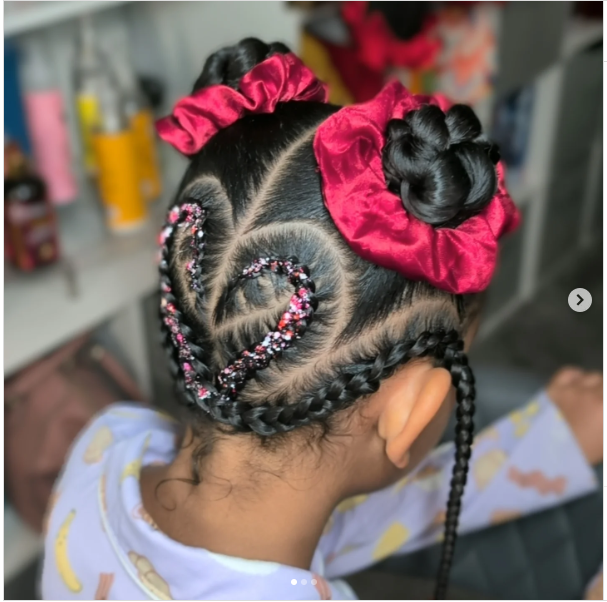
- Best for: Medium-thick short hair (nape-length)
- How to do it: Part the back of the hair into two curved sections that mirror the top half of a heart. Cornrow each section toward the center. Meet at the middle and combine into one small braid or bun.
- Why it works: Looks intricate but is just two cornrows; kids love the hidden heart.
9. Fishtail Half-Up Style
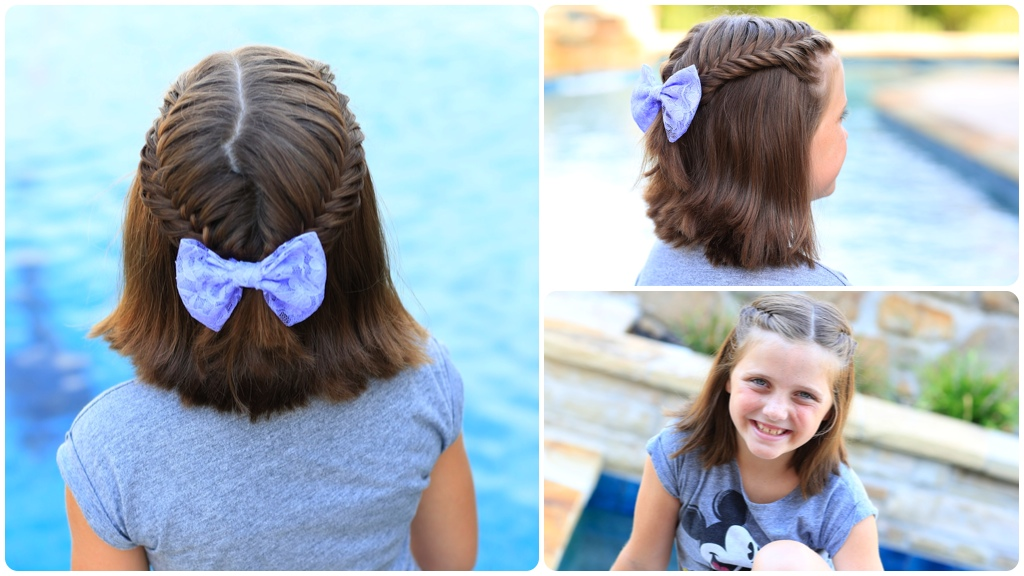
- Best for: Straight or wavy short hair (bob length)
- How to do it: Take the top half of the hair (above the ears). Fishtail braid it loosely—short length is fine because the braid will be short. Secure with a small elastic. Leave the bottom half down.
- Why it works: Combines an up-braid with loose ends, so short hair doesn’t fall out of the braid easily.
10. Beaded Mini Pony Clusters (No Braiding)
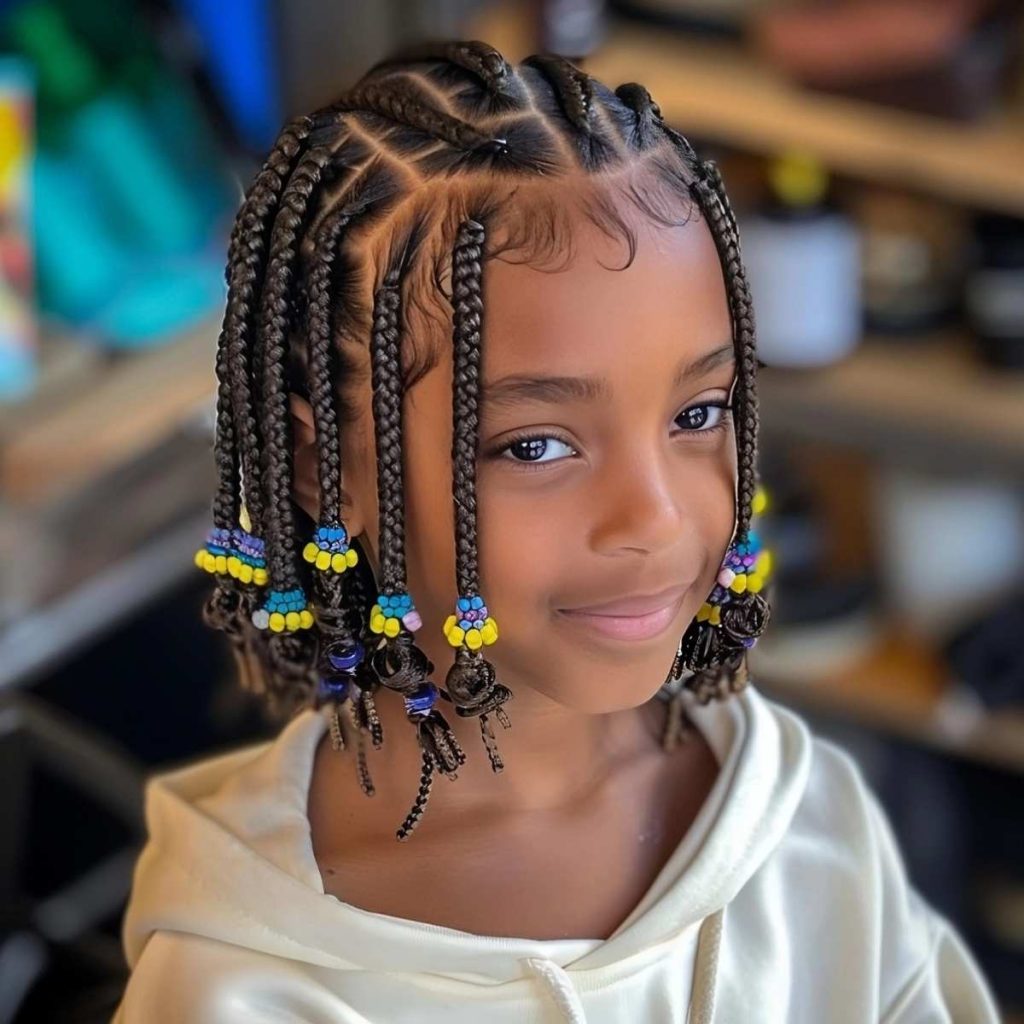
- Best for: Chin-length to shoulder-length hair
- How to do it: Part the hair into 4–6 small sections (like little ponytails) across the head — two on each side, two at the back. Secure each section with a tiny clear or colored elastic. Slide 1–2 large-hole plastic or silicone beads onto each mini ponytail right above the elastic. Push the bead snug against the elastic so it stays in place.
- Why it works: Zero braiding required. Takes 3 minutes. Beads add color and movement. Kids can help choose the beads. Works perfectly on short hair that’s too short for braids.
Tips for Braiding Short Hair on Kids
Short hair can feel tricky at first, but these tips make all the difference.
1. Start with slightly damp hair
Damp hair has more grip and fewer flyaways than dry hair. A light mist of water or detangling spray is all you need.
2. Use smaller sections than you think
Short hair doesn’t hold wide braids well. Keep each section about the width of your pinky finger.
3. Don’t braid too tightly
Tight braids can cause headaches and breakage. Aim for snug but comfortable – you should be able to gently lift the braid without pulling the scalp.
4. Tuck, don’t tie, the ends
When short braids run out of hair, simply tuck the tiny tail under the braid and secure with a bobby pin. No elastic needed.
5. Add texture if hair is very slippery
Fine, straight hair can slide right out of a braid. A touch of texturizing spray or sea salt spray (kid-safe formula) adds grip.
6. Practice on non-school days first
Let your child watch a favorite show while you practice. No pressure, no rushing – just learning the motion.
How to Keep Short Braids Looking Good Longer
Short braids can unravel faster than long ones, but these steps help them last.
Overnight care
- Have your child sleep on a satin or silk pillowcase – it reduces friction and frizz.
- For multiple braids, gather them loosely on top of the head and secure with a soft scrunchie (like a pineapple ponytail).
- For a single braid, place a satin bonnet or buff tube over the head.
Morning refresh
- Lightly mist with water and smooth flyaways with a soft toothbrush (yes, a clean toothbrush works perfectly).
- Gently pull the edges of the braid to fluff it back into shape.
When to redo
- Most short braids last 1–2 days.
- Take them out if you see white flakes (product buildup), tangling at the roots, or if your child complains of itching.
Safety & Comfort Notes for Parents
Your child’s comfort comes before any hairstyle.
- Never braid hair that is tangled or matted – detangle first, always.
- Watch for tension around the hairline and ears. Redness or complaints of “ouch” mean the braid is too tight.
- Change styles regularly – don’t braid the same sections every day to prevent breakage.
- Use only kid-safe hair ties – soft, fabric-covered elastics are best. Avoid metal clasps or tight rubber bands.
- Listen to your child – if they want the style out, take it out. No hairstyle is worth tears.
Conclusion
Braiding short hair for kids doesn’t have to be complicated or time-consuming. With the right tools, a little patience, and these 10 simple styles, you can turn everyday hair routines into something fun and special.
Whether you choose mini cornrows for a busy school week, beaded pony clusters for a birthday party, or a single side braid for a lazy Sunday, the goal is the same: keeping your child comfortable, confident, and cute.
Remember, short hair grows fast. Enjoy these small-canvas styles while you have them. And if a braid comes loose or a bead falls off? No worries. Tomorrow is another chance to try again – maybe with your child’s favorite color beads this time.
Now go grab that comb, call your little one over, and make some braiding memories.
