If you have thin hair, you’ve probably heard the old myth that long hair is the only way to create fullness—or worse, that you should cut it all off into a pixie. The truth is, shoulder-length hair is the sweet spot for fine or thinning strands. It’s long enough to style in soft layers, waves, and updos, yet short enough to prevent the “stringy” look that often plagues longer thin hair.
At shoulder length, your hair has less weight pulling it down, which means more natural lift at the roots and easier volume throughout the day. The right cut and style can create the illusion of density, movement, and body—without relying on heavy products or extensions.
Below are 14 expertly curated shoulder-length hairstyles designed specifically for thin hair. Each idea includes why it works, styling tips, and who it suits best.
14 Well-Structured Ideas
1. The Blunt Lob (Long Bob)
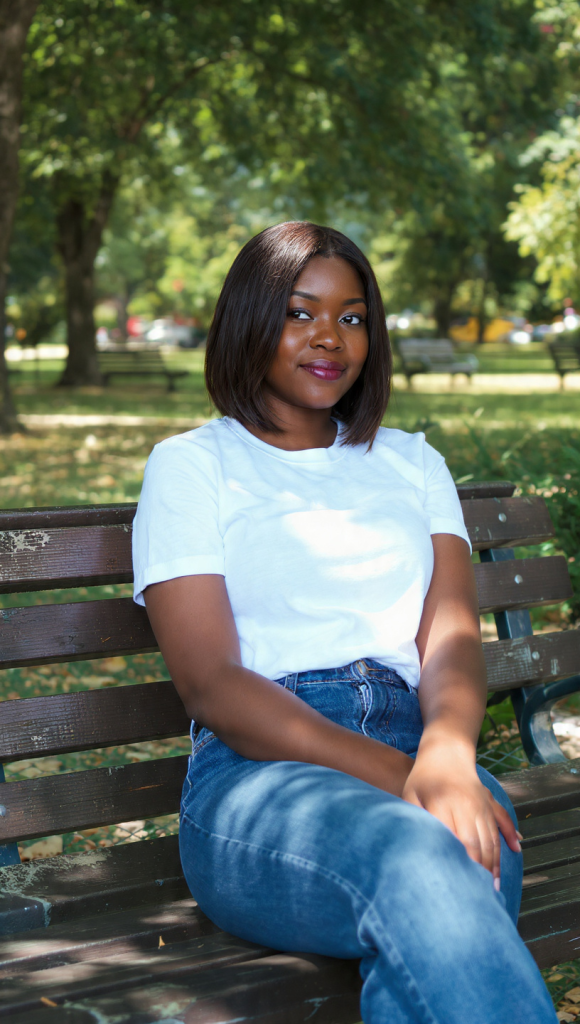
Why it works: A blunt, one-length cut at the collarbone removes thinning ends and creates a solid, weighty line that makes hair appear denser.
Styling tip: Blow-dry with a round brush, tucking ends under slightly. Avoid layering the bottom.
Best for: Straight to slightly wavy thin hair.
2. Soft, Face-Framing Layers

Why it works: Layers that begin at the chin (not the crown) add movement without sacrificing bulk. The face-framing pieces give the illusion of deeper texture.
Styling tip: Use a volumizing mousse on damp hair, then twist small sections around a 1-inch curling iron away from the face.
Best for: Oval and heart-shaped faces.
3. Textured Shag (Modern Mullet-Lite)
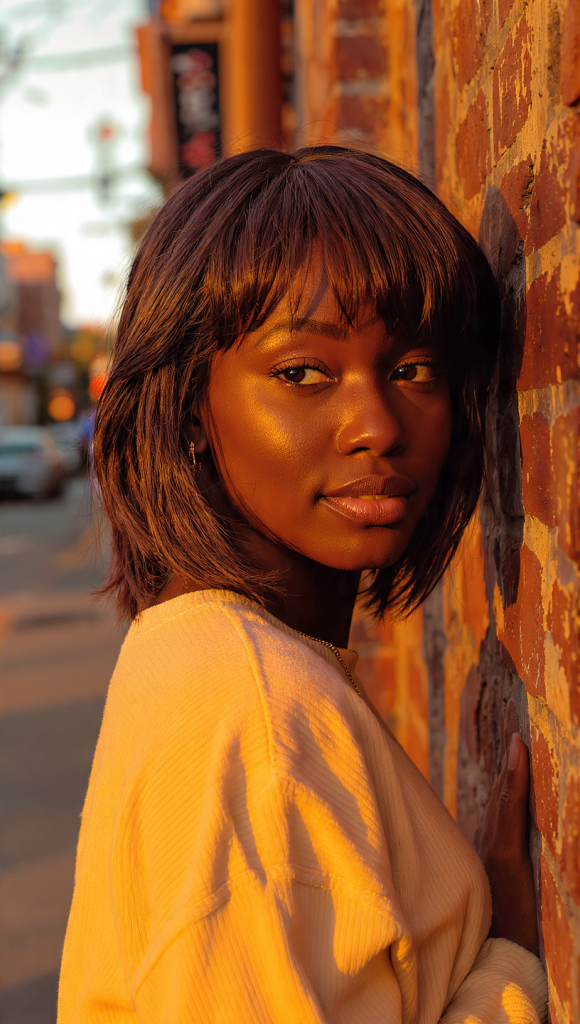
Why it works: A shoulder-length shag with wispy bangs and choppy ends creates multiple points of interest, distracting from sparseness while adding gritty volume.
Styling tip: Work a dry texture spray into roots and mid-lengths. Scrunch with fingers—no brushing.
Best for: Wavy or curly thin hair; edgy personal style.
4. The French Bob (Chin-to-Shoulder)

Why it works: Cut slightly above the shoulders with a subtle undercurl, this style adds roundness and body. Micro-bangs (optional) draw attention upward.
Styling tip: Air-dry with a leave-in volumizing lotion, then use a small-barrel curling iron to create a gentle bend at the ends.
Best for: Fine, straight hair that lacks natural movement.
5. Deep Side Part + Voluminous Waves

Why it works: A deep side part instantly lifts the root area and creates asymmetry, making thin hair look fuller. Loose waves add surface texture.
Styling tip: Apply root lift spray, blow-dry the opposite direction of your part, then use a 1.5-inch iron for loose S-waves.
Best for: All face shapes; especially good for round faces.
6. The Sleek, Straight A-Line Bob
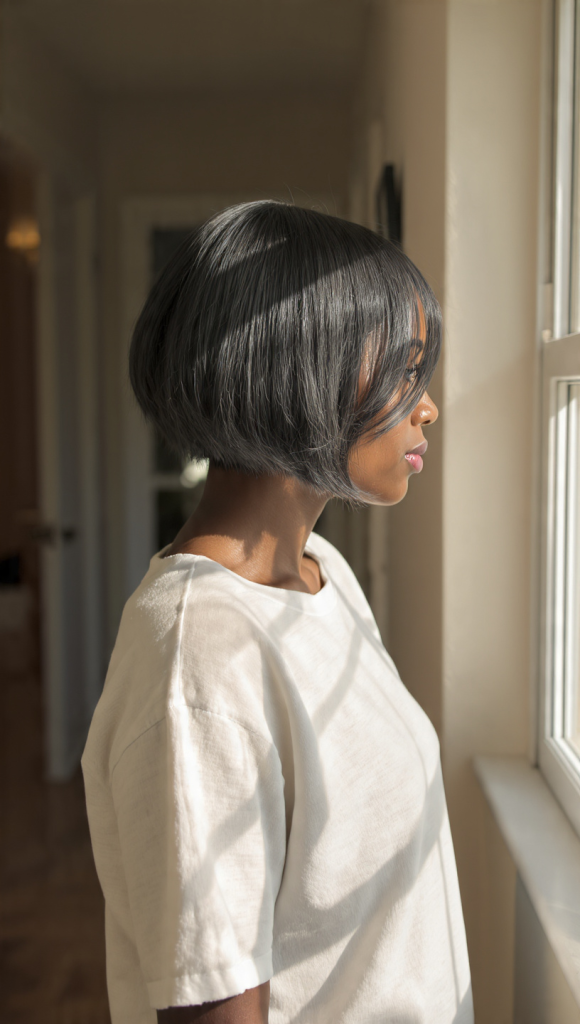
Why it works: Shorter in the back, longer in the front (shoulder-tip length). The sharp angle gives structure, and the sleek finish reflects light, creating gloss and perceived density.
Styling tip: Use a flat iron and a shine serum. No layers—just clean, straight lines.
Best for: Very fine, straight hair that can hold a flat-iron style.
7. Messy, Low Bun With Face-Framing Pieces
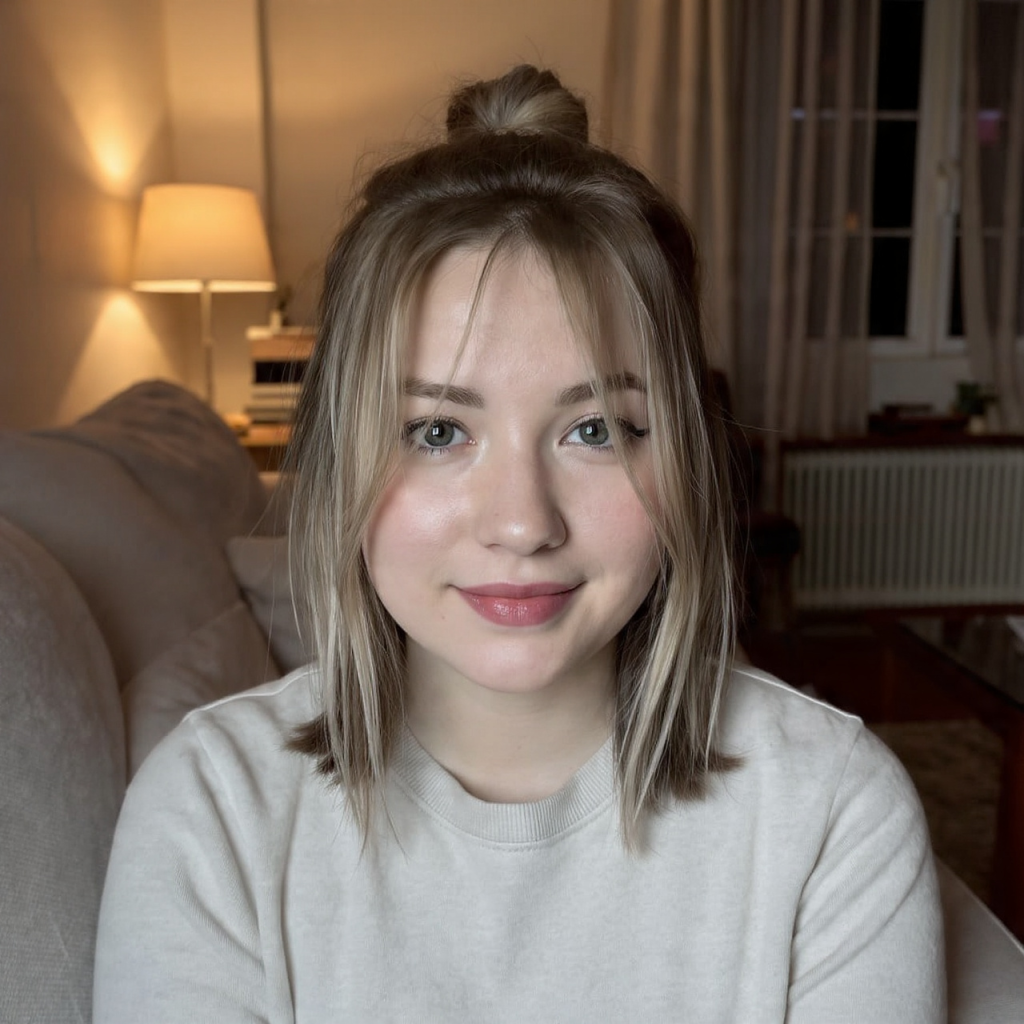
Why it works: Pulling thin hair into a low bun at the nape removes visual bulk from the ends while the front pieces soften the look. Messiness adds volume.
Styling tip: Tease the crown lightly before pinning, then pull out a few wispy strands around the ears and forehead.
Best for: Second-day hair; casual or professional settings.
8. Voluminous Blowout (The “Old Hollywood” Wave)
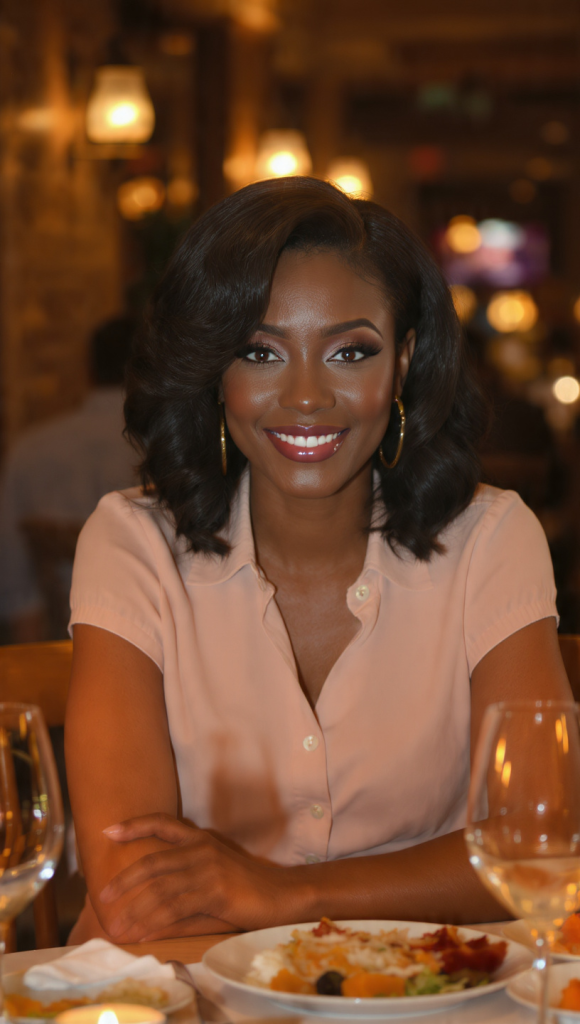
Why it works: A rounded blowout with a large round brush creates lift at the roots and a C-shaped curve at the ends, mimicking thick hair’s natural body.
Styling tip: Use a thermal protectant and volumizing foam. Roll sections on velcro rollers after blow-drying for 10 minutes.
Best for: Special occasions or daily if you have 15 minutes to style.
9. Asymmetrical Lob (One Side Slightly Longer)
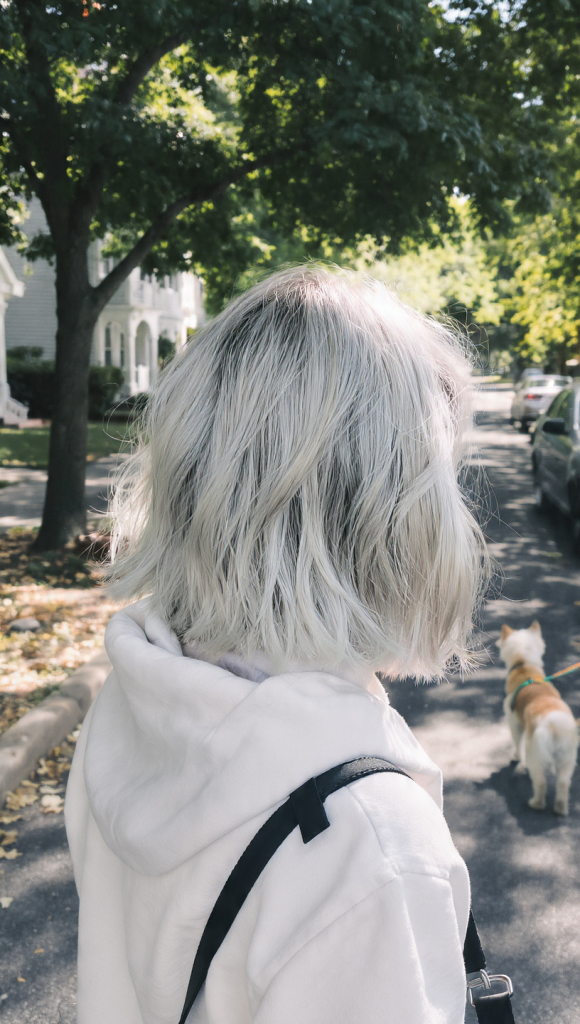
Why it works: The imbalance distracts from thinness and creates a modern, intentional shape. The shorter side can be tucked behind an ear for extra lift.
Styling tip: Keep texture smooth with a light cream; avoid crunchy products.
Best for: Oval, square, or diamond face shapes.
10. Tousled Bedhead Waves (Heatless Method)
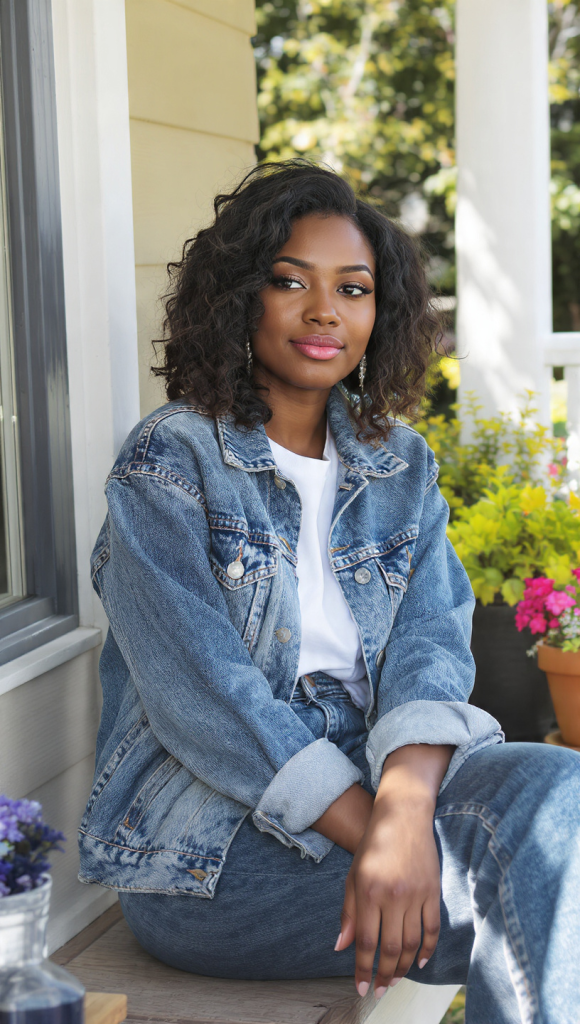
Why it works: Overnight braids or twists create a zigzag texture that expands the hair shaft, making thin hair look twice as thick.
Styling tip: Dampen hair, divide into 4-6 small twists, pin into buns, sleep, then shake out with fingers. Finish with texturizing spray.
Best for: No-heat days; naturally straight or slightly wavy thin hair.
11. Curly Shoulder-Length Cut With Triangular Layers

Why it works: For naturally curly thin hair, a rounded shape with light internal layering prevents the dreaded “triangle head” while keeping curls bouncy and full.
Styling tip: Diffuse upside down with a curl-defining mousse. Never rake through curls—scrunch only.
Best for: Type 2c to 3b thin curly hair.
12. The “Pixie-Lob” (Short in Back, Graduated to Shoulder)
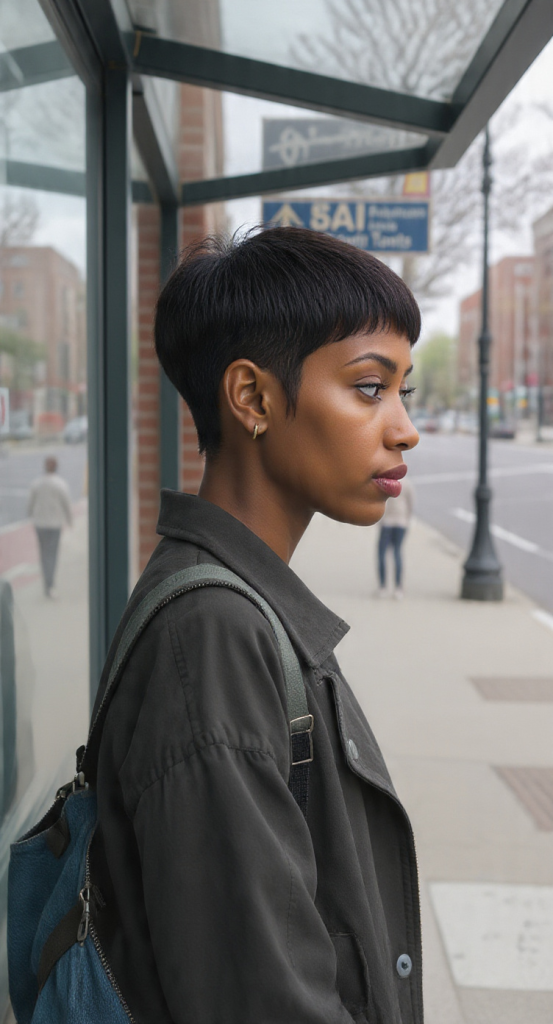
Why it works: A stacked nape with a longer front panel gives the volume of a pixie with the versatility of a bob. The stacking adds internal support.
Styling tip: Blow-dry the stacked area with a small round brush, lifting straight up.
Best for: Very thin hair that has lost density; women over 40.
13. Half-Up, Half-Down With Root Teasing

Why it works: Pulling the top half back creates instant crown volume, and leaving the bottom shoulder-length section down maintains length. Teasing adds grip.
Styling tip: Backcomb a 1-inch section at the crown, smooth over it, then secure with a clear elastic. Add a ribbon or small clip for flair.
Best for: Fine, straight hair that falls flat quickly.
14. Sliced Layers With Hidden Undercut (Disconnected)
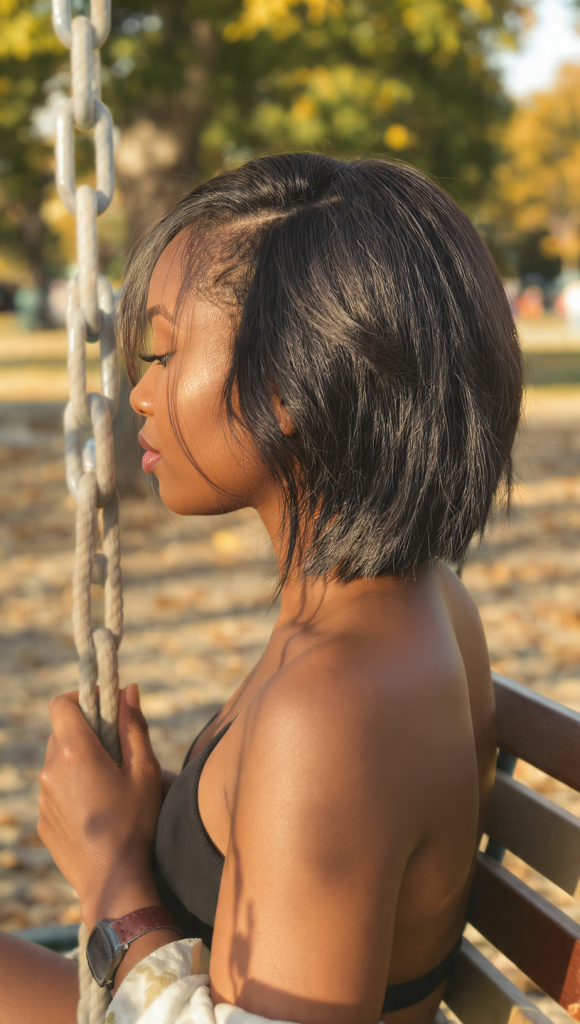
Why it works: A very light undercut (just at the very nape) removes excess bulk underneath, allowing the top layers to float with more volume. Sliced layers are chunky, not wispy.
Styling tip: Ask your stylist for “sliced, not point-cut” layers. Use a powder volumizer at the roots.
Best for: Adventurous clients; thin but not balding hair.
What to Avoid When Styling Thin Hair at Shoulder Length
Even the best haircut can fail if you use the wrong techniques or products. Avoid these common mistakes:
- Heavy oils and butters – Shea butter, coconut oil, and argan oil weigh thin hair down instantly. Save them for ends only (a pinhead amount).
- Over-layering – Too many layers remove density. Stick to soft, face-framing layers or blunt ends.
- Skipping heat protectant – Thin hair damages faster. Always use a lightweight spray before hot tools.
- Washing daily – Natural oils add body. Wash every other day or use dry shampoo at the roots.
- Using wide-tooth combs on dry hair – They flatten volume. Use fingers or a boar-bristle brush for distribution.
- Growing out too long – Past the collarbone, thin hair looks stringy. Stick to shoulder length or slightly above.
Best Products for Thin Shoulder-Length Hair
| Product type | What to look for | What to avoid |
|---|---|---|
| Shampoo | Volumizing, sulfate-free, clear consistency | Creamy, “moisturizing,” 2-in-1 formulas |
| Conditioner | Lightweight, apply only to ends | Heavy butters, silicones (dimethicone) |
| Mousse | Alcohol-free, medium hold | Gel-based, crunchy finishes |
| Root lifter | Spray form, heat-activated | Heavy creams |
| Dry shampoo | Tinted or translucent, powder-based | Aerosol sprays with propellants |
| Texturizing spray | Sea salt or rice protein | Oily finishing sprays |
| Hairspray | Flexible hold, fine mist | Hard-shell, high-alcohol content |
Top 3 drugstore recommendations:
- John Frieda Volume Lift Mousse
- Batiste Dry Shampoo (tinted for dark hair)
- Not Your Mother’s Beach Babe Texturizing Spray
Top 3 professional recommendations:
- Kevin Murphy Body.Builder Volumising Mousse
- Oribe Dry Texturizing Spray
- Living Proof Full Dry Volume Blast
Styling Techniques That Add Instant Volume
These take less than 5 minutes and work specifically for shoulder-length thin hair:
1. The Over-Direction Blow-Dry
- Flip your head upside down
- Blow-dry roots first, aiming heat toward the scalp
- Continue drying while moving your head side to side
- Flip back – roots will stay lifted for hours
2. Velcro Rollers at the Crown
- After blow-drying, place 2–3 large velcro rollers at the top of your head
- Spray with flexible hairspray
- Leave in while you do makeup (5–10 minutes)
- Remove and shake gently
3. The Pin-Curl Tuck
- Take small face-framing sections
- Wrap them around two fingers into a loose pin curl
- Secure with a small clip for 10 minutes
- Release – you get gentle bend without heat damage
4. Dry Shampoo at Night
- Apply dry shampoo to roots before bed
- Sleep on it
- Brush out in the morning – volume lasts all day
How to Communicate With Your Stylist
Walk into the salon with these exact phrases:
“I have thin hair and want a shoulder-length cut that adds volume – no heavy layering on top.”
“Please keep the ends blunt or lightly textured, not wispy or point-cut.”
“I don’t want to lose density – keep the perimeter strong.”
“Show me where the shortest layer will fall before cutting.”
Red flags to watch for:
- Stylist immediately reaches for thinning shears
- They suggest going shorter than shoulder length without asking
- They recommend a “razored cut” – razors shred thin hair
Maintenance Schedule for Thin Shoulder-Length Hair
| Task | Frequency |
|---|---|
| Trim | Every 6–8 weeks (to prevent split ends traveling up) |
| Clarifying shampoo | Every 2 weeks (removes buildup that flattens hair) |
| Root touch-up (if colored) | Every 4 weeks |
| Deep conditioning | Once a week (lightweight formula only, 5 minutes max) |
| Heat tool use | Max 3 times per week |
Signs you need a trim sooner:
- Ends look see-through or stringy
- Hair tangles more than usual
- Volume disappears by midday despite styling
Frequently Asked Questions
Q: Will shoulder-length hair make my thin hair look shorter?
A: No – it actually creates the illusion of fullness. Very long thin hair exposes the scalp and looks sparse. Shoulder length gives body and movement.
Q: Can I wear my thin hair straight?
A: Yes, but add a deep side part or a slight bend at the ends. Pin-straight thin hair can look flat. A 1-inch curling iron waved loosely fixes this.
Q: What if my thin hair is also oily at the roots?
A: Use dry shampoo before it gets oily – as a preventative. Apply to clean, dry roots right after styling. This absorbs oil throughout the day.
Q: Are bangs a good idea for thin hair?
A: Yes – but keep them textured or wispy, not blunt. Blunt bangs remove too much density from the front. Curtain bangs work best.
Q: How do I refresh second-day thin hair?
A: Spray roots with dry shampoo, flip head over, massage gently, then re-curl only the front pieces with a small iron. Never brush dry thin hair.
Conclusion
Thin hair is not a limitation – it’s a canvas. The right shoulder-length cut can transform fine, limp strands into a style that looks intentionally light, modern, and full of movement. You don’t need thick hair to turn heads; you need the right shape, the right products, and a few simple techniques.
Remember: blunt ends add weight, soft waves add texture, and root lift adds life. Shoulder length is the sweet spot because it removes the weight that drags thin hair down while leaving enough length to play with buns, waves, and half-up styles.
Whether you choose a sleek A-line bob, a textured shag, or a voluminous blowout, the goal is always the same – create the illusion of density without fighting your natural texture. Work with your thin hair, not against it.
Start with a trim, invest in a lightweight mousse and dry shampoo, and practice the over-direction blow-dry tomorrow morning. You’ll be surprised how much body shoulder-length thin hair can truly hold.
