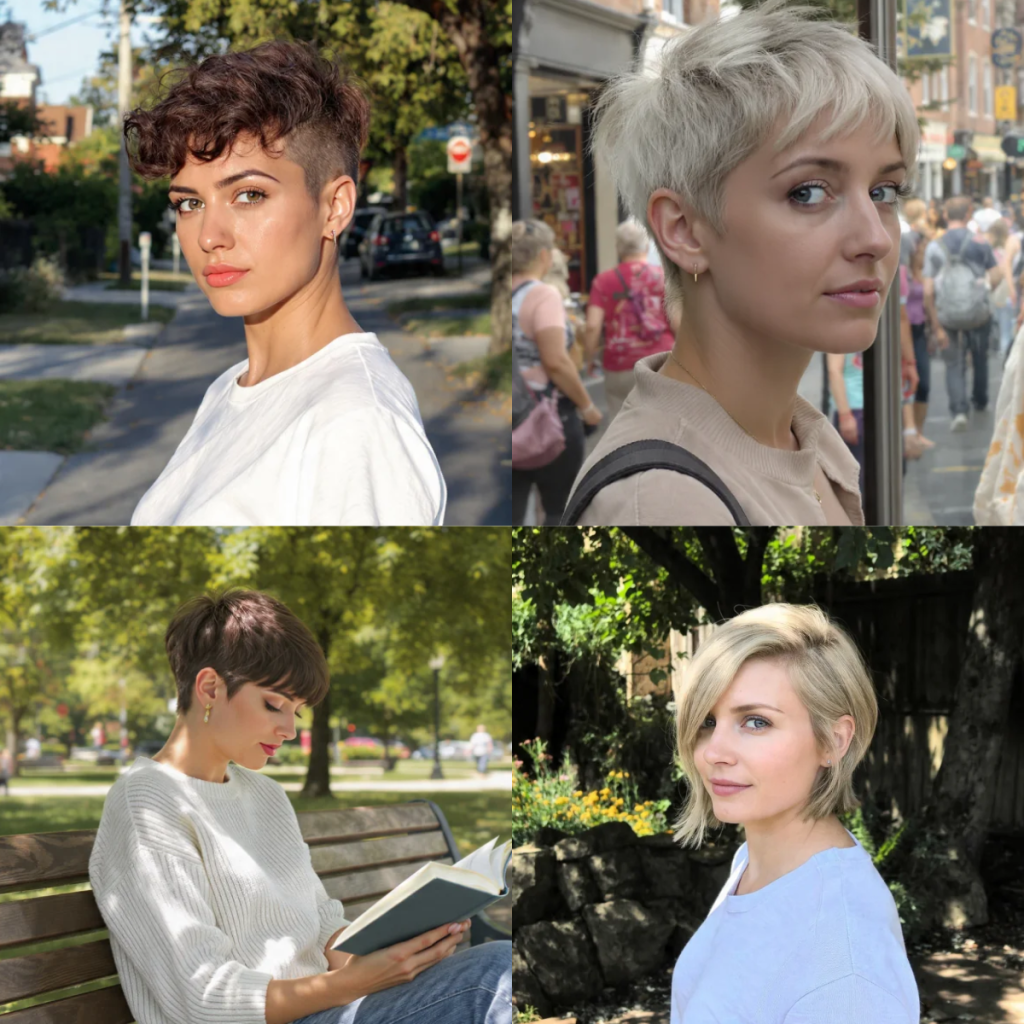
The pixie cut is more than just a hairstyle—it’s a statement. For decades, women have turned to this cropped, fearless look to express confidence, simplify their morning routine, and highlight their best facial features. Whether you’re after something softly feminine, edgy and textured, or elegantly polished, there’s a pixie variation waiting for you.
In this guide, we’ll walk through 15 well-structured short pixie hairstyles, each tailored to different face shapes, hair textures, and personal styles. From the classic Audrey Hepburn-inspired crop to modern undercuts and curly pixies, you’re sure to find your next signature cut.
What to Consider Before Cutting Your Hair Pixie-Short
A pixie cut is liberating, but it’s also a commitment. Before you book that salon appointment, ask yourself these four questions:
- Face shape: Oval faces suit almost any pixie. Round faces benefit from height on top. Square faces look great with soft, wispy edges. Heart-shaped faces shine with side-swept bangs.
- Hair texture: Fine hair needs texturizing layers to avoid looking flat. Thick hair requires internal thinning. Curly hair should be cut dry, curl by curl.
- Lifestyle: If you exercise daily or live in humidity, a micro pixie is low-maintenance. If you enjoy styling, a longer pixie gives you more options.
- Growing out phase: Pixies grow out awkwardly around weeks 6–8. Plan for trims every 3–4 weeks if you want to maintain the shape, or invest in headbands and clips during grow-out.
15 Well-Structured Pixie Hairstyle Ideas
1. The Classic Pixie

Structure: Even length (1–2 inches) all over, slightly longer at the crown.
Best for: Oval and heart-shaped faces; fine to medium hair.
Styling tip: Use a pea-sized amount of pomade for piece-y definition.
2. The Textured Pixie
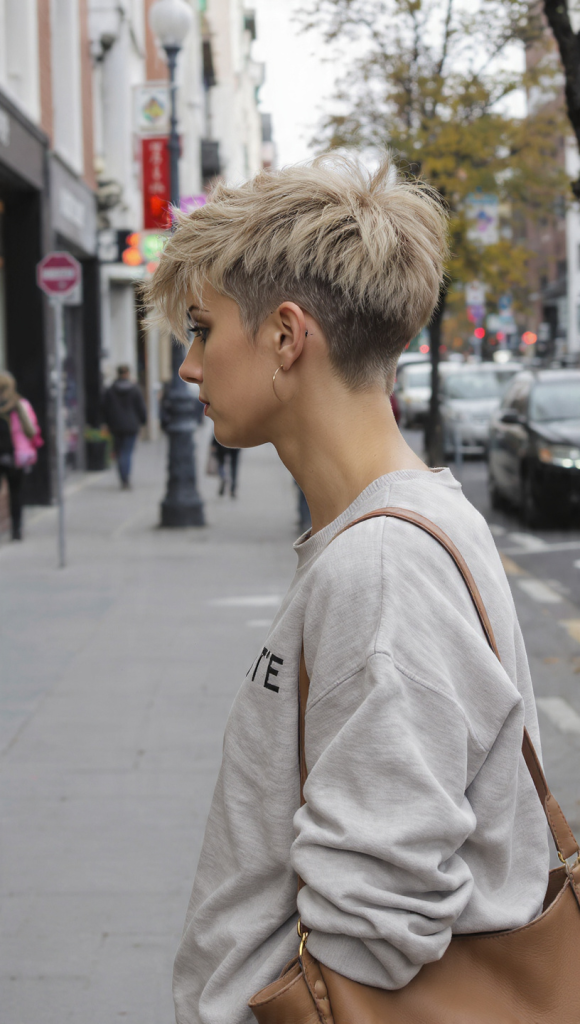
Structure: Layered and choppy throughout, with varied lengths (½ to 2½ inches).
Best for: Round faces; thick or wavy hair.
Styling tip: Apply a texturizing spray and scrunch with fingers.
3. The Long Pixie (Pixie-Bob Hybrid)
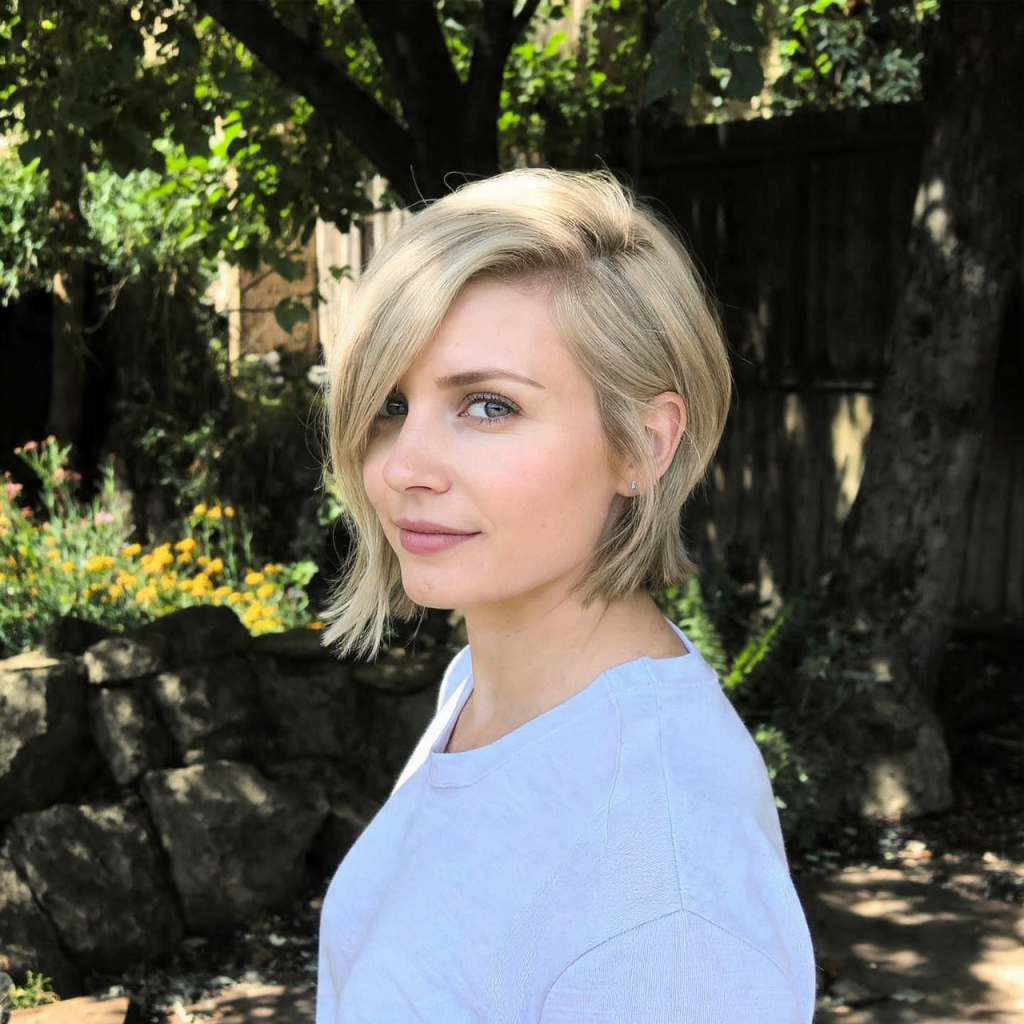
Structure: Longer on top (3–4 inches), short back and sides.
Best for: Square or oblong faces; straight or slightly wavy hair.
Styling tip: Sweep the top to one side with a light-hold gel.
4. The Undercut Pixie
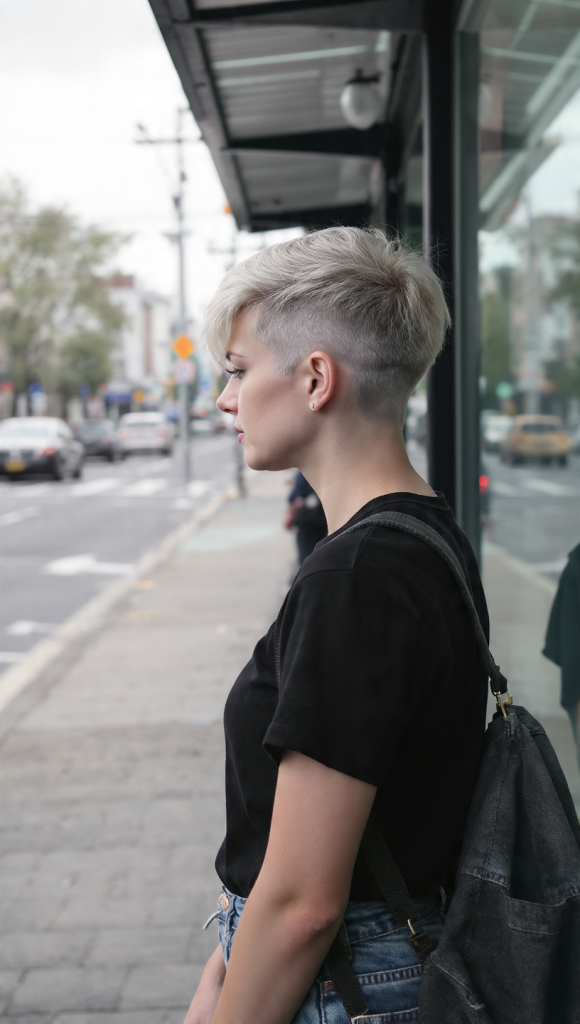
Structure: Shaved or closely clipped (¼ inch) on one side or the back, longer (2–3 inches) on top.
Best for: Bold personalities; straight or curly hair.
Styling tip: Keep the shaved part clean-shaven every 5–7 days.
5. The Curly Pixie
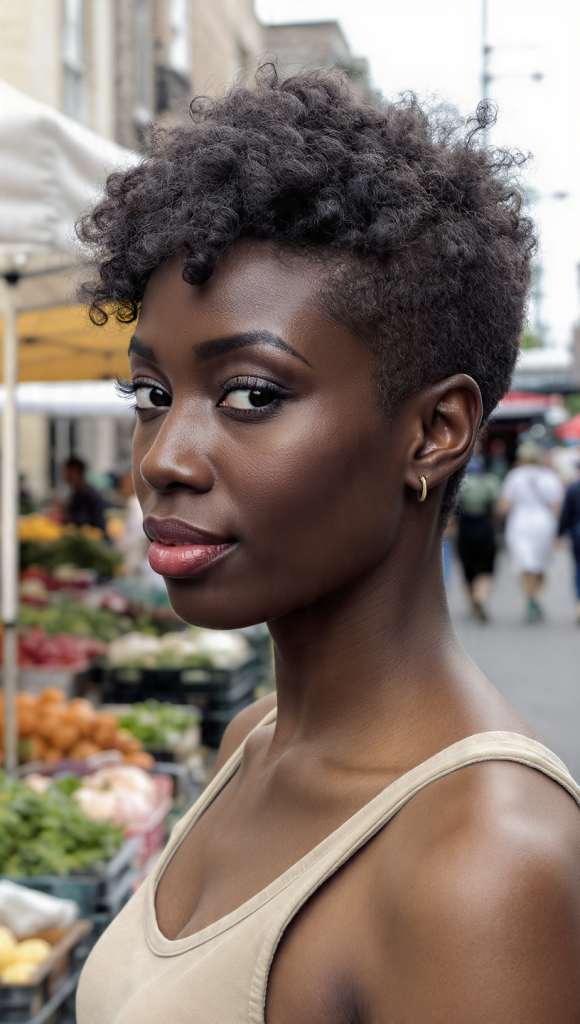
Structure: Cropped to let natural curls sit just above the ears (1–3 inches when dry).
Best for: Naturally curly or coily hair; round or oval faces.
Styling tip: Use a curl cream and diffuser to avoid frizz.
6. The Side-Swept Pixie

Structure: Deep side part with longer bangs (2–3 inches) falling across the forehead.
Best for: High foreheads; fine to medium hair.
Styling tip: Blow-dry bangs with a round brush for a soft wave.
7. The Spiky Pixie
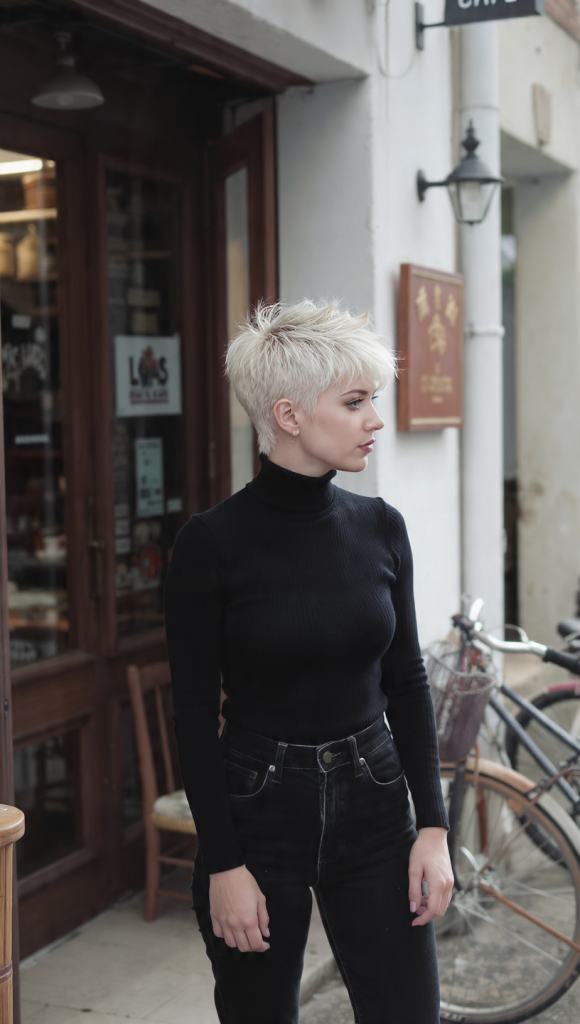
Structure: Very short (½–1 inch) with longer, spike-able pieces on top (1½ inches).
Best for: Angular or diamond faces; strong hair that holds product.
Styling tip: Work a strong-hold wax or glue between your fingertips and pinch ends.
8. The Baby Pixie (Micro Pixie)

Structure: Ultra-short (¼–½ inch) all over, often showing scalp lines.
Best for: Small features; confident minimalists.
Styling tip: Wash-and-go — just add a lightweight SPF moisturizer to the scalp.
9. The Asymmetrical Pixie
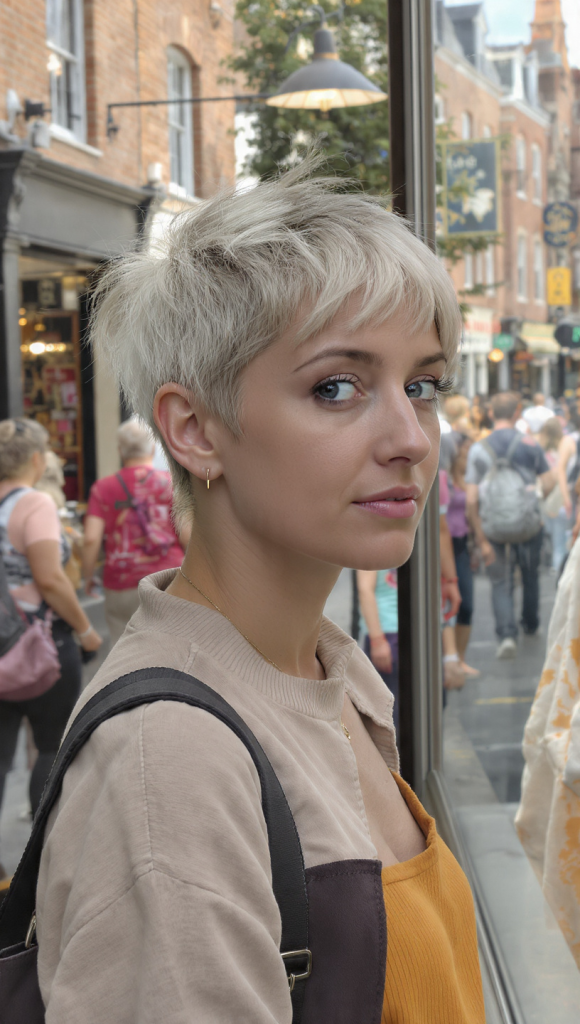
Structure: One side noticeably longer (2–3 inches) than the other (½–1 inch).
Best for: Heart or oval faces; straight hair.
Styling tip: Use a flat iron to emphasize the length difference.
10. The Wispy Pixie

Structure: Soft, feathered ends with layers starting at the crown (1–2 inches).
Best for: Mature women; fine or thinning hair.
Styling tip: A lightweight mousse adds volume without weighing it down.
11. The Faux Hawk Pixie
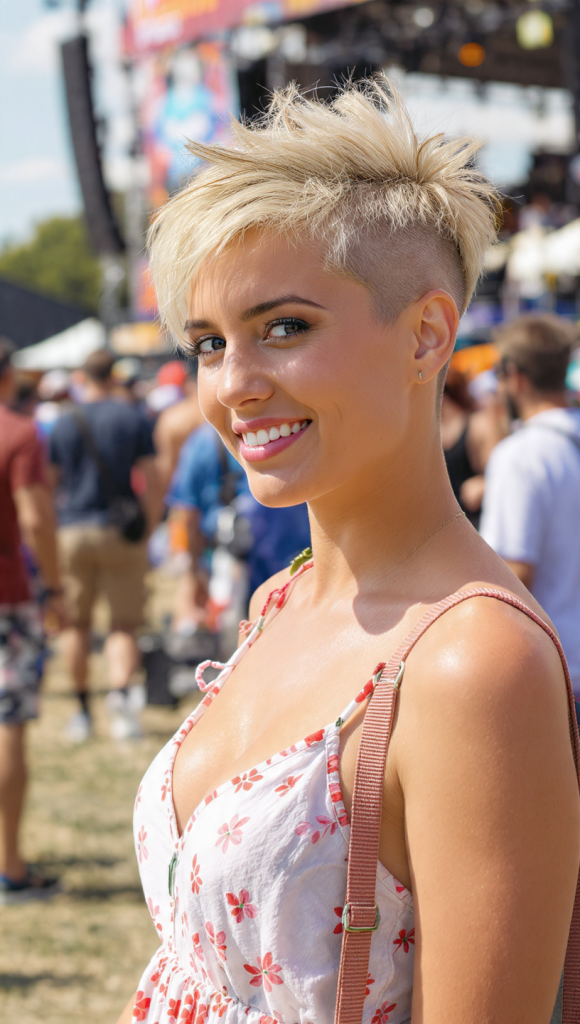
Structure: A strip of longer hair (2–3 inches) down the center, short or shaved sides.
Best for: Adventurous styles; oval or long faces.
Styling tip: Blow-dry the center strip upward and set with a flexible hairspray.
12. The French Pixie
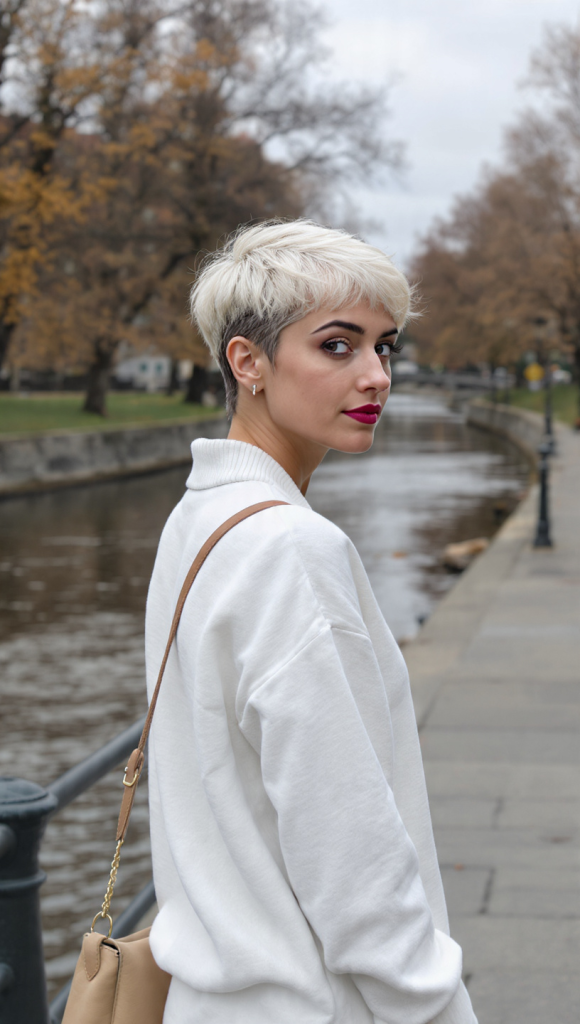
Structure: Clean, sculpted lines with slightly longer, curled-under bangs (1½ inches).
Best for: Delicate or angular faces; straight, sleek hair.
Styling tip: Run a shine serum through ends and tuck bangs behind one ear.
13. The Layered Pixie with Bangs

Structure: Full, choppy layers (1–3 inches) plus blunt or side-swept bangs.
Best for: Thick or coarse hair; square or round faces.
Styling tip: Blow-dry forward with a vent brush to create lift at the roots.
14. The Tapered Pixie
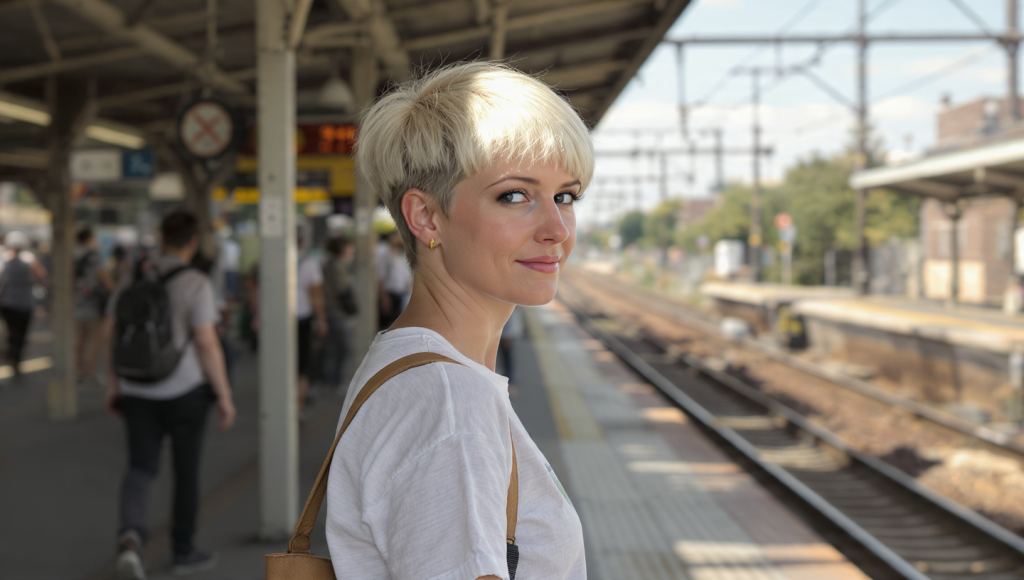
Structure: Hair gradually shortens from top (2 inches) to nape (¼ inch).
Best for: Any face shape; all hair densities.
Styling tip: Ask your stylist for a “drop fade” at the nape for extra polish.
15. The Curly Top + Shaved Sides Pixie
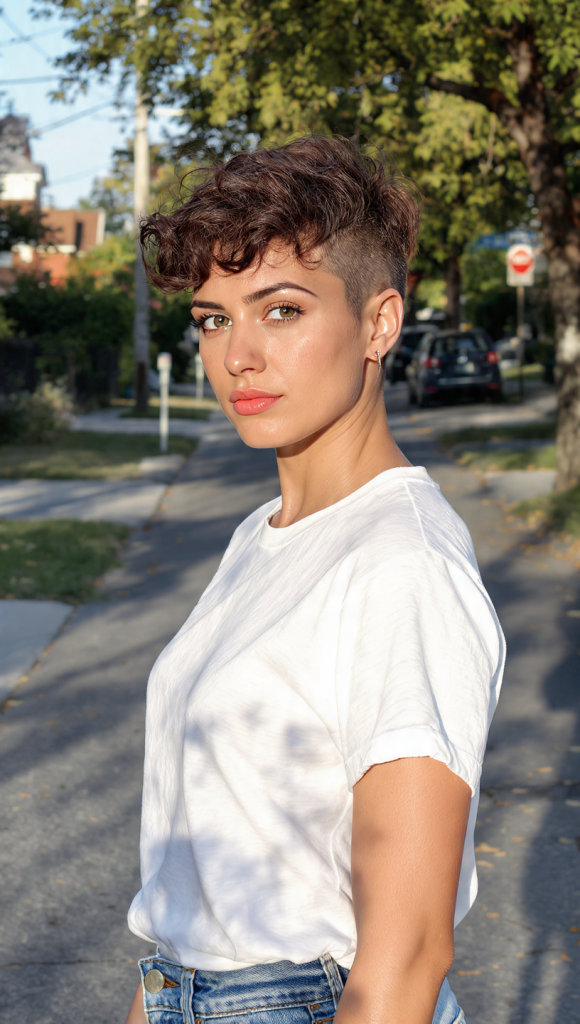
Structure: Sides and back shaved (¼ inch or less), top left in tight curls (1–2 inches).
Best for: Type 3B–4C curls; oval or heart-shaped faces.
Styling tip: Define curls with a leave-in conditioner, then let the shaved contrast shine.
How to Style a Pixie Cut (Step by Step)
You don’t need a dozen products. Here’s a simple routine that works for most pixie lengths:
Step 1 – Towel-dry
Gently squeeze out excess water. Never rub—it creates frizz and breaks the hair cuticle.
Step 2 – Apply a pea-sized product
- For piece-y texture: pomade or wax
- For soft hold: mousse or curl cream
- For sleek looks: smoothing serum
Step 3 – Blow-dry (optional)
Use a small round brush for volume at the crown. For a messy pixie, skip the brush and use your fingers.
Step 4 – Finish
Flip your head upside down and shake. Then use your fingertips to arrange pieces exactly where you want them.
Pro tip: A dry texture spray on second-day hair revives a pixie instantly without washing.
Best Products for Short Pixie Hairstyles
Keep your shelf minimal. These five product types cover 90% of pixie needs:
| Product Type | What It Does | Example Texture |
|---|---|---|
| Texture spray | Adds grit and volume | Light, airy |
| Matte pomade | Defines pieces without shine | Waxy, pliable |
| Light hold gel | Controls flyaways | Clear, non-crunchy |
| Curl cream | Defines curls and reduces frizz | Creamy, moisturizing |
| Dry shampoo | Absorbs oil between washes | Powder or aerosol |
Avoid: Heavy oils, butters, or anything labeled “super hold” unless you want helmet-head.
How Often to Trim a Pixie Cut
| Pixie Type | Trim Frequency |
|---|---|
| Micro / Baby pixie | Every 2–3 weeks |
| Classic or textured pixie | Every 4 weeks |
| Long pixie (pixie-bob) | Every 5–6 weeks |
| Undercut or shaved sides | Every 5–7 days (shaved part only) |
Signs you’re due for a trim:
- Hair starts poking your ears or collar
- The shape looks like a mushroom
- You can’t style it without fighting it
Transitioning from Long Hair to a Pixie: What to Expect
Going from long to short is a big change. Here’s a realistic timeline:
- Day 1: Euphoria. You’ll touch your head constantly.
- Week 1–2: Learning curve. Styling takes a few extra minutes.
- Week 3–4: The “fluffy” phase. Hair settles into its natural shape.
- Week 6–8: The awkward grow-out. Use bobby pins, headbands, or get a shape-up trim.
Emotional tip: If you feel regret, wait two full weeks before growing it out. Most pixie regret fades once you learn two or three styling tricks.
Pixie Hairstyles by Face Shape (Quick Reference Guide)
- Oval: Almost any pixie works. Try the classic, asymmetrical, or French pixie.
- Round: Go for height on top. Textured, spiky, or faux hawk pixies are excellent.
- Square: Soften the jawline with wispy edges or side-swept bangs. Wispy or long pixies work best.
- Heart: Draw attention to your eyes. Side-swept or layered pixies with volume at the crown are flattering.
- Long / Oblong: Avoid too much height. Long pixies and pixie-bobs add width beautifully.
Common Pixie Cut Mistakes (And How to Avoid Them)
| Mistake | Why It Happens | Fix |
|---|---|---|
| Too much bulk on top | Stylist left too much length | Ask for “texturizing shears” next time |
| Shaved too high up the back | Miscommunication about length | Bring a photo of the back view |
| Looks like a helmet | No internal layering | Request “point cutting” or “notching” |
| Curls shrink too much | Curly hair cut wet | Always cut curly pixies dry |
| Growing out looks awkward | No shape-up trims | Schedule trims every 4 weeks even while growing |
Conclusion
A pixie cut is not a hairstyle you hide behind—it’s one you live inside. Whether you choose the elegance of a French pixie, the edge of an undercut, or the ease of a micro crop, short hair has a way of revealing confidence you didn’t know you had.
The 15 styles outlined above give you a roadmap, but the best pixie is the one that feels like you. Bring photos to your stylist. Ask questions. And if you’ve been thinking about the chop for months? Take this as your sign.
Short hair doesn’t mean less style. It means less hiding.
