Sage green is the most forgiving colour you can put in a bathroom — and the easiest one to ruin with bad lighting. Under warm light, sage glows soft and botanical. Under cold blue-white LEDs, the same wall turns flat institutional grey. The paint hasn’t changed; the light has.
So before you pick a single fixture, lock in the rule that governs everything below: keep your bulbs between 2700K and 3000K. That warm-white range is what lets the green read as green. Then choose your fixtures from these twelve options, depending on whether your sage leans warm farmhouse, cool spa, or moody powder room.
1. Black Candlestick Sconces
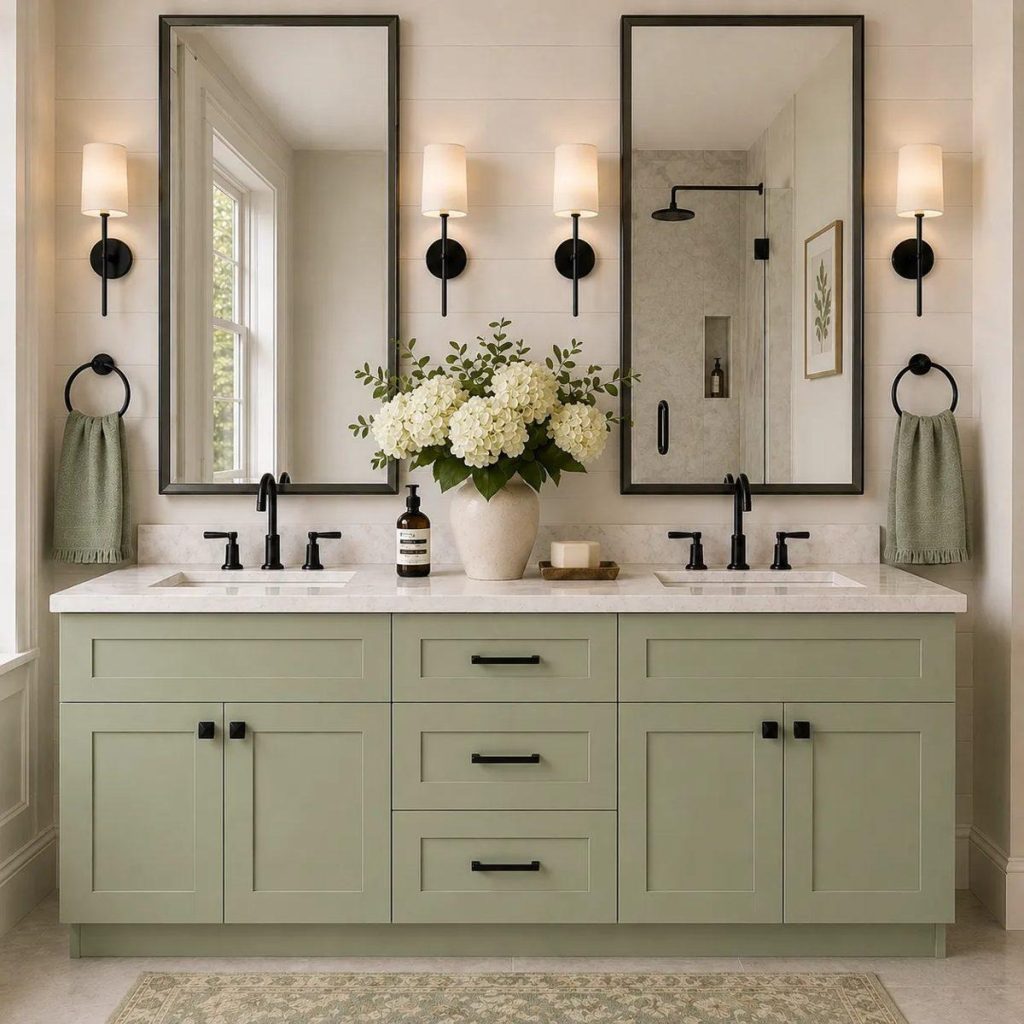
The safest high-impact choice. Slim matte black sconces with white linen or opal shades, mounted in pairs flanking each mirror, give a sage vanity wall instant symmetry and a tailored, almost editorial look. Black hardware on the vanity ties it together — taps, drawer pulls, mirror frames, sconces, all one finish. Mount them at roughly eye level, 60 to 66 inches off the floor, so the shade sits beside your face rather than above it. Side lighting is also the most flattering for shaving and makeup — it kills the under-eye shadows that overhead-only lighting creates.
2. Brass Vanity Bar Lights
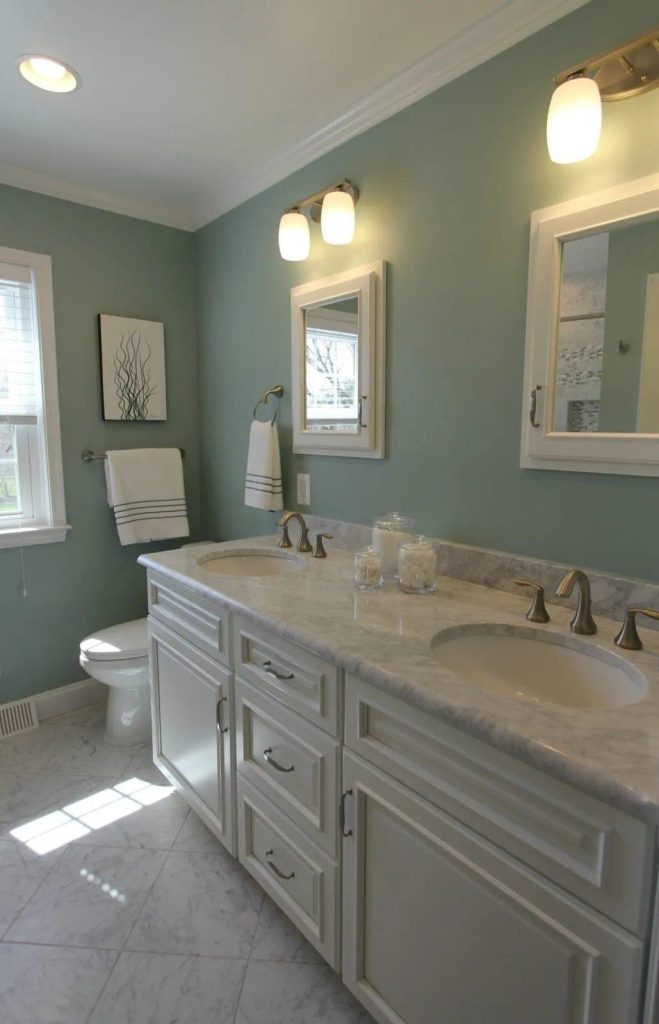
For sage-painted walls in a traditional or transitional bathroom, the classic two- or three-light brass bar above the mirror still earns its place. Opal glass shades throw light down across the mirror and countertop without glare, and aged brass against sage is one of the most reliable colour pairings in interiors — green and gold, warm on warm. This is the option for bathrooms where the sconce-beside-the-mirror layout isn’t possible because the mirrors are medicine cabinets or the wall space is tight.
3. Mixed-Metal Globe Bars
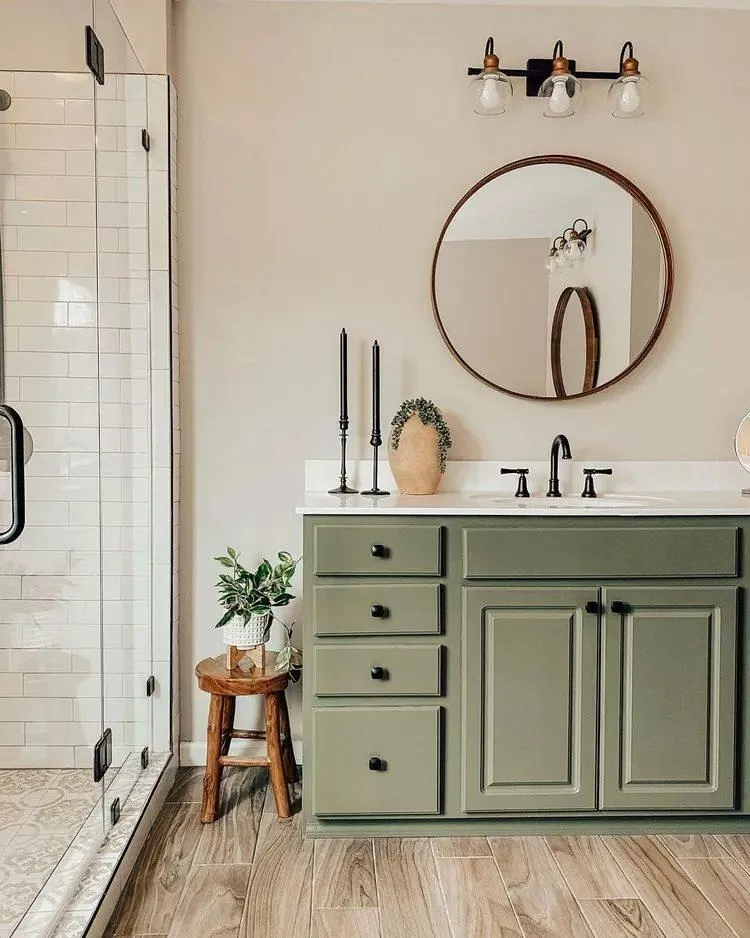
Want something less polite? A three-light bar mixing black arms with brass sockets and clear glass globes adds an industrial-farmhouse edge that works especially well above a round wood-framed mirror on an olive or deep sage vanity. Exposed glass means exposed bulbs, so spend the extra few pounds on good-looking LED filament bulbs — the spiral-filament warm ones, dimmable, around 2700K. With clear glass, the bulb is the fixture.
4. Black Bars With Fabric Shades
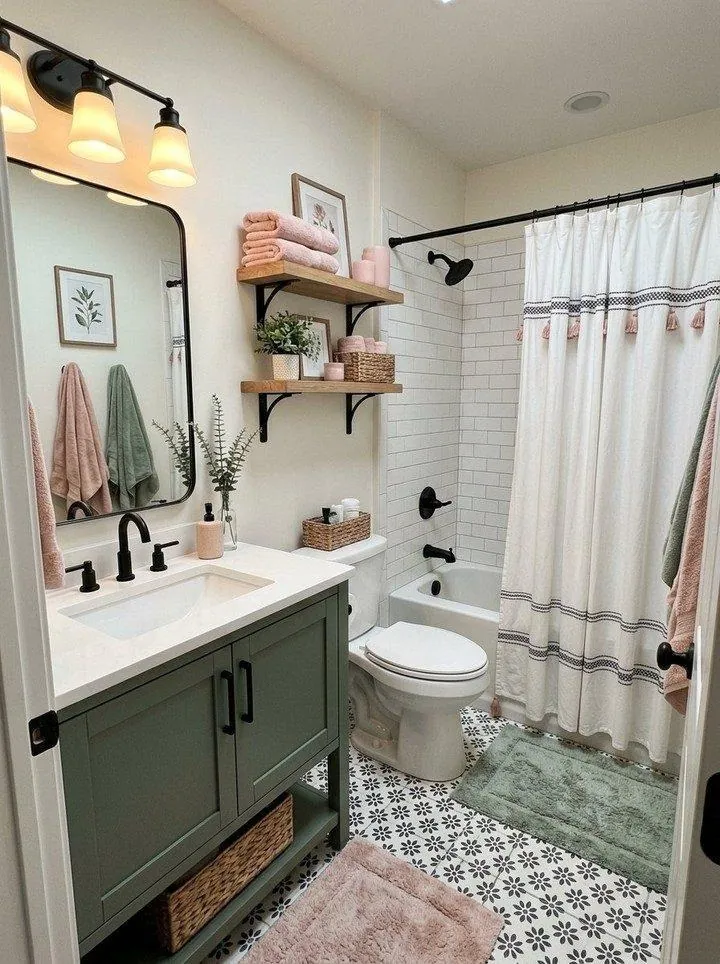
The softer cousin of the globe bar: a black multi-arm fixture with cream fabric or frosted shades. The shades diffuse the light, which matters in small sage bathrooms where a bare-bulb fixture can feel harsh bouncing off tile. This version suits the cottage and modern-farmhouse end of sage — patterned floor tiles, shaker vanities, woven baskets.
5. Period Brass Swing-Arm Sconces
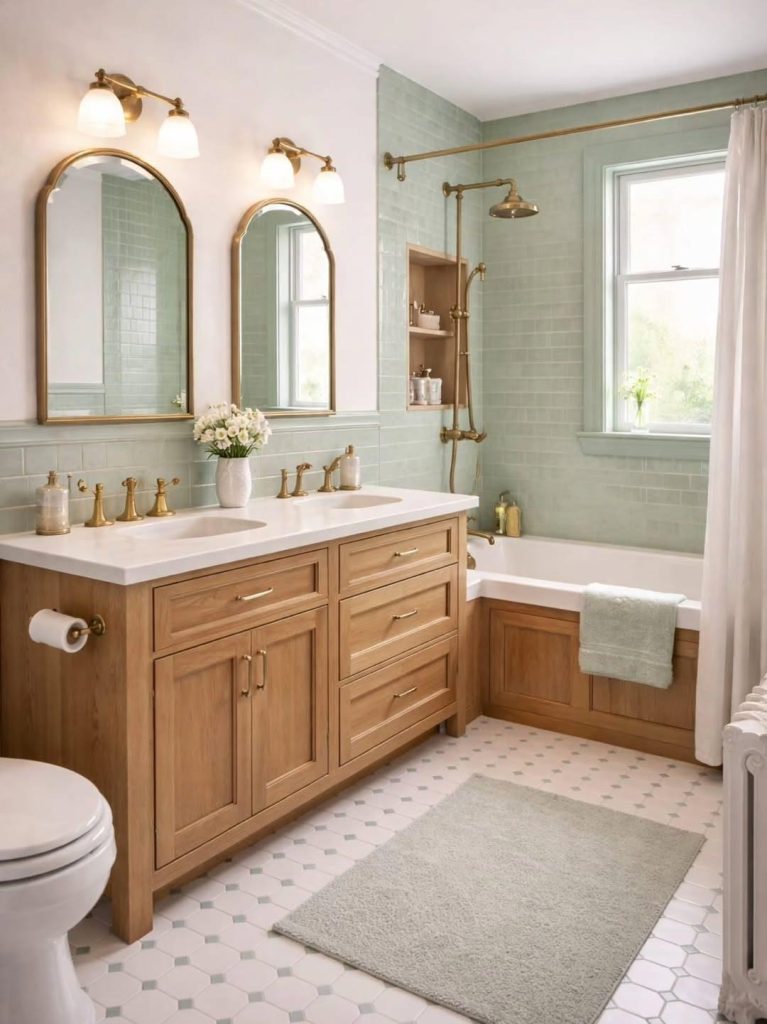
In a sage bathroom with traditional bones — brass shower set, arched mirrors, marble-look tile — double-arm brass sconces with opal globes are the detail that makes the room look renovated by someone who cared. They read as original 1920s fittings even when they’re brand new. Position one between or beside each mirror and let them do double duty as task and ambient light.
6. Ceramic Pendants Over the Basins
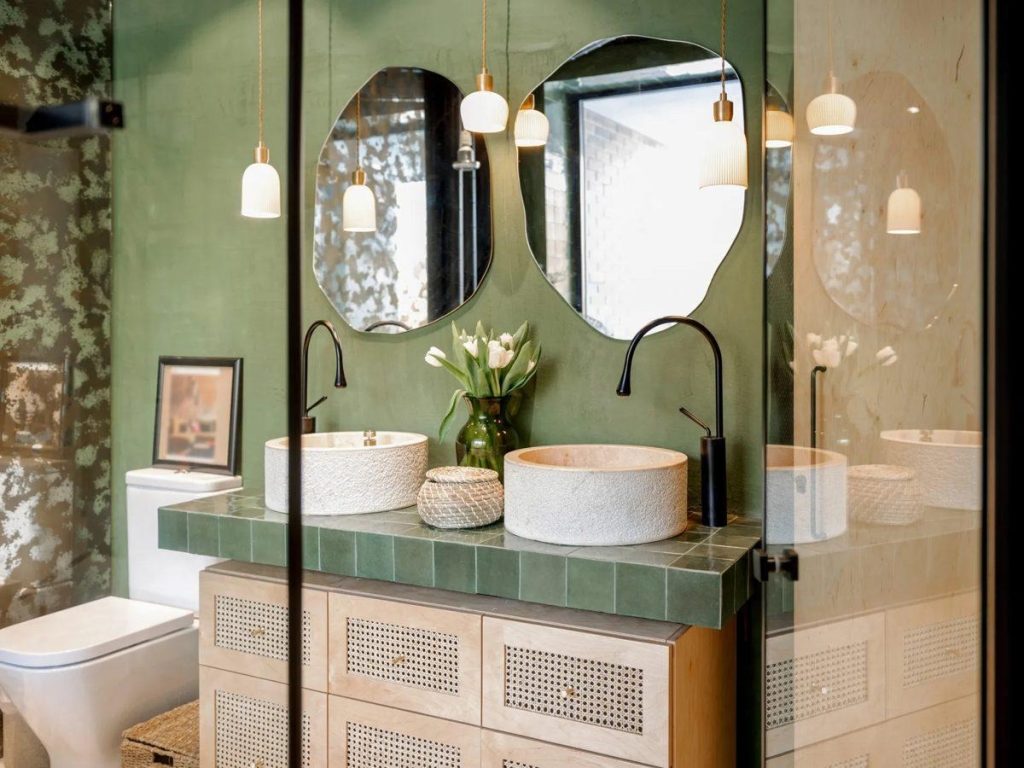
Dropping pendants from the ceiling on cords instead of mounting wall lights is the move that signals a designed room. Ribbed white ceramic or fluted glass shades on brass cord sets, hung in pairs at different heights over each basin, throw soft pools of light and leave the walls clean. This works brilliantly with deeper sage and olive limewashed walls, where wall-mounted fixtures would interrupt the texture. Hang the bottom of the shade around 65 to 70 inches off the floor — low enough to feel intentional, high enough not to block the mirror.
7. A Woven Rattan Pendant
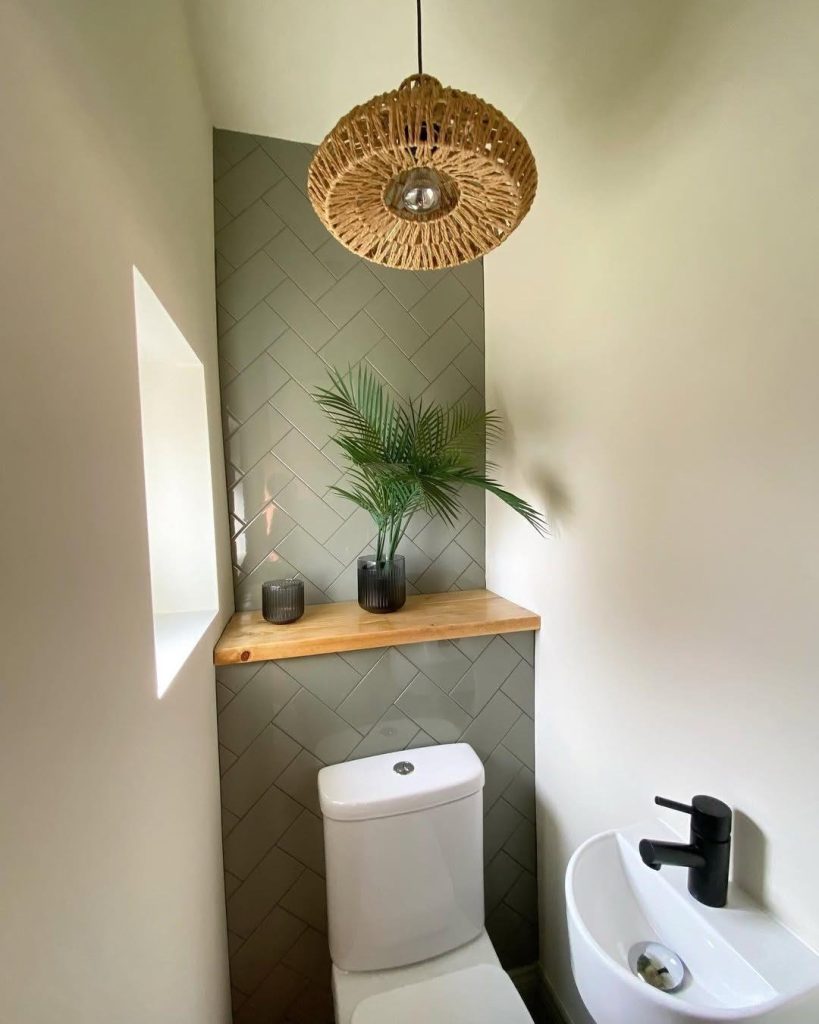
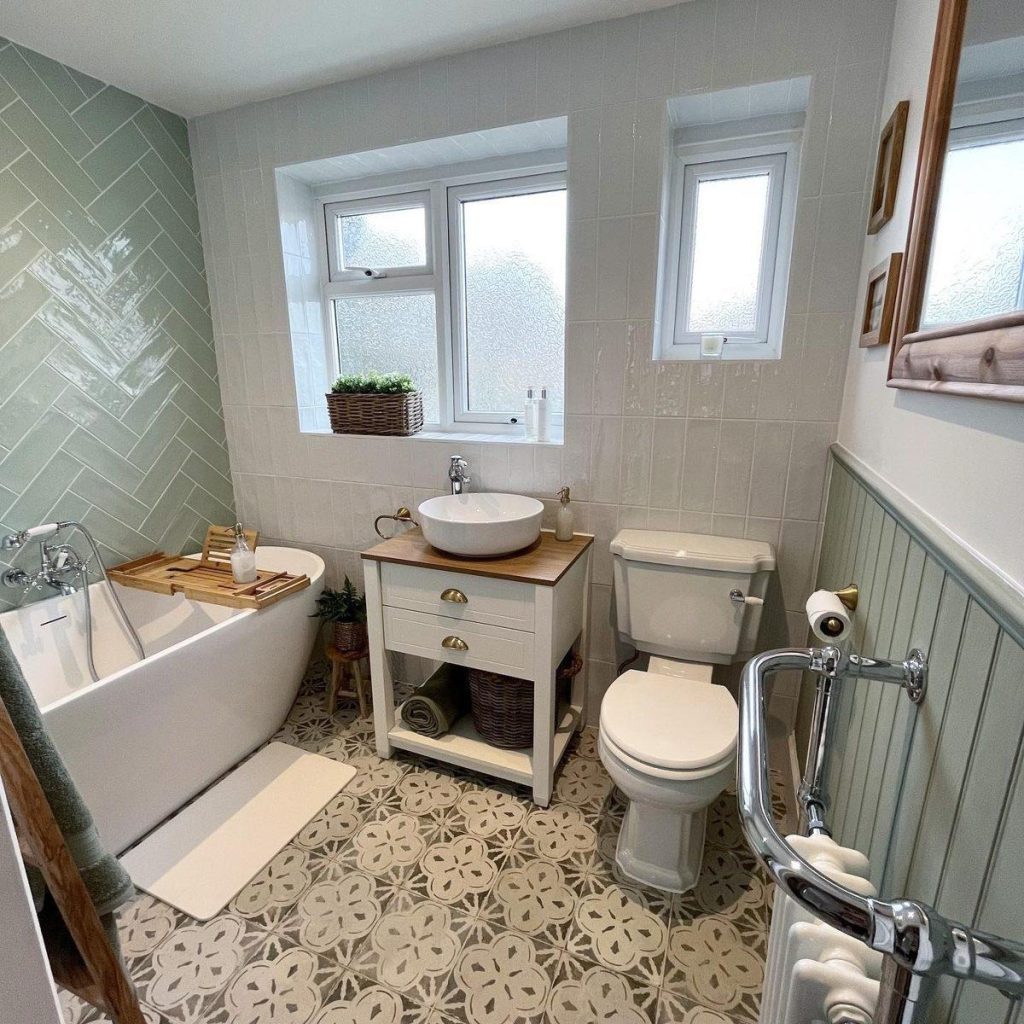
For cloakrooms and small WCs with a sage herringbone feature wall, one woven rattan or rope pendant is all the decorative lighting the room needs. The texture warms up the green, the open weave throws patterned shadows on the ceiling, and it costs a fraction of a multi-light fixture. Small rooms are where you can afford a fixture with personality — you’re in there two minutes at a time.
8. The Backlit LED Mirror
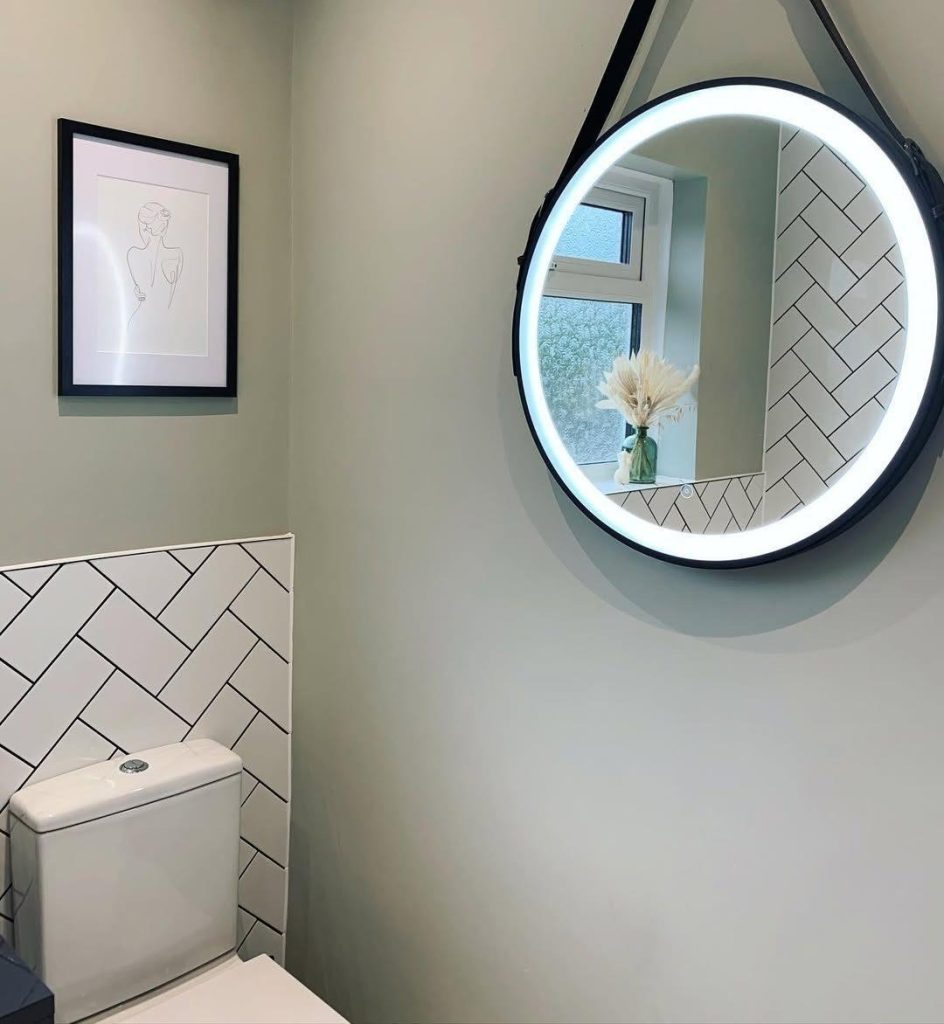
A round halo mirror — LED ring behind the glass, ideally on a black leather strap or thin black frame — gives a sage half-bath modern polish and genuinely useful task light. Two things to check before buying: that the colour temperature is adjustable or fixed warm (many cheap halo mirrors only do 6000K daylight, which is exactly the light that murders sage green), and that it has a proper IP44 rating for bathroom zones.
9. Sconces Flanking the Tub
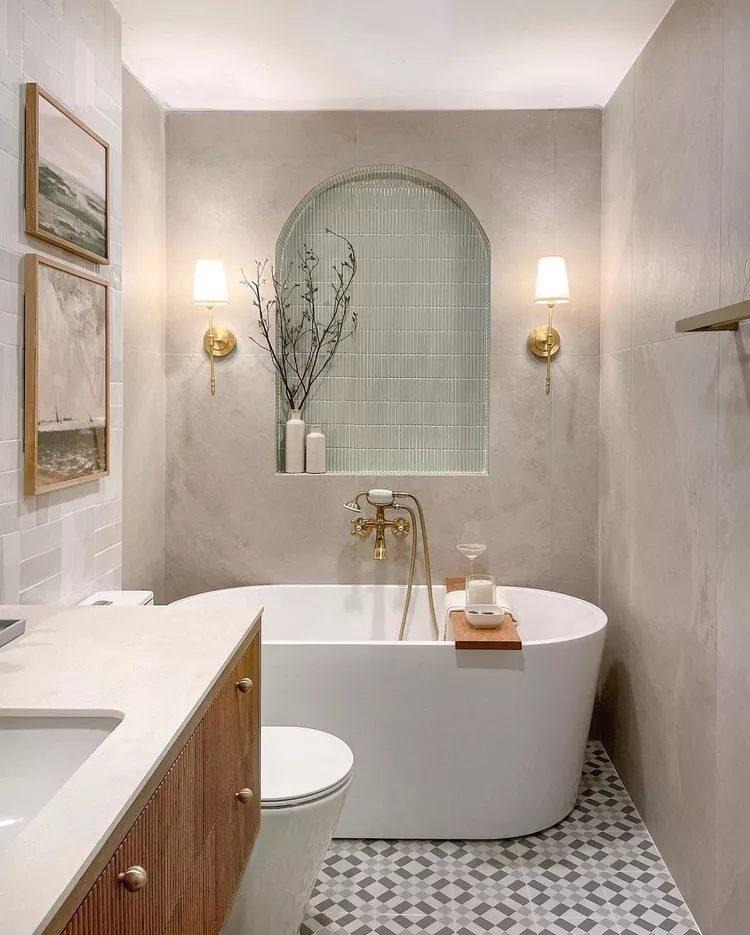
Lighting shouldn’t stop at the vanity. A pair of slim brass candle sconces with white shades flanking an alcove, arched niche, or freestanding tub turns the bathing zone into its own destination — especially against soft sage-adjacent plaster or microcement. Wire them to a separate switch (ideally a dimmer) so the tub end of the room can glow while the vanity lights are off. Check zone regulations: fixtures within reach of the tub need the appropriate IP rating.
10. Uplight Sconces for the Powder Room
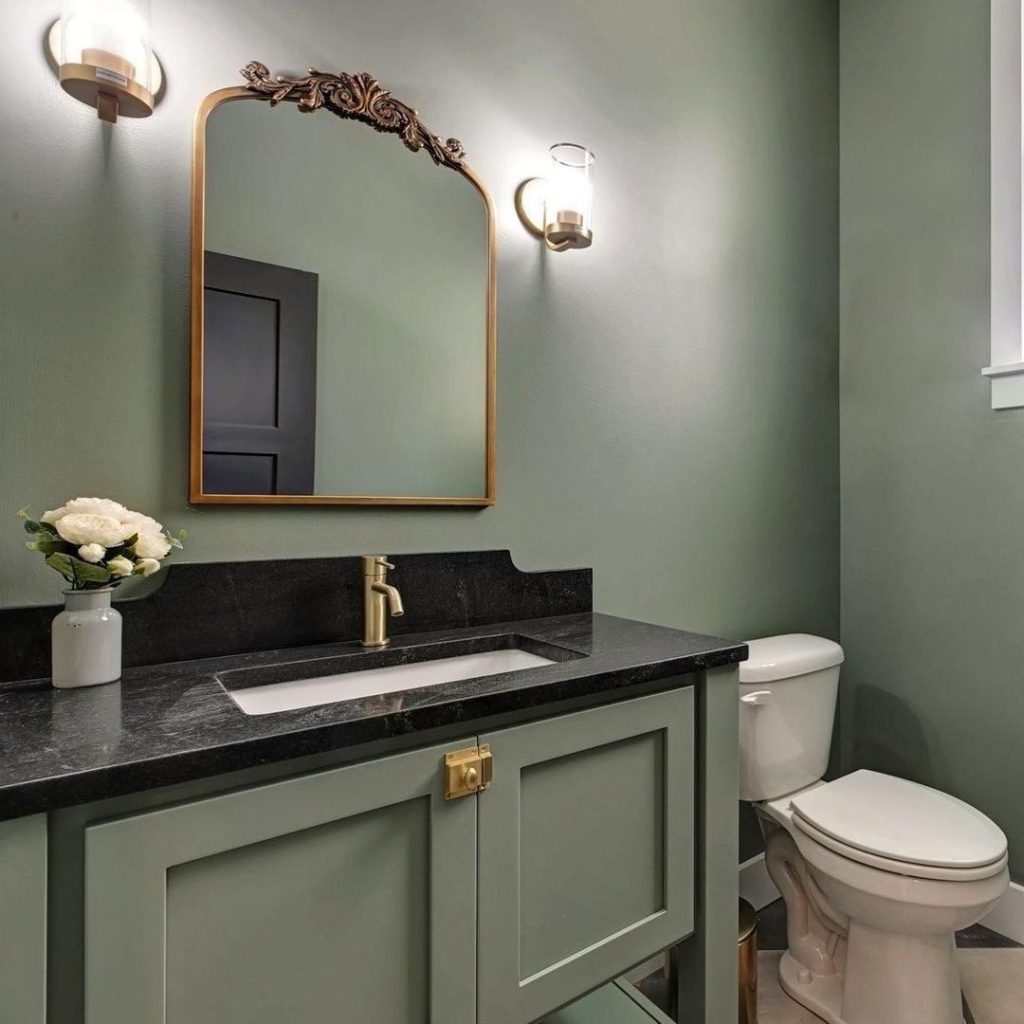
Deeper sage walls with black stone counters and an ornate gold mirror want drama, not brightness. Brass uplight sconces — cylinder or torch style, throwing light at the ceiling — keep the room moody while bouncing enough soft light back down to function. Powder rooms are the one bathroom where you can light for atmosphere first, because nobody’s doing their makeup in there.
11. Recessed Downlights — As the Supporting Act
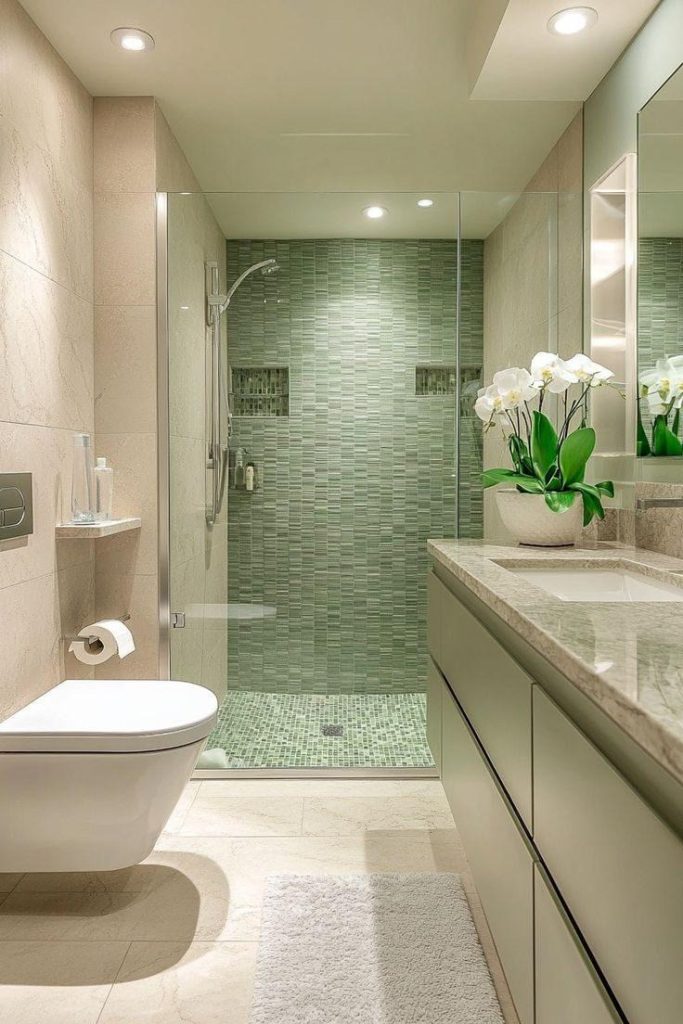
Recessed spots have a job: even, shadow-free general light, especially over showers and in spa-style sage bathrooms with mosaic feature walls. The mistake is making them the only light source — a grid of ceiling cans and nothing else is why so many bathrooms feel like dental surgeries. Use warm-white, dimmable downlights for the base layer, position one inside the shower enclosure (rated for the zone), and let sconces or pendants carry the decorative load.
12. Candles, Lanterns, and the Free Layer
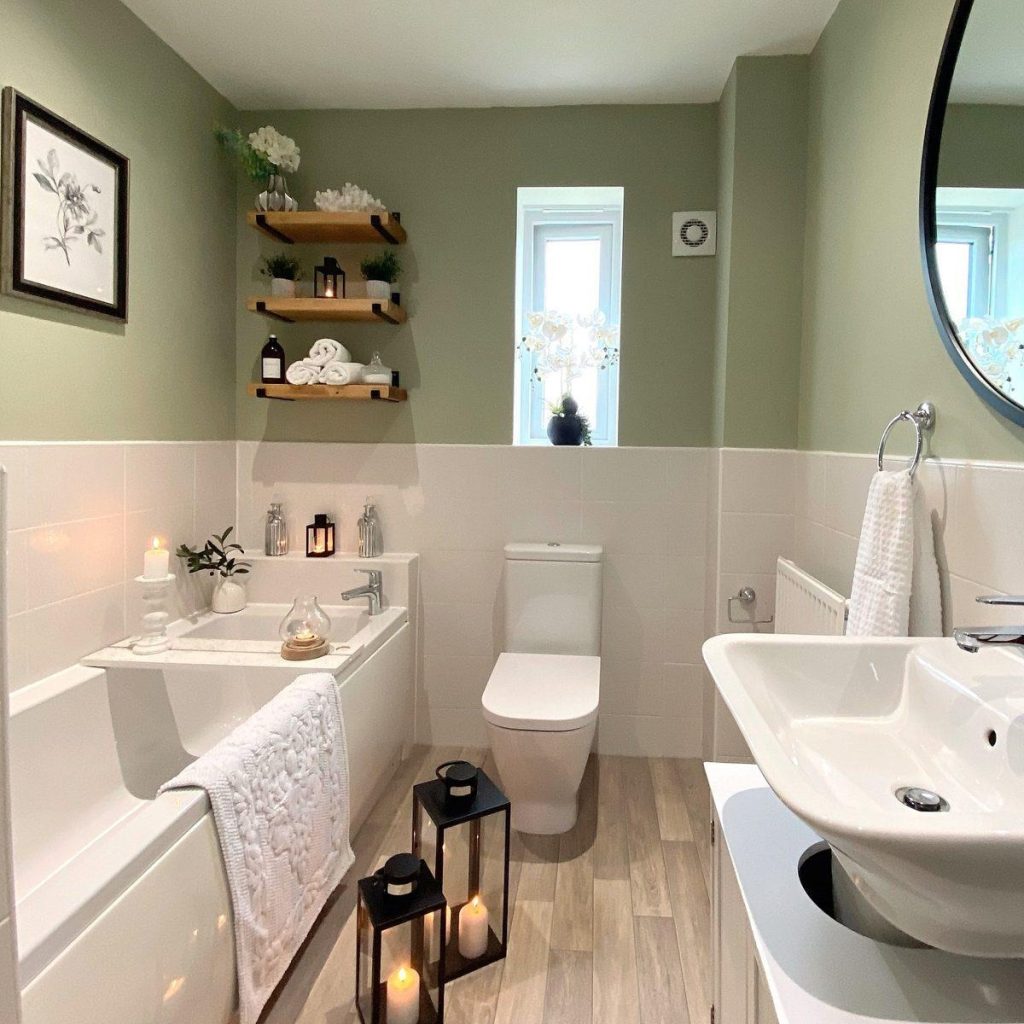
The cheapest decorative lighting in a sage bathroom is fire and daylight. Black metal lanterns clustered on the floor, a pillar candle on the bath ledge, tealights on a rustic shelf — against sage walls and white tile, candlelight adds the amber layer that no fixture replicates. And during the day, let the window do the work: sage shifts beautifully through the day under natural light, which is half the reason the colour became popular in the first place.
Getting the Layers Right
Every good sage bathroom uses at least two of these, on separate switches: a task layer at the mirror (sconces, bar lights, or a backlit mirror), an ambient layer (downlights or a ceiling pendant), and an accent layer (tub sconces, lanterns, candles). Put the ambient layer on a dimmer and the room works at 7am and 10pm.
One last point: lighting exposes paintwork. Sconce light raking across a sage wall will highlight every roller mark and patch of flat sheen, so if you’re repainting before the electrician arrives, get the finish right — our guide to painting your bathroom covers moisture-resistant sheens, and this breakdown of paint finishes for high-traffic areas explains which ones survive steam and scrubbing.
And if your sage vanity is a painted wood piece — shaker unit, repurposed dresser, or a DIY colour change — pair the new lighting with a finish that can take the humidity. The guide to water-based finishes covers clear protective topcoats that won’t yellow the green, and the common wood finishing mistakes rundown is worth a read before you crack open the tin.
