Your front yard is the opening chapter of your home’s story—the first thing visitors see and the image that greets you each day. Yet too often, this valuable space becomes an afterthought, a simple stretch of lawn that fails to capture the warmth and personality within. A thoughtfully designed flower bed changes everything. It adds instant curb appeal, frames your entryway, and creates a welcoming atmosphere that extends from the street right to your front door . Whether you have a sprawling lawn or a compact urban plot, the right flower bed design can transform an ordinary facade into something truly memorable. The best part? You don’t need a professional landscaper or a green thumb to get started. From low-maintenance native plantings to creative upcycled containers, these 15 ideas offer something for every style, budget, and skill level .
15 Front Yard Flower Bed Ideas
1. Walkway Border Bed
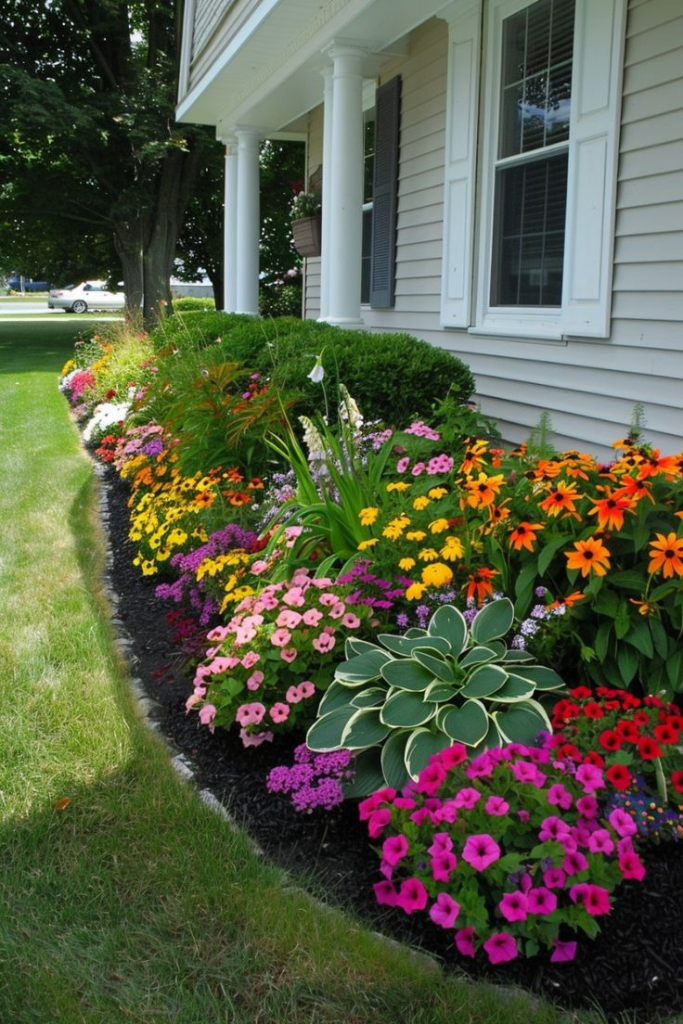
A flower bed flanking your front walkway does more than add color—it sets the tone for your entire home’s exterior. This design guides visitors directly to your front door while offering bursts of fragrance and visual interest on both sides. For a tidy, polished look, plant low-growing varieties like marigolds, salvia, or alyssum along the edge, with medium-height perennials such as echinacea or black-eyed Susans behind them. Define the bed with edging stones or metal borders, and consider fragrant options like lavender or jasmine for added sensory appeal .
2. Circular Feature Bed
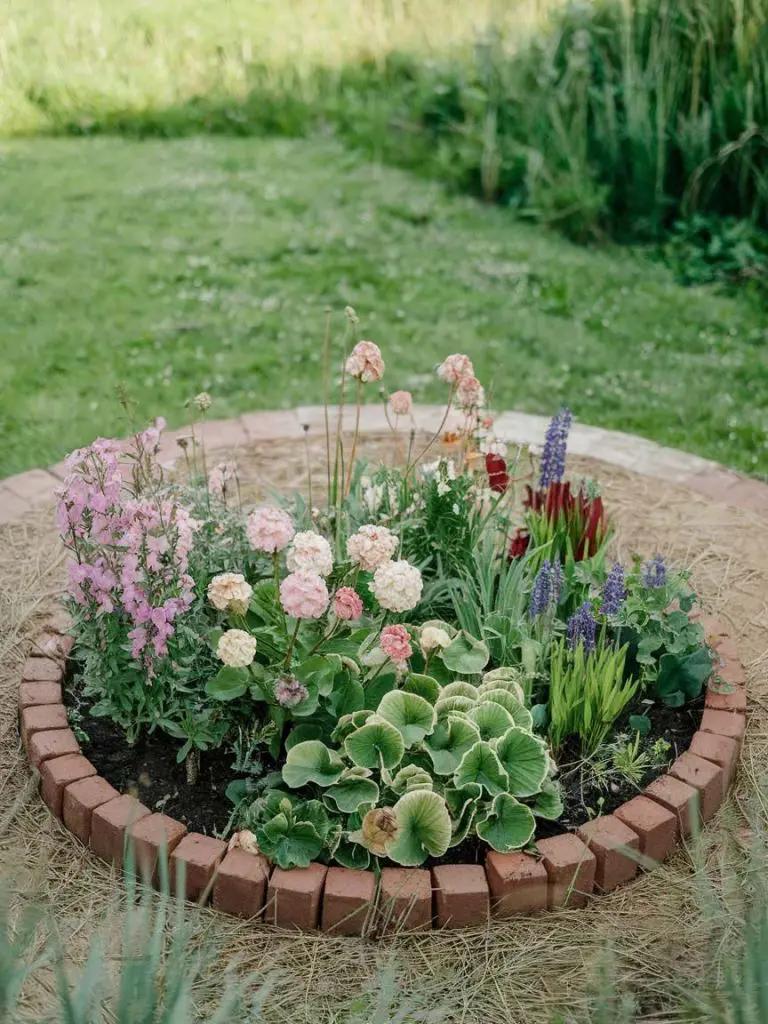
A round flower bed positioned in the center of your front yard serves as a stunning focal point, especially effective in open lawns where it draws attention from all angles. At its heart, place a standout feature—an ornamental tree, birdbath, sculpture, or large flowering shrub. Surround the centerpiece with layered rings: taller plants like dahlias or daylilies in the middle, mid-height fillers such as salvia or rudbeckia, and a border of low-growing blooms like lobelia or sweet alyssum. Stick to two or three colors for a cohesive look, and use edging stones to define the circle .
3. Raised Bed with Seating
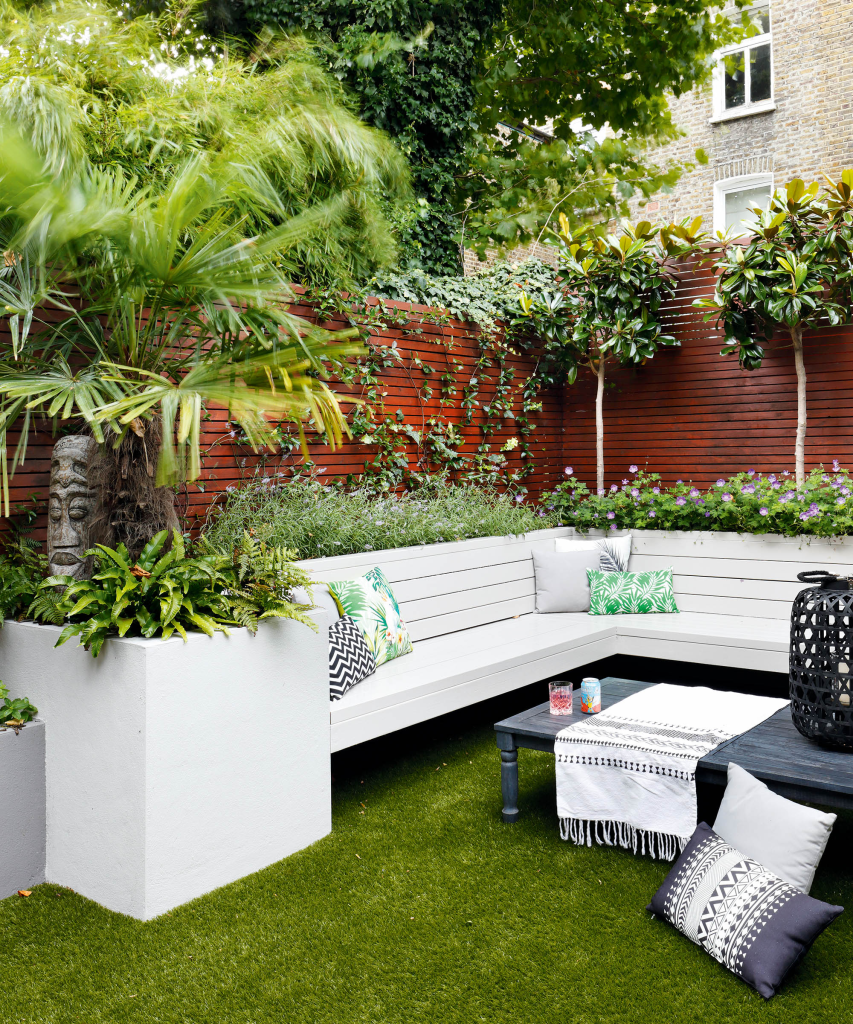
A raised flower bed paired with built-in or surrounding seating creates a charming, functional space right at the front of your home. Construct the bed using wood, brick, or stone that complements your home’s exterior, building it to bench height—around 18 inches—so it comfortably doubles as seating. Fill with colorful perennials like geraniums, zinnias, or dwarf roses, and accent with cascading plants that soften the edges. Add cushions or a backrest for comfort, and choose weather-resistant materials that will withstand the elements .
4. Tiered Slope Bed
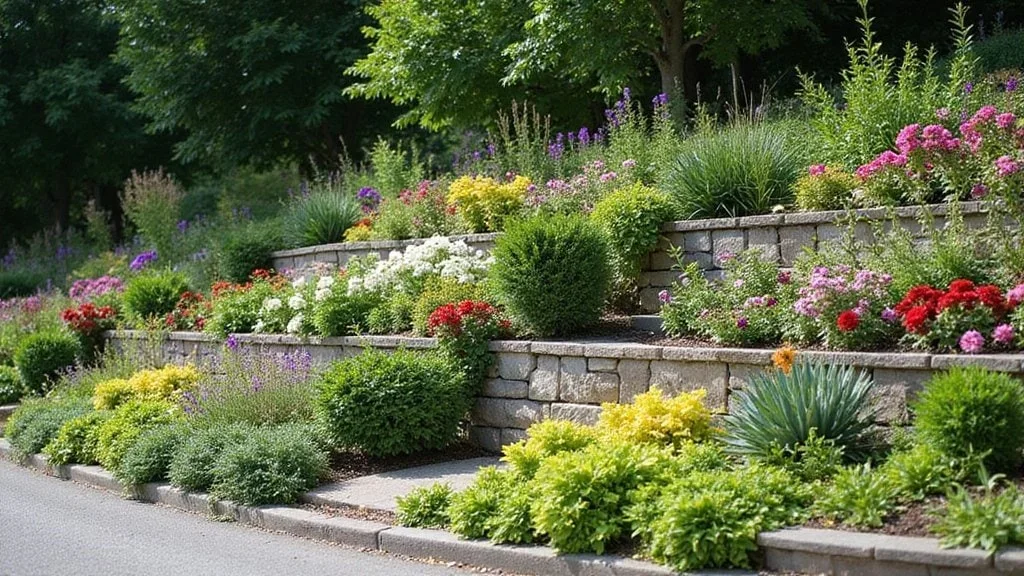
If your front yard has a slope, a tiered flower bed turns a potential challenge into a dramatic design feature. This approach adds height and dimension while preventing soil erosion and making every bloom visible. Build your tiers using wooden boxes, retaining wall blocks, or stacked planters. Place taller plants like snapdragons or ornamental grasses on the top tier, medium-height blooms like daisies or coneflowers in the middle, and ground-huggers like creeping phlox or begonias at the base. Water from the top tier to allow runoff to nourish the lower levels naturally .
5. Tree Base Garden
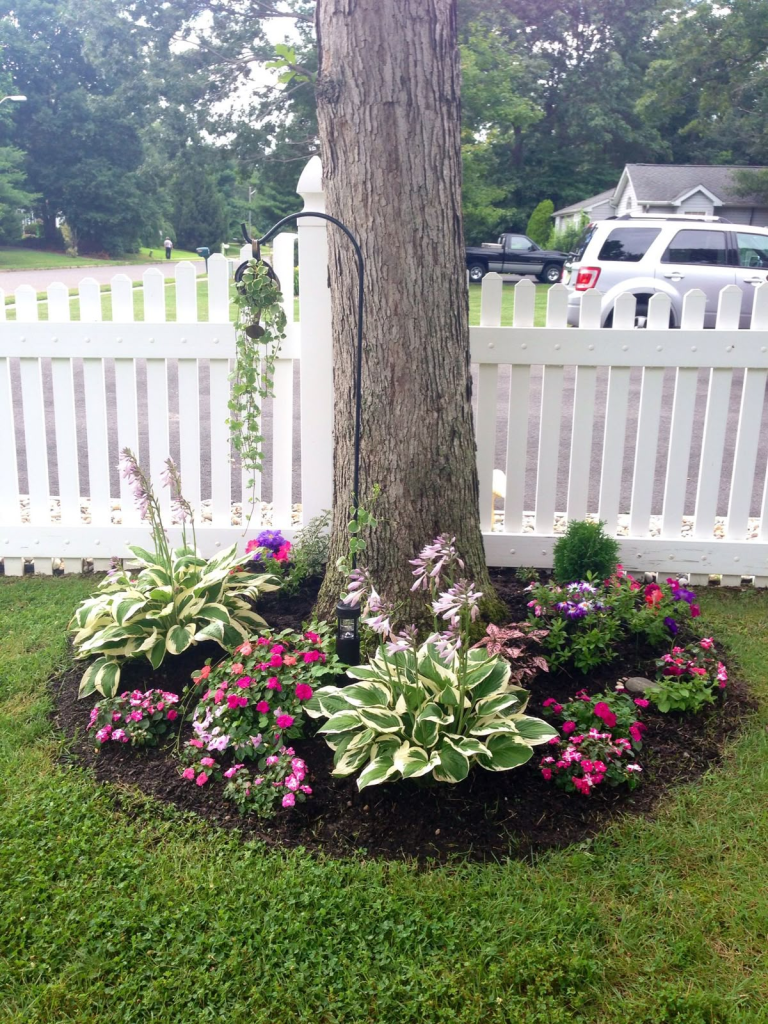
Transform the bare soil beneath your front yard trees into a blooming flower bed that softens the landscape and brings color to shaded areas. This underutilized space becomes a natural frame for your tree while making your yard feel lush and intentional. Use shade-tolerant flowers like impatiens, hostas, astilbes, or begonias, and create a circular or crescent-shaped bed around the trunk. Layer plants based on height—shorter ones near the edge and taller varieties closer to the trunk (but not too close). Avoid deep digging near tree roots, and use breathable landscape fabric to reduce weed growth .
6. Cottage Garden Overflow
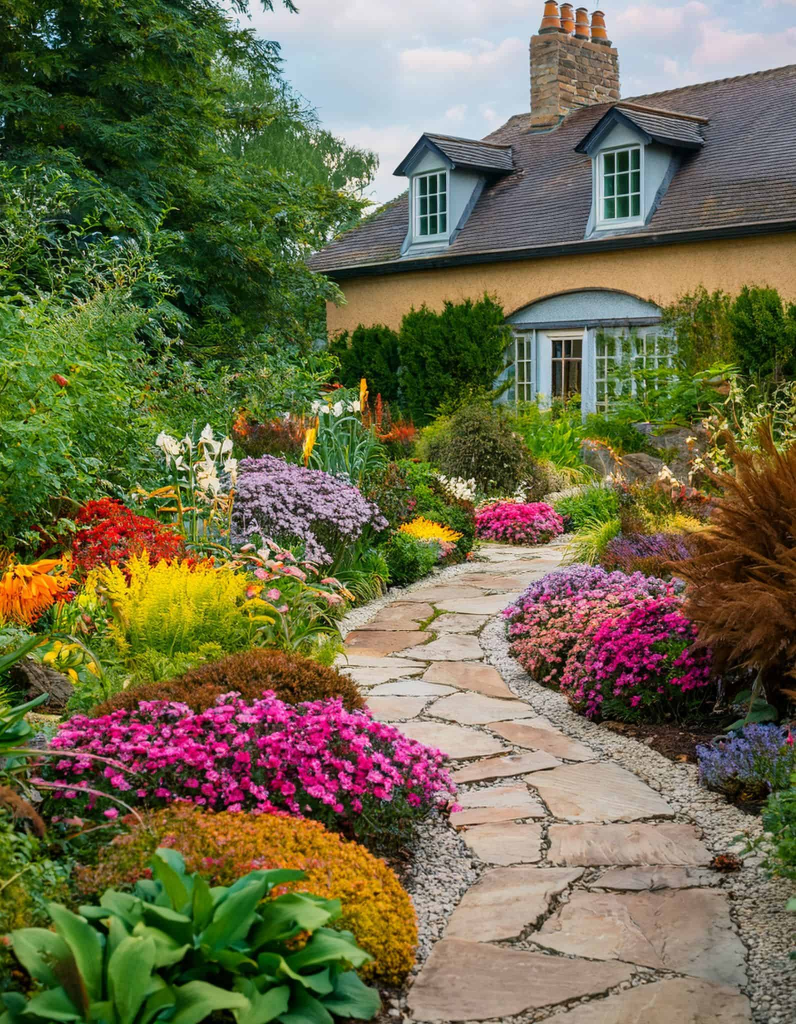
Embrace a charming, informal look with a cottage-style flower bed filled with a dense mix of colorful, self-sowing flowers. This style is wonderfully forgiving—there are no strict rules about spacing or symmetry, just masses of blooms spilling over each other in a romantic, lived-in display. Fill your bed with roses, daisies, lavender, and delphiniums, and let things mix naturally. A simple white picket fence makes a fantastic backdrop, adding structure while keeping the overall feel relaxed and inviting .
7. Pollinator Paradise
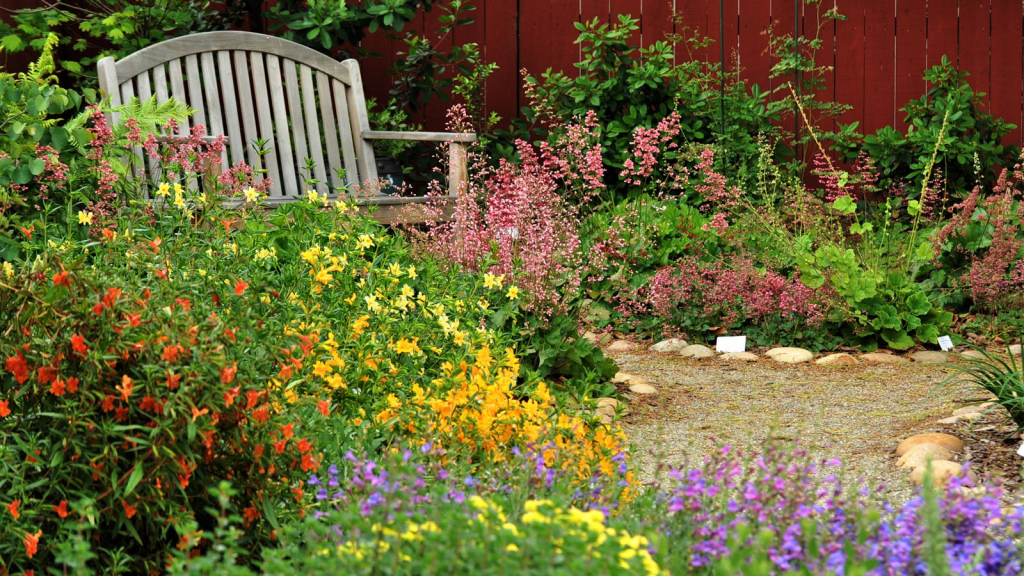
Invite butterflies, bees, and hummingbirds to your front yard with a flower bed designed specifically for wildlife. Plant nectar-rich species like milkweed, bee balm, coneflowers, and black-eyed Susans that provide blooms from spring through fall. This style can be as tidy or wild as you prefer—some gardeners embrace a meadow-like look, while others design more structured beds with native perennials. Beyond the beauty and movement these gardens bring, you’re making a meaningful contribution to your local ecosystem .
8. Monochromatic Elegance
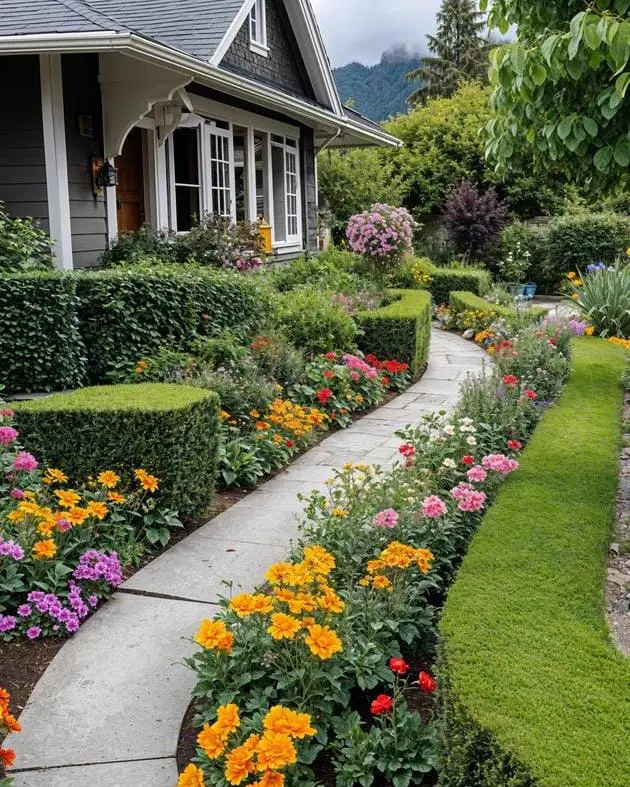
For a look of simple sophistication, design a flower bed using varying shades of a single color. A monochromatic theme creates a soothing, elegant effect and can make a small space appear larger. Go with an all-purple palette using lavender, salvia, iris, and verbena, or create a crisp white garden with Shasta daisies, white petunias, and silvery dusty miller. The key to success is mixing different flower shapes, textures, and heights to maintain visual interest despite the limited color range .
9. Modern Succulent Display
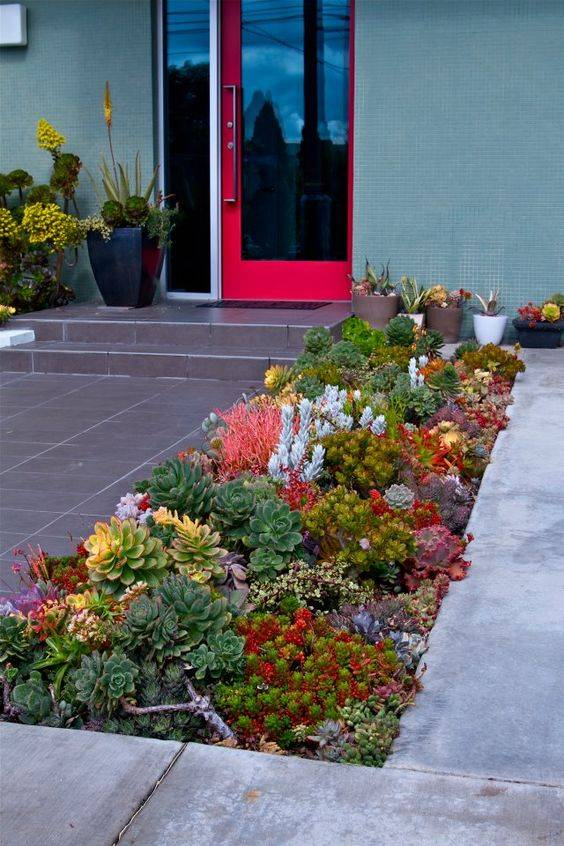
For a clean, contemporary look that requires minimal upkeep, consider a flower bed built around succulents and ornamental grasses. These drought-tolerant plants thrive on neglect once established, making them perfect for busy homeowners. Create a raised bed or ground-level display with dark gravel mulch that provides striking contrast against the fleshy, sculptural forms of aeoniums, agaves, and sedums. Color-block different varieties for maximum impact—chartreuse and deep red sedums planted together create a stunning visual punch along walkways or driveways .
10. River Rock Accent Bed
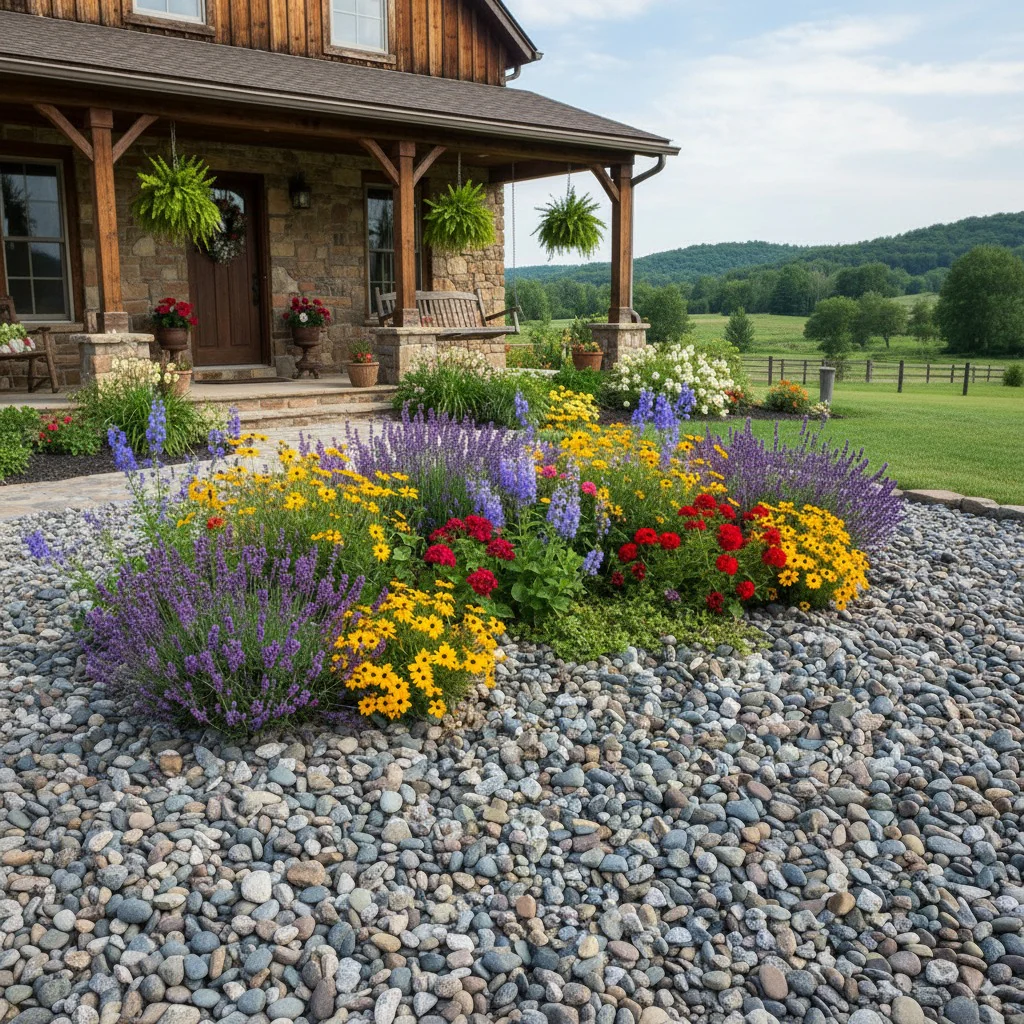
For a natural, rustic touch, design a flower bed accented with smooth river rocks. These stones create striking contrast with soft blooms while improving drainage and suppressing weeds. Start by laying landscape fabric to block weeds, arrange your flowers in clusters—think black-eyed Susans, yarrow, or sedum—and surround them with river rocks in varying shades and sizes. The rocks frame the blooms beautifully and keep soil in place during rain. Choose native stones for a cohesive, local look, and combine flowers with ornamental grasses for added texture .
11. Curved Path Garden
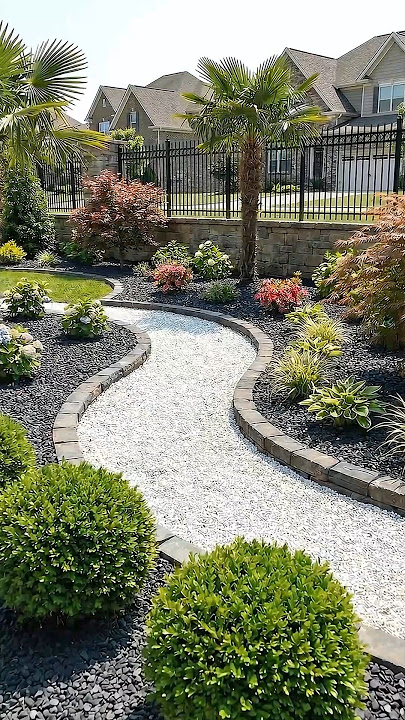
Break away from rigid lines with a wavy or curved flower bed that mimics natural forms like rivers or garden paths. This style adds movement and visual interest, making even a simple landscape feel more dynamic and inviting. Design the bed with gentle curves that follow the contours of your lawn or sidewalk, and choose plants that enhance the flow—ornamental grasses, salvias, or daylilies work beautifully. Alternate bloom colors along the wave for rhythm, or keep it unified with a repeating pattern. Use mulch or groundcover to define the shape and reduce maintenance .
12. Foundation Skirt Bed
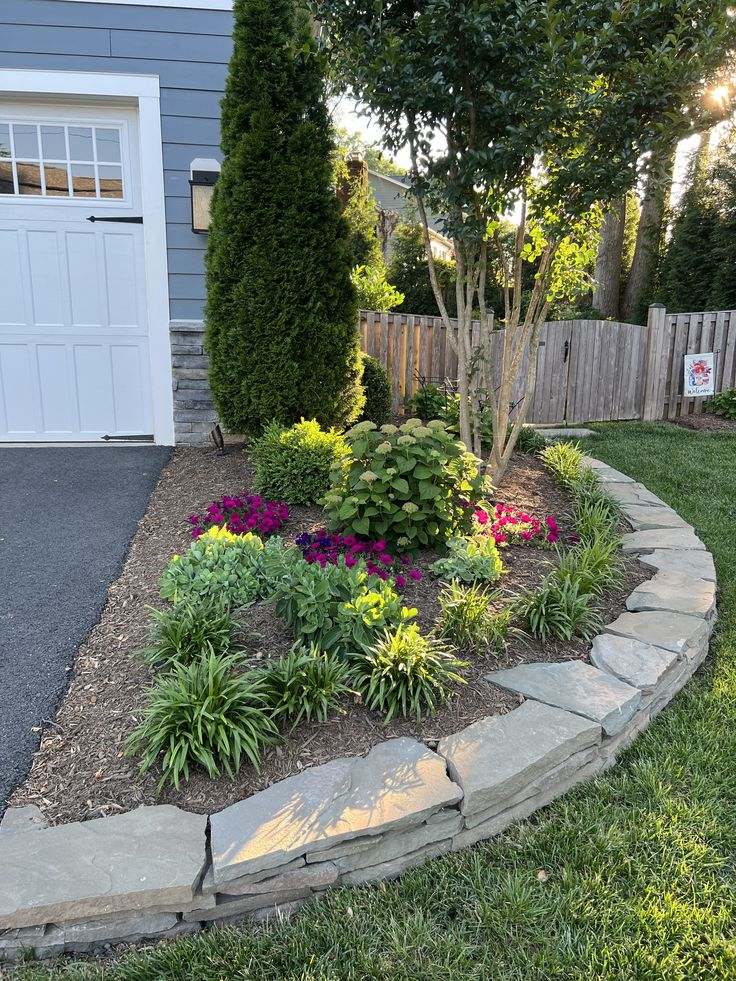
A flower bed that runs along the front of your house softens the hard lines of your foundation and creates a seamless transition between architecture and landscape. This classic design frames your home beautifully while adding color and texture right where it’s most visible. Keep the bed width consistent—typically one to three feet—and use a durable edging material to maintain clean lines. Plant a mix of evergreen shrubs for year-round structure and colorful perennials or annuals for seasonal interest. Avoid placing large plants too close to the front door, where they can block the view and feel uninviting .
13. Repurposed Container Garden
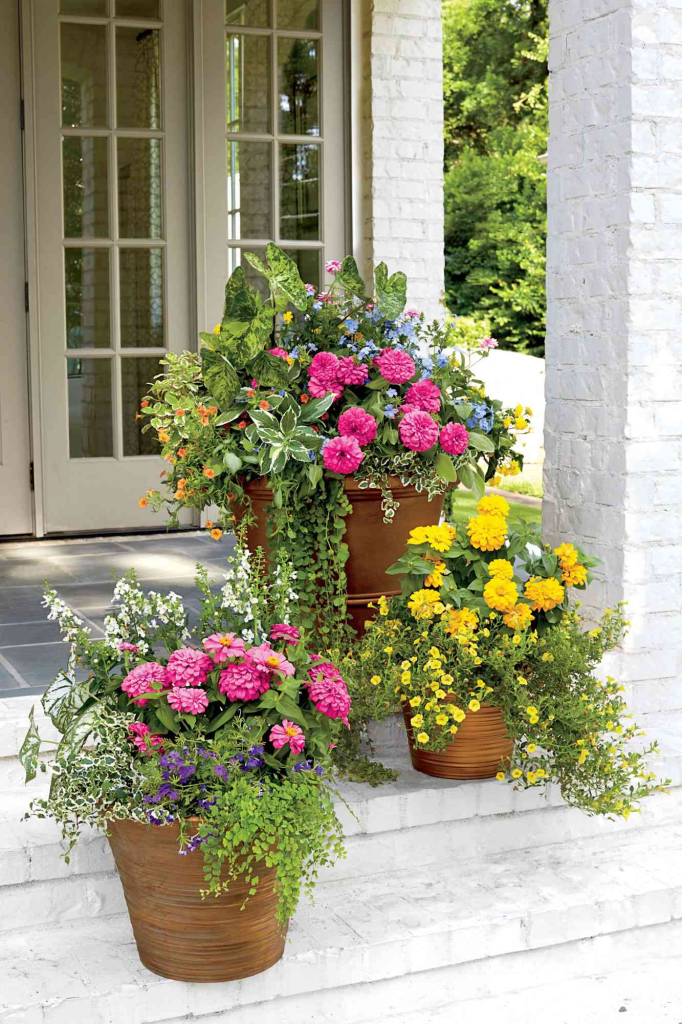
Give new life to old tools and household items by turning them into charming flower beds. Vintage wheelbarrows, old tires, wooden crates, and even worn-out boots can become playful planters that add character and conversation-starting appeal to your front yard. For a tire planter, clean thoroughly, drill drainage holes, paint with weather-resistant colors, and fill with heat-loving blooms like marigolds or zinnias. Stack multiple tires for a tiered effect, or hang one on a sturdy fence for vertical interest. This budget-friendly approach lets your creativity shine .
14. Edible Flower and Herb Bed
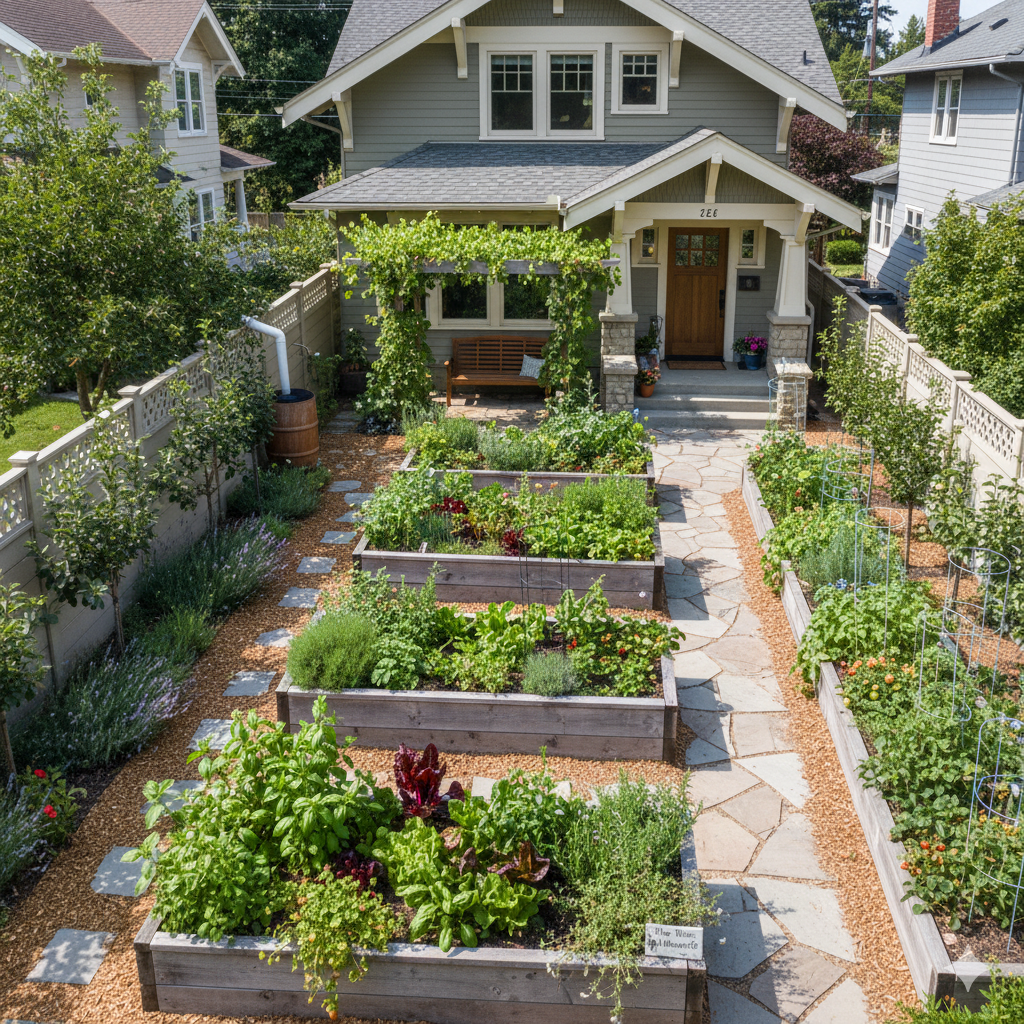
Why choose between beauty and utility when you can have both? An edible flower bed combines colorful blooms with kitchen-friendly plants, creating a space that’s as functional as it is attractive. Plant nasturtiums, calendula, and chives for their vibrant flowers and edible petals, and intermingle with culinary herbs like rosemary, sage, and thyme. The fragrant herbs add sensory appeal when brushed against, and the flowers attract beneficial pollinators that help your entire garden thrive. This approach works especially well near mailboxes or along pathways where you’ll enjoy the scents daily .
15. Formal Symmetrical Pair
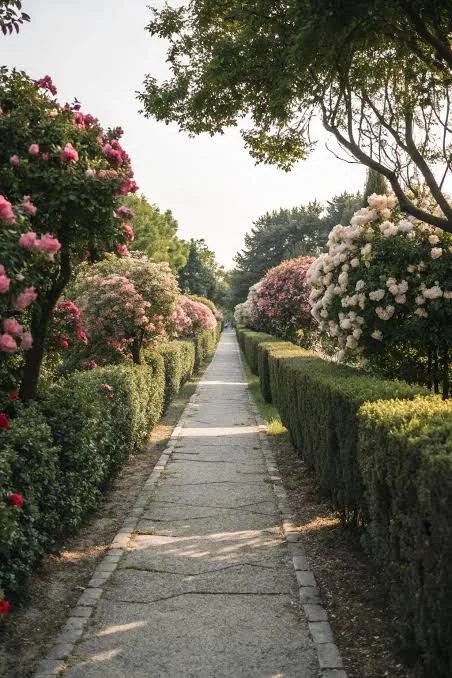
For a look of classic elegance and order, create two identical flower beds flanking your front door, walkway, or steps. This symmetrical design establishes balance and draws attention directly to your entryway. Plant both beds with the exact same arrangement—perhaps a small sculpted evergreen like boxwood in the center, surrounded by a border of uniform flowers. The repetition creates a sense of harmony and sophistication that feels polished and intentional. While this style requires more maintenance to keep both sides looking identical, the visual payoff is well worth the effort .
Planning Your Flower Bed: Essential Considerations
Before you start digging, taking time to plan will save you from costly mistakes and disappointing results. Here are the critical factors to consider:
Assessing Your Space
Begin by evaluating your front yard’s unique characteristics. Measure the available area and note its shape—is it a narrow strip, a wide open lawn, or an awkward corner? Consider how much sunlight different parts of your yard receive throughout the day. Full sun areas get six or more hours of direct light, while shady spots receive less than four hours. Walk around your property and observe how light shifts with the seasons; a spot that’s sunny in summer might be shaded by a neighbor’s tree in spring. Also, note any slopes, drainage issues, or existing features like trees, pathways, or utility boxes that could affect your design.
Understanding Your Soil
Healthy soil is the foundation of any thriving flower bed. Conduct a simple soil test to determine pH levels and nutrient content—DIY kits are inexpensive and widely available. Most flowers prefer slightly acidic to neutral soil (pH 6.0 to 7.0). If your soil is heavy clay, amend it with organic matter like compost or aged manure to improve drainage. Sandy soil, on the other hand, benefits from compost that helps retain moisture. Don’t forget to check drainage by digging a small hole, filling it with water, and observing how quickly it drains. If water stands for more than a few hours, consider raised beds or plants that tolerate wet feet.
Choosing the Right Plants
Selecting plants that suit your climate and conditions is the single most important decision you’ll make. Start by identifying your USDA hardiness zone—this tells you which perennials will survive winter in your area. Then, match plants to your site’s conditions: sun lovers like roses, lavender, and daylilies need full sun, while impatiens, ferns, and hostas thrive in shade. Consider bloom time, too; aim for a sequence of flowers that provides color from early spring through late fall. Mix annuals, which bloom all season but need replanting each year, with perennials, which return year after year. Native plants are an excellent choice—they’re adapted to your local climate, require less water and maintenance, and support local wildlife.
Creating a Color Palette
Thoughtful color choices can make or break your flower bed’s visual impact. Start with a simple palette of two or three colors that complement your home’s exterior. Warm colors—reds, oranges, and yellows—create energy and draw attention, making them ideal for focal points. Cool colors—blues, purples, and whites—have a calming effect and can make a small space feel larger. Consider the psychology of color: white flowers pop beautifully in evening light, making them perfect for entryways, while pastels create a romantic cottage feel. For a harmonious look, use the color wheel: analogous colors sit next to each other (like pink and purple), while complementary colors (like purple and yellow) create vibrant contrast.
Budgeting and Timing
A beautiful flower bed doesn’t have to break the bank. Start small and expand over time—it’s better to have one well-designed bed than several half-finished ones. Buy smaller plants rather than large specimens; they’re less expensive and establish more quickly. Consider starting from seeds for annuals and dividing existing perennials from friends or neighbors. When it comes to timing, plant perennials in spring or fall when temperatures are mild and rainfall is more reliable. Annuals should go in after the last frost date in your area. Fall is also an excellent time for planting bulbs and trees, giving them a head start before spring growth.
Maintenance and Care Guide
A beautiful flower bed requires ongoing care, but with a consistent routine, it becomes an enjoyable part of your gardening rhythm rather than a chore.
Watering Wisely
Proper watering is crucial, and more isn’t always better. Most flowers need about an inch of water per week, either from rain or irrigation. Water deeply and less frequently—this encourages roots to grow deep and strong, making plants more drought-resistant. Morning watering is ideal, as it allows foliage to dry before nightfall, reducing the risk of fungal diseases. Aim the water at the soil level rather than overhead to keep leaves dry. Consider installing a drip irrigation system or soaker hoses for efficient, targeted watering that saves both water and time.
Mulching for Success
Mulch is your flower bed’s best friend. A 2-3 inch layer of organic mulch—such as shredded bark, wood chips, or compost—offers multiple benefits: it suppresses weeds, retains soil moisture, regulates soil temperature, and slowly adds nutrients as it decomposes. Apply mulch in spring after the soil has warmed, and top it up in fall to protect roots through winter. Keep mulch a few inches away from plant stems and tree trunks to prevent rot and discourage pests.
Fertilizing Fundamentals
Even with rich soil, your flowers will benefit from regular feeding. Choose a balanced, slow-release fertilizer that provides nitrogen for leafy growth, phosphorus for roots and blooms, and potassium for overall plant health. Apply according to package instructions, typically in spring as growth begins and again in mid-summer for heavy feeders. For organic options, compost tea, fish emulsion, and well-rotted manure are excellent choices. Be careful not to over-fertilize, which can lead to excessive leafy growth at the expense of flowers and increase susceptibility to pests.
Pruning and Deadheading
Regular pruning keeps your flower bed looking tidy and encourages more blooms. Deadheading—removing spent flowers—prevents plants from putting energy into seed production and redirects it to producing more flowers. Use clean, sharp shears and cut back to a leaf node or side branch. For perennials, a mid-season trim can rejuvenate tired-looking plants. In late fall or early spring, cut back dead stems and remove debris to prevent disease and pests from overwintering.
Seasonal Maintenance Schedule
Spring: Clean up winter debris, divide and replant overcrowded perennials, apply fresh mulch, and plant new additions.
Summer: Water regularly, deadhead spent blooms, monitor for pests, and apply fertilizer as needed.
Fall: Plant spring bulbs, trim back perennials, add a layer of mulch for winter protection, and clean up fallen leaves.
Winter: Plan next year’s design, order seeds or bulbs, maintain hardscape features, and prune dormant trees and shrubs.
Pest and Disease Management
Prevention is the best approach. Healthy, well-cared-for plants are naturally more resistant to problems. Encourage beneficial insects like ladybugs and lacewings that prey on common pests. Inspect plants regularly—catching issues early makes them much easier to manage. Use the least toxic solution first: a strong spray of water can knock off aphids, while neem oil or insecticidal soap handles many common pests. For fungal issues, improve air circulation by spacing plants properly and avoiding overhead watering. Remove and dispose of heavily infested or diseased plants rather than composting them.
Style and Design Tips
Matching Your Home’s Architecture
Your flower bed should complement, not compete with, your home’s style. For a modern, minimalist house, opt for clean lines, symmetrical plantings, and bold foliage plants. A traditional or colonial home pairs beautifully with classic, symmetrical plantings featuring boxwoods, roses, and hydrangeas. Cottage-style homes embrace the relaxed, abundant look with mixed perennials and self-seeding annuals. For a craftsman-style bungalow, choose native plants and natural materials like stone and wood that echo the home’s organic design philosophy.
Seasonal Interest Throughout the Year
A well-designed flower bed offers something beautiful in every season. Start with early spring bulbs like crocuses, daffodils, and tulips that announce the end of winter. Follow with spring-blooming perennials like peonies, iris, and bleeding hearts. Summer brings the main show with roses, daylilies, coneflowers, and black-eyed Susans. For fall, plant chrysanthemums, asters, and ornamental kale. Don’t forget winter interest: evergreen shrubs, ornamental grasses, and trees with interesting bark or berries maintain visual appeal even in the coldest months.
Creating Depth and Dimension
Layering is the secret to a professional-looking flower bed. Place the tallest plants at the back (or center, for island beds), medium-height plants in the middle, and low-growing groundcovers at the front. This tiered approach ensures every plant is visible and creates a sense of depth and abundance. Vary plant textures too—combine fine, feathery foliage with broad, bold leaves for contrast. Repeating certain plants or colors throughout the bed creates rhythm and unity, pulling the whole design together.
Using Hardscaping Elements
Hardscaping—the non-living elements of your landscape—provides structure and contrast. Pathways guide visitors through your garden, while edging materials define beds and keep them tidy. Consider adding a focal point: a decorative birdbath, a sculptural stone, a garden bench, or a small water feature draws the eye and adds interest even when flowers aren’t at their peak. Lighting is another powerful tool; well-placed solar or low-voltage lights can highlight your flower bed’s best features after dark, creating a warm welcome for evening visitors.
Common Mistakes to Avoid
Even experienced gardeners make mistakes, but knowing what to watch for can save you time, money, and frustration.
Overcrowding Plants
It’s tempting to plant everything close together for instant fullness, but this leads to problems down the line. Overcrowded plants compete for water, nutrients, and light, leading to weak growth and increased disease risk. Always follow spacing recommendations on plant tags, and remember that plants will fill in over time. If you want a lush look immediately, place annuals between young perennials; they’ll provide coverage while the perennials establish and can be removed as the perennials grow.
Ignoring Mature Plant Size
That tiny shrub you plant today might grow to block your window or engulf your walkway in just a few years. Research the mature size of every plant before purchasing, and give it enough space to reach its full dimensions. This is particularly important near foundations, pathways, and utility access points. Consider how your plants will interact with each other at maturity, not just in their first season.
Planting Without a Plan
Spontaneity has its charm, but buying plants without considering your site conditions, color palette, and overall design often leads to disjointed results. Take time to sketch a rough plan or use garden design software. Even simple lists noting plant names, heights, bloom times, and light requirements will help you make informed decisions. Stick to your plan when shopping to avoid impulse purchases that don’t fit your vision.
Poor Soil Preparation
Skipping soil preparation is one of the most common—and costly—mistakes. Good soil is the foundation of a healthy garden, and amending it before planting is much easier than trying to fix problems later. Take the time to clear the area of weeds and debris, loosen the soil to a depth of 8-12 inches, and incorporate plenty of organic matter. Test your soil and address any deficiencies before planting.
Neglecting Maintenance
A beautiful flower bed requires ongoing care. Establish a regular maintenance routine that includes watering, weeding, deadheading, and monitoring for pests. Set aside a little time each week for garden maintenance; it’s much more manageable than letting tasks pile up. If you know you won’t have much time for gardening, design your bed with low-maintenance plants and incorporate labor-saving features like landscape fabric and automatic irrigation.
Conclusion
Your front yard flower bed is more than just a collection of plants—it’s an opportunity to express your personality, welcome your neighbors, and create a daily dose of beauty right outside your door. Whether you lean toward the relaxed charm of a cottage garden, the clean lines of modern succulent displays, or the elegant simplicity of a monochromatic scheme, the best design is one that fits your space, your lifestyle, and your sense of style.
Start small if you’re unsure—a single bed along the walkway or a cluster of pots by the door can make a remarkable difference. Take the time to plan thoughtfully, prepare your soil properly, and choose plants suited to your conditions. Embrace the learning process; gardens are living things that evolve over time, and even your “mistakes” can lead to beautiful discoveries.
Remember that the most successful front yards feel welcoming, not intimidating. They invite people in, reflect the character of those who live there, and bring joy to everyone who passes by. With the right plants and a bit of planning, you’ll create a front yard that makes you smile every time you come home—and leaves a lasting impression on everyone who visits. Your garden is waiting; now it’s time to start digging.
