Every parent knows the struggle: you spend a small fortune on toys, only to find them scattered across the living room floor, gathering dust in the corner, or, worse, causing a tripping hazard. The problem isn’t the toys; it’s the space. A well-designed playroom is more than just a room with a toy box. It is a sanctuary for imagination, a laboratory for learning, and a controlled environment where chaos can be contained.
The magic of a great playroom lies in the details. It’s about creating designated zones that naturally encourage specific activities, using smart storage that makes tidying up a game, and choosing a color palette that stimulates creativity without being overwhelming. Whether you are working with a spacious basement, a converted attic, or a small corner of the living room, these 11 ideas will help you transform a standard room into the ultimate hub for fun and development. Let’s dive in and build the playroom of your (and your child’s) dreams.
11 Well-Structured Playroom Ideas
1. The Art Studio Zone: Inspire the Next Picasso
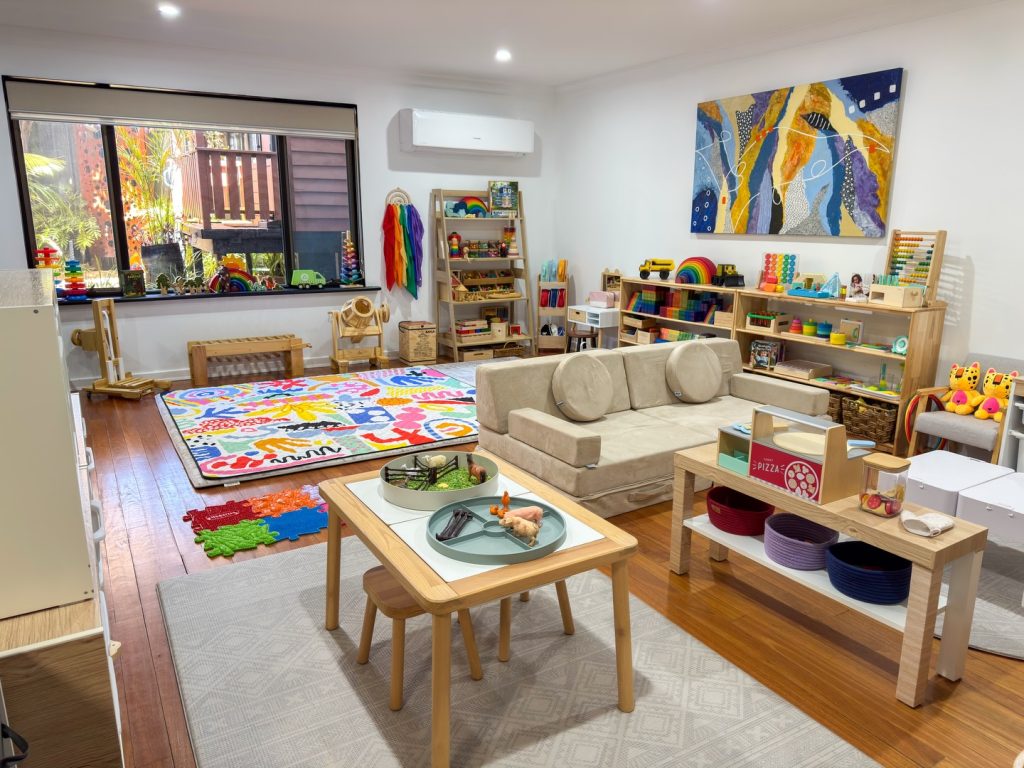
Dedicate a specific corner of the room purely for messy play and creativity. Key Elements: Install a large, easy-to-clean whiteboard or chalkboard wall to eliminate paper waste. Add a low, durable table (IKEA Flisat is a popular choice) with adjustable stools. Storage: Use clear, stackable jars on a low shelf for crayons, markers, and paintbrushes, and hang an art drying rack on the wall. Pro Tip: Place a washable rug underneath to absorb spills and make clean-up a breeze.
2. The Quiet Reading Nook: A Sanctuary for Stories
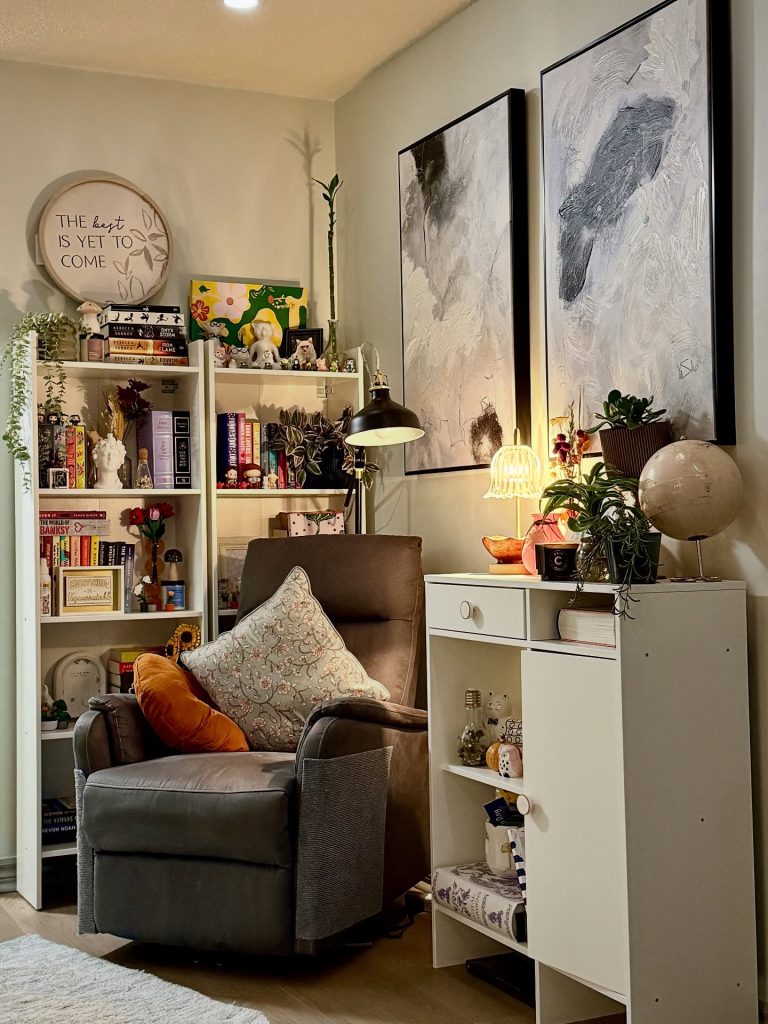
Every playroom needs a calming retreat where kids can decompress and get lost in a book. Key Elements: Create a “tent” or “cave” using a teepee, a canopy, or a simple sheet draped over a table. Furnishings: Add a soft floor cushion, a beanbag, or a mattress topper for coziness. Display: Install a forward-facing bookshelf (like a spice rack) so the covers are visible, which encourages younger children to pick up books independently.
3. The “Wall of Wonder”: Vertical Play
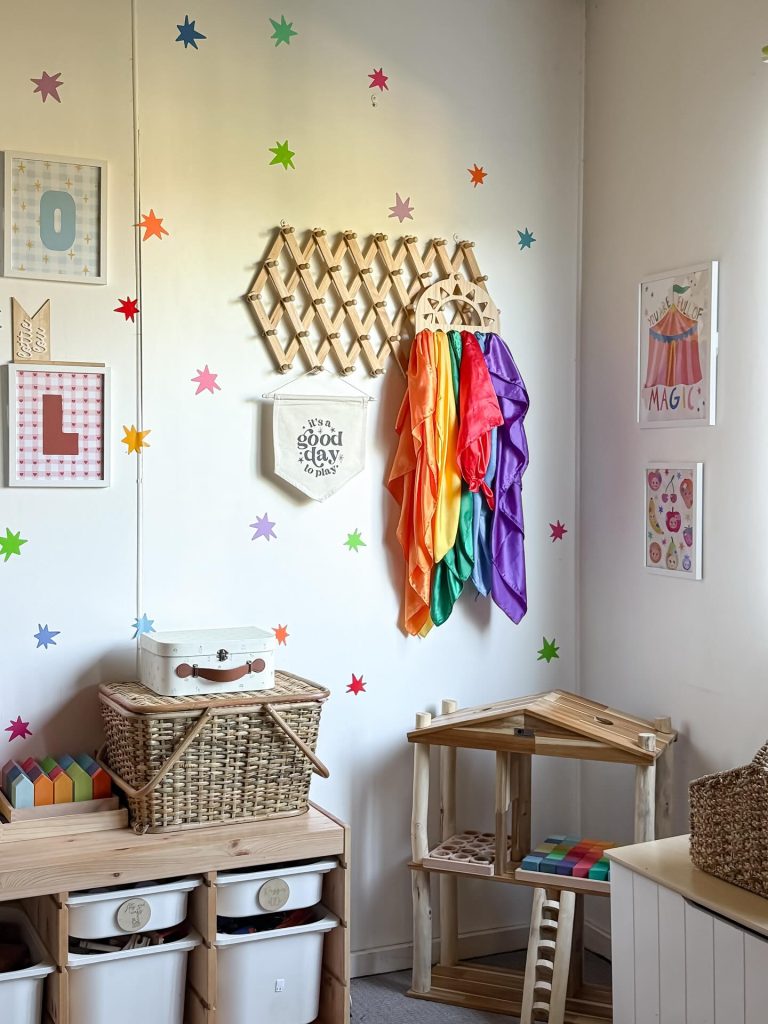
When floor space is limited, look up! Vertical play adds a dynamic element to the room. Key Elements: Install a climbing wall with colorful, easy-to-grip holds that are low to the ground (perfect for toddlers and young kids). Alternative: For a non-sporty option, install a magnetic board where kids can build with magnetic tiles vertically, or use a felt board for storytelling. Safety: Ensure the floor beneath the climbing wall has a thick crash mat.
4. The Imaginative Play “Store”
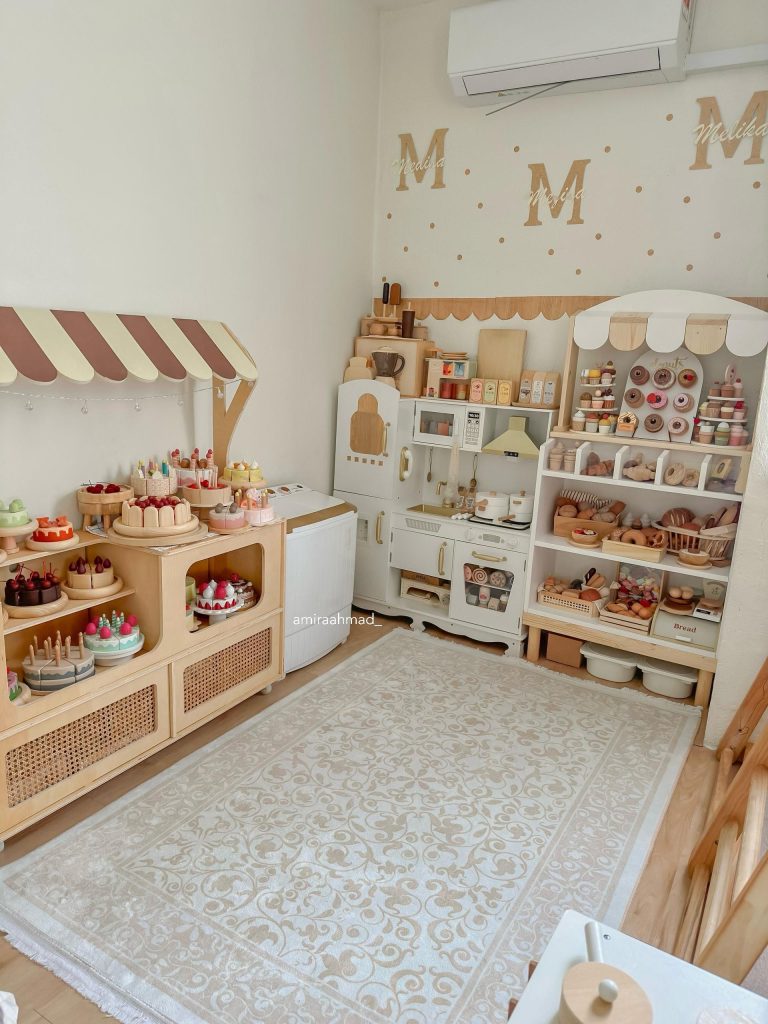
Encourage social skills and role-play with a dedicated shop or kitchen area. Key Elements: A play kitchen is a classic, but a “grocery store” is a fun twist. Use a low bookshelf as a “counter” and stock it with wooden play food, a toy cash register, and reusable shopping bags. Storage: Label plastic baskets with price tags (e.g., “Fruit: $1”) to encourage early math skills while cleaning up.
5. The Lego & Building “Loose Parts” Bar
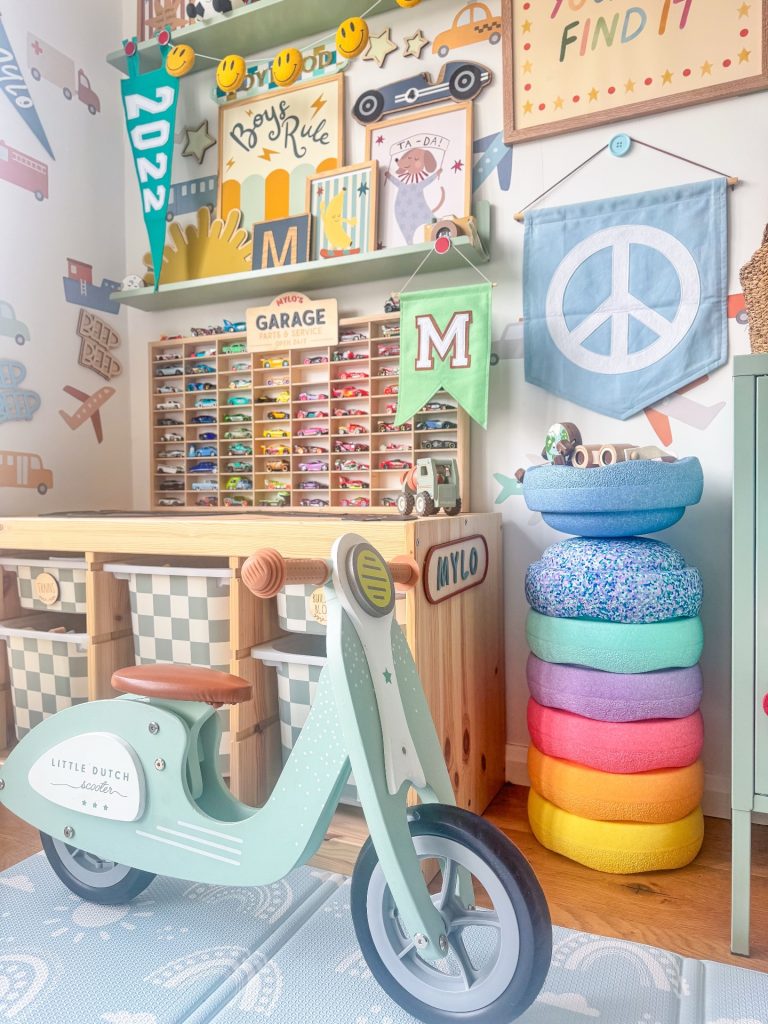
Instead of keeping building toys in a deep bin where they get lost, create a display station. Key Elements: Install a long, shallow IKEA Trofast shelf or a simple piece of guttering on the wall. Sorting: Sort Lego bricks by color or size into clear plastic cups or jars so kids can “shop” for pieces. Surface: Provide a large, smooth tabletop or a set of baseplates glued to a tray. This setup makes starting a project easy and ending one (cleanup) just as simple.
6. The “Under-the-Stairs” Hideaway
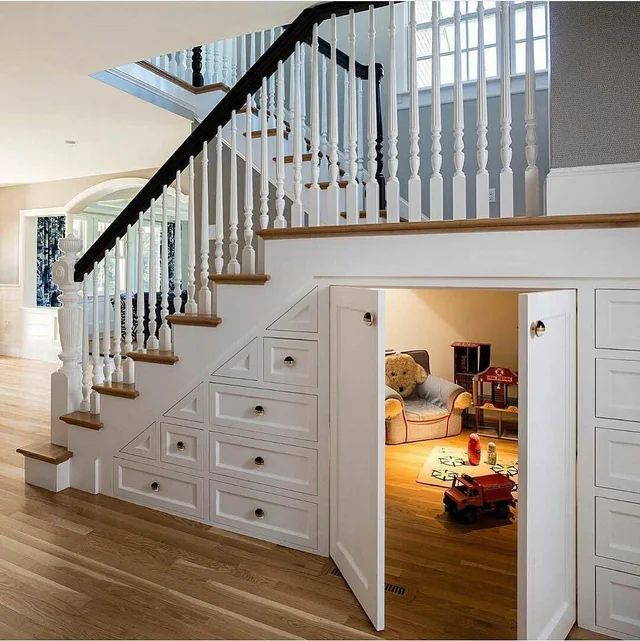
Utilize that awkward, unused space under the staircase. Key Elements: Frame it out to create a secret “clubhouse” entrance. Interior: Install battery-operated sconces for lighting, a plush rug, and a few pillows. Function: Use this space exclusively for reading or quiet time. It provides a sense of ownership and privacy for the child.
7. The Active Zone: Indoor Gross Motor Skills
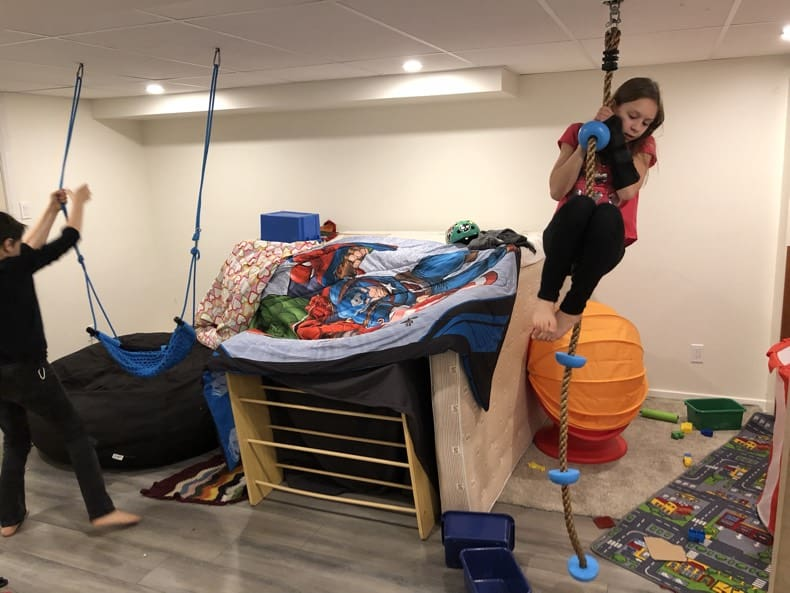
Kids need to jump, balance, and move, especially on rainy days. Key Elements: Define a specific area for physical play. Equipment: Include balance beams (a piece of wood on the floor), a mini-trampoline, or a set of stepping stones. Flooring: This is where a thick, interlocking foam mat is essential. Pro Tip: Keep this area clear of hard furniture to prevent injuries.
8. The Interactive Gallery Wall
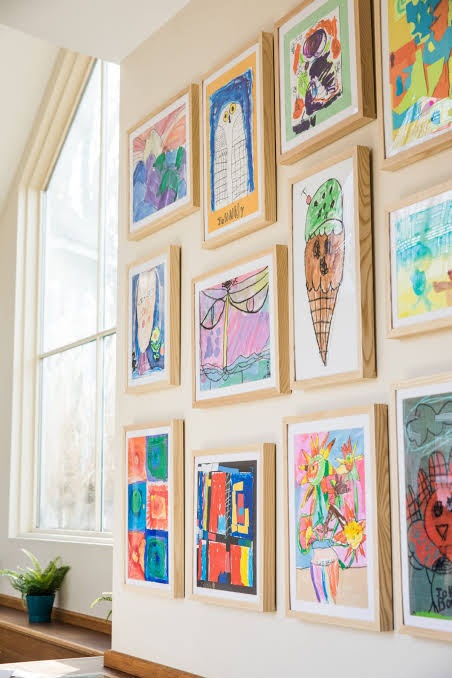
Showcase your child’s ever-changing masterpieces. Key Elements: Instead of taping paintings to the wall, install a wire curtain rod with clips that span across the wall. Inclusion: Rotate the art regularly to keep the gallery feeling fresh and let the child feel proud of their “exhibition.” Include a small bin nearby with their current art supplies to encourage a continuous flow of new masterpieces.
9. The “Craft & Loose Parts” Trolley
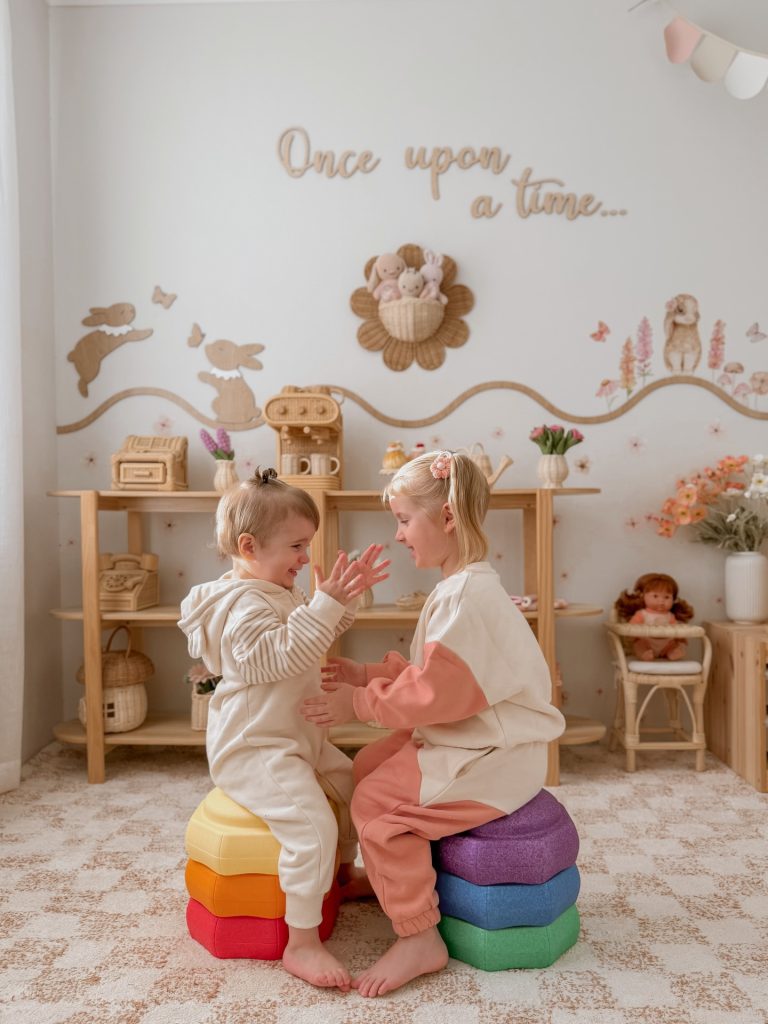
For those who don’t have a permanent art station, create a mobile solution. Key Elements: Use a 3-tier rolling trolley (like the IKEA Raskog). Organization: Top tier: Paper and coloring books. Middle tier: Crayons, markers, and glue. Bottom tier: Recyclables (toilet paper rolls, egg cartons, bottle caps) for “Junk Art.” This allows you to wheel creativity anywhere in the room and hide it away when guests come over.
10. The Sensory Wall
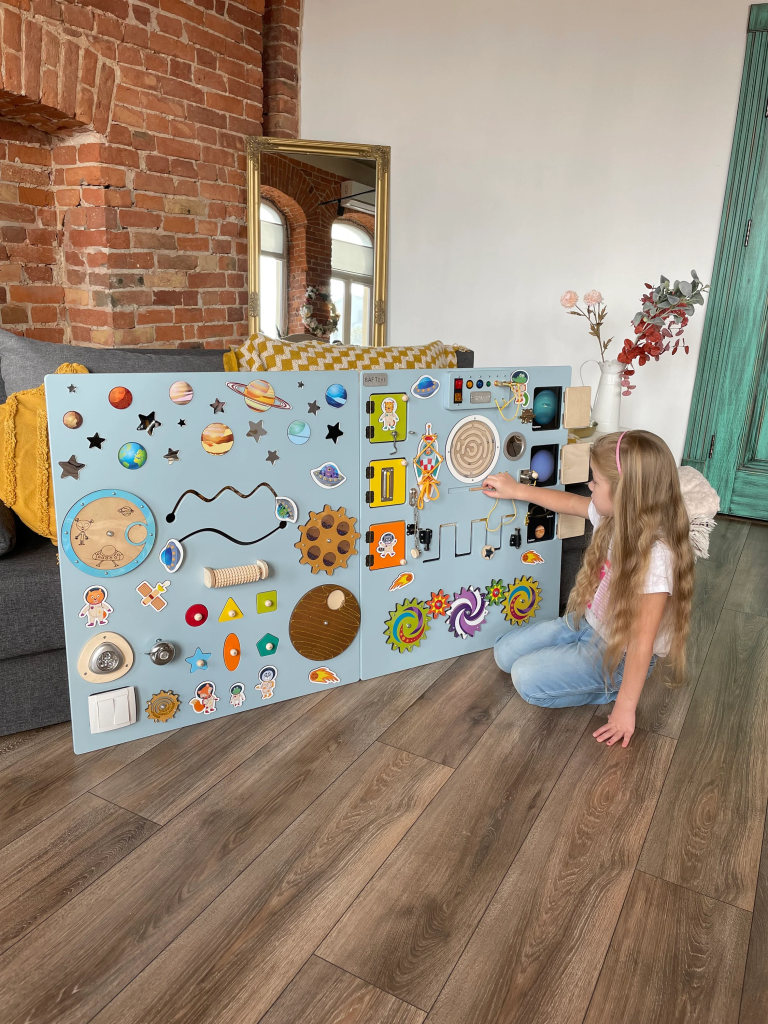
Perfect for toddlers and preschoolers, this is a tactile experience. Key Elements: Mount a large pegboard to the wall. Activities: Attach different items to it using zip ties or strong magnets—think spinning wheels, latches, locks, textured fabric swatches, and wind chimes. Goal: This helps with fine motor skill development and sensory processing in a compact space.
11. The Global Map Wall
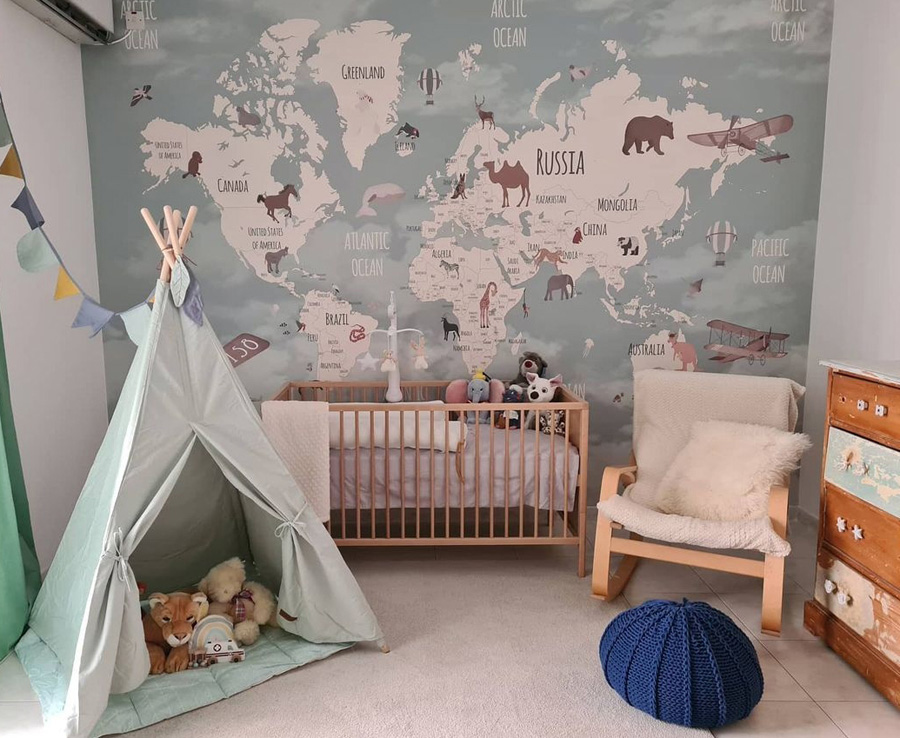
Turn a plain wall into a massive educational tool. Key Elements: Buy a large, removable wallpaper world map or paint a giant map directly onto the wall. Interactive Play: Use pushpins (with adult supervision) or magnet dots to mark where family members live, or places you have visited. Storage: Keep a world atlas or encyclopedia on a nearby shelf, encouraging kids to cross-reference the map and learn about geography through active play.
Planning Your Playroom – The Blueprint for Success
Before you buy a single toy bin or paint a single wall, you need a plan. A successful playroom doesn’t happen by accident; it requires thoughtful consideration of your space, your children, and your lifestyle.
Assess Your Space: Start by measuring the room and noting the location of windows, doors, outlets, and radiators. Sketch a rough floor plan. This will prevent you from buying furniture that doesn’t fit and help you visualize traffic flow. Remember that children need clear pathways to move between zones without tripping.
Define the Purpose: Ask yourself what you want this room to achieve. Is it purely for active, high-energy play? Do you need it to double as a homework space? Will it host playdates, or is it primarily for solo play? Write down your top three priorities—this will guide every decision you make.
Set a Realistic Budget: Playroom makeovers can range from a few hundred dollars to several thousand. Decide upfront what you are willing to spend and allocate funds to the “big three”: storage solutions, flooring, and a statement piece (like a rug or a teepee). Remember that you can always add decorative elements later.
Zone Planning: Divide your floor plan into distinct activity zones. A good rule of thumb is to create three core zones: a calm zone (reading, puzzles), an active zone (climbing, dancing), and a creative zone (art, building). This separation helps children understand where specific activities should happen, which naturally aids in tidiness and focus.
Color Psychology – Setting the Right Mood
Color is one of the most powerful and cost-effective tools in playroom design. The shades you choose will directly influence your child’s mood, energy levels, and ability to concentrate.
Soothing Neutrals for the Base: Instead of painting the entire room in bright, overstimulating colors, start with a neutral base—soft whites, warm beiges, or gentle greys. This creates a calming backdrop that allows toys and colorful accents to pop without creating visual chaos. Neutral walls also make the room feel larger and more adaptable as your child grows.
Pops of Color for Energy: Introduce vibrant colors through accessories, rugs, storage bins, and artwork. Yellow stimulates optimism and creativity, making it perfect for the art corner. Blue promotes calmness and focus, ideal for the reading nook. Green reduces anxiety and is excellent for general play areas. Red, while stimulating, should be used sparingly as it can increase heart rate and agitate some children.
The 60-30-10 Rule: Designers swear by this formula: 60% of the room should be your dominant neutral color (walls, large furniture), 30% should be a secondary color (rug, curtains, main storage units), and 10% should be an accent color (cushions, artwork, toys). This creates visual harmony without boring the eye.
Involve Your Child: If your child is old enough, let them choose the accent color. Giving them ownership over the space makes them more likely to respect and enjoy it. You can even let them paint a single accent wall in their favorite shade while you keep the rest neutral.
Safety First – Childproofing Essentials
A beautiful playroom is worthless if it isn’t safe. Children move quickly and test boundaries, so your design must prioritize their wellbeing without looking like a padded cell.
Furniture Anchoring: Secure all tall furniture—bookshelves, wardrobes, and dressers—to the wall using furniture straps or L-brackets. This is non-negotiable and prevents tip-over accidents that can cause serious injury.
Corner and Edge Protection: Install soft corner guards on sharp edges of tables, shelves, and window sills. For built-in furniture, consider rounding the edges during construction. This small investment saves countless bumped heads and bruised shins.
Electrical Safety: Cover all unused outlets with tamper-resistant plug covers. Keep power strips out of reach or enclose them in a cord management box. Ensure that all cords from lamps, monitors, or chargers are tucked away behind furniture to prevent pulling or tripping.
Flooring Choices: The right flooring is critical. Avoid hard tiles or polished concrete. Opt for:
- Interlocking foam mats: Soft, warm, and easy to clean.
- Thick carpet with a dense underlay: Soft landing for falls, but ensure it’s stain-resistant.
- Cork flooring: Naturally soft, sustainable, and sound-absorbing.
Area rugs should have a non-slip pad underneath to prevent them from sliding.
Window Safety: Never place furniture under windows that children could climb. Ensure windows have safety locks to prevent them from opening too wide. Blinds should be cordless to eliminate strangulation hazards.
Toxic-Free Materials: Choose paints with zero or low VOCs (volatile organic compounds). Verify that any wooden furniture is finished with water-based, non-toxic sealants. Look for toys and storage bins that are BPA-free and phthalate-free.
Storage Solutions – The Art of Containing Chaos
Mess is inevitable in a playroom, but smart storage can transform cleanup from a battlefield into a five-minute game. The golden rule: if storage isn’t easy, it won’t be used.
Open Shelving at Child Height: Place low, open shelves where children can easily see and reach their toys. When kids can see their options, they are more likely to engage with a variety of toys, and they can put things back without adult assistance. Use forward-facing display for books and puzzles.
Clear Bins and Labels: Transparent bins are a game-changer because children can instantly identify the contents. Label each bin with a picture and a word—this promotes literacy and teaches responsibility. Use different colored bins to designate different categories (e.g., green for building toys, blue for art supplies).
The Rotation System: Here is the secret to avoiding toy overwhelm: you don’t need to display everything at once. Store half of your toys in labeled, sealed bins in a closet or garage. Every month, swap out the current toys with the stored ones. This keeps the playroom fresh, reduces clutter, and makes old toys feel brand new.
Multi-Functional Furniture: Invest in furniture that works double-duty. Storage ottomans provide seating and hide toys. Bench seating with lift-up lids offers massive hidden storage along a wall. A play table with built-in drawers or bins underneath keeps activities contained in one spot.
Wall-Mounted Storage: Use pegboards, wall-mounted buckets, and hanging shoe organizers to store smaller toys, art supplies, and dress-up accessories. This frees up valuable floor space while keeping everything visible and organized. Hang baskets on the wall for stuffed animals.
Conclusion
Creating the perfect playroom is not about achieving Pinterest-perfect aesthetics; it’s about crafting a space that serves your family’s unique needs and evolves alongside your children. The room should feel like an extension of your child’s personality—a place where they feel safe, inspired, and empowered to explore their interests freely.
Remember that you don’t need to implement all 11 ideas at once. Start with the zones that align with your child’s current passions—whether that’s art, building, reading, or physical play—and gradually add elements as they grow. The most successful playrooms are those that remain flexible, allowing for easy reconfiguration as interests shift.
Here are a few final tips for wrapping up your project:
- Add Personal Touches: Frame a few family photos, display your child’s name in wooden letters, or include a growth chart on the wall. These details make the room feel uniquely theirs.
- Create a “Clean-Up” Routine: Establish a fun, reward-based cleaning routine from day one. Use a cleanup song, a timer, or a sticker chart to make tidying up feel like a game rather than a chore.
- Keep It Adaptable: Choose furniture that can serve multiple purposes and grow with your child. A toddler’s art table can become a homework desk. A crib mattress on the floor can become a reading cushion. Avoid overly themed decor that will feel babyish in a few years.
- Leave Space for Emptiness: Resist the urge to fill every corner. Empty floor space is essential for sprawling out with puzzles, building large block towers, or simply lying down and daydreaming. Empty space fuels imagination.
- Involve the Kids: Let them choose a color for their own special bin, arrange their bookshelf, or decide where to hang their art. When children have a hand in designing their environment, they develop a sense of ownership and respect for the space.
Ultimately, the goal is a room that brings joy—not just to your children, but to you as well. A space where you can watch them grow, learn, and create memories without worrying about the mess. So take a deep breath, pick one idea to start with, and watch your playroom transform into the heart of your home. Happy designing
