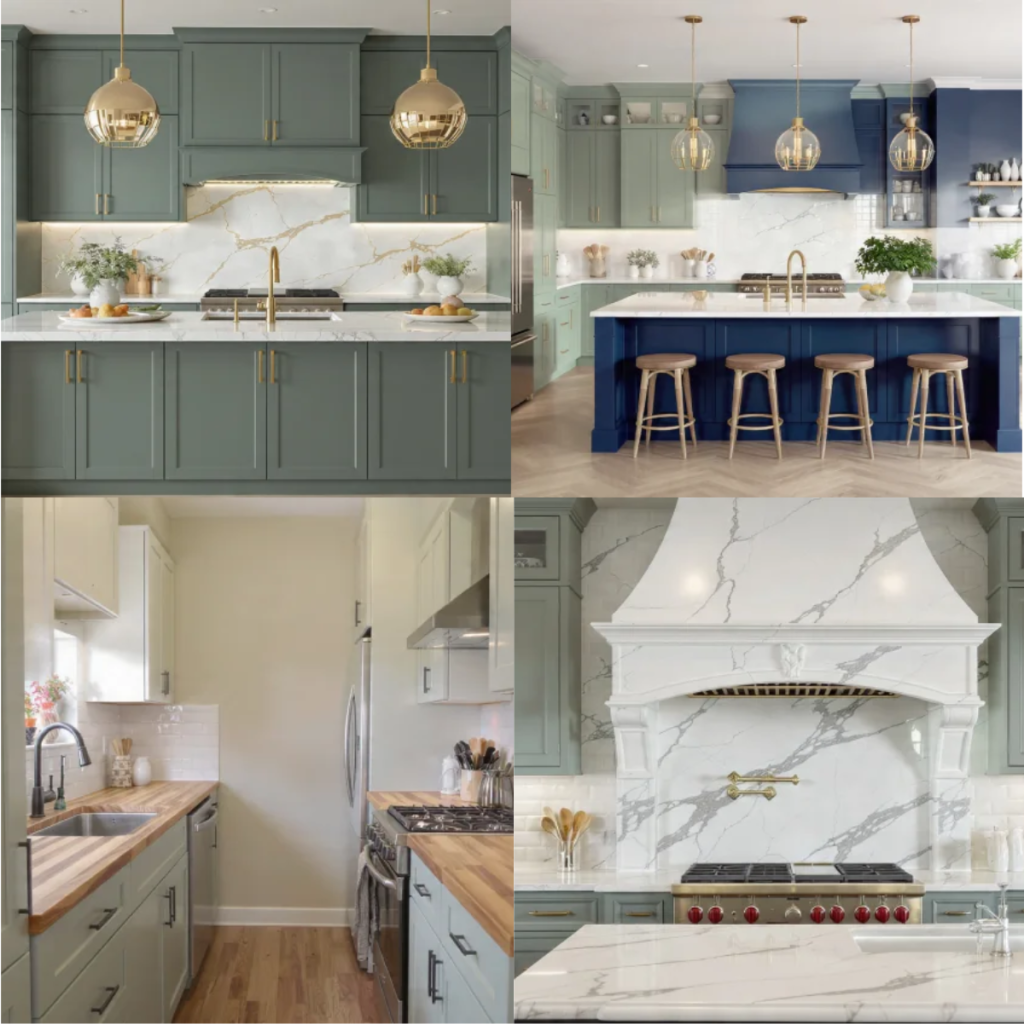
In the ever-evolving world of interior design, few colors have achieved the quiet authority of sage green. This muted, earthy shade—somewhere between green and grey—has emerged as the defining kitchen color of 2026, replacing plain white and predictable grey with something far more nuanced . What makes sage green so compelling is its chameleon-like ability: it softens hard surfaces, sharpens architectural lines, and brings cohesion to open layouts, all while maintaining a calm, grounded presence that feels both contemporary and timeless .
Designers and paint experts agree that sage green has staying power. “Unlike trend-driven colors that feel tied to a specific moment, sage has a familiarity that feels grounded and reassuring,” explains Kerrie Kelly, CEO of Kerrie Kelly Studio. It evokes kitchens connected to the garden, cooking, gathering, and everyday rituals rather than fleeting design trends . Whether you’re planning a full renovation or a subtle refresh, here are 14 well-structured ideas to help you master the art of the sage green kitchen.
Choosing the Right Shade of Sage
Not all sage greens are created equal, and selecting the right undertone is critical to achieving your desired look. Here’s a breakdown of the most popular sage variations:
Cool Sage (Grey-Green Undertones): Ideal for modern and minimalist kitchens, cool sage creates a serene, almost ethereal quality. It works particularly well with white marble, stainless steel, and light woods. Paint colors like Farrow & Ball’s Vert de Terre or Benjamin Moore’s October Mist fall into this category.
Warm Sage (Yellow-Green Undertones): Warm sage brings coziness and a touch of earthiness. It pairs beautifully with brass, warm woods, and terracotta accents. This shade works best in heritage, cottage, or farmhouse-style kitchens. Look for colors like Sherwin-Williams Sage Green or Behr’s Sage Brush.
Deep Sage (Olive-Green Undertones): For those seeking drama and sophistication, deep sage offers richness and depth. It pairs exceptionally well with marble, dark wood, and brass. This shade reads almost as a neutral but with far more character than standard grey or navy.
When testing sage green, always paint large swatches on your kitchen walls and observe them at different times of day. The color will shift dramatically under natural and artificial light, so take your time before committing.
14 Sage Green Kitchen Ideas
1. The Classic Two-Tone: Sage Base, White Uppers
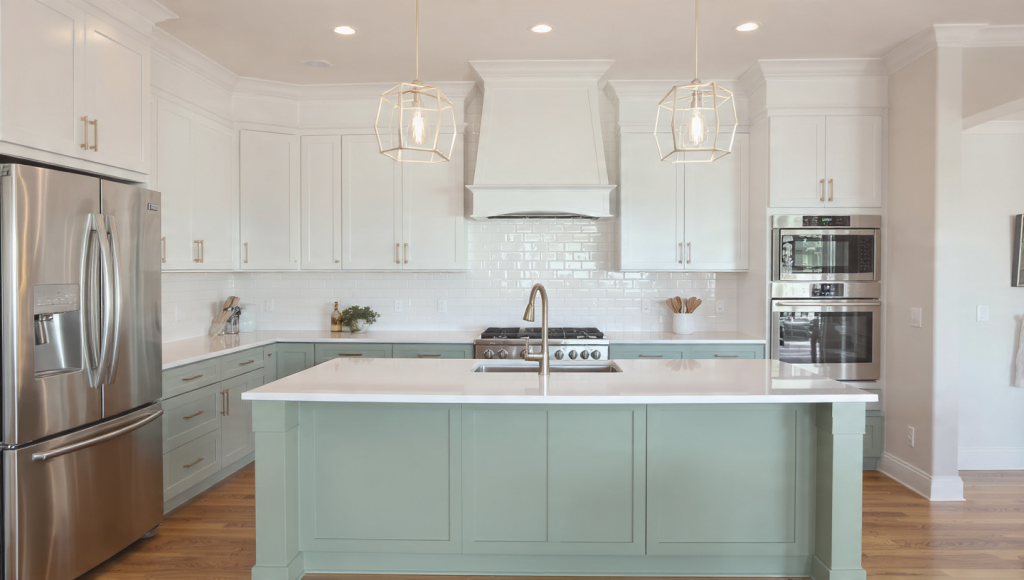
One of the most practical and popular approaches grounds the lower cabinets in sage green while keeping upper cabinets crisp white. This creates visual balance—the sage adds depth and personality at eye level, while white uppers reflect light and prevent the room from feeling closed in, especially in smaller spaces . A white quartz countertop and simple subway tile backsplash complete the fresh, timeless look.
2. Full-Wall Sage Statement
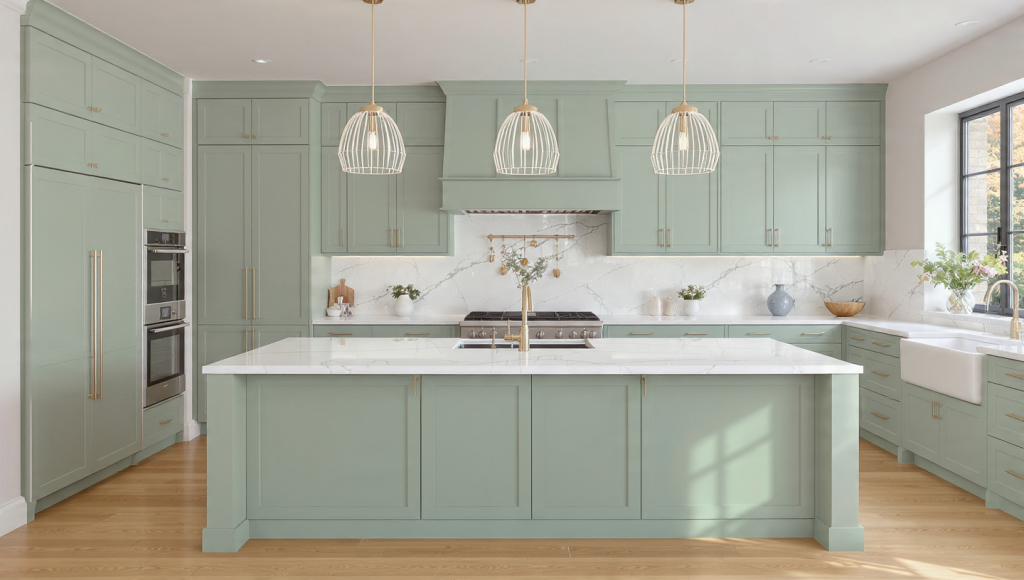
For a bolder approach, commit fully to sage green across all cabinetry, from perimeter units to the oversized island. The continuous green surface creates remarkable cohesion, while white counters and pendant lighting carve out necessary contrast. Slab-style island panels give the shade a modern edge, and paired with warm wood flooring, the sage reads earthy rather than pastel . This is color used as architecture, not accent.
3. Sage Meets Natural Timber
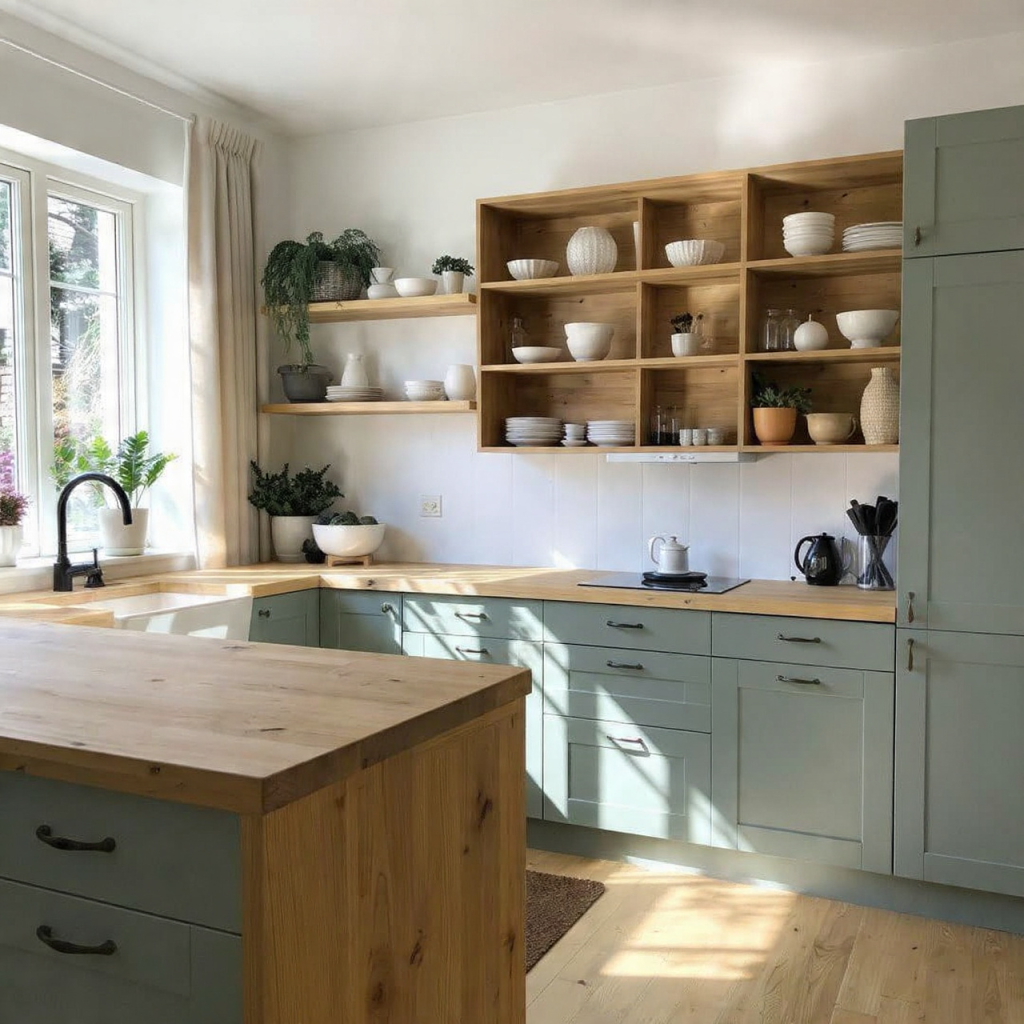
Sage green and wood are a pairing made in design heaven. Lighter timbers like oak create a relaxed, almost Scandinavian feel, while darker woods such as walnut introduce more contrast and depth . Consider open wood shelving, a butcher block worktop, or light oak flooring to temper the coolness of sage and make the kitchen feel lived-in and cozy . This combination brings the garden indoors with organic warmth.
4. Deep Sage with Brass Accents
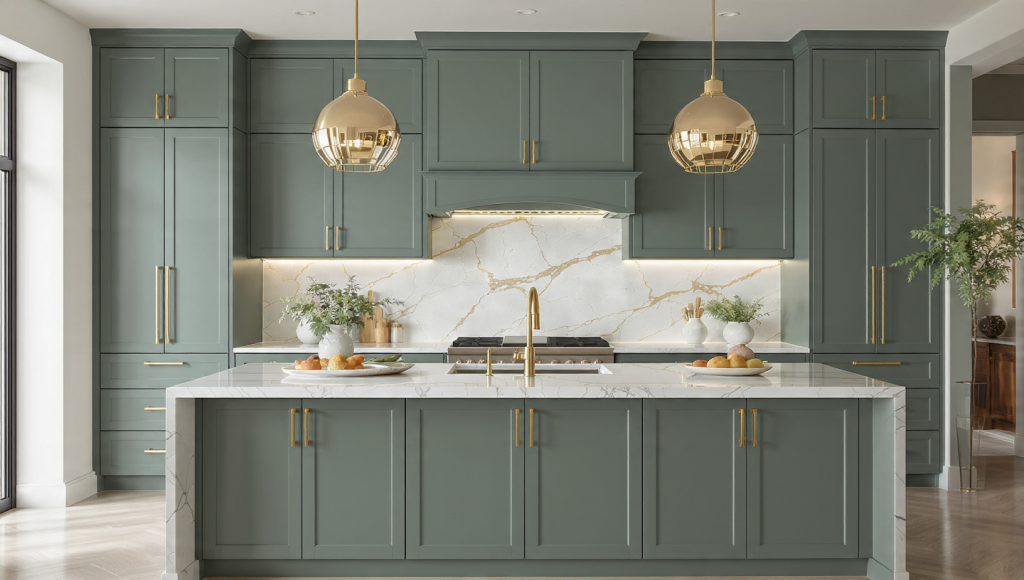
Elevate sage green into luxury territory by choosing a darker, richer tone with warm metallic finishes. Flat-front cabinet doors in a deep sage shade feel undeniably modern, while slim brass pulls add precision and a curated warmth . A marble backsplash and countertop amplify the depth of the green, creating contrast that feels intentional and high-end. Brass hardware against sage creates one of the most sophisticated color stories in contemporary kitchen design.
5. Rustic Brick and Sage Pairing
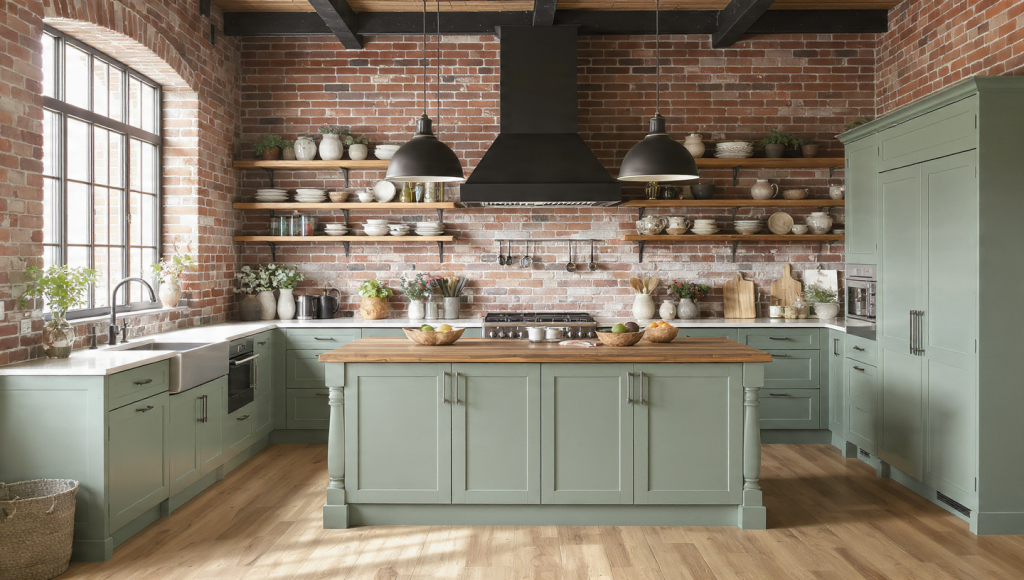
Exposed brick brings textural contrast and an industrial edge that roughens up the softness of sage green. The muted green shade bridges old and new materials, connecting wood floors, brick texture, and painted panels . Black metal brackets and natural wood shelves break up the cabinetry without interrupting flow, proving that sage can act as a quiet backdrop that lets bold materials shine.
6. Glass-Front Sage Cabinets for Airiness
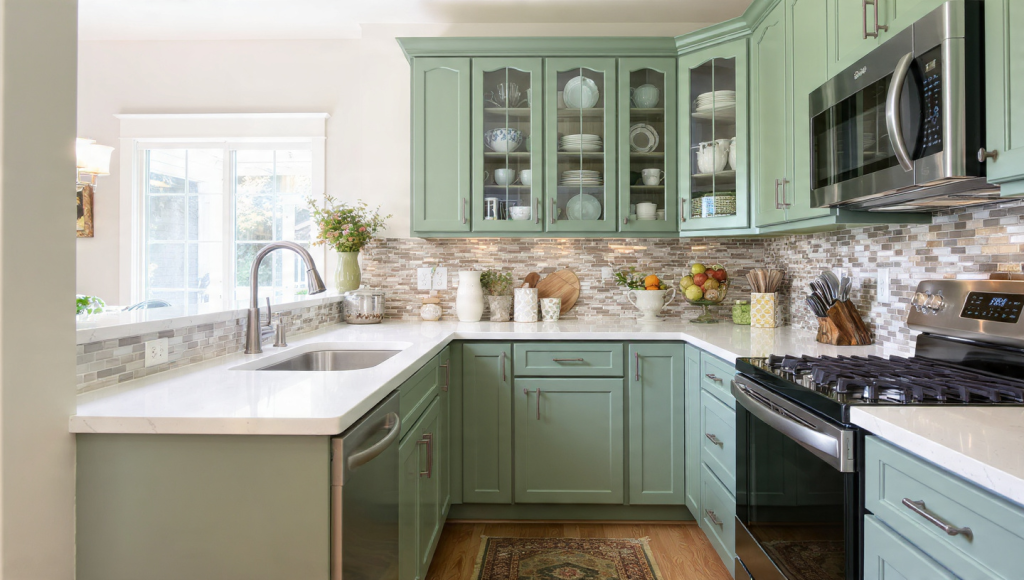
Sage shaker cabinets set a calm foundation, while glass-front uppers introduce rhythm and transparency. The soft green tone balances white quartz countertops and pale mosaic backsplashes, creating a layered but controlled palette. Brushed nickel hardware keeps the look tailored, while stainless appliances add contrast without overpowering the green . This approach is ideal for small or narrow kitchens that need visual breathing room.
7. Sage and Marble Grandeur
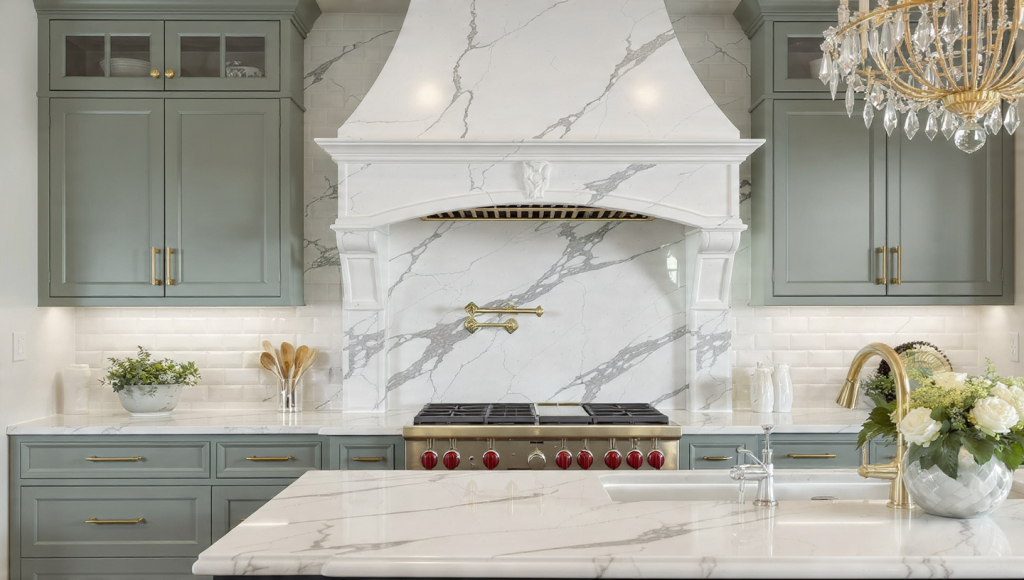
Pairing sage cabinetry with dramatic marble veining creates a timeless, elevated result. The green reads richer against a white marble hood surround and stone backsplash, with gold-toned hardware highlighting the cabinet lines . Sage becomes the balancing element between heavy marble surfaces and metallic accents, creating a composed, high-end aesthetic that appeals to buyers seeking contemporary, nature-inspired homes .
8. Heritage Sage with Butcher Block Detail
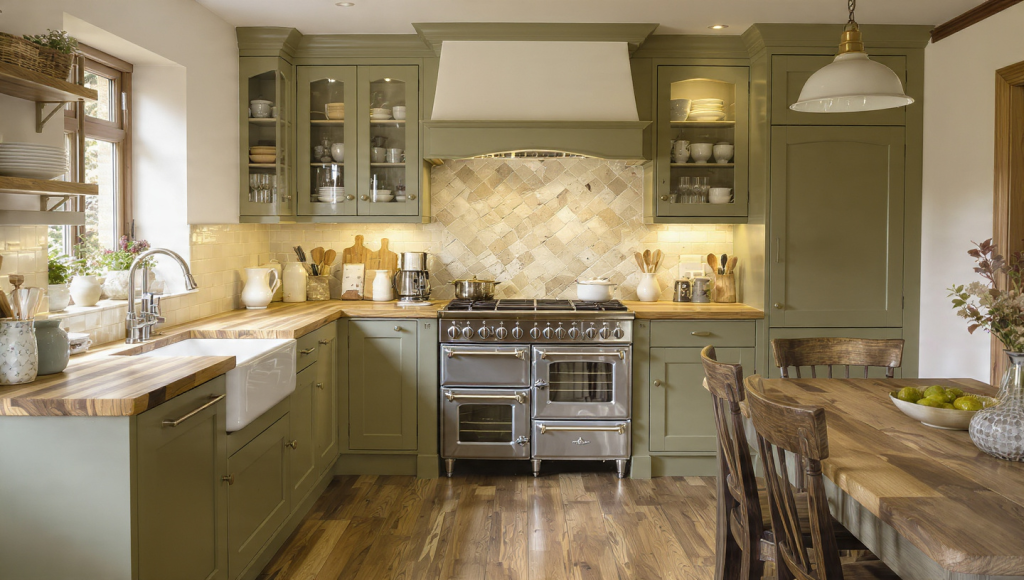
Lean into a richer sage tone, close to olive, to create a heritage kitchen presence without going rustic. The cabinetry frames a stainless range and textured stone backsplash, while a butcher block prep surface adds pattern and contrast . Glass-front uppers lighten the upper wall, preventing the green from feeling heavy, while dark wood floors ground the entire scheme. This approach feels established and confident, not decorative.
9. The Island-Centered Sage Statement
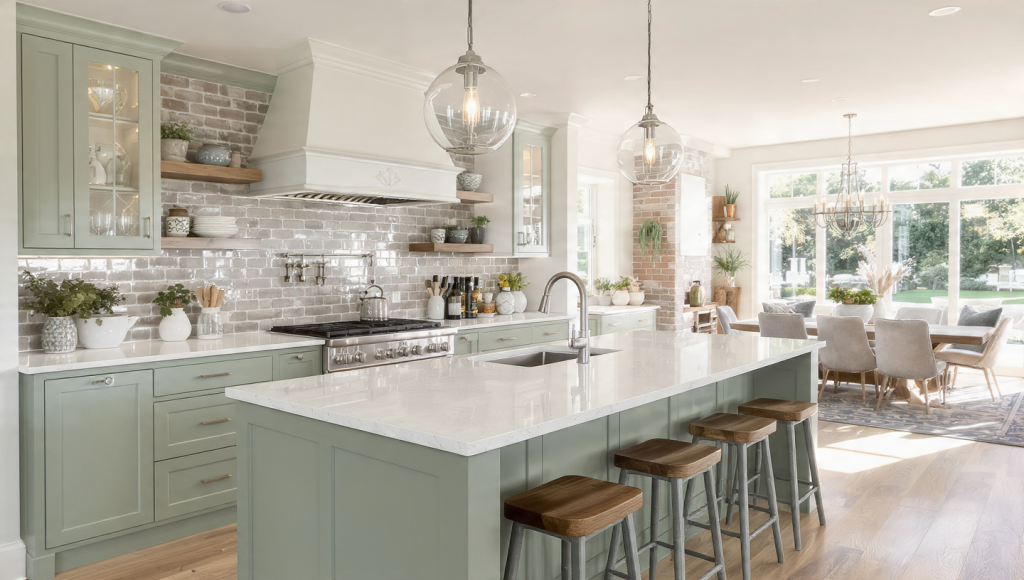
Place sage green at the core of the design by wrapping the island and perimeter cabinetry in a soft, muted shade. White quartz countertops sharpen the silhouette, while glass pendants introduce transparency above . Brick accents and oak flooring add texture and warmth, preventing the space from feeling stark. The sage tone ties together wood, stone, and upholstery, proving that cabinetry can act as structure rather than background.
10. Sage Green Walls: A Feature Statement
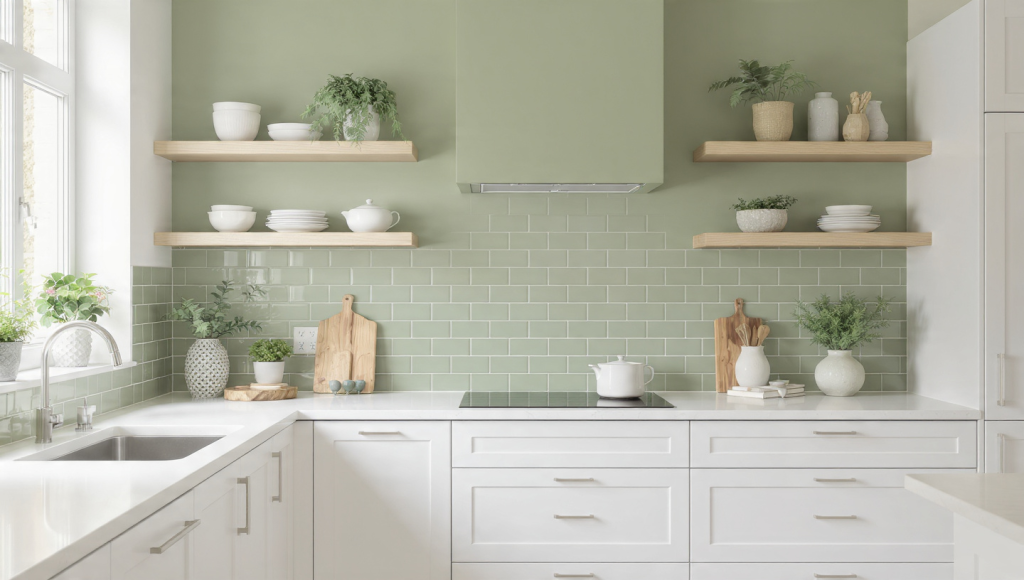
While cabinetry is the most common application, sage green on kitchen walls offers a fresh alternative. Use it for a feature wall or color-block a section of your kitchen to create a calming, organic backdrop . Wall tiles in sage green can be contrasted against white or light grey walls to make a small kitchen feel more spacious. This approach allows you to incorporate the color without committing to full cabinetry.
11. Narrow Galley with Earthy Sage
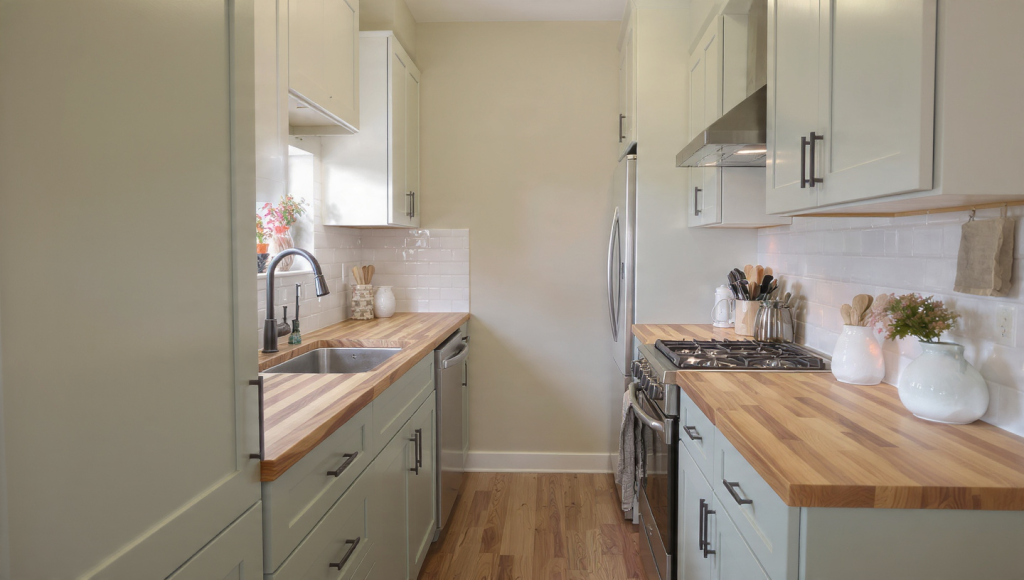
In a galley kitchen, use sage green on lower cabinets to bring depth to a tight footprint while keeping upper cabinets white to maintain an open feel. Wood countertops add warmth and texture, and matte black hardware sharpens the green with a modern outline . The sage shade prevents the long layout from feeling sterile and introduces contrast without overwhelming the space—a smart solution for compact kitchens.
12. Sage with Navy Blue Accents
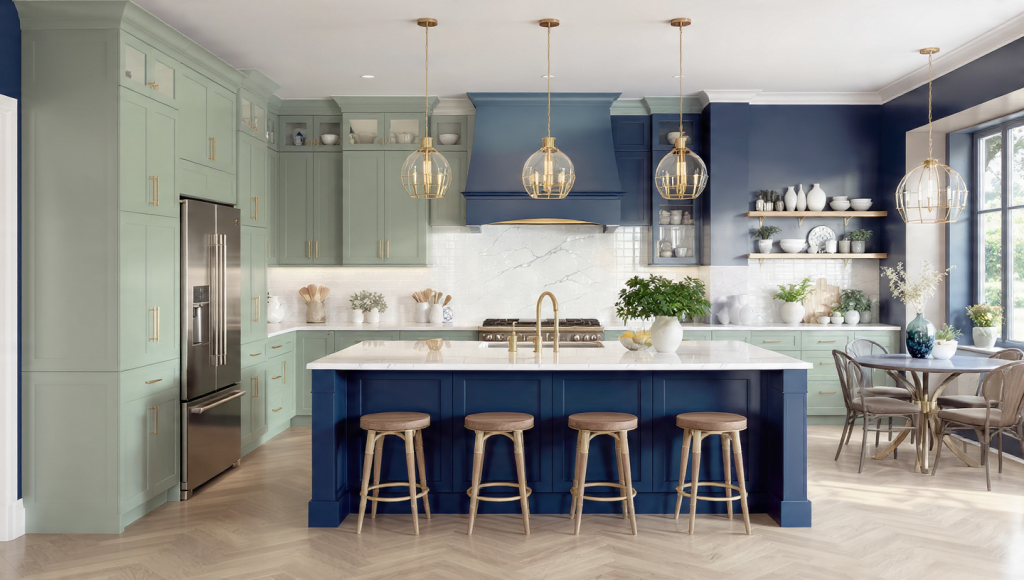
For a rich, sophisticated contrast, incorporate navy blue alongside sage green. Deep navy brings a bold counterpoint to soft sage, making the overall palette feel more tailored and high-end . Use navy on a feature wall, accessories, or even a kitchen island for a unique finish. This combination is ideal for those who want a refined, structured look that’s not too loud.
13. Chalky Matte Sage for Vintage Charm
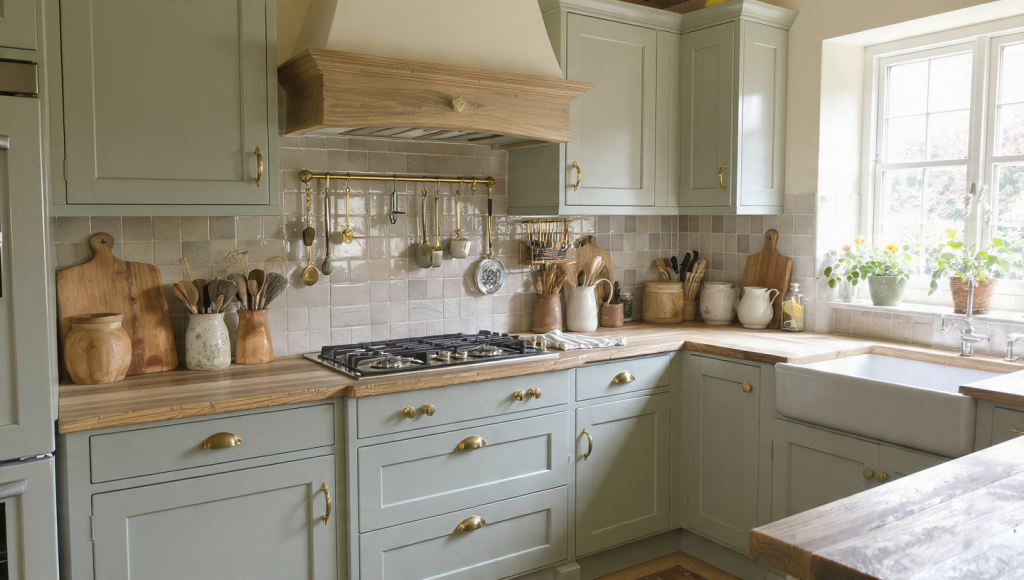
Revive an old cottage kitchen with a chalky, desaturated sage in a matte finish. This approach creates a worn-in, curated look that hides brush marks and emphasizes texture . Matte finishes can show grease more easily, so choose a washable matte or flat enamel for high-use kitchens. This is one of the most cost-effective ways to achieve a designer look, particularly in traditional or shaker-style kitchens.
14. Small Kitchen, Sage Minimalism
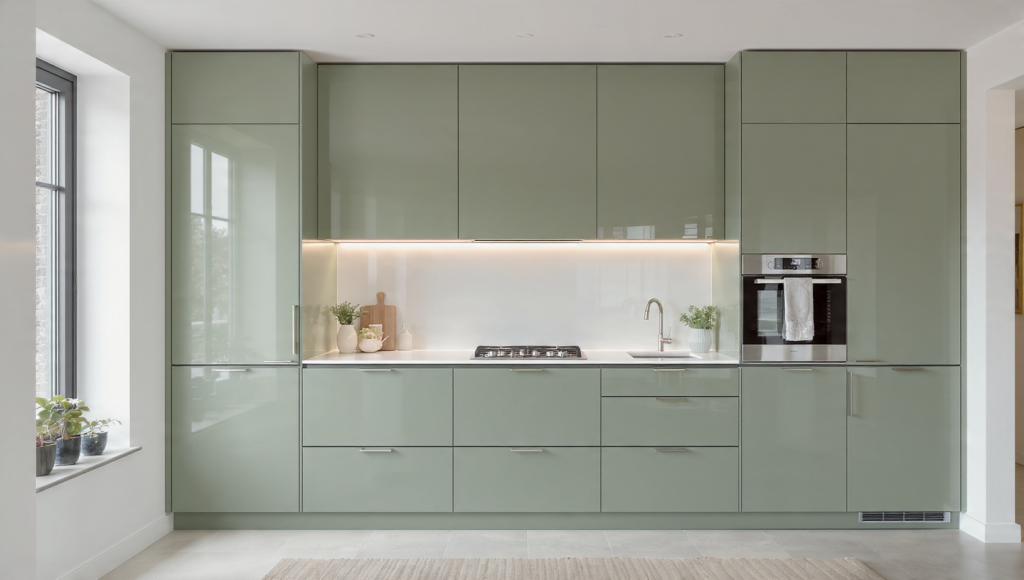
Sage green works surprisingly well in small kitchens. Full-height cabinetry in a muted green shade creates a unified wall, eliminating visual breaks that would shrink the space . Pair with a white countertop to cut through the color with clarity, and use reflective materials like a glass backsplash to amplify light . The soft green recedes visually, helping the compact space feel more open and calm.
Materials That Complement Sage Green
The beauty of sage green lies in its ability to harmonize with a wide range of materials. To help you build a cohesive design, here are the most complementary materials and how to use them:
Wood: Sage and wood are a match made in design heaven. Light oaks and ash bring a Scandinavian freshness, while mid-tone walnuts and teaks add warmth and richness. Reclaimed wood introduces texture and history, grounding the green in authenticity.
Marble and Stone: White marble with subtle veining creates a classic, elevated contrast against sage. For a more contemporary look, consider darker stones like soapstone or slate, which add depth and drama.
Metals: Brass and gold bring out the warmth in sage green, creating a luxe, sophisticated feel. Brushed nickel and chrome offer a cooler, more modern contrast. Matte black hardware provides a sharp, contemporary edge.
Tile: Subway tile in white or cream remains a timeless choice. For added interest, consider zellige tile, which offers a handcrafted, textured finish. Mosaic and patterned tiles can introduce personality and visual complexity.
Textiles: Natural fibers like linen, cotton, and wool soften the kitchen’s hard surfaces. Consider linen bar stools, cotton tea towels, or a wool runner to introduce comfort and warmth.
Practical Considerations for a Sage Green Kitchen
While aesthetics are important, a successful kitchen design must also be practical. Here are key considerations when incorporating sage green into your kitchen:
Lighting: Sage green can appear dramatically different under various lighting conditions. In kitchens with limited natural light, consider under-cabinet and pendant lighting to ensure the color remains true. Warm LED bulbs (2700K-3000K) enhance the green’s earthy qualities, while cool bulbs can make it appear flat or grey.
Cabinetry Finish: The finish of your sage green cabinetry affects both appearance and maintenance. Glossy finishes reflect light and feel more contemporary but show smudges and fingerprints. Matte finishes hide imperfections and feel more traditional but can be harder to clean. For high-traffic kitchens, consider a satin or eggshell finish that balances beauty with durability.
Countertop Selection: Your countertop should complement, not compete with, sage green. White quartz or marble offers crisp contrast, while butcher block adds warmth. Dark granite or soapstone creates a dramatic, moody feel. Consider the overall mood you want to achieve before making your selection.
Backsplash Choices: The backsplash is an opportunity to introduce texture and pattern. Simple subway tile keeps the focus on the cabinetry, while patterned or mosaic tiles add visual interest. For a seamless look, consider extending your countertop material up the wall.
Flooring: Sage green pairs beautifully with both light and dark flooring. Light oak or ash floors keep the space airy, while darker woods like walnut add richness. For a contemporary twist, consider large-format porcelain tiles in warm greys or beiges.
Maintaining Your Sage Green Kitchen
A well-maintained sage green kitchen will retain its beauty for years. Here are practical maintenance tips:
Cabinetry Care: Wipe cabinets regularly with a soft, damp cloth and mild soap. Avoid abrasive cleaners, which can damage the finish. For matte finishes, use products specifically designed for flat paints to avoid creating shiny spots.
Preventing Fading: Sage green, like all colors, can fade over time when exposed to direct sunlight. Consider UV-protective window films or blinds to minimize sun damage. If you’re concerned about fading, choose a paint or finish with high UV resistance.
Touching Up: Keep a small sample pot of your sage green paint for touch-ups. Scratches and chips are inevitable in busy kitchens, and having the exact color on hand ensures seamless repairs.
Hardware Maintenance: Clean brass and gold hardware regularly with appropriate metal cleaners to prevent tarnishing. For matte black hardware, use a gentle cleaner to avoid scratching the finish.
Sage Green Through the Seasons
One of the most delightful aspects of sage green is how it evolves throughout the year. In spring, it feels fresh and rejuvenating, echoing new growth. Summer brings out its warmth, especially with golden sunlight streaming through windows. Autumn sees sage green deepening alongside seasonal foliage, creating a cozy, grounded atmosphere. In winter, the grey undertones become more pronounced, offering a calm, quiet backdrop to the shorter, darker days.
This seasonal adaptability means your kitchen never feels static or out of sync with the world outside. It’s a color that breathes with the year, making your kitchen feel alive and connected to nature’s rhythms.
Sage Green and Biophilic Design
The rise of sage green in kitchens is closely tied to the biophilic design movement, which seeks to connect interior spaces with the natural world. Kitchens, as the heart of the home, are natural candidates for this approach. Sage green brings the outdoors in, creating a visual and psychological link to gardens, forests, and meadows.
Beyond color, you can enhance this connection by incorporating natural materials, indoor plants, and plenty of natural light. Open shelving displaying ceramic pottery or fresh herbs reinforces the organic feel. The result is a kitchen that nurtures as much as it functions, supporting well-being and reducing stress through its calming presence.
Sage Green vs. Other Neutral Colors
To truly appreciate sage green, it’s helpful to compare it with other popular kitchen colors:
Sage Green vs. White: White kitchens can feel clean and bright but sometimes sterile. Sage green offers the same lightness with added warmth and personality. It doesn’t show dirt or wear as easily, making it more practical for everyday living.
Sage Green vs. Grey: Grey has been a dominant kitchen color for over a decade, but its popularity is waning. Sage green offers a softer, more interesting alternative that still functions as a versatile neutral. It’s less cold than grey and more forgiving with different lighting conditions.
Sage Green vs. Navy: Navy brings drama and sophistication but can dominate a space. Sage green offers similar depth without overwhelming the room. It’s more approachable and easier to pair with various materials and colors.
Sage Green vs. Beige: Beige has made a comeback as a warm neutral, but it can sometimes read as dated. Sage green feels fresher and more modern while still offering the warmth that beige provides.
Budget-Friendly Ways to Incorporate Sage Green
If a full kitchen renovation isn’t in your immediate future, there are plenty of affordable ways to introduce sage green into your space:
Paint Your Walls: The simplest and most cost-effective approach. A sage green feature wall can transform the entire feel of your kitchen.
Update Cabinet Hardware: Swap out old handles and knobs for new ones in brass, matte black, or brushed nickel. This small change can dramatically refresh the look of your existing cabinets.
Add Open Shelving: Install floating shelves in sage green or display sage-colored accessories like ceramics, jars, or cookbooks.
Refresh Your Backsplash: Consider peel-and-stick tiles in sage green for a temporary but impactful update.
Introduce Textiles: Sage green tea towels, curtains, or a runner can add a pop of color without any permanent changes.
Paint an Island: If you have a kitchen island, painting it sage green while keeping the rest of your cabinets neutral creates a striking focal point.
Add Plants: Incorporating indoor plants introduces green tones naturally and complements the biophilic feel of sage green.
Common Mistakes to Avoid
Even the most well-intentioned design can go awry. Here are common pitfalls to avoid when designing a sage green kitchen:
Choosing the Wrong Undertone: Not all sage greens suit all spaces. Test your chosen shade in your actual kitchen with your specific lighting before committing.
Overpowering the Space: Sage green should enhance, not dominate. Use it thoughtfully, balancing with complementary materials and colors.
Ignoring Lighting: Failing to consider how light affects sage green can result in a color that looks entirely different than expected. Always test in situ.
Skipping the Primer: When painting cabinets, primer is essential for achieving an even, durable finish. Don’t skip this crucial step.
Forgetting About Hardware: The wrong hardware can cheapen the look of even the most beautiful cabinetry. Invest in quality handles and knobs that complement your chosen shade.
Clashing with Existing Elements: Ensure your sage green harmonizes with fixed elements like countertops, flooring, and tiles. The color should feel intentional, not accidental.
The Psychology of Sage Green in the Kitchen
Color psychology plays a significant role in how we experience our homes, and sage green is particularly beneficial in a kitchen setting. Green is associated with balance, renewal, and health—qualities that resonate deeply in a room dedicated to nourishment and gathering.
Sage green specifically has a calming effect, reducing stress and promoting a sense of well-being. In a busy household, the kitchen can be a place of chaos, but a sage green palette helps create a serene backdrop against which daily life unfolds. It encourages mindful cooking, relaxed entertaining, and unhurried conversations around the island.
Additionally, green is considered the most restful color for the eye, requiring minimal adjustment from the retina. This makes it an excellent choice for a room where people spend significant amounts of time.
Sage Green in Different Kitchen Styles
One of the greatest strengths of sage green is its stylistic versatility. Here’s how it performs across different design aesthetics:
Modern Minimalist: Use sage green on handleless, flat-front cabinets paired with white countertops and minimal hardware. The color adds warmth without compromising the clean lines of minimalist design.
Farmhouse: Sage green shaker cabinets, butcher block countertops, and open shelving create the quintessential farmhouse look. Add vintage accessories and natural wood for authenticity.
Traditional: Rich, deep sage cabinets with raised panel detailing, marble countertops, and brass hardware evoke timeless elegance. Glass-front cabinets and decorative molding complete the look.
Scandinavian: Light sage green with pale wood floors, white walls, and minimal accessories creates the airy, functional look synonymous with Nordic design.
Industrial: Pair sage green with exposed brick, black metal accents, and concrete flooring for an urban, edgy feel. The green softens the harshness of industrial materials.
Coastal: Sage green reads beautifully in coastal kitchens, especially when paired with white, driftwood tones, and natural textures. It echoes the muted greens of beach grasses and sea glass.
Sage Green Color Combinations
Beyond the ideas already explored, here are additional color palettes that work beautifully with sage green:
Sage Green + Blush Pink: A soft, romantic pairing that feels contemporary and unexpected. Use blush in textiles, accessories, or a subtle backsplash.
Sage Green + Terracotta: This earthy combination is warm, grounded, and on-trend. Use terracotta in tiles, planters, or accessories.
Sage Green + Mustard Yellow: A bold, retro-inspired pairing that adds energy and vibrancy. Use mustard sparingly for maximum impact.
Sage Green + Charcoal Grey: For a moodier, more dramatic feel, pair sage with deep charcoal. This works particularly well in contemporary or industrial kitchens.
Sage Green + Cream: A softer alternative to white, cream adds warmth and pairs effortlessly with sage green.
Sustainable Considerations
As sustainability becomes increasingly important in home design, sage green kitchens offer several eco-friendly opportunities:
Cabinetry: Choose cabinets made from sustainably sourced wood or FSC-certified materials. Many manufacturers now offer eco-friendly finishes with low VOCs.
Paint: Opt for low-VOC or zero-VOC paints to reduce indoor air pollution. Brands like Farrow & Ball, Benjamin Moore, and Sherwin-Williams offer environmentally friendly options.
Countertops: Consider recycled glass, paper composite, or sustainably sourced wood for your countertops. These materials reduce environmental impact while offering beauty and durability.
Flooring: Bamboo, cork, and reclaimed wood are sustainable flooring options that pair beautifully with sage green.
Appliances: Energy-efficient appliances reduce your kitchen’s carbon footprint. Look for Energy Star-rated models.
Real-World Inspiration
While every kitchen should reflect its owner’s unique taste, looking at real-world examples can spark ideas. Consider the following approaches:
The English Country Kitchen: Sage green cabinets, Aga range, wooden worktops, and floral accents create a romantic, nostalgic feel. This style celebrates imperfections and embraces a lived-in look.
The Urban Loft Kitchen: Deep sage cabinetry, concrete floors, exposed pipes, and industrial lighting offer a contemporary, edgy aesthetic. The green softens the raw materials, creating balance.
The Coastal Escape Kitchen: Light sage green, driftwood accents, white shiplap, and sea glass accessories evoke the calm of the coast. This style is breezy, relaxed, and endlessly inviting.
The Modern Classic Kitchen: Sage green cabinets with sleek lines, marble countertops, brass hardware, and statement lighting create a timeless yet current look. This style balances tradition with contemporary flair.
Conclusion
Sage green has earned its place as one of the most versatile and enduring colors in kitchen design. Its ability to adapt to different styles, lighting conditions, and materials makes it a reliable choice for homeowners seeking both beauty and longevity. Unlike fleeting trends that quickly feel dated, sage green offers a timeless quality that will remain relevant for years to come.
What makes sage green truly special is its emotional resonance. It’s a color that makes a kitchen feel like the heart of the home—welcoming, calm, and alive with possibility. Whether you choose a full suite of sage green cabinetry, a single feature wall, or subtle accents, this shade will transform your kitchen into a space that nourishes both body and soul.
As you embark on your sage green kitchen journey, remember that the best designs are those that reflect your personal taste and lifestyle. Use these ideas as a starting point, but don’t be afraid to adapt them to your unique space. The most beautiful kitchens are the ones that feel authentic and lived-in, where color, material, and function come together in harmony.
Ultimately, a sage green kitchen is more than a design choice—it’s a statement about what we value: connection to nature, comfort, and the simple pleasures of home. In a world that often feels chaotic, it offers a quiet, grounding presence, reminding us to slow down, gather around the table, and savor the moments that matter most.
Frequently Asked Questions
Is sage green a timeless kitchen color?
Yes, sage green has been used in interior design for centuries and shows no signs of fading from popularity. Its neutral yet distinctive quality ensures it remains relevant across changing design trends.
Does sage green work in small kitchens?
Absolutely. In small kitchens, sage green can make the space feel calm and cohesive, especially when paired with white countertops and reflective materials that amplify light.
What colors clash with sage green?
Bright, cool reds and overly saturated purples can clash with sage green. Stick to warm, earthy tones or muted pastels for harmonious combinations.
How do I choose between warm and cool sage?
Consider your kitchen’s natural light and your existing materials. Warm sage suits north-facing kitchens or those with cool materials; cool sage works in south-facing spaces or with warm woods.
Can I mix sage green with other greens?
Yes! Layering different shades of green adds depth and interest. Just ensure there’s enough contrast between the shades to avoid a muddy look.
What’s the best white to pair with sage green?
Warm whites like cream or off-white pair best with sage green. Stark bright whites can create too much contrast, making the green feel dull.
Is sage green easy to maintain?
Sage green hides dirt and wear better than white, making it a practical choice for busy kitchens. Choose a durable finish for cabinetry to ensure easy cleaning.
