There’s a common misconception that bangs are reserved for the young. In reality, the right fringe can be one of the most anti-aging secrets in hairstyling—and curtain bangs are the perfect place to start. Unlike heavy, blunt bangs that can hide your face and add years, curtain bangs are soft, face-framing, and effortlessly chic. They gently sweep to the sides like parted curtains, drawing the eye outward to highlight your cheekbones and soften fine lines around the eyes and forehead. For women over 50, curtain bangs offer a unique blend of volume, versatility, and a modern update that never screams “trying too hard.”
Whether you have fine hair, silver strands, or a chic bob, here are 10 beautifully structured ways to wear curtain bangs at any age:
1. The Classic Long Curtain Bang
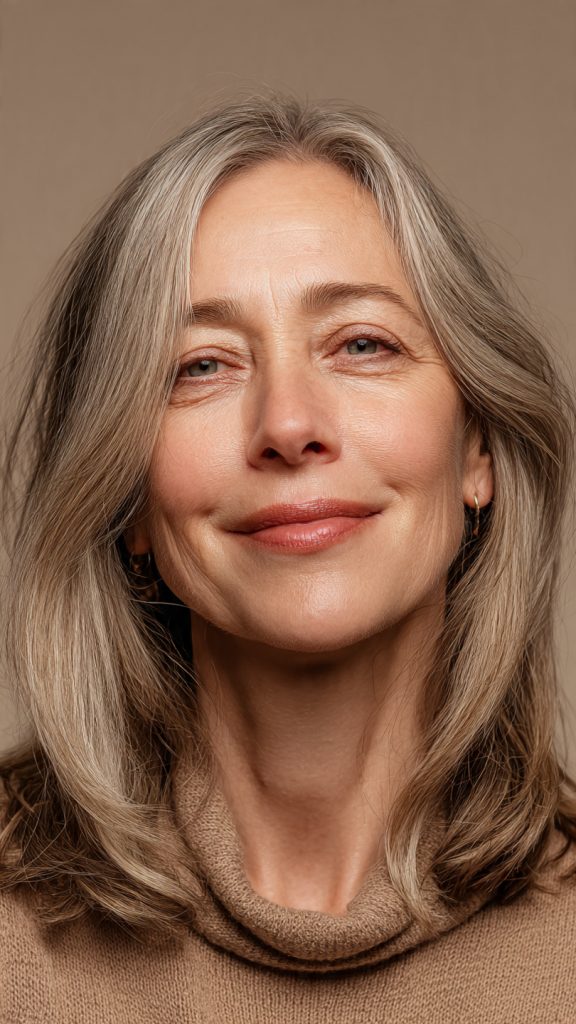
Best for: Oval and heart-shaped faces.
Keep the bangs long (grazing the cheekbones) with the shortest point at the bridge of the nose. This length creates a vertical line that elongates the face and beautifully camouflages forehead lines. Style by blow-drying with a round brush, rolling the ends away from your face.
2. The Wispy Silver Fringe
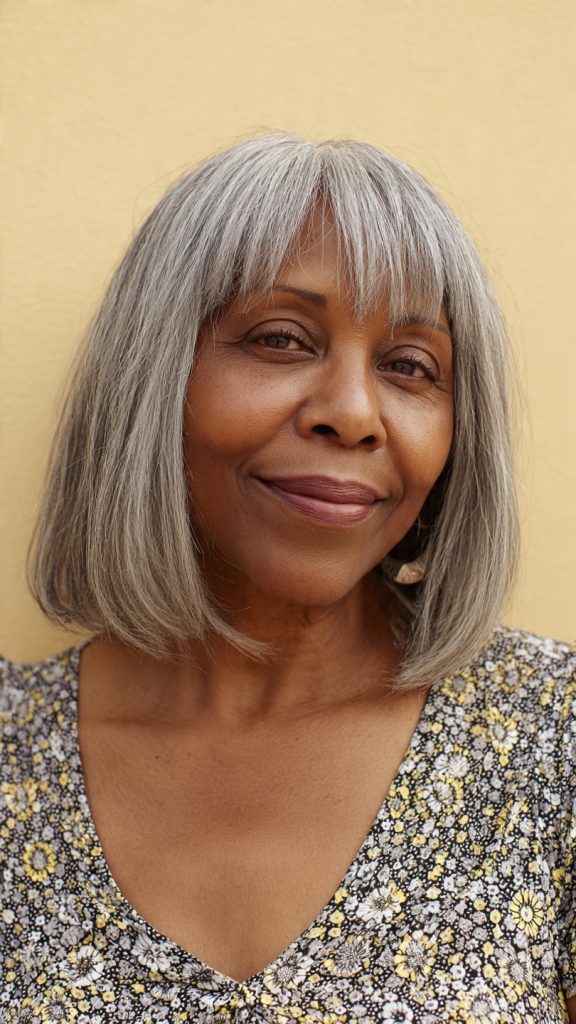
Best for: Fine or thinning hair.
Thin, piece-y curtain bangs add texture and movement without sacrificing density. On silver or gray hair, the lighter color makes wispy ends look ethereal and soft. This style reduces bulk at the hairline, creating an airy, modern feel that lifts the eyes.
3. The Volumizing Lift Bang
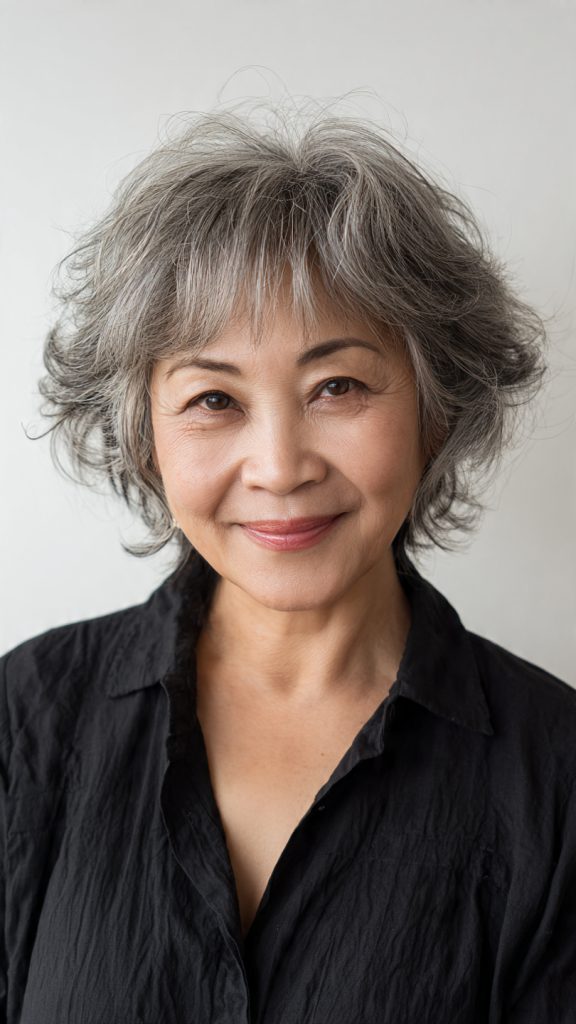
Best for: Flat or limp hair.
Ask your stylist for curtain bangs cut with extra weight at the roots and tapered ends. When blown out with a large round brush, the “lift” at the crown mimics the effect of a subtle facelift. The volume adds height, which counteracts the natural flattening that occurs with age.
4. The Curly Curtain Fringe
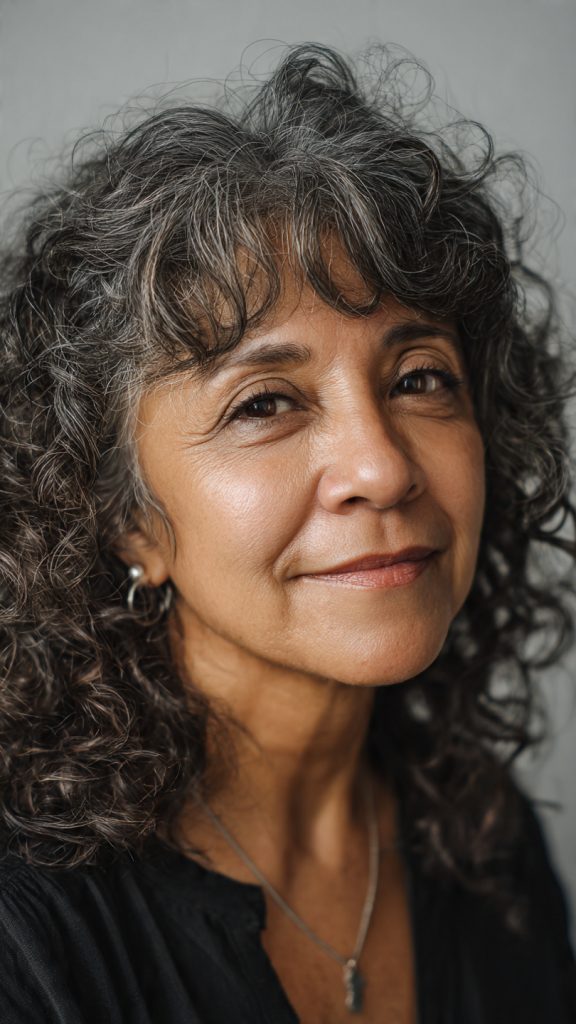
Best for: Naturally wavy or curly hair (Type 2c to 3c).
Curly curtain bangs are cut dry and left longer to allow for spring-back. They blend seamlessly into the rest of your curls, softening the hairline and adding romantic texture. The key is keeping the part defined—the curtain effect reduces triangle-head syndrome and frames the face organically.
5. The Bardot-Inspired Blunt Curtain
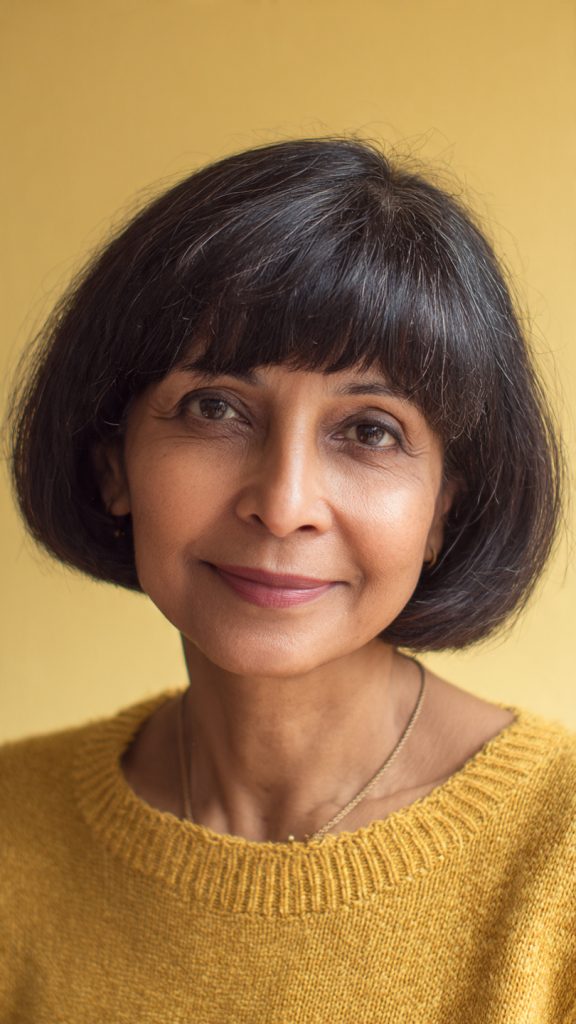
Best for: Thick, straight hair.
Channel Brigitte Bardot with a slightly thicker, eyebrow-grazing curtain bang that still parts in the middle. The blunt ends give a confident, structured look, while the curtain sweep keeps it soft. This style works wonders for disguising a larger forehead without closing in the face.
6. The Salt-and-Pepper Tapered Bang
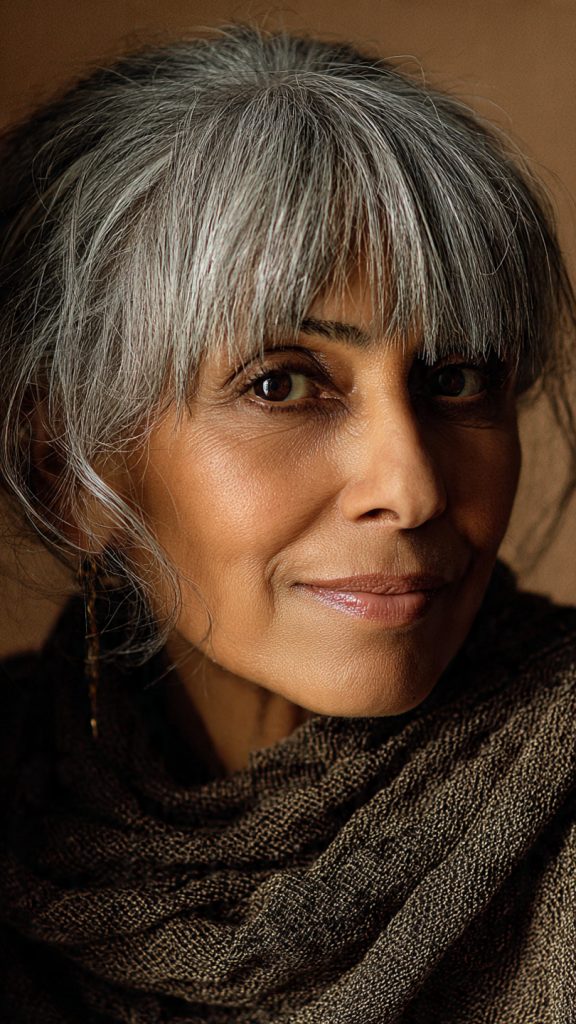
Best for: Highlighted or naturally two-toned hair.
Ask for tapered curtain bangs—shorter in the center, longer at the sides. In salt-and-pepper hair, the lighter pieces naturally reflect light, creating a brightening effect around the eyes. Tapering prevents a heavy “helmet” look and adds sophisticated, low-maintenance texture.
7. The Textured Pixie Curtain
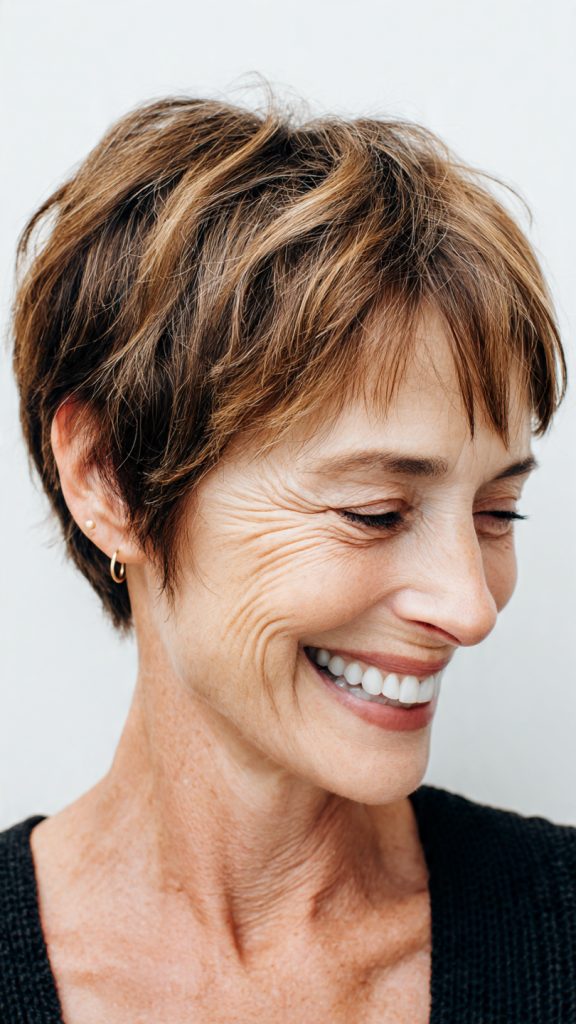
Best for: Very short or fine hair (great for transitioning from a pixie).
A pixie with elongated curtain bangs at the front offers the best of both worlds: the ease of short hair with the softness of a fringe. The bangs can be swept across or parted down the middle, giving you two looks in one. It’s incredibly age-defying because it shows off your cheekbones and neck.
8. The Face-Framing Layered Combo
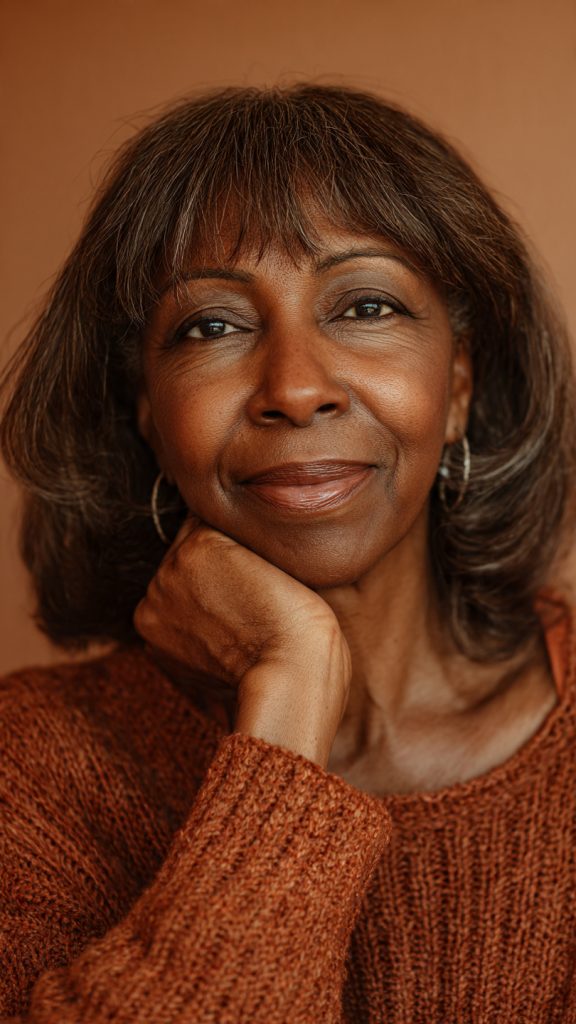
Best for: Shoulder-length or longer hair.
Integrate your curtain bangs into a layered haircut where the shortest layer begins at the chin. This creates a cascading frame that draws the eye diagonally downward—a trick that minimizes jowls and softens a square jaw. Style with a flat iron for gentle bends, not curls.
9. The Low-Maintenance Air-Dry Bang
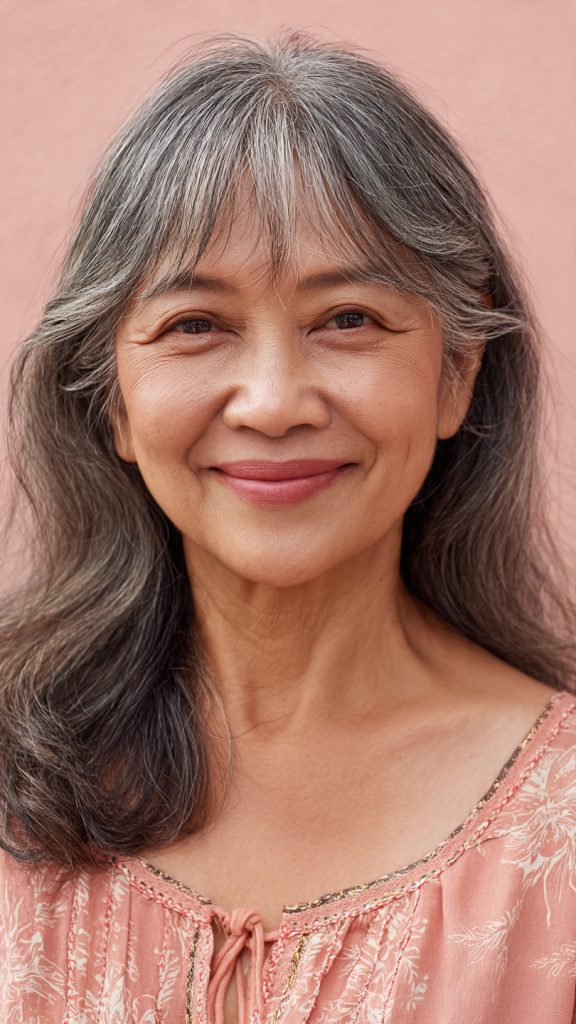
Best for: Busy lifestyles or dry/sensitive scalps.
Curtain bangs can be cut to suit a wash-and-go routine. The secret is a “dry cut” with no overdirection—the bangs will fall naturally into a soft curtain shape as they dry. Apply a dab of lightweight mousse, part in the middle, and let air dry. The slight wave will hide unevenness and look effortlessly French.
10. The Statement Silver Streak Bang
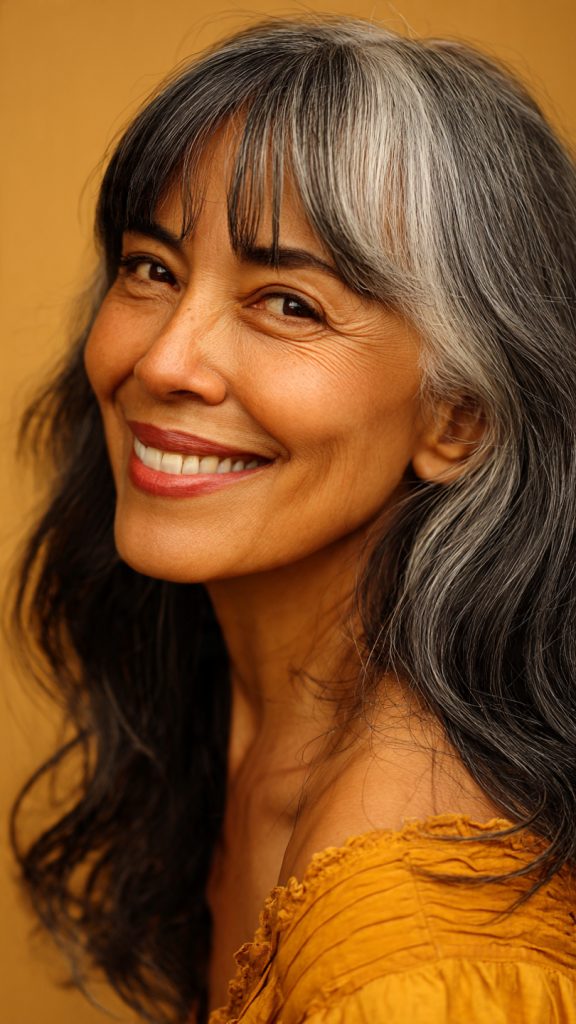
Best for: Darker hair with a dramatic gray streak (skunk stripe or maleficent style).
If you have a natural white streak at the front, curtain bangs turn it into your best accessory. Cut the bangs to highlight the contrast—the lighter streak will act like a highlighter on your forehead, while the darker sides recede. It’s bold, modern, and unmistakably confident.
Frequently Asked Questions About Curtain Bangs After 50
Q: Will curtain bangs make my fine hair look thinner?
A: Not if cut correctly. Ask your stylist for wispy or tapered curtain bangs, which remove bulk from the ends while keeping weight at the roots. This creates the illusion of density and movement, not flatness.
Q: How often do I need to trim curtain bangs?
A: Every 4–6 weeks for a precise shape. However, because curtain bangs blend into the sides, they grow out more gracefully than blunt bangs. You can stretch to 8 weeks if you style them swept to the side.
Q: Can I wear curtain bangs with glasses?
A: Absolutely. Choose bangs that sit slightly above or right at the top of your frames. Avoid bangs that clash with the brow line of your glasses. A longer curtain bang that sweeps past the temple works beautifully with both reading and sunglasses.
Q: What if I have a cowlick or a strong forehead crease?
A: Curtain bangs are actually ideal for cowlicks—the center part works with the natural growth pattern. For deep forehead lines, keep the bangs longer (at nose level) and style them with a slight bend, not a hard crease.
Q: Will curtain bangs look good if I wear my hair up?
A: Yes, and that’s one of their superpowers. When you pull your hair back, the curtain bangs remain down, softly framing your face. This instantly softens the severity of a ponytail or bun and adds a romantic, undone touch.
What to Tell Your Stylist Before the Cut
Walk into the salon with these three key phrases:
- “Cut my curtain bangs dry and in my natural part.”
Wet hair shrinks and shifts. A dry cut respects your hair’s true fall and texture. - “Keep the shortest point at my nose or eyebrow, depending on my forehead.”
Longer for forehead lines, shorter for smaller foreheads. - “Taper the ends so they blend into my layers.”
This prevents the dreaded “shelf” look and ensures the bangs move naturally with the rest of your hair.
Bonus: Bring a photo from this article. Stylists love visual references.
Styling Tools & Products to Own
| Tool/Product | Why It Helps |
|---|---|
| Small round brush (1.5-inch barrel) | Creates the signature curtain bend without adding volume at the root |
| Blow-dryer with a concentrator nozzle | Directs air downward, preventing frizz and flyaways |
| Lightweight mousse (not gel or heavy cream) | Gives memory to fine hair without weighing bangs down |
| Flat iron (1-inch) | For quick touch-ups—use on a low setting and only at the ends |
| Dry texture spray | Adds piece-y separation and absorbs oil on second-day bangs |
Pro routine: Blow-dry your bangs first while the rest of your hair is damp. Point the nozzle downward, roll the round brush away from your face, and lock in the shape with a cool shot of air.
Common Mistakes to Avoid
- Cutting bangs too short. Curtain bangs should never look like baby bangs. When in doubt, go longer—you can always trim more later.
- Using heavy oils or serums. These weigh bangs down and make them look greasy within hours. Stick to powder or dry shampoo.
- Parting them too far to one side. The “curtain” effect requires a defined center or slight side part. An extreme side part defeats the purpose.
- Skipping the blowout. Curtain bangs rarely air-dry perfectly unless cut specifically for that. A 90-second blow-dry with a round brush makes all the difference.
- Letting bangs grow past the chin. Once they hit your chin, they’re no longer bangs—they’re just layers. Schedule that trim.
Conclusion
Curtain bangs are not a trend you outgrow. They are a timeless, architectural element of hairstyling that happens to work brilliantly for women over 50—perhaps more than for any other age group. Why? Because they address the specific changes that come with mature hair: loss of volume, the desire to soften lines without hiding, and the need for a style that feels both polished and effortless.
The ten ideas above prove there is a curtain bang for every texture, face shape, and lifestyle. Whether you embrace your silver streaks, lean into curls, or keep it sleek and low-maintenance, the right fringe will do more than frame your face—it will lift your entire presence. You’ll catch your reflection and think, “There I am. Just softer. Just brighter. Just me.”
And that’s the real secret. Curtain bangs after 50 aren’t about looking younger. They’re about looking like you—but with a little more light around your eyes and a little less weight on your forehead.
So go ahead. Book that trim. Let the bangs fall where they may. And wear them like the confident, beautiful woman you’ve spent five decades becoming.
